

 Download PDF
Market Overview
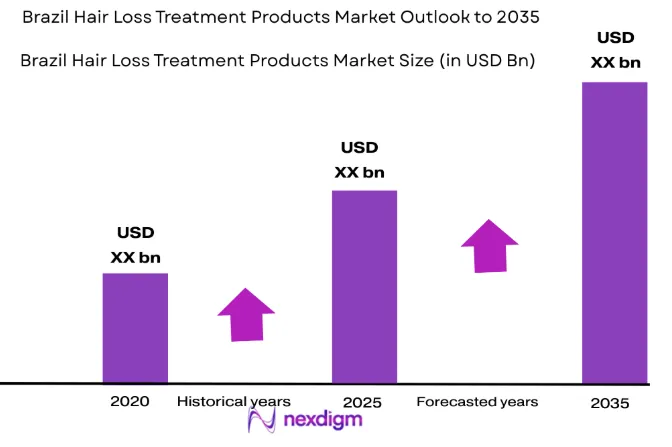
The Brazil Hair Loss Treatment Products market is valued at USD ~ billion, driven by a growing consumer base increasingly concerned with hair loss solutions. The market is propelled by advancements in hair treatment technologies, consumer awareness, and a rise in disposable income, especially in urban areas. The increasing popularity of non-surgical treatments, such as topical solutions and oral medications, has further contributed to the market’s growth. These treatments are becoming more accessible as global brands enter the Brazilian market, offering localized products tailored to regional preferences.
Brazil, with its large and diverse population, remains the largest consumer base for hair loss treatments in Latin America. The major cities like São Paulo, Rio de Janeiro, and Brasília are particularly dominant due to their high concentration of urban, middle-to-high-income individuals who prioritize personal grooming and aesthetic treatments. São Paulo, as the country’s economic hub, sees the most significant adoption of hair loss treatments, driven by its large number of beauty salons and cosmetic clinics. Additionally, the high prevalence of hair loss issues in urban centers contributes to the market’s growth in these regions.
Market Segmentation
By Product Type
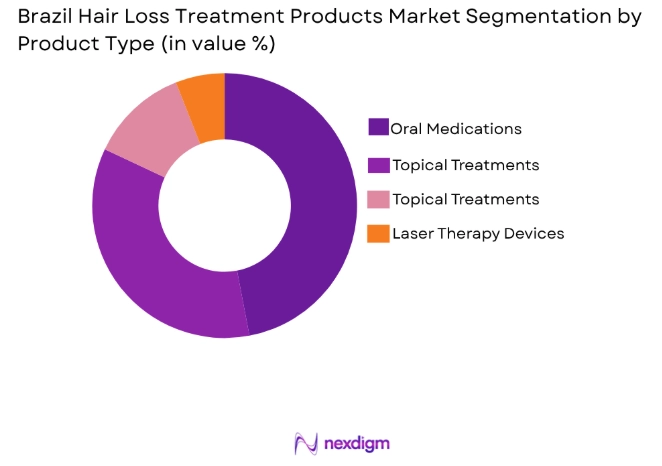
The Brazil Hair Loss Treatment Products market is segmented by product type into oral medications, topical treatments, hair transplant solutions, and laser therapy devices. Among these, oral medications currently dominate the market share due to their accessibility and convenience. These products, often based on popular ingredients like finasteride and minoxidil, are widely trusted for their efficacy in slowing hair loss and stimulating hair regrowth. The segment’s dominance is further bolstered by the increasing demand for easy-to-use, at-home solutions as consumers continue to seek non-invasive treatments. Topical treatments follow closely, with their popularity driven by familiarity and ease of application.
By Gender
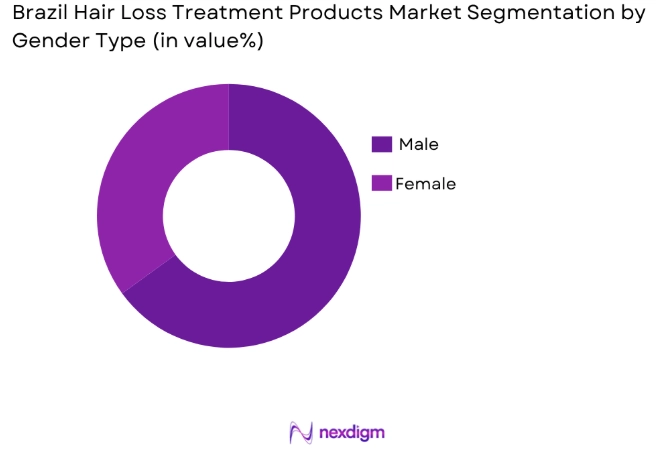
The gender-based segmentation of the market includes male and female consumers, with male consumers dominating the market share. This trend can be attributed to the higher prevalence of male pattern baldness, which affects a significant portion of the male population starting in their 20s. Men are more likely to seek treatment for hair loss at earlier stages, making them a primary demographic for both prescription and over-the-counter hair loss solutions. The female market is growing due to an increasing awareness of female hair thinning and the rise in female-specific hair care products that cater to this need.
Competitive Landscape
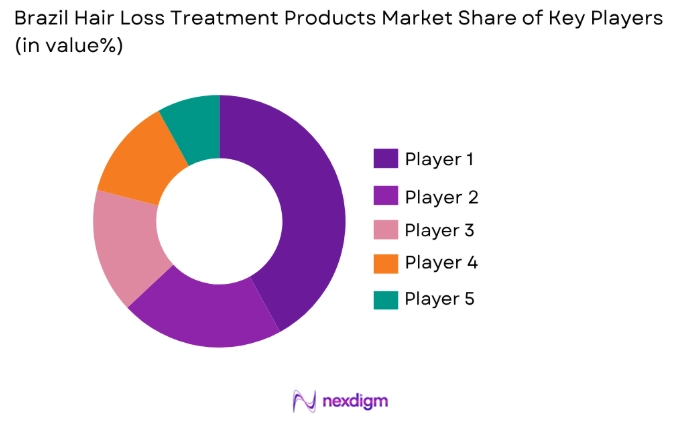
The Brazil Hair Loss Treatment Products market is highly competitive, with both local and international brands fighting for market share. Major players in the market include global companies like Unilever, L’Oréal, and Shiseido, as well as local players such as Grandha Professional Hair Care and Zencial. The market is witnessing a trend where international brands partner with local distributors to cater to the specific preferences of Brazilian consumers, thus gaining dominance. At the same time, local players differentiate themselves by offering products suited for the Brazilian climate and hair types, enabling them to effectively compete with larger brands.
| Company Name | Establishment Year | Headquarters | Product Portfolio | Market Share (%) | Distribution Channels | Pricing Strategy |
| Unilever | 1930 | London, UK | ~ | ~ | ~ | ~ |
| L’Oréal | 1909 | Paris, France | ~ | ~ | ~ | ~ |
| Shiseido | 1872 | Tokyo, Japan | ~ | ~ | ~ | ~ |
| Grandha Professional Hair Care | 1990 | São Paulo, Brazil | ~ | ~ | ~ | ~ |
| Zencial | 2000 | São Paulo, Brazil | ~ | ~ | ~ | ~ |
Brazil Hair Loss Treatment Product Market Analysis
Growth Drivers
Increasing Incidence of Hair Loss
Hair loss continues to be a significant concern globally, with increasing numbers of individuals seeking treatment for the condition. Data from the World Health Organization shows that approximately 60% of men and 50% of women experience some form of hair loss during their lifetime. In Brazil, the incidence rate of male pattern baldness is higher than the global average, with over 40% of Brazilian men suffering from noticeable hair thinning by the age of 30. These numbers indicate a strong demand for effective hair loss treatments. Additionally, the Brazilian demographic is aging, with 14% of the population expected to be aged 60 or over by 2025, leading to a higher incidence of age-related hair thinning and a growing consumer base for hair loss treatments.
Rising Awareness about Hair Care Products
Rising consumer awareness about hair health and the availability of various hair care products have been driving market growth. In Brazil, there is a noticeable increase in online searches and social media discussions related to hair care products, as people are increasingly investing in treatments for hair restoration and maintenance. Reports indicate that approximately 70% of Brazilian women are actively seeking hair care products in both the personal care and cosmetic sectors. This surge is also supported by the increase in the per capita income of Brazilian households, projected to rise by 4.5% in 2024, enabling consumers to spend more on premium hair care treatments. This heightened awareness, coupled with improving economic conditions, has led to a robust demand for advanced hair care solutions.
Market Challenges
Regulatory Challenges
Brazil’s stringent regulatory framework presents significant challenges for companies seeking to introduce new hair loss treatment products. The Brazilian Health Regulatory Agency (ANVISA) has a comprehensive and strict approval process for health and cosmetic products. In 2023, ANVISA rejected approximately 12% of cosmetic product submissions, including hair treatments, due to inadequate testing or failure to meet safety standards. This regulatory bottleneck results in delays in bringing new products to market, hindering growth opportunities for companies looking to expand their product offerings. Additionally, the complex regulatory requirements increase costs for companies operating in the Brazilian market, making it a more challenging environment for new entrants.
High Cost of Treatments
The high cost of advanced hair loss treatments, particularly surgical options such as hair transplants, is a major barrier for a large portion of the Brazilian population. According to data from the Brazilian Association of Dermatology, hair transplant surgeries can cost between BRL 10,000 to BRL 20,000, making them inaccessible to many consumers. Despite the growing demand for these treatments, a significant portion of the population, especially those in lower-income brackets, remains unable to afford these services. This economic divide creates an access issue, preventing a broader segment of the population from utilizing available treatments. The cost of innovative non-surgical treatments such as laser therapy also remains relatively high, limiting market expansion.
Opportunities
Rise in the Adoption of Advanced Treatments
There has been a noticeable shift in Brazil towards non-invasive and technologically advanced hair loss treatments. Laser therapy devices, hair growth stimulants, and PRP (Platelet-Rich Plasma) treatments are gaining popularity due to their reduced recovery times and non-surgical nature. In recent years, Brazil has seen a 25% growth in the number of clinics offering these non-invasive treatments, as reported by the Brazilian Society of Dermatology. With the country’s growing middle class and improving disposable income, more consumers are opting for advanced treatments instead of traditional methods. The increased availability of these treatments across various regions is further fueling adoption.
Emergence of Personalized Hair Care Solutions
Personalized hair care is an emerging opportunity in the Brazilian market, driven by increasing demand for customized solutions. Recent data suggests that 38% of Brazilian consumers are interested in personalized cosmetic products, which includes hair treatments. The availability of DNA-based testing for hair loss solutions and the increasing number of salons offering customized treatments is expected to significantly boost the market. As Brazil’s e-commerce sector grows, online platforms are introducing personalized hair care products based on consumer profiles, further expanding the reach of these tailored treatments. This trend is poised to grow, as the Brazilian economy continues to recover and more consumers opt for personalized health and beauty solutions.
Future Outlook
Over the next several years, the Brazil Hair Loss Treatment Products market is expected to see continued growth. This growth will be driven by increasing consumer awareness, rising disposable income, and innovations in non-invasive hair treatment methods. Moreover, the growing focus on natural and organic hair care products will propel the market further. Government initiatives aimed at improving healthcare access and expanding the cosmetic industry in Brazil will also foster an environment conducive to the growth of the hair loss treatment market.
Major Players
- Unilever
- L’Oréal
- Shiseido
- Natura &Co Holding
- Sun Pharmaceutical Industries
- Lexington International
- Johnson & Johnson
- Church & Dwight
- Pierre Fabre
- Cipla
- The Himalaya Drug Co.
- Vinci Hair Clinic
- Zencial
- Grandha Professional Hair Care
- Maz International
Key Target Audience
- Investments and Venture Capitalist Firms
- Government and Regulatory Bodies
- Pharmaceutical Distributors
- Cosmetic Companies
- Dermatology Clinics
- Hair Care Professionals
- Beauty Salons
- E-commerce Platforms
Research Methodology
Step 1: Identification of Key Variables
The research begins by identifying the key variables impacting the Brazilian hair loss treatment products market. This includes understanding market trends, consumer preferences, and the role of technological advancements in treatment options. Data is collected through secondary research, proprietary databases, and expert opinions.
Step 2: Market Analysis and Construction
In this phase, historical market data is analyzed to understand the dynamics and trends that have shaped the market. This includes assessing product demand, regional variations, and the growth of treatment methods such as topical and oral solutions. An analysis of the distribution channels also helps us understand market dynamics.
Step 3: Hypothesis Validation and Expert Consultation
Market hypotheses are validated through expert consultations, such as interviews with dermatologists, pharmaceutical distributors, and product manufacturers. This provides crucial industry insights that help to fine-tune the analysis and confirm findings.
Step 4: Research Synthesis and Final Output
The final phase integrates all research insights and synthesizes the information into a comprehensive report. The insights are validated through direct engagement with stakeholders and product providers to ensure an accurate representation of market trends and future projections.

- Executive Summary
- Research Methodology (Market Definitions and Assumptions, Abbreviations, Market Sizing Approach, Consolidated Research Approach., Understanding Market Potential Through In-Depth Industry Interviews, Primary Research Approach, Limitations and Future Conclusions)

- Definition and Scope
- Market Genesis and Evolution
- Timeline of Major Players
- Business Cycle and Market Stages
- Supply Chain and Value Chain Analysis

- Growth Drivers
Increasing Incidence of Hair Loss
Rising Awareness about Hair Care Products - Market Challenges
Regulatory Challenges
High Cost of Treatments - Opportunities
Rise in the Adoption of Advanced Treatments
Emergence of Personalized Hair Care Solutions - Trends
Growth in Laser Therapy Solutions
Focus on Organic Ingredients - Government Regulation
Regulatory Approval Process for Products
Import Tariffs and Duties - SWOT Analysis
- Porter’s Five Forces Analysis
- Competition Ecosystem

- By Value,2020-2025
- By Volume,2020-2025
- By Average Price,2020-2025

- By Product Type (In Value %)
Oral Medications
Topical Treatments
Hair Transplant Solutions
Laser Therapy Devices - By Gender (In Value %)
Male
Female - By Application Area (In Value %)
Clinical Hair Loss Treatment
Cosmetic Hair Loss Solutions
- By Distribution Channel (In Value %)
Online Retail
Offline Retail
- By Region (In Value %)
North Region
South Region
East Region
West Region - By Age Group (In Value %)
Teenagers
Adults
Middle Aged
Senior Citizens - By Packaging Type (In Value %)
Bottles
Tubs
Tubes

- Market Share of Major Players
- Market Share by Product Type
- Cross Comparison Parameters (Company Overview, Business Strategies, Recent Developments, Strength, Weakness, Opportunities, and Threats, Organizational Structure, Revenues and Market Share by Product Type, Number of Dealers and Distributors, Pricing Strategies and Margin Analysis, Distribution Channel Performance)
- SWOT Analysis of Major Players
- Pricing Analysis
- Pricing Trends and SKUs for Major Players
- Detailed Profiles of Major Companies
- Unilever PLC
L’Oréal SA
Shiseido Company Ltd
Natura &Co Holding SA
Sun Pharmaceutical Industries Ltd
Lexington International LLC
Johnson & Johnson Services, Inc
Church & Dwight Co. Inc
Pierre Fabre SA
Cipla Ltd
The Himalaya Drug Co.
Vinci Hair Clinic
Zencial
Grandha Professional Hair Care
Maz International

- Market Demand and Utilization
- Purchasing Power and Budget Allocations
- Regulatory and Compliance Requirements
- Needs, Desires, and Pain Point Analysis
- Decision-Making Process

- By Value,2026-2035
- By Volume, 2026-2035
- By Average Price,2026-2035


 Request a Sample
 Ask for Customization
 Get a Quote
 Enquire Now