

 Download PDF
Market Overview
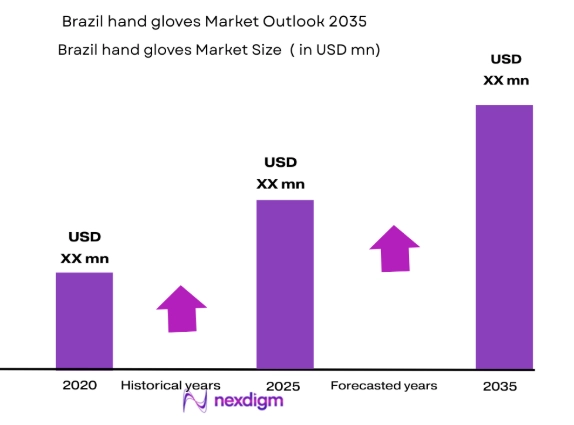
The Brazil hand gloves market is valued at approximately USD ~ million and is forecasted to grow at a CAGR of 8.8% through 2030. The market is driven by disposable medical glove demand, industrial hand protection, PPE compliance and hygiene-led usage across healthcare, manufacturing, construction, chemicals and food processing. Brazil’s industrial output increased by 3.1 after a marginal 0.1 movement in the prior annual period, supporting recurring glove replacement demand.
São Paulo, Rio de Janeiro, Minas Gerais, Paraná, Rio Grande do Sul and Bahia dominate the Brazil hand gloves market due to hospital density, industrial clusters, port-linked distribution and strong procurement activity. Brazil has 7,309 hospitals, 500,253 hospital beds, 575,930 physicians, 402,000 dentists and 93,174 drugstores, creating strong medical glove consumption. These states also have large manufacturing, construction, logistics, food processing and mining-linked demand bases.
Market Segmentation
By Product Type
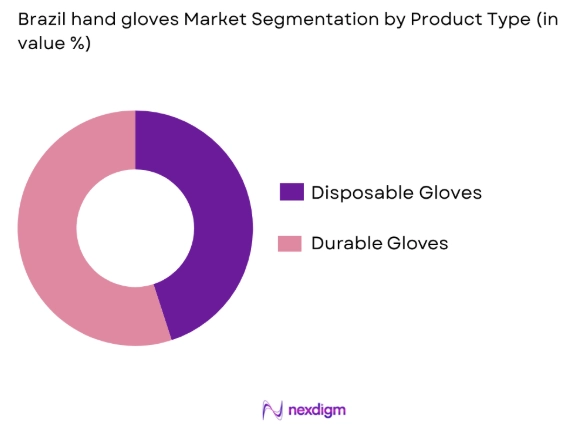
The Brazil hand gloves market is segmented by product type into durable gloves and disposable gloves. Recently, durable gloves have a dominant market share in Brazil under the segmentation product type, due to recurring demand from manufacturing, construction, mining, oil and gas, automotive workshops, utilities and chemical handling. Durable hand protection is central to workplace safety because gloves must protect workers from cuts, abrasions, heat, chemicals and punctures in industrial environments. Brazil’s NR-6 framework requires PPE used or sold in the country to carry a Certificate of Approval, which reinforces demand for certified durable gloves in formal industrial procurement. Disposable gloves remain important in hospitals, clinics, laboratories, dentistry, food handling and cleaning, but durable gloves lead because industrial use cases require higher-value products, technical specifications and replacement across large employer sites.
By Material Type
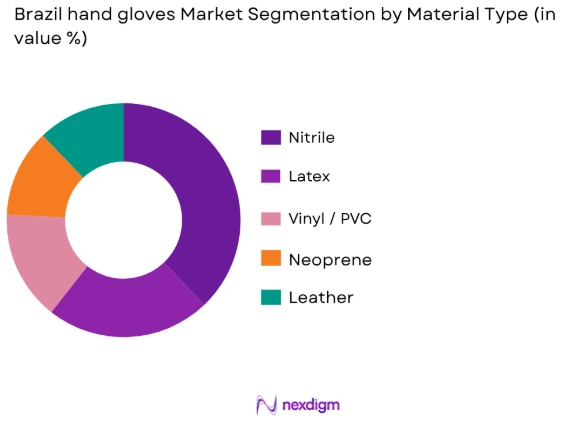
The Brazil hand gloves market is segmented by material type into nitrile, latex, vinyl / PVC, leather, neoprene and HPPE / aramid blended gloves. Recently, nitrile gloves have a dominant market share in Brazil under the segmentation material type, due to their broad application across healthcare, industrial safety, laboratories, chemicals, food handling and cleaning. Nitrile provides puncture resistance, chemical resistance and latex-free suitability, making it useful for both disposable examination gloves and reusable industrial safety gloves. Its position is strengthened by growing allergy concerns around latex and rising demand for gloves that can serve higher-risk handling environments. Latex remains relevant in surgical, examination and household applications because of elasticity and tactile sensitivity, while vinyl serves low-risk and price-sensitive users. Leather and HPPE-based gloves remain concentrated in industrial safety, construction and cut-resistant applications.
Competitive Landscape
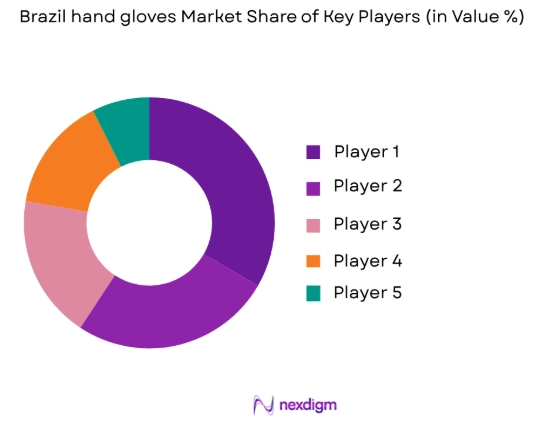
The Brazil hand gloves market is moderately fragmented, with multinational PPE companies, global disposable glove exporters and local safety-equipment suppliers competing across healthcare, industrial, food service and household channels. Ansell, 3M, Honeywell, Top Glove and Danny EPI are key players, with global firms competing through technical product portfolios and local players competing through CA-certified PPE distribution and industrial customer access.
| Company Name | Establishment Year | Headquarters | Product Range | Technology / Material Strength | Certification Focus | Key End Users | Distribution Channels | Brazil Positioning |
| Ansell | 1905 | Australia | Medical and industrial gloves | ~ | ~ | ~ | ~ | ~ |
| 3M | 1902 | USA | PPE and workplace safety products | ~ | ~ | ~ | ~ | ~ |
| Honeywell Safety Products | 1906 | USA | Industrial safety gloves | ~ | ~ | ~ | ~ | ~ |
| Top Glove | 1991 | Malaysia | Disposable medical and industrial gloves | ~ | ~ | ~ | ~ | |
| Danny EPI | 1987 | Brazil | Industrial PPE gloves | ~ | ~ | ~ | ~ |
Brazil Hand Gloves Market Analysis
Growth Drivers
NR-6 Compliance
Brazil’s NR-6 regulation requires employers to provide appropriate personal protective equipment, including certified hand gloves, wherever workplace risks cannot be fully eliminated through engineering or administrative controls. This makes gloves a recurring compliance-driven purchase for sectors such as construction, manufacturing, logistics, mining, chemicals and oil and gas. Employers prefer CA-certified gloves to avoid regulatory exposure, workplace penalties and liability from occupational injuries. The regulation supports demand for cut-resistant, chemical-resistant, thermal, abrasion-resistant and general-purpose safety gloves. As formal companies strengthen safety audits and procurement documentation, NR-6 compliance continues to drive organized demand.
Hospital Infection Control
Hospital infection control is a major driver for disposable examination and surgical gloves in Brazil. Hospitals, diagnostic laboratories, dental clinics and outpatient centers use gloves continuously to reduce contamination risk during patient care, sample handling, procedures and cleaning. Glove consumption is recurring because products are single-use and required across multiple departments, including emergency care, surgery, pathology, intensive care and dentistry. Demand is also supported by the shift toward powder-free, nitrile and latex-free gloves to reduce allergy risks and improve hygiene standards. Private hospitals and large healthcare groups increasingly prioritize reliable supply, consistent quality and regulatory documentation.
Challenges
Import Price Volatility
Brazil’s glove market remains exposed to import price volatility because many disposable gloves and specialty industrial gloves depend on imported raw materials or finished products. Changes in freight rates, exchange rates, rubber prices, nitrile input costs and supplier pricing can directly affect landed costs. This creates uncertainty for distributors, hospital buyers and industrial procurement teams that operate under annual contracts or tender-based pricing. Smaller distributors face margin pressure when costs rise faster than contract prices. Import volatility also affects inventory planning, as buyers may overstock during shortages or delay purchases when prices decline.
Latex Allergy Concerns
Latex allergy remains a challenge for glove suppliers and healthcare users because natural rubber latex can cause skin irritation or allergic reactions among workers and patients. This has pushed hospitals, laboratories, food handlers and cleaning service providers toward nitrile and vinyl alternatives. However, latex gloves remain widely used because of their elasticity, tactile sensitivity and lower cost in several applications. Buyers must balance comfort, performance, allergy risk and procurement budgets. Suppliers with heavy latex portfolios may face substitution pressure, while institutions increasingly require latex-free options in tenders and internal safety policies.
Opportunities
Domestic Nitrile Glove Manufacturing
Domestic nitrile glove manufacturing represents a major opportunity for Brazil because the market relies heavily on imported disposable and technical gloves. Local production could reduce exposure to currency volatility, freight disruption and international supply shortages. Nitrile gloves are increasingly preferred in healthcare, laboratories, food processing, automotive, chemicals and cleaning due to puncture resistance, chemical resistance and latex-free usage. A domestic manufacturing base would also allow faster delivery, customized specifications and stronger participation in public and private institutional procurement. Investors could benefit from import substitution and growing demand for certified nitrile gloves.
B2B E-Commerce
B2B e-commerce is an important opportunity in Brazil’s hand gloves market as small hospitals, clinics, workshops, construction contractors, food-service operators and cleaning companies increasingly purchase PPE online. Digital platforms allow buyers to compare glove materials, certifications, pack sizes, prices and delivery timelines more efficiently than traditional distributor-led procurement. Suppliers can use online channels to display CA certificates, ANVISA documentation, technical datasheets and bulk pricing, improving buyer confidence. E-commerce also expands access beyond major urban centers, helping regional buyers source certified gloves without relying only on local distributors.
Future Outlook
The Brazil hand gloves market is expected to experience sustained growth over the next five years, supported by workplace safety compliance, healthcare usage, industrial activity and rising hygiene standards. Durable gloves will remain important in industrial applications, while disposable gloves will continue to benefit from hospitals, laboratories, food handling and cleaning services.
Major Players
- Ansell
- 3M
- Honeywell Safety Products
- Supermax
- Hartalega
- Top Glove
- Kossan Rubber Industries
- Semperit
- MAPA Professional
- Showa Group
- Danny EPI
- Volk do Brasil
- Kalipso
- Carbografite
- Luvas Lemgruber / Targa
Key Target Audience
- PPE Manufacturers and Importers
- Medical Glove Manufacturers and Distributors
- Industrial Safety Equipment Distributors
- Hospital Procurement Departments and Healthcare Groups
- Food Processing and Food Service Companies
- Oil, Gas, Mining, Construction and Manufacturing Companies
- Investments and Venture Capitalist Firms
- Government and Regulatory Bodies
Research Methodology
Step 1: Identification of Key Variables
The first step involves identifying key variables impacting the Brazil hand gloves market, including product type, material type, end-user industry, certification requirements, import reliance and distribution structure. This is supported through desk research, regulatory review and category-level market mapping.
Step 2: Market Analysis and Construction
This phase involves collecting and analyzing market data related to durable gloves, disposable gloves, nitrile gloves, latex gloves and industrial safety gloves. The analysis focuses on revenue, demand concentration, procurement behavior, healthcare usage and workplace safety compliance to construct the market model.
Step 3: Hypothesis Validation and Expert Consultation
The market hypotheses are validated through interviews with PPE distributors, medical consumable suppliers, hospital procurement teams, industrial safety managers and importers. These consultations help refine assumptions related to material preference, replacement frequency, certification barriers and distributor margins.
Step 4: Research Synthesis and Final Output
The final output synthesizes secondary research, regulatory inputs, market sizing references and expert validation. The study aligns top-down category sizing with bottom-up demand indicators across healthcare, manufacturing, construction, mining, oil and gas, food processing and cleaning services.

- Executive Summary
- Research Methodology (Market Definitions and Assumptions, Abbreviations, Top-Down and Bottom-Up Sizing Approach, Import-Export Mapping, CAEPI Certification Mapping, ANVISA Medical Glove Validation, Primary Interviews with Distributors and End Users, Secondary Data Validation, Forecasting Models, Limitations and Sensitivity Analysis)

- Definition and Scope
- Industry Genesis and Evolution
- Demand-Supply Ecosystem
- Import Dependency and Domestic Manufacturing Base
- Regulatory and Certification Landscape
- Distribution and After-Sales Ecosystem

- Growth Drivers
NR-6 Compliance
Hospital Infection Control
Industrial Safety Enforcement
Food Hygiene Standards
Construction and Mining Activity
Nitrile Adoption - Challenges
Import Price Volatility
Latex Allergy Concerns
Counterfeit CA Products
Certification Delays
Low-Cost Asian Imports
Distributor Margin Pressure - Opportunities
Domestic Nitrile Glove Manufacturing
Private Hospital Procurement
B2B E-Commerce
Cut-Resistant Gloves for Industry
Sustainable and Powder-Free Gloves
Contract Supply for Large Employers - Trends
Shift from Latex to Nitrile
Powder-Free Medical Gloves
Ergonomic Coated Industrial Gloves
Digital PPE Procurement
Reusable High-Dexterity Gloves
Biodegradable Packaging - Government Regulations and Standards
- SWOT Analysis
- Porter’s Five Forces
- Stakeholder Ecosystem

- By Value, 2020-2025
- By Volume, 2020-2025
- By Average Selling Price, 2020-2025
- By Domestic Production and Imports, 2020-2025
- By End-Use Consumption, 2020-2025

- By Product Type (In Value %)
Disposable Examination Gloves
Surgical Gloves
Industrial Safety Gloves
Chemical-Resistant Gloves
Cut-Resistant Gloves
Thermal and Welding Gloves
Household and Cleaning Gloves - By Material (In Value %)
Latex
Nitrile
Vinyl / PVC
Neoprene
Leather
HPPE / Aramid / Kevlar Blend
Cotton / Fabric Coated - By End-User Industry (In Value %)
Healthcare and Hospitals
Dental and Diagnostic Clinics
Food Processing and Food Service
Construction and Infrastructure
Oil, Gas and Petrochemicals
Mining and Metals
Manufacturing and Automotive
Household and Janitorial Use - By Distribution Channel (In Value %)
Industrial PPE Distributors
Medical and Hospital Supply Distributors
Modern Retail and Hardware Stores
Pharmacies and Drugstores
Online B2B Marketplaces
Direct Institutional Procurement - By Price Tier (In Value %)
Premium Certified Gloves
Mid-Tier Branded Gloves
Economy Imported Gloves
Bulk Institutional Procurement Gloves - By Certification Type (In Value %)
NR-6 / CA Approved PPE Gloves
ANVISA Registered Medical Gloves
INMETRO / SBAC Certified Gloves
Non-Certified General-Purpose Gloves

- Market Share by Value and Volume
- Market Share by Product Category
- Cross Comparison Parameters(CA Certificate Portfolio, ANVISA Registered SKUs, Material Specialization, Import vs Domestic Supply Mix, Distributor Coverage Across Brazilian States, Institutional Tender Participation, Industrial Risk Category Coverage, Average Replacement Cycle)
- SWOT Analysis of Major Players
- Pricing Benchmark Analysis by SKU, Material, Certification and Pack Size
- Detailed Profiles of Major Companies
Ansell
3M
Honeywell Safety Products
Supermax
Hartalega
Top Glove
Kossan Rubber Industries
Semperit
MAPA Professional
Showa Group
Danny EPI
Volk do Brasil
Kalipso
Carbografite
Luvas Lemgruber / Targa

- Healthcare Procurement Behavior
- Industrial Buyer Analysis
- Food Service and Processing Demand
- Construction and Mining Demand
- Household Consumer Demand
- Pain Point Analysis

- By Value, 2026-2035
- By Volume, 2026-2035
- By Average Selling Price, 2026-2035
- By Domestic Production and Imports, 2026-2035
- By End-Use Consumption, 2026-2035


 Request a Sample
 Ask for Customization
 Get a Quote
 Enquire Now