
 Download PDF
Market Overview
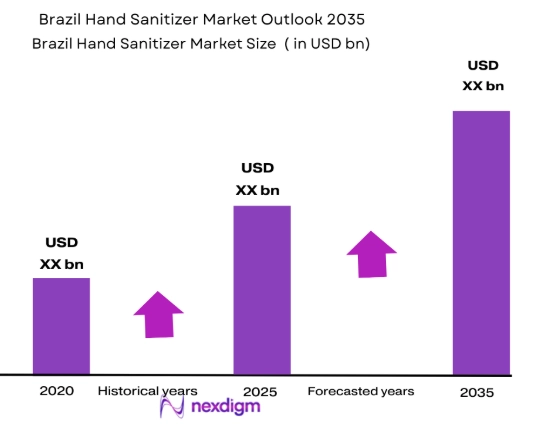
The Brazil hand sanitizer market is valued at USD ~ billion. The growth of the market is attributed to the heightened focus on hygiene practices, particularly post-pandemic. A surge in consumer awareness about health and safety, coupled with the enforcement of hygiene protocols in both corporate and healthcare sectors, has propelled the demand for hand sanitizers. Brands are innovating in product offerings with antimicrobial and moisturizing features, further driving the market.
Brazil’s major cities, particularly São Paulo, Rio de Janeiro, and Brasília, dominate the hand sanitizer market due to their large populations, high urbanization rates, and significant economic activity. These cities house the majority of the population and contribute to a significant share of national consumption. São Paulo, being the financial hub, has a higher concentration of corporate offices and healthcare facilities, pushing demand for hand sanitizers in the commercial and healthcare sectors. Moreover, government health initiatives and an established retail presence boost demand in these regions.
Market Segmentation
By Product Type
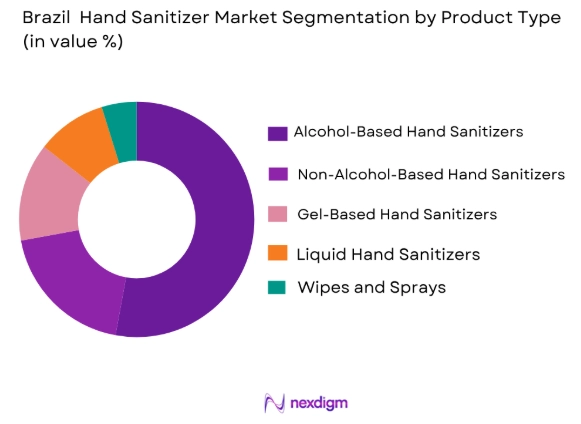
The Brazil hand sanitizer market is segmented by product type into alcohol-based sanitizers, non-alcohol-based sanitizers, gel-based sanitizers, liquid sanitizers, and wipes. Among these, alcohol-based sanitizers dominate the market. The prevalence of alcohol-based sanitizers is primarily due to their high efficacy in killing germs and viruses, which became increasingly important during the COVID-19 pandemic. Additionally, their widespread availability across both physical stores and e-commerce platforms has further boosted their popularity. Alcohol-based hand sanitizers are preferred by consumers due to their quick drying feature and high antiseptic properties, making them a go-to choice for personal and corporate hygiene practices.
By Distribution Channel
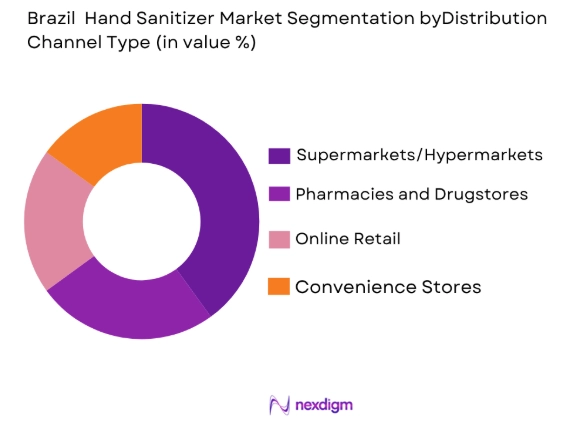
The distribution channel segment in the Brazil hand sanitizer market includes supermarkets/hypermarkets, pharmacies and drugstores, online retail, convenience stores, and direct sales. Among these, supermarkets/hypermarkets have the largest market share. The dominance of this segment can be attributed to the wide footfall in these retail outlets, which serve as one-stop shops for daily necessities. During the pandemic, consumers increasingly turned to large retail chains for hygiene products due to their accessibility and variety. Additionally, promotional offers and easy access to hand sanitizers in these stores have helped them maintain a leading position in the market.
Competitive Landscape
The Brazil hand sanitizer market is competitive, with both global and local brands vying for market share. Major players include Procter & Gamble, Henkel Brasil, Kimberly-Clark, Gojo Industries, and Nivea Brasil. These companies have established a strong presence by ensuring consistent product quality, extensive distribution networks, and innovative marketing strategies. Local brands like Natura &Co and Biolab Sanus also play an important role in the market, with their focus on organic and natural product offerings, appealing to the growing demand for eco-friendly and skin-friendly options.
| Company | Establishment Year | Headquarters | Sales Volume | Revenue | Product Range | Distribution Network | Compliance Track Record | Digital Presence | Innovation |
| Procter & Gamble Brasil | 1930 | São Paulo | ~ | ~ | ~ | ~ | ~ | ~ | ~ |
| Henkel Brasil | 1934 | São Paulo | ~ | ~ | ~ | ~ | ~ | ~ | ~ |
| Kimberly-Clark Brasil | 1971 | São Paulo | ~ | ~ | ~ | ~ | ~ | ~ | ~ |
| Gojo Industries, Inc. | 1946 | Ohio, USA | ~ | ~ | ~ | ~ | ~ | ~ | ~ |
| Nivea Brasil | 1900 | São Paulo | ~ | ~ | ~ | ~ | ~ | ~ | ~ |
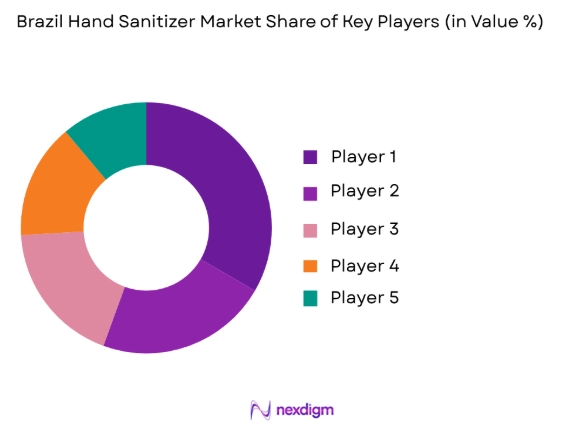
Brazil Hand Sanitizer Market Analysis
Growth Drivers
Awareness of Hygiene and Health Practices
The growing awareness of hygiene practices in Brazil has significantly impacted the demand for hand sanitizers. In 2022, Brazil’s health expenditures amounted to approximately USD 90 billion, showing a consistent upward trend in healthcare spending. The global pandemic catalyzed a cultural shift, where hygiene became an integral part of daily life. The World Bank reported a notable rise in public health campaigns, contributing to this shift in behavior. Brazil’s government and health authorities have also been proactive in promoting hygiene standards, strengthening the demand for sanitizing products, including hand sanitizers.
Regulatory Support and Public Health Initiatives
Regulatory measures by ANVISA (Brazil’s National Health Surveillance Agency) have driven the growth of hand sanitizer consumption. ANVISA introduced strict regulations for hand sanitizer formulations in 2022, ensuring that only approved sanitizers are sold in the market. In addition, the Brazilian government allocated funds to public health initiatives in 2023, including hygiene and sanitation projects, which directly supported increased hand sanitizer usage. Such regulatory frameworks not only assure product quality but also build consumer trust, which is crucial for market expansion.
Market Challenges
High Production Costs
The production costs of hand sanitizers in Brazil are elevated due to the prices of raw materials such as isopropyl alcohol and glycerin. In 2023, Brazil experienced a 15% increase in the price of these key materials, driven by inflationary pressures and global supply chain disruptions. Additionally, the devaluation of the Brazilian Real against the US Dollar in recent years has increased the import costs of these raw materials. This price volatility creates challenges for local manufacturers and can affect the final retail price of sanitizers, impacting consumer affordability.
Competition with Traditional Cleaning Products
The Brazilian market faces stiff competition from traditional cleaning products, such as soap and detergents. According to a 2023 report by the Brazilian Institute of Geography and Statistics (IBGE), soap consumption in Brazil remains high, with over 70% of households using it as the primary product for hand washing. The entrenched habits of using soap and water, combined with its lower cost, pose a challenge for hand sanitizers, which are often perceived as less necessary compared to these established products.
Opportunities
Growing Demand in Industrial & Corporate Sectors
There is a significant rise in demand for hand sanitizers within Brazil’s industrial and corporate sectors. In 2022, Brazil’s industrial production saw a 2.7% increase in output, with many sectors such as manufacturing and logistics ramping up hygiene measures post-pandemic. With companies now prioritizing employee health and sanitation, many corporations have adopted the use of hand sanitizers in workplaces, particularly in high-traffic areas. This shift, paired with government mandates for workplace hygiene, offers substantial growth opportunities in this sector.
Product Innovation (Fragrance, Packaging, Eco-friendly Options)
Product innovation has become a major driver in the Brazil hand sanitizer market. Consumers are increasingly seeking hand sanitizers with added features, such as moisturizing properties, pleasant fragrances, and eco-friendly packaging. The Brazilian market is seeing a shift toward products with biodegradable packaging, catering to environmentally conscious consumers. In 2023, a survey by Brazil’s Ministry of Environment indicated that nearly 30% of consumers are willing to pay a premium for eco-friendly products. This demand for sustainable and unique product features is expected to continue driving growth in the hand sanitizer market.
Future Outlook
Over the next five years, the Brazil hand sanitizer market is expected to grow significantly due to continued awareness regarding hygiene practices and rising demand from the corporate and healthcare sectors. As consumers prioritize health and safety, demand for hand sanitizers will remain high. Furthermore, technological advancements in product formulation, such as the development of alcohol-free sanitizers with moisturizing properties, are expected to drive innovation. Retail and e-commerce channels will continue to expand, making hand sanitizers more accessible to the broader population.
Major Players
- Procter & Gamble Brasil
- Henkel Brasil
- Kimberly-Clark Brasil
- Gojo Industries, Inc.
- Nivea Brasil
- Amway Brasil
- Natura & Co
- Biolab Sanus Farmacêutica
- Reckitt Benckiser
- Johnson & Johnson Brasil
- L’Oréal Brasil
- Avon Products, Inc.
- Unilever Brasil
- Hypermarcas
- GlaxoSmithKline Brasil
Key Target Audience
- Investors and Venture Capitalist Firms
- Government and Regulatory Bodies (National Health Surveillance Agency – ANVISA, Ministry of Health – Brazil)
- Healthcare and Hospital Facilities
- Corporate Offices and Institutions
- Retailers (Supermarkets, Pharmacies, and Drugstores)
- Online Retailers and E-commerce Platforms
- Distributors and Wholesalers
- Manufacturers of Hygiene and Sanitization Products
Research Methodology
Step 1: Identification of Key Variables
The first step involves identifying and defining the key market variables that influence the hand sanitizer market in Brazil. This includes understanding the regulatory environment, consumer behavior, and purchasing patterns. We gather data from secondary sources such as government publications, market reports, and industry analyses.
Step 2: Market Analysis and Construction
In this phase, we compile historical market data to evaluate past performance and construct market size estimates. This includes assessing production volume, revenue growth, and trends in consumer demand. A detailed review of the product segmentation and distribution channels is conducted to build a comprehensive market model.
Step 3: Hypothesis Validation and Expert Consultation
The next step involves validating hypotheses through expert consultations and interviews with key stakeholders in the hand sanitizer market, including manufacturers, retailers, and health professionals. These discussions help refine our market data and gain deeper insights into current and future market trends.
Step 4: Research Synthesis and Final Output
In the final phase, we synthesize all collected data and insights to produce a detailed and accurate market analysis. This includes refining the market model based on expert feedback, analyzing regional differences, and making final adjustments to ensure a comprehensive and reliable market forecast.

- Executive Summary
- Research Methodology (Market Definitions and Assumptions, Regulatory Framework Considerations Market Segmentation Criteria, Sales Channel Mapping Approach, Market Sizing via Sales Volume and Revenue, Primary Expert Interviews with Manufacturers/Retailers, Data Triangulation Using Industry Reports, Limitations and Forecasting Assumptions)

- Definition and Scope
- Evolution of Hand Sanitizer Market in Brazil
- Regulatory Landscape and Licensing Framework
- Market Ecosystem
- Value Chain Analysis
- Role of Sanitizer Manufacturers in Market Expansion
- Impact of COVID-19 on Hand Sanitizer Demand
- Trends in Consumer Behavior and Product Usage

- Growth Drivers
Awareness of Hygiene and Health Practices
Regulatory Support and Public Health Initiatives
Increased Demand from Healthcare Sector
Corporate Hygiene Protocols
Rise in Online Shopping and E-commerce - Market Challenges
High Production Costs
Price Sensitivity Among Consumers
Regulatory and Compliance Issues
Competition with Traditional Cleaning Products
Supply Chain and Raw Material Shortages - Opportunities
Growing Demand in Industrial & Corporate Sectors
Product Innovation (Fragrance, Packaging, Eco-friendly Options)
Rise in Consumer Health Awareness
Expansion in Regional Markets
Online and Direct-to-Consumer Sales Growth - Market Trends
Shift Toward Eco-friendly and Sustainable Products
Growth in Private Label and Store Brands
Development of Antibacterial and Moisturizing Formulations
Customization and Personalized Hand Sanitizer Products - Regulatory Framework
Compliance with ANVISA Guidelines
Market Access and Licensing Requirements
Import/Export Regulations - SWOT Analysis of Key Competitors
- Pricing & Procurement Analysis
- Porter’s Five Forces

- By Sales Volume, 2020–2025
- By Revenue, 2020–2025
- By Number of Brands, 2020–2025
- By Product Types, 2020–2025

- By Product Type (in Value %)
Alcohol-Based Hand Sanitizers
Non-Alcohol-Based Hand Sanitizers
Gel-Based Hand Sanitizers
Liquid Hand Sanitizers
Wipes and Sprays - By Distribution Channel (in Value %)
Supermarkets/Hypermarkets
Pharmacies and Drugstores
Online Retail
Convenience Stores
- By End-Use (in Value %)
Retail Consumers
Corporate & Office Use
Healthcare & Hospitals
Government & Educational Institutions
Industrial & Commercial Sectors - By Region (in Value %)
North Brazil
South Brazil
East Brazil
West Brazil
Central Brazil

- Market Share Analysis (By Revenue and Volume)
- Cross Comparison Parameters (Company Overview, Sales Volume, Revenue, Brand Portfolio, Geographic Presence, Distribution Network, Product Innovation, Marketing Strategy, Online Presence, Compliance Track Record)
- Competitive Strategies
- Pricing & Product Range Analysis
- Detailed Profiles of Major Companies
Procter & Gamble Brasil
Henkel Brasil
Kimberly-Clark Brasil
Unilever Brasil
Amway Brasil
Gojo Industries, Inc.
Nivea Brasil
L’Oréal Brasil
Avon Products, Inc.
Natura &Co
Biolab Sanus Farmacêutica

- Consumer Buying Behavior
- Trends in Healthcare and Hygiene Adoption
- Corporate and Institutional Buying Trends
- Decision-Making Process
- Pain Points and Expectations
- Product Preferences and Selection Criteria

- By Sales Volume, 2026–2035
- By Revenue, 2026–2035
- By Number of Brands, 2026–2035
- By Product Types, 2026–2035


 Request a Sample
 Ask for Customization
 Get a Quote
 Enquire Now