

 Download PDF
 Download PDF
Market Overview
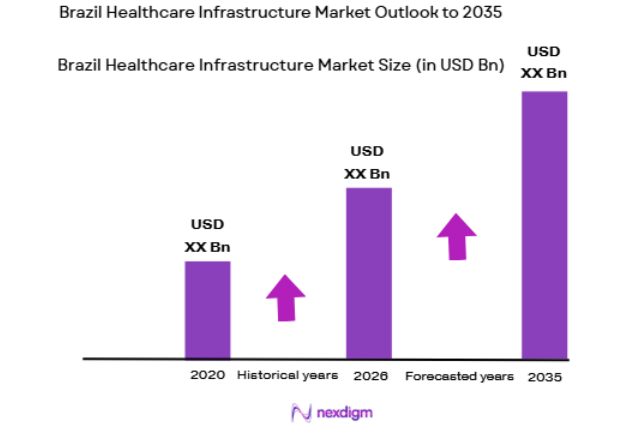
The healthcare infrastructure market in Brazil is valued at approximately USD ~ billion based on a recent historical assessment. This market is driven by the increasing demand for healthcare services, spurred by an aging population and the rise in chronic diseases. Additionally, the expansion of private healthcare providers, public-private partnerships, and government investments in healthcare infrastructure further support the market’s growth. The ongoing development of modern healthcare facilities and advanced medical technologies has strengthened Brazil’s position as a key player in the Latin American healthcare market.
Cities such as São Paulo, Rio de Janeiro, and Brasília dominate the healthcare infrastructure landscape in Brazil due to their large populations, economic significance, and robust healthcare facilities. These cities have seen significant investments in healthcare infrastructure, including hospitals, clinics, and diagnostic centers, making them key hubs for healthcare services. The growth of these urban centers has led to greater access to healthcare and improved medical care standards, further enhancing the overall healthcare system in Brazil. Additionally, the development of healthcare facilities in regional areas is expected to foster more equitable healthcare access across the country.
Market Segmentation
By Product Type
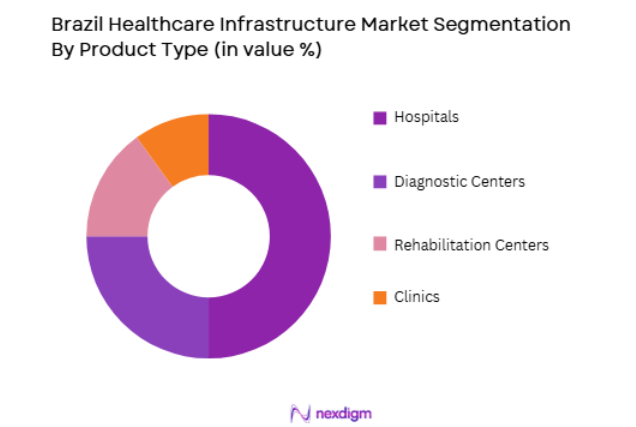
Brazil’s healthcare infrastructure market is segmented by product type into hospitals, diagnostic centers, rehabilitation centers, and clinics. Recently, hospitals have dominated the market share due to the growing demand for specialized and emergency medical services. Brazil’s large population, along with increasing rates of chronic diseases and complex medical conditions, has contributed to the rising demand for advanced hospitals. The availability of specialized treatments, cutting-edge medical technologies, and high-quality patient care has made hospitals a preferred healthcare facility type, further boosting this segment’s dominance. The expansion of private hospital networks, in addition to public healthcare providers, has played a crucial role in meeting this demand.
By Region
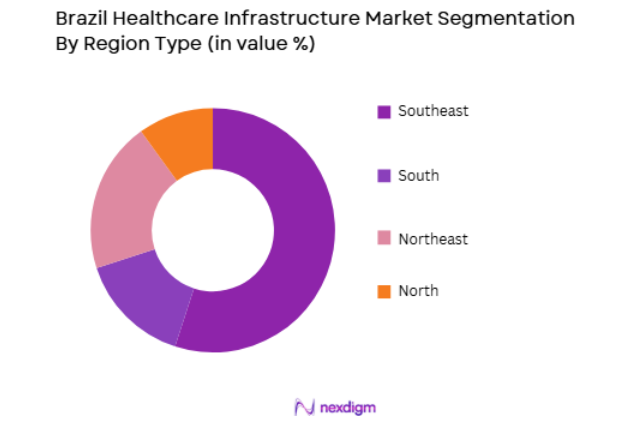
Brazil’s healthcare infrastructure market is segmented by region into Southeast, South, Northeast, and North. The Southeast region, including São Paulo and Rio de Janeiro, has a dominant market share due to its economic significance, high population density, and concentration of advanced healthcare facilities. The region houses a significant number of private hospitals, specialty clinics, and diagnostic centers, attracting both domestic and international patients. Furthermore, the Southeast benefits from stronger investments in healthcare infrastructure and technological advancements, ensuring a higher standard of medical care compared to other regions.
Competitive Landscape
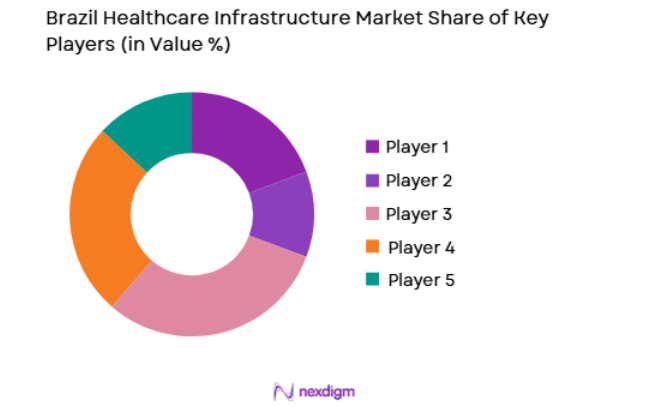
The competitive landscape of Brazil’s healthcare infrastructure market is highly fragmented, with a mix of public and private healthcare providers. While large multinational healthcare companies hold significant market influence, local players continue to thrive by catering to regional healthcare needs. The market is witnessing increasing consolidation, with major players acquiring smaller healthcare providers to expand their reach and service offerings. Private hospitals, clinics, and diagnostic centers are increasingly integrating cutting-edge technologies such as telemedicine, AI diagnostics, and electronic health records to improve healthcare delivery and patient outcomes.
| Company Name | Establishment Year | Headquarters | Technology Focus | Market Reach | Key Products | Revenue | Additional Parameter |
| DASA | 1961 | São Paulo, Brazil | ~ | ~ | ~ | ~ | ~ |
| Hospital Israelita Albert Einstein | 1951 | São Paulo, Brazil | ~ | ~ | ~ | ~ | ~ |
| Rede D’or São Luiz | 1977 | Rio de Janeiro, Brazil | ~ | ~ | ~ | ~ | ~ |
| Amil Healthcare | 1978 | Rio de Janeiro, Brazil | ~ | ~ | ~ | ~ | ~ |
| Hapvida | 1981 | Fortaleza, Brazil | ~ | ~ | ~ | ~ | ~ |
Brazil Healthcare Infrastructure Market Analysis
Growth Drivers
Government Investments in Healthcare
Government investments in Brazil’s healthcare infrastructure are a major growth driver for the market. The Brazilian government has consistently increased its funding for healthcare facilities, public hospitals, and healthcare technologies in an effort to meet the needs of a growing and aging population. Public-private partnerships have also played a key role in enhancing the quality of healthcare services in underserved regions. The expansion of Brazil’s Unified Health System (SUS) has further contributed to improving access to healthcare services for the population. In addition to government efforts, there has been a strong push to improve the country’s healthcare infrastructure to comply with international standards, making Brazil an attractive destination for healthcare investments.
Private Sector Expansion
The expansion of the private healthcare sector has also significantly contributed to the growth of Brazil’s healthcare infrastructure market. With the rise in demand for high-quality medical care, Brazil’s private healthcare providers are continuously expanding their service offerings. This includes the development of new hospitals, clinics, diagnostic centers, and rehabilitation facilities. The increasing availability of private healthcare services has helped address the gaps in the public healthcare system, providing more treatment options for the middle and upper-income population. The private sector is also driving innovation by adopting advanced medical technologies, which further strengthens the healthcare infrastructure market in Brazil.
Market Challenges
Regulatory and Compliance Issues
One of the significant challenges faced by Brazil’s healthcare infrastructure market is navigating the complex regulatory environment. Healthcare providers must comply with a wide range of regulations related to patient care, medical equipment, and healthcare delivery standards. These regulations can often vary by state, creating challenges for healthcare organizations operating across multiple regions. The need for compliance with stringent regulations, coupled with the ongoing changes in laws surrounding medical equipment and pharmaceuticals, requires constant adaptation from healthcare providers, which can be costly and time-consuming.
Regional Disparities in Healthcare Access
Brazil faces significant regional disparities in healthcare access, with some areas, particularly in the North and Northeast regions, suffering from inadequate healthcare infrastructure. Despite improvements in urban areas, rural and remote regions still face challenges in accessing quality healthcare services. These disparities contribute to uneven healthcare delivery, resulting in longer wait times, limited treatment options, and lower overall patient satisfaction. Bridging this gap requires targeted investments in healthcare facilities and infrastructure in underserved areas, which remains a challenge for the government and private sector.
Opportunities
Technological Advancements in Healthcare
Technological advancements in healthcare present a significant opportunity for Brazil’s healthcare infrastructure market. The growing adoption of telemedicine, electronic health records (EHR), AI-powered diagnostics, and robotic surgery is transforming healthcare delivery in Brazil. As healthcare providers look to improve efficiency, accuracy, and patient outcomes, the demand for high-tech healthcare solutions continues to rise. Brazil’s healthcare market is increasingly integrating these technologies into its infrastructure, leading to better medical services and more streamlined operations. This trend is expected to create new growth opportunities for both local and international companies in Brazil’s healthcare infrastructure sector.
Expansion of Medical Tourism
The expansion of medical tourism offers a significant opportunity for Brazil’s healthcare infrastructure market. As Brazil continues to improve the quality and accessibility of its healthcare services, it is positioning itself as a destination for international patients seeking high-quality, affordable medical treatments. The country’s competitive pricing, combined with advanced healthcare technologies and highly skilled medical professionals, has already attracted medical tourists, particularly from neighboring Latin American countries. By further developing its healthcare facilities, improving patient services, and promoting Brazil as a medical tourism destination, the country can significantly expand its healthcare infrastructure market.
Future Outlook
The future outlook for Brazil’s healthcare infrastructure market is promising, with continued growth expected in the coming years. The ongoing investment in healthcare facilities and technologies, both by the government and the private sector, will play a key role in improving access to high-quality medical care across the country. Technological innovations in telemedicine, AI, and robotic surgeries will continue to enhance healthcare delivery, making medical services more efficient and accessible. Additionally, Brazil’s expanding medical tourism sector will create new revenue streams, driving further growth in healthcare infrastructure development.
Major Players
- DASA
- Hospital Israelita Albert Einstein
- Rede D’or São Luiz
- Amil Healthcare
- Hapvida
- Grupo Fleury
- Unimed
- Hapvida Saúde
- Grupo Sabin
- São Camilo
- Hospital de Câncer de Barretos
- Clínica Alemana
- Hospital de Coraçāo
- São Paulo Medical Center
- A. C. Camargo Cancer Center
Key Target Audience
- Investments and venture capitalist firms
- Government and regulatory bodies
- Healthcare providers
- Hospitals and clinics
- Pharmaceutical companies
- Medical device manufacturers
- Insurance providers
- Medical research organizations
Research Methodology
Step 1: Identification of Key Variables
Key variables such as market size, growth drivers, segmentation factors, and key trends are identified through both primary and secondary research.
Step 2: Market Analysis and Construction
Comprehensive market data is gathered and analyzed using statistical models to build a detailed market forecast.
Step 3: Hypothesis Validation and Expert Consultation
Insights and assumptions are validated through consultations with industry experts, ensuring data reliability.
Step 4: Research Synthesis and Final Output
The final report synthesizes all collected data, providing a comprehensive analysis and clear insights into Brazil’s healthcare infrastructure market.

- Executive Summary
- Research Methodology (Definitions, Scope, Industry Assumptions, Market Sizing Approach, Primary & Secondary Research Framework, Data Collection & Verification Protocol, Analytic Models & Forecast Methodology, Limitations & Research Validity Checks)

- Market Definition and Scope
- Value Chain & Stakeholder Ecosystem
- Regulatory / Certification Landscape
- Sector Dynamics Affecting Demand

- Growth Drivers
Government Initiatives to Improve Healthcare Access
Technological Advancements in Healthcare Systems
Growing Investment in Healthcare Facilities - Market Challenges
Limited Access to Rural Healthcare
High Healthcare Infrastructure Costs
Regulatory and Compliance Barriers - Market Opportunities
Rising Demand for Telemedicine Solutions
Investment in Smart Healthcare Infrastructure
Expansion of Healthcare Insurance Programs - Trends
Increased Integration of AI in Healthcare
Digital Transformation of Healthcare Management - Government Regulations
- SWOT Analysis
- Porter’s Five Forces

- By Market Value, 2020-2025
- By Installed Units, 2020-2025
- By Average System Price, 2020-2025
- By System Complexity Tier, 2020-2025

- By System Type (In Value%)
Hospital Infrastructure
Primary Care Facilities
Outpatient Clinics
Specialized Healthcare Facilities
Emergency Medical Services - By Platform Type (In Value%)
Digital Health Platforms
Electronic Health Records (EHR) Platforms
Healthcare IT Solutions
Telemedicine Platforms
Hospital Management Systems - By Fitment Type (In Value%)
On-premise Solutions
Cloud-based Solutions
Hybrid Solutions
Integrated Solutions - By End User Segment (In Value%)
Public Healthcare Sector
Private Healthcare Sector
Healthcare Service Providers

- Market Share Analysis
- Cross Comparison Parameters (System Type, Platform Type, Procurement Channel, End User Segment, Fitment Type, Healthcare Technology Integration, Service Quality, Market Penetration, Compliance and Certification, Infrastructure Scalability)
- SWOT Analysis of Key Competitors
- Pricing & Procurement Analysis
- Key Players
DGLAB
Siemens Healthineers
GE Healthcare
Philips Healthcare
Medtronic
Roche Diagnostics
Honeywell Life Sciences
Johnson & Johnson Medical Devices
Elekta
Abbott Laboratories
Schneider Electric
Stryker Corporation
Becton Dickinson
Cognizant Healthcare
Fujifilm Medical Systems

- Public Healthcare Providers Adopting Modern Infrastructure
- Private Sector Expanding Healthcare Networks
- Healthcare Providers Focusing on Digital Integration
- Government Policy Shaping Healthcare Infrastructure

- Forecast Market Value, 2026-2035
- Forecast Installed Units, 2026-2035
- Price Forecast by System Tier, 2026-2035
- Future Demand by Platform, 2026-2035


 Request a Sample
 Ask for Customization
 Get a Quote
 Enquire Now