

 Download PDF
Market Overview
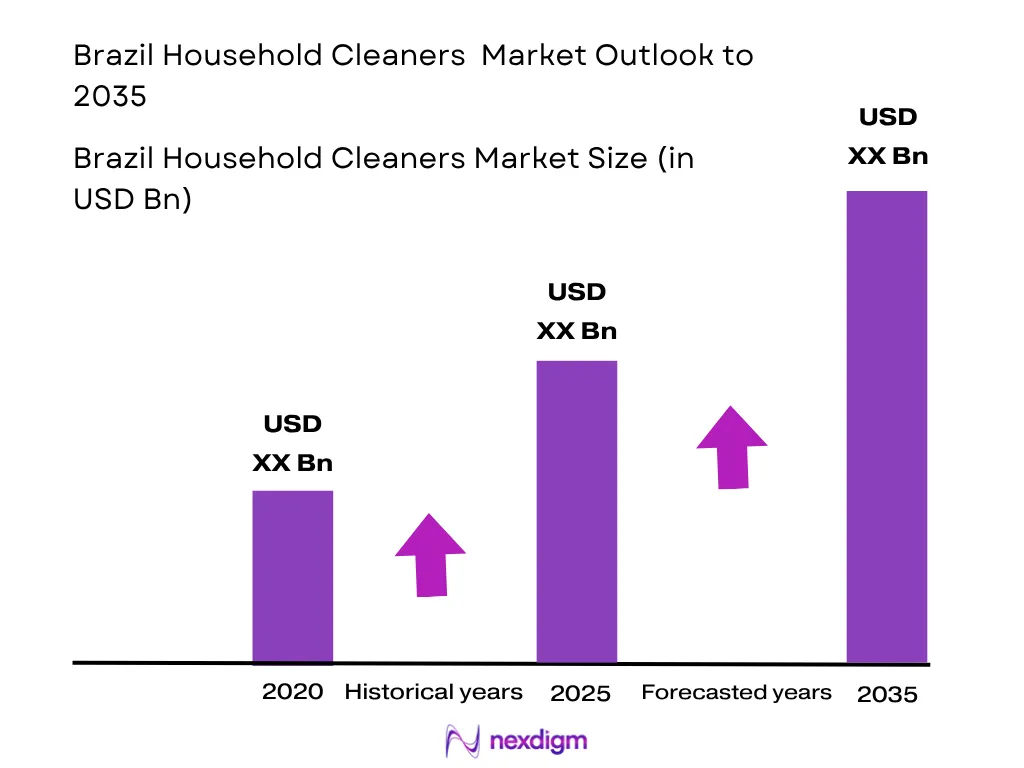
The Brazil household cleaners market is valued at approximately USD ~ billion. This market is driven by the rising demand for hygiene products and an increasing consumer awareness of cleanliness. The surge in cleaning habits, especially in urban households, is partially due to the COVID-19 pandemic’s impact, which intensified the need for disinfectants and general cleaning products. Factors like urbanization, a growing middle-class population, and changing consumer preferences toward eco-friendly products further drive the market. Furthermore, the retail distribution of household cleaners is expected to witness a robust growth trajectory in the coming years as supermarkets and e-commerce platforms increasingly cater to consumers’ needs.
Brazil’s household cleaners market is dominated by large urban areas such as São Paulo, Rio de Janeiro, and Brasília. These cities represent the highest consumer demand due to their dense populations, high-income groups, and modern retail infrastructures. São Paulo, in particular, stands as the economic hub with an extensive distribution network for both traditional and e-commerce channels. Additionally, regions such as the Southeast and South are also key drivers of the market, owing to their higher concentration of supermarkets, pharmacies, and retail outlets, along with rising disposable incomes and consumer demand for premium cleaning products.
Market Segmentation
By Product Type
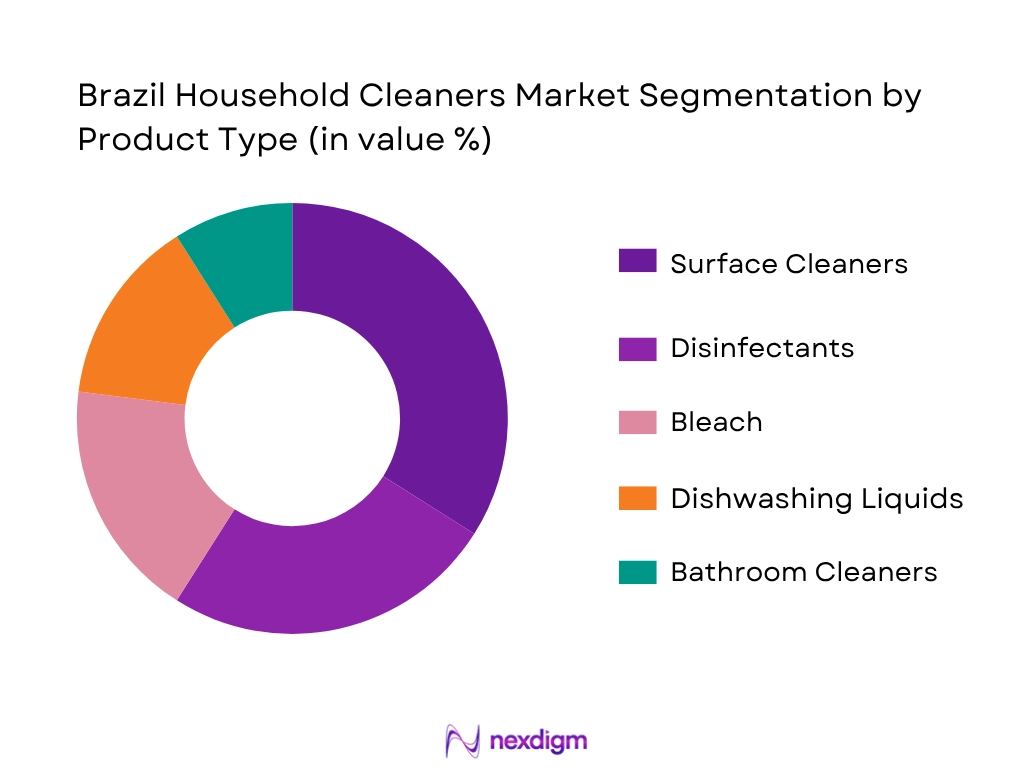
The Brazilian household cleaners market is segmented by product type into surface cleaners, disinfectants, bleach, dishwashing liquids, and bathroom cleaners. Among these, surface cleaners hold the dominant share, driven by their versatility and widespread use in Brazilian households. Surface cleaners, especially multi-surface products like those under brands such as Veja and Mr. Muscle, enjoy strong brand loyalty and recurring demand. With urbanization, consumers in Brazil are increasingly inclined toward convenient and multi-use products, which contribute significantly to the dominance of surface cleaners in the market. This segment is expected to remain dominant due to growing demand for products that combine efficiency and ease of use.
By Distribution Channel
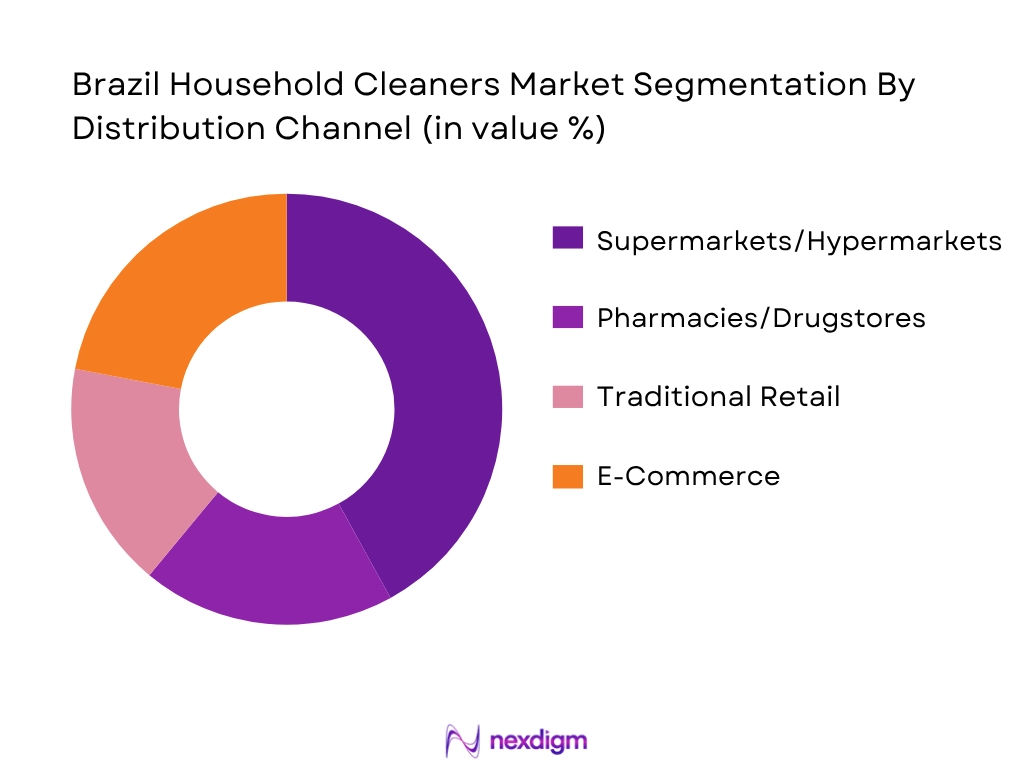
The Brazil household cleaners market is also segmented by distribution channel into supermarkets/hypermarkets, pharmacies/drugstores, traditional retail (including convenience stores), and e-commerce platforms. Supermarkets and hypermarkets dominate the market, accounting for the largest share due to their broad geographical reach and the convenience they offer to consumers. However, the share of e-commerce has been rapidly increasing, driven by the digital transformation in Brazil and the growth of online shopping. Consumers appreciate the ease of purchasing household cleaners online, especially with the rise of door-to-door delivery services. This is leading to a shift toward omnichannel retailing, where both traditional and e-commerce platforms are playing critical roles in expanding market reach.
Competitive Landscape
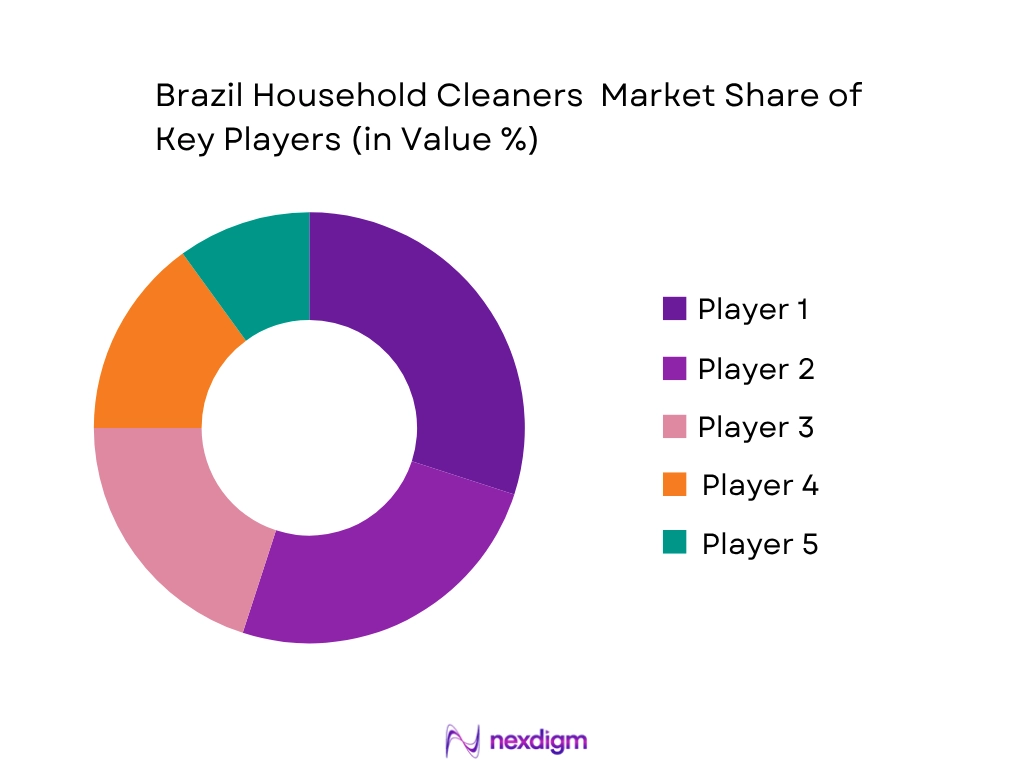
The Brazil household cleaners market is dominated by a few major players that hold significant market share. These include multinational companies such as Unilever, Procter & Gamble, and Reckitt Benckiser, alongside regional brands like Bombril and Flora. These companies leverage established distribution networks, strong brand recognition, and continuous innovation to maintain their dominance. The market’s competitive landscape highlights the importance of strong retail partnerships, innovation in product formulations, and increasing demand for eco-friendly and sustainable products.
| Company | Establishment Year | Headquarters | Product Portfolio | Manufacturing Footprint | Distribution Reach | R&D Investment | Market Position | Pricing Strategy | Sustainability Initiatives |
| Unilever | 1930 | São Paulo, Brazil | ~ | ~ | ~ | ~ | ~ | ~ | ~ |
| Procter & Gamble | 1939 | São Paulo, Brazil | ~ | ~ | ~ | ~ | ~ | ~ | ~ |
| Reckitt Benckiser | 1823 | São Paulo, Brazil | ~ | ~ | ~ | ~ | ~ | ~ | ~ |
| Bombril | 1948 | São Paulo, Brazil | ~ | ~ | ~ | ~ | ~ | ~ | ~ |
| Flora Produtos | 1962 | São Paulo, Brazil | ~ | ~ | ~ | ~ | ~ | ~ | ~ |
Brazil Household Cleaners Market Analysis
Growth Drivers
Urban Households
Brazil is undergoing rapid urbanization, with more people moving to cities and contributing to the growing demand for household cleaners. According to the World Bank, Brazil’s urban population is expected to reach approximately 88% by 2024, up from 85% in 2020. This urbanization trend is directly tied to the increase in household cleaning product consumption. Urban households have a higher propensity to purchase cleaning products regularly due to lifestyle changes, higher disposable incomes, and greater availability of retail options. These urban areas also tend to be more health-conscious, and cleaning is often seen as a key part of maintaining a hygienic living environment. In metropolitan areas like São Paulo, Rio de Janeiro, and Brasília, cleaning products are not only essential for everyday use but are also part of a growing trend toward premium, eco-friendly products. As Brazil’s urbanization continues, it is expected to positively influence the household cleaners market by creating more demand for cleaning solutions that cater to the needs of modern living spaces.
Hygiene Awareness
Increasing hygiene awareness in Brazil has also been a key growth driver in the household cleaners market. Public health campaigns, especially in the wake of the COVID-19 pandemic, have heightened the awareness of cleanliness and disinfection among the Brazilian population. According to the Ministry of Health, the demand for disinfectants and surface cleaners surged in 2023 due to the heightened focus on hygiene in both public and private spaces. In addition, the National Health Surveillance Agency (ANVISA) has been promoting greater regulatory oversight of cleaning and sanitizing products, further reinforcing their importance in everyday life. With an increasing focus on sanitation in schools, public transport, and healthcare settings, the demand for cleaning products is expected to maintain its upward trajectory. The Brazilian government has invested heavily in public health infrastructure, contributing to a stronger awareness of hygiene and cleanliness, which is expected to continue driving demand for household cleaners in urban and rural households alike.
Market Challenges
Inflation Sensitivity
Inflation sensitivity poses a challenge to the Brazilian household cleaners market, as consumer purchasing power becomes more constrained during periods of high inflation. Brazil’s inflation rate is projected to remain high in 2024, with the Central Bank of Brazil forecasting an inflation rate of around 5.5%. This economic pressure leads to changes in consumer behavior, particularly in relation to household cleaning products, as consumers become more price-sensitive and prioritize essential items. Data from the Brazilian Institute of Geography and Statistics (IBGE) indicates that in recent years, Brazilian consumers have been shifting toward smaller, more affordable packaging to cope with rising costs. The increasing cost of raw materials, especially those used in cleaning products, exacerbates the impact of inflation. Brands that cater to the lower-income segments are especially affected, as households with tight budgets are often forced to reduce their spending on non-essential goods, including premium or luxury cleaning products. In this challenging economic environment, companies in the household cleaners market must adapt to ensure that their products remain accessible to a broad range of consumers, while also managing rising input costs.
Trade Spend Pressure
Trade spend pressure is another significant challenge in the Brazil household cleaners market, especially for multinational companies. With an increasingly competitive retail environment and the dominance of large retail chains like Carrefour, Walmart, and local chains such as Grupo Pão de Açúcar, brands are under pressure to allocate more resources to trade promotions and discounts to maintain shelf space. Data from the Brazilian Retail Confederation (CNDL) indicates that retail margins have been under constant pressure, particularly in the household cleaners segment. Retailers demand significant trade spend to secure prime positions on shelves, especially for household cleaning products, which are often subject to price competition. The pressure on companies to reduce prices while simultaneously increasing the promotional spend may impact profitability and product differentiation. As consumers increasingly turn to e-commerce platforms for purchasing household cleaners, companies must also navigate the complexities of digital marketing, where additional costs are associated with online promotions and logistics. These factors together present a challenge for household cleaners manufacturers, particularly as they face rising input costs and intensifying retail competition.
Opportunities
White Spaces
The Brazilian household cleaners market is experiencing significant opportunities in “white spaces,” particularly in regional markets that have historically been underserved. Areas such as the Northeast and North regions of Brazil, where urbanization is still catching up with major cities like São Paulo and Rio de Janeiro, are seeing a rise in demand for household cleaning products. According to the IBGE, these regions have experienced rapid population growth, which is expected to continue into 2024. The demand for cleaning products in these areas is spurred by improvements in infrastructure, higher disposable income, and greater consumer awareness of hygiene. In addition, these regions present a unique opportunity for both international and regional brands to penetrate local markets with tailored offerings that cater to local preferences and budgets. With more Brazilians from lower-income households moving into the middle class, there is a significant opportunity for brands to introduce affordable and practical cleaning solutions. Companies that can effectively tap into these emerging regional markets by offering localized products and engaging in region-specific marketing campaigns are well-positioned to capitalize on this growth.
Premiumization
Premiumization presents another growth opportunity in the Brazil household cleaners market, as more consumers are willing to spend on high-quality, eco-friendly, and specialty cleaning products. As Brazilian consumers become more environmentally conscious, there is a growing demand for cleaning products that offer natural ingredients and environmentally friendly packaging. A report from the Brazilian Association of Packaging (ABRE) suggests that consumers are increasingly opting for products that come in recyclable, biodegradable packaging or are advertised as “green” products. This premium trend is especially prevalent in urban households, where there is greater awareness of the environmental impact of cleaning products. Brands like Unilever’s “Seventh Generation” line and Reckitt Benckiser’s “Method” have seen success in Brazil by capitalizing on the growing demand for sustainable cleaning solutions. These premium products not only address the ecological concerns of Brazilian consumers but also provide additional value through longer-lasting effectiveness and innovative formulations. As the middle and upper-income classes continue to expand, premiumization in the household cleaners market will remain a key driver of growth.
Future Outlook
Over the next few years, the Brazil household cleaners market is expected to experience steady growth. The increasing focus on hygiene and cleanliness, particularly in urban households, will continue to drive demand for a variety of household cleaning products. The market will be further bolstered by the growing trend of eco-friendly products, driven by consumer demand for sustainability. Innovations in product formulations, including the use of natural ingredients and recyclable packaging, will provide opportunities for brands to differentiate themselves in an increasingly competitive market. E-commerce is also expected to play a key role in the future growth of the market, as more consumers turn to online platforms for convenience and wider product availability.
Major Players
- Unilever
- Procter & Gamble
- Reckitt Benckiser
- Bombril
- Flora Produtos de Higiene
- SC Johnson
- Colgate-Palmolive
- 3M Brasil
- Limppano
- Bettanin
- Start Química
- Girando Sol
- Amparo Química
- Ypê
- Noviça
Key Target Audience
- Manufacturers of Household Cleaning Products
- Investments and Venture Capitalist Firms
- Supermarket and Hypermarket Chains
- Pharmaceutical Retail Chains (Pharmacies/Drugstores)
- E-Commerce Platforms and Online Retailers
- Government Agencies (e.g., ANVISA, Ministry of Health)
- Regulatory Bodies (e.g., ABIPLA, IBAMA)
- Raw Material Suppliers (e.g., Chemical Manufacturers)
Research Methodology
Step 1: Identification of Key Variables
This step involves constructing an ecosystem map encompassing all major stakeholders in the Brazil household cleaners market. We conduct extensive desk research using secondary and proprietary data to gather insights on key market variables. The goal is to identify and define critical factors that influence market dynamics.
Step 2: Market Analysis and Construction
We compile and analyze historical market data focusing on sales volume, market share, consumer preferences, and brand distribution. This phase aims to provide a granular view of the market structure and trends.
Step 3: Hypothesis Validation and Expert Consultation
We engage industry experts through in-depth interviews (IDI) and telephone surveys (CATI). These consultations help validate the hypotheses formulated in the initial stages and provide additional insights into consumer behavior and company strategies.
Step 4: Research Synthesis and Final Output
In the final phase, we synthesize the data gathered from multiple sources, including primary and secondary research, to produce a comprehensive market analysis. The data is verified and corroborated through consultations with industry experts and stakeholders.

- Executive Summary
- Research Methodology (Market Definitions, Saneantes Classification, ANVISA Risk Class Mapping, Household Consumption Basket, SKU-Level Price Tracking, Primary Trade Interviews, Distributor Checks, Retail Shelf Audits, E-Commerce Scraping, Top-Down Demand Estimation, Bottom-Up SKU Build-Up, Data Triangulation, Assumptions and Limitations)

- Definition and Scope
- Overview Genesis
- Evolution of Household Hygiene and “Saneantes” Consumption
- Timeline of Major Players
- Business Cycle
- Supply Chain and Value Chain Analysis
- Brazil Retail Cleaning Basket Structure
- Category Role in Monthly Household Shopping Missions
- Regional Demand Clusters
- Channel Evolution Across Modern Trade, Atacarejo, Traditional Trade, and E-Commerce

- Growth Drivers (Urban Households, Hygiene Awareness, Atacarejo Expansion, Multipurpose Usage, Fragrance Premiumization)
- Market Challenges (Inflation Sensitivity, Trade Spend Pressure, Regulatory Claims, Informal Competition, Raw Material Volatility)
- Opportunities (Concentrated Formats, Digital Retail, Regional Value Brands, Channel Expansion, Refill Economics, Regional Penetration)
- Market Trends (Ingredient Transparency, Scent Premiumization, Concentrated Formats, Digital Retail, Regional Value Brands)
- Government Regulation (ANVISA Saneantes Rules, Risk Class, Labeling, Claims, Ingredient Restrictions)
- Supply Chain Analysis (Surfactants, Solvents, Fragrances, Plastic Packaging, Contract Manufacturing, Retail Distribution)
- Value Chain Margin Pool (Raw Material Suppliers, Formulators, Brand Owners, Distributors, Retailers, Marketplaces)
- Pricing Analysis (Price/Liter, Price/Kg, Promo Discount, Pack-Size Premium, Regional Price Index)
- Trade Promotion Analysis (Endcap Placement, Multipack Offers, Atacarejo Discounts, Digital Coupons, Seasonal Promotions)
- Import-Export and Local Production Analysis (Imported Actives, Domestic Formulation, Packaging Inputs, Finished Goods Trade)
- Consumer Decision Journey (Brand Recall, Fragrance, Efficacy, Price, Safety, Availability)
- SWOT Analysis (Scale Advantage, Regulatory Barriers, Regional Fragmentation, Eco-Format Opportunity)
- Porter’s Five Forces (Supplier Power, Retailer Power, Substitution Risk, Entry Barriers, Rivalry Intensity)
- PESTLE Analysis (Regulatory, Economic, Social, Technological, Legal, Environmental Drivers)
- Stakeholder Ecosystem (Manufacturers, ANVISA, ABIPLA, Retailers, Distributors, E-Commerce Platforms, Raw Material Suppliers)

- By Retail Sales Value (2020-2025)
- By Ex-Factory Value (2020-2025)
- By Volume (2020-2025)
- By Unit Sales (2020-2025)
- By Average Selling Price (2020-2025)
- By Household Penetration (2020-2025)
- By Per-Capita Consumption (2020-2025)

- By Product Type (In Value%)
Surface and Multipurpose Cleaners
Disinfectants and Sanitizers
Bleach and Chlorine-Based Cleaners
Dishwashing Cleaners
Bathroom and Toilet Cleaners
Kitchen Degreasers
Floor Cleaners and Polishes
Glass and Specialty Cleaners - By Formulation Type (In Value%)
Ready-to-Use Liquids
Concentrates and Dilutables
Trigger Sprays
Gels and Thickened Liquids
Powders and Abrasives
Wipes and Pre-Moistened Formats
Aerosol Cleaners
Tablets and Solid Concentrates - By Application Area (In Value%)
Kitchen Cleaning
Bathroom Cleaning
Floor Cleaning
Multi-Surface Cleaning
Toilet Cleaning
Glass and Mirror Cleaning
Laundry Area Cleaning
Pet-Area Cleaning - By Pack Type (In Value%)
PET Bottles
Trigger Spray Bottles
Refill Pouches
Economy Gallons
Sachets and Small Packs
Multi-Packs
Aerosol Cans
Buckets and Large Household Packs - By Distribution Channel (In Value%)
Supermarkets
Hypermarkets
Atacarejo/Cash-and-Carry
Traditional Grocery and Neighborhood Stores
Pharmacies and Drugstores
E-Commerce Marketplaces
Quick Commerce and Delivery Apps
Wholesale Distributors - By Price Tier (In Value%)
Economy
Mass
Value-Plus
Premium
Eco/Natural Premium
Professional-at-Home - By Consumer Cohort (In Value%)
Price-Sensitive Mass Households
Middle-Income Urban Families
Premium Urban Households
Child-Sensitive Households
Pet-Owning Households
Eco-Conscious Households
Heavy Cleaning Users
Online-First Households - By Region (In Value%)
Southeast
South
Northeast
Center-West
North

- Market Share of Major Players (Retail Value, Retail Volume, Product Category, Region, Channel)
- Cross Comparison Parameters (Household Cleaner Portfolio Breadth, ANVISA Saneantes Risk-Class Coverage, SKU Pack-Price Ladder, Surfactant and Active Ingredient Strategy, Fragrance Platform Strength, Atacarejo and Modern Trade Reach, Refill/Concentrate and Packaging Sustainability, Regional Manufacturing and Distribution Footprint)
- Competitive Benchmarking Matrix (Brand Recall, Product Efficacy, Price/Liter, Distribution Reach, Innovation Cadence, Promo Intensity, Private Label Exposure)
- Pricing Analysis by Major SKUs (Multiuso Bottle, Disinfectant Liter Pack, Bleach Pack, Dishwashing Liquid, Bathroom Spray, Refill Pouch)
- Channel Presence Mapping (Supermarkets, Atacarejo, Traditional Trade, Pharmacies, Marketplaces, Quick Commerce)
- Brand Positioning Map (Economy, Mass, Premium, Eco/Natural, Heavy-Duty, Fragrance-Led)
- Recent Developments (Product Launches, Packaging Changes, Retail Partnerships, Sustainability Claims, Capacity Expansion)
- SWOT Analysis of Major Players (Strength, Weakness, Opportunity, Threat by Company)
- Detailed Profiles of Major Companies
Química Amparo / Ypê
Unilever Brasil
Reckitt Brasil
Bombril
Flora Produtos de Higiene e Limpeza
SC Johnson Brasil
Procter & Gamble Brasil
Colgate-Palmolive Brasil
GTEX Brasil
AudaxCo
Start Química
Girando Sol
Limppano
Bettanin
3M do Brasil

- Household Demand and Utilization (Rooms Cleaned, Cleaning Frequency, Product Repertoire, Monthly Basket Size)
- Purchase Triggers (Odor Control, Visible Dirt, Disinfection Need, Stain Removal, Grease Removal, Guest Visits)
- Needs, Desires, and Pain Points (Efficacy, Price, Fragrance, Surface Safety, Child Safety, Pet Safety, Eco-Claims)
- Consumer Purchase Decision Process (Brand Trust, Price Promotions, Pack Size, Fragrance Testing, Retail Availability)
- Brand Loyalty and Switching Behavior (Promo Sensitivity, Private Label Trial, Regional Brand Adoption, Premium Trade-Up)
- Household Budget Allocation (Monthly Cleaning Spend, Bulk Purchase, Stock-Up Cycles, Small-Pack Dependence)
- Digital Consumer Behavior (Marketplace Reviews, Retailer App Discounts, Subscription Bundles, Search Terms)
- Unmet Needs Analysis (Refill Convenience, Low-Toxicity Products, Mold and Humidity Solutions, Multipurpose Convenience)

- By Retail Sales Value (2026-2035)
- By Ex-Factory Value (2026-2035)
- By Volume (2026-2035)
- By Unit Sales (2026-2035)
- By Average Selling Price (2026-2035)
- By Household Penetration (2026-2035)


 Request a Sample
 Ask for Customization
 Get a Quote
 Enquire Now