

 Download PDF
Market Overview
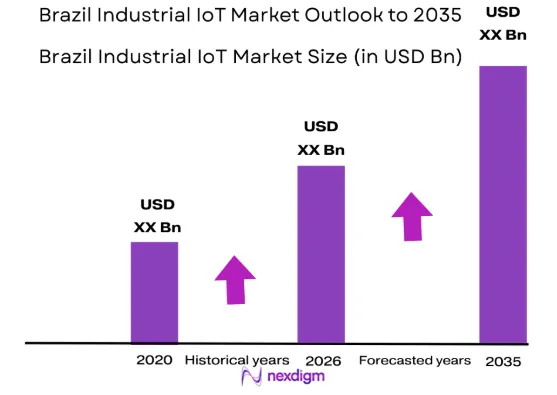
The Brazil Industrial IoT market is witnessing significant growth, driven by the increasing demand for automation, real-time data analytics, and improved operational efficiency across various industries. The market is supported by governmental initiatives, technological advancements, and the rise of Industry 4.0. In recent assessments, the market size has been calculated at USD ~ billion, reflecting the growing adoption of IoT solutions within sectors such as manufacturing, agriculture, and energy.
Brazil is leading the way in Industrial IoT adoption in Latin America, especially in urban areas like São Paulo and Rio de Janeiro, which have become hubs for industrial innovation. These regions benefit from advanced infrastructure, governmental support, and large-scale industrial operations. The focus on smart cities, energy management, and automation in industries is propelling the growth of Industrial IoT solutions in the country, making Brazil a key player in the Latin American market.
Market Segmentation
By System Type
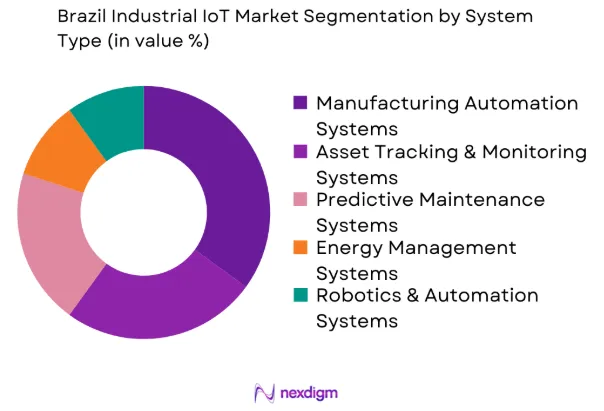
The Brazil Industrial IoT market is segmented by system type into Manufacturing Automation Systems, Asset Tracking & Monitoring Systems, Predictive Maintenance Systems, Energy Management Systems, and Robotics & Automation Systems. Recently, Manufacturing Automation Systems have dominated the market due to the increasing demand for process optimization and efficiency in manufacturing operations. These systems enable manufacturers to integrate IoT sensors, automation, and real-time data analytics to streamline production processes, reduce downtime, and improve overall system reliability.
By Platform Type
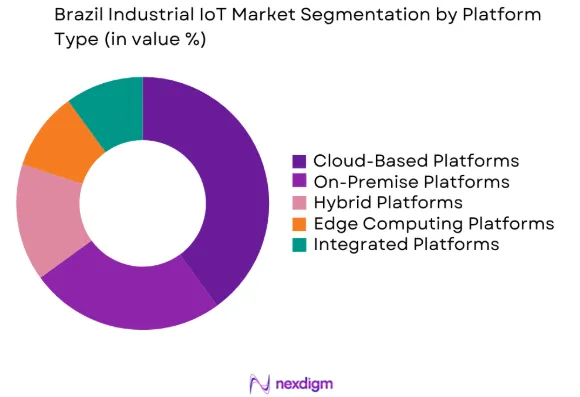
The Brazil Industrial IoT market is segmented by platform type into Cloud-Based Platforms, On-Premise Platforms, Hybrid Platforms, Edge Computing Platforms, and Integrated Platforms. Cloud-Based Platforms are currently dominating the market share due to their scalability, cost-effectiveness, and ease of integration with other business systems. These platforms allow businesses to store, analyze, and access large volumes of data remotely, providing greater flexibility and accessibility in managing IoT solutions across various industries.
Competitive Landscape
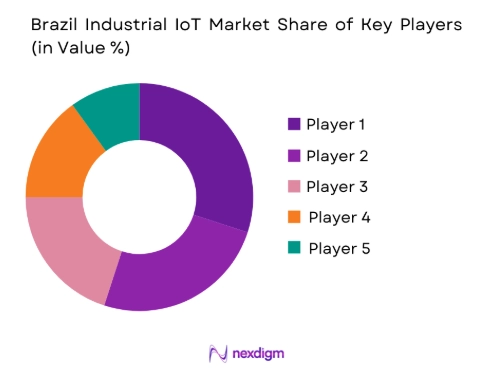
The competitive landscape in Brazil’s Industrial IoT market is characterized by both global and local players working to provide innovative solutions. The market is seeing consolidation as larger companies acquire smaller, niche players to expand their capabilities in edge computing, AI integration, and system automation. These companies are heavily investing in R&D and forming strategic partnerships to enhance their product offerings and stay competitive in the growing market.
| Company Name | Establishment Year | Headquarters | Technology Focus | Market Reach | Key Products | Revenue | Additional Parameter |
| Siemens | 1847 | Germany | ~ | ~ | ~ | ~ | ~ |
| GE Digital | 1892 | USA | ~ | ~ | ~ | ~ | ~ |
| Rockwell Automation | 1903 | USA | ~ | ~ | ~ | ~ | ~ |
| Schneider Electric | 1836 | France | ~ | ~ | ~ | ~ | ~ |
| Honeywell | 1906 | USA | ~ | ~ | ~ | ~ | ~ |
Brazil Industrial IoT Market Analysis
Growth Drivers
Technological Advancements in IoT
Technological advancements in the Internet of Things (IoT) are significantly driving the Brazil Industrial IoT market. The growing adoption of cloud-based platforms, predictive maintenance, and real-time data analytics is enhancing operational efficiency and reducing downtime across industries. IoT systems enable continuous monitoring of industrial assets, which is crucial for optimizing workflows and maintaining smooth operations, particularly in sectors like manufacturing, energy, and logistics. As businesses increasingly embrace digital transformation, the demand for IoT solutions is expected to rise. These technologies not only improve resource management but also offer insights that drive decision-making, further accelerating the growth of the Industrial IoT market in Brazil and reinforcing the country’s position in the digital transformation landscape.
Government Support for Industry 4.0
The Brazilian government’s active promotion of Industry 4.0 initiatives is another key growth driver for the Industrial IoT market. By focusing on smart manufacturing, automation, and digitalization, the government is providing incentives and subsidies to accelerate the adoption of IoT technologies across various sectors. These efforts are vital for boosting productivity and enhancing competitiveness in Brazil’s industrial sectors, including manufacturing, agriculture, and logistics. Government policies, infrastructure investments, and regulatory frameworks designed to support IoT adoption are creating a favorable environment for long-term growth in the market. With continued support for digital transformation, these initiatives will play a significant role in driving the expansion of the Industrial IoT market in Brazil.
Market Challenges
High Implementation Costs
A major challenge limiting the growth of Brazil’s Industrial IoT market is the high initial investment required for IoT system implementation. Small and medium-sized enterprises (SMEs) often struggle to justify the substantial costs involved, including expenses for hardware, software, and system integration. These high upfront costs make it difficult for SMEs to adopt IoT solutions, restricting the market’s potential in certain sectors. While long-term operational cost savings are expected, the significant capital investment needed for IoT adoption remains a barrier, especially in cost-sensitive industries. This challenge slows down the widespread implementation of IoT technologies, limiting growth opportunities for some businesses and hindering the overall market development in Brazil.
Cybersecurity Risks and Data Privacy
Cybersecurity risks and data privacy concerns present another significant challenge for the Brazil Industrial IoT market. As industrial systems become more interconnected, the potential for cyberattacks increases, exposing sensitive operational data to cybercriminals. These systems are prime targets for malicious activities, requiring businesses to invest heavily in cybersecurity measures to protect their networks and ensure compliance with privacy regulations. Securing industrial IoT systems is complex, as the rapid pace of technological advancements creates additional vulnerabilities. With the growing volume of connected devices, businesses must adopt robust security protocols to safeguard their operations, making cybersecurity management a critical challenge for organizations adopting IoT solutions in Brazil.
Opportunities
Smart Cities and Infrastructure Projects
A significant opportunity for Brazil’s Industrial IoT market is the development of smart cities and infrastructure projects. As urbanization grows and the demand for energy-efficient, sustainable urban planning increases, Brazil’s major cities are increasingly adopting IoT technologies to enhance infrastructure management, reduce energy consumption, and improve public safety. The use of smart sensors, real-time data analytics, and automated systems in urban infrastructure creates a substantial opportunity for IoT solution providers to contribute to the development of smart cities across the country. This shift towards smarter urban environments presents a long-term growth opportunity, driving the expansion of IoT solutions and contributing to the broader development of Brazil’s digital transformation.
Adoption of Artificial Intelligence (AI)
The integration of artificial intelligence (AI) in industrial IoT systems presents a major growth opportunity for Brazil. By combining AI with IoT solutions, businesses can utilize machine learning algorithms and predictive analytics to optimize operations, forecast failures, and automate processes. As AI technologies continue to advance, their synergy with IoT will transform industries by improving decision-making, boosting efficiency, and cutting costs. The adoption of AI in sectors like manufacturing, energy, and logistics is expected to drive increased demand for IoT solutions, creating substantial opportunities for market players in Brazil. This integration promises to enhance the capabilities of industrial IoT systems, supporting long-term market growth and innovation.
Future Outlook
The future outlook for the Brazil Industrial IoT market over the next five years is highly optimistic. The market is expected to continue expanding with strong growth driven by technological innovations, increased adoption of smart systems, and government initiatives to promote digital transformation. Advancements in 5G technology, AI integration, and the development of smart infrastructure are expected to drive new opportunities in various industries. Furthermore, the Brazilian government’s continued support for Industry 4.0 initiatives will play a pivotal role in sustaining the market’s growth trajectory, positioning Brazil as a leader in the Latin American Industrial IoT landscape.
Major Players
- Siemens
- GE Digital
- Rockwell Automation
- Schneider Electric
- Honeywell
- Cisco Systems
- Bosch Rexroth
- ABB Ltd.
- Emerson Electric
- Mitsubishi Electric
- HPE
- Microsoft
- SAP
- IBM
- Dell Technologies
Key Target Audience
- Investments and venture capitalist firms
- Government and regulatory bodies
- Industrial manufacturers
- Smart city developers
- Energy & utilities companies
- Logistics & transportation companies
- Agribusinesses
- IoT technology solution providers
Research Methodology
Step 1: Identification of Key Variables
Identifying key variables involves understanding the major factors driving the market, including technological advancements, industry demand, and economic conditions.
Step 2: Market Analysis and Construction
This step involves analyzing the collected data to construct a comprehensive market model, evaluating both current trends and future projections.
Step 3: Hypothesis Validation and Expert Consultation
Experts in industrial IoT technologies, government regulations, and market trends are consulted to validate the hypotheses formed during the initial analysis.
Step 4: Research Synthesis and Final Output
All research findings are synthesized to create a final market report, summarizing key insights and providing actionable recommendations for stakeholders.

- Executive Summary
- Research Methodology (Definitions, Scope, Industry Assumptions, Market Sizing Approach, Primary & Secondary Research Framework, Data Collection & Verification Protocol, Analytic Models & Forecast Methodology, Limitations & Research Validity Checks)

- Market Definition and Scope
- Value Chain & Stakeholder Ecosystem
- Regulatory / Certification Landscape
- Sector Dynamics Affecting Demand
- Strategic Initiatives & Infrastructure Growth

- Growth Drivers
Increased adoption of Industry 4.0
Rising demand for real-time data analytics
Government policies supporting smart industries - Market Challenges
High initial investment costs
Integration complexities with legacy systems
Cybersecurity threats and data privacy concerns - Market Opportunities
Expanding use of AI and machine learning in IoT
Partnerships between tech companies and industrial sectors
Growth in smart city and infrastructure projects - Trends
Increase in machine-to-machine communication
Rising deployment of IoT in predictive maintenance
Adoption of 5G technology to enhance connectivity - Government Regulations
- SWOT Analysis of Key Competitors
- Porter’s Five Forces

- By Market Value, 2020-2025
- By Installed Units, 2020-2025
- By Average System Price, 2020-2025
- By System Complexity Tier, 2020-2025

- By System Type (In Value%)
Manufacturing Automation Systems
Asset Tracking & Monitoring Systems
Predictive Maintenance Systems
Energy Management Systems
Robotics & Automation Systems - By Platform Type (In Value%)
Cloud-Based Platforms
On-Premise Platforms
Hybrid Platforms
Edge Computing Platforms
Integrated Platforms - By Fitment Type (In Value%)
On-premise Solutions
Cloud-based Solutions
Hybrid Solutions
Modular Solutions
Integrated Solutions - By End User Segment (In Value%)
Manufacturing Industry
Oil & Gas Industry
Agriculture Industry
Energy & Utilities Industry
Logistics & Transportation Industry - By Procurement Channel (In Value%)
Direct Procurement
Government Tenders
Private Sector Procurement
Online Bidding Platforms
Third-party Distributors

- Market Share Analysis
- Cross Comparison Parameters (System Type, Platform Type, Procurement Channel, End User Segment, Fitment Type, Technology Integration, Regulatory Compliance, Data Security, Connectivity Infrastructure, Product Lifecycle Management)
- SWOT Analysis of Key Competitors
- Pricing & Procurement Analysis
- Key Players
Siemens
GE Digital
Rockwell Automation
Schneider Electric
Honeywell
Cisco Systems
Bosch Rexroth
ABB Ltd.
Emerson Electric
Mitsubishi Electric
HPE
Microsoft
SAP
IBM
Dell Technologies

- Manufacturers investing in IoT for operational efficiency
- Oil & gas sector enhancing safety and monitoring
- Agricultural adoption of smart farming technologies
- Energy & utilities sectors focusing on efficiency optimization

- Forecast Market Value, 2026-2035
- Forecast Installed Units, 2026-2035
- Price Forecast by System Tier, 2026-2035
- Future Demand by Platform, 2026-2035


 Request a Sample
 Ask for Customization
 Get a Quote
 Enquire Now