
 Download PDF
Market Overview
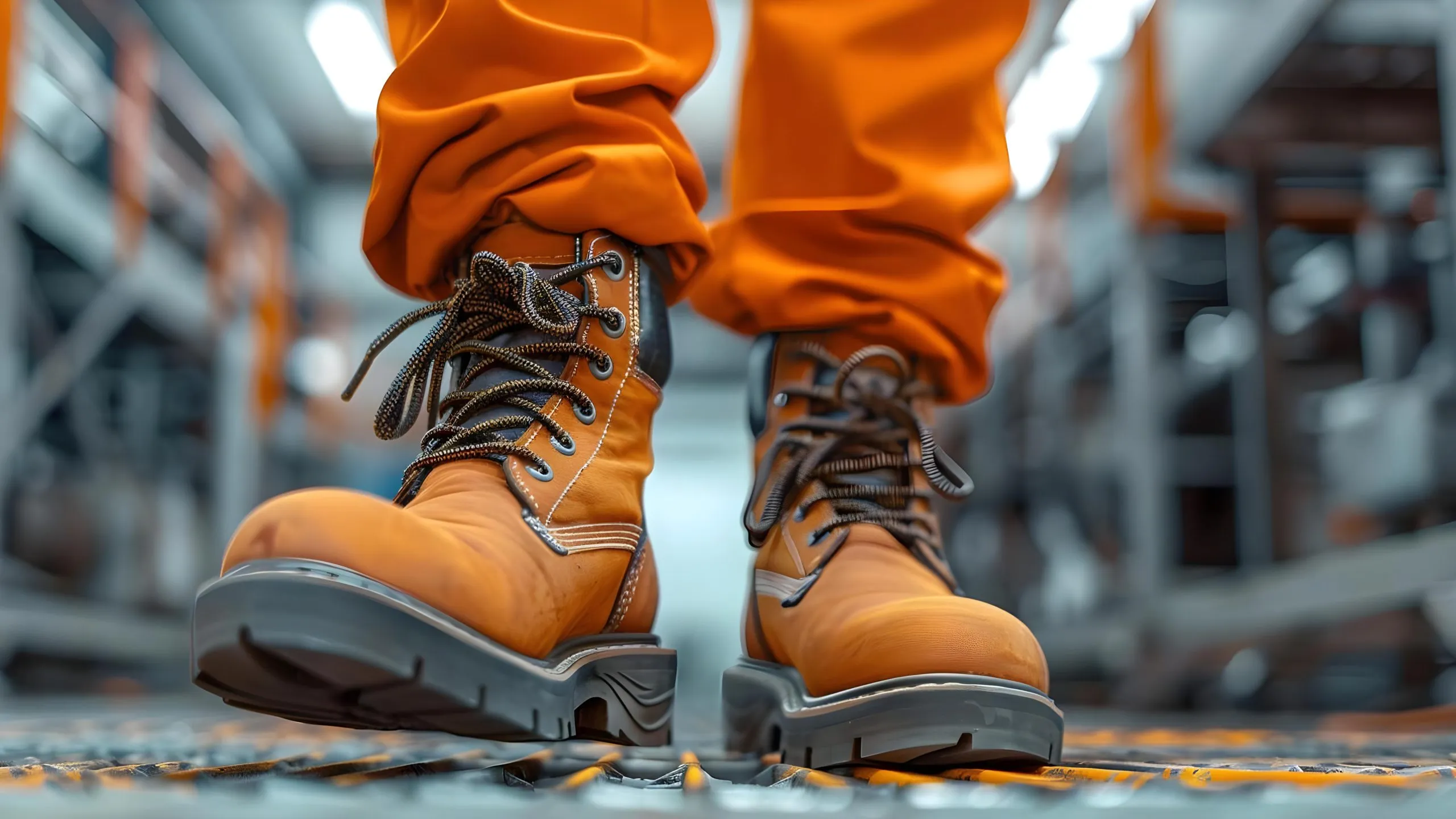
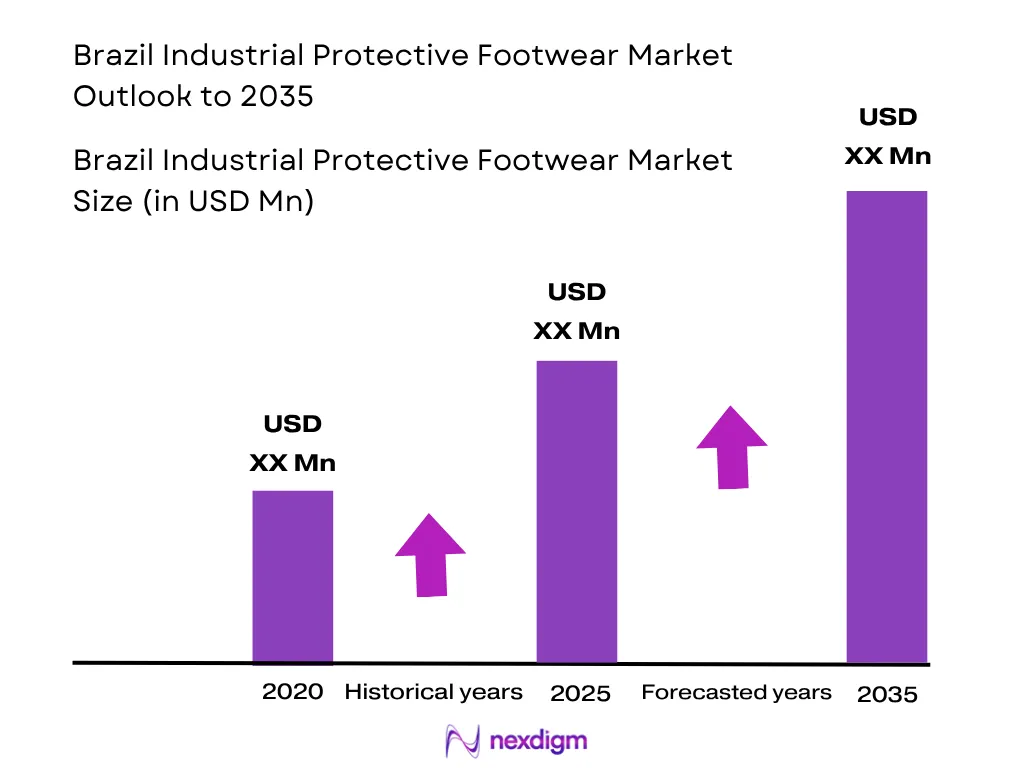
The Brazil Industrial Protective Footwear Market is valued at USD ~ billion, with steady growth driven by the country’s expanding industrial base and increasing regulatory requirements around worker safety. The demand for protective footwear is bolstered by the growing construction, manufacturing, oil & gas, and mining sectors, which together constitute the key end-users of this market. Brazil’s adoption of safety regulations and standards like NR-6 and ABNT NBR 20345 further stimulates the market, with a clear upward trend in consumer awareness and occupational health safety.
Brazil’s Southeast region dominates the Industrial Protective Footwear Market, primarily due to its concentration of industrial activities, including construction, manufacturing, and oil & gas. Cities like São Paulo, Rio de Janeiro, and Campinas are key hubs for these industries, where high demand for protective footwear arises from large-scale infrastructure projects and stringent safety regulations. Additionally, the presence of major manufacturers and distributors in these regions facilitates easy access to market players, ensuring a steady supply of industrial footwear across Brazil.
Market Segmentation
By Product Type
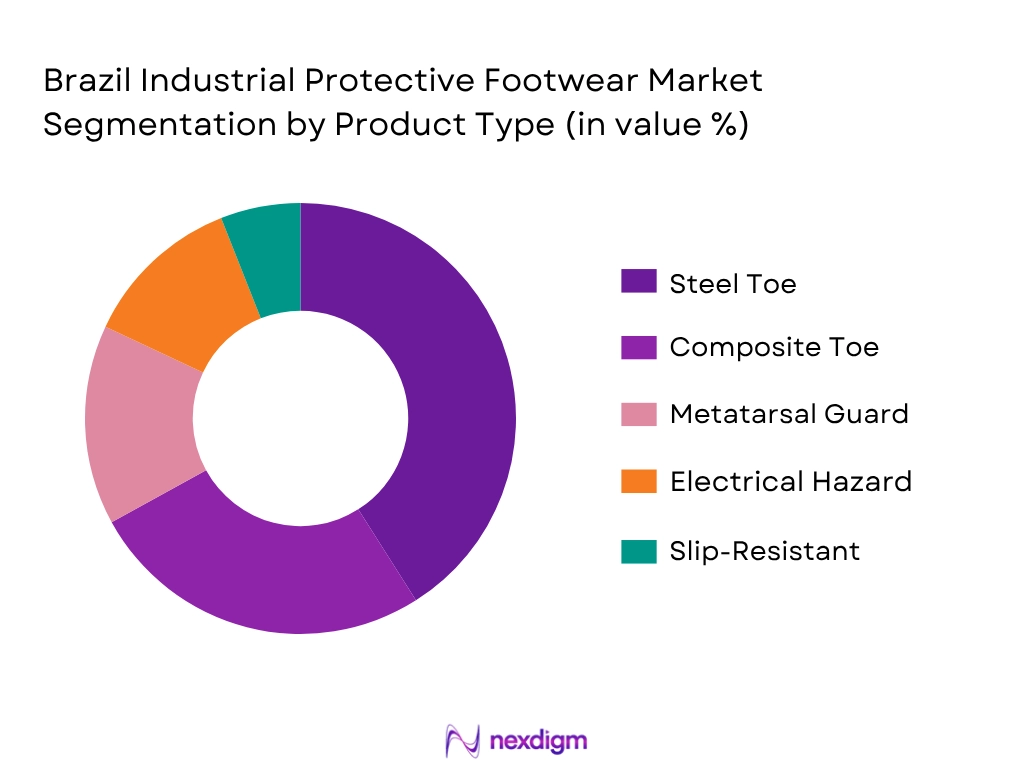
The Brazilian Industrial Protective Footwear Market is segmented by product type into safety boots, safety shoes, safety sandals, and overshoes. Within this segmentation, safety boots dominate the market, accounting for a substantial portion of the market share. This segment benefits from its widespread use in high-risk environments such as construction and mining, where protection from heavy objects and sharp materials is crucial. Safety boots offer superior ankle protection, durability, and water resistance, making them the preferred choice for workers exposed to hazardous conditions. Furthermore, safety boots are highly favored due to their ability to meet the safety standards set by regulatory bodies.
By Material Type
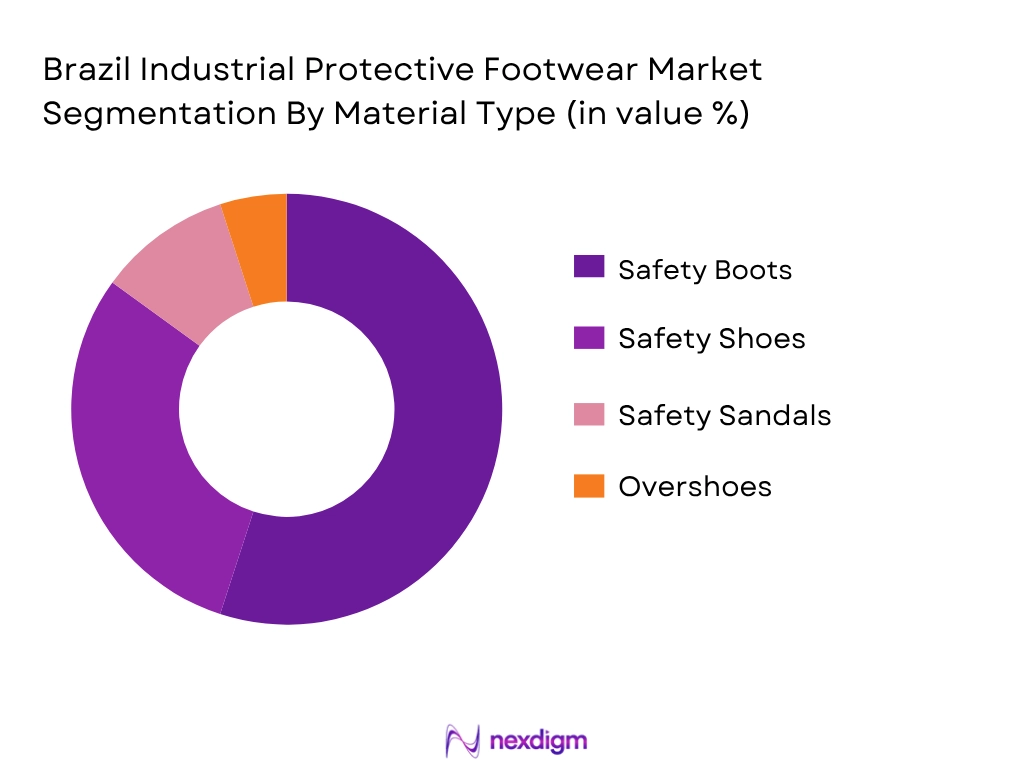
The market is also segmented by material, with leather, rubber, synthetic/polymer, and composite materials being the key sub-segments. Leather continues to dominate the material segment, holding a significant market share due to its durability, comfort, and high-performance capabilities. Leather is the material of choice in safety footwear because it provides enhanced protection against abrasions, cuts, and water, making it ideal for use in demanding industrial environments. The increasing trend of sustainable and eco-friendly leather further drives its popularity, as it aligns with growing consumer and corporate focus on sustainability.
Competitive Landscape
The Brazil Industrial Protective Footwear Market is dominated by several global and regional players, reflecting a mix of local expertise and international presence. The market’s competitive landscape is shaped by established brands like Honeywell International, 3M Corporation, and Bata Industrials, which have strong brand recognition and a wide distribution network. These players maintain their dominance through innovation, strategic partnerships, and compliance with local safety regulations, which enable them to meet the growing demand for industrial protective footwear.
| Company Name | Establishment Year | Headquarters | Product Portfolio | Market Reach | R&D Capabilities | Certifications |
| Honeywell International Inc. | 1906 | Morris Plains, NJ, USA | ~ | ~ | ~ | ~ |
| 3M Corporation | 1902 | Saint Paul, MN, USA | ~ | ~ | ~ | ~ |
| Bata Industrials (Bata Corporation) | 1894 | Luxembourg | ~ | ~ | ~ | ~ |
| Wolverine World Wide Inc. | 1883 | Rockford, MI, USA | ~ | ~ | ~ | ~ |
| Marluvas Calçados de Segurança Ltda. | 1976 | Brazil | ~ | ~ | ~ | ~ |
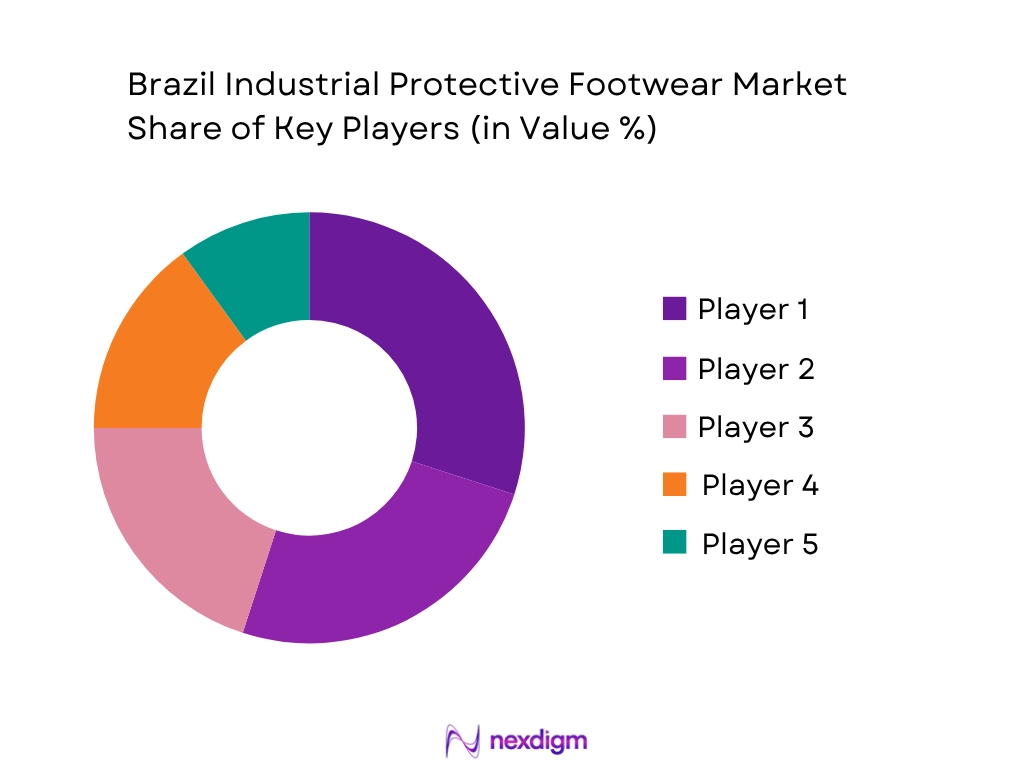
Brazil Industrial Protective Footwear Market Analysis
Growth Drivers
Industrial Expansion
Brazil’s industrial expansion is a significant driver for the growth of the Industrial Protective Footwear Market. The industrial sector is expected to see continued growth with a projected 3.3% growth in industrial production for 2024 as per the International Monetary Fund (IMF). The manufacturing and construction industries, which are major consumers of protective footwear, continue to benefit from investments in new projects and technological upgrades. Additionally, the Brazilian government’s ongoing initiatives to modernize infrastructure, such as the National Logistics Plan, further support industrial activities, amplifying the demand for safety equipment, including footwear. This expansion drives the need for more workers, directly impacting the protective footwear market.
Infrastructure Projects
Brazil’s ongoing and upcoming infrastructure projects significantly contribute to the demand for industrial protective footwear. With the country committing to large-scale public works and infrastructure improvements, including road construction and energy projects, the demand for protective footwear is set to grow. Brazil’s 2024 infrastructure investments are projected at BRL 150 billion, focusing on the expansion of roads, bridges, and transportation networks, with an emphasis on safety compliance in all sectors. This surge in infrastructure development not only supports the growth of the construction sector but also increases the need for safety footwear that meets stringent workplace protection standards.
Market Challenges
Price Sensitivity
Price sensitivity remains one of the most significant challenges in Brazil’s Industrial Protective Footwear Market. The cost of raw materials has been volatile due to fluctuations in the global market, with prices for leather, rubber, and composites rising sharply in recent years. For instance, the price of leather has increased by 12% in 2024 compared to the previous year. Brazil’s inflation rate in 2024 is expected to reach 5.5%, affecting the purchasing power of businesses and workers alike. The increase in overall product costs, combined with tight profit margins in industries like construction and manufacturing, heightens the price sensitivity of consumers towards protective footwear, limiting the potential market growth for higher-end products.
Counterfeit Products
The presence of counterfeit industrial protective footwear in the Brazilian market poses a significant challenge. As per the National Institute of Industrial Property (INPI) in Brazil, counterfeit products account for over 10% of the total footwear sold in the market. Counterfeit goods, often sold at lower prices, undermine market standards for safety and quality. This creates a challenge for legitimate manufacturers who face increased competition from these illicit products. Additionally, counterfeit goods can lead to safety risks, as they do not meet the established safety standards like ABNT NBR 20345, which compromises worker protection.
Raw Material Fluctuations
Fluctuations in the price and availability of raw materials are a key challenge in the industrial protective footwear market in Brazil. For example, the price of rubber, which is essential for manufacturing footwear soles, has risen by 8% in the last six months, due to supply disruptions caused by adverse weather conditions and production constraints in Asia. Additionally, the availability of high-quality leather has been impacted by reduced cattle herding in Brazil, pushing up prices for leather goods. These fluctuations lead to instability in production costs, making it difficult for manufacturers to maintain consistent pricing, which in turn impacts the overall market dynamics.
Market Opportunities
Smart Footwear
Smart footwear represents a burgeoning opportunity in the Brazil Industrial Protective Footwear Market. With advancements in wearable technology, the integration of smart sensors in industrial footwear is becoming a reality. In 2024, 15% of Brazilian companies in the mining and oil sectors are adopting IoT-enabled footwear, which tracks worker safety metrics like movement, posture, and exposure to hazardous materials. This trend is driven by increased safety regulations and the desire to enhance worker productivity and health. The Brazilian government has also been focusing on promoting Industry 4.0, which includes the integration of smart technologies in the manufacturing and industrial sectors, further paving the way for growth in this segment.
Sustainable Materials
Sustainability is another critical market opportunity, as eco-conscious manufacturing practices are gaining traction in Brazil. The Brazilian footwear industry is increasingly adopting sustainable materials, such as plant-based polymers and recycled materials. In 2024, over 20% of Brazilian footwear manufacturers are transitioning to using sustainable raw materials in their production processes, in line with the global push for eco-friendly products. This shift is encouraged by both consumer demand for greener products and government incentives aimed at reducing carbon footprints. With sustainability becoming a key consideration, the demand for protective footwear made from environmentally friendly materials is expected to rise in the coming years.
Future Outlook
Over the next decade, the Brazil Industrial Protective Footwear Market is expected to show sustained growth driven by ongoing industrial expansion, heightened safety regulations, and a push for sustainable materials. The market will be propelled by an increased focus on worker safety across industries, with key sectors like construction, oil & gas, and manufacturing leading the demand for high-quality protective footwear. Technological innovations such as smart footwear, IoT-enabled products, and eco-friendly materials will also contribute to market advancements.
Major Players
- Honeywell International Inc.
- 3M Corporation
- Bata Industrials (Bata Corporation)
- Dunlop Protective Footwear (Honeywell)
- Wolverine World Wide Inc. (Iron Age, CAT Footwear)
- Caterpillar Inc. (Cat Footwear)
- Safetline Equipamentos de Segurança Ltda.
- Kadesh Calçados Profissionais Ltda.
- Conforto Artefatos de Couro Ltda.
- Marluvas Calçados de Segurança Ltda.
- Bompel Indústria de Calçados Ltda.
- Viposa Calçados Ltda.
- BSB Produtora de EPIs S.A.
- Bracol S.A.
- Red Wing Shoe Company
Key Target Audience
- Investments and Venture Capitalist Firms
- Government and Regulatory Bodies (e.g., National Institute of Metrology, Quality and Technology (Inmetro), Ministry of Labor and Employment)
- Construction Industry Executives
- Manufacturing Industry Executives
- Oil & Gas Industry Executives
- Mining Industry Executives
- Industrial Footwear Manufacturers
- Logistics and Supply Chain Managers
Research Methodology
Step 1: Identification of Key Variables
The initial phase involves constructing an ecosystem map encompassing all major stakeholders within the Brazil Industrial Protective Footwear Market. This step is underpinned by extensive desk research, utilizing secondary databases to gather information on industry trends, safety regulations, and consumer preferences. The primary objective is to identify the critical variables influencing the market, such as product type, materials, and end-use industries.
Step 2: Market Analysis and Construction
In this phase, we compile and analyze historical data pertaining to the Brazil Industrial Protective Footwear Market. This includes assessing market penetration, product preferences, and the impact of regulatory standards. Additionally, an evaluation of product quality, safety standards, and industry compliance is performed to ensure the reliability of the market data.
Step 3: Hypothesis Validation and Expert Consultation
Market hypotheses are developed and validated through direct interviews with industry experts, including manufacturers, distributors, and regulatory authorities. These consultations offer firsthand insights into market challenges, growth drivers, and consumer behavior, helping refine and validate the research data.
Step 4: Research Synthesis and Final Output
The final phase involves synthesizing the collected data and validating the findings with industry leaders. This interaction ensures that the insights provided in the report are accurate and comprehensive, offering a robust analysis of the Brazil Industrial Protective Footwear Market, ready for use by stakeholders.

- Executive Summary
- Research Methodology (Definitions & Assumptions, Data Sources, Primary Interviews: industry experts, Secondary: Trade & Public Databases, Market Sizing Approach, Forecasting models (CAGR, unit volume vs. revenue), Limitations)

- Definition and Scope
- Market Genesis and Evolution
- Timeline of Key Regulatory & Industry Events
- Business Cycle (Procurement & Usage Patterns)
- Supply Chain and Value Chain Analysis
- Industry Safety Standards & Certification Framework

- Growth Drivers (Industrial Expansion, Safety Regulations, Infrastructure Projects)
- Market Challenges (Price Sensitivity, Counterfeit Products, Raw Material Fluctuations)
- Opportunities (Smart Footwear, Sustainable Materials, SME Safety Adoption)
- Market Trends (Digital Sales Growth, Customizable PPE, Smart & IoT Footwear)
- Government Regulations & Standards (NR-6 (PPE), ABNT NBR 20345, CA Certification)
- SWOT Analysis (Market-level)
- Stakeholder Ecosystem (Manufacturers, Distributors, Government, End Users)
- Porter’s Five Forces Analysis (Competitive intensity & supplier dynamics)

- By Value (2020-2025)
- By Volume (Pairs) (2020-2025)
- By Average Selling Price Trends (2020-2025)
- By Channel Sales Breakdown (2020-2025)

- By Product Type (In Value %)
Safety Boots
Safety Shoes
Safety Sandals
Others - By Material (In Value %)
Leather
Rubber
Synthetic/Polymer
Composite - By End-Use Industry (In Value %)
Construction
Manufacturing
Oil & Gas
Mining
Utilities & Others - By Distribution Channel (In Value %)
Specialty Retailers
Industrial Distributors
Direct Sales
E-Commerce - By Region (In Value %)
Southeast Brazil
South
Northeast
Central-West
North

- Market Share of Major Players (Value/Volume)
- Cross Comparison Parameters (Company Overview, Business Strategy, Product Portfolio & Technologies, Certifications & Compliance, Production Capacity, Distribution Network, R&D/Innovation, Major Clients/Partnerships)
- SWOT Analysis of Major Players
- Pricing Analysis (SKU/Segment-level Pricing of Key Players)
- Detailed Company Profiles of Major Players
Honeywell International Inc.
3M Corporation
Bata Industrials (Bata Corporation)
Dunlop Protective Footwear (Honeywell)
Wolverine World Wide Inc. (Iron Age, CAT Footwear)
Caterpillar Inc. (Cat Footwear)
Safetline Equipamentos de Segurança Ltda.
Kadesh Calçados Profissionais Ltda.
Conforto Artefatos de Couro Ltda.
Marluvas Calçados de Segurança Ltda.
Bompel Indústria de Calçados Ltda.
Viposa Calçados Ltda.
BSB Produtora de EPIs S.A.
Bracol S.A.
Red Wing Shoe Company

- Market Demand and Utilization (Consumption by Industry)
- Buyer Segments & Purchasing Patterns (Multinationals vs SMEs)
- Purchasing Criteria (Price, Certification, Comfort)
- Needs, Pain Points and Preferences (Fit, Availability, After-sales)
- Decision-Making Process (Safety Officers, Procurement, Compliance)

- By Value (2026-2035)
- By Volume (2026-2035)
- By Average Price Outlook (2026-2035)


 Request a Sample
 Ask for Customization
 Get a Quote
 Enquire Now