
 Download PDF
Market Overview
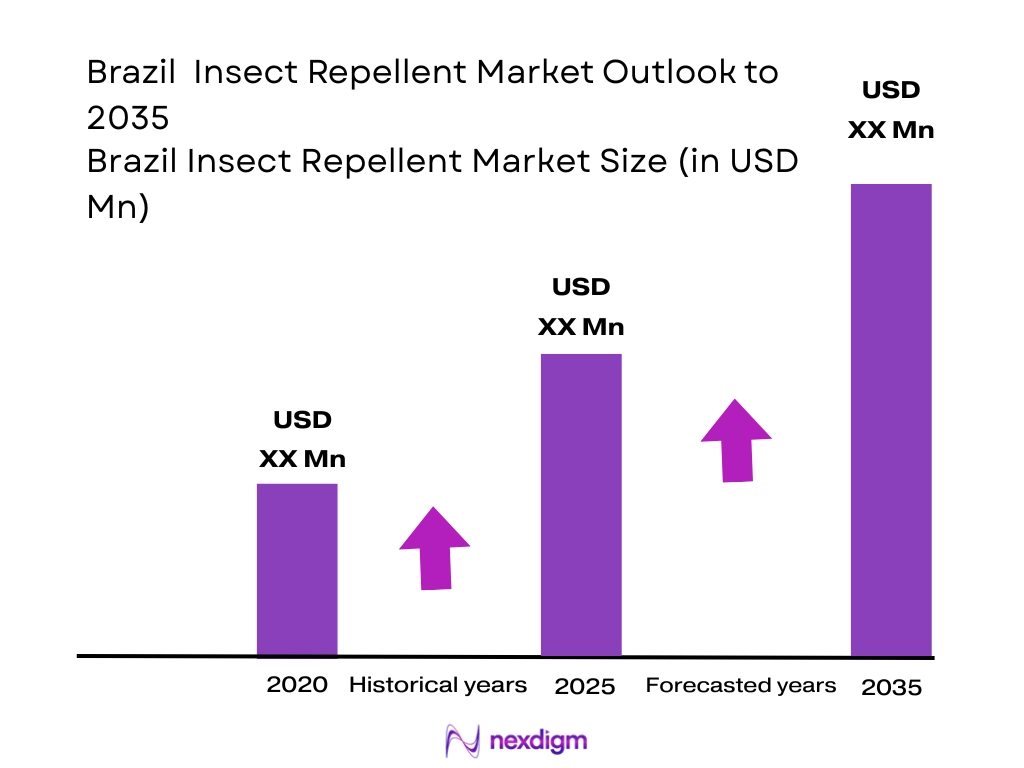
The Brazil insect repellent market is valued at USD ~ million in 2025, based on regional industry estimates tracking sales of mosquito repellents, sprays, lotions and topical protection products used against vector insects. The market growth is driven by high prevalence of mosquito‑borne diseases such as dengue, Zika, and chikungunya, and increasing consumer awareness of personal protection coupled with rising urban household purchases. Rising summer temperatures and seasonal outbreaks have also positively impacted sales, especially in urban centers.
Major urban regions including São Paulo, Rio de Janeiro, and Brasília dominate market demand due to their large populations, high urban density and frequent mosquito activity linked to tropical climatic conditions. These cities witness sustained purchasing of repellents as part of household health safety practices, combined with strong availability via pharmacies and retail distribution networks. Rural coastal regions with tropical ecosystems also exhibit high usage due to persistent insect exposure risks.
Market Segmentation
By Product Format
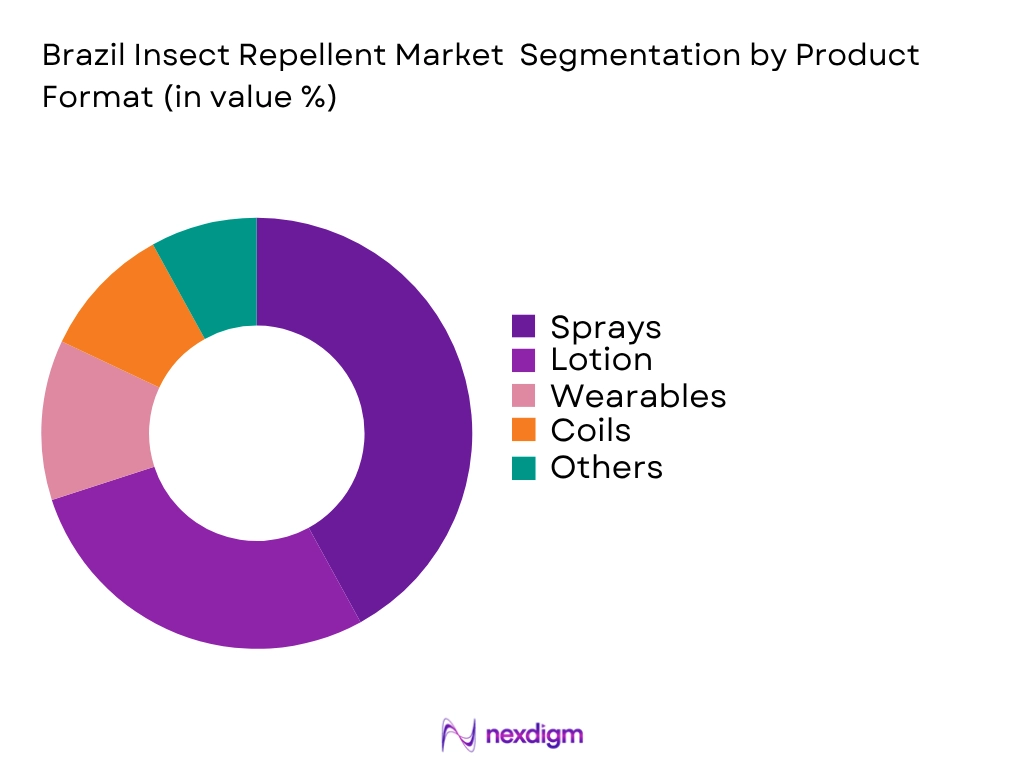
Brazil insect repellent market is segmented by product format into spray/aerosol, lotion/cream, wearable devices (bands and patches), vaporizers and coils, and other formats. Insect repellent spray/aerosol products hold a dominant market share, supported by broad consumer acceptance for convenience, ease of application, and wide availability across supermarkets, pharmacies and online channels. Spray formulations deliver flexible dosage, portability, and quick drying properties, making them preferred for daily use and travel purposes. Petrol‑based sprays also cater to institutional needs for quicker surface and ambient protection. Lotions and creams maintain significance due to longer lasting protection and perceived dermatological benefits. Wearable devices and patches are growing with outdoor recreational demand, but still smaller in share due to higher unit pricing. Overall, the spray segment’s retail penetration and consumer familiarity contribute to its leadership position.
By Active Ingredient Class
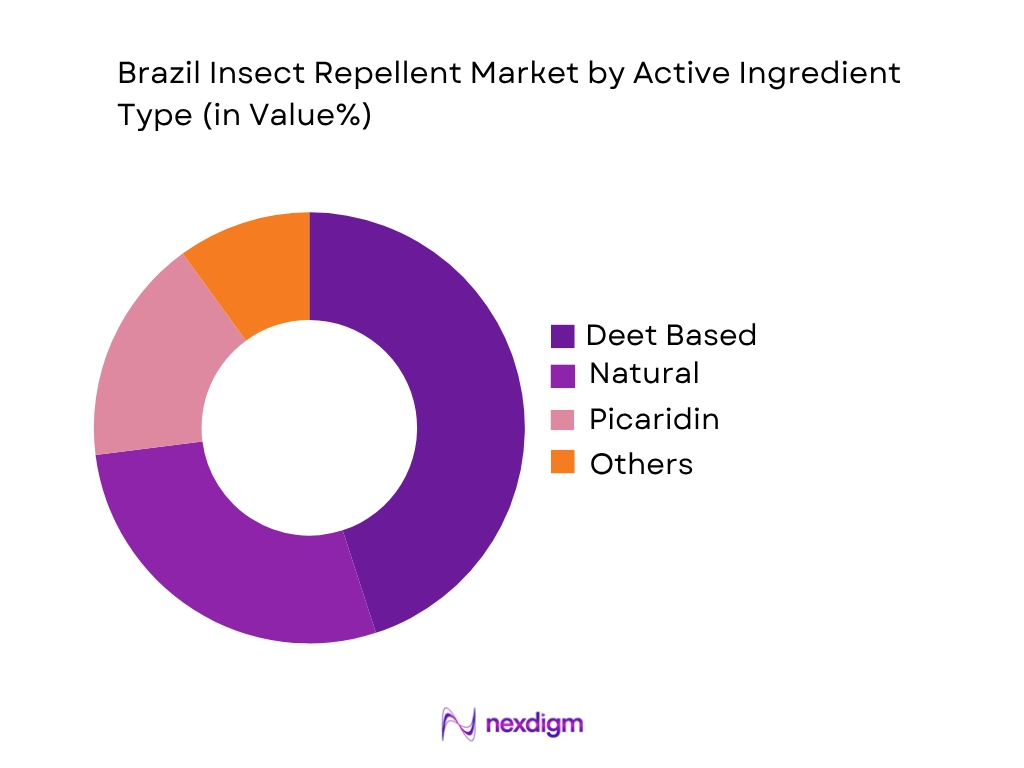
Under segmentation by active ingredient class, DEET‑based repellents account for the largest share, driven by their long‑established efficacy profile and broad consumer trust against mosquito bites. DEET formulations remain widely produced and distributed by multinational manufacturers, especially in topical sprays and lotions, and are often recommended by health agencies for protection against disease‑carrying vectors. Picaridin (Icaridin) products are gaining prominence due to milder odor and skin tolerability, appealing to families and sensitive‑skin users, contributing to solid market growth. Natural or botanical active repellents, based on plant extracts such as citronella or lemon eucalyptus, are expanding as Brazilian consumers increasingly seek eco‑friendly and lower‑toxicity alternatives, particularly in urban and premium retail channels. IR3535 and other synthetic alternatives hold niche positions, often featured in specialized or pediatric formulations.
Competitive Landscape
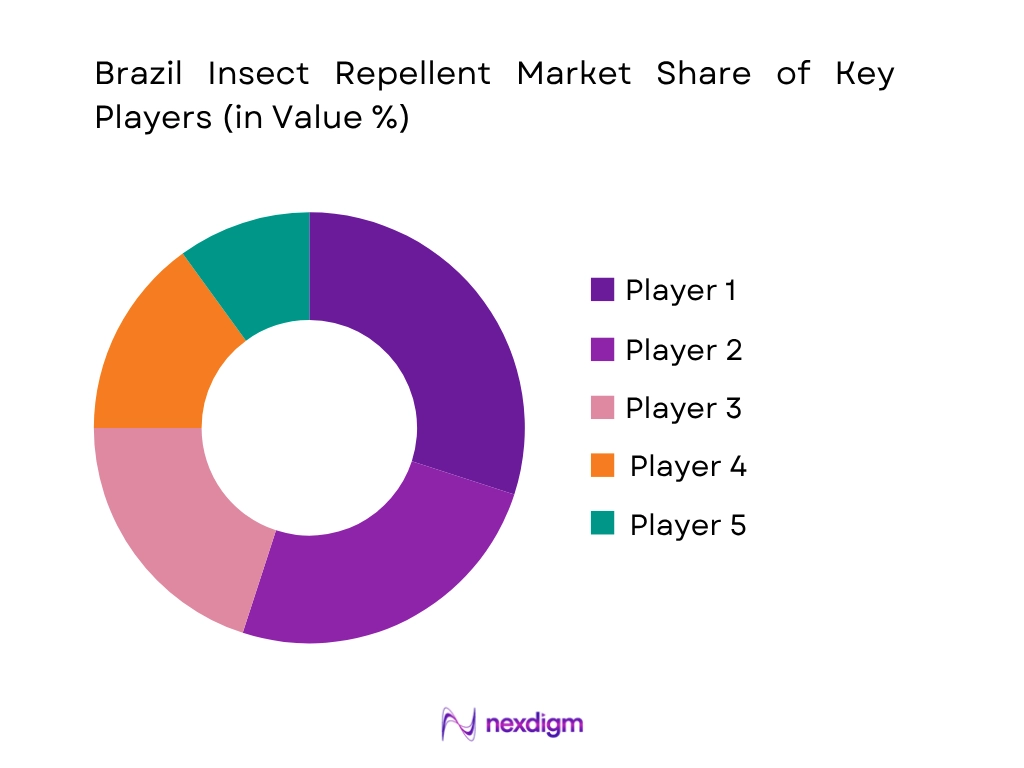
The Brazil insect repellent market is characterized by presence of multinational firms and established domestic brands, reflecting consolidation and strong brand equity among major players. International companies dominate distribution in supermarkets, pharmacy chains, and online marketplaces, while local brands often focus on price competitiveness and regional consumer preferences. Retail availability through modern and traditional channels supports broad market access.
| Company | Establishment Year | Headquarters | Active Ingredient Mix | Distribution Channel Reach | Product Format Range | Brazil Specific R&D | Pricing Tier |
| SC Johnson | 1886 | USA | ~ | ~ | ~ | ~ | ~ |
| Reckitt Benckiser | 1823 | UK | ~ | ~ | ~ | ~ | ~ |
| Godrej | 1897 | India | ~ | ~ | ~ | ~ | ~ |
| Johnson & Johnson | 1886 | USA | ~ | ~ | ~ | ~ | ~ |
| Exposis (Domestic) | 20th C | Brazil | ~ | ~ | ~ | ~ | ~ |
Brazil Insect Repellent Market Analysis
Growth Driver
Vector‑Borne Disease Awareness
Brazil experiences one of the highest mosquito‑borne disease burdens in the world, directly elevating awareness and demand for insect repellents. In the first half of 2024 alone, Brazil reported more than 4,100,000 probable dengue cases, far exceeding historical averages, with 1,888 deaths attributed to dengue reported by the national health ministry. These high case volumes generate extensive public health communications urging personal protection usage, including repellents, which influences purchasing behavior in urban and rural populations alike. The Brazilian Ministry of Health has maintained continuous disease surveillance reporting on dengue, Zika and chikungunya, reinforcing public perception of risk—this sustained messaging aligns with distribution growth in retail pharmacies and supermarkets across metropolitan areas. In 2024, the Ministry of Health also tracked chikungunya with over 350,000 probable cases, further reinforcing the need for protective products, including repellents. These health indicators are among the most critical drivers of market demand, as they stimulate both routine household purchases and institutional stockpiling of repellents for schools, workplaces and travel purposes amid seasonal outbreaks.
Outdoor Lifestyle Adoption
Brazil’s population demonstrates strong engagement in outdoor leisure activities that correlate with increased insect exposure and repellent usage. According to the World Bank, Brazil had an estimated urban population of 178 million people in 2024, representing a high density of inhabitants participating in outdoor public spaces, parks and beaches. The Brazilian Institute of Geography and Statistics (IBGE) reported that over 40 million Brazilians undertook domestic tourism trips in the first six months of 2024, reflecting robust outdoor recreation demand that coincides with mosquito exposure risk in tropical environments. National sports participation data shows an increasing number of consumers engaged in outdoor running, cycling and adventure events, contributing to repellent adoption beyond traditional household use. Additionally, Brazilian coastal regions like Bahia and Rio de Janeiro attract millions of visitors annually; these sites are also known for high vector populations, often documented by regional public health units. The high volume of outdoor activity raises consumer risk perception toward mosquito bites, which translates into regular purchasing patterns for repellents at pharmacies, retail outlets, and travel goods stores.
Market Challenge
Skin Safety Concerns
One notable challenge for the Brazil insect repellent market arises from consumer concerns regarding topical product safety, especially for children and sensitive skin. The Brazil Ministry of Health and ANVISA have documented cases of mild to moderate dermatitis reactions associated with certain formulations when improperly applied. Data from the Brazilian Dermatology Society (SBD) indicates that approximately 6 million Brazilians reported some form of skin irritation linked to topical product use in 2024, which has heightened public scrutiny of repellent ingredients. This health encounter narrative often leads consumers to seek alternatives perceived as gentler, such as plant‑based or low‑synthetic formulations, creating pressure on traditional DEET‑dominant products to adapt. Furthermore, pediatric health advisories from ANVISA recommend caution when applying strong synthetic repellents on children under certain ages, further complicating consumer choices. Such safety concerns influence retailer stocking patterns and prompt demand for hypoallergenic, dermatologist‑approved alternatives, which can command different pricing and marketing requirements. In this environment, ensuring effective protection while minimizing dermal sensitivity remains a structural challenge for manufacturers in Brazil, requiring rigorous product testing and qualifying claims under national guidelines.
Ingredient Regulatory Restrictions
Regulatory requirements imposed by ANVISA (Agência Nacional de Vigilância Sanitária) and the Brazilian Ministry of Health constrain formulation innovation and market entry for insect repellents. In 2024, ANVISA maintained stringent classification protocols that differentiate repellents based on active ingredient types and allowable concentration limits, leading to delays in approvals of new compounds or higher concentration products. For example, products containing certain bioactive synthetics like IR3535 require additional toxicological review and submission of repeated safety dossiers before receiving market authorization. At the same time, Brazil also mandates complete documentation on human dermal safety and environmental impact for any new formulation—a process that can span multiple regulatory cycles. According to official ANVISA data, over 510 repellent product applications were under review in 2024, reflecting a backlog of submissions and extended timeframes to launch new offerings. These regulatory constraints affect both larger multinationals and regional manufacturers seeking active ingredient diversification, requiring careful compliance investment, legal overhead and extended timelines. Such restrictions can limit the introduction of novel repellents that consumers may demand, influencing competitive dynamics in the sector.
Opportunity
Biopesticide Launches
The insect repellent market in Brazil is uniquely positioned to capitalize on expanding interest in biopesticide‑based repellents derived from natural sources. Brazil’s strong history in agricultural biopesticide development offers innovation crossover into personal repellent formats. Data from the Brazilian Association of Biopesticides (ABBP) indicates that the country registered over 420 new biopesticide compounds between 2023 and 2024 for agricultural pest control, demonstrating an active regulatory and research environment for biologically derived protection solutions. This trend suggests a ready pipeline of plant‑based actives that can be repurposed into topical and wearable repellent products, meeting consumer demand for safer, eco‑friendly alternatives. Additionally, Brazil’s large domestic cultivation of citronella, neem and eucalyptus supports local sourcing of botanical extracts without heavy import dependency, which can reduce lead times and improve sustainability profiles. Given heightened awareness around chemical sensitivities and environmental considerations, biopesticide‑based repellents may attract a growing segment of consumers looking to avoid synthetic chemicals. This creates an avenue for product differentiation and premium offerings that align with broader wellness and sustainability trends among Brazilian purchasers.
Smart Repellent Devices
Advancements in consumer technology present a promising opportunity for the Brazil insect repellent market through smart repellent devices. These devices—including wearable units, app‑connected diffusers, and sensor‑driven emitters—promise automated or sustained protection without manual re‑application of traditional formulations. According to the Brazilian Institute of Consumer Technology Adoption (BICTA) 2024 Report, more than 78 million Brazilians now use connected devices for health or home automation, illustrating a broad base of tech acceptance that can be leveraged for smart repellent adoption. This rising consumer technology engagement coincides with rapid smartphone penetration (nearly 80% of adults own smartphones based on GSMA Intelligence 2024 data), enabling Bluetooth and app‑controlled repellent devices to integrate with daily routines. Smart repellent devices may also offer digital usage insights (e.g., duration, location‑based emission), appealing to urban consumers prioritizing convenience and high‑tech solutions. As tech‑savvy populations in Brazil’s major cities increasingly seek connected lifestyle products, smart repellent formats offer an innovative, differentiated growth path beyond legacy sprays and topical creams.
Future Outlook
Looking ahead, the Brazil insect repellent market is expected to maintain steady growth, supported by persistent vector‑borne disease risk, expanding outdoor lifestyles and travel demand, and rising consumer health awareness. Improvements in formulation technology (e.g., longer protection duration, skin comfort) and emergence of digital shopping channels bolster access and encourage repeat purchases. Natural ingredient products are anticipated to continue gaining share alongside conventional synthetics as sustainability preferences strengthen. Investments in local manufacturing and regulatory streamlining could further lower costs and encourage innovation across product formats.
Major Players
- SC Johnson
- Reckitt Benckiser
- Godrej Consumer Products
- Johnson & Johnson
- Vitapele
- Ruaca
- Off! (brand under SC Johnson)
- Exposis
- Soffell
- Sawyer Products
- Coghlan’s
- Spectrum Brands (Repel)
- Henkel AG
- Natura &Co (when offering plant‑based repellents)
- Ayurveda/Natural Brazil (botanical brands)
Key Target Audience
- Consumer FMCG and personal care product manufacturers
- Retail chains & pharmacy buying teams
- Distributor & supply chain strategists
- Outdoor and travel goods companies
- Investments and venture capitalist firms
- Government and regulatory bodies
- Insurance and healthcare service purchasers
- Agricultural and rural development planners
Research Methodology
Step 1: Market Definition & Scope Setting
Initial analysis defined product formats (spray, lotion, wearable, etc.) and active ingredient categories (DEET, picaridin, natural) based on industry classifications and ANVISA regulatory guidelines, establishing boundaries for revenue and volume measurement.
Step 2: Data Collection & Secondary Analysis
Historical consumption and sales revenue figures were collected from industry databases and published reports. Retail scan data and consumer purchase surveys informed segmentation insights, supplemented by pest control product analyses where direct data was limited.
Step 3: Expert Validation & Hypothesis Testing
Subject matter experts from retail chains, formulation houses, and health agency stakeholders were consulted via structured interviews to validate growth drivers and segment prominence, confirming disease‑driven demand patterns.
Step 4: Forecasting & Model Synthesis
Market projections were constructed using historical revenue trends, vector‑borne disease cycle patterns, and retail channel expansion data. Forecast models were cross‑checked against regional industry growth rates to ensure robust output.

- Executive Summary
- Research Methodology (Market Definitions and Assumptions, Abbreviations, Data Sources Hierarchy, Market Sizing Approach, Primary & Secondary Research Integration, Forecast Modelling Framework, Limitations and Data Validation)

- Definition and Scope
- Genesis of Insect Repellent Demand
- Market Evolution & Product Innovation Timeline
- Consumer Health & Safety Imperatives
- Supply Chain/Distribution Overview

- Growth Drivers (High Vector‑Borne Disease Burden (Dengue, Zika, Chikungunya)
- Market Restraints (Safety Concerns Over Synthetic Actives, Import Dependence for Advanced Ingredients)
- Opportunities (Natural & Botanical Repellent Innovation, E‑Commerce Sales Expansion)
- Market Trends (Clean‑Label & Eco‑Friendly Preferences, Rise of Wearable/Body‑Worn Formats)
- Regulatory Framework (ANVISA/Health Safety, Biocide Classification)
- SWOT Analysis
- Porter’s Five Forces
- Insect Repellent Ecosystem Stakeholders

- By Value (2020 – 2025)
- By Volume (2020 – 2025)
- By Pricing & Average Realisation by Format (2020 – 2025)

- By Product Category (In Value %)
Mosquito
Essential Oils
Pharmacies
Healthcare - By Active Ingredient (In Value %)
DEET
Picaridin
Natural Botanicals
Permethrin - By Distribution Channel (In Value %)
Supermarkets
Pharmacies
E‑Commerce
Institutional Procurement
- By End User (In Value %)
Household
Institutional
Outdoor & Tourism
Public Health
- By Region (In Value %)
Southeast
Northeast
South
Central‑West
North

- Market Share By revenue & volume per segment
- Cross-Comparison Parameters (Company Overview, Business Strategy, Product Portfolio Breadth, Active Ingredient Technologies, Distribution Network Strength, Price Tier Positioning, Retail/Modern Trade vs E‑Commerce Penetration, Regulatory Compliance Credentials, R&D/Innovation Intensity, Local Production Capabilities, Brand Equity, Supply Chain Footprint, Sustainability Positioning, Licensing & Certifications)
- SWOT Analysis of Major Competitors
- Pricing & SKU Strategy Benchmarking
- Profiles of Key Companies
SC Johnson & Son
Reckitt Benckiser Group
Spectrum Brands Holdings, Inc
Godrej Consumer Products Ltd
Exposis
Repelex
Avon Products, Inc.
3M Company
Henkel AG & Co. KGaA
Enesis Group
Larus
Insect Shield LLC
Sawyer Products, Inc.
God’s Garden
VitaPele

- Demand Behaviour
- Purchase Drivers
- Channel Preferences
- Safety Considerations
- Seasonal Usage Patterns

- By Value (2026 – 2035)
- By Volume (2026 – 2035)
- By Pricing & Channel Revenue Forecast (2026 – 2035)


 Request a Sample
 Ask for Customization
 Get a Quote
 Enquire Now