
 Download PDF
Market Overview
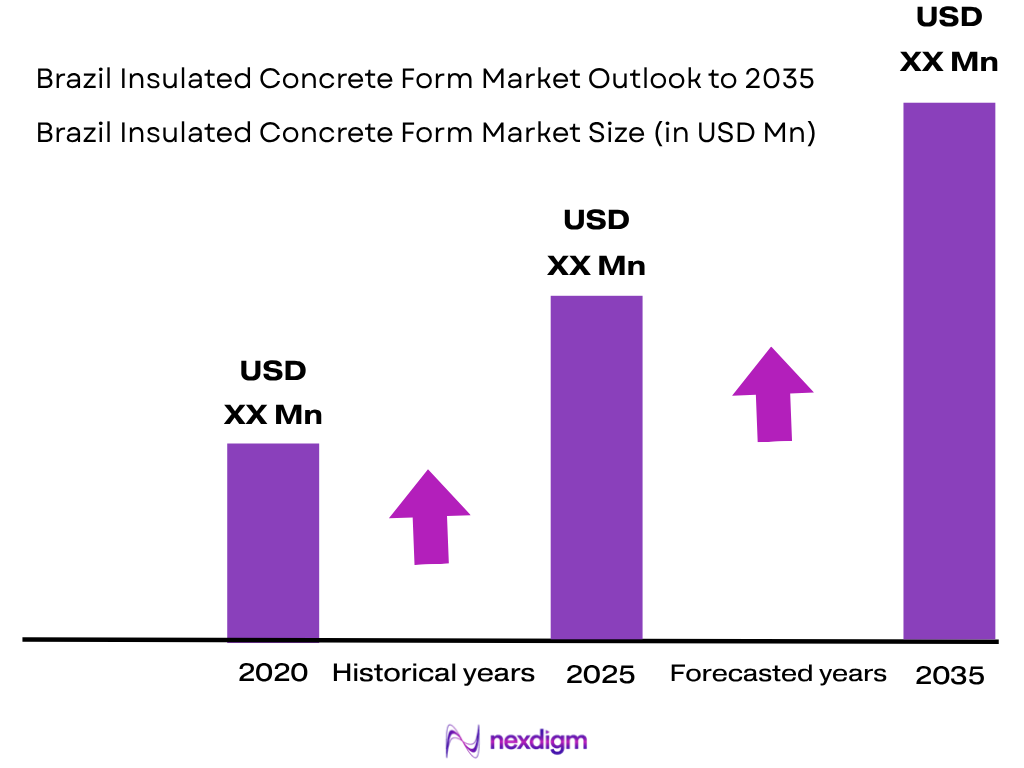
The Brazil Insulated Concrete Form Market is valued at approximately USD ~XX million, based on historical demand for EPS permanent formwork and reinforced-concrete envelope systems. Construction activity supports adoption: Brazil recorded 130,910 construction companies employing 2.5 million people, compared with 128,400 companies and 2.3 million workers in the preceding dataset. Residential demand is reinforced by Minha Casa Minha Vida, which contracted 491,000 housing units compared with 21,000 units previously.
São Paulo, Minas Gerais, Paraná, Santa Catarina and Goiás form important demand centers for Brazil’s Insulated Concrete Form Market because they combine housing construction, EPS conversion, ready-mix supply and industrialized-building activity. São Paulo recorded 38,509 construction companies, followed by Minas Gerais with 15,601 and Paraná with 11,290, compared with 37,253, 15,224 and 10,720, respectively, in the preceding dataset. This contractor density supports ICF specification, installation and material distribution.
Market Segmentation
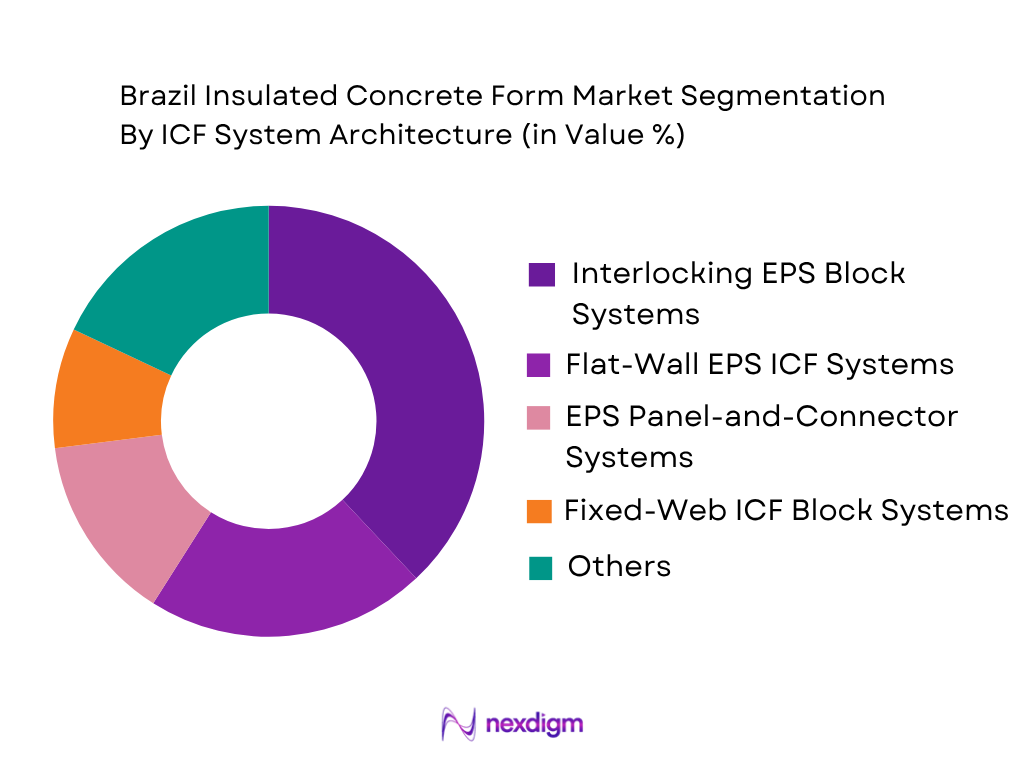
By ICF System Architecture
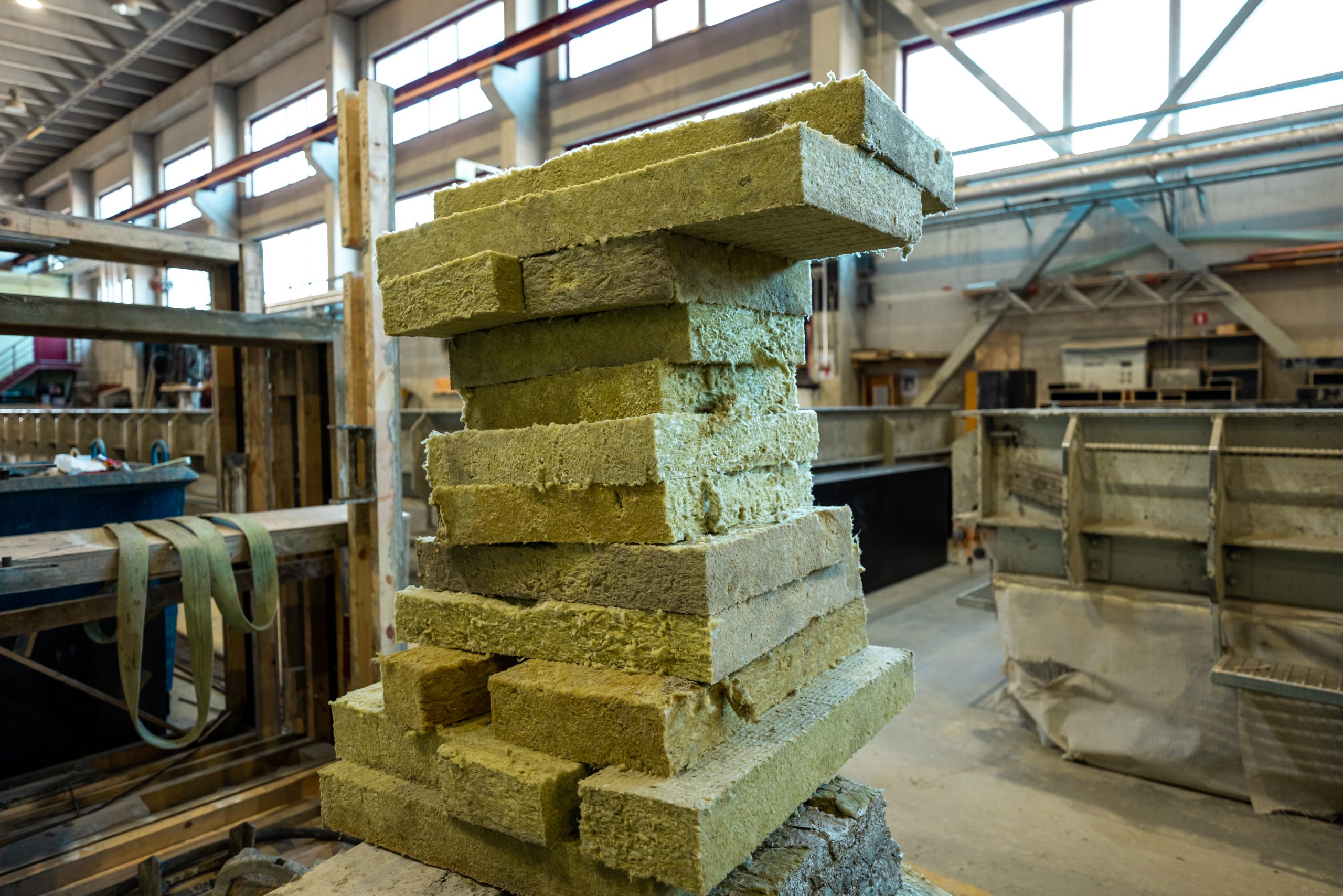
The Brazil Insulated Concrete Form Market is segmented into interlocking EPS blocks, flat-wall EPS systems, panel-and-connector systems, fixed-web blocks, knock-down systems, grid-wall systems, vertical forms and composite systems. Interlocking EPS block systems hold the dominant report-model share because they align with Brazil’s masonry-oriented construction workflow while replacing removable formwork with lightweight modular components. EPS forms provide permanent insulation around a reinforced-concrete core, allowing structure and thermal envelope to be executed through one coordinated wall system. Domestic suppliers such as iForms have commercialized interlocking EPS forms specifically for Brazilian residential and commercial construction, strengthening local contractor familiarity and material availability. The configuration is particularly suited to detached housing, gated residential developments and repetitive low-rise construction because blocks can be manually handled, reinforcement can be integrated within the forms and concrete can be placed after wall assembly. Compatibility with Brazilian reinforced-concrete practices and the possibility of regional EPS manufacturing further support this architecture over more specialized imported panel or composite systems.
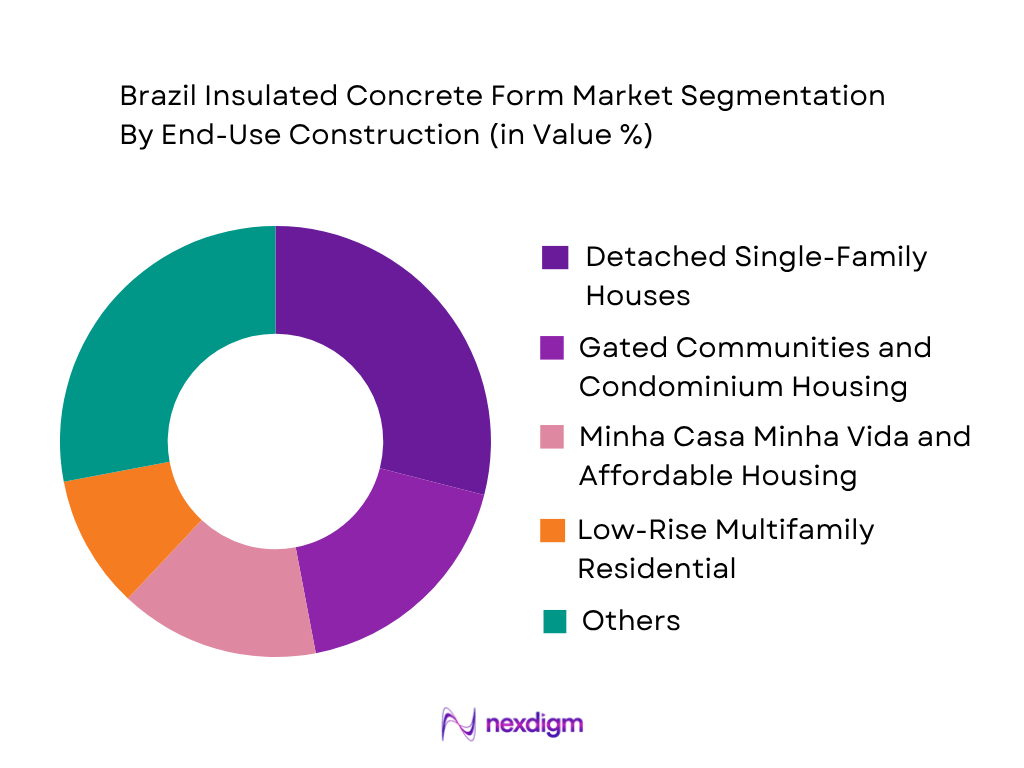
By End-Use Construction
The Brazil Insulated Concrete Form Market is segmented into detached houses, condominium housing, affordable housing, multifamily residential buildings, commercial buildings, hospitality, education, healthcare, government buildings, industrial facilities and agribusiness structures. Detached single-family housing holds the dominant report-model share, reflecting ICF’s strongest fit with low-rise construction, where developers can capture benefits from rapid wall assembly, integrated insulation and monolithic reinforced-concrete construction without the logistical complexity associated with larger towers. Brazil’s housing ecosystem also provides a substantial addressable base for industrialized wall technologies. Minha Casa Minha Vida contracted 491,000 units in its latest reported full year, substantially expanding the pipeline in which technically accepted industrialized construction systems can compete. ICF is particularly relevant where repetitive housing designs, thermal comfort, construction productivity and reduced formwork handling are important procurement considerations. Condominium and affordable housing follow because standardized layouts allow contractors to repeat reinforcement, openings and concrete-placement sequences across multiple units, improving learning curves and supporting larger-volume procurement of EPS forms and accessories.
Competitive Landscape
The Brazil Insulated Concrete Form Market is led by a relatively small domestic ecosystem of ICF system manufacturers, EPS processors and specialized contractors, supplemented by international ICF technologies that serve as product and engineering benchmarks. iForms/Grupo ICF, ICF ARXX Brasil, ICF InConcreto, Portal EPS and Quanthun represent relevant domestic participants. Competition centers on local EPS manufacturing, concrete-core flexibility, technical approvals, thermal performance, structural engineering support and contractor training rather than solely on block supply.
| Major Player | Establishment Year | Headquarters | ICF Architecture | EPS / Form Manufacturing | Concrete-Core Flexibility | Brazilian Technical Compliance | Main Application Exposure | Installer / Engineering Support |
| iForms / Grupo ICF | 2018 | Brazil | ~ | ~ | ~ | ~ | ~ | ~ |
| ICF ARXX Brasil | Not publicly disclosed | Brazil | ~ | ~ | ~ | ~ | ~ | ~ |
| ICF InConcreto | Not publicly disclosed | Brazil | ~ | ~ | ~ | ~ | ~ | ~ |
| Portal EPS | Not publicly disclosed | Brazil | ~ | ~ | ~ | ~ | ~ | ~ |
| Quanthun | Not publicly disclosed | Brazil | ~ | ~ | ~ | ~ | ~ | ~ |
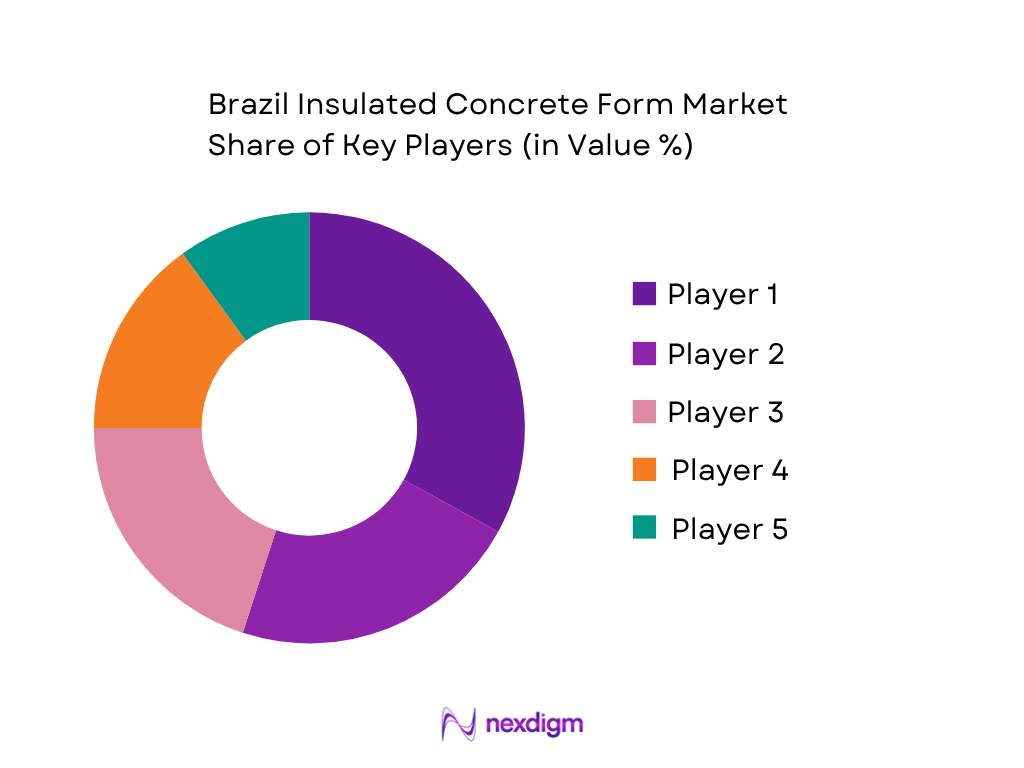
Brazil Insulated Concrete Form Market Analysis
Growth Drivers
Expansion of Housing Construction and Minha Casa Minha Vida Activity
Expansion of residential construction is a direct demand driver for the Brazil Insulated Concrete Form Market, because large housing programs increase the addressable pool of repetitive low-rise projects where EPS permanent formwork, reinforced-concrete cores and factory-produced wall components can replace conventional masonry and removable formwork. Federal government data show that Minha Casa Minha Vida recorded 588,300 financed housing units in 2024, alongside 119,300 subsidized units contracted through supported modalities. Activity strengthened further in 2025, when 662,500 financed housing units and 151,300 subsidized units were contracted. By December 2025, the program had reached 2 million contracted housing units since its relaunch, creating a substantial construction pipeline requiring wall systems, insulation, reinforcing steel, concrete and installation services. This volume is particularly relevant for ICF because standardized housing designs allow the same block geometries, reinforcement schedules, window openings and concrete-placement procedures to be repeated across multiple dwellings, improving installation learning curves and creating conditions for industrialized construction. The wider construction base is also large: IBGE identified approximately 191,000 construction companies employing 2.5 million people in 2024, including 894,800 workers engaged in building construction. An ICF supplier therefore does not need the technology to replace masonry nationwide to achieve meaningful scale; penetration within selected affordable-housing developments, condominium projects and standardized detached-home projects can generate recurring block and technical-service demand. The macroeconomic environment reinforces the scale of the addressable construction economy: World Bank data place Brazil’s 2024 GDP at USD 2,185,821,648,943.9 and GDP per capita at USD 10,310.5. For ICF manufacturers, the combination of high annual housing contracting volumes, a large formal construction workforce and recurring government-supported residential development increases the commercial justification for domestic EPS moulding, regional inventory, contractor training and structural-design support dedicated specifically to insulated reinforced-concrete wall systems.
Scale of the Construction Industry Supporting Faster and Industrialized Wall Systems
Brazil’s large construction ecosystem creates a second major growth driver for the Brazil Insulated Concrete Form Market, particularly as developers seek building methods that combine formwork, insulation and structural concrete within a coordinated wall assembly. IBGE’s latest Annual Survey of the Construction Industry identifies approximately 191,000 construction companies and 2.5 million workers operating in the sector in 2024. Building construction alone employed about 894,800 people, demonstrating the size of the contractor base involved directly in residential, commercial and industrial structures where ICF can technically be deployed. At the same time, Minha Casa Minha Vida generated 588,300 financed-unit contracts and 119,300 subsidized-unit contracts during 2024, followed by 662,500 financed units and 151,300 subsidized units during 2025. These volumes increase the importance of construction methods that can be replicated across standardized designs and executed with predictable wall geometry. ICF directly addresses this requirement because EPS blocks or panels remain in position after the concrete pour, removing separate stripping operations associated with reusable formwork while simultaneously creating the insulation layer. The resulting workflow combines EPS form assembly, reinforcement placement and concrete filling into fewer major wall-production stages than a conventional sequence involving structural frame construction, infill masonry and subsequent insulation measures. This does not eliminate the need for skilled construction management—the concrete pour, bracing, openings and service penetrations remain critical—but it strengthens the commercial rationale for trained ICF crews on repetitive projects. Brazil’s macroeconomic scale supports this industrialization pathway: World Bank data report 2024 GDP of USD 2,185,821,648,943.9 and GDP per capita of USD 10,310.5. The combination of a large contractor universe, millions of construction workers and hundreds of thousands of annually contracted housing units provides ICF suppliers with sufficient underlying project volume to establish specialized installation networks, regional block manufacturing and dedicated engineering services rather than relying on isolated custom-home applications.
Market Challenges
Technical Approval, Concrete Placement and System-Performance Requirements
Technical qualification remains a significant challenge for the Brazil Insulated Concrete Form Market because ICF is not simply an EPS insulation product; it functions as permanent formwork around a reinforced-concrete structural core, making successful adoption dependent on structural design, reinforcement positioning, concrete placement, bracing, openings, interfaces and finished-wall performance. Brazil’s SiNAT framework requires innovative construction technologies without established ABNT standards to undergo technical assessment, placing formal performance validation at the center of commercialization for newer construction systems. This requirement becomes more material as project scale increases. Minha Casa Minha Vida contracted 588,300 financed units and 119,300 subsidized units in 2024, while 662,500 financed units and 151,300 subsidized units were contracted in 2025; suppliers seeking entry into such standardized housing channels must therefore demonstrate repeatable technical performance rather than relying on isolated project references. Execution capacity is another challenge. IBGE reports 191,000 construction companies employing 2.5 million workers in 2024, but this large workforce is predominantly embedded in established Brazilian construction methods rather than specialized ICF installation. ICF wall quality depends on maintaining block alignment during the pour, controlling concrete flow and lift sequence, correctly positioning reinforcing bars and ensuring that window, door and MEP penetrations do not compromise the structural core. Poor execution can cause form movement, localized deformation, voids or dimensional deviations, making installer training an essential commercial requirement. This raises entry costs for ICF suppliers because the product must be accompanied by structural detailing, installation manuals, jobsite training and technical assistance. Brazil’s broader economic scale—USD 2,185,821,648,943.9 of GDP and USD 10,310.5 GDP per capita in 2024, according to the World Bank—supports a large construction market but does not automatically translate into ICF competence. Consequently, gaining regulatory acceptance and converting Brazil’s extensive conventional contractor base into trained ICF installers remains a core constraint on faster penetration.
Regional Logistics and Competition from Established Brazilian Wall-Construction Practices
Brazil’s geographical scale and deeply established conventional construction ecosystem create another structural challenge for the Brazil Insulated Concrete Form Market. The country covers approximately 8.5 million square kilometres, contains more than 5,500 municipalities and supports highly dispersed housing and construction activity across the Southeast, South, Northeast, Center-West and North. This geography matters directly for ICF because moulded EPS forms have low weight but occupy substantial transport volume; supplying blocks over long distances can therefore create operational inefficiencies unless production, warehousing or licensing is regionalized. The scale of the contractor network adds complexity: IBGE identified around 191,000 construction companies and 2.5 million workers in 2024. Most of this ecosystem has existing supply relationships and established knowledge around ceramic blocks, concrete blocks, cast-in-place concrete and other familiar construction methods, meaning ICF suppliers must alter established procurement and installation routines rather than simply introduce another insulation material. Housing volume magnifies the challenge. Minha Casa Minha Vida registered 588,300 financed housing contracts and 119,300 subsidized-unit contracts in 2024, followed by 662,500 financed contracts and 151,300 subsidized units in 2025. To participate meaningfully in this dispersed project base, an ICF manufacturer needs reliable access to EPS forms, reinforcement, suitable ready-mix concrete, bracing systems, trained installers and structural engineering near project locations. A centralized manufacturing operation can serve nearby markets effectively but becomes less competitive as delivery distances expand, while regional production requires moulding equipment, quality control and local technical capability. The World Bank records Brazil’s 2024 GDP at USD 2,185,821,648,943.9 and GDP per capita at USD 10,310.5, highlighting the overall economic scale within which ICF competes. Accordingly, the challenge is not insufficient construction demand; it is building a geographically distributed manufacturing and contractor ecosystem capable of competing operationally with wall systems that are already stocked, specified and understood throughout Brazil.
Market Opportunities
Minha Casa Minha Vida and Industrialized Affordable-Housing ICF Applications
The scale of Brazil’s affordable-housing pipeline creates a substantial future opportunity for the Brazil Insulated Concrete Form Market, provided manufacturers secure the required technical approvals and demonstrate repeatable construction performance. Current activity already provides the demand base: Minha Casa Minha Vida recorded 588,300 financed housing-unit contracts and 119,300 subsidized units in 2024, followed by 662,500 financed housing units and 151,300 subsidized units in 2025. By December 2025, total contracted units since the program’s relaunch reached 2 million. These are current historical contract volumes rather than future projections, but they demonstrate the scale available to industrialized wall technologies capable of meeting public-housing requirements. ICF can be particularly applicable to projects containing repeated detached houses, townhouses and low-rise multifamily configurations because standardized floor plans allow EPS block dimensions, reinforcement details, concrete-core specifications and installation sequences to be repeated. That repetition can support centralized design engineering and structured installer training, two prerequisites for reducing execution variability. Brazil’s broader construction capacity is equally significant: approximately 191,000 construction companies and 2.5 million workers were operating in 2024, giving ICF suppliers a large potential contractor base from which certified specialist networks can be developed. Formal SiNAT assessment provides a route for innovative systems to establish documented technical performance, which is especially important when suppliers seek participation in financed or publicly supported residential developments. World Bank indicators put Brazil’s 2024 GDP at USD 2,185,821,648,943.9 and GDP per capita at USD 10,310.5, confirming the macroeconomic depth of the housing and construction ecosystem. The opportunity therefore extends beyond selling EPS blocks: manufacturers can develop complete affordable-housing propositions encompassing structural calculation, reinforcement schedules, ICF forms, installer certification, concrete-placement procedures, architectural interface detailing and on-site technical supervision, allowing the technology to compete as an integrated industrialized construction system.
Regional ICF Manufacturing, Licensing and Recycled-EPS System Development
Regionalized manufacturing represents a strong future opportunity for the Brazil Insulated Concrete Form Market because the country’s construction demand is both large and geographically dispersed, while EPS forms are particularly suited to decentralized moulding close to project clusters. Brazil spans approximately 8.5 million square kilometres, contains more than 5,500 municipalities, and had 191,000 construction companies employing 2.5 million people in 2024. These conditions create a commercial case for multiple production and service nodes rather than a single national factory shipping lightweight, high-volume forms over long distances. Current housing activity provides the demand foundation: Minha Casa Minha Vida contracted 588,300 financed housing units and 119,300 subsidized units in 2024, increasing to 662,500 financed units and 151,300 subsidized units in 2025. Regional ICF plants or licensed moulding partners located close to major construction corridors could supply standard straight forms, corners, lintel elements and accessories while local engineering teams adapt concrete-core and reinforcement specifications to individual projects. This model also creates scope to integrate recycled-content EPS into suitable product designs as Brazil advances circularity policy. The federal government established the National Circular Economy Strategy through Decree 12,082 in 2024, explicitly promoting resource efficiency, material circulation and recovery across production chains. For ICF suppliers, that policy direction can support research into recovered-EPS feedstock, manufacturing scrap recirculation and designs that reduce construction-site waste, subject to structural, fire and durability requirements. The opportunity is reinforced by Brazil’s 2024 macroeconomic base of USD 2,185,821,648,943.9 in GDP and USD 10,310.5 GDP per capita, according to World Bank data. Regional moulding, licensed production, local installer academies and circular-material development can therefore become mutually reinforcing strategies: localized manufacturing addresses logistics, contractor training addresses execution risk, and recycled-material innovation strengthens ICF positioning in projects increasingly concerned with construction productivity, insulation and resource efficiency.
Future Outlook
The Brazil Insulated Concrete Form Market is forecast to expand at approximately ~XX% CAGR during 2026–2035, driven by housing construction, industrialized building methods, thermal-performance requirements and domestic EPS-form manufacturing. Future adoption will depend strongly on technical approval, contractor training and the ability of ICF suppliers to compete with ceramic masonry, concrete blocks and conventional cast-in-place concrete walls. Housing represents the largest strategic pathway. Minha Casa Minha Vida has again become a major residential construction channel, with 491,000 housing units contracted in the latest full-year reporting period. Industrialized systems capable of repetitive wall assembly can address this ecosystem where they obtain required technical acceptance and demonstrate predictable structural, thermal, acoustic and fire performance. The strongest opportunity is therefore not merely selling EPS blocks, but creating integrated packages covering structural design, reinforcement schedules, concrete specifications, installation training and site supervision
Major Players
- iForms / Grupo ICF
- ICF ARXX Brasil S.A.
- ICF InConcreto
- Portal EPS
- Quanthun
- ICF Construtora / Grupo ICF
- Shimoda Construtora
- Fox Blocks
- Nudura
- Amvic Building System
- BuildBlock Building Systems
- Quad-Lock Building Systems
- SuperForm Products
- EUROMAC2
- RASTRA
Key Target Audience
- Insulated Concrete Form and EPS Permanent Formwork Manufacturers
- Residential Developers and Housebuilders
- Minha Casa Minha Vida and Affordable Housing Developers
- Main Contractors and Specialized ICF Contractors
- EPS, Ready-Mix Concrete and Reinforcing Steel Manufacturers
- Architects, Structural Engineering Practices and Building-System Specifiers
- Investments and Venture Capitalist Firms
- Government and Regulatory Bodies (Ministry of Cities, CAIXA Econômica Federal, Ministry of Development Industry Commerce and Services, PBQP-H, SINAT, Brazilian Association of Technical Standards and State Housing Agencies)
Research Methodology
Step 1: Identification of Key Variables
The initial phase constructs an ecosystem map for the Brazil Insulated Concrete Form Market, covering EPS producers, ICF manufacturers, concrete suppliers, reinforcement companies, contractors, developers, structural engineers and housing agencies. Desk research identifies critical variables including installed ICF wall area, EPS consumption, concrete-core configuration, building applications, technical approvals, regional production capability and competing wall systems.
Step 2: Market Analysis and Construction
Historical market construction combines top-down and bottom-up approaches. The top-down assessment evaluates residential construction, Minha Casa Minha Vida activity, building permits, construction-company activity, EPS availability and regional building investment. Bottom-up analysis evaluates ICF manufacturer revenues, block and panel production, installed wall area, contractor project volumes, regional distribution, concrete consumption and supplier utilization to construct the addressable market.
Step 3: Hypothesis Validation and Expert Consultation
Market hypotheses are validated through computer-assisted telephone interviews with ICF manufacturers, EPS processors, structural engineers, architects, developers, ready-mix producers and specialized installers. Consultation focuses on form consumption, concrete-core thickness, installation productivity, competitive wall systems, project approval, thermal performance, contractor training, regional logistics and customer willingness to adopt permanent insulated formwork.
Step 4: Research Synthesis and Final Output
The final phase triangulates construction statistics, housing-program information, supplier disclosures, technical approval documentation and primary-industry inputs. Top-down estimates derived from Brazilian construction activity are reconciled against bottom-up manufacturer and installer volumes. This process produces a validated assessment of segmentation, competitive positioning, domestic manufacturing, regional adoption, regulatory requirements and future development of the Brazil Insulated Concrete Form Market.

- Executive Summary
- Research Methodology (Market Definition and Scope, Brazil Insulated Concrete Form Market Classification, EPS ICF Block Demand Assessment, Installed ICF Wall Area Mapping, Domestic ICF Manufacturing Capacity Assessment, Imported ICF System Dependency Analysis, EPS Resin and Moulding Ecosystem Assessment, Concrete Core Consumption Mapping, Reinforcement Integration Assessment, Ready-Mix Concrete Requirement Analysis, ICF Installation Productivity Mapping, Building Application Demand Assessment, Residential and Non-Residential Construction Mapping, Primary Industry Interviews, Top-Down Construction Activity Assessment, Bottom-Up Company Revenue and ICF Installation Volume Assessment, Minha Casa Minha Vida and Housing Pipeline Assessment, PBQP-H/SINAT Technology Mapping, Data Triangulation, Pricing Assessment, Forecasting Framework)

- Definition and Scope
- Brazil Insulated Concrete Form Industry Evolution
- ICF Block and Panel Manufacturing
- Brazil Insulated Concrete Form Value Chain Analysis
- Brazil Insulated Concrete Form Supply Chain Analysis

- Growth Drivers (Expansion of Housing Construction, Minha Casa Minha Vida Residential Activity, Demand for Faster Wall Construction, Growing Adoption of Industrialized Building Systems, Thermal Comfort Requirements in Hot Climate Zones, Reduction of Wet Construction Activities, Reinforced Concrete Structural Integration, Expansion of Domestic EPS Moulding Capacity, Need for Lower On-Site Waste, Growth of Sustainable Building Specification)
- Market Challenges (Strong Entrenchment of Ceramic Masonry and Concrete Block Construction, Limited ICF Awareness Among Contractors, Need for Trained Concrete Placement Practices, Formwork Bracing and Alignment Requirements, PBQP-H/SINAT and DATec Compliance for Innovative Systems, Fire Performance Requirements for EPS, Interface Detailing with Doors Windows and Services, Limited ICF-Specific Installer Network, Concrete Placement Quality Control, Regional Logistics Across Brazil)
- Market Opportunities (Minha Casa Minha Vida ICF Housing, Industrialized Affordable Housing, Domestic EPS ICF Manufacturing Expansion, Multifamily Low-Rise Projects, Agribusiness Thermally Insulated Buildings, Schools and Public Buildings, Hospitality and Resort Construction, Swimming Pool Applications, Cold-Storage and Temperature-Controlled Structures, Integrated ICF Wall-and-Slab Systems, Regional Licensing of ICF Production, Recycled EPS Form Development, Lower-Carbon Concrete Integration, Contractor Certification Programs)
- Market Trends (Interlocking EPS Forms, Flat-Wall ICF Architecture, Permanent EPS Insulation, Polypropylene Web and Connector Systems, Variable Concrete-Core Thickness, Factory-Controlled EPS Density, BIM-Assisted Structural Detailing, Ready-Mix Pumped Concrete Integration, Monolithic Wall Construction, Thermal-Acoustic Envelope Integration, Flame-Retardant EPS, Recycled EPS Content, Installer Training Networks, Regionalized ICF Manufacturing)
- Regulatory and Standards Landscape (PBQP-H, SINAT, DATec Technical Assessment, ABNT NBR 15575 Building Performance Requirements, ABNT NBR 16055 Cast-in-Place Concrete Wall Requirements, ABNT NBR 6118 Reinforced Concrete Structural Requirements, ABNT NBR 11752 EPS Requirements, Fire Performance and Flame-Retardant EPS Requirements, Thermal Performance Requirements, Acoustic Performance Requirements, CAIXA Acceptance of Innovative Construction Systems)
- SWOT Analysis
- Porter’s Five Forces Analysis
- PESTLE Analysis

- By Market Value (2020-2025)
- By ICF Block and Panel Consumption Volume (2020-2025)
- By Installed ICF Wall Area (2020-2025)
- By Domestic ICF Production Volume (2020-2025)
- By Domestic ICF Production Value (2020-2025)
- By EPS Consumption in ICF Applications (2020-2025)

- By ICF System Architecture (in value %)
Interlocking EPS Block ICF Systems
Flat-Wall EPS ICF Systems
EPS Panel-and-Polypropylene Connector Systems
Fixed-Web ICF Block Systems
Knock-Down ICF Systems
Post-and-Beam ICF Systems
Grid-Wall ICF Systems
Vertical ICF Systems
Composite and Hybrid ICF Systems
Integrated ICF Wall-and-Slab Systems - By Insulating Form Material (in value %)
Standard Expanded Polystyrene ICF
High-Density Expanded Polystyrene ICF
Graphite-Enhanced EPS ICF
Flame-Retardant EPS ICF
Recycled-Content EPS ICF
Cement-Bonded EPS Composite Forms
Wood-Cement Permanent Formwork
EPS and Polypropylene Composite Systems
Hybrid High-Performance Insulating Forms
Other Permanent Insulated Formwork Systems - By Concrete Core Configuration (in value %)
Narrow Concrete Core ICF Systems
Medium Concrete Core ICF Systems
Wide Concrete Core ICF Systems
Variable-Width Concrete Core Systems
Flat Monolithic Reinforced Concrete Core
Grid-Type Reinforced Concrete Core
High-Load Structural Concrete Core
Multi-Storey Structural Core Configuration
Application-Specific Engineered Concrete Core Systems - By Building Application (in value %)
External Load-Bearing Walls
Internal Structural Walls
External Building Envelope Walls
Foundation and Stem Walls
Basement Walls
Retaining Walls
Swimming Pools and Water Structures
Agricultural and Grain-Storage Structures
Cold Rooms and Thermally Controlled Spaces
Industrial and Warehouse Walls
ICF Floor and Roof Integration
Ancillary and Utility Structures - By End-Use Construction (in value %)
Detached Single-Family Houses
Gated Communities and Condominium Housing
Minha Casa Minha Vida and Affordable Housing
Low-Rise Multifamily Residential Buildings
Mid-Rise Multifamily Buildings
Commercial and Office Buildings
Hotels and Hospitality Developments
Schools and Educational Facilities
Healthcare and Care Facilities
Government and Municipal Buildings
Industrial and Logistics Facilities
Agribusiness and Rural Buildings
Religious and Community Buildings
High-Performance and Sustainable Buildings - By Housing Delivery Model (in value %)
Individual Self-Build Housing
Custom-Build Residential Projects
Private Developer Housing
Housing Condominium Development
Minha Casa Minha Vida Housing
Municipal and State Affordable Housing
Design-and-Build ICF Projects
Turnkey ICF Construction
Licensed ICF Contractor Projects
Architect- and Engineer-Led ICF Projects

- Market Share of Major Players (By Brazil ICF Revenue, ICF Form Consumption Volume, Installed ICF Wall Area, Residential Project Exposure, Commercial and Industrial Project Exposure, Domestic Manufacturing Capacity, Regional Distribution Footprint, Installer and Technical Support Coverage)
- Cross Comparison Parameters (Brazil ICF Revenue, ICF Block Panel and Flat-Wall Architecture Breadth, EPS Density Thickness and Thermal Performance Capability, Concrete Core Width and Structural Configuration Flexibility, PBQP-H SINAT DATec and ABNT Compliance Coverage, Brazil Manufacturing Licensing and Distribution Footprint, Residential Affordable Housing Commercial and Agribusiness Project Exposure, Structural Design Installer Training and On-Site Technical Support Capability)
- SWOT Analysis of Major Players
- Detailed Profiles of Major Companies
iForms / Grupo ICF
ICF ARXX Brasil S.A.
ICF InConcreto
Portal EPS
Quanthun
ICF Construtora / Grupo ICF
Shimoda Construtora
Fox Blocks
Nudura
Amvic Building System
BuildBlock Building Systems
Quad-Lock Building Systems
SuperForm Products
EUROMAC2
RASTRA

- Detached House Developer ICF Adoption Assessment
- Minha Casa Minha Vida Developer ICF Requirement Assessment
- Residential Condominium Developer ICF Procurement Analysis
- Multifamily Developer Structural ICF Assessment
- Self-Builder ICF Adoption Assessment
- Architect ICF Specification and Building Envelope Assessment

- By Market Value (2026-2035)
- By ICF Block and Panel Consumption Volume (2026-2035)
- By Installed ICF Wall Area (2026-2035)
- By Domestic ICF Production Volume (2026-2035)
- By Domestic ICF Production Value (2026-2035)
- By EPS Consumption in ICF Applications (2026-2035)


 Request a Sample
 Ask for Customization
 Get a Quote
 Enquire Now