

 Download PDF
 Download PDF
Market Overview
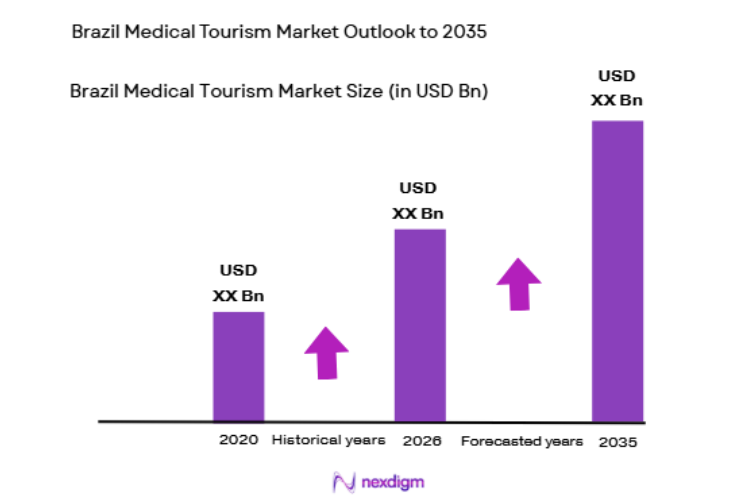
The Brazil medical tourism market is valued at approximately USD ~ billion based on a recent historical assessment. This market is primarily driven by the country’s robust healthcare system, competitive pricing, and world-class medical services. The growing demand for medical procedures such as cosmetic surgery, dental care, and fertility treatments has been a major contributor. Additionally, Brazil’s well-developed tourism infrastructure further supports its position as a popular destination for medical tourists from Latin America, the U.S., and Europe.
São Paulo, Rio de Janeiro, and Brasília are the dominant cities for Brazil’s medical tourism market due to their advanced healthcare facilities and established reputation for high-quality medical services. These cities attract a significant number of international patients seeking affordable, world-class medical care. The presence of top-tier hospitals, specialized clinics, and well-trained medical professionals make these cities attractive destinations. Additionally, these cities benefit from strong connections to international airports, making them more accessible to international travelers seeking medical treatments.
Market Segmentation
By Treatment Type
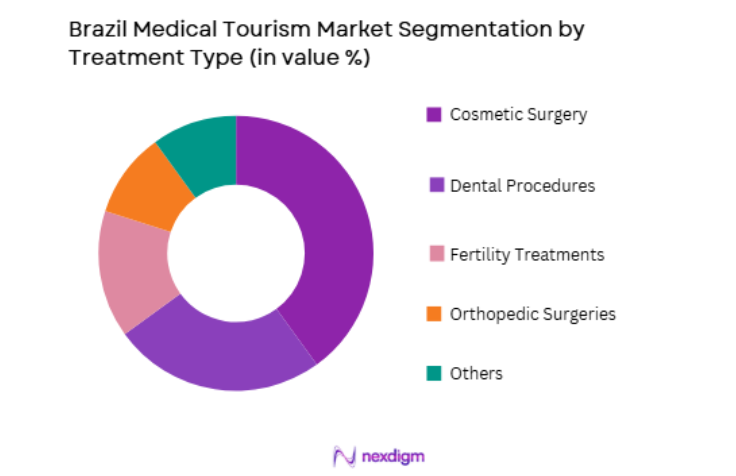
Brazil’s medical tourism market is segmented by treatment type into cosmetic surgery, dental procedures, fertility treatments, orthopedic surgeries, and others. Recently, cosmetic surgery has dominated the market share due to Brazil’s global reputation as a leading destination for aesthetic procedures. The country’s skilled surgeons, advanced facilities, and lower treatment costs compared to the U.S. and Europe have made Brazil the preferred destination for cosmetic surgeries, such as breast augmentations, liposuction, and facelifts. The increasing popularity of body image enhancements and non-invasive cosmetic procedures has further driven this sub-segment’s growth. The accessibility and affordability of these treatments have contributed significantly to Brazil’s position as a medical tourism hub.
By Source Country
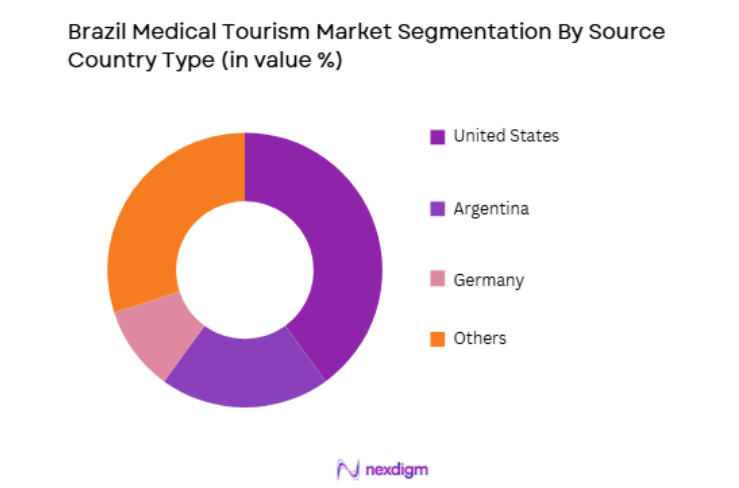
Brazil’s medical tourism market is segmented by source country into the United States, Argentina, Germany, and other countries. Recently, the U.S. has been the dominant source of medical tourists, with many Americans seeking affordable treatments in Brazil due to the high cost of healthcare in the U.S. Patients from the U.S. are particularly attracted to Brazil for cosmetic surgeries, dental treatments, and fertility procedures, as the country offers world-class medical care at a fraction of the cost. Additionally, Brazil’s proximity to the U.S., combined with its high-quality healthcare services, makes it an attractive destination for Americans seeking cost-effective medical solutions.
Competitive Landscape
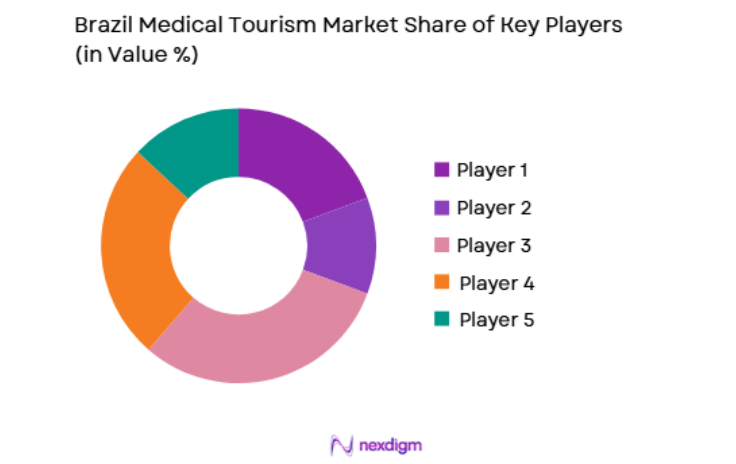
The competitive landscape of Brazil’s medical tourism market is increasingly characterized by the presence of both established international medical facilities and emerging local players. The market is witnessing consolidation as larger players acquire smaller local hospitals or clinics to expand their service offerings and geographic reach. International patients are drawn to Brazil due to its lower treatment costs, high-quality medical services, and established reputation in fields such as cosmetic surgery, dentistry, and fertility. Key players are increasingly adopting advanced technologies, such as telemedicine for pre-consultation, improving patient experiences and broadening their appeal to global markets.
| Company Name | Establishment Year | Headquarters | Technology Focus | Market Reach | Key Products | Revenue | Additional Parameter |
| Rede D’or São Luiz | 1977 | Rio de Janeiro, Brazil | ~ | ~ | ~ | ~ | ~ |
| Hospital Israelita Albert Einstein | 1951 | São Paulo, Brazil | ~ | ~ | ~ | ~ | ~ |
| Amil Healthcare | 1978 | Rio de Janeiro, Brazil | ~ | ~ | ~ | ~ | ~ |
| Fleury Group | 1926 | São Paulo, Brazil | ~ | ~ | ~ | ~ | ~ |
| Hapvida | 1981 | Fortaleza, Brazil | ~ | ~ | ~ | ~ | ~ |
Brazil Medical Tourism Market Analysis
Growth Drivers
Affordable Healthcare Costs
Affordable healthcare costs in Brazil are one of the main growth drivers for the medical tourism market. Brazilian medical services are significantly more affordable compared to the U.S. and Europe, making it an attractive destination for international patients seeking high-quality treatments at a fraction of the cost. The cost of medical procedures such as cosmetic surgeries, dental treatments, and fertility services are often 30% to 70% lower in Brazil, which appeals to medical tourists, particularly from the U.S. and European countries where healthcare costs are prohibitively high. The affordability factor is particularly attractive to patients who are looking for cost-effective solutions for elective surgeries, such as plastic surgeries and dental implants. Brazil’s competitive pricing combined with world-class healthcare professionals makes it a leading choice for medical tourism, driving the market’s growth.
World-Class Medical Facilities
Brazil’s reputation for world-class medical facilities is another key growth driver. Brazilian hospitals and clinics are equipped with the latest medical technologies and staffed by highly trained professionals, many of whom have received their education and training from prestigious institutions worldwide. The country’s expertise in fields like cosmetic surgery, dentistry, and fertility treatments has attracted international patients for many years. Additionally, Brazil’s medical tourism industry is well-regulated, ensuring that the facilities meet international standards of care. With internationally recognized medical professionals and a high standard of medical equipment, Brazil’s healthcare sector continues to thrive as a trusted destination for medical procedures, further accelerating market growth.
Market Challenges
Regulatory and Legal Barriers
Brazil’s medical tourism market faces challenges related to regulatory and legal barriers. While the country has a well-established medical system, patients coming from abroad may face difficulties navigating the legal landscape. For example, foreign patients may struggle with the bureaucratic processes involved in obtaining medical visas, understanding insurance coverage, or dealing with local laws regarding malpractice and patient rights. Moreover, the Brazilian healthcare system’s regulations may differ significantly from those in patients’ home countries, leading to confusion and potential delays in care. To overcome these challenges, many international patients rely on medical tourism facilitators, but the absence of clear legal frameworks for medical tourists can still be a barrier to market growth.
Cultural and Language Differences
Cultural and language differences also pose challenges for Brazil’s medical tourism market. While Brazil is a popular destination for patients from Latin America and the U.S., language barriers remain a concern for international patients. Although many Brazilian healthcare professionals are proficient in English, patients may encounter difficulties when communicating with staff who do not speak their language. Additionally, cultural differences in medical practices may make patients feel uneasy or disconnected. To address these concerns, many Brazilian medical tourism providers offer multilingual staff and cultural training to ensure a smoother experience for international patients. Despite these efforts, cultural and language differences still present a significant challenge for Brazil’s medical tourism market.
Opportunities
Medical Tourism Expansion in Brazil’s Northeastern Region
An emerging opportunity for Brazil’s medical tourism market is the expansion of services into the Northeastern region. Historically, Brazil’s medical tourism market has been concentrated in cities like São Paulo and Rio de Janeiro, but the government and private sector are increasingly investing in healthcare infrastructure in the Northeast. Cities such as Salvador, Recife, and Fortaleza are seeing significant improvements in healthcare services, making them attractive destinations for medical tourists seeking lower-cost options. As healthcare facilities improve and the region’s infrastructure develops, the Northeastern region has the potential to become a key player in Brazil’s medical tourism sector, offering more accessible and affordable medical treatments to international patients.
Integration of Wellness and Medical Tourism
The integration of wellness services with traditional medical tourism offers another significant opportunity for growth. Brazil’s tourism industry is already known for its natural beauty, with many visitors flocking to the country for relaxation and leisure. The combination of medical tourism and wellness tourism, such as spa treatments, rehabilitation therapies, and holistic health services, provides an all-encompassing experience for international patients. By offering wellness services alongside traditional medical procedures, Brazil can differentiate itself from other medical tourism destinations and attract a broader range of patients. This integration not only appeals to those seeking medical treatments but also to individuals looking for comprehensive health and wellness experiences, driving further growth in the medical tourism market.
Future Outlook
The future outlook for Brazil’s medical tourism market is highly positive, with continued growth expected in the coming years. The increasing demand for affordable, high-quality medical treatments, combined with advancements in healthcare technologies, will drive further market expansion. As Brazil continues to invest in healthcare infrastructure, particularly in emerging regions like the Northeast, medical tourism will become more accessible to a broader range of international patients. The integration of wellness and medical services will also open new market segments, attracting more patients seeking holistic health solutions. With continued support from both the government and the private sector, Brazil’s medical tourism market is poised for steady growth.
Major Players
- Rede D’or São Luiz
- Hospital Israelita Albert Einstein
- Amil Healthcare
- Fleury Group
- Hapvida
- DASA
- Grupo Sabin
- São Paulo Medical Center
- Clínica Alemana
- Hospital de Câncer de Barretos
- Hospital de Coraçāo
- São Camilo
- Hospital São Luiz
- Grupo São Marcos
- Hospital Samaritano
Key Target Audience
- Investments and venture capitalist firms
- Government and regulatory bodies
- Healthcare providers
- Hospitals and clinics
- Pharmaceutical companies
- Medical device manufacturers
- Insurance providers
- Medical tourism facilitators
Research Methodology
Step 1: Identification of Key Variables
Key variables such as market size, growth drivers, segmentation factors, and key trends are identified through both primary and secondary research.
Step 2: Market Analysis and Construction
Comprehensive market data is gathered and analyzed using statistical models to build a detailed market forecast.
Step 3: Hypothesis Validation and Expert Consultation
Insights and assumptions are validated through consultations with industry experts to ensure the reliability of the findings.
Step 4: Research Synthesis and Final Output
The final report synthesizes all collected data, providing a comprehensive analysis of Brazil’s medical tourism market.

- Executive Summary
- Research Methodology (Definitions, Scope, Industry Assumptions, Market Sizing Approach, Primary & Secondary Research Framework, Data Collection & Verification Protocol, Analytic Models & Forecast Methodology, Limitations & Research Validity Checks)

- Market Definition and Scope
- Value Chain & Stakeholder Ecosystem
- Regulatory / Certification Landscape
- Sector Dynamics Affecting Demand

- Growth Drivers
High-Quality Healthcare at Competitive Prices
Government Promotion of Medical Tourism
Advancements in Medical Technology - Market Challenges
Regulatory and Licensing Barriers
Language and Cultural Barriers
Perception of Medical Risks - Market Opportunities
Expansion in Non-surgical Treatments
Medical Tourism for Wellness Services
Increase in Dental and Cosmetic Surgery Tourism - Trends
Rising Popularity of Wellness Tourism
Increasing Acceptance of Telemedicine in Medical Tourism - Government Regulations
- SWOT Analysis
- Porter’s Five Forces

- By Market Value, 2020-2025
- By Installed Units, 2020-2025
- By Average System Price, 2020-2025
- By System Complexity Tier, 2020-2025

- By System Type (In Value%)
Cosmetic Surgery
Orthopedic Surgery
Cardiac Surgery
Dental Procedures
Fertility Treatments - By Platform Type (In Value%)
Medical Tourism Agencies
Online Platforms
Direct Hospital Referrals
Third-party Facilitators - By Fitment Type (In Value%)
Complete Treatment Packages
Pre-treatment Services
Post-treatment Services
Travel and Accommodation Services - By End User Segment (In Value%)
International Patients
Domestic Patients
Insurance Providers

- Market Share Analysis
- Cross Comparison Parameters (System Type, Platform Type, Procurement Channel, End User Segment, Fitment Type, Service Quality, Regulatory Compliance, Patient Experience, Cost Efficiency, Market Penetration)
- SWOT Analysis of Key Competitors
- Pricing & Procurement Analysis
- Key Players
Hospital Alemão Oswaldo Cruz
Fleury Group
DGLAB
Hospital de Câncer de Barretos
Aché Laboratórios Farmacêuticos
Rede D’Or São Luiz
Centrinho
Clinica São Vicente
Sirius Health
Brazilian Health Services
Hospital Israelita Albert Einstein
Grupo Sabin
Oswaldo Cruz Foundation
Grupo São João
Beneficência Portuguesa de São Paulo

- International Patients Seeking Affordable Healthcare
- Insurance Providers Facilitating Medical Tourism
- Domestic Patients Opting for High-Quality Services

- Forecast Market Value, 2026-2035
- Forecast Installed Units, 2026-2035
- Price Forecast by System Tier, 2026-2035
- Future Demand by Platform, 2026-2035


 Request a Sample
 Ask for Customization
 Get a Quote
 Enquire Now