

 Download PDF
Market Overview
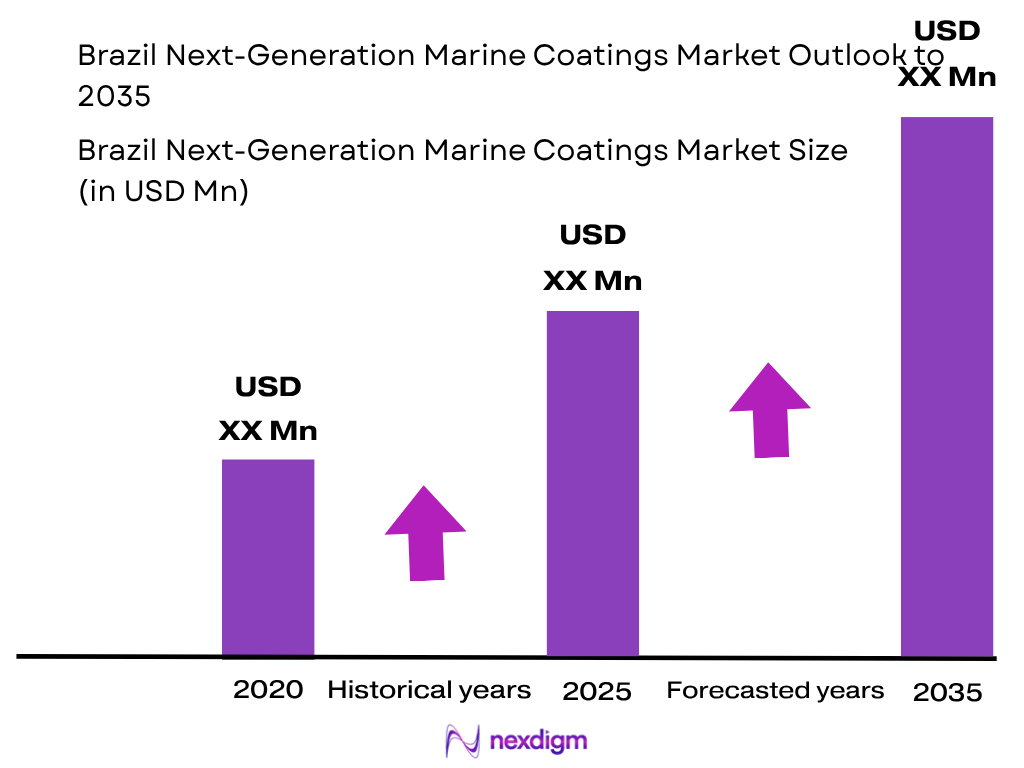
The Brazil Next-Gen Marine Coatings Market is valued at approximately ~USD ~ billion based on recent industry analysis, supported by increasing demand for advanced antifouling systems, corrosion-resistant coatings, low-VOC formulations, and sustainable marine protection solutions. The market growth is driven by Brazil’s extensive coastline, offshore oil and gas activities, vessel maintenance requirements, shipbuilding operations, and the transition toward high-performance coating technologies that improve vessel efficiency, durability, and environmental compliance.
Brazil’s marine coatings ecosystem is concentrated across major maritime hubs including Rio de Janeiro, São Paulo, Espírito Santo, Santa Catarina, and Rio Grande do Sul due to their strong presence in offshore operations, shipyards, ports, and industrial marine activities. Rio de Janeiro dominates due to offshore oil and gas infrastructure and vessel maintenance demand, while São Paulo contributes through industrial supply networks. Southern coastal regions benefit from shipbuilding clusters, repair facilities, and commercial shipping activities.
Market Segmentation
By Coating Technology
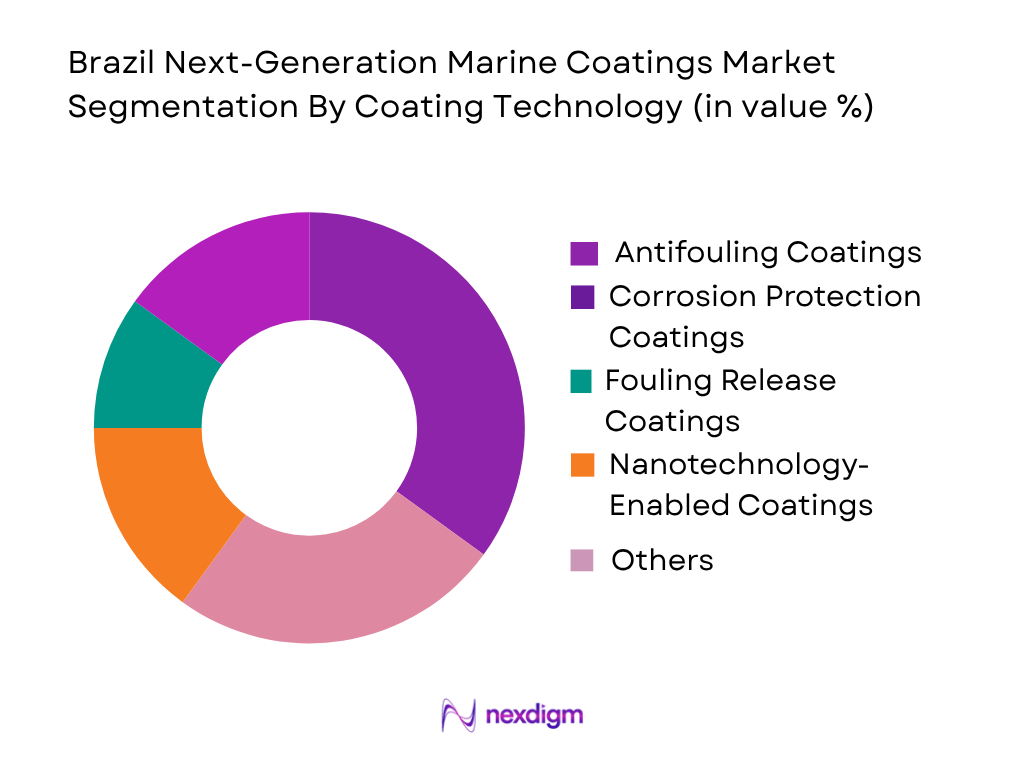
The Brazil Next-Gen Marine Coatings Market is segmented by coating technology into antifouling coatings, fouling release coatings, anticorrosion coatings, nanotechnology-enabled coatings, smart marine coatings, and bio-based marine coatings. Among these, antifouling coatings hold the dominant market position due to their extensive application across commercial vessels, offshore support vessels, and ship maintenance activities. The requirement to prevent marine organism accumulation on vessel hulls remains a major factor supporting adoption. Companies operating in Brazil’s shipping and offshore sectors prioritize antifouling solutions because they improve vessel performance, reduce fuel consumption, and extend operational life. Increasing environmental restrictions are also encouraging manufacturers to develop advanced antifouling alternatives with reduced toxicity and improved sustainability characteristics.
By Vessel Type
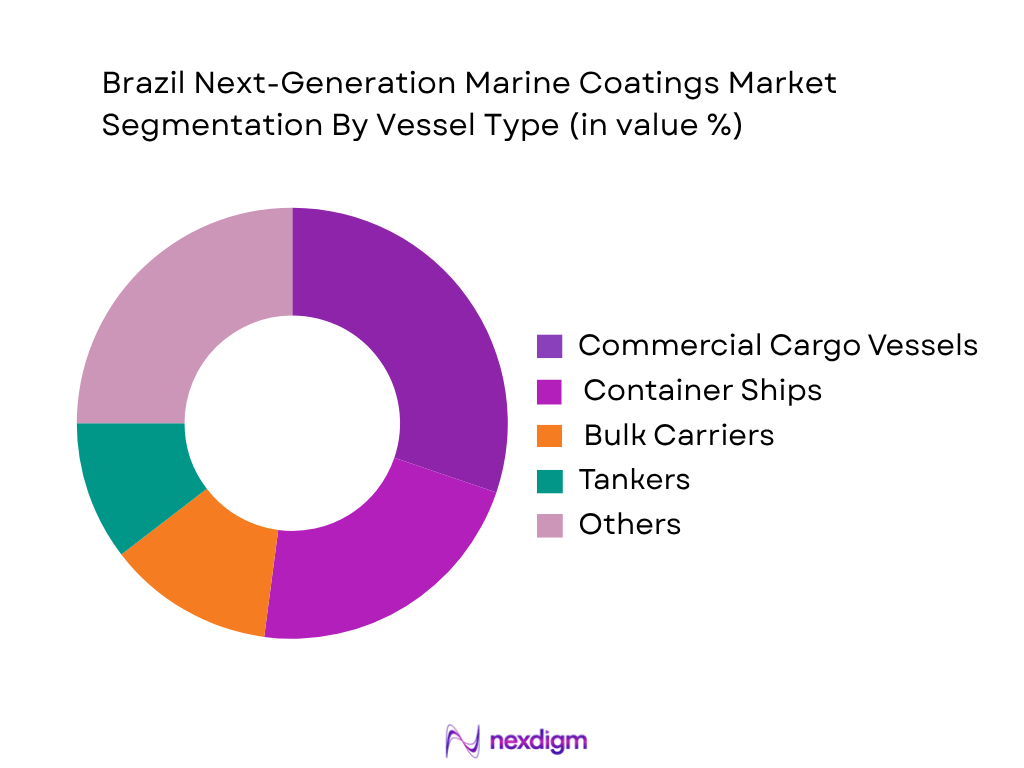
The Brazil Next-Gen Marine Coatings Market is segmented by vessel type into commercial cargo vessels, offshore support vessels, fishing vessels, naval vessels, passenger ferries, tugboats, workboats, and recreational vessels. Commercial cargo vessels represent the dominant segment due to Brazil’s large maritime transportation network, export-oriented economy, and dependence on bulk carriers, tankers, and container vessels. Offshore support vessels also contribute significantly due to Brazil’s extensive offshore oil and gas production activities. Continuous maintenance requirements, corrosion exposure, and regulatory compliance requirements increase coating demand across vessel operators. The replacement of conventional coatings with advanced marine protection systems further supports adoption among commercial fleet owners.
Competitive Landscape
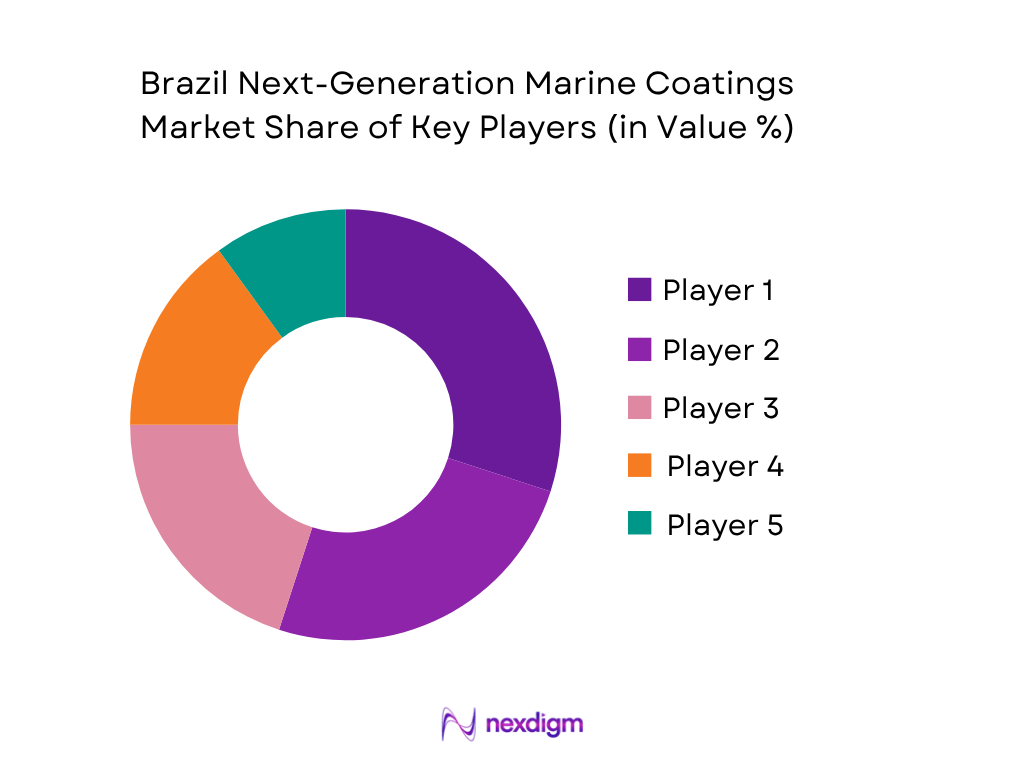
The Brazil Next-Gen Marine Coatings Market is moderately consolidated with the presence of global marine coating manufacturers and regional suppliers. Companies such as AkzoNobel, PPG Industries, Jotun, Hempel, and Sherwin-Williams maintain strong market positions due to extensive product portfolios, technical expertise, marine certifications, and established relationships with shipyards and vessel operators. Competition is primarily based on coating performance, sustainability capabilities, technical support, application expertise, and ability to supply specialized marine protection systems.
| Company | Established | Headquarters | Brazil Footprint | Marine Technology Focus | Antifouling/Fouling Control | Offshore & Protective Strength | Compliance/Qualification Positioning | Technical-Service Capability |
| AkzoNobel / International | 1792 heritage | Amsterdam, Netherlands | ~ | ~ | ~ | ~ | ~ | ~ |
| PPG Protective & Marine Coatings | 1883 heritage | Pittsburgh, USA | ~ | ~ | ~ | ~ | ~ | ~ |
| Jotun | 1926 | Sandefjord, Norway | ~ | ~ | ~ | ~ | ~ | ~ |
| Hempel | 1915 | Kongens Lyngby, Denmark | ~ | ~ | ~ | ~ | ~ | ~ |
| WEG Coatings | 1961 | Jaraguá do Sul, Brazil | ~ | ~ | ~ | ~ | ~ |
Brazil Next-Gen Marine Coatings Market Analysis
Growth Drivers
Expansion of Offshore Oil and Gas Activities Supporting Marine Coating Demand
Brazil’s offshore energy sector is a major demand driver for next-generation marine coatings due to the extensive use of FPSOs, offshore platforms, subsea equipment, and support vessels that require advanced corrosion protection and high-performance coating systems. The country recorded crude oil and natural gas production from offshore fields as a significant component of its energy industry, with offshore production data monitored through the National Agency of Petroleum, Natural Gas and Biofuels (ANP). Brazil’s maritime energy infrastructure continues to expand, with Petrobras operating 56 active offshore platforms in 2024, including producing platforms and supporting units, creating continuous requirements for protective coatings, ballast tank coatings, and marine-grade corrosion-resistant solutions. The country’s offshore assets operate in harsh marine environments where exposure to saltwater, pressure variations, and biofouling increases maintenance requirements. Brazil’s GDP reached USD 2.17 trillion in 2024, while merchandise trade reached USD 615 billion, highlighting the scale of industrial and export activities dependent on reliable maritime infrastructure. These economic activities support demand for advanced marine coating technologies that improve asset durability, reduce maintenance interruptions, and enhance operational efficiency.
Growth of Maritime Transportation, Port Infrastructure, and Vessel Maintenance Activities
Brazil’s extensive maritime transportation network creates sustained demand for next-generation marine coatings across commercial vessels, shipyards, ports, and marine infrastructure. The country operates one of the largest maritime ecosystems in Latin America, supported by a coastline of approximately 7,400 kilometers and significant dependence on maritime trade flows. Brazil recorded 900 nationally flagged ships with approximately 5.7 million deadweight tons (DWT) capacity and 26,631 port calls in 2024, demonstrating the requirement for continuous vessel maintenance and protective coating applications. Container port throughput reached 11.6 million TEU in 2024, reflecting strong cargo movement through Brazilian ports and supporting demand for hull protection, antifouling coatings, and corrosion-resistant systems. Additionally, Brazil’s naval and maritime sector received BRL 30.8 billion in approved investments for more than 430 projects in 2024, strengthening shipbuilding, repair, and marine infrastructure activities. These developments increase the requirement for advanced coating solutions that extend vessel lifecycle, improve fuel efficiency, and comply with environmental standards governing marine operations.
Market Challenges
High Dependence on Imported Advanced Marine Coating Technologies and Specialty Raw Materials
The Brazil Next-Gen Marine Coatings Market faces challenges due to dependence on international suppliers for advanced coating technologies, specialty resins, additives, pigments, and high-performance formulations. Although Brazil has a developed industrial base, several specialized marine coating components are sourced through global supply chains, increasing vulnerability to international logistics disruptions and raw material availability constraints. Brazil recorded merchandise imports of USD 277.9 billion in 2024, reflecting the country’s significant engagement with global supply chains across industrial sectors. Advanced marine coatings such as silicone-based fouling release systems, nanotechnology-enabled coatings, and low-VOC formulations require specialized chemical inputs and technical expertise that remain concentrated among global manufacturers. The complexity of marine coating formulation, certification requirements, and vessel-specific performance standards creates barriers for local manufacturers attempting to develop equivalent technologies. Additionally, offshore operators and shipyards require coatings that meet international maritime standards, increasing reliance on established global suppliers with proven marine application experience and certification capabilities.
Complex Marine Application Requirements and Limited Specialized Workforce Availability
The adoption of next-generation marine coatings in Brazil is challenged by complex application requirements, including surface preparation, environmental condition management, coating thickness control, inspection procedures, and specialized application expertise. Marine coatings require precise application processes because coating failure can accelerate corrosion, increase vessel downtime, and reduce asset operational life. Brazil’s maritime ecosystem includes diverse vessel categories, offshore platforms, and port infrastructure operating under different environmental conditions, creating the need for highly trained applicators and technical service teams. The country’s maritime sector recorded 900 national flag vessels and more than 11.6 million TEU of container throughput in 2024, increasing the need for regular maintenance and specialized coating applications. The shortage of experienced marine coating professionals capable of handling advanced systems such as high-solid coatings, smart coatings, and nano-enhanced formulations can slow adoption. Furthermore, compliance with environmental and safety requirements increases operational complexity for shipyards and marine contractors implementing next-generation coating technologies.
Market Opportunities
Adoption of Sustainable and Environmentally Compliant Marine Coating Technologies
The transition toward environmentally sustainable marine operations creates opportunities for advanced coating manufacturers offering low-VOC, bio-based, and non-toxic marine coating solutions. Increasing focus on reducing marine pollution and improving vessel efficiency is encouraging ship operators and offshore companies to adopt coatings with improved environmental performance. Brazil’s maritime trade ecosystem remains highly significant, with merchandise trade reaching USD 615 billion in 2024 and transport-related activities supporting industrial and export operations. As vessel operators seek solutions that reduce maintenance requirements and improve fuel efficiency, sustainable antifouling systems, silicone-based fouling release coatings, and advanced protective coatings are gaining importance. Environmental compliance requirements from international maritime regulations are influencing procurement decisions among shipowners, shipyards, and offshore operators. The opportunity is strengthened by Brazil’s extensive offshore infrastructure and large coastal shipping network, where sustainable coating technologies can support longer asset lifecycles and reduced environmental impact.
Development of Smart Marine Coatings and Advanced Protective Systems for Offshore Assets
The expansion of offshore infrastructure and modernization of maritime assets creates opportunities for smart marine coatings, self-healing coatings, graphene-enhanced systems, and advanced corrosion protection technologies. Brazil’s offshore oil and gas sector continues to represent a significant application area, with ANP monitoring extensive offshore production activities and Petrobras reporting 56 active offshore platforms in operation during 2024. These assets require continuous protection against corrosion, marine growth, and extreme operating conditions, creating demand for high-performance coating systems. The country’s maritime fleet recorded 14.1 million DWT under ownership capacity in 2024, supporting additional demand for advanced vessel protection technologies. Smart coatings integrated with monitoring capabilities can improve inspection efficiency by enabling early identification of coating degradation and corrosion risks. As offshore operators focus on asset reliability and lifecycle extension, advanced marine coating technologies provide opportunities to reduce maintenance frequency, improve operational continuity, and enhance protection of critical maritime infrastructure.
Future Outlook
Over the next decade, the Brazil Next-Gen Marine Coatings Market is expected to demonstrate significant growth driven by increasing offshore activities, fleet modernization, environmental regulations, and demand for longer-lasting marine protection systems. Adoption of smart coatings, sustainable antifouling technologies, and advanced corrosion protection solutions is expected to accelerate among vessel operators and shipyards.
Growth opportunities will emerge from offshore infrastructure expansion, digital coating inspection systems, and the transition toward environmentally compliant marine coating formulations. Manufacturers focusing on innovation, local partnerships, and sustainable product development are expected to strengthen their market position.
Major Players
- AkzoNobel
- PPG Industries
- Sherwin-Williams
- Jotun
- Hempel
- Nippon Paint Marine Coatings
- Chugoku Marine Paints
- Kansai Paint Marine Coatings
- Axalta Coating Systems
- BASF Coatings
- RPM International
- Weg Coatings
- International Paint
- Eucatex
- Marangoni Marine Coatings
Key Target Audience
- Shipbuilding and Ship Repair Companies
- Offshore Oil and Gas Operators
- Commercial Shipping Companies and Vessel Owners
- Marine Coating Manufacturers and Suppliers
- Investments and Venture Capitalist Firms (Marine Technology Investors, Industrial Technology Funds, Sustainable Materials Investment Firms, Maritime Infrastructure Investment Funds)
- Government and Regulatory Bodies
- Port Authorities and Marine Infrastructure Developers
- Industrial Chemical and Raw Material Companies
Research Methodology
Step 1: Identification of Key Variables
The initial phase involves developing a comprehensive ecosystem map covering major stakeholders operating within the Brazil Next-Gen Marine Coatings Market. This process includes identifying coating manufacturers, shipyards, vessel operators, offshore companies, raw material suppliers, regulatory bodies, and technology providers. Secondary research from industry databases, trade publications, maritime reports, and proprietary sources is used to define critical market variables including coating technologies, vessel applications, demand drivers, and supply chain factors.
Step 2: Market Analysis and Construction
This phase focuses on compiling historical market information and evaluating the structure of the Brazil Next-Gen Marine Coatings Market. The assessment includes analysis of marine coating consumption patterns, shipyard demand, offshore maintenance requirements, import dependency, technology adoption, and product segmentation. Revenue estimation is developed through a combination of supply-side evaluation, vessel fleet analysis, application-based consumption assessment, and industry-level demand modeling.
Step 3: Hypothesis Validation and Expert Consultation
Market assumptions and analytical hypotheses are validated through discussions with industry participants including marine coating manufacturers, shipyard professionals, offshore operators, vessel owners, and technical specialists. Computer-assisted telephone interviews (CATIs), expert discussions, and primary interactions provide operational insights regarding product adoption, pricing trends, procurement behavior, and future technology requirements.
Step 4: Research Synthesis and Final Output
The final stage integrates findings from primary and secondary research to develop a validated market assessment. Data collected from manufacturers, shipyards, vessel operators, and maritime stakeholders is analyzed through bottom-up and top-down approaches. The final report provides insights into market size, competitive positioning, segmentation analysis, growth opportunities, and strategic recommendations for stakeholders operating in the Brazil Next-Gen Marine Coatings Market.

- Executive Summary
- Research Methodology (Market Definition and Scope, Brazil Next-Generation Marine Coatings Taxonomy, Marine Coating Technology Classification, Functional Performance Mapping, Sustainable Coating Technology Assessment, Market Sizing Framework, Top-Down Analysis, Bottom-Up Analysis, Domestic Manufacturing Assessment, Import Dependency Assessment, Demand-Side Assessment, Supply-Side Assessment, Vessel Application Mapping, Shipyard Consumption Assessment, Offshore Asset Coating Assessment, Primary Industry Interviews, Maritime Industry Validation, Trade Flow Analysis, Data Triangulation, Forecasting Framework, Scenario Analysis, Assumptions and Limitations)

- Definition and Scope
- Brazil Marine Coatings Industry Evolution and Technology Development
- Next-Generation Marine Coatings Manufacturing and Formulation Process
- Marine Coatings Value Chain Analysis
- Brazil Marine Coatings Supply Chain Analysis
- Marine Coatings Raw Material Ecosystem Analysis
- Brazil Marine Coatings Import Dependency and Localization Assessment
- Marine Coatings Performance and Application Architecture
- Marine Coatings Application Lifecycle Analysis

- Growth Drivers (Expansion of Brazilian Maritime Transportation, Growth of Offshore Oil and Gas Activities, Development of Shipbuilding and Ship Repair Industry, Increasing Vessel Maintenance Requirements, Offshore Platform Expansion, Port Infrastructure Modernization, Demand for Longer Coating Service Life, Fuel Efficiency Improvement Through Hull Coatings, Adoption of Environmentally Compliant Marine Coatings)
- Market Challenges (High Dependence on Imported Advanced Marine Coating Technologies, Premium Cost of Next-Generation Coatings, Limited Domestic Specialty Coating Manufacturing Capability, Skilled Marine Applicator Shortage, Surface Preparation Complexity, Raw Material Price Volatility, Limited Awareness of Advanced Coating Technologies, Regulatory Compliance Costs)
- Market Opportunities (Green Marine Coating Adoption, Bio-Based Antifouling Technologies, Smart Coating Systems, Offshore Asset Life Extension Programs, Naval Fleet Modernization, Premium Fouling Release Coatings, Digital Coating Monitoring Solutions, Sustainable Ship Maintenance Practices, Offshore Renewable Energy Development)
- Market Trends (Low-VOC Marine Coating Adoption, Silicone-Based Fouling Release Technology Growth, High-Solids Coating Conversion, Nano-Enhanced Marine Protection, Graphene-Based Coating Development, Smart Coating Integration, Longer Dry Docking Intervals, Sustainable Maritime Operations, Fuel Consumption Reduction Through Hull Performance Coatings)
- Regulatory and Standards Landscape (Brazilian Environmental Regulations, Brazilian Navy Standards, National Maritime Authority Requirements, International Maritime Organization Compliance, Antifouling Systems Regulations, Marine Pollution Prevention Standards, VOC Emission Requirements, Hazardous Chemical Management, Ship Safety Standards, Environmental Protection Regulations)
- SWOT Analysis
- Porter’s Five Forces Analysis
- PESTLE Analysis

- By Market Value (2020-2025)
- By Marine Coating Consumption Volume (2020-2025)
- By Domestic Production Volume (2020-2025)
- By Import Volume (2020-2025)
- By Export Volume (2020-2025)
- By Vessel Maintenance Coating Consumption Volume (2020-2025)
- By Shipyard Coating Application Volume (2020-2025)
- By Offshore Structure Coating Consumption Volume (2020-2025)
- By Marine Coatings Production Capacity (2020-2025)

- By Coating Type (In Value %)
Anticorrosion Marine Coatings
Antifouling Coatings
Fouling Release Coatings
Marine Protective Coatings
Hull Performance Coatings
Ballast Tank Protective Coatings
Deck and Superstructure Coatings
Offshore Platform Protective Coatings
Fire-Resistant Marine Coatings
High-Performance Functional Marine Coatings
Self-Polishing Antifouling Coatings - By Resin Type (In Value %)
Epoxy Resin Marine Coatings
Polyurethane Marine Coatings
Acrylic Marine Coatings
Silicone-Based Marine Coatings
Polysiloxane Marine Coatings
Fluoropolymer Marine Coatings
Hybrid Resin Marine Coating Systems
Bio-Based Resin Marine Coatings
Advanced Nano-Enhanced Resin Systems - By Technology (In Value %)
Solvent-Borne Marine Coatings
Waterborne Marine Coatings
High-Solids Marine Coatings
Low-VOC Marine Coatings
Self-Healing Marine Coatings
Nano-Technology Enabled Marine Coatings
Graphene-Enhanced Marine Coatings
Smart Marine Coating Systems
UV-Resistant Marine Coatings
Advanced Fouling Release Technologies - By Vessel Type (In Value %)
Commercial Cargo Vessels
Bulk Carriers
Container Ships
Oil and Chemical Tankers
Passenger Ferries and Ro-Ro Vessels
Fishing Vessels
Naval and Defense Vessels
Offshore Support Vessels
Tugboats and Workboats
Recreational Boats and Yachts
Coastal and Inland Transport Vessels - By End-Use Industry (In Value %)
Maritime Transportation
Shipbuilding Industry
Ship Repair and Maintenance Industry
Offshore Oil and Gas Industry
Naval Defense Sector
Port and Marine Infrastructure
Offshore Renewable Energy Infrastructure - By Sales Channel (In Value %)
Direct Shipyard Sales
Direct Vessel Operator Sales
Marine Coating Distributors
Industrial Coating Distributors
Marine Maintenance Contractors
OEM and Specification Sales
Specialty Chemical Dealers - By Region (In Value %)
Southeast Brazil
South Brazil
Northeast Brazil
North Brazil
Central-West Brazil

- Market Share of Major Players (By Revenue, Volume, Coating Type, Resin Type, Technology, Vessel Segment, Application Area, Distribution Channel, Customer Segment)
- Cross Comparison Parameters (Marine Coating Technology Portfolio Breadth, Antifouling and Fouling Release Capability, Brazilian Shipyard Partnership Network, Offshore Coating Capability, Low-VOC and Sustainable Coating Capability, Marine Certification and Specification Approval Depth, Vessel Segment Coverage, Local Technical Service Capability)
- SWOT Analysis of Major Players
- Competitive Positioning Matrix
- Pricing and Distribution Network Benchmarking
- Detailed Profiles of Major Companies
AkzoNobel
PPG Industries
Sherwin-Williams
Jotun
Hempel
Nippon Paint Marine Coatings
Chugoku Marine Paints
Kansai Paint Marine Coatings
Axalta Coating Systems
BASF Coatings
RPM International
Weg Coatings
International Paint
Eucatex
Marangoni Marine Coatings

- Buyer Segmentation
- Procurement Behaviour
- Supplier Selection Criteria
- Buyer Pain Points
- Technology Adoption Assessment
- Replacement and Repurchase Behaviour
- Marine Coating Specification Decision Process
- Total Cost of Ownership Assessment

- By Market Value (2026-2035)
- By Marine Coating Consumption Volume (2026-2035)
- By Domestic Production Volume (2026-2035)
- By Import Volume (2026-2035)
- By Export Volume (2026-2035)
- By Vessel Maintenance Coating Consumption Volume (2026-2035)
- By Shipyard Coating Application Volume (2026-2035)
- By Offshore Structure Coating Consumption Volume (2026-2035)
- By Marine Coatings Production Capacity (2026-2035)


 Request a Sample
 Ask for Customization
 Get a Quote
 Enquire Now