

 Download PDF
Market Overview
The Brazil oral care market is valued at USD ~ million, supported by daily-use toothpaste, toothbrush replacement, mouthwash adoption, dental-floss consumption, and premium claims such as sensitivity, whitening, enamel repair, gum protection, and alcohol-free rinses. Grand View Research states that toothpaste is the largest revenue-generating product category, while toothbrushes are the fastest-growing segment, reflecting Brazil’s shift from basic hygiene to preventive and benefit-led oral care.
São Paulo, Rio de Janeiro, Belo Horizonte, Brasília, Fortaleza, and Porto Alegre dominate Brazil oral care demand because they combine dense urban populations, modern retail chains, pharmacies, dental clinics, and e-commerce fulfilment. IBGE reports Brazil’s population at 212.6 million, with São Paulo’s metropolitan area at 21.5 million, Rio de Janeiro at 12.9 million, Belo Horizonte at 6.0 million, Federal District surroundings at 4.7 million, Fortaleza at 4.2 million, and Porto Alegre at 4.1 million.
Brazil Oral Care Market Segmentation
By Product Type
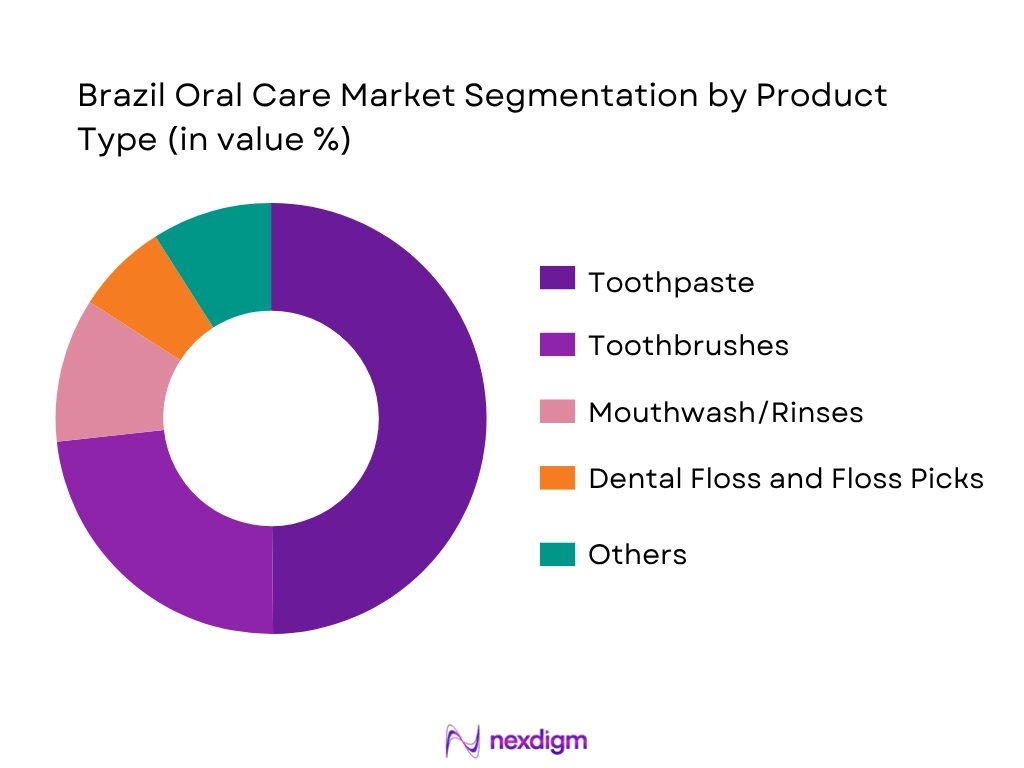
Brazil oral care market is segmented by product type into toothpaste, toothbrushes, mouthwash/rinses, dental floss, denture care, whitening products, interdental brushes, and tongue cleaners. Toothpaste holds the dominant market share because it is the highest-frequency oral-care product, used across income groups and age cohorts, and is deeply embedded in household replenishment baskets. The segment is supported by fluoride cavity protection, whitening, sensitivity relief, gum-care and total-care claims. Brazil’s large dental-professional base and ANVISA-regulated fluoride labeling further strengthen consumer trust in toothpaste as the primary preventive oral hygiene product. Premium variants such as sensitive, enamel repair, charcoal, herbal and whitening toothpaste are also expanding basket value in pharmacies and supermarkets. Nexdigm identifies toothpaste as Brazil’s largest revenue-generating oral care segment.
By Distribution Channel
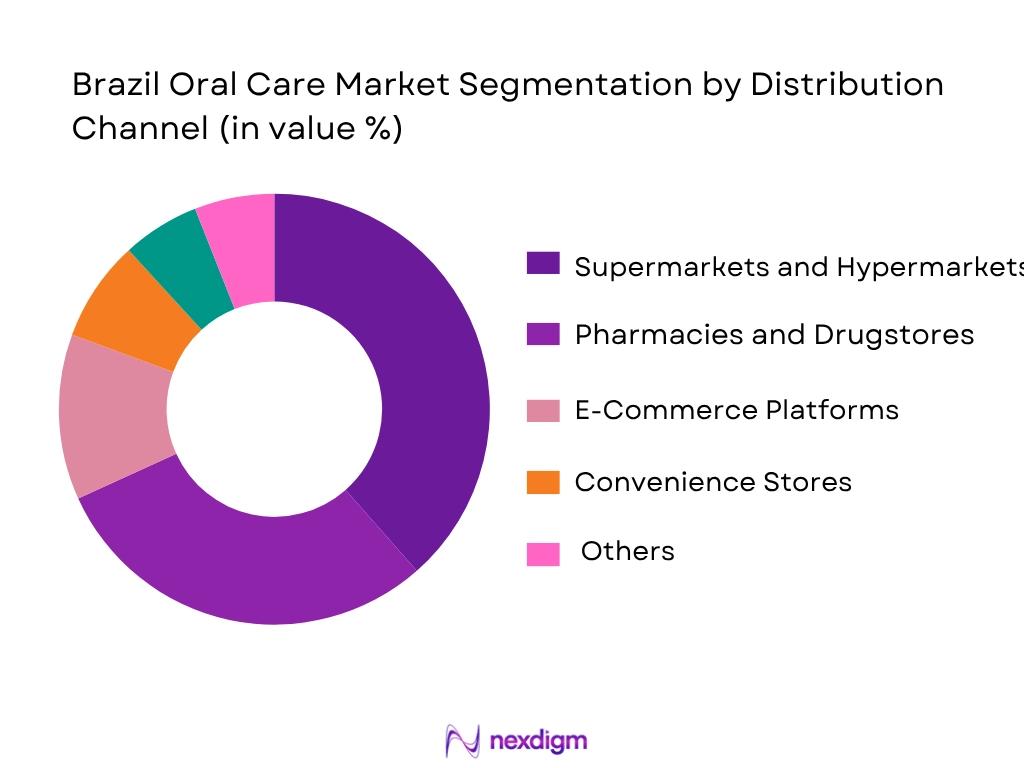
Brazil oral care market is segmented by distribution channel into supermarkets/hypermarkets, pharmacies/drugstores, e-commerce platforms, convenience stores, dental clinics, marketplaces, and direct-to-consumer channels. Supermarkets and hypermarkets dominate because oral care is primarily purchased as a household FMCG category alongside personal care, beauty, groceries, and hygiene products. These outlets provide high SKU visibility, price promotions, multi-pack offers, family-size toothpaste, and immediate product comparison between Colgate, Oral-B, Sensodyne, Closeup, Listerine, Curaprox, Condor and private-label products. Pharmacies are highly relevant for sensitivity, gum care, whitening, alcohol-free mouthwash and dentist-recommended products, but modern grocery retail remains the strongest volume channel due to accessibility, promotional depth, and weekly household shopping behavior.
Competitive Landscape
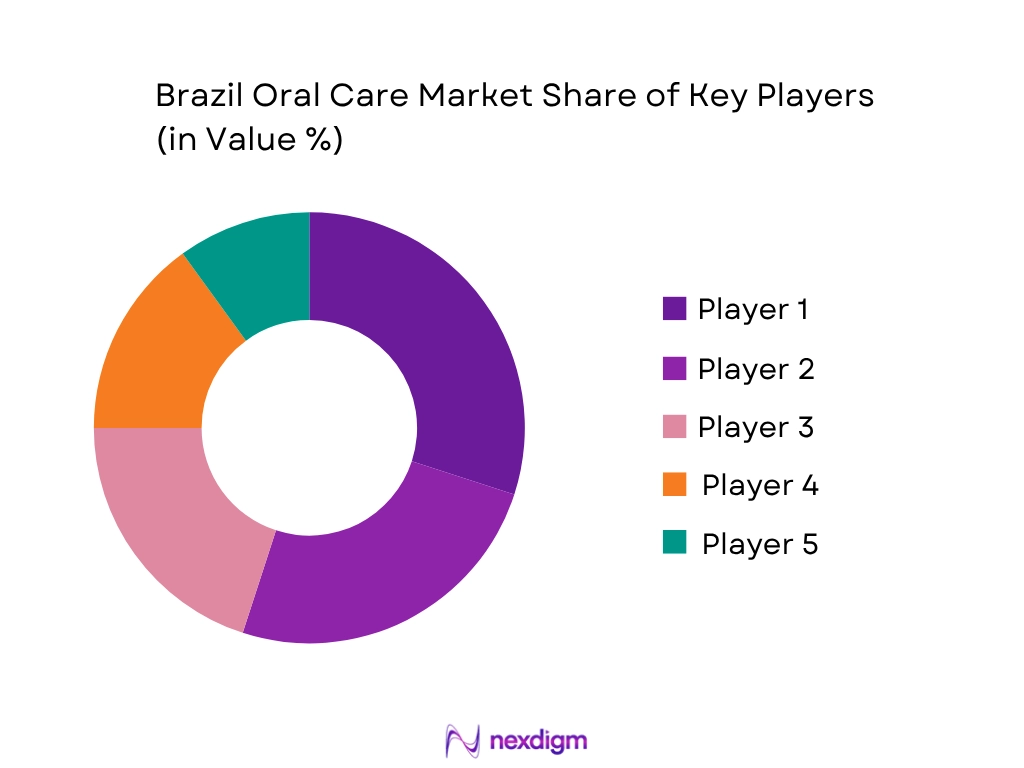
The Brazil oral care market is concentrated around global FMCG and consumer-health companies, supported by local toothbrush, natural-care and dental-specialist brands. Colgate-Palmolive, Procter & Gamble, Unilever, Haleon and Kenvue lead through broad portfolios, pharmacy and supermarket distribution, benefit-led toothpaste claims, mouthwash brands, and dentist-backed positioning. Local and specialist brands compete through affordability, brush quality, natural formulations, orthodontic products and whitening-led innovation.
| Company | Establishment Year | Headquarters | Key Brazil Oral Care Brands | Core Product Strength | Main Channel Strength | Premium Positioning | Dentist/Clinical Equity | Innovation Focus | Brazil Relevance |
| Colgate-Palmolive | 1806 | New York, USA | ~ | ~ | ~ | ~ | ~ | ~ | ~ |
| Procter & Gamble | 1837 | Cincinnati, USA | ~ | ~ | ~ | ~ | ~ | ~ | ~ |
| Unilever | 1929 | London, UK | ~ | ~ | ~ | ~ | ~ | ~ | ~ |
| Haleon | 2022 | Weybridge, UK | ~ | ~ | ~ | ~ | ~ | ~ | ~ |
| Kenvue | 2023 | Skillman, USA | ~ | ~ | ~ | ~ | ~ | ~ | ~ |
Brazil Oral Care Market Analysis
Growth Drivers
Urban Oral Hygiene Routines
Brazil Oral Care Market is supported by a large urban consumer base with frequent replenishment demand for toothpaste, toothbrushes, mouthwash and dental floss. Brazil’s estimated population reached 212.6 million people, and its largest metropolitan concentrations include São Paulo with 21.5 million people, Rio de Janeiro with 12.9 million, Belo Horizonte with 6.0 million, the Federal District and surroundings with 4.7 million, Fortaleza with 4.2 million, and Porto Alegre with 4.1 million. These dense urban clusters support supermarket, pharmacy and e-commerce availability for oral-care SKUs. The World Bank also reports Brazil’s GDP at USD 2.19 trillion and GDP per capita at USD 10,310.5, indicating a large consumption base for recurring personal-care categories. For oral care, this matters because urban households buy toothpaste as a non-discretionary hygiene product, while higher-income metropolitan areas support whitening, sensitivity, gum-care, alcohol-free mouthwash and electric toothbrush adoption.
Dentist-Led Recommendations
Brazil Oral Care Market benefits from one of the world’s largest dental-professional ecosystems, which directly influences purchases of sensitivity toothpaste, gum-care toothpaste, fluoride rinses, interdental brushes, floss, orthodontic brushes and electric toothbrushes. The Federal Council of Dentistry reported 441,000 registered dental surgeons in Brazil and 149,346 completed specializations across 24 recognized dental specialty areas. CFO also reported that the public health system had 82,079 dental surgeons, 12,163 oral-health technicians, 48,603 oral-health assistants, and more than 30 million dental attendances in the first half of 2025. These numbers create a strong clinical recommendation layer behind oral-care routines. In market terms, dentist advice increases credibility for therapeutic claims such as sensitivity relief, anti-plaque, anti-caries, gum protection, fluoride use and post-procedure oral hygiene. This supports premium SKUs in pharmacies and dentist-recommended retail assortments.
Market Challenges
Price Sensitivity
Brazil Oral Care Market faces price sensitivity because oral-care products compete within monthly household hygiene baskets, particularly in lower-income regions. IBGE reported Brazil’s per-capita household earnings at R$2,069, ranging from R$1,077 in Maranhão to R$3,444 in the Federal District. This wide income dispersion affects trade-up potential for premium toothpaste, alcohol-free mouthwash, electric toothbrushes, whitening products and interdental accessories. IBGE also reported average usual real earnings of R$3,108 in the main job, while the World Bank reported GDP per capita at USD 10,310.5. For market participants, the implication is clear: economy and mass toothpaste remain essential for national reach, while premium oral-care growth is more concentrated in urban, higher-income states and pharmacy-led channels. Brands must balance small pack sizes, multi-packs, promotions, family tubes and benefit-led premium lines without losing low-income consumers who prioritize basic fluoride toothpaste and manual toothbrushes.
Counterfeit/Low-Quality SKUs
Brazil Oral Care Market is exposed to low-quality and irregular hygiene products because oral-care SKUs fall under Brazil’s regulated cosmetics and personal-hygiene framework. ANVISA states that products for teeth and oral mucosa are included under personal hygiene, cosmetics and perfumes, and that Grade 2 products require proof of safety and/or efficacy, instructions, precautions and usage restrictions. In 2025, ANVISA ordered the recall of 78 irregular cosmetics that required registration but had only been notified to the agency. For oral care, this regulatory distinction is important because claims such as sensitive teeth, anti-caries, anti-plaque, anti-tartar and dental whitening are classified as higher-risk indications in ANVISA’s technical framework. Low-quality or wrongly regularized SKUs can weaken consumer confidence, create compliance pressure for legitimate brands, and increase monitoring needs across marketplaces, small retailers and informal channels.
Opportunities
Alcohol-Free Mouthwash
Alcohol-free mouthwash represents a future growth opportunity in Brazil Oral Care Market because it aligns with preventive routines, family usage, gum care, breath freshening and sensitivity-oriented product positioning. Brazil has a large digitally reachable consumer base: IBGE reported 74.9 million households with internet access and 168.0 million people aged 10 and above using the internet. This creates strong conditions for online education around alcohol-free rinses, fluoride rinses, gum-care mouthwash and post-brushing oral hygiene routines. ANVISA’s framework also supports structured category development because mouthwash products and oral-hygiene formulations are covered under regulated personal-hygiene and cosmetic rules, with anti-plaque and fluoride-related claims requiring technical discipline. For brands, the opportunity lies in pharmacy education, dentist-backed communication, e-commerce bundles, family-safe positioning and alcohol-free variants targeted at consumers who avoid irritation, burning sensation or strong-taste formulas. Current internet reach and formal regulatory classification support scalable awareness-building without relying only on physical shelf education.
Electric Brushes
Electric toothbrushes represent a future growth opportunity in Brazil Oral Care Market because the country combines a large urban population, strong dental-professional influence and high digital commerce readiness. IBGE reported 74.9 million internet-connected households, while 168.0 million people aged 10 and above used the internet through the reference period. Brazil also has major urban consumer centers, including São Paulo with 21.5 million people, Rio de Janeiro with 12.9 million, Belo Horizonte with 6.0 million, and the Federal District and surroundings with 4.7 million. These cities concentrate pharmacies, premium supermarkets, dental clinics and online fulfilment networks, which are critical for rechargeable brushes, battery-powered brushes and replacement heads. Dentist-led recommendations further support premium brush adoption because CFO reported 441,000 registered dental surgeons and 149,346 dental specializations. The opportunity is strongest where professional advice, online comparison, premium personal-care behavior and recurring replacement-head demand intersect.
Future Outlook
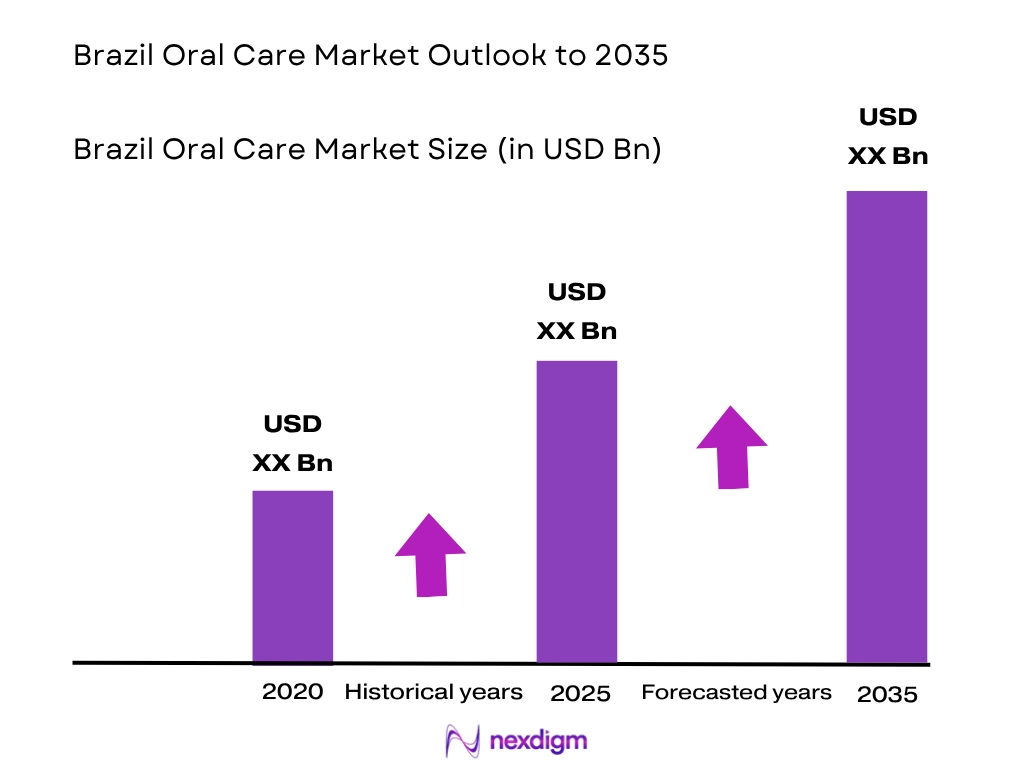
The Brazil oral care market is expected to expand steadily as consumers move from basic brushing to broader oral hygiene routines involving mouthwash, flossing, interdental cleaning, whitening, sensitivity care, and premium toothbrushes. The market is forecast to grow at about 6.8% CAGR through the long-term forecast period, with oral-care demand supported by preventive dental awareness, pharmacy expansion, e-commerce growth, and premium benefit claims. Decisions Advisors projects Brazil oral care to reach USD 5,310 million by 2035, growing at 6.8% CAGR. Future growth will be driven by five shifts: first, premium toothpaste claims such as enamel repair, gum protection, whitening and sensitivity; second, faster adoption of electric and battery-powered toothbrushes; third, higher mouthwash penetration, particularly alcohol-free and gum-care variants; fourth, growth in kids, orthodontic and senior oral care; and fifth, online replenishment through marketplaces, pharmacy apps and subscription bundles. Regulation will remain important, especially fluoride disclosure and cosmetic product compliance under ANVISA.
Major Players
- Colgate-Palmolive
- Procter & Gamble
- Unilever
- Haleon
- Kenvue
- Church & Dwight
- Philips
- Sunstar
- Curaprox
- Dentscare/FGM
- Condor
- Dentalclean
- Boni Natural
- Johnson & Johnson Consumer Health Legacy Brands
- Pierre Fabre Oral Care
Key Target Audience
- Oral care product manufacturers
- FMCG and consumer-health companies
- Dental product distributors and wholesalers
- Pharmacy and drugstore chains
- Supermarket and hypermarket retail groups
- E-commerce platforms and online marketplaces
- Investments and venture capitalist firms
- Government and regulatory bodies (ANVISA, Ministry of Health Brazil, Conselho Federal de Odontologia, IBGE)
Research Methodology
Step 1: Identification of Key Variables
The initial phase involves mapping the Brazil oral care ecosystem, including toothpaste, toothbrush, mouthwash, floss, denture care, whitening products, pharmacies, supermarkets, dental clinics and online platforms. Key variables include SKU mix, product claims, retail pricing, channel penetration, fluoride regulation, consumer hygiene routines, and dental-professional influence.
Step 2: Market Analysis and Construction
The second phase compiles historical and current data from public sources, industry databases, company portfolios, retail channel checks, regulatory documents and market reports. The market is constructed through top-down validation using national oral-care revenue and bottom-up modelling using product category sales, SKU pricing, distribution reach and replenishment frequency.
Step 3: Hypothesis Validation and Expert Consultation
The third phase validates category assumptions through interviews with oral-care distributors, dentists, pharmacy category managers, FMCG sales teams, supermarket buyers and e-commerce category specialists. These discussions help refine assumptions around toothpaste dominance, mouthwash penetration, electric toothbrush uptake, premiumization and region-wise demand concentration.
Step 4: Research Synthesis and Final Output
The final phase triangulates secondary data, primary insights and bottom-up calculations to produce a validated market view. The output includes market size, CAGR, segmentation, competitive benchmarking, future outlook, pricing structure, channel analysis and strategic recommendations for manufacturers, investors, retailers and regulatory stakeholders.

- Executive Summary
- Research Methodology (Market Definitions and Assumptions, Oral Care Taxonomy, TAM-SAM-SOM Approach, Retail Audit Framework, SKU-Level Price Tracking, Primary Interviews with Dentists/Distributors/Retail Chains, Bottom-Up Channel Mapping, Top-Down FMCG Spend Validation, Limitations and Forecast Assumptions)

- Definition and Scope
- Market Genesis and Evolution
- Timeline of Major Oral Care Brands
- Business Cycle and Replenishment Frequency
- Supply Chain and Value Chain Analysis

- Growth Drivers (Urban Oral Hygiene Routines, Dentist-Led Recommendations, Premium Whitening Demand, Sensitivity Toothpaste Uptake)
- Market Challenges (Price Sensitivity, Counterfeit/Low-Quality SKUs, Regional Access Gaps, Private Label Pressure)
- Opportunities (Alcohol-Free Mouthwash, Electric Brushes, Kids Oral Care, Natural Toothpaste, Interdental Cleaning)
- Market Trends (Complete Care Claims, Enamel Repair Positioning, Sustainable Packaging, Subscription Oral Care, Dermatology-Style Premiumization)
- Government Regulation (ANVISA Cosmetic Classification, Fluoride Concentration Limits, Labeling Compliance, Import Registration)
- SWOT Analysis (Brand Concentration, Channel Reach, Premiumization, Price Elasticity)
- Stakeholder Ecosystem (Manufacturers, Importers, Distributors, Pharmacies, Dental Clinics, Dentists, Marketplaces, Consumers)
- Porter’s Five Forces (Retailer Bargaining Power, Brand Loyalty, Substitution Risk, Entry Barriers, Promotional Intensity)
- Competition Ecosystem (Global FMCG Brands, Consumer Health Brands, Dental Specialist Brands, Private Labels, Imported Premium Brands)

- By Value (2020-2025)
- By Volume (2020-2025)
- By Average Selling Price (2020-2025)
- By Per Capita Oral Care Spend (2020-2025)

- By Product Type (In Value%)
Toothpaste
Manual Toothbrush
Electric Toothbrush
Mouthwash/Rinse
Dental Floss and Floss Picks
Interdental Brushes
Denture Care Products
Whitening Strips, Pens and Kits - By Toothpaste Benefit Claim (In Value%)
Fluoride Cavity Protection
Whitening and Stain Removal
Sensitivity Relief
Gum Protection
Herbal/Natural Formulations
Kids Toothpaste
Tartar Control
Multi-Benefit/Total Care - By Brush Type (In Value%)
Manual Soft Bristle Toothbrush
Manual Medium Bristle Toothbrush
Kids Toothbrush
Orthodontic Toothbrush
Electric Rechargeable Toothbrush
Battery-Operated Toothbrush
Electric Brush Replacement Heads - By Mouthwash Type (In Value%)
Alcohol-Based Mouthwash
Alcohol-Free Mouthwash
Fluoride Mouth Rinse
Antiseptic Mouthwash
Gum Care Mouthwash
Whitening Mouthwash
Breath Freshening Mouthwash
Kids Mouth Rinse - By Price Positioning (In Value%)
Economy Oral Care SKUs
Mass-Market Oral Care SKUs
Mid-Premium Oral Care SKUs
Premium Oral Care SKUs
Dentist-Recommended SKUs
Imported Specialist SKUs - By Consumer Age Group (In Value%)
Kids
Teens
Adults
Seniors
Denture Users
Orthodontic Users - By Distribution Channel (In Value%)
Supermarkets and Hypermarkets
Pharmacies and Drugstores
Convenience Stores
Dental Clinics
E-Commerce Platforms
Marketplaces
Direct-to-Consumer Brand Stores - By Region (In Value%)
Southeast Brazil
South Brazil
Northeast Brazil
Central-West Brazil
North Brazil

- Market Share of Major Players (Value Share, Volume Share, Product-Level Share, Channel-Level Share)
- Cross Comparison Parameters (Product Portfolio Breadth, Toothpaste Benefit Claims, Brush Technology, Mouthwash Formulation, Fluoride/Active Ingredient Positioning, Dental Professional Endorsement, Retail and Pharmacy Reach, E-Commerce Visibility)
- SWOT Analysis of Major Players (Brand Equity, Distribution Strength, Premium Portfolio, Innovation Pipeline)
- Pricing Analysis by SKU (Toothpaste Tube Size, Toothbrush Pack Count, Mouthwash Bottle Size, Floss Meter Length, Electric Brush Kit)
- Detailed Profiles of Major Companies
Colgate-Palmolive
Procter & Gamble
Unilever
Haleon
Kenvue
Church & Dwight
Philips
Sunstar
Curaprox
Dentscare/FGM
Condor
Dentalclean
Boni Natural
Johnson & Johnson Consumer Health Legacy Brands
Pierre Fabre Oral Care

- Consumer Demand and Utilization (Toothpaste Replenishment, Brush Replacement Cycle, Mouthwash Usage Frequency)
- Purchasing Power and Basket Allocation (Mass SKUs, Premium SKUs, Multi-Pack Buying, Promotional Packs)
- Needs, Desires and Pain Points (Cavity Prevention, Fresh Breath, Whitening, Gum Bleeding, Sensitivity, Orthodontic Cleaning)
- Decision-Making Process (Dentist Recommendation, Brand Trust, Price Promotion, Retail Visibility, Online Reviews)
- End-User Cohort Mapping (Families with Children, Urban Professionals, Seniors, Orthodontic Patients, Premium Beauty Consumers)

- By Value (2026-2035)
- By Volume (2026-2035)
- By Average Selling Price (2026-2035)
- By Per Capita Oral Care Spend (2026-2035)


 Request a Sample
 Ask for Customization
 Get a Quote
 Enquire Now