
 Download PDF
Market Overview
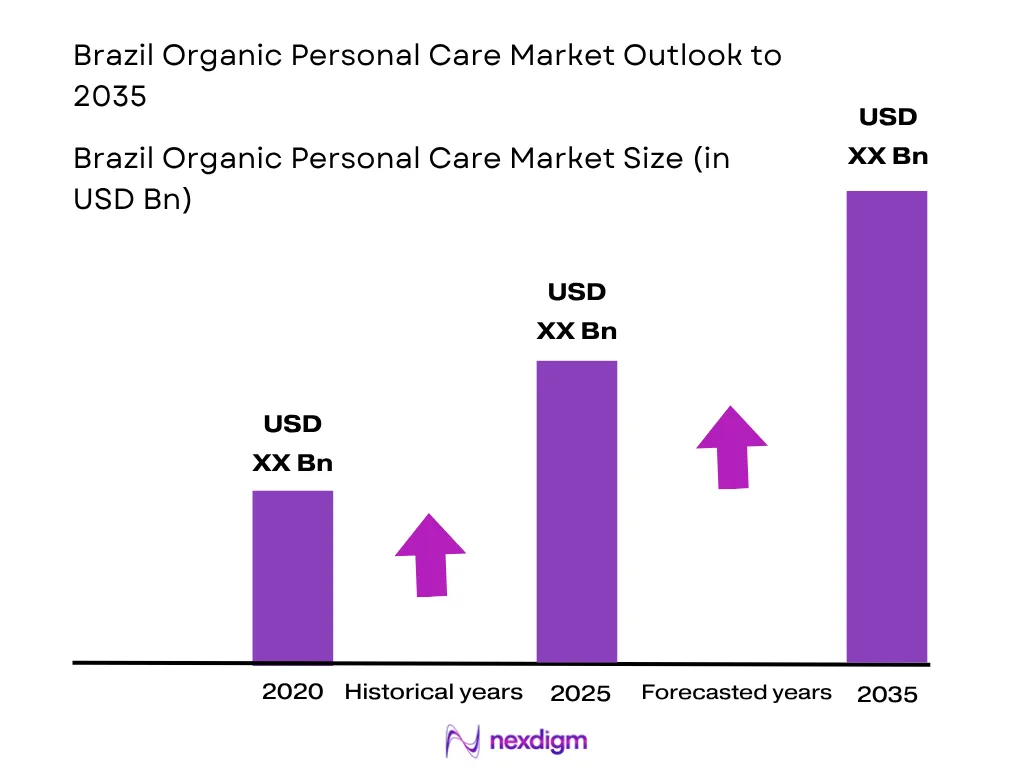
The Brazil Organic Personal Care Market is experiencing robust growth, driven by increasing consumer demand for natural and eco-friendly beauty solutions. As of the latest data, the market is valued at USD ~ billion, with consistent year-on-year growth. This growth is largely attributed to heightened consumer awareness about sustainable practices, the increasing preference for chemical-free personal care products, and the rise of social media influencing beauty standards. Additionally, Brazil’s increasing focus on eco-conscious consumption and local sourcing of ingredients has accelerated the expansion of the organic segment within the broader personal care industry.
Brazil stands as a key player in the organic personal care market in Latin America. Major cities such as São Paulo, Rio de Janeiro, and Curitiba are at the forefront of market dominance due to their higher disposable income, large urban populations, and the concentration of retail outlets that cater to eco-conscious consumers. São Paulo, in particular, is a hotspot for organic brands, both local and international, owing to its status as Brazil’s economic hub. The market’s dynamism is also driven by strong consumer advocacy for ethical beauty, including cruelty-free, organic, and fair-trade certified products.
Market Segmentation
By Product Type
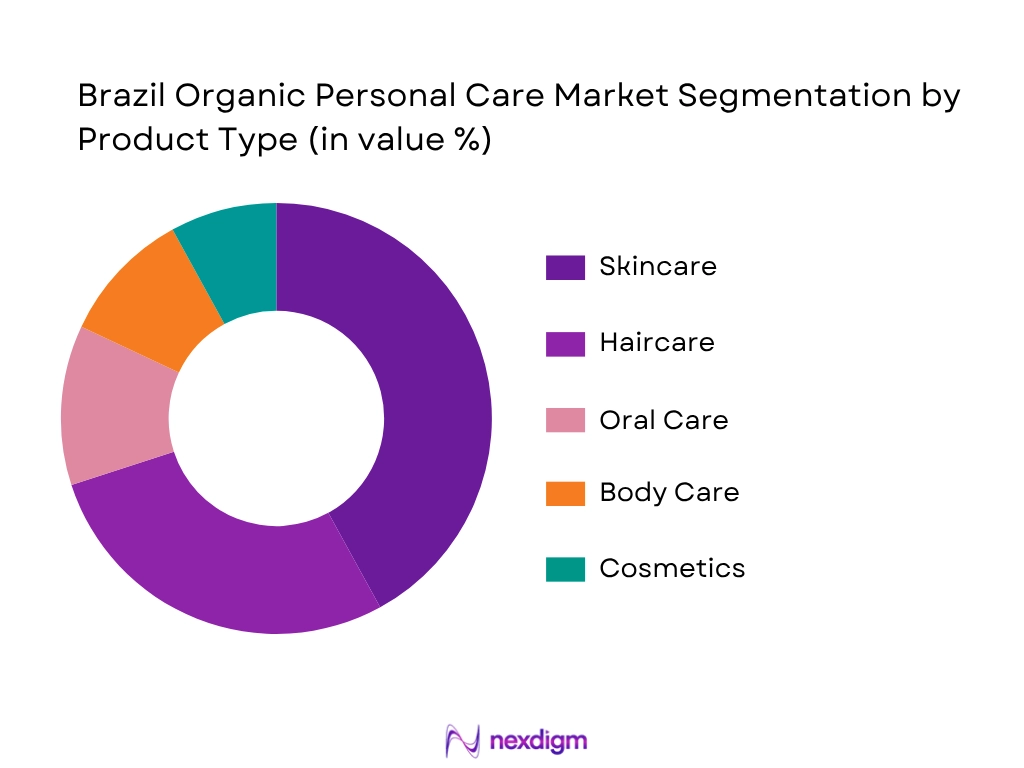
The Brazil Organic Personal Care Market is segmented by product type into skin care, hair care, oral care, body care, and cosmetics. Skin care products, particularly organic facial care and moisturizers, are currently leading this segment due to the growing consumer preference for chemical-free formulations that cater to sensitive skin types. Organic serums, face oils, and sunscreens are highly sought after, as consumers continue to prioritize both anti-aging and skin health benefits.
By Ingredient Type
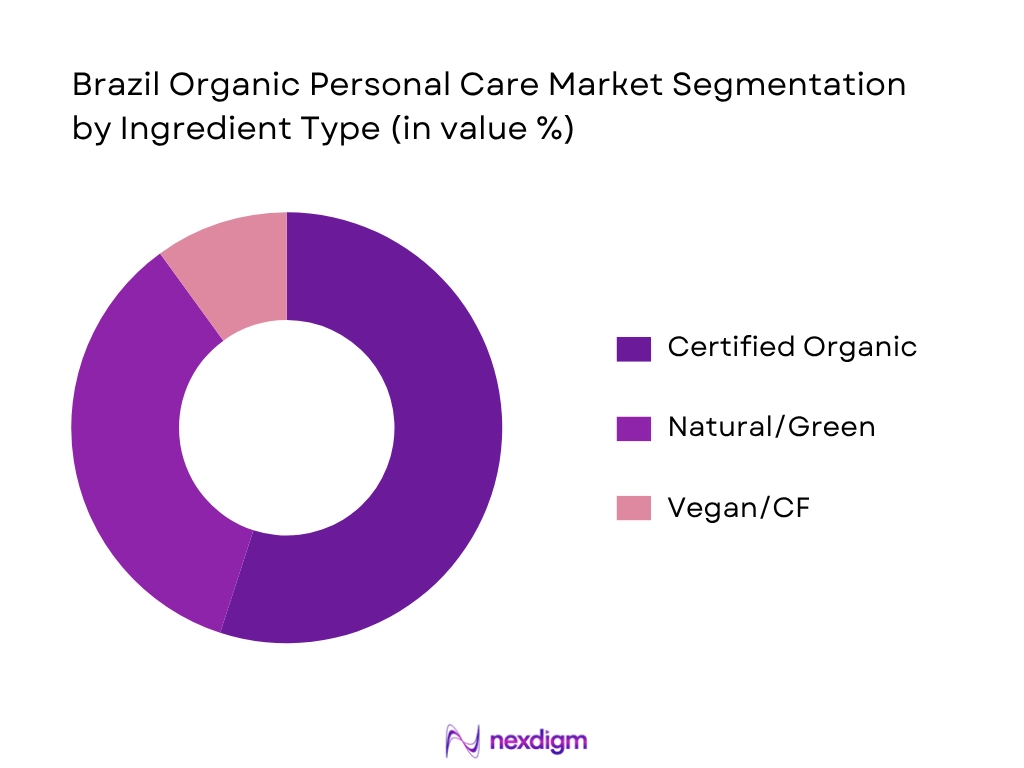
The Brazil Organic Personal Care Market is also segmented by ingredient type, primarily into certified organic ingredients, natural/green ingredients, and vegan/cruelty-free formulations. Certified organic ingredients dominate the segment due to the increasing emphasis on authenticity and transparency in the beauty sector. Consumers are increasingly choosing products with certifications from reputable bodies such as ECOCERT and IBD, which ensure adherence to strict standards of organic farming and processing practices.
Competitive Landscape
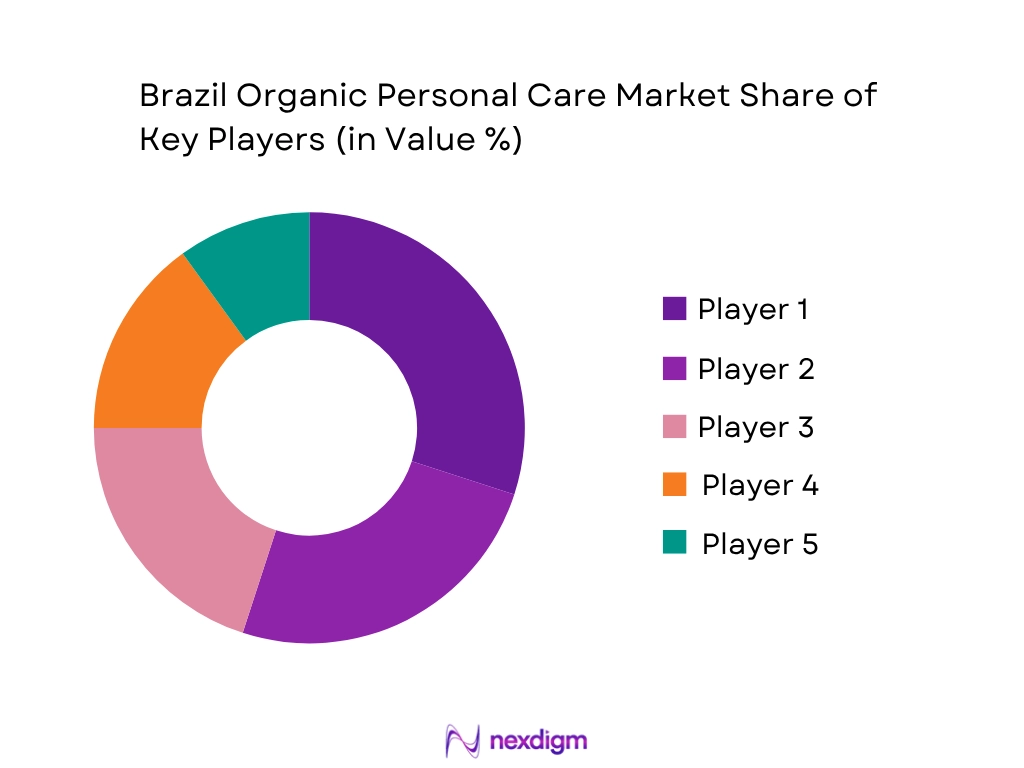
The Brazil Organic Personal Care Market is characterized by a blend of local and international players, with key players like Natura, O Boticário, and Surya Brasil dominating the scene. Natura, a Brazilian multinational, continues to lead with a focus on natural and ethically sourced ingredients, while O Boticário has successfully leveraged its vast retail network to become a prominent name in organic beauty. Surya Brasil has carved out a niche in hair care with its organic hair colorants, catering to consumers looking for eco-friendly and cruelty-free alternatives.
The competitive landscape is also marked by the emergence of international brands such as The Body Shop and Lush, which have strengthened their foothold by offering certified organic and cruelty-free products tailored to Brazilian preferences. Local brands, supported by a strong demand for natural solutions, continue to expand their product portfolios to meet the increasing market expectations for quality and sustainability.
| Company Name | Establishment Year | Headquarters | Product Range | Distribution Channels | Key Certifications | Revenue (USD) |
| Natura | 1969 | São Paulo | ~ | ~ | ~ | ~ |
| O Boticário | 1977 | São Paulo | ~ | ~ | ~ | ~ |
| Surya Brasil | 1995 | São Paulo | ~ | ~ | ~ | ~ |
| The Body Shop | 1976 | London, UK | ~ | ~ | ~ | ~ |
| Lush | 1995 | Poole, UK | ~ | ~ | ~ | ~ |
Brazil Organic Personal Care Market Analysis
Growth Drivers
Health & Sustainability Awareness
Increasing awareness regarding health and sustainability is a key growth driver for the Brazil Organic Personal Care Market. As Brazilian consumers become more conscious of their environmental impact and the ingredients used in their personal care products, there is a marked shift towards organic and natural alternatives. In Brazil, the growing environmental consciousness has been reflected in public opinion; a survey from the Brazilian Institute of Geography and Statistics (IBGE) reports that approximately 50% of Brazilian consumers actively seek eco-friendly products when making purchasing decisions. Additionally, in 2024, Brazil’s population of 213 million is increasingly concerned with health, as data from World Health Organization (WHO) indicates that non-communicable diseases (NCDs) such as obesity, diabetes, and hypertension are on the rise, driving more consumers to opt for organic and chemical-free beauty products. Furthermore, 72% of Brazilian consumers show preference for products made with sustainable packaging, highlighting the rising demand for both personal care products and environmental responsibility. These factors are helping to propel the growth of organic beauty products, especially in urban areas like São Paulo and Rio de Janeiro, where consumer spending on organic and sustainable goods is notably higher.
Clean Beauty Adoption
The rise of the clean beauty movement in Brazil is significantly shaping the growth of the organic personal care market. Clean beauty, which refers to products that are free from harmful chemicals, synthetic fragrances, and other toxins, has gained widespread adoption among Brazilian consumers. According to the Brazilian Ministry of Health, the incidence of skin allergies and irritations has been increasing, particularly in major urban centers. As a result, more consumers are turning towards beauty products with transparent ingredient lists, devoid of synthetic additives. By 2024, the demand for cleaner beauty formulations, including fragrance-free, paraben-free, and phthalate-free products, is on the rise. Data from the Brazilian Health Regulatory Agency (ANVISA) indicates that nearly 40% of personal care products sold in the country are now being promoted as “clean” or “natural.” Furthermore, younger consumers, particularly those in the 18–34 age group, are more likely to purchase clean beauty products, with this demographic now accounting for over 45% of all beauty product purchases in Brazil. This trend reflects a broader societal shift toward more responsible consumption, where consumers increasingly prioritize products that are both effective and safe for their health and the environment.
Market Challenges
Price Sensitivity
Price sensitivity remains one of the major challenges for the Brazil Organic Personal Care Market. Despite the growing interest in organic and natural beauty products, the high price point of many of these items continues to limit accessibility for a broader segment of the population. Brazil’s inflation rate in 2024 is projected to be around 5.5% (according to Central Bank of Brazil) which places additional strain on consumer purchasing power, particularly in the lower-income brackets. While urban populations in cities like São Paulo and Rio de Janeiro have higher disposable income, rural consumers still face affordability barriers when it comes to premium organic beauty products. Furthermore, a significant proportion of Brazilian consumers remain loyal to more affordable, mass-market personal care brands, even though they may contain more synthetic ingredients. The World Bank’s 2024 report on consumer behavior indicates that 45% of Brazilian households experience difficulties with price inflation, making organic beauty products unaffordable for many consumers. This price sensitivity limits the potential customer base for organic personal care products and hampers the expansion of the market.
Certification Costs
Certification costs for organic products continue to pose a significant challenge for brands in Brazil. Obtaining certifications such as ECOCERT or IBD Organic requires brands to meet strict standards, which often entails substantial costs in terms of raw materials, production processes, and quality control measures. As of 2024, the cost of obtaining ECOCERT certification in Brazil can range from USD 10,000 to USD 50,000 depending on the scale and complexity of the product line. Additionally, regulatory requirements from Brazil’s National Health Surveillance Agency (ANVISA) demand that brands adhere to specific guidelines on the use of organic and natural ingredients, which incurs additional costs. This barrier has slowed down market entry for small to mid-sized organic brands, limiting competition and innovation. While larger companies, such as Natura and O Boticário, can absorb these costs, smaller players face difficulty scaling due to the high upfront investment required for certification. As a result, the market remains dominated by a few large players with the resources to handle the certification burden, preventing smaller, local organic brands from expanding at the same rate.
Market Opportunities
Bio-Based Ingredients
Bio-based ingredients are expected to be a key growth area in the Brazil Organic Personal Care Market, as consumer demand for more sustainable and eco-friendly alternatives to synthetic chemicals continues to rise. Brazil’s rich biodiversity provides a vast reservoir of natural resources that can be used to produce bio-based ingredients for personal care products. In 2024, Brazil is home to over 55,000 plant species, many of which are used in organic skincare, haircare, and cosmetic formulations. Products made from ingredients like Brazilian nuts, acai berries, and cupuaçu are growing in popularity due to their rich nutritional profiles and sustainable sourcing methods. These bio-based ingredients not only support environmental sustainability but also appeal to health-conscious consumers looking for natural solutions to personal care. The Brazilian Ministry of Environment notes that there has been a 20% increase in the certification of sustainable farming practices for cosmetic ingredients over the past two years. Additionally, companies are exploring ways to integrate these bio-based ingredients into their product lines to meet growing consumer expectations for clean beauty and ethical sourcing.
Personalized Organic Solutions
Personalized organic solutions present a significant opportunity for the Brazil Organic Personal Care Market, as consumers increasingly seek products tailored to their specific skin and hair needs. In 2024, Brazilian consumers are increasingly turning to brands that offer personalized skincare routines, driven by the growing influence of dermatologists and beauty influencers on social media platforms like Instagram. Companies are leveraging technologies such as AI-powered skincare analysis and DNA-based formulations to create highly individualized beauty products. The demand for these personalized solutions is supported by the rise in Brazil’s e-commerce market, where consumers prefer customized beauty products that are delivered directly to their homes. Furthermore, the Brazilian population of 213 million includes a growing middle class that is more willing to invest in premium, personalized beauty solutions. This market shift is supported by data from the Brazilian Institute of Geography and Statistics (IBGE), which reports that nearly 15 million Brazilians have been classified as part of the emerging middle class in recent years, further boosting demand for personalized organic products.
Future Outlook
Over the next decade, the Brazil Organic Personal Care Market is poised for substantial growth, driven by rising demand for sustainable and clean beauty products. Consumers are expected to continue shifting towards organic and cruelty-free alternatives, spurred by greater awareness of environmental and health concerns. As regulatory frameworks around organic certifications become more robust, consumer trust in organic claims will continue to enhance market growth. The demand for organic products in Brazil is also anticipated to be bolstered by innovations in ingredient sourcing and product development. Major Brazilian brands are focusing on locally-sourced organic ingredients, tapping into the country’s rich biodiversity to create unique, high-quality offerings. Additionally, advancements in green packaging and eco-friendly formulations will be central to future market expansion.
Major Players
- Natura
- O Boticário
- Surya Brasil
- The Body Shop
- Lush
- Simple Organic
- KHOR
- Organics Brasil
- Cargill Personal Care
- Bio Bothanic Perfumaria e Cosméticos
- CARE Natural Beauty
- Senselles Cosméticos
- Florus Cosméticos
- HM Beauty Factory
- Innovaderm Cosméticos
Key Target Audience
- Investments and Venture Capitalist Firms
- Government and Regulatory Bodies (ANVISA, Ministry of Health)
- Retail Chains and E-commerce Platforms
- Organic Ingredient Suppliers and Distributors
- Beauty Product Manufacturers (Private Labels)
- Health and Wellness Brands
- Cosmetic and Personal Care Retailers
- Sustainability and Environmental Advocacy Groups
Research Methodology
Step 1: Identification of Key Variables
This phase involves conducting desk research to identify critical market variables, such as the most demanded product categories, popular distribution channels, and consumer purchasing patterns. Secondary data will be used to assess the trends, size, and growth drivers of the organic personal care market.
Step 2: Market Analysis and Construction
In this step, we will compile historical data on Brazil’s organic personal care industry. The focus will be on market revenue, growth rates, and regional distribution. Analysis will also include consumer behavior and purchasing frequency to ensure accuracy in revenue estimates.
Step 3: Hypothesis Validation and Expert Consultation
A series of interviews will be conducted with industry experts, including product developers, brand managers, and market analysts. These consultations will offer qualitative insights into emerging trends, challenges, and consumer preferences that influence the market.
Step 4: Research Synthesis and Final Output
Finally, data from both primary and secondary sources will be synthesized to develop an in-depth understanding of the Brazil Organic Personal Care Market. The final output will provide a validated, actionable market analysis, including key insights into growth drivers, consumer segments, and competitive dynamics.

- Executive Summary
- Research Methodology (Market Definitions & Organic Personal Care Criteria (Organic Certification Standards, Natural Ingredient Thresholds), Abbreviations & Organic Industry Glossary, Market Sizing & Bottom‑Up/Top‑Down Estimation (Revenue, Units Sold, SKU Counts), Primary Research Design, Secondary Research Sources, Data Weighting & Triangulation Approach, Limitations & Validation)

- Definition and Scope
- Market Genesis & Evolution
- Market Regulatory Framework
- Organic Certification Framework
- Value Chain – Ingredient Sourcing to Retail Shelf
- Supply Chain Dynamics
- Retail & E‑Commerce Channel Architecture

- Growth Drivers (Health & Sustainability Awareness, Clean Beauty Adoption, E‑commerce Penetration)
- Market Challenges (Price Sensitivity, Certification Costs, Ingredient Supply Constraints)
- Market Opportunities (Bio‑Based Ingredients, Personalized Organic Solutions, Retail Expansion)
- Emerging Trends (Green Packaging Adoption, Traceable Sourcing, Ethical Branding)
- Regulatory & Compliance Landscape (ANVISA Norms, Certification Labeling,Cosmetic safety substantiation)
- Value Chain and Supply Chain Analysis (farm-to-extract flow, import dependencies, converter margins, fill-finish nodes, quality controls)
- Porter’s Five Forces – Organic Personal Care Focus
- SWOT Analysis (Market Macro & Competitive)
- Demand Elasticity & Consumer Behavior Analytics

- By Value (2020-2025)
- By Volume (2020-2025)
- By Price Benchmarks & ASP Trends (2020-2025)
- By Organic Share vs. Total Personal Care (2020-20250

- By Product Category (In Value%)
Skin Care
Hair Care
Oral Care
Body Care
Cosmetics & Color - By Ingredient Type (In Value %)
Certified Organic
Natural/Green
Clean & Non‑Synthetic
Vegan / Cruelty‑Free - By Distribution Channel (In Value %)
Supermarkets/Hypermarkets
Specialty Organics & Pharmacies
Online/E‑Commerce Platforms
Direct‑to‑Consumer / Subscription - By Price Tier (In Value%)
Mass Organic
Mid‑Tier Organic
Premium Organic & Clean - By Geography (In Value%)
Southeast
South
Northeast (Bahia, Pernambuco)
Central & North Brazil - By Consumer Demographic (In Value%)
Millennials (Age Cohort)
Gen Z
Baby Boomers
Male Grooming Segment

- Market Share of Leading Players (by Value, overall share, category share, channel share, and branded vs private label)
- Cross‑Comparison Parameters(Product Portfolio Breadth (Organic SKUs), Certification & Compliance Credentials, Ingredient Sourcing (Local vs. Imported), Distribution Footprint & Channel Strength, Brand Trust & Sustainability Scores, Pricing Strategy & ASP Trends, R&D & Innovation Intensity, Marketing & Digital Engagement Index)
- SWOT Profiles of Key Players
- Pricing & Promotion Analysis (Average Selling Prices by Segment, Promotional Intensity Across Channels, Discounting vs Brand Premium Strategies)
- Pricing Benchmarking Across Core Categories (baby-safe, sensitive-skin, lip care, soap, scalp care, deodorant, oral care, sun care)
- Consumer Perception & Brand Equity Mapping
- Detailed Profiles of Major Companies
Simple Organic
KHOR
Organics Brasil
Natura &Co
O Boticário
Grupo Boticário Beauty Brands
Surya Brasil
Cargill Personal Care
Bio Bothanic Perfumaria e Cosméticos
CARE Natural Beauty
Senselles Cosméticos
Florus Cosméticos
HM Beauty Factory
Innovaderm Cosméticos
Lew Cosméticos

- Buyer Cohort Profiling (age, income, household type, condition-led needs, wellness orientation)
- Purchase Drivers and Barriers (seal trust, safety perception, efficacy, scent, value, availability)
- Shopper Journey and Decision Funnel (awareness source, trial trigger, review influence, conversion friction, repurchase trigger)
- Channel Behavior Analysis (discovery channel, purchase channel, replenishment channel, basket mission)
- E-Commerce, DTC, and Social Commerce Analysis (traffic source, CAC, conversion rate, subscription mix, repeat rate)
- Basket Composition and Repurchase Economics (cross-sell, attach rate, replenishment cycle, bundle uptake)
- Retailer and Practitioner Influence (buyer gatekeeping, shelf standards, dermatologist/esthetician/pediatric endorsement)

- By Value (2026-2035)
- By Volume (2026-2035)
- By ASP & Price Trend Forecast (2026-2035)
- By Category Growth Contribution (2026-2035)
- By Channel Growth Contribution (2026-2035)


 Request a Sample
 Ask for Customization
 Get a Quote
 Enquire Now