
 Download PDF
Market Overview
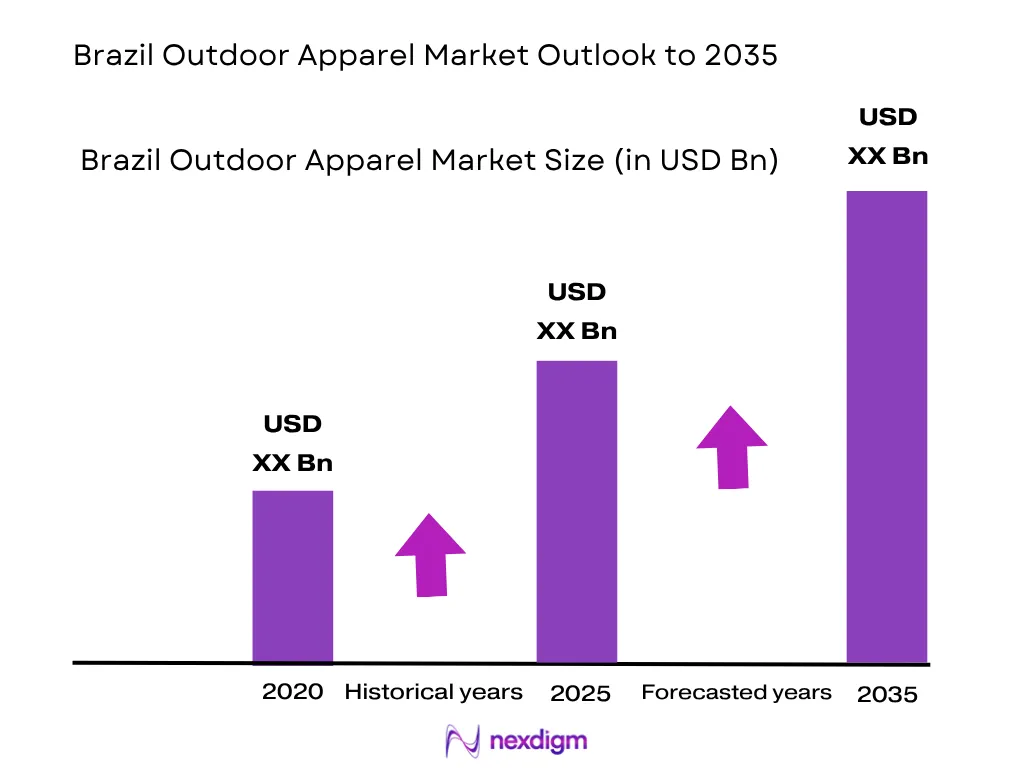
The Brazil Outdoor Apparel market is valued at approximately USD ~ billion in 2025, as reported by Nexdigm Market Report, reflecting strong consumer interest in durable, performance‑oriented outdoor clothing tailored to diverse Brazilian climates and terrains such as rainforests, mountains, and coastlines. Demand has been driven by growth in adventure tourism, increased participation in outdoor activities like hiking and camping, and the rising influence of urban fitness lifestyles that emphasize apparel functionality for both performance and daily wear.
Major cities such as São Paulo, Rio de Janeiro, and Brasília are dominant consumption hubs due to high incomes and concentrated retail infrastructure, coupled with a strong base of outdoor enthusiasts. Additionally, proximity to major import distribution channels makes these cities primary entry points for international brands. Their dominance is also supported by robust e‑commerce adoption, facilitating broader access to outdoor apparel categories across urban and nearby suburban populations.
Market Segmentation
By Product Type
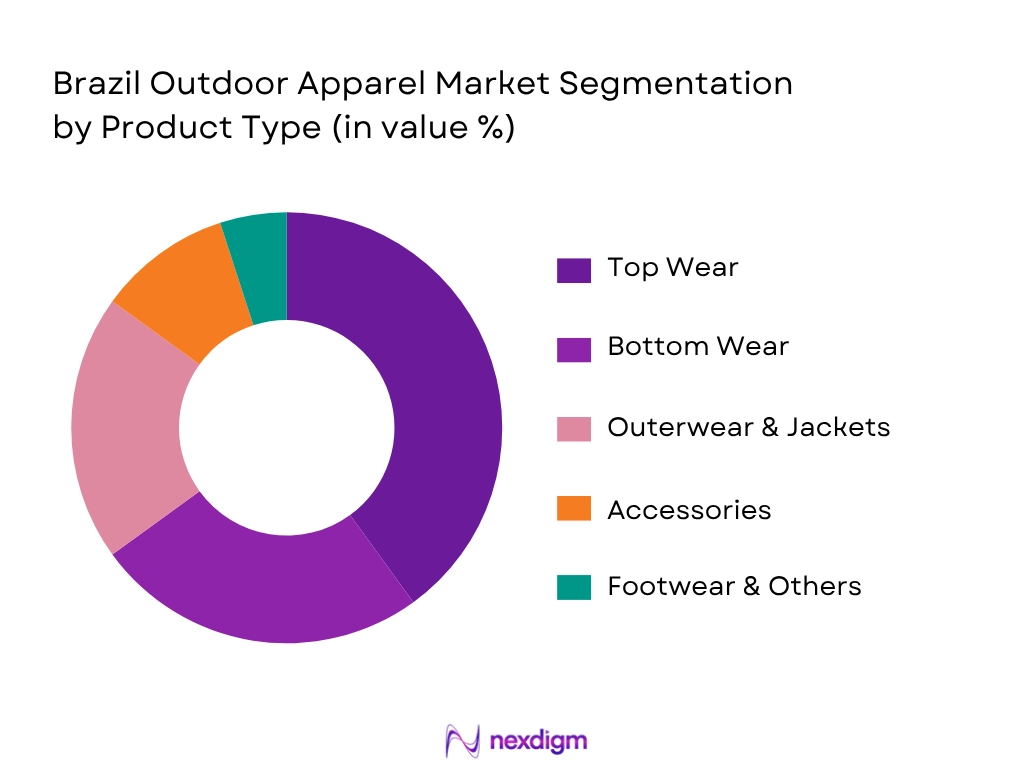
The Brazil outdoor apparel market is segmented into top wear, bottom wear, outerwear, accessories, and footwear. In 2024, top wear dominates the share due to its versatility across a range of activities from casual outdoor recreation to trekking and urban athleisure. Consumers prioritize functional shirts, T‑shirts, and moisture‑wicking tops that balance performance and comfort, driving this segment’s leadership. Established global brands offer extensive top wear collections tailored for humidity, UV protection, and multi‑activity suitability conditions common in Brazil’s climates thereby strengthening this segment’s penetration.
By Distribution Channel
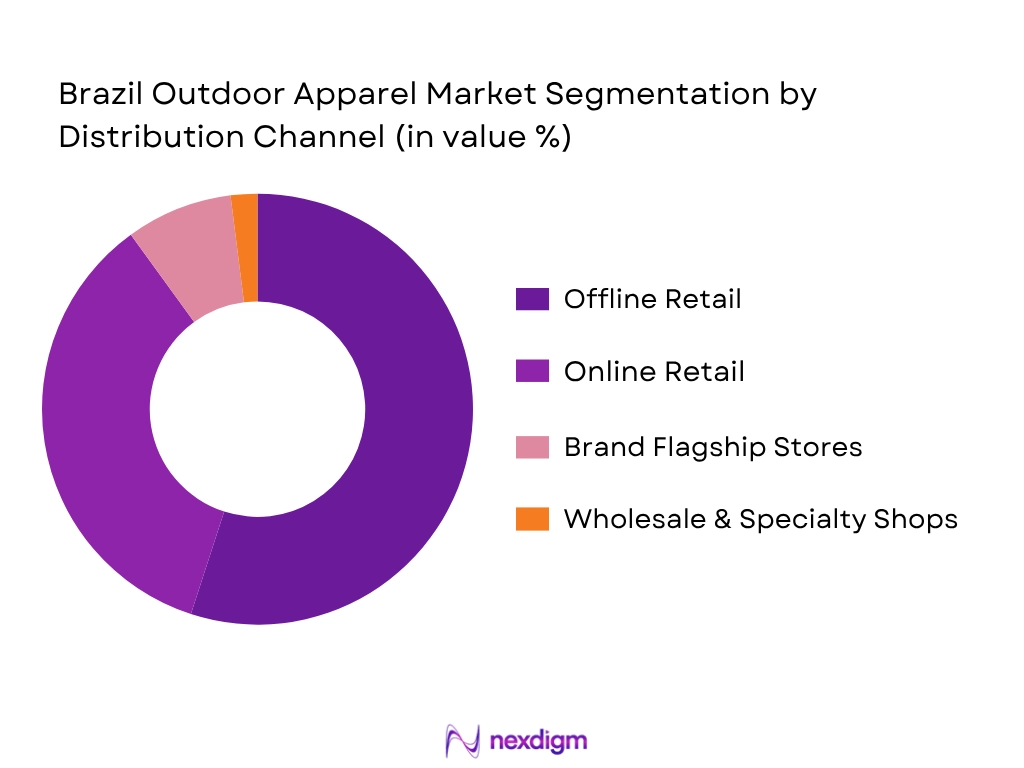
The segment is divided into offline retail, online retail, brand flagship stores, and specialty/wholesale channels. Offline retail dominates due to long‑established consumer habits of trying performance apparel in person, especially for technical outdoor gear where fit and material assessment are key. Specialty outdoor stores and multi‑brand sports retailers remain preferred for technical product exploration. However, online retail is growing rapidly as e‑commerce platforms broaden access to international brands and niche performance products, especially among urban Millennials and Gen Z consumers who value convenience and variety.
Competitive Landscape
The Brazil outdoor apparel competitive environment is shaped by both international giants and strong regional brands offering specialized gear. A mix of global material innovation and local market penetration has formed a consolidated yet diverse competitive structure. Competition in the Brazil Outdoor Apparel Market is characterized by established global players leveraging wide distribution, technical product portfolios, and digital engagement, alongside local firms that focus on value positioning and regional consumer preferences. This consolidation indicates the significant influence of key international and domestic players on pricing, distribution, and consumer loyalty.
| Company | Est. Year | Headquarters | Product Range | Distribution Reach | Material Tech Adoption | Sustainability Initiatives | E‑Commerce Presence |
| Decathlon Brasil | 1976 | São Paulo, Brazil | ~ | ~ | ~ | ~ | ~ |
| Nike do Brasil | 1964 | São Paulo, Brazil | ~ | ~ | ~ | ~ | ~ |
| Adidas do Brasil | 1949 | São Paulo, Brazil | ~ | ~ | ~ | ~ | ~ |
| Columbia Sportswear | 1938 | São Paulo (subsidiary) | ~ | ~ | ~ | ~ | ~ |
| The North Face Brasil | 1968 | Rio de Janeiro (subsidiary) | ~ | ~ | ~ | ~ | ~ |
| Salomon Brasil | 1947 | São Paulo (regional) | ~ | ~ | ~ | ~ | ~ |
| Under Armour Brasil | 1996 | São Paulo, Brazil | ~ | ~ | ~ | ~ | ~ |
| Puma Brasil | 1948 | São Paulo, Brazil | ~ | ~ | ~ | ~ | ~ |
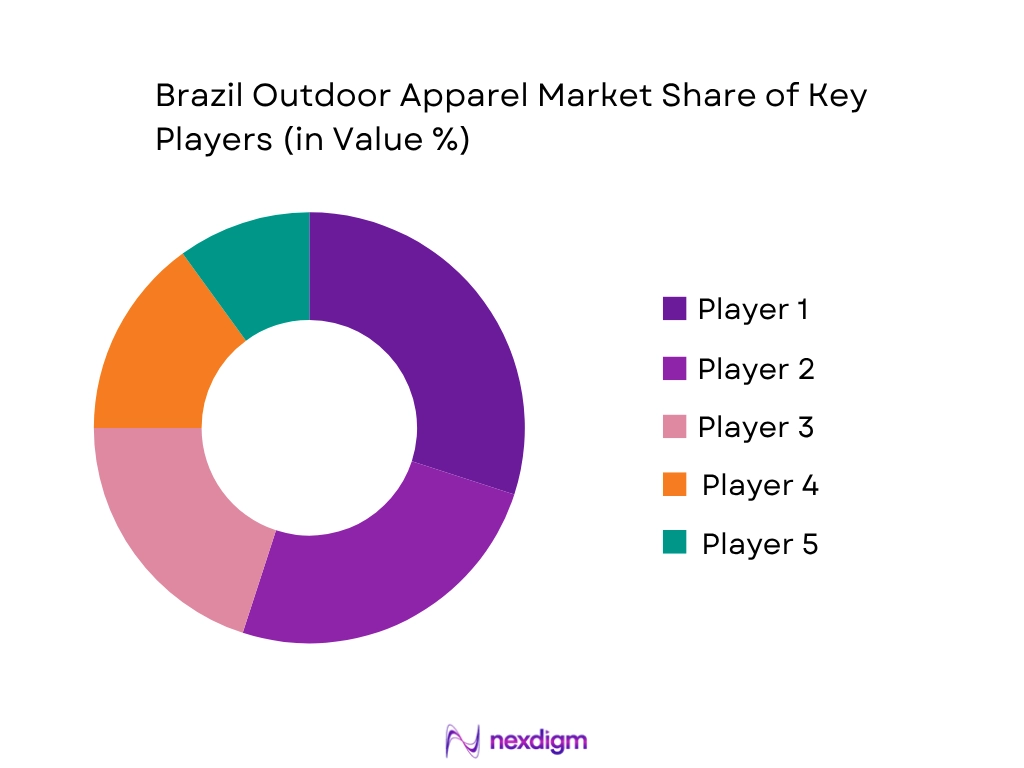
Brazil Outdoor Apparel Market Analysis
Growth Drivers
Outdoor Participation
A fundamental driver for the Brazil outdoor apparel market is the scale of recreational and nature‑based physical activity engagement. While comprehensive national outdoor participation surveys specific to outdoor apparel don’t yet exist for 2024, broader sports and recreation data confirm that significant portions of the Brazilian population engage in physical activity and sport, which correlates directly with demand for outdoor performance clothing. For instance, Brazil fielded 277 athletes in the 2024 Summer Olympics, representing the country in 29 different sports disciplines, evidencing institutional investment and public engagement in active lifestyles that support related apparel purchases. Furthermore, studies examining physical activity among Brazilian adolescents indicate that 28.5% of youth are classified as ‘active’, engaging in nature‑based or leisure‑time physical activities at least monthly. This participation extends demand beyond traditional athletic wear into outdoor‑specific gear that must perform in Brazil’s varied environments from coastal humidity to rainforest and highland climates. Such participation coefficients suggest a growing culture of outdoor and active lifestyles among urban and rural Brazilians alike, thereby stimulating interest in technical, durable outdoor apparel that supports hiking, trekking, trail running, camping, and other nature‑oriented pursuits.
Health & Fitness Awareness
Rising health and fitness awareness in Brazil is a structural macro driver for the outdoor apparel segment. Although Brazil faces challenges in broad physical activity adoption such as 83.6% of adolescents being classified as insufficiently active the efforts to promote physical health are significant and widespread. Government and health bodies increasingly emphasize physical activity to reduce non‑communicable diseases, which directly influences consumer priorities toward performance and outdoor clothing. With physical education and organized fitness integrated into public programs, many Brazilians allocate household expenditure toward gear that supports active lifestyles. Brazilian tourism policy indicates spending by international tourists of USD 6.9 billion in 2023, which indirectly signals rising domestic interest in activities associated with travel and adventure. Additionally, initiatives like the National Tourism Plan, which aims to expand adventure tourism infrastructure and attract up to 8.1 million international tourists annually, foster a broader cultural emphasis on outdoor recreation. Increased awareness of health outcomes associated with outdoor engagements reinforced through national sports participation at high‑visibility events like the Olympics lends momentum to consumer priorities for functional outdoor apparel, influencing purchasing decisions and long‑term market expansion.
Market Challenges
Import Tariffs & Price Sensitivity
One of the primary challenges confronting the Brazil outdoor apparel market stems from Brazil’s complex tariff and tax regime, which substantially influences landed costs and retail pricing. Brazil’s import duties, known under the Mercosur Common External Tariff regime, can include layered taxation not only import duty itself, but also value‑added and circulation taxes (ICMS), with effective total landed costs often reaching high effective percentages of the product value. A practical example shows that a product with an initial FOB value of USD 100 000 can see its final landed cost escalate to roughly USD 168 931 after tariffs, insurance, freight, and multiple tax layers are added. This creates a direct pricing challenge for imported performance outdoor apparel, where brand recognition is high but the enhanced cost is passed on to consumers. Compounding this, Brazil’s trade openness indicator for imported industrial inputs in wearing apparel reached 19.0% in 2024, up from 16.4% in 2023, reflecting a growing dependency on foreign clothing inputs and exposure to tariff volatility. These structural costs pressure margins and elevate retail prices in a market where consumer price sensitivity is high, making robust discounting or financing options common in response but compressing profitability for brands. Price sensitivity also constrains the adoption of higher‑end performance gear, limiting segment penetration primarily to more affluent urban consumers.
Seasonal Demand & Counterfeits
Seasonality and counterfeiting present persistent operational challenges for the Brazil outdoor apparel segment. Brazil’s diverse climate means distinct demand peaks for apparel for instance, high humidity coastal seasons increase demand for moisture‑wicking wear, while dry highland periods boost demand for layered outerwear. This irregular consumption pattern complicates inventory management and forecasting, leading brands to carry excess stock during off‑peak months or face stockouts during transient peaks, thereby affecting cash flows and retailer profitability. Counterfeiting further complicates the landscape: while specific national data on counterfeit outdoor apparel volumes in 2025/2026 is limited, Brazil ranks among regions with significant counterfeit activity across consumer goods categories, with federal enforcement actions seizure figures for luxury and branded items reaching BRL 1.5 billion worth of counterfeit products in major operations targeting fraudulent goods. Counterfeit apparel inflates consumer expectations for lower prices, undermines brand integrity, and reduces legitimate sales in formal retail channels. Coupled with price sensitivity, counterfeit prevalence affects outdoor apparel segments disproportionately, since high‑performance gear commands premium pricing yet can be mimicked and sold illicitly at significantly lower prices. The combined effect of seasonal demand fluctuations and an entrenched counterfeit ecosystem strains supply chains, erodes consumer trust in product authenticity, and necessitates increased investment in anti‑counterfeiting measures by brands and regulators alike.
Future Outlook
Over the next decade, the Brazil Outdoor Apparel market is expected to grow steadily, driven by continuous expansion of outdoor and adventure tourism sectors, rising consumer health‑centric lifestyles, and broader adoption of functional and sustainable apparel. Market dynamics will likely be influenced by innovations in performance materials, increased digital engagement for direct online sales, and diversification of product ranges that appeal to multi‑activity users and climate‑specific needs. Growth in smaller urban and peri‑urban regions will further expand the consumer base beyond traditional metropolitan centers, promoting broader penetration of both international brands and agile domestic manufacturers.
Major Players
- Decathlon Brasil
- Nike do Brasil
- Adidas do Brasil
- Columbia Sportswear Brasil
- The North Face Brasil
- Salomon Brasil
- Under Armour Brasil
- Puma Brasil
- Asics Brasil
- New Balance Brasil
- Oakley Brasil
- Skechers Brasil
- Reebok Brasil
- Fila Brasil
- Kanxa
Key Target Audience
- Outdoor Retailers & Chain Store Buyers
- Sports & Adventure Tour Operators
- Investments & Venture Capitalist Firms
- Brand & Product Licensing Investors
- Sportswear & Apparel Manufacturers
- Government & Regulatory Bodies (Ministry of Tourism Brazil, Ministry of Industry & Commerce Brazil)
- E‑Commerce Platform Strategists
- Specialty Outdoor Distributors
Research Methodology
Step 1: Identification of Key Variables
The initial phase involves mapping all outdoor apparel stakeholders in Brazil, including manufacturers, distributors, retailers, and consumer segments. Secondary sources such as industry reports, import/export data, and government economic indicators form the basis for defining key market drivers and constraints.
Step 2: Market Analysis and Construction
This stage compiles historical revenue and volume data for Brazil outdoor apparel, including product types and channel distribution. Channel penetration, pricing trends, and material adoption rates are analyzed to build a reliable revenue baseline and performance profiles.
Step 3: Hypothesis Validation and Expert Consultation
Market hypotheses regarding consumer behavior, material preferences, and growth drivers are validated through interviews with industry experts, brand managers, and retail analysts. These insights inform segmentation sensitivity and competitive positioning.
Step 4: Research Synthesis and Final Output
The final phase integrates primary and secondary findings to deliver validated market forecasts, competitive analysis, and strategic insights. Iterative cross‑verifications ensure accuracy, with outputs tailored for strategic and investment decision‑making.

- Executive Summary
- Research Methodology (Market Definitions and Operational Scope, Brazil Market Assumptions, Abbreviations, Macro‑to‑Micro Sizing Method, Bottom‑Up/Top‑Down Validation, Primary Research Protocol, Data Normalization Standards, Limitations & Margin of Error)

- Definition and Scope
- Market Genesis and Evolution in Brazil
- Outdoor Recreation Trends and Activity Index
- Value Chain: Raw Materials to Retail
- Supply Chain Dynamics (Import Flows, Domestic Production, Logistics Intensity)
- Pricing Mechanisms & Segment Elasticities

- Growth Drivers (Outdoor Participation, Health & Fitness Awareness, Adventure & Ecotourism, Rising Disposable Income, Urban Outdoor Lifestyle, Technical Apparel Adoption, Brand Loyalty, E-commerce Access)
- Market Challenges (Import Tariffs, Price Sensitivity, Seasonal Demand, Counterfeits, Limited Regional Availability, Raw Material Costs, Low Technical Awareness)
- Opportunities (Sustainable Materials, Custom & Performance Apparel, DTC & Omni-channel Growth, Online Marketplaces, Tourism Partnerships, Private Label Expansion, Mobile & Social Commerce)
- Emerging Trends (Smart Fabrics & Wearables, Eco-conscious Preferences, Hybrid Multi-Activity Apparel, Subscription/Rental Models, Regional Micro-Segments, Influencer Marketing, Experiential Retail)
- Regulatory Environment (INMETRO Compliance, ABNT Standards, Import Duties, Label & Claims, Environmental Regulations, Packaging Norms)
- Porter’s Five Forces Analysis (New Entrants, Supplier Power, Buyer Power, Substitutes, Competitive Rivalry)
- SWOT Analysis (Market Level) (Strengths: Outdoor Participation & Brand Awareness; Weaknesses: Price & Seasonality; Opportunities: Eco & Technical Apparel, Digital Retail; Threats: Tariffs, Counterfeits, Regulations)
- Value Chain & Supply Chain Analysis (Raw Materials – Technical & Sustainable Fabrics; Domestic vs Imports; Production Lines; Logistics Hubs; Wholesale & Retail Distribution; Quality Testing; E-commerce Fulfillment)
- Pricing Dynamics & Margin Stack (ASP – Entry/Mid/Premium, Channel Price Gaps, Promotions, Gross vs Contribution Margins, Regional Variations, Cost Pass-Through)
- Consumer Purchase Behavior & Retail Analytics (Purchase Frequency, Basket Affinity, Brand Loyalty, Online vs In-Store, Social Influence, Regional Preferences, Seasonal Impact)

- By Revenue (2020-2025)
- By Volume (2020-2025)
- By Average Selling Price (2020-2025)

- By Product Type (In Value%)
Technical Jackets & Outerwear
Performance Trousers & Bottomwear
Hiking & Trekking Shirts
Water‑Resistant / Weather Protective Gear
Accessories (Hats, Gloves, Technical Socks) - By Material Type (In Value%)
Synthetic Performance Fabrics
Natural / Organic Materials
Recycled / Eco‑Sustainable Materials
Hybrid Fabric Systems - By Consumer Segment (In Value%)
Casual Outdoor Enthusiasts
Trail Runners & Hikers
Adventure Tourists
Climbers & Mountaineers
Extreme Weather Outdoor Users - By Sales Channel (In Value%)
Brand Flagship Stores
Specialty Outdoor Retailers
Multi‑Brand Sports Stores
Online / Omni‑Channel Retail
Wholesale Distributors - By Geography(In Value%)
Southeast Region
South Region
Northeast Region
Central‑West Region
North / Amazon & Remote Region Demand

- Market Share Analysis (Revenue Share, Volume Share, Segment-wise Share, Channel-wise Share, Regional Share)
- Cross‑Comparison Parameters (Company Overview, Product Portfolio Breadth, Material Tech Index, Pricing Strategy, Distribution Channel Footprint, Domestic Manufacturing Footprint, Sustainability Score, Digital Engagement KPIs)
- SWOT Analysis of Major Players (Strengths: Brand Equity, Technical Expertise; Weaknesses:
Limited Direct-to-Consumer Reach, Price Sensitivity; Opportunities: Expansion into Sustainability & Digital Channels; Threats: Competitive Saturation, Supply Chain Disruptions) - Pricing Analysis & SKU Benchmarking (ASP by Segment, Promotional Intensity, Channel Price Variance, Discount & Loyalty Program Impact, Gross Margin Benchmarks, Premium vs Value Brand Positioning, Online vs Offline Economics)
- Product Innovation & R&D Tracking (Technical Fabric Launches, Smart & Connected Apparel, Eco-Friendly Material Integration, Limited Edition & Capsule Collections, Product Personalization Options, Activity-Specific Innovation)
- Distribution & Channel Performance (Specialty Retail Penetration, Big-Box/Department Store Footprint, E-Commerce Growth & Conversion Metrics, Omni-Channel Fulfillment, Subscription & Rental Partnerships, International vs Domestic Sales)
- Marketing & Consumer Engagement (Brand Awareness Campaigns, Social Media & Influencer Marketing, Loyalty Programs, Sponsorship & Event Marketing, Community Engagement, Seasonal Promotions & Product Launches, Content Strategy & Digital Storytelling)
- Detailed Profiles of Major Players
Decathlon Brasil
Nike do Brasil
Adidas do Brasil
Columbia Sportswear Brasil
The North Face Brasil
Salomon Brasil
Under Armour Brasil
Puma Brasil
Asics Brasil
New Balance Brasil
Oakley Brasil
Skechers Brasil
Reebok Brasil
Fila Brasil
Kanxa

- End-User Segments (Casual Enthusiasts, Trail Runners & Hikers, Adventure Tourists, Climbers & Mountaineers, Extreme Weather Users)
- Purchase Drivers (Product Performance, Brand Reputation, Price vs Value, Material Sustainability, Style & Design, Peer/Influencer Recommendations, Seasonal Needs)
- Usage Patterns (Frequency of Use, Activity-Specific Apparel Preference, Replacement Cycle, Multi-Activity Usage, Regional Climate Influence)
- Channel Preferences (Online Retail, Brand Flagship Stores, Specialty Outdoor Stores, Multi-Brand Sports Stores, Wholesale Channels)
- Price Sensitivity & Elasticity (Budget vs Premium Segments, Seasonal Discounts Influence, Regional Pricing Acceptance, Cost vs Performance Considerations)
- Decision-Making Factors (Technical Features, Brand Loyalty, Social Proof, Product Reviews & Ratings, Material & Sustainability Awareness)
- Consumer Behavior Trends (Digital Research Prior to Purchase, Social Media Influence, Subscription & Rental Model Adoption, Eco-Conscious Buying, Product Customization Preference)
- Retail Analytics Insights (Basket Composition, Cross-Sell Opportunities, SKU Preferences, Online vs Offline Conversion, Regional Demand Hotspots, Promotions Impact)

- By Revenue (2026-2035)
- By Volume (2026-2035)
- By Average Selling Price (2026-2035)


 Request a Sample
 Ask for Customization
 Get a Quote
 Enquire Now