
 Download PDF
Market Overview
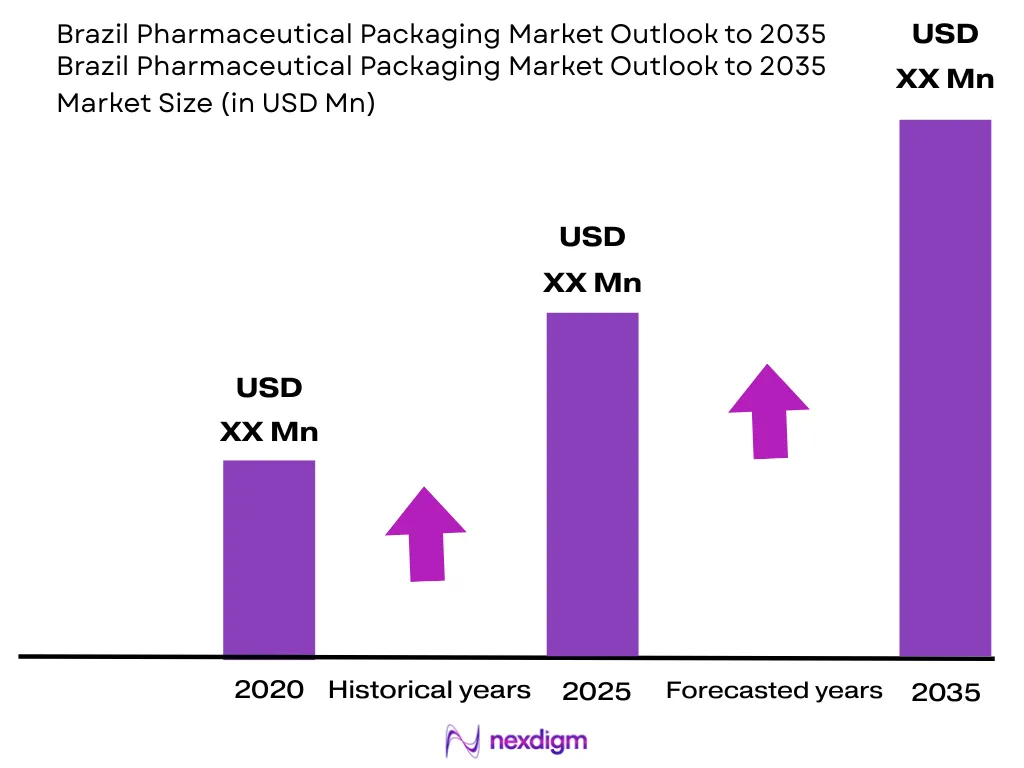
The Brazil Pharmaceutical Packaging Market was valued at USD ~ Million in 2024 and is anticipated to expand at a CAGR of ~% during 2026–2035. The market is primarily driven by Brazil’s position as Latin America’s largest pharmaceutical and healthcare market, ongoing implementation of the National Medicine Control System (SNCM) serialization mandate, and continued growth in domestic generic drug manufacturing. According to the International Trade Administration of the U.S. Department of Commerce, Brazil allocates approximately 9.1% of GDP to healthcare expenditure, the largest pharmaceutical and healthcare market in Latin America, while the Ministry of Transparency estimated Brazil’s government health spending at BRL 136.41 billion (USD 26.05 billion) in 2022. The Brazil Blister Packaging Market alone is projected to reach USD 449.27 million by 2028, expanding at a CAGR of 6.31%, while the broader Latin America Blister Packaging Market is projected to grow from USD 1.47 billion in 2024 to USD 2.12 billion by 2029, at a CAGR of 7.42%. Brazil’s National Health Surveillance Agency (ANVISA) established the SNCM in 2009 and formalized serialization requirements under RDC 157/2017 and Normative Instruction No. 100/2021, mandating unit-level serialization with GS1 Data Matrix barcodes across bakery, dairy, and pharmaceutical packaging applications, with full compliance, including distributors and wholesalers, required since April 2024.
Market Segmentation
By Packaging Type
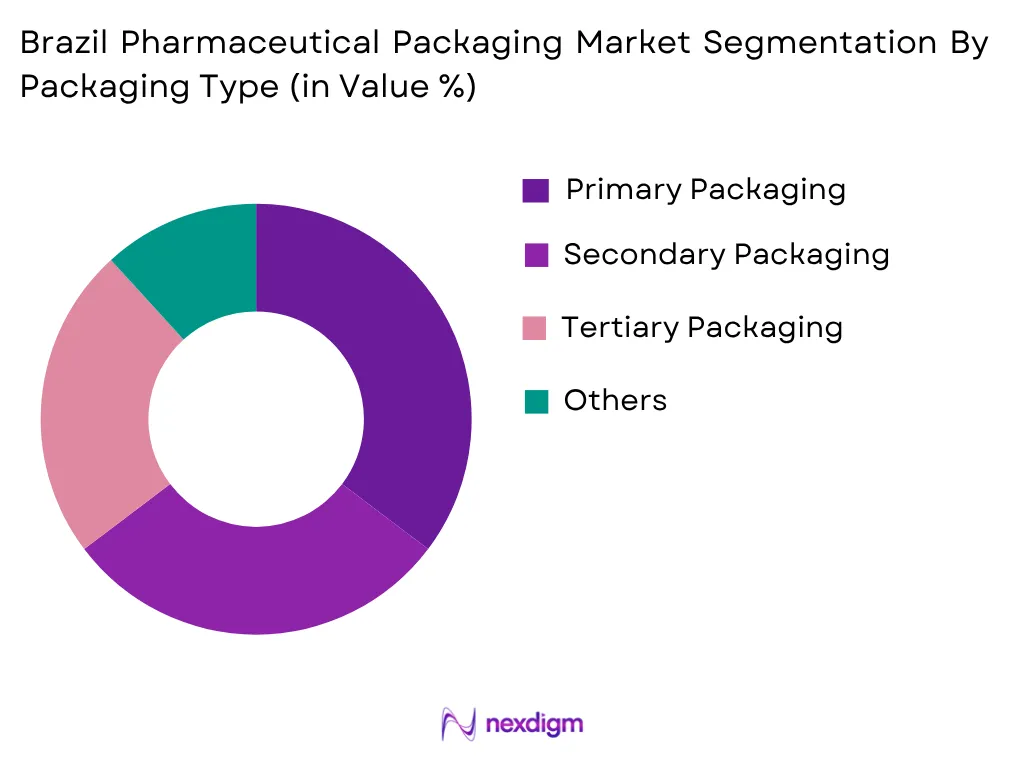
Among these, Primary Packaging, encompassing blister packs, bottles, and ampoules, holds the largest share of the Brazil Pharmaceutical Packaging Market, consistent with the global pattern in which primary packaging captured approximately 41.54% of the pharmaceutical serialization services market in 2024. This dominance reflects primary packaging’s crucial role in ensuring the safety and authenticity of products, as it represents the first point of contact between the drug and the consumer, making it the critical layer for the GS1 Data Matrix serialization and Unique Medicine Identifier requirements mandated under Brazil’s National Medicine Control System. Secondary Packaging, comprising cartons and folding boxes, is projected to experience the fastest growth due to increasing focus on enhancing supply chain security and meeting the aggregation requirements of ANVISA’s serialization framework, which requires linkage between individual unit packages and their corresponding transport packaging identifiers throughout the distribution chain.
By Material
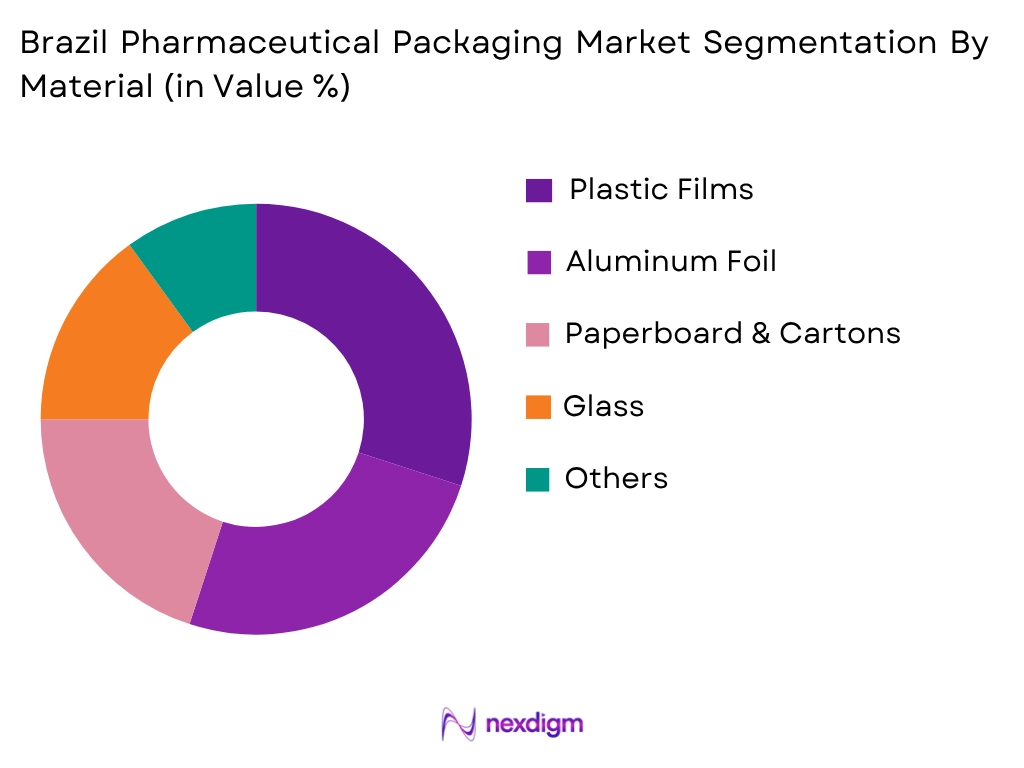
Plastic Films, including PVC, PVDC, and Aclar barrier films, dominate the Brazil Pharmaceutical Packaging Market given their widespread use in blister packaging for solid oral dosage forms, offering insulation from the external environment, cost-effectiveness, and convenience of handling while maintaining medicine efficacy. Amcor’s April 2021 announcement of client trials for recyclable thermoform blister packaging made of polyethylene reflects growing industry investment in more environmentally friendly alternatives to conventional PVC-based films, offering carbon footprint reductions of up to 70% while still meeting the strict specifications required for highly regulated pharmaceutical packaging. Aluminum Foil remains essential for blister lidding and maintains a significant share given its superior moisture and light barrier properties, while Paperboard and Cartons continue to see steady demand for secondary packaging applications requiring printed regulatory information and serialization codes.
Competitive Landscape
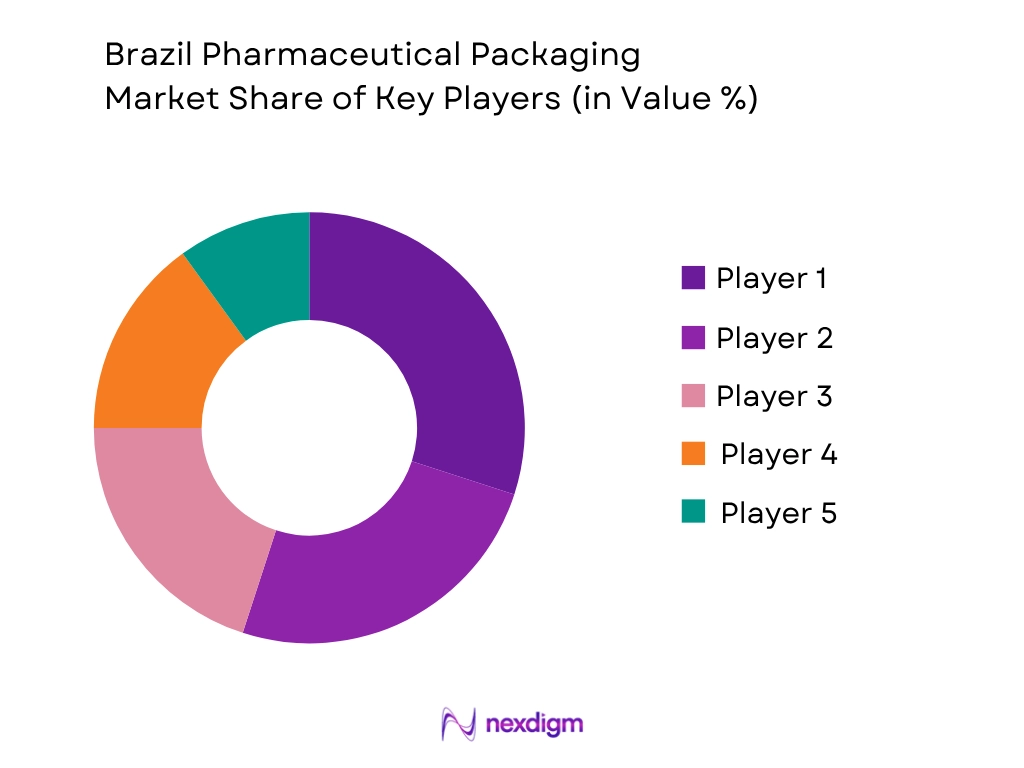
The Brazil Pharmaceutical Packaging Market is moderately consolidated, with multinational packaging conglomerates maintaining significant local manufacturing presence alongside specialized domestic blister packaging converters. Competition is primarily based on manufacturing capacity, barrier film technology, serialization and track-and-trace integration capability, regulatory compliance with ANVISA’s SNCM framework, and the ability to serve Brazil’s large domestic generic drug manufacturing base. Embalagem Blister, a São Paulo-based specialist with approximately 30 years of experience in the Brazilian market, has built a strong regional reputation manufacturing and developing some of the most widely used blister packaging formats for the domestic pharmaceutical industry. Klöckner Pentaplast do Brasil maintains dedicated local manufacturing operations to serve the Brazilian and broader Latin American pharmaceutical blister packaging market, while global players including Amcor, Constantia Flexibles, and Bilcare Research continue to compete on the strength of their barrier film technology, sustainability credentials, and multinational customer relationships across generic and branded pharmaceutical manufacturers operating in Brazil.
| Company | Establishment Year | Headquarters | Primary Product Portfolio | Pharmaceutical Packaging Portfolio
|
Manufacturing Presence | Major End-Use Industries | Key Strategic Focus | Certifications & Compliance |
| Embalagem Blister | 1995 | ~ | ~ | ~ | ~ | ~ | ~ | ~ |
| Klöckner Pentaplast do Brasil | 1965 | ~ | ~ | ~ | ~ | ~ | ~ | ~ |
| Amcor plc | 1860 | ~ | ~ | ~ | ~ | ~ | ~ | ~ |
| Constantia Flexibles | 1969 | ~ | ~ | ~ | ~ | ~ | ~ | ~ |
| Bilcare Research | 1987 | ~ | ~ | ~ | ~ | ~ | ~ | ~ |
Brazil Pharmaceutical Packaging Market Analysis
Growth Drivers
ANVISA SNCM Serialization Mandate Driving Track-and-Trace Investment
The Brazil Pharmaceutical Packaging Market is experiencing sustained growth due to the National Medicine Control System (SNCM), which ANVISA established in 2009 and formalized through RDC 157/2017 and Normative Instruction No. 100/2021. The regulation required a phased rollout of serialization compliance, with manufacturers and importers reaching 30% of serialized products and reported events by April 2022, 70% by April 2023, and full 100% compliance, including distributors and wholesalers, by April 2024. Each serialized unit must carry a GS1 2D Data Matrix barcode containing the Unique Medicine Identifier, comprising the GTIN, ANVISA registration number, unique serial number, expiration date, and lot number, alongside aggregation to a transport packaging identifier. With ANVISA’s 2026 audits now requiring complete aggregation records and real-time electronic event reporting, pharmaceutical manufacturers and packaging converters continue to invest heavily in upgraded serialization-compatible packaging lines and machine vision inspection systems to maintain compliance.
Brazil’s Position as Latin America’s Largest Pharmaceutical Market
Brazil’s position as Latin America’s largest pharmaceutical and healthcare market continues to drive sustained demand for pharmaceutical packaging across the country. According to the International Trade Administration of the U.S. Department of Commerce, Brazil allocates approximately 9.1% of GDP to healthcare expenditure, while the Ministry of Transparency estimated government health spending at BRL 136.41 billion (USD 26.05 billion) in 2022. The most considerable profits in the region are earned by local private laboratories, highlighting the expanding need for pharmaceutical packaging suppliers as the number of solid dosage form developments rises. This robust domestic pharmaceutical manufacturing base, anchored by leading Brazilian pharmaceutical companies, continues to create substantial and diversified demand for primary, secondary, and tertiary packaging formats across the country’s expanding generic and branded drug manufacturing sectors.
Market Challenges
Complex Multi-Phase Compliance Timeline and Legacy System Obsolescence
The Brazil Pharmaceutical Packaging Market faces significant challenges as ANVISA’s evolving SNCM audit standards render older serialization systems non-compliant. Track-and-trace systems implemented as early as 2018 often lack complete aggregation records and real-time event reporting capabilities that are now essential for passing ANVISA’s updated 2026 audit standards, which require verified linkage at all packaging levels and immediate reporting of supply chain events. Pharmaceutical manufacturers and packaging converters operating with legacy systems face costly upgrades to achieve full compliance, including online and offline track-and-trace capability, manual and multi-2D aggregation across the complete hierarchy from unit to pallet, and inbuilt reporting servers capable of submitting traceability data to the SNCM portal in real time, creating substantial capital investment requirements across the value chain.
Sustainability Pressure Amid Stringent Regulatory Requirements
The Brazil Pharmaceutical Packaging Market faces the ongoing challenge of balancing growing sustainability pressure against ANVISA’s strict specifications for highly regulated pharmaceutical packaging. While manufacturers increasingly seek to replace conventional PVC and PVDC-based blister films with more environmentally friendly alternatives, any new material or format must continue to meet the exacting barrier, protection, and serialization requirements mandated for pharmaceutical products. This tension requires sustained research and development investment from packaging manufacturers to develop recyclable or biodegradable materials that do not compromise the moisture, light, and oxygen barrier performance essential to maintaining drug efficacy and regulatory compliance throughout a product’s shelf life.
Market Opportunities
Recyclable and Sustainable Blister Packaging Innovation
Growing demand for more sustainable pharmaceutical packaging presents substantial opportunities for manufacturers operating in the Brazil Pharmaceutical Packaging Market. Amcor’s April 2021 announcement of client trials for recyclable thermoform blister packaging made of polyethylene demonstrates the potential for carbon footprint reductions of up to 70% compared with conventional blister formats, while still meeting the strict specifications required for highly specialized and regulated pharmaceutical packaging. Amcor’s subsequent August 2021 announcement of a proprietary inert film and laminate lidding option capable of surviving heat sterilization further illustrates continued innovation potential for medical device and Active Pharmaceutical Ingredient packaging applications, creating opportunities for manufacturers that can successfully combine sustainability credentials with the rigorous performance standards required by ANVISA.
Anti-Counterfeiting Digital Authentication Technology Adoption
Brazil’s anti-counterfeit packaging market, valued at USD 2.47 billion in 2024 and projected to reach USD 5.43 billion by 2033 at a CAGR of 8.48%, presents significant opportunities for pharmaceutical packaging manufacturers specializing in digital authentication technologies. Rising counterfeit threats, strict regulatory enforcement, and growing pharmaceutical safety concerns continue to drive adoption of RFID tags, QR codes, and blockchain-based track-and-trace systems to combat counterfeiting. In September 2024, the Brazilian Directory for Combating Trademark Counterfeiting established a feature that has registered more than 270 companies representing over 35,000 trademarks from 32 countries, reflecting the institutional momentum behind brand protection initiatives that continue to create demand for advanced anti-counterfeiting packaging technologies across Brazil’s pharmaceutical sector.
Future Outlook
The Brazil Pharmaceutical Packaging Market is expected to witness sustained expansion over the forecast period, supported by continued enforcement of ANVISA’s SNCM serialization requirements, ongoing growth in domestic generic drug manufacturing, and increasing investment in sustainable and recyclable blister packaging formats. Continued upgrades to legacy track-and-trace systems, driven by ANVISA’s strengthening 2026 audit standards, are expected to sustain demand for advanced serialization-compatible packaging technology. The market is also likely to benefit from growing anti-counterfeiting technology adoption and Brazil’s continued position as Latin America’s largest pharmaceutical market, supporting long-term growth across solid dosage, liquid formulation, injectable, and topical pharmaceutical packaging applications.
Major Players
- Embalagem Blister
- Klöckner Pentaplast do Brasil
- Amcor plc
- Constantia Flexibles
- Bilcare Research
- Sonoco Products Company
- WestRock Company
- Gerresheimer AG
- Schott AG
- AptarGroup Inc.
- West Pharmaceutical Services
- Berry Global Inc.
- Owens-Illinois Inc.
- Tekni-Plex Inc.
- Becton, Dickinson and Company (BD)
Key Target Audience
- Pharmaceutical Packaging Manufacturers and Converters
- Pharmaceutical Companies and Generic Drug Manufacturers
- Contract Manufacturing Organizations (CMOs)
- Medical Device Manufacturers
- Track-and-Trace and Serialization Technology Providers
- Distributors and Wholesalers
- Investment and Venture Capitalist Firms
- Government and Regulatory Bodies (Agência Nacional de Vigilância Sanitária (ANVISA), National Medicine Control System (SNCM), Ministry of Health)
- Raw Material Suppliers and Resin Manufacturers
Research Methodology
Step 1: Identification of Key Variables
The research process begins with identifying the complete ecosystem of the Brazil Pharmaceutical Packaging Market, including raw material suppliers, packaging manufacturers, converters, pharmaceutical companies, distributors, and regulatory authorities. Extensive secondary research is conducted using company annual reports, government publications, trade associations, customs statistics, industry journals, and proprietary databases to determine the variables influencing market demand, pricing, production, consumption, and technological developments.
Step 2: Market Analysis and Construction
Historical market information is collected and analyzed to estimate market size, production volumes, import-export activity, application-wise demand, and pricing trends. A combination of top-down and bottom-up approaches is used to estimate market revenues and validate segment-level performance. Consumption patterns across solid dosage, liquid formulations, injectables, and topical applications are evaluated to establish an accurate representation of the industry.
Step 3: Hypothesis Validation and Expert Consultation
The preliminary findings are validated through Computer-Assisted Telephone Interviews (CATIs) and structured discussions with pharmaceutical packaging manufacturers, procurement managers, converters, regulatory experts, and senior executives operating within the Brazilian pharmaceutical industry. These interviews help verify market assumptions, competitive developments, technology adoption trends, pricing dynamics, and future investment opportunities while refining the overall market estimates.
Step 4: Research Synthesis and Final Output
The final stage integrates insights obtained from primary interviews with quantitative information collected through secondary sources. Data triangulation techniques are applied to reconcile differences between supply-side and demand-side estimates, ensuring robust market forecasting. The report is then reviewed through multiple quality assurance checkpoints to deliver a comprehensive analysis covering market size, segmentation, competitive landscape, future outlook, and strategic recommendations for industry stakeholders.

- Executive Summary
- Research Methodology (Market Definitions and Assumptions, Abbreviations, Market Sizing Approach, Top-Down Analysis, Bottom-Up Analysis, Demand-Side Assessment, Supply-Side Assessment, Primary Industry Interviews, Secondary Research Validation, Data Triangulation, Forecasting Framework, Limitations and Future Conclusions)

- Definition and Scope
- Market Evolution and Industry Genesis
- Timeline of Major Industry Developments
- Pharmaceutical Packaging Industry Value Chain Analysis
- Supply Chain Analysis

- Growth Drivers (ANVISA SNCM Serialization Mandate Driving Track-and-Trace Investment, Brazil’s Position as Latin America’s Largest Pharmaceutical Market, Rising Generic Drug Manufacturing, Growth in Chronic Disease Treatment Demand, Expansion of Domestic API Manufacturing, Premiumization of Packaging Formats)
- Market Challenges (Complex Multi-Phase Compliance Timeline and Legacy System Obsolescence, Sustainability Pressure Amid Stringent Regulatory Requirements, High Implementation Costs, Raw Material Price Volatility, Regulatory Compliance Complexity)
- Market Opportunities (Recyclable and Sustainable Blister Packaging Innovation, Anti-Counterfeiting Digital Authentication Technology Adoption, Smart Packaging and Connected Devices, Export-Oriented Manufacturing, Biologics and Cold Chain Packaging)
- Market Trends (Shift Toward Recyclable Mono-Material Blister Structures, Growth of Digital Authentication Technologies, Cold Chain Packaging for Biologics, Smart Labeling Adoption, Consolidation Through Mergers and Acquisitions)
- Government Regulations (National Medicine Control System (SNCM), ANVISA RDC 157/2017, Normative Instruction No. 100/2021, Unique Medicine Identifier (IUM) Requirements, GS1 Data Matrix Serialization Standards)
- Import and Export Analysis (Trade Volume, Major Import Sources, Export Destinations, HS Code Analysis, Trade Balance)
- Raw Material Availability Analysis (Polyvinyl Chloride (PVC), Polyvinylidene Chloride (PVDC), Aluminum Foil Stock, Paperboard, Recycled Polyethylene)
- Technology Landscape (Thermoforming Technology, Cold Forming Technology, GS1 Data Matrix Serialization, Barrier Coating Technologies, Machine Vision Inspection Systems)
- Sustainability Assessment (Recycled Content Adoption, Recyclable Mono-Material Design, Carbon Footprint Reduction, Biodegradable Additive Development, Circular Economy Initiatives)
- PESTLE Analysis
- SWOT Analysis
- Porter’s Five Forces Analysis
- Stakeholder Ecosystem
- Competition Ecosystem

- By Market Value (2020-2025)
- By Volume Consumption (2020-2025)
- By Average Selling Price (2020-2025)

- By Packaging Type (In Value %)
Primary Packaging (Blister Packs, Bottles & Ampoules)
Secondary Packaging (Cartons & Folding Boxes)
Tertiary Packaging (Shrink Wrap & Pallets) - By Material (In Value %)
Plastic Films (PVC, PVDC & Aclar)
Aluminum Foil
Paperboard & Cartons
Glass - By Application (In Value %)
Solid Dosage (Tablets & Capsules)
Liquid Formulations
Injectables
Topical & Semi-Solid Formulations - By Technology (In Value %)
Serialization & Track-and-Trace
Tamper-Evident Packaging
Child-Resistant Packaging
Anti-Counterfeiting Technology - By Region (In Value %)
Southeast Brazil
South Brazil
Northeast Brazil
Central-West & North Brazil

- Market Share of Major Players (By Value, Volume, Material, Application Industry, Product Category)
- Cross Comparison Parameters (Product Portfolio Breadth, Barrier Film Capability, Serialization Technical Support Capability, Manufacturing Capacity, Regulatory Compliance & Certifications, Pharmaceutical Customer Base, Innovation & New Product Launch Frequency)
- SWOT Analysis of Major Players
- Pricing Analysis by Product Category and SKU
- Production Capacity Analysis
- Manufacturing Footprint Analysis
- Distribution Network Analysis
- Innovation Benchmarking
- Detailed Profiles of Major Companies
Embalagem Blister
Klöckner Pentaplast do Brasil
Amcor plc
Constantia Flexibles
Bilcare Research
Sonoco Products Company
WestRock Company
Gerresheimer AG
Schott AG
AptarGroup Inc.
West Pharmaceutical Services
Berry Global Inc.
Owens-Illinois Inc.
Tekni-Plex Inc.
Becton, Dickinson and Company (BD)

- Consumption Pattern Analysis (Industrial Usage, Batch Size, Product Category Penetration, Seasonal Demand, Reformulation Activity)
- Purchasing Criteria (Barrier Performance, Regulatory Compliance, Cost Efficiency, Serialization Capability, Shelf Life, Supply Reliability)
- Procurement and Supplier Selection Analysis
- Sustainable Packaging Adoption Assessment
- Premium vs Conventional Packaging Demand
- Product Attribute Preference Analysis (Barrier Consistency, Print Quality, Seal Integrity, Recyclability, Tamper Evidence, Serialization Accuracy)
- Regulatory Compliance Influence on Product Development
- Pain Point Analysis
- Decision-Making Process

- By Market Value (2026-2035)
- By Volume Consumption (2026-2035)
- By Average Selling Price (2026-2035)


 Request a Sample
 Ask for Customization
 Get a Quote
 Enquire Now