
 Download PDF
Market Overview
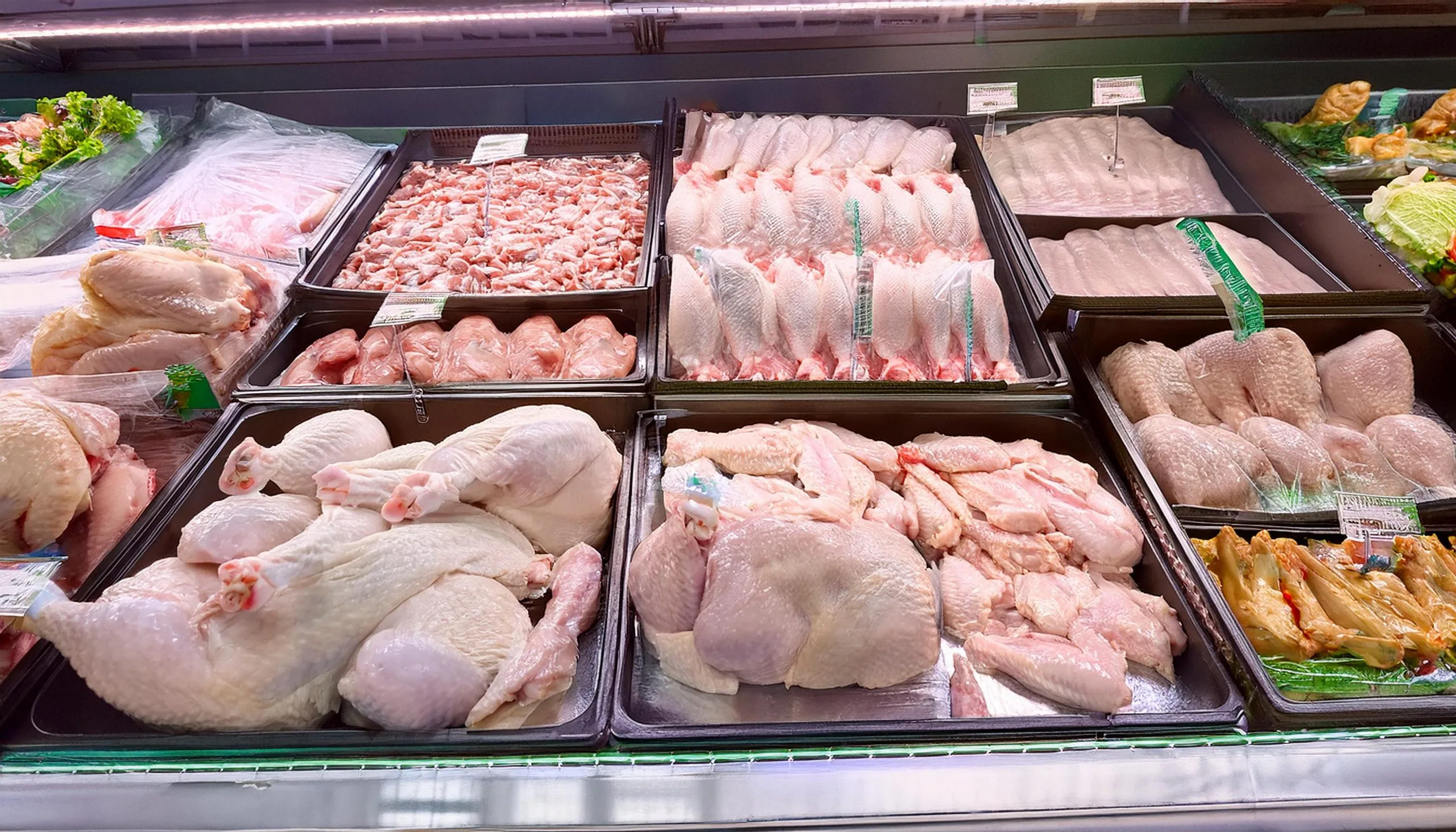
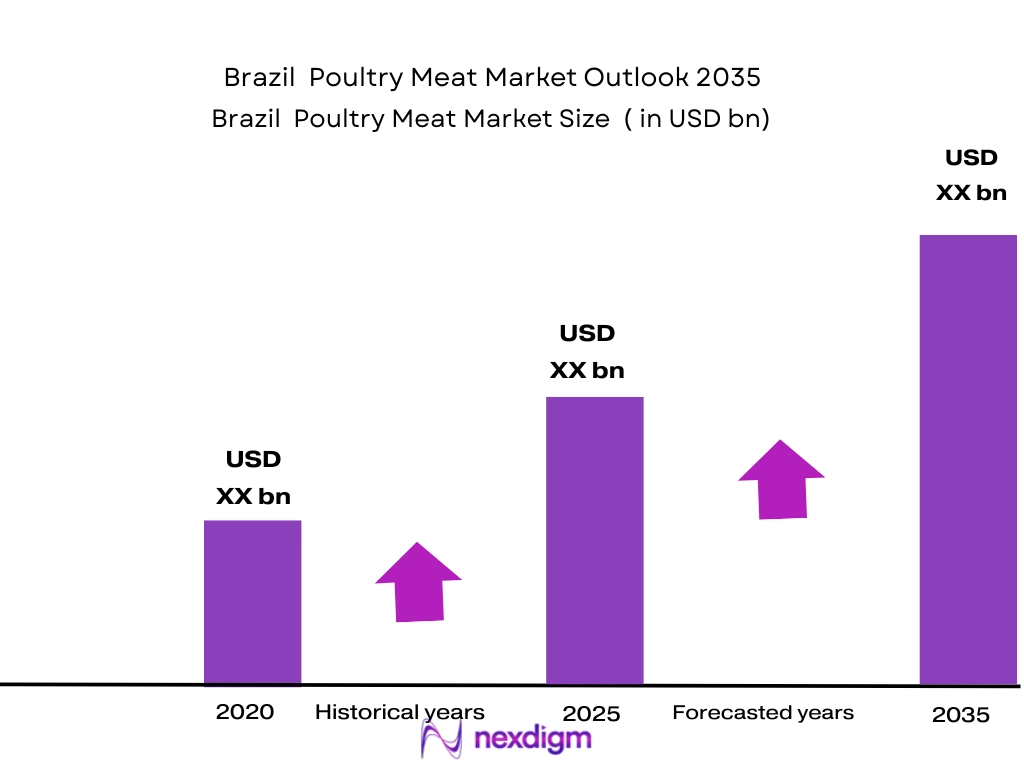
The Brazil poultry meat market was valued at USD ~ billion based on a recent historical assessment, supported by high chicken consumption, integrated production systems, feed-cost advantages, and strong export orientation. Domestic supply was reinforced by chicken meat output of about 15.0 million metric tons and human consumption of about 10.0 million metric tons, while export revenue reached USD 9.928 billion, showing the sector’s scale across both internal and external demand.
Paraná, Santa Catarina, Rio Grande do Sul, São Paulo, and Goiás dominate Brazil’s poultry meat industry because they combine dense farming clusters, integrated processors, feed availability, port access, cold-chain infrastructure, and established export certification capabilities. Paraná remains the production and export anchor, followed by Santa Catarina and Rio Grande do Sul, while São Paulo and Goiás benefit from large consumer bases, foodservice demand, logistics networks, and proximity to feed-producing agricultural zones.
Market Segmentation
By Product Type
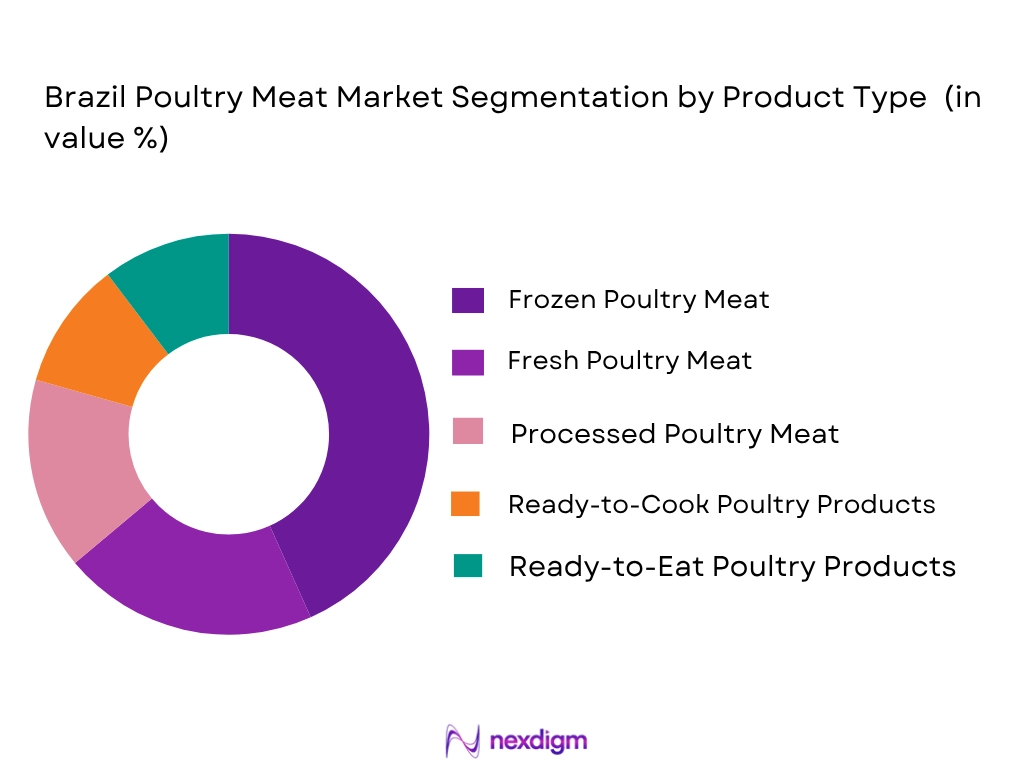
Brazil poultry meat market is segmented by product type into fresh poultry meat, frozen poultry meat, processed poultry meat, ready-to-cook poultry products, ready-to-eat poultry products, and others. Recently, frozen poultry meat has a dominant market share due to its strong role in export shipments, long shelf life, suitability for cold-chain distribution, and compatibility with Brazil’s large-scale processing model. The sub-segment is supported by major integrated producers that operate slaughtering, chilling, freezing, and export-certified facilities across southern and southeastern Brazil. Frozen poultry also fits the requirements of import markets in Asia, the Middle East, Africa, and Latin America, where bulk shipments, price competitiveness, halal certification, and storage flexibility influence purchasing decisions. Domestic retail chains and foodservice buyers also prefer frozen and chilled formats because they support inventory planning and reduce spoilage risk. Processed and ready-to-cook products are expanding, but frozen chicken remains the backbone of Brazil’s poultry meat commercialization structure.
By Distribution Channel
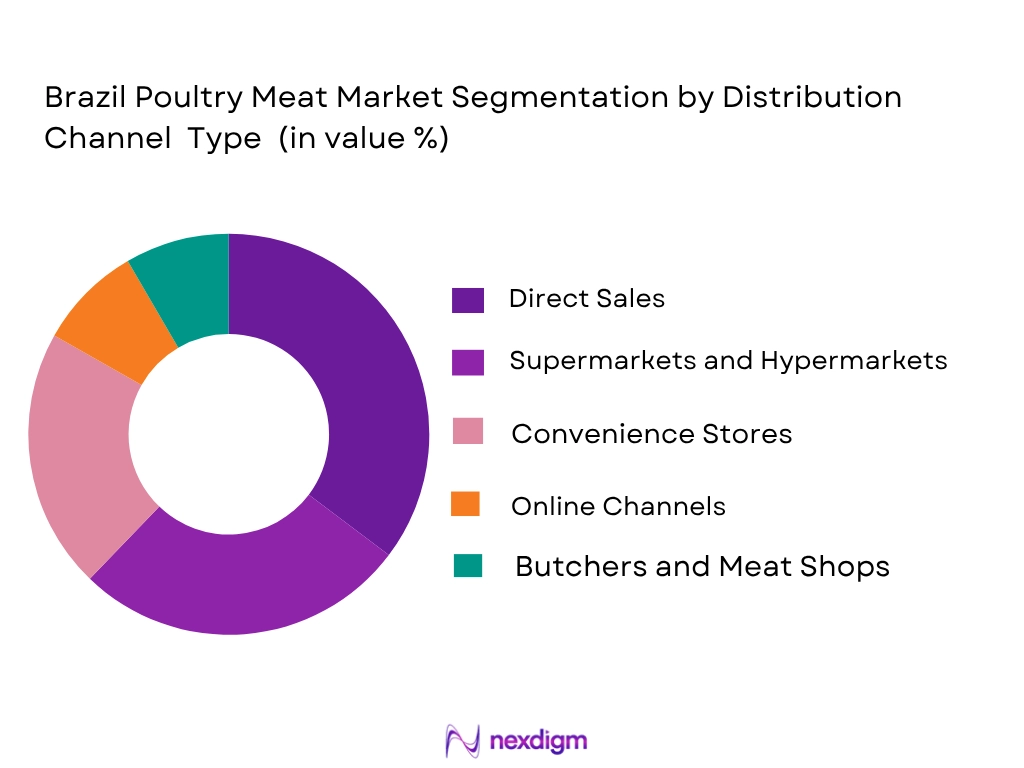
Brazil poultry meat market is segmented by distribution channel into supermarkets and hypermarkets, traditional retail stores, foodservice distributors, direct sales, online channels, and butchers and meat shops. Recently, supermarkets and hypermarkets have a dominant market share due to their national footprint, organized cold-chain systems, branded packaged-meat offerings, and ability to serve middle-income urban households seeking convenient protein purchases. These channels are especially strong in large consumption centers because they offer fresh, chilled, frozen, marinated, and value-added poultry products in one location. Foodservice distributors also hold a major position because Brazil’s poultry industry supplies restaurants, quick-service chains, hotels, caterers, and institutional buyers. Traditional stores and butcher shops remain relevant for price-sensitive consumers and neighborhood-based purchases. Online channels are growing from a smaller base as grocery platforms and meat-delivery services expand refrigerated delivery capabilities, but their reach remains concentrated in urban markets.
Competitive Landscape
The Brazil poultry meat market is moderately consolidated at the processing and export level, with large integrated companies controlling significant slaughtering, processing, cold-chain, branding, and export-certification capacity. BRF, JBS/Seara, Aurora Alimentos, C.Vale, and Copacol influence pricing, product innovation, export access, halal-certified production, retail relationships, and foodservice supply. Competition is shaped by scale economics, feed sourcing, biosecurity standards, export-market approvals, brand equity, and the ability to move across fresh, frozen, processed, and value-added poultry categories. JBS reported 2024 revenue of about USD 77.18 billion, while BRF reported net revenue of R$61.4 billion, underlining the scale difference between diversified meat majors and poultry-focused processors.
| Company Name | Establishment Year | Headquarters | Technology Focus | Market Reach | Key Products | Revenue | Export/Processing Capability |
| BRF S.A. | 2009 | Itajaí, Brazil | ~ | ~ | ~ | ~ | ~ |
| JBS S.A. / Seara | 1953 | São Paulo, Brazil | ~ | ~ | ~ | ~ | ~ |
| Aurora Alimentos | 1969 | Chapecó, Brazil | ~ | ~ | ~ | ~ | ~ |
| C.Vale Cooperativa Agroindustrial | 1963 | Palotina, Brazil | ~ | ~ | ~ | ~ | ~ |
| Copacol | 1963 | Cafelândia, Brazil | ~ | ~ | ~ | ~ | ~ |
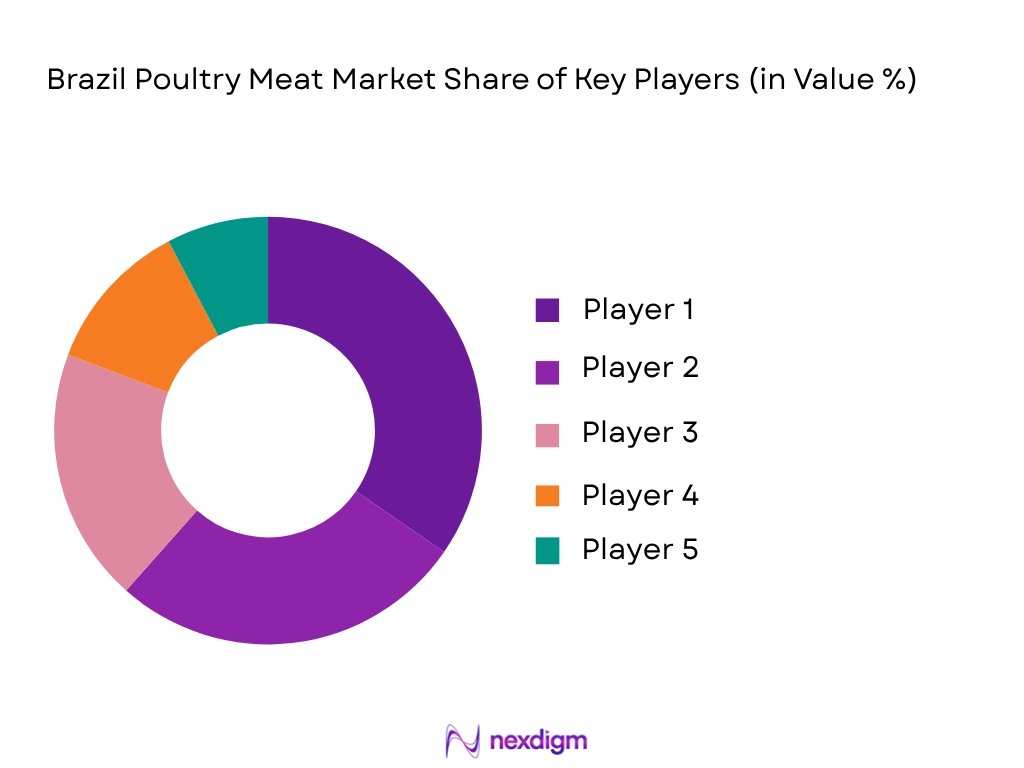
Brazil Poultry Meat Market Analysis
Growth Drivers
Rising Demand for Affordable Animal Protein
Brazil poultry meat market is strongly driven by the rising demand for affordable animal protein among households, foodservice operators, and institutional buyers. Poultry meat remains more price-accessible than beef and several seafood categories, making it a preferred protein source for daily consumption. Its versatility in Brazilian cuisine, ease of preparation, and suitability for different income groups further support demand. Consumers use chicken across home-cooked meals, quick-service menus, frozen foods, and ready-to-cook products. As inflation and food-price sensitivity influence purchasing behavior, poultry benefits from being a cost-effective substitute for higher-priced meats. This affordability advantage continues to strengthen its position in both urban and semi-urban markets.
Expansion of Poultry Exports from Brazil
The expansion of poultry exports from Brazil is a major growth driver for the market, supported by large-scale production capacity, competitive feed availability, and strong processing infrastructure. Brazil is one of the leading global poultry exporters, supplying frozen and processed chicken to Asia, the Middle East, Africa, and Latin America. Export demand helps producers maintain high plant utilization and encourages investments in slaughtering, freezing, packaging, halal certification, and food-safety systems. Major companies benefit from established international buyer relationships and diversified export destinations. The country’s integrated poultry supply chain also supports consistent product quality and large-volume shipments. As global demand for affordable protein increases, Brazil’s poultry exporters are positioned to capture additional opportunities.
Market Challenges
Volatility in Feed Prices
Volatility in feed prices is a key challenge for Brazil poultry meat market because poultry production depends heavily on corn and soybean meal. Changes in grain prices directly affect production costs, grower margins, and processor profitability. Weather conditions, export demand for grains, currency fluctuations, logistics costs, and crop availability can create sudden input-cost pressure. While large integrated producers can manage some risk through scale, storage, and procurement contracts, smaller players remain more exposed. If feed costs rise faster than poultry prices, companies may struggle to pass the increase to consumers due to price sensitivity. This can affect investment decisions, production planning, and competitiveness across domestic and export markets.
Disease Outbreaks and Biosecurity Concerns
Disease outbreaks and biosecurity concerns remain significant challenges for Brazil poultry meat market, especially because the industry depends on domestic trust and export-market access. Avian influenza, Newcastle disease, and other poultry-related health risks can disrupt production, trigger movement controls, and lead importing countries to impose trade restrictions. Even localized outbreaks can create uncertainty for processors, farmers, retailers, and international buyers. Companies must invest continuously in farm-level biosecurity, vaccination practices where applicable, sanitation, monitoring, traceability, and rapid response systems. These measures increase operating costs but are necessary to protect flock health and market access. Failure to contain disease risks can damage consumer confidence and reduce export competitiveness.
Opportunities
Rising Demand for Processed and Value-added Poultry Products
Rising demand for processed and value-added poultry products creates a strong opportunity in Brazil poultry meat market. Consumers are increasingly looking for convenient formats such as marinated cuts, nuggets, sausages, breaded fillets, seasoned wings, frozen meals, and ready-to-cook packs. These products help households save preparation time while allowing companies to earn better margins than basic raw poultry cuts. Supermarkets and foodservice operators also prefer standardized processed poultry products because they support inventory control, consistent quality, and faster preparation. Major producers can use branding, packaging, flavor innovation, and portion control to differentiate offerings. This opportunity is especially relevant in urban areas, where convenience-driven food consumption continues to grow.
Increasing Export Demand from Asia, Middle East, and Africa
Increasing export demand from Asia, the Middle East, and Africa offers a major opportunity for Brazil poultry meat market. These regions have growing populations, rising protein consumption, and, in many cases, limited domestic poultry production capacity. Brazil can serve these markets with frozen whole chicken, cuts, offal, mechanically deboned meat, and halal-certified poultry products. The Middle East remains especially important because of strong demand for halal-certified chicken, while Asian and African markets provide long-term volume growth potential. Export diversification helps Brazilian producers reduce reliance on a few destination countries and improve resilience against trade disruptions. Companies with strong certification, logistics, and buyer networks can benefit significantly.
Future Outlook
Brazil poultry meat market is expected to remain structurally strong over the next five years, supported by affordable protein demand, export competitiveness, and the continued importance of chicken in household diets.Growth is likely to be shaped by investment in automation, feed efficiency, traceability, cold-chain expansion, and value-added processing.Regulatory and sanitary systems will remain critical because market access depends on disease surveillance, export certification, and regionalization agreements.Demand-side momentum should come from domestic retail, foodservice recovery, halal markets, emerging import destinations, and growing acceptance of processed poultry formats.
Major Players
- BRF S.A.
- JBS S.A.
- Seara Alimentos
- Aurora Alimentos
- C.Vale Cooperativa Agroindustrial
- Copacol
- Lar Cooperativa Agroindustrial
- Cooperativa Central Aurora Alimentos
- Marfrig Global Foods
- Minerva Foods
- Tyson Foods Brazil
- Aviagen Brazil
- Granja Faria
- São Salvador Alimentos
- Pif Paf Alimentos
Key Target Audience
- Poultry meat producers
- Poultry processors and slaughterhouses
- Supermarkets and hypermarkets
- Foodservice distributors
- Quick-service restaurant chains
- Cold-chain logistics providers
- Investments and venture capitalist firms
- Government and regulatory bodies
Research Methodology
Step 1: Identification of Key Variables
The research process began by identifying demand, supply, pricing, production, trade, regulatory, and competitive variables relevant to the Brazil poultry meat market. Key variables included production volume, domestic consumption, exports, product formats, distribution channels, feed-cost behavior, and sanitary compliance requirements.
Step 2: Market Analysis and Construction
Market analysis was constructed through secondary research using industry publications, government trade sources, company disclosures, and poultry-sector reports. The market structure was mapped across product type, distribution channel, end-use demand, regional production clusters, and major processing companies.
Step 3: Hypothesis Validation and Expert Consultation
Initial findings were validated through comparison of production, export, and company-level indicators. Expert consultation would typically include poultry processors, distributors, retail category managers, cold-chain operators, feed suppliers, and regulatory specialists to test assumptions around demand, margins, and market access.
Step 4: Research Synthesis and Final Output
The final output was synthesized by aligning quantitative indicators with qualitative market drivers, challenges, opportunities, and competitive behavior. The report structure was developed to support strategic decision-making for producers, investors, retailers, foodservice buyers, logistics providers, and public-sector stakeholders.

- Executive Summary
- Research Methodology (Market Definitions and Assumptions, Abbreviations, Market Sizing Approach, Consolidated Research Approach, Understanding Market Potential Through In-Depth Industry Interviews, Primary Research Approach, Limitations and Future Conclusions)

- Definition and Scope
- Market Dynamics Overview
- Market Genesis
- Major Players and Market Timeline
- Business Cycle and Trends
- Supply Chain and Value Chain Analysis

- Growth Drivers
Rising Demand for Affordable Animal Protein
Growth in Domestic Poultry Consumption
Expansion of Poultry Exports from Brazil
Increasing Urbanization and Changing Food Habits
Growth of Quick Service Restaurants and Food Service Sector
Expansion of Cold Chain and Organized Retail Infrastructure - Market Challenges
Volatility in Feed Prices
Disease Outbreaks and Biosecurity Concerns
Strict Food Safety and Export Regulations
Price Sensitivity Among Consumers
Environmental and Sustainability Concerns
High Competition Among Domestic Producers - Opportunities
Rising Demand for Processed and Value-added Poultry Products
Expansion of Frozen and Ready-to-Cook Poultry Segment
Growth in Online Grocery and Meat Delivery Platforms
Increasing Export Demand from Asia, Middle East, and Africa
Innovation in Packaging and Shelf-life Extension
Rising Demand for Antibiotic-free and Organic Poultry Meat - Key Trends
Shift Toward Processed and Convenience Poultry Products
Increasing Preference for Frozen and Packaged Meat
Rising Focus on Traceability and Food Safety
Growth of Private Label Poultry Products
Adoption of Automation in Poultry Processing
Sustainability Initiatives in Poultry Farming and Packaging - Government Regulations
- SWOT Analysis
- Porter’s Five Forces

- By Value, 2020–2025
- By Volume, 2020–2025
- By Average Price, 2020–2025

- By Product Type (In Value %)
Fresh Poultry Meat
Frozen Poultry Meat
Processed Poultry Meat
Ready-to-Cook Poultry Products
Ready-to-Eat Poultry Productt - By Poultry Type (In Value %)
Chicken Meat
Turkey Meat
Duck Meat
Quail Meat
Others - By Cut Type (In Value %)
Whole Bird
Breast
Thighs and Drumsticks
Wings
Boneless Cuts
Minced Poultry Meat
Others - By Processing Type (In Value %)
Raw Poultry Meat
Marinated Poultry Meat
Smoked Poultry Meat
Breaded Poultry Products
Sausages and Nuggets
Others - By Packaging Type (In Value %)
Fresh Loose Packaging
Vacuum Packaging
Modified Atmosphere Packaging
Frozen Packaging
Canned Packaging
Others - By Application / End Use (In Value %)
Household Consumption
Food Service Industry
Quick Service Restaurants
Hotels and Restaurants
Institutional Sales
Food Processing Industry - By Distribution Channel (In Value %)
Direct Sales
Supermarkets and Hypermarkets
Convenience Stores
Online Channels
Butchers and Meat Shops - By Region (In Value %)
North Region
Northeast Region
Central-West Region
Southeast Region
South Region
Rest of Brazil

- Market Share of Major Players by Value/Volume
- Market Share of Major Players by Product Type
- Cross Comparison Parameters (Company Overview, Business Strategies, Recent Developments, Strength, Weakness, Organizational Structure, Revenues, Revenues by Product Type, Number of Touchpoints, Distribution Channels, Number of Dealers and Distributors, Margins, Processing Plants, Production Capacity, Unique Value Offering and Others)
- SWOT Analysis of Major Players
- Pricing Analysis Based on Product Categories for Major Players
- Detailed Profiles of Major Companies
BRF S.A.
JBS S.A.
Seara Alimentos
Aurora Alimentos
C.Vale Cooperativa Agroindustrial
Copacol
Lar Cooperativa Agroindustrial
Cooperativa Central Aurora Alimentos
Marfrig Global Foods
Minerva Foods
Tyson Foods Brazil
Aviagen Brazil
Granja Faria
São Salvador Alimentos
Pif Paf Alimentos

- Market Demand and Utilization
- Purchasing Power and Budget Allocations
- Regulatory and Compliance Requirements
- Needs, Desires, and Pain Point Analysis
- Decision-Making Process

- By Value, 2026–2035
- By Volume, 2026–2035
- By Average Price, 2026–2035


 Request a Sample
 Ask for Customization
 Get a Quote
 Enquire Now