
 Download PDF
Market Overview
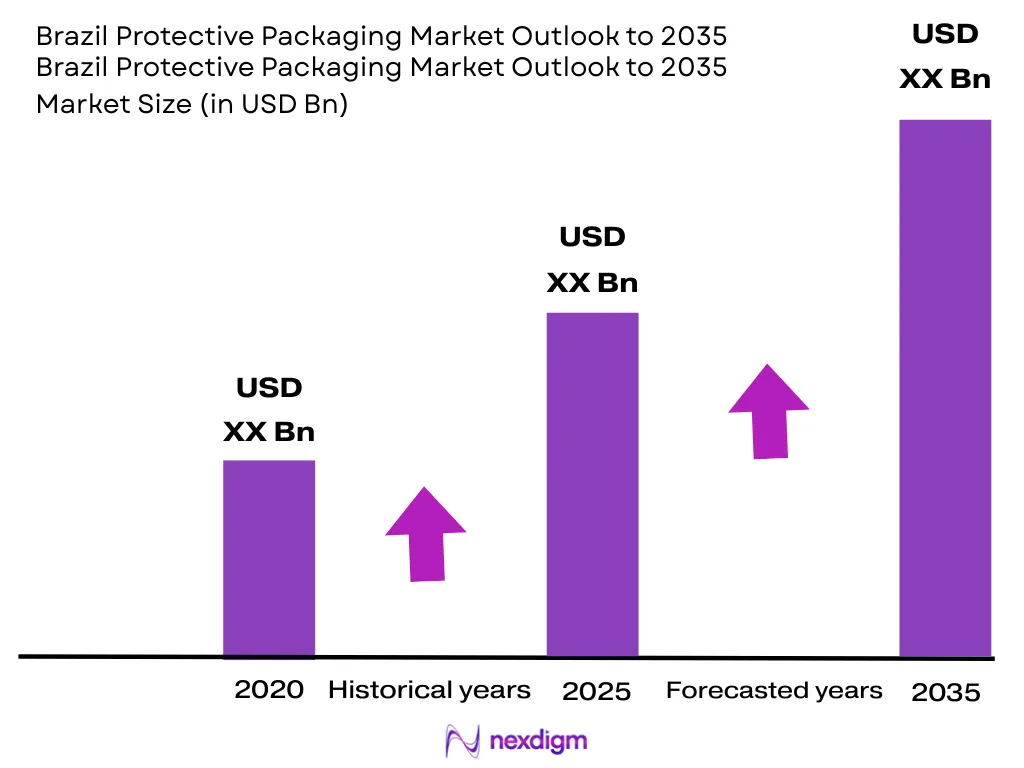
The Brazil Protective Packaging Market was valued at USD ~ Billion in 2024 and is anticipated to expand at a CAGR of ~% during 2026–2035. The market is primarily driven by Brazil’s rapidly expanding e-commerce sector, which generated online sales exceeding BRL 185 billion in 2024 and lifted corrugated shipments by 29% year over year, alongside the unique logistical demands of protecting goods across the country’s vast geographic distances and varied climate conditions. Brazil’s largest paper and packaging producer, Klabin S.A., has built a dedicated e-commerce packaging platform, Klabin ForYou, offering same-day delivery across Greater São Paulo alongside a broad portfolio of corrugated boxes, tapes, and cushioning materials designed for online retailers of all sizes. Fulfillment centers across the country increasingly specify crush-resistant board grades and void-fill cushioning engineered to survive multileg journeys spanning up to 5,000 kilometers, while moisture-barrier coatings are gaining traction to protect electronics and sensitive goods as last-mile delivery networks extend further into the humid climates of the Amazon region and Brazil’s Northeast.
Market Segmentation
By Material
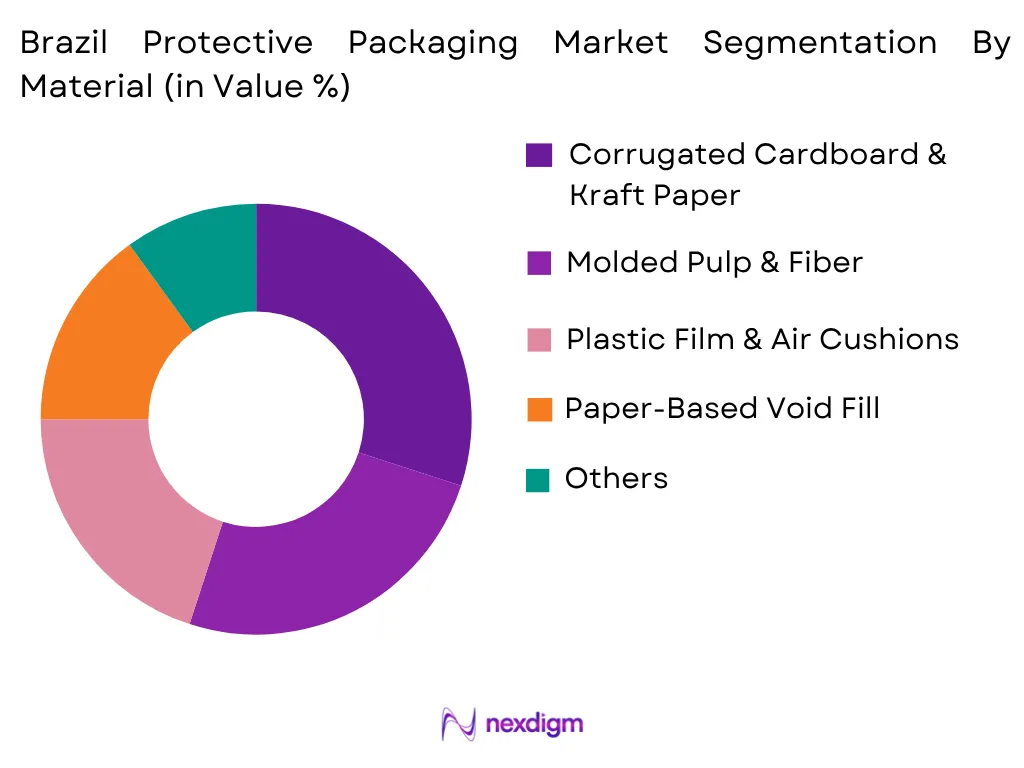
Corrugated Cardboard & Kraft Paper represents the largest material category in the Brazil Protective Packaging Market, anchored by Klabin S.A.’s position as Brazil’s market leader in corrugated board and sack kraft packaging, a segment in which the company has introduced innovations such as Eukaliner, a kraftliner made exclusively from eucalyptus fiber that combines performance with sustainability credentials increasingly demanded by Brazilian retailers and consumers. Molded Pulp & Fiber is gaining share as quick-service restaurant chains and food retailers test fiber bowls and trays, including products sourced from Klabin that meet ANVISA’s food-contact packaging rules, reducing reliance on imported PLA-based alternatives. Plastic Film & Air Cushions retain a meaningful share for lightweight and electronics protection applications, though sustained regulatory and consumer pressure, reflected in municipal decrees in São Paulo and Rio de Janeiro requiring a 30% reduction in disposable plastic use by 2026, continues to push volume toward paper-based and recyclable protective packaging alternatives.
By Distribution Reach
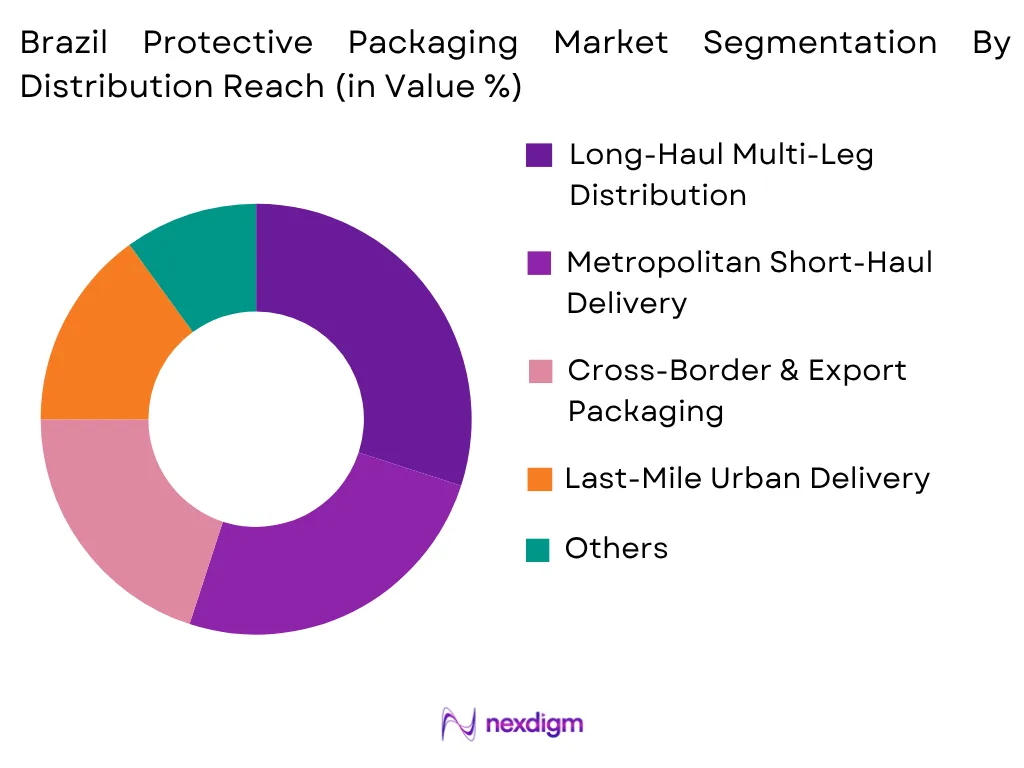
Long-Haul Multi-Leg Distribution represents a distinctive and demanding segment within the Brazil Protective Packaging Market, reflecting the country’s continental scale and the resulting need for crush-resistant board grades and void-fill cushioning engineered to survive multileg journeys across distribution chains spanning up to 5,000 kilometers. As last-mile delivery networks continue to extend into the Amazon region and Brazil’s Northeast, moisture-barrier coatings are gaining particular traction to protect electronics and other sensitive goods from humidity damage during transit, a challenge less pronounced in more climate-uniform and geographically compact markets. Metropolitan Short-Haul Delivery, concentrated around dense population centers such as Greater São Paulo, Rio de Janeiro, and Belo Horizonte, represents a comparatively lower-complexity segment where same-day and next-day delivery capabilities, exemplified by Klabin ForYou’s same-day delivery service within Greater São Paulo, have become an increasingly important competitive differentiator among protective packaging suppliers serving e-commerce fulfillment operations.
Competitive Landscape
The Brazil Protective Packaging Market is shaped by a combination of large, vertically integrated domestic pulp and paper majors and global protective packaging specialists with established Brazilian manufacturing operations. Klabin S.A., founded in 1899 and headquartered in São Paulo, stands as Brazil’s largest paper producer and exporter and the acknowledged market leader in corrugated board and sack kraft packaging, operating its own Packaging Technology Center to develop custom protective solutions alongside its Klabin ForYou e-commerce marketplace platform. Suzano S.A., the world’s largest producer of eucalyptus pulp, and Irani, a longstanding Brazilian paper and packaging producer, further reinforce the depth of Brazil’s domestic fiber-based packaging manufacturing base. Global protective packaging leader Sealed Air Corporation operates a significant automated fulfillment technology hub in Jaguariúna, São Paulo state, where automated right-size pack stations have been shown to raise throughput by 25%, illustrating the kind of automation investment increasingly central to competitive differentiation in the market. International Paper do Brasil, which operates pulp and paper mills within the country, competes alongside these domestic majors and other global players including Smurfit Kappa, DS Smith, and Mondi Group, with competition increasingly centered on sustainable material innovation, automation capability, and the ability to serve Brazil’s demanding long-haul distribution requirements.
| Company | Established | Headquarters | Recyclable/Sustainable Portfolio | Automation & Right-Sizing Portfolio | Manufacturing Presence | Major End-Use Industries | Key Strategic Focus | Brazil market position |
| Klabin S.A. | 1899 | ~
|
~ | ~ | ~ | ~ | ~ | ~ |
| Sealed Air Corporation | 1960 | ~
|
~ | ~ | ~ | ~ | ~ | ~ |
| Irani (Celulose Irani) | 1941 | ~
|
~ | ~ | ~ | ~ | ~ | ~ |
| Suzano S.A. | 1924 | ~ | ~ | ~ | ~ | ~ | ~ | ~ |
| International Paper do Brasil | 1898 | ~
|
~ | ~ | ~ | ~ | ~ | ~ |
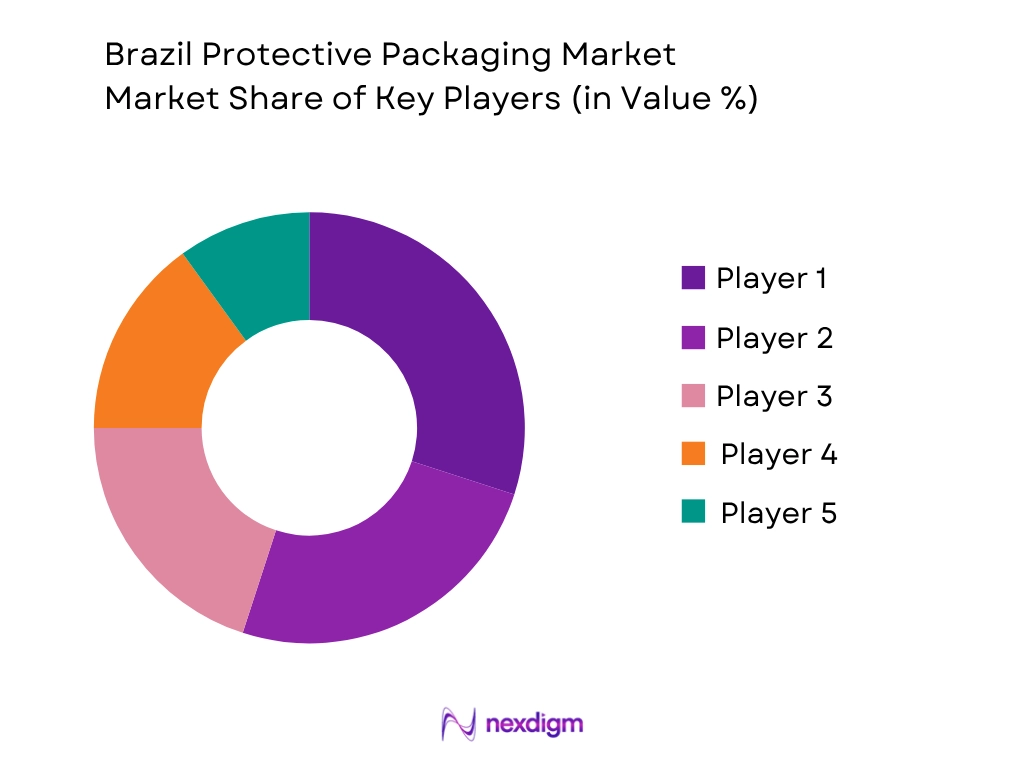
Brazil Protective Packaging Market Analysis
Growth Drivers
Explosive E-Commerce Growth Driving Protective Packaging Demand
Brazil’s e-commerce sector generated online sales exceeding BRL 185 billion in 2024, lifting corrugated shipments by 29% year over year and establishing e-commerce as one of the primary demand drivers for the country’s protective packaging market. Klabin S.A. has responded to this growth by building Klabin ForYou, a dedicated e-commerce marketplace platform offering a wide range of corrugated board box sizes, tapes, and cushioning materials for online retailers of all sizes across Brazil, with same-day delivery available within Greater São Paulo. As fulfillment centers scale operations to meet rising order volumes, specification of crush-resistant board grades and void-fill cushioning engineered to withstand multileg journeys across distribution chains spanning up to 5,000 kilometers continues to expand, reflecting both the sheer scale of Brazil’s e-commerce growth and the unique protective packaging challenges posed by the country’s continental geography.
Regulatory and Retailer-Driven Shift Toward Sustainable Materials
Federal and municipal decrees are tightening single-use plastic limits across Brazil, with São Paulo and Rio de Janeiro both requiring a 30% reduction in disposable plastic use by 2026, accelerating demand for compostable paperboard and molded-fiber packaging solutions. Consumer sentiment reinforces this shift, with 67% of Brazilian shoppers indicating willingness to accept higher prices for sustainable packaging, while suppliers that certify products under the Green Seal Program gain preferred-vendor status with national retailers. Klabin’s introduction of Eukaliner, a kraftliner made exclusively from eucalyptus fiber, illustrates the kind of sustainable material innovation increasingly central to competitive positioning, as quick-service restaurant chains and food retailers simultaneously test Klabin-sourced fiber bowls meeting ANVISA food-contact rules to reduce reliance on imported PLA-based cutlery and packaging.
Market Challenges
Vast Geographic Distances and Climate Variability
Brazil’s continental scale creates distinctive protective packaging challenges not present in more geographically compact markets, with fulfillment centers required to specify crush-resistant board grades and void-fill cushions capable of surviving multileg journeys across distribution chains spanning up to 5,000 kilometers. As last-mile delivery networks extend further into the Amazon region and Brazil’s Northeast, moisture-barrier coatings have become increasingly important to protect electronics and other humidity-sensitive goods from damage during transit through Brazil’s varied and often challenging tropical climate conditions. These requirements add meaningful cost and engineering complexity relative to protective packaging designed for more climate-uniform, geographically compact distribution networks, requiring continuous product innovation from packaging suppliers serving Brazil’s full national market.
Fragmented Regulatory Landscape Across Municipal and Federal Levels
Packaging suppliers and brand owners operating in Brazil must navigate a regulatory landscape that spans federal requirements under the National Solid Waste Policy’s reverse logistics obligations, ANVISA’s food-contact packaging rules, and increasingly stringent municipal-level decrees such as those in São Paulo and Rio de Janeiro mandating a 30% reduction in disposable plastic use by 2026. This multi-layered compliance environment, in which requirements can vary meaningfully between states and municipalities, creates administrative complexity for national packaging suppliers and e-commerce retailers seeking to maintain consistent packaging specifications across Brazil’s diverse regulatory jurisdictions, particularly as additional cities are expected to introduce their own single-use plastic restrictions in the coming years.
Market Opportunities
Automation and Right-Sizing Technology Investment
Sealed Air’s automated fulfillment hub in Jaguariúna, São Paulo state, has demonstrated that automated right-size pack stations can raise fulfillment throughput by 25%, providing a proven template for further automation investment across Brazil’s rapidly scaling e-commerce fulfillment sector. As Brazilian online retailers and third-party logistics providers seek to manage rising order volumes while controlling packaging material costs and dimensional weight shipping fees, packaging technology suppliers capable of delivering automated, right-sized packaging solutions stand to capture significant investment as fulfillment operations across the country continue to modernize and scale.
Premium Unboxing and Digital Printing for Social Commerce
Corrugated converters that adopt digital printing technology are increasingly capturing unboxing-experience contracts from premium beauty brands and other consumer goods companies targeting Brazil’s large and rapidly growing social commerce audience, which relies heavily on platforms such as Instagram and WhatsApp for product discovery and purchase. As Brazilian consumers increasingly share unboxing experiences on social media, packaging suppliers that can combine sustainable materials, brand customization, and digital printing capability are well positioned to capture premium pricing and long-term contracts from brand owners seeking to differentiate their products within Brazil’s crowded and rapidly digitalizing e-commerce and social commerce landscape.
Future Outlook
The Brazil Protective Packaging Market is expected to witness sustained expansion over the forecast period, supported by continued rapid growth in e-commerce sales, ongoing regulatory tightening under federal and municipal sustainability requirements, and continued investment in automation and moisture-barrier technology suited to Brazil’s demanding long-haul distribution requirements. Growing adoption of eucalyptus fiber and other sustainable material innovations, alongside continued expansion of digital printing capability for branded unboxing experiences, will further accelerate demand for next-generation protective packaging solutions. The market is also likely to benefit from Brazil’s position as Latin America’s largest e-commerce market, as domestic packaging majors and global suppliers operating in Brazil continue to invest in the automation, sustainability, and climate-resilient packaging innovation required to serve the country’s rapidly growing and geographically demanding online retail sector.
Major Players
- Klabin S.A.
- Sealed Air Corporation
- Irani (Celulose Irani)
- Suzano S.A.
- International Paper do Brasil
- Smurfit Kappa Group
- DS Smith Plc
- Mondi Group
- Bemis do Brasil
- Owens-Illinois do Brasil Vidros
- Braskem S.A.
- Papirus Indústria de Papel S.A.
- C-Pack Creative Packaging S.A.
- Antilhas Gráfica e Embalagens
- Storopack
Key Target Audience
- Protective Packaging Manufacturers and Converters
- E-Commerce Retailers and Online Marketplaces
- Third-Party Logistics and Fulfillment Providers
- Electronics and Automotive Manufacturers
- Food & Beverage and Cosmetics Manufacturers
- Investment and Venture Capitalist Firms
- Government and Regulatory Bodies (Brazilian Health Regulatory Agency – ANVISA, Ministério do Meio Ambiente, INMETRO)
- Raw Material Suppliers and Packaging Material Distributors
Research Methodology
Step 1: Identification of Key Variables
The research process begins with identifying the complete ecosystem of the Brazil Protective Packaging Market, including raw material and pulp suppliers, packaging converters, e-commerce retailers, third-party logistics providers, and regulatory authorities. Extensive secondary research is conducted using company reports, government publications, trade associations, customs statistics, industry journals, and proprietary databases to determine the variables influencing market demand, pricing, production, consumption, and technological developments.
Step 2: Market Analysis and Construction
Historical market information is collected and analyzed to estimate market size, import volumes, application-wise demand, and pricing trends. A combination of top-down and bottom-up approaches is used to estimate market revenues and validate segment-level performance. Consumption patterns across e-commerce, electronics, automotive, food & beverage, and cosmetics applications are evaluated to establish an accurate representation of the industry.
Step 3: Hypothesis Validation and Expert Consultation
The preliminary findings are validated through Computer-Assisted Telephone Interviews (CATIs) and structured discussions with packaging converters, procurement managers, fulfillment operations specialists, sustainability officers, and senior executives operating within the Brazilian e-commerce and packaging industry. These interviews help verify market assumptions, competitive developments, technology adoption trends, pricing dynamics, and future investment opportunities while refining the overall market estimates.
Step 4: Research Synthesis and Final Output
The final stage integrates insights obtained from primary interviews with quantitative information collected through secondary sources. Data triangulation techniques are applied to reconcile differences between supply-side and demand-side estimates, ensuring robust market forecasting. The report is then reviewed through multiple quality assurance checkpoints to deliver a comprehensive analysis covering market size, segmentation, competitive landscape, future outlook, and strategic recommendations for industry stakeholders.

- Executive Summary
- Research Methodology (Market Definitions and Assumptions, Abbreviations, Market Sizing Approach, Top-Down Analysis, Bottom-Up Analysis, Demand-Side Assessment, Supply-Side Assessment, Primary Industry Interviews, Secondary Research Validation, Data Triangulation, Forecasting Framework, Limitations and Future Conclusions)

- Definition and Scope
- Market Evolution and Industry Genesis
- Timeline of Major Industry Developments
- Protective Packaging Industry Value Chain Analysis
- Supply Chain Analysis

- Growth Drivers (Explosive E-Commerce Growth, Regulatory and Retailer-Driven Shift to Sustainable Materials, Growth of Social Commerce and Premium Unboxing, Expansion of Automotive and Industrial Manufacturing, Rising Electronics and Appliance E-Commerce Sales, Growth of Cross-Regional Distribution Networks)
- Market Challenges (Vast Geographic Distances and Climate Variability, Fragmented Regulatory Landscape Across Municipal and Federal Levels, High Logistics Costs Across Multileg Distribution Chains, Raw Material and Energy Cost Volatility, Currency Fluctuation Impacting Imported Components, Infrastructure Gaps in Northeast and Amazonia Regions)
- Market Opportunities (Automation and Right-Sizing Technology Investment, Premium Unboxing and Digital Printing for Social Commerce, Moisture-Barrier Innovation for Humid Climate Regions, Eucalyptus Fiber and Sustainable Material Innovation, Regional Distribution Hub Expansion, Public-Private Sustainability Partnerships)
- Market Trends (Automated Right-Sizing Pack Stations, Growth of Eucalyptus Fiber and Recyclable Kraftliner, Moisture-Barrier Coating Innovation, Digital Printing for Branded Unboxing Experiences, Rise of E-Commerce-Dedicated Packaging Marketplaces, Growing Use of Crush-Resistant Board Grades)
- Government Regulations (National Solid Waste Policy (PNRS) Reverse Logistics Obligations, ANVISA Food-Contact Packaging Requirements, São Paulo and Rio de Janeiro Single-Use Plastic Reduction Decrees, Green Seal Program Certification, INMETRO Packaging Standards, State-Level Environmental Licensing Requirements)
- Import and Export Analysis (Trade Volume, Major Import Sources, Export Destinations, HS Code Analysis, Trade Balance)
- Raw Material Availability Analysis (Domestic Eucalyptus Pulp and Kraftliner Production, Recovered Fiber and Recycled Paper Availability, Imported Plastic Resin Feedstocks, Foam and Polyurethane Feedstocks, Regional Pulp and Paper Mill Capacity)
- Technology Landscape (Automated Right-Size Packaging Systems, Corrugated Board Manufacturing Technology, Molded Pulp Production Technology, Digital Printing for Personalization, Moisture-Barrier Coating Technology)
- Sustainability Assessment (Recyclable and Compostable Material Adoption, Eucalyptus Fiber Sourcing Initiatives, Carbon Footprint Reduction in Long-Haul Distribution, Reduced Single-Use Plastic Adoption, Circular Economy Alignment)
- PESTLE Analysis
- SWOT Analysis
- Porter’s Five Forces Analysis
- Stakeholder Ecosystem
- Competition Ecosystem

- By Market Value (2020-2025)
- By Volume Consumption (2020-2025)
- By Average Selling Price (2020-2025)

- By Material (In Value %)
Corrugated Cardboard & Kraft Paper
Molded Pulp & Fiber
Plastic Film & Air Cushions
Foam & Polyurethane
Paper-Based Void Fill - By Packaging Type (In Value %)
Boxes & Cartons
Void-Fill & Cushioning
Wraps & Air Pillows
Foam Inserts
Moisture-Barrier Packaging - By End-Use Industry (In Value %)
E-Commerce & Retail
Electronics
Automotive & Industrial
Food & Beverage
Cosmetics & Personal Care - By Distribution Reach (In Value %)
Metropolitan Short-Haul Delivery
Long-Haul Multi-Leg Distribution
Cross-Border & Export Packaging
Last-Mile Urban Delivery - By Region (In Value %)
Southeast Brazil
South Brazil
Northeast Brazil
Central-West Brazil
North Brazil

- Market Share of Major Players (By Value, Volume, Material Type, End-Use Industry, Distribution Reach)
- Cross Comparison Parameters (Recyclable/Sustainable Portfolio Breadth, Automation and Right-Sizing Capability, Moisture-Barrier Technology Portfolio, Application Technical Support, Manufacturing Capacity, Regulatory Compliance & Certifications, Customer Base, Innovation & New Product Launch Frequency)
- SWOT Analysis of Major Players
- Pricing Analysis by Product Category and Format
- Production Capacity Analysis
- Manufacturing Footprint Analysis
- Distribution Network Analysis
- Innovation Benchmarking
- Detailed Profiles of Major Companies
Klabin S.A.
Sealed Air Corporation
Irani (Celulose Irani)
Suzano S.A.
International Paper do Brasil
Smurfit Kappa Group
DS Smith Plc
Mondi Group
Bemis do Brasil
Owens-Illinois do Brasil Vidros
Braskem S.A.
Papirus Indústria de Papel S.A.
C-Pack Creative Packaging S.A.
Antilhas Gráfica e Embalagens
Storopack

- Consumption Pattern Analysis (Order Volume Intensity, Parcel Size Distribution, End-Use Industry Penetration, Seasonal and Peak-Period Demand, Multileg Distribution Impact)
- Purchasing Criteria (Crush Resistance, Moisture-Barrier Performance, Cost Efficiency, Regulatory Compliance, Recyclability, Brand Customization Capability)
- Procurement and Supplier Selection Analysis
- Sustainable and Recyclable Packaging Adoption Assessment
- Premium Branded vs Standard Protective Packaging Demand
- Product Attribute Preference Analysis (Crush Resistance, Moisture-Barrier Performance, Dimensional Efficiency, Print and Brand Customization, Ease of Assembly, Recyclability)
- Sustainability & ESG Influence on Procurement Decisions
- Pain Point Analysis
- Decision-Making Process

- By Market Value (2026-2035)
- By Volume Consumption (2026-2035)
- By Average Selling Price (2026-2035)


 Request a Sample
 Ask for Customization
 Get a Quote
 Enquire Now