
 Download PDF
 Download PDF
Market Overview
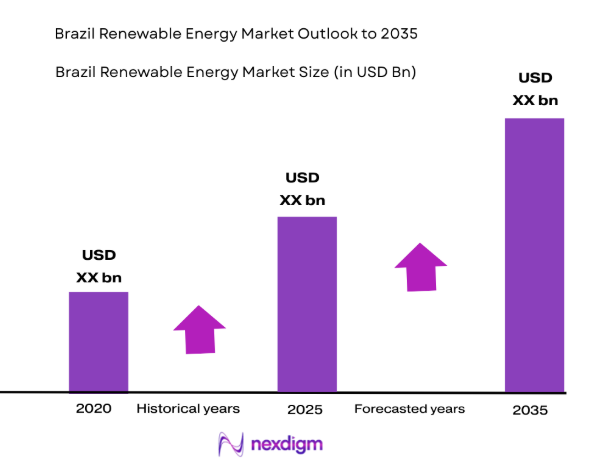
The Brazil Renewable Energy market is valued in the billions ~ USD, driven by increasing investments and favorable government policies. Recent historical assessments highlight significant progress due to advancements in solar, wind, and biomass technologies. Renewable energy’s expansion is bolstered by Brazil’s commitment to sustainability and its geographic potential for wind and solar energy generation. This sector has witnessed steady growth, supported by both public and private sector initiatives, making Brazil a leader in Latin America’s renewable energy transition.
Brazil’s dominance in renewable energy can be attributed to its vast natural resources, particularly in wind and solar energy. The country’s coastal regions and vast interior provide ideal conditions for wind and solar farms. Key regions, including the northeast and south of Brazil, lead the way due to higher solar radiation and wind speeds. Additionally, the Brazilian government’s proactive approach in supporting green energy infrastructure through subsidies and regulatory measures further strengthens the market position of these areas.
Market Segmentation
By Product Type
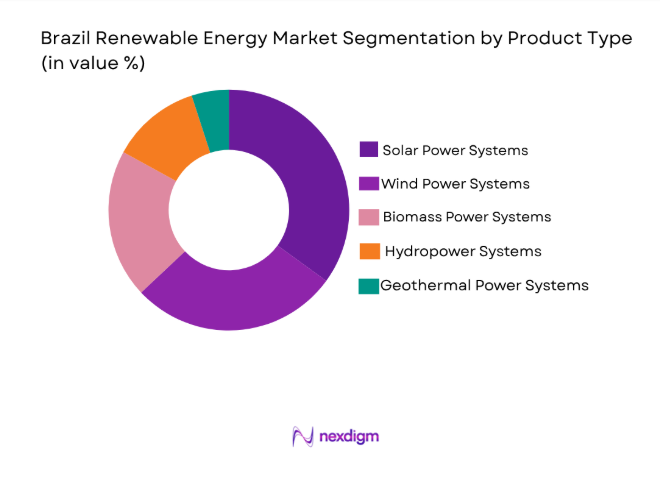
Brazil Renewable Energy market is segmented by product type into solar power systems, wind power systems, biomass power systems, hydropower systems, and geothermal power systems. Recently, solar power systems have a dominant market share due to Brazil’s abundant sunlight, especially in the northern and northeastern regions. Solar energy’s cost-effectiveness, coupled with ongoing government support and technological advancements in photovoltaic technology, has made it the preferred choice for large-scale and residential applications.
By Platform Type
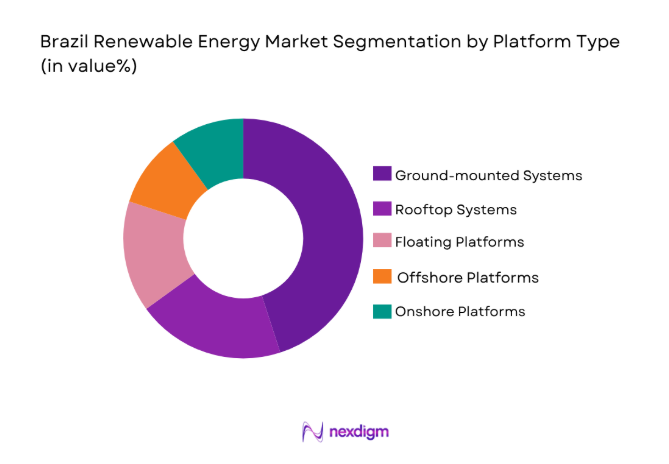
Brazil Renewable Energy market is segmented by platform type into ground-mounted systems, rooftop systems, floating systems, offshore platforms, and onshore platforms. Ground-mounted systems dominate the market share due to their cost-effectiveness and scalability. With Brazil’s vast land area, these systems are often deployed in rural and remote locations where space is abundant. Their capacity for large-scale energy production and integration into the national grid contributes significantly to Brazil’s renewable energy capacity expansion.
Competitive Landscape
The competitive landscape of Brazil’s renewable energy market is characterized by increasing consolidation as major players continue to expand their operations across the country. Dominant firms are investing heavily in both large-scale projects and technological innovation to meet growing energy demands. These players are also driving the market by securing favorable regulatory conditions and forming partnerships with local firms to enhance their market reach. Key players in the market are actively shaping Brazil’s renewable energy future by focusing on both wind and solar energy solutions.
| Company Name | Establishment Year | Headquarters | Technology Focus | Market Reach | Key Products | Revenue | Innovation Focus |
| Enel Green Power | 2008 | São Paulo, Brazil | ~ | ~ | ~ | ~ | ~ |
| Vestas Wind Systems | 1945 | Copenhagen, Denmark | ~ | ~ | ~ | ~ | ~ |
| First Solar | 1999 | Tempe, USA | ~ | ~ | ~ | ~ | ~ |
| Siemens Gamesa | 1976 | Zamudio, Spain | ~ | ~ | ~ | ~ | ~ |
| Brookfield Renewable Partners | 2009 | Toronto, Canada | ~ | ~ | ~ | ~ | ~ |
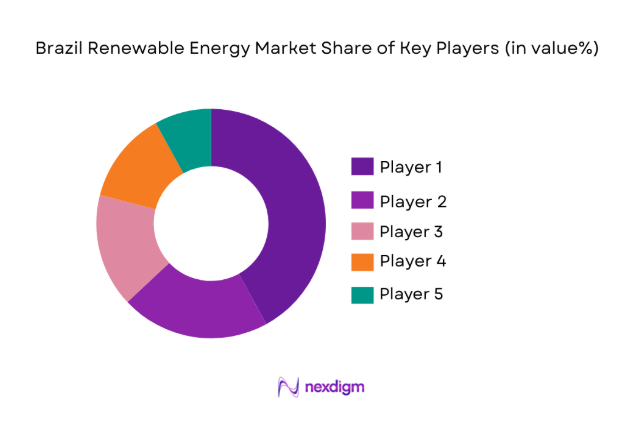
Brazil Renewable Energy Market Analysis
Growth Drivers
Government Policies Promoting Renewable Energy
The Brazilian government’s favorable policies for renewable energy have significantly driven the market. The government’s commitment to sustainability and the national energy mix has led to the establishment of incentives, including tax rebates and subsidies for renewable energy projects. These initiatives have made renewable energy technologies more affordable and accessible to businesses and consumers. In addition to financial incentives, regulatory frameworks such as the Proinfa program have played a critical role in promoting the generation of wind, solar, and biomass power across Brazil. By aligning its energy policies with global sustainability goals, the government has created a favorable environment for growth in the renewable energy sector.
Technological Advancements in Solar and Wind Energy
Technological innovations, particularly in solar and wind power, have been pivotal to Brazil’s renewable energy market growth. Advanced photovoltaic systems and more efficient wind turbine designs have contributed to reducing costs while improving energy output. Brazil, with its high solar radiation and strong winds, has been able to leverage these technologies effectively, increasing the competitiveness of its renewable energy sources. Additionally, storage technology improvements have helped manage intermittent energy production from renewable sources. These technological advances not only improve the feasibility of renewable energy but also attract international investors to Brazil’s growing energy market, contributing to its ongoing development and sustainability.
Market Challenges
High Capital Costs of Renewable Energy Projects
One of the primary challenges facing the renewable energy sector in Brazil is the high upfront capital investment required for large-scale renewable energy projects. Despite the long-term cost savings, the initial financial barrier remains significant for both developers and investors. This is particularly relevant for solar and wind power projects, where installation costs are substantial. Although the Brazilian government offers incentives and financing options, the costs involved in building infrastructure such as transmission lines and substations further increase the total investment. These financial hurdles can deter smaller players from entering the market and limit the speed at which the market can expand.
Regulatory and Policy Uncertainty
The regulatory environment in Brazil, though generally supportive, poses challenges due to frequent changes in policies and regulations. Inconsistent enforcement of renewable energy laws and delayed approvals for new projects can hinder the smooth development of renewable energy infrastructure. Additionally, local government regulations and zoning restrictions can add complexity for developers, particularly in regions where there are competing land uses or environmental concerns. As a result, regulatory uncertainty can slow down the pace of growth in the market, creating challenges for investors looking for stability and long-term profitability.
Opportunities
Expansion of Solar Energy in Remote Areas
Brazil’s vast land area and abundant sunlight provide significant opportunities for expanding solar energy in remote regions. While Brazil’s coastal areas have seen substantial investment, the northern and central parts of the country are underutilized. These areas could benefit from large-scale solar power projects, which would help meet the energy needs of rural communities. Government initiatives such as remote area electrification and off-grid solutions provide an opportunity for solar power companies to target these regions. Expanding solar energy in these areas would not only help meet local energy demands but also contribute to Brazil’s overall energy security.
Growth in Offshore Wind Energy
Offshore wind energy is a rapidly growing segment in Brazil’s renewable energy market, offering significant untapped potential. Brazil’s extensive coastline provides favorable conditions for the development of offshore wind farms, particularly in the south and southeast regions. Offshore wind farms have the advantage of being located in areas with stronger and more consistent winds compared to onshore sites, which increases their efficiency. The Brazilian government’s focus on developing a comprehensive renewable energy strategy, coupled with international interest in offshore wind energy, presents a unique opportunity for growth in this segment.
Future Outlook
The future outlook for Brazil’s renewable energy market is promising, driven by ongoing technological advancements and supportive government policies. In the coming years, Brazil is expected to see substantial growth in solar and wind energy generation, particularly with the expansion of offshore wind farms and solar installations in remote areas. Technological innovations, along with decreasing costs of renewable energy technologies, will continue to make renewable energy more accessible to both commercial and residential sectors. Brazil’s commitment to sustainability, paired with increasing international investments, is expected to drive the growth of its renewable energy market over the next five years.
Major Players
- Enel Green Power
- Vestas Wind Systems
- First Solar
- Siemens Gamesa
- Brookfield Renewable Partners
- Iberdrola
- Nordex SE
- SunPower Corporation
- JinkoSolar
- Trina Solar
- Canadian Solar
- GE Renewable Energy
- Acciona Energia
- SolarCity (Tesla Energy)
- Suzlon Energy
Key Target Audience
- Investments and venture capitalist firms
- Government and regulatory bodies
- Independent power producers
- Large-scale renewable energy developers
- Solar and wind farm operators
- Energy-focused financial institutions
- Energy utilities
Research Methodology
Step 1: Identification of Key Variables
This step involves identifying key market variables such as energy production capacity, technological trends, and government policies. These variables are essential to formulating a detailed understanding of the market dynamics.
Step 2: Market Analysis and Construction
Market segmentation and construction involve analyzing various renewable energy sources like wind, solar, and biomass, as well as understanding market drivers, challenges, and opportunities. Data from secondary and primary sources is collected to assess growth trends.
Step 3: Hypothesis Validation and Expert Consultation
We validate initial hypotheses through expert consultations with industry leaders, government officials, and market analysts. This process ensures accuracy and relevance in the final market insights.
Step 4: Research Synthesis and Final Output
The research synthesis involves compiling insights from all stages to form a cohesive market report. The final output integrates expert opinions, validated data, and market trends to deliver a comprehensive analysis.

- Executive Summary
- Research Methodology (Definitions, Scope, Industry Assumptions, Market Sizing Approach, Primary & Secondary Research Framework, Data Collection & Verification Protocol, Analytic Models & Forecast Methodology, Limitations & Research Validity Checks)

- Market Definition and Scope
- Value Chain & Stakeholder Ecosystem
- Regulatory / Certification Landscape
- Sector Dynamics Affecting Demand
- Strategic Initiatives & Infrastructure Growth

- Growth Drivers
Government Policies Promoting Clean Energy
Technological Advancements in Renewable Systems
Private Sector Investment in Green Energy - Market Challenges
High Initial Capital Costs
Grid Integration and Infrastructure Limitations
Regulatory Barriers and Policy Instability - Market Opportunities
Expansion of Solar Power in Remote Areas
Increased Investment in Wind Energy
Growth in Biomass Energy for Agriculture - Trends
Adoption of Smart Grid Technologies
Integration of Energy Storage with Renewable Sources - Government Regulations
Environmental Impact Assessments
Renewable Energy Tax Incentives
Grid Access and Management Regulations - SWOT Analysis
- Porter’s Five Forces

- By Market Value, 2020-2025
- By Installed Units, 2020-2025
- By Average System Price, 2020-2025
- By System Complexity Tier, 2020-2025

- By System Type (In Value%)
Solar Power Systems
Wind Power Systems
Biomass Power Systems
Hydropower Systems
Geothermal Power Systems - By Platform Type (In Value%)
Ground-mounted Systems
Rooftop Systems
Floating Systems
Offshore Platforms
Onshore Platforms - By Fitment Type (In Value%)
On-site Solutions
Off-site Solutions
Hybrid Solutions
Modular Solutions - By End User Segment (In Value%)
Commercial Sector
Industrial Sector
Residential Sector

- Market Share Analysis
- Cross Comparison Parameters (System Type, Platform Type, Procurement Channel, End User Segment, Fitment Type, Regional Dynamics, Technological Advancements)
- SWOT Analysis of Key Competitors
- Pricing & Procurement Analysis
- Key Players
Iberdrola
Enel Green Power
Vestas Wind Systems
Siemens Gamesa
EDF Renewables
First Solar
Brookfield Renewable Partners
ACCIONA
GE Renewable Energy
Suzlon Energy
JinkoSolar
SunPower
NextEra Energy
Trina Solar
Canadian Solar

- Increasing Adoption of Solar Energy by Residential Consumers
- Government-led Projects in Rural and Remote Areas
- Commercial Sector Investment in Sustainability
- Industrial Demand for Energy Efficiency Solutions

- Forecast Market Value, 2026-2035
- Forecast Installed Units, 2026-2035
- Price Forecast by System Tier, 2026-2035
- Future Demand by Platform, 2026-2035


 Request a Sample
 Ask for Customization
 Get a Quote
 Enquire Now