
 Download PDF
Market Overview
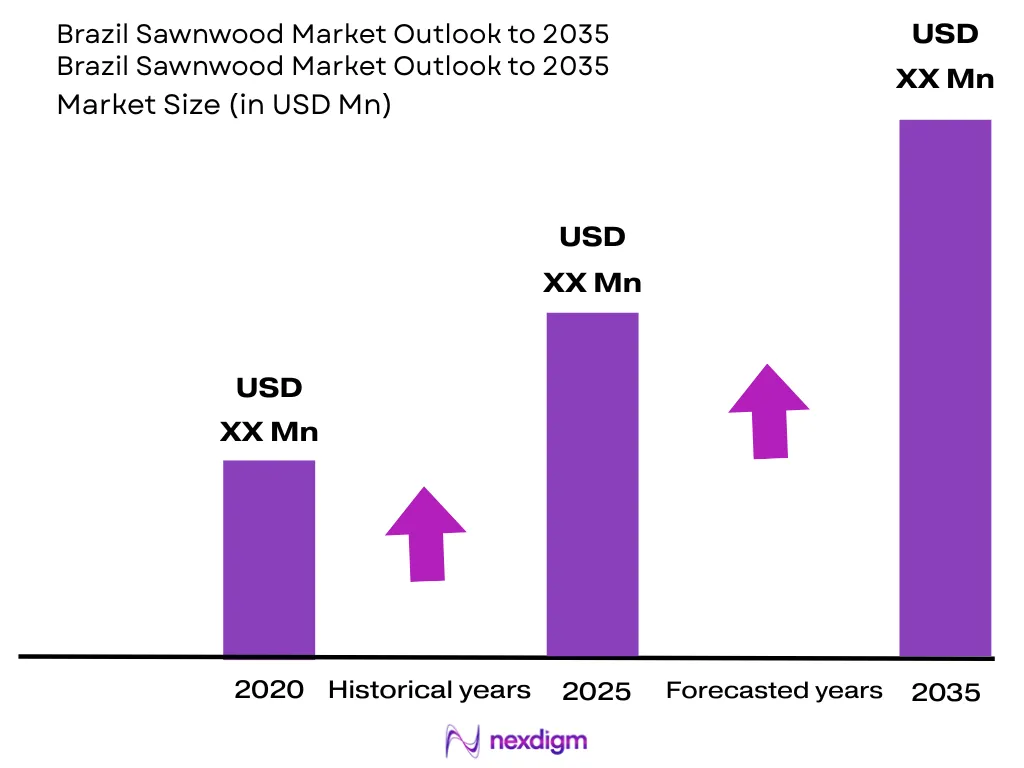
The Brazil Sawnwood Market was valued at approximately USD ~ Million in 2024, supported by the country’s position as one of the world’s largest forest-resource economies. According to data published by the Food and Agriculture Organization and Indústria Brasileira de Árvores (IBÁ), Brazil possesses more than 9 million hectares of planted forests and remains among the leading global producers of industrial roundwood. The market is primarily driven by expanding residential construction activity, rising furniture manufacturing output, increasing demand for pallets and packaging materials, and strong export demand for kiln-dried and value-added sawn timber products across international markets.
Market Segmentation
By Wood Species Type
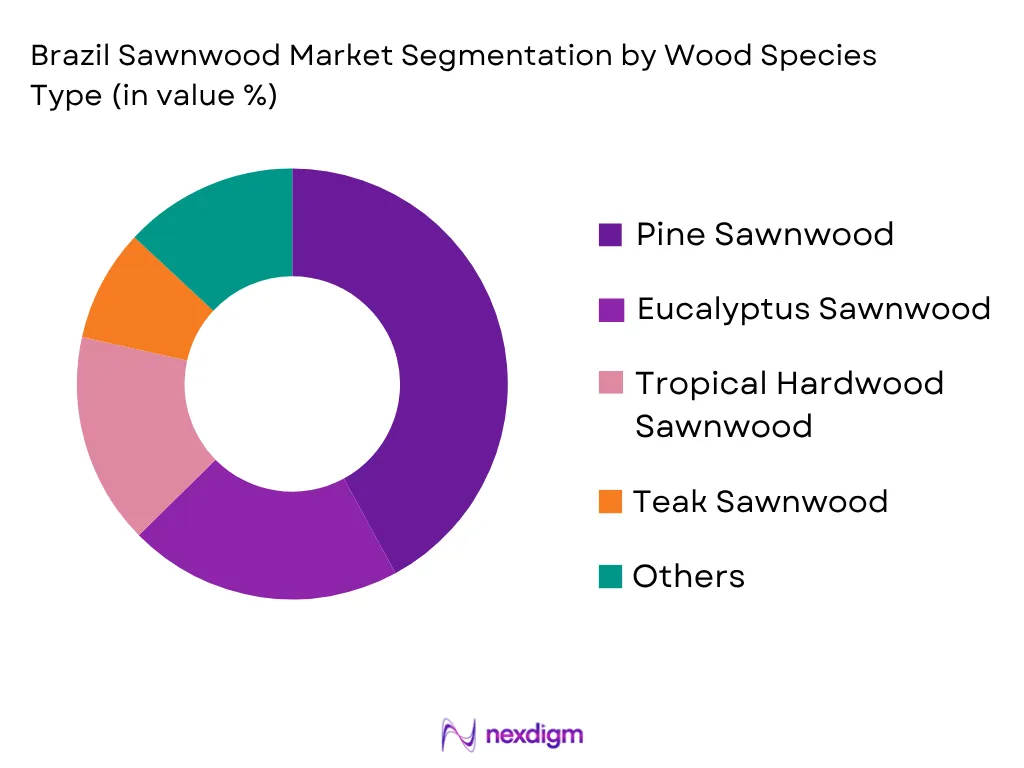
Brazil Sawnwood Market is segmented by wood species type into Pine Sawnwood, Eucalyptus Sawnwood, Tropical Hardwood Sawnwood, Teak Sawnwood, Native Forest Sawnwood, and Other Commercial Species. Pine Sawnwood holds the dominant market share owing to its extensive plantation base in southern Brazil, consistent wood quality, high processing efficiency, and suitability for construction, packaging, furniture, and export applications. The species benefits from shorter harvesting cycles compared to many hardwood alternatives and enjoys widespread acceptance across domestic and international markets. Large-scale commercial forestry investments in Paraná and Santa Catarina have strengthened raw material availability, while established sawmill infrastructure has improved production economics. Furthermore, pine lumber is easier to kiln dry, machine, and transport, making it the preferred choice among construction companies, distributors, and furniture manufacturers seeking cost-effective and standardized timber solutions.
By End-Use Industry
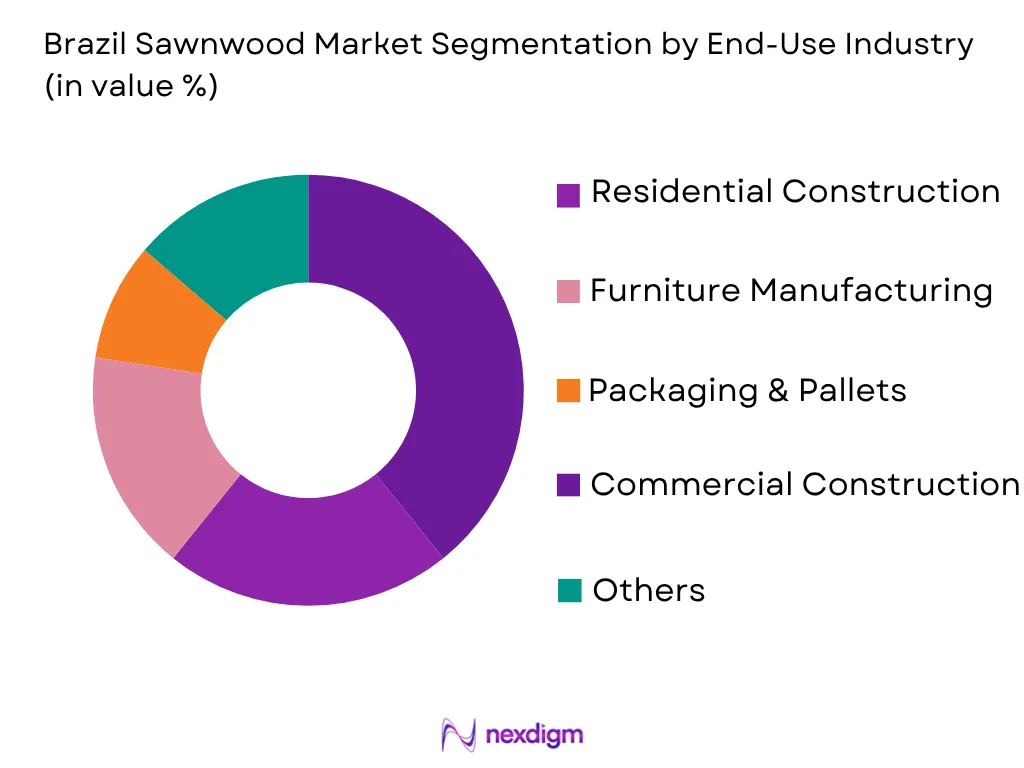
Brazil Sawnwood Market is segmented by end-use industry into Residential Construction, Commercial Construction, Furniture Manufacturing, Packaging & Pallets, Infrastructure Projects, and Joinery & Interior Applications. Residential Construction represents the largest market segment due to the continuous demand for timber framing, roofing structures, flooring systems, doors, windows, and interior finishing materials. Rising urbanization, expansion of housing projects, and increasing adoption of sustainable building materials have significantly supported sawnwood consumption within the residential sector. Additionally, timber offers favorable cost-performance characteristics, ease of installation, and lower environmental impact compared to several conventional construction materials. Growth in modular housing and engineered wood construction has further strengthened demand for processed sawnwood products. The segment also benefits from a stable distribution network involving timber wholesalers, construction material retailers, and direct sales channels serving residential developers throughout Brazil.
Competitive Landscape
The Brazil Sawnwood Market is moderately consolidated, with a mix of integrated forestry companies, plantation owners, timber processors, and export-oriented sawmill operators. Major participants leverage extensive forest assets, vertically integrated operations, advanced kiln-drying facilities, and established export networks to maintain competitive advantages. Companies with strong plantation ownership and certification credentials are particularly well-positioned to benefit from rising demand for sustainably sourced timber across international markets.
| Company | Establishment Year | Headquarters | Plantation Assets | Sawmill Capacity | FSC/PEFC Certification | Export Presence | Product Portfolio | End-Use Focus |
| Klabin S.A. | 1899 | ~ | ~ | ~ | ~ | ~ | ~ | ~ |
| Berneck S.A. | 1952 | ~ | ~ | ~ | ~ | ~ | ~ | ~ |
| Araupel S.A. | 1972 | ~ | ~ | ~ | ~ | ~ | ~ | ~ |
| BrasPine Madeiras | 1997 | ~ | ~ | ~ | ~ | ~ | ~ | ~ |
| Sudati Produtos de Madeira | 1973 | ~ | ~ | ~ | ~ | ~ | ~ | ~ |
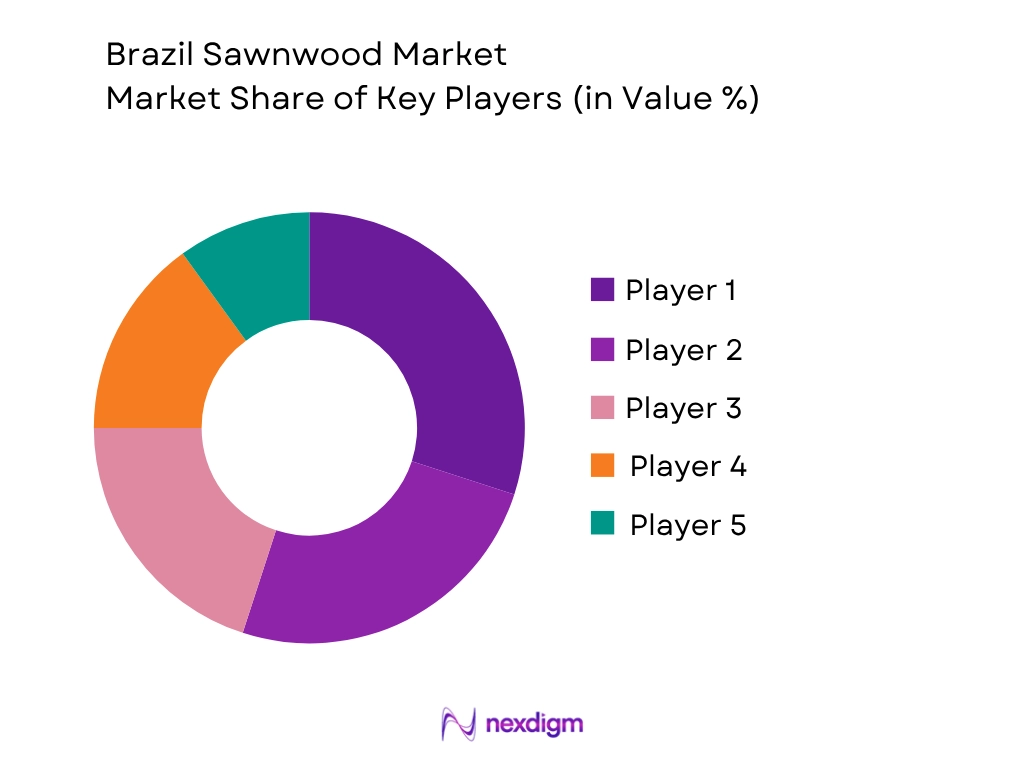
Brazil Sawnwood Market Analysis
Growth Drivers
Expansion of Commercial Forest Plantations
Brazil’s sawnwood industry is strongly supported by the continuous expansion of commercial forest plantations that ensure long-term log availability for sawmills. According to the Brazilian Tree Industry Association (IBÁ), Brazil’s planted forest area exceeded 10.5 million hectares in the latest industry assessment, compared to more than 10 million hectares previously, demonstrating continued investment in timber resources. The sector also conserves over 7 million hectares of native vegetation alongside productive forests, supporting sustainable timber production. Brazil plants approximately 1.8 million trees per day, creating a substantial supply base for pine and eucalyptus logs used in sawnwood manufacturing. The Brazilian forestry sector supports around 2.69 million direct and indirect jobs, highlighting the importance of plantation forestry to the wider economy. In addition, the country remains one of the world’s leading producers of industrial roundwood, accounting for around 10% of global industrial roundwood production according to FAO forestry statistics. The large-scale availability of plantation-grown timber reduces dependence on natural forests and improves raw material security for sawmills. These factors collectively strengthen the competitiveness of Brazil’s sawnwood sector and support higher utilization of processing facilities across major forestry regions such as Paraná, Santa Catarina, Mato Grosso do Sul, and Rio Grande do Sul.
Growth in Construction and Wood Processing Industries
The expansion of Brazil’s construction, furniture, and wood-processing industries continues to stimulate demand for sawnwood products. According to the Brazilian Forest Service, nearly 60% of Brazil’s territory remains covered by forests, providing a significant resource base for timber-dependent industries. The country’s forestry value chain has become increasingly integrated with downstream sectors including furniture manufacturing, flooring production, packaging, and residential construction. Domestic sales of wood panels reached approximately 7.1 million cubic meters, while laminate flooring production exceeded 10.4 million square meters, indicating strong demand for processed wood products that rely on sawn timber inputs. Brazil also remains among the leading producers of industrial roundwood globally, supporting large-scale conversion into lumber and value-added wood products. The forestry sector generated international trade revenues exceeding USD 15.7 billion from forest products, demonstrating strong domestic and export demand for wood-based materials. Urban development projects, logistics infrastructure investments, housing programs, and industrial expansion continue to require timber products for structural and non-structural applications. As construction activity expands and wood-based products gain preference due to sustainability advantages, demand for sawnwood remains closely linked to broader economic development and industrial growth across Brazil.
Market Challenges
Log Supply Constraints and Sustainable Timber Availability
Despite possessing extensive forest resources, the Brazil sawnwood market faces challenges related to long-term log supply availability and sustainable harvesting requirements. Commercial plantations require multiple years before reaching harvesting maturity, creating potential mismatches between demand growth and timber supply. Regulatory scrutiny surrounding timber sourcing has increased, particularly in regions where concerns regarding illegal timber extraction persist. Investigations into native wood utilization in industrial applications highlight ongoing challenges in ensuring traceability and compliance throughout the supply chain. Brazil’s forestry industry relies heavily on planted forests, yet growing demand from pulp, paper, bioenergy, panelboard, and sawnwood industries intensifies competition for available timber resources. The country’s industrial forestry sector now manages more than 10.5 million hectares of planted forests, but multiple downstream industries compete for the same raw materials. Furthermore, certification requirements continue to become more stringent in export markets, requiring additional investments in monitoring and traceability systems. Sawmill operators must maintain stable access to certified pine and eucalyptus logs while complying with environmental regulations and sustainable forest management requirements. These challenges can constrain production planning and increase operational complexity for companies operating throughout the sawnwood value chain.
Transportation and Logistics Infrastructure Limitations
Transportation and logistics constraints remain a significant challenge for Brazil’s sawnwood industry due to the geographical distance between forestry plantations, processing facilities, ports, and end-use markets. Brazil’s forestry resources are concentrated across southern, southeastern, and central regions, requiring extensive road and rail transportation networks to move logs and finished lumber. Sawnwood is a bulky commodity with relatively high transportation intensity, making freight efficiency critical to profitability. The forestry sector exported products worth approximately USD 15.7 billion, highlighting the importance of efficient logistics for international competitiveness. However, road dependency, port congestion, and infrastructure bottlenecks can increase delivery times and operational costs. Many sawmills are located near plantation regions, yet export markets often require transportation over hundreds or thousands of kilometers before reaching major ports. Seasonal weather events can also affect timber transportation in certain producing regions. In addition, growing export volumes from Brazil’s broader forestry sector place additional pressure on logistics infrastructure. As global demand for timber products increases, investments in rail corridors, port modernization, and multimodal transportation systems remain essential for supporting the long-term growth and efficiency of the Brazilian sawnwood industry.
Market Opportunities
Rising Demand for Certified and Sustainable Timber Products
Growing global demand for certified and sustainably sourced wood products presents a major opportunity for Brazil’s sawnwood industry. International construction companies, furniture manufacturers, retailers, and importers increasingly require timber products that comply with environmental, social, and governance standards. Brazil has expanded its certified forestry footprint substantially, with total certified forest area reaching approximately 10.6 million hectares and certified plantation forests covering around 7.8 million hectares. The country has strengthened its position among leading certified forest producers globally, improving access to premium export markets. Sustainable forest management practices, combined with plantation-based timber production, allow Brazilian producers to meet international procurement requirements. Additionally, Brazil conserves more than 7 million hectares of native vegetation within forestry operations, supporting environmental credentials valued by overseas buyers. Demand from North America, Europe, and Asia continues to favor certified lumber products for green building projects and sustainable furniture manufacturing. As environmental regulations become stricter worldwide, certified pine and eucalyptus sawnwood from Brazil is expected to benefit from improved market access, stronger customer relationships, and increased participation in environmentally focused supply chains. These factors create substantial growth opportunities for producers investing in certification and traceability systems.
Expansion of Value-Added Wood Processing and Export Activities
Brazil possesses significant opportunities to expand value-added processing activities beyond basic lumber production. The country already maintains a highly developed forestry industry that includes wood panels, flooring, furniture, packaging materials, and engineered wood products. Domestic wood panel sales exceeded 7.1 million cubic meters, while laminate flooring production surpassed 10.4 million square meters, demonstrating the presence of strong downstream manufacturing capabilities. The forestry sector also generated export revenues of approximately USD 15.7 billion, highlighting established international market access for wood-based products. By increasing investments in kiln drying, precision cutting, grading technologies, and engineered wood manufacturing, sawmills can improve product quality and capture higher-value applications. Export demand for processed timber products often exceeds demand for rough sawn lumber, creating opportunities to enhance margins through additional processing. Furthermore, the availability of more than 10.5 million hectares of plantation forests provides a stable resource base for industrial expansion. As global demand for sustainable construction materials continues to increase, Brazil is well positioned to strengthen its role as a supplier of higher-value timber products for residential construction, commercial buildings, furniture manufacturing, and industrial applications worldwide.
Future Outlook
The Brazil Sawnwood Market is expected to witness sustained growth over the forecast period, supported by increasing construction activity, growing investments in plantation forestry, and rising global demand for sustainable timber products. Expansion of certified forest areas, technological modernization of sawmills, and increasing utilization of kiln-dried lumber are expected to improve productivity and product quality. Growing adoption of wood-based construction materials and the development of export markets will further strengthen industry prospects. Additionally, value-added processing and downstream furniture manufacturing are anticipated to create new growth opportunities for market participants.
Major Players
- Klabin S.A.
- Berneck S.A.
- Araupel S.A.
- BrasPine Madeiras
- Sudati Produtos de Madeira
- Battistella Florestal
- Madepar S.A.
- Millpar S.A.
- Precious Woods Amazon
- Agrocortex Florestal
- Reflorestadores Unidos S.A.
- Indústria de Madeiras Zani
- Bonet Madeiras e Papéis
- Tratebel Energia Florestal
- WestRock Brasil
Key Target Audience
- Forestry and Timber Production Companies
- Sawmill Operators and Wood Processing Enterprises
- Furniture Manufacturing Companies
- Residential and Commercial Construction Companies
- Building Material Distributors and Timber Traders
- Investments and Venture Capitalist Firms
- Government and Regulatory Bodies (Ministry of Agriculture and Livestock (MAPA), Brazilian Forest Service (SFB), Brazilian Institute of Environment and Renewable Natural Resources (IBAMA))
- Exporters, Importers and International Timber Trading Organizations
Research Methodology
Step 1: Identification of Key Variable
The initial phase involves constructing an ecosystem map covering forestry companies, plantation operators, sawmills, timber traders, exporters, construction companies, and furniture manufacturers operating within the Brazil Sawnwood Market. Extensive secondary research is conducted using industry associations, trade databases, forestry reports, and government publications to identify the variables influencing market demand and supply.
Step 2: Market Analysis and Construction
This phase focuses on gathering historical information relating to timber harvesting volumes, sawnwood production, domestic consumption, export performance, pricing trends, and end-use demand. Market revenues are estimated using a combination of production volumes, average selling prices, and trade flow assessments while validating relationships between supply-side and demand-side indicators.
Step 3: Hypothesis Validation and Expert Consultation
Market assumptions are validated through structured interviews with forestry executives, sawmill operators, timber exporters, distributors, and industry specialists. These consultations provide operational insights regarding production capacity utilization, procurement trends, export demand, pricing dynamics, and technological developments, ensuring greater accuracy of market estimates.
Step 4: Research Synthesis and Final Output
The final stage integrates findings from primary and secondary research to develop market forecasts, segmentation analysis, competitive benchmarking, and strategic recommendations. Data triangulation techniques are applied to validate market estimates and generate a comprehensive assessment of the Brazil Sawnwood Market while ensuring consistency across all segments and stakeholder perspectives.

- Executive Summary
- Research Methodology (Market Definitions and Assumptions, Abbreviations, Market Sizing Approach, Top-Down Analysis, Bottom-Up Analysis, Demand-Side Assessment, Supply-Side Assessment, Primary Industry Interviews, Forestry Sector Validation Framework, Trade Flow Assessment, Data Triangulation, Forecasting Framework, Limitations and Future Conclusions)

- Definition and Scope
- Market Evolution and Industry Genesis
- Timeline of Major Industry Developments
- Forestry and Wood Processing Industry Ecosystem
- Sawnwood Value Chain Analysis

- Growth Drivers (Commercial Plantation Expansion, Construction Activity Growth, Furniture Manufacturing Demand, Sustainable Building Material Adoption, Export Market Expansion)
- Market Challenges (Log Supply Volatility, Transportation Bottlenecks, Environmental Compliance Costs, Sawmill Productivity Constraints, Competition from Engineered Wood Products)
- Market Opportunities (Value-Added Lumber Products, Certified Timber Demand, Export Diversification, Digital Timber Trading Platforms, Sawmill Modernization Investments)
- Market Trends (FSC/PEFC Certification Adoption, Kiln-Dried Lumber Penetration, Sawmill Automation, Plantation Timber Utilization Growth, Sustainable Construction Practices)
- Government Regulations (Forest Code Compliance, Timber Traceability Requirements, Environmental Licensing Standards, Export Certification Requirements, Sustainable Forest Management Guidelines)
- SWOT Analysis
- Porter’s Five Forces Analysis
- PESTLE Analysis
- Stakeholder Ecosystem
- Competition Ecosystem

- By Market Value (2020-2025)
- By Volume (2020-2025)
- By Average Realized Price (2020-2025)

- By Wood Species Type (In Value %)
Pine Sawnwood
Eucalyptus Sawnwood
Teak Sawnwood
Tropical Hardwood Sawnwood
Native Forest Sawnwood
Other Commercial Wood Species - By Product Form (In Value %)
Rough Sawn Lumber
Planed Sawnwood
Kiln-Dried Sawnwood
Treated Sawnwood
Structural Sawn Timber
Appearance Grade Lumber - By End-Use Industry (In Value %)
Residential Construction
Commercial Construction
Industrial Construction
Furniture Manufacturing
Packaging and Pallets
Joinery and Interior Applications
Infrastructure and Utility Projects - By Distribution Channel (In Value %)
Direct Sales to Industrial Buyers
Timber Traders and Wholesalers
Building Material Distributors
Retail Lumber Yards
Export Trading Companies - By Region (In Value %)
South Brazil
Southeast Brazil
Central-West Brazil
North Brazil
Northeast Brazil

- Market Share of Major Players (By Value, Production Volume, Export Volume, Sawmill Capacity)
- Cross Comparison Parameters (Annual Sawnwood Production Capacity, Forest Plantation Area, Sawmill Recovery Rate, Kiln Drying Capacity, FSC/PEFC Certified Timber Share, Export Revenue Share, Number of Sawmill Facilities, Product Grade Portfolio)
- SWOT Analysis of Major Players
- Benchmarking Analysis of Major Players
- Pricing Analysis (By Species, Grade, Moisture Content, Thickness, Export vs Domestic Sales)
- Detailed Profiles of Major Companies
Klabin S.A.
WestRock Brasil
Berneck S.A.
Araupel S.A.
Madepar S.A.
Millpar S.A.
Battistella Florestal
Reflorestadores Unidos S.A.
Precious Woods Amazon
Agrocortex Florestal
Indústria de Madeiras Zani
BrasPine Madeiras
Sudati Produtos de Madeira
Bonet Madeiras e Papéis
Tratebel Energia Florestal

- Consumption Pattern Assessment (Consumption Frequency, Product Mix, Industry Demand Share, Volume Utilization, Seasonal Demand)
- Sawnwood Utilization by Industry (Construction Usage, Furniture Manufacturing Share, Packaging Consumption, Infrastructure Demand, Industrial Applications)
- Procurement and Sourcing Analysis (Contract Duration, Supplier Preference, Import Dependence, Procurement Volume, Lead Time Requirements)
- Buyer Preference Analysis (Species Preference, Grade Preference, Moisture Requirements, Certification Requirements, Delivery Expectations)
- Price Sensitivity Analysis (Price Elasticity, Grade-Based Pricing, Regional Price Variations, Volume Discounts, Contract Pricing Trends)

- By Market Value (2026-2035)
- By Volume (2026-2035)
- By Average Realized Price (2026-2035)


 Request a Sample
 Ask for Customization
 Get a Quote
 Enquire Now