
 Download PDF
 Download PDF
Market Overview
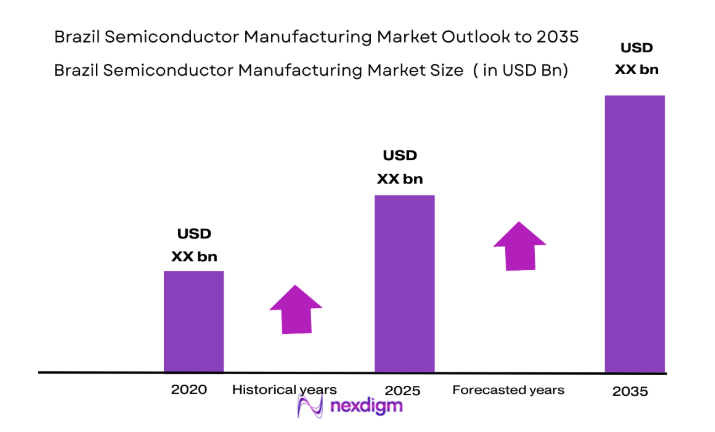
The semiconductor manufacturing market in Brazil is driven by significant technological advancements and an increase in demand for consumer electronics, automotive components, and industrial applications. Based on recent historical assessments, the market is expected to continue its steady growth with an estimated value of USD ~ billion. Brazil’s semiconductor manufacturing is bolstered by growing investments in the electronics and automotive sectors, alongside ongoing efforts by the government to support local production and reduce reliance on imports. Additionally, expanding infrastructure and a favorable investment climate contribute to the growing demand for advanced semiconductors in various applications.
The major driving force behind Brazil’s dominance in semiconductor manufacturing is its strategic location, offering proximity to key markets in North America and Europe. Sao Paulo, the country’s industrial hub, is home to many of Brazil’s largest semiconductor companies and provides a robust manufacturing infrastructure. Other key cities, such as Campinas and Porto Alegre, are also emerging as centers for semiconductor research and development, supported by government initiatives and investments in infrastructure. These cities, along with their strong industry presence, continue to support Brazil’s role as a leading semiconductor hub in Latin America.
Market Segmentation
By Product Type:
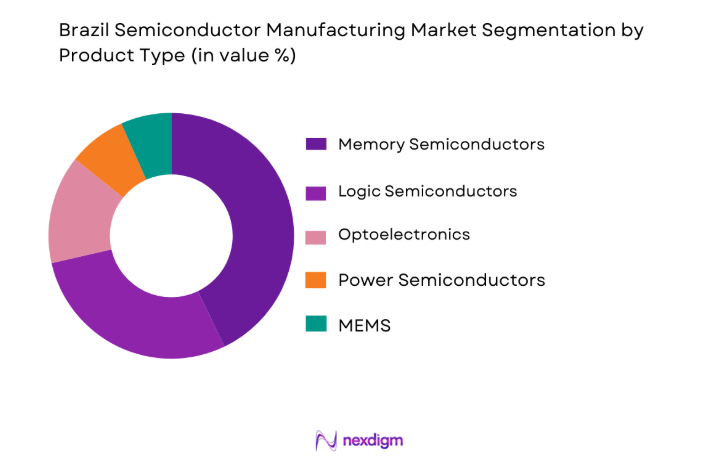
The Brazilian semiconductor manufacturing market is segmented by product type into memory semiconductors, logic semiconductors, optoelectronics, power semiconductors, and microelectromechanical systems (MEMS). Memory semiconductors have a dominant market share due to the increasing demand for high-performance computing, smartphones, and storage devices. This growth is driven by the rise in mobile device usage and the development of technologies like cloud computing, which require more advanced memory chips. Additionally, Brazil’s growing consumer electronics market and infrastructure developments have further fueled the demand for memory semiconductors.
By Platform Type:
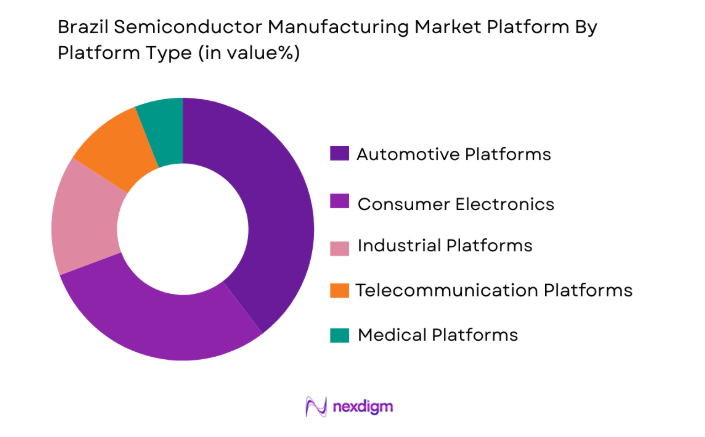
Brazil’s semiconductor manufacturing market is segmented by platform type into automotive platforms, consumer electronics platforms, industrial platforms, telecommunication platforms, and medical platforms. Automotive platforms dominate the market share due to the rising demand for electric vehicles (EVs) and advanced driver-assistance systems (ADAS). The increased adoption of smart vehicles and automotive electronics, including sensors and semiconductors, is driving the demand in this segment. Brazil’s growing automotive sector, particularly in regions such as Sao Paulo, has made it a hub for manufacturing semiconductors tailored to the automotive industry.
Competitive Landscape
The Brazilian semiconductor manufacturing market is highly competitive, with significant contributions from both local and international players. As Brazil seeks to strengthen its position as a key supplier of semiconductors in Latin America, consolidation is expected to increase, with major players investing in local production facilities and research capabilities. The market is influenced by the presence of multinational corporations as well as local enterprises that continue to innovate and adapt to shifting technological demands. The growing presence of automotive and consumer electronics companies further enhances the competitive environment, creating opportunities for market expansion and growth.
| Company Name | Establishment Year | Headquarters | Technology Focus | Market Reach | Key Products | Revenue | Manufacturing Locations |
| Intel Corporation | 1968 | USA | ~ | ~ | ~ | ~ | ~ |
| TSMC | 1987 | Taiwan | ~ | ~ | ~ | ~ | ~ |
| Samsung Electronics | 1938 | South Korea | ~ | ~ | ~ | ~ | ~ |
| STMicroelectronics | 1987 | Switzerland | ~ | ~ | ~ | ~ | ~ |
| Qualcomm | 1985 | USA | ~ | ~ | ~ | ~ | ~ |
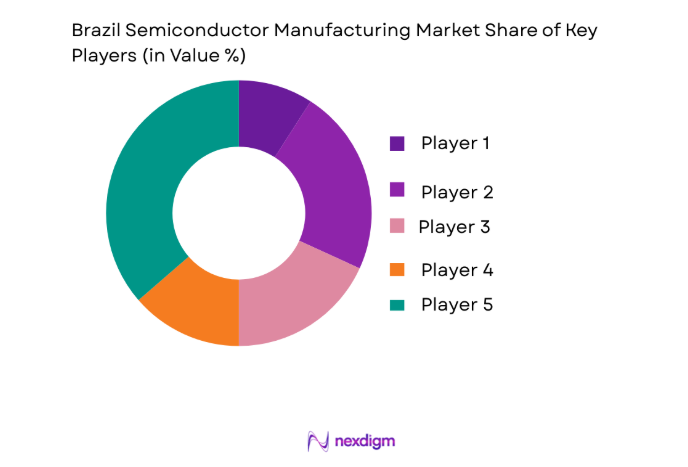
Brazil Semiconductor Manufacturing Market Analysis
Growth Drivers
Government Investment in Semiconductor Infrastructure:
The Brazilian government has significantly increased investments in the semiconductor sector, aiming to boost the country’s technological capabilities and reduce dependence on foreign semiconductor products. Government incentives such as tax reductions, subsidies, and support for research and development have played a key role in encouraging local production. These efforts are focused on strengthening Brazil’s position in global semiconductor supply chains, particularly in industries such as automotive, consumer electronics, and telecommunications. This has been further supported by strategic partnerships between the government and private enterprises, creating a favorable environment for semiconductor manufacturing.
Technological Advancements and Rising Demand for Electronics:
The growing demand for electronic devices, particularly smartphones, consumer electronics, and automotive electronics, has significantly boosted the Brazilian semiconductor manufacturing market. As Brazil continues to embrace digital technologies, from artificial intelligence (AI) to the Internet of Things (IoT), the demand for high-performance semiconductors continues to rise. Brazil’s expanding infrastructure in both urban and rural areas has also contributed to the surge in demand for smart devices and connectivity. Technological advancements in chip design and manufacturing processes further propel growth, making Brazil a competitive player in the global semiconductor market.
Market Challenges
Supply Chain Disruptions:
The Brazilian semiconductor manufacturing sector faces significant challenges related to global supply chain disruptions. These disruptions, particularly in raw materials such as silicon, have led to delays in production and increased costs for local manufacturers. The reliance on imported materials from Asia and other global markets poses risks to the stability of Brazil’s semiconductor supply chains. In addition, ongoing global trade tensions and the COVID-19 pandemic have exacerbated these issues, making it challenging for Brazilian companies to maintain a consistent supply of semiconductors. The high capital investment required to establish local raw material sourcing capabilities further complicates this challenge.
Regulatory and Compliance Barriers:
Brazil’s semiconductor manufacturing industry is also confronted by complex regulatory and compliance barriers. These regulations, especially related to environmental standards, intellectual property protection, and import/export controls, can slow down production and increase operational costs for local manufacturers. Additionally, the regulatory landscape in Brazil can be difficult to navigate for international companies looking to enter the market. The need to adhere to global standards while simultaneously complying with local regulations makes it a challenge for semiconductor companies to maintain profitability and remain competitive in the global market.
Opportunities
Expanding Electric Vehicle (EV) Market:
The electric vehicle (EV) market in Brazil offers significant growth opportunities for semiconductor manufacturers. As the government continues to push for sustainability and cleaner energy sources, the demand for electric vehicles has risen dramatically. This, in turn, has driven the need for advanced semiconductor components, such as power semiconductors and battery management systems, which are crucial for EVs. Brazil’s push towards increasing EV adoption, coupled with a growing domestic automotive industry, positions the country to capitalize on this trend. This creates ample opportunities for local semiconductor manufacturers to diversify their product offerings and meet the growing demand for automotive electronics.
Smart City and IoT Development:
The development of smart cities in Brazil presents significant opportunities for semiconductor manufacturing. As Brazil invests in infrastructure to support the growth of smart cities, the demand for semiconductors in applications like smart grids, public safety, transportation, and environmental monitoring is expected to rise. IoT devices, which require advanced semiconductors for connectivity and data processing, are integral to the functioning of smart cities. Brazil’s ongoing investments in urban development and technological integration create a promising market for semiconductor manufacturers to expand their presence and meet the increasing demand for smart technologies.
Future Outlook
The future outlook for Brazil’s semiconductor manufacturing market is optimistic, with continued investments in infrastructure, government support, and growing demand for consumer electronics and automotive components. Technological advancements, particularly in the fields of AI, IoT, and EVs, will continue to drive market growth. Brazil’s focus on self-sufficiency in semiconductor production and increasing local manufacturing capabilities will bolster its position as a key player in the global semiconductor market. Additionally, favorable regulations and international collaborations will provide further opportunities for expansion, positioning Brazil to benefit from the growing global demand for semiconductors.
Major Players
- Intel Corporation
- TSMC
- Samsung Electronics
- STMicroelectronics
- Qualcomm
- Micron Technology
- Texas Instruments
- Broadcom
- NXP Semiconductors
- ON Semiconductor
- Infineon Technologies
- MediaTek
- Renesas Electronics
- Analog Devices
- GlobalFoundries
Key Target Audience
- Investments and venture capitalist firms
- Government and regulatory bodies
- Electronics manufacturers
- Automotive manufacturers
- Telecommunications providers
- Semiconductor equipment suppliers
- Renewable energy firms
- Industrial automation companies
Research Methodology
Step 1: Identification of Key Variables
Identifying and defining key variables such as technological trends, market dynamics, and consumer demand patterns.
Step 2: Market Analysis and Construction
Gathering data through primary and secondary research methods, constructing the market size, segmentation, and competitive landscape.
Step 3: Hypothesis Validation and Expert Consultation
Validating assumptions through expert consultations and market expert feedback to refine insights.
Step 4: Research Synthesis and Final Output
Synthesizing research findings and drafting the final output based on data accuracy and insights derived from the analysis.

- Executive Summary
- Research Methodology (Definitions, Scope, Industry Assumptions, Market Sizing Approach, Primary & Secondary Research Framework, Data Collection & Verification Protocol, Analytic Models & Forecast Methodology, Limitations & Research Validity Checks)

- Market Definition and Scope
- Value Chain & Stakeholder Ecosystem
- Regulatory / Certification Landscape
- Sector Dynamics Affecting Demand

- Growth Drivers
Government Investment in Semiconductor R&D
Rising Demand for Consumer Electronics
Increasing Automotive Electronics Adoption - Market Challenges
Supply Chain Instability
Technological Complexity
Regulatory Barriers - Market Opportunities
Expansion of 5G Networks
Development of Autonomous Vehicles
Integration of AI and IoT in Semiconductors - Trends
Miniaturization of Semiconductor Devices
Growth of Sustainable Semiconductor
Manufacturing
Rise of Smart Wearables - Government Regulations
- SWOT Analysis of Key Competitors

- By Market Value, 2020-2025
- By Installed Units, 2020-2025
- By Average System Price, 2020-2025
- By System Complexity Tier, 2020-2025

- By System Type (In Value%)
Memory Semiconductors
Logic Semiconductors
Power Semiconductors
Optoelectronics
Microelectromechanical Systems (MEMS) - By Platform Type (In Value%)
Automotive Platforms
Consumer Electronics Platforms
Industrial Platforms
Telecommunication Platforms
Medical Platforms - By Fitment Type (In Value%)
Integrated Circuits
Discrete Components
Optical Components
Sensors
Microprocessors - By EndUser Segment (In Value%)
Automotive Industry
Consumer Electronics
Telecommunications
Industrial Automation
Healthcare

- Market Share Analysis
- CrossComparison Parameters (System Type, Platform Type, Procurement Channel, EndUser Segment, Fitment Type)
- SWOT Analysis of Key Competitors
- Pricing & Procurement Analysis Porter’s Five Forces
- Key Players
Intel Corporation
TSMC
Samsung Electronics
GlobalFoundries
STMicroelectronics
Micron Technology
Qualcomm
Broadcom
NXP Semiconductors
Texas Instruments
Infineon Technologies
MediaTek
Analog Devices
ON Semiconductor
Renesas Electronics

- Adoption of Advanced Technologies in Automotive
- Consumer Electronics Demands for High-Performance Chips
- Industrial Automation and Robotics Integration
- Healthcare Sector’s Reliance on High-Precision Semiconductors

- Forecast Market Value, 2026-2035
- Forecast Installed Units, 2026-2035
- Price Forecast by System Tier, 2026-2035
- Future Demand by Platform, 2026-2035


 Request a Sample
 Ask for Customization
 Get a Quote
 Enquire Now