
 Download PDF
Market Overview
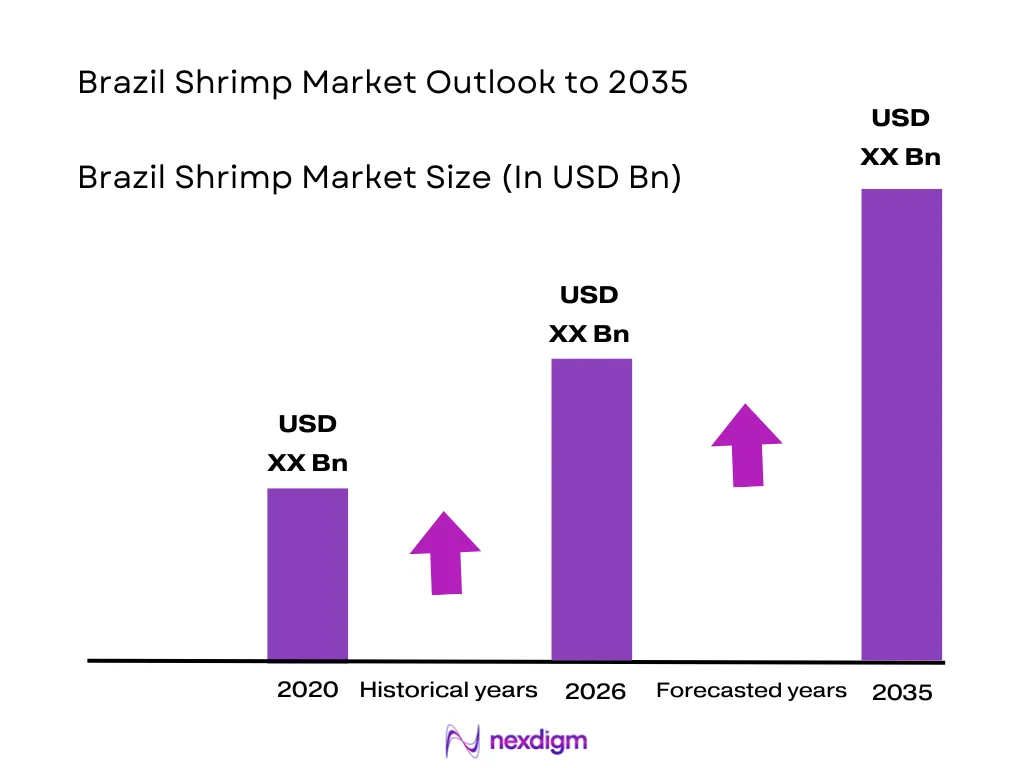
The Brazil Shrimp Market is supported by expanding domestic seafood consumption, rising aquaculture production, and increasing investment in intensive farming infrastructure. Brazil’s aquaculture industry generated more than BRL 3.1 billion from shrimp farming activities, while national aquaculture production exceeded 968 thousand metric tons according to government fisheries statistics. The market is valued at approximately USD ~ million, supported by strong demand from retail seafood chains, restaurants, and frozen food distributors. Growing urbanization, higher protein consumption, and expansion of organized retail channels continue to accelerate shrimp consumption across domestic markets and strengthen aquaculture commercialization throughout Brazil’s coastal regions.
The Northeast region dominates the Brazil Shrimp Market due to favorable climatic conditions, extensive coastal resources, and established aquaculture infrastructure. States such as Ceará and Rio Grande do Norte lead shrimp production because of high-salinity environments suitable for Pacific white shrimp cultivation and strong hatchery ecosystems. Coastal cities including Fortaleza, Natal, and Recife serve as major seafood processing and export hubs due to better logistics infrastructure and cold storage availability. Internationally, the United States, China, and European seafood importers remain important destinations for Brazilian shrimp exports because of increasing demand for frozen and value-added seafood products supported by improving export logistics and traceability standards.
Market Segmentation
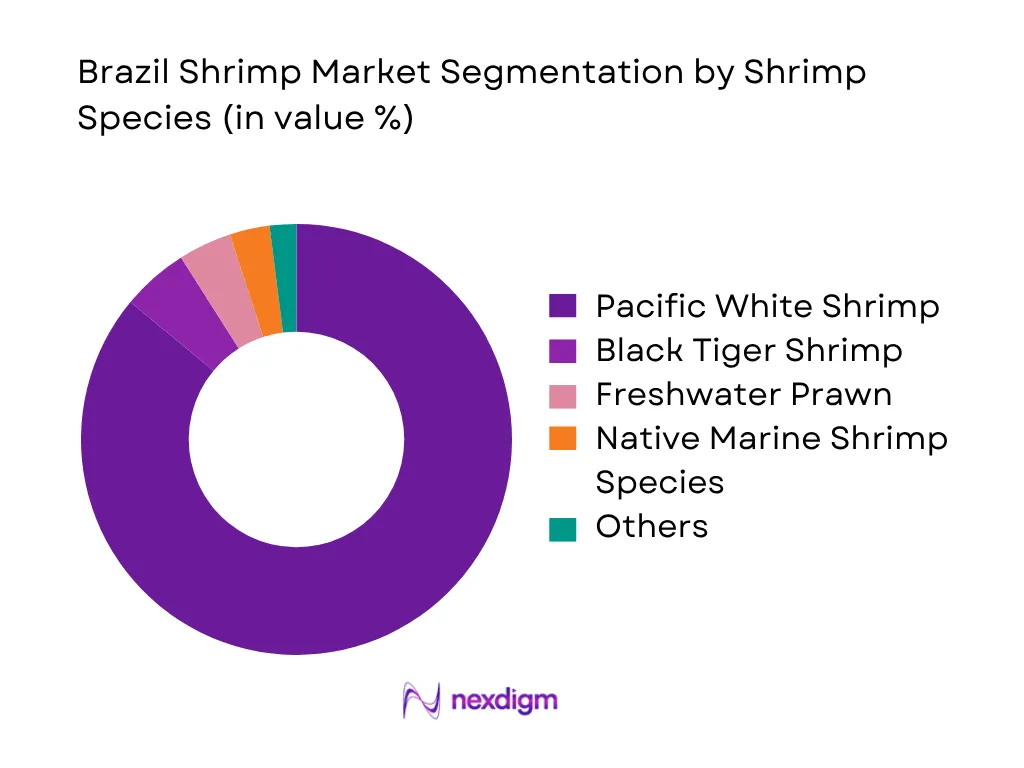
By Shrimp Species
The Brazil Shrimp Market is segmented by shrimp species into Pacific White Shrimp, Black Tiger Shrimp, Freshwater Prawn, Native Marine Shrimp Species, and Others. Pacific White Shrimp dominates the Brazil Shrimp Market because of its superior adaptability to Brazil’s climatic conditions, higher survival rates, and faster production cycles. Shrimp farmers increasingly prefer this species due to its compatibility with intensive and biofloc farming systems that deliver higher productivity per hectare. The availability of SPF larvae, advanced hatchery support, and strong acceptance among domestic retailers and export buyers further support segment leadership. Processing companies also favor Pacific White Shrimp because of consistent sizing and suitability for frozen and value-added seafood products across commercial distribution channels.
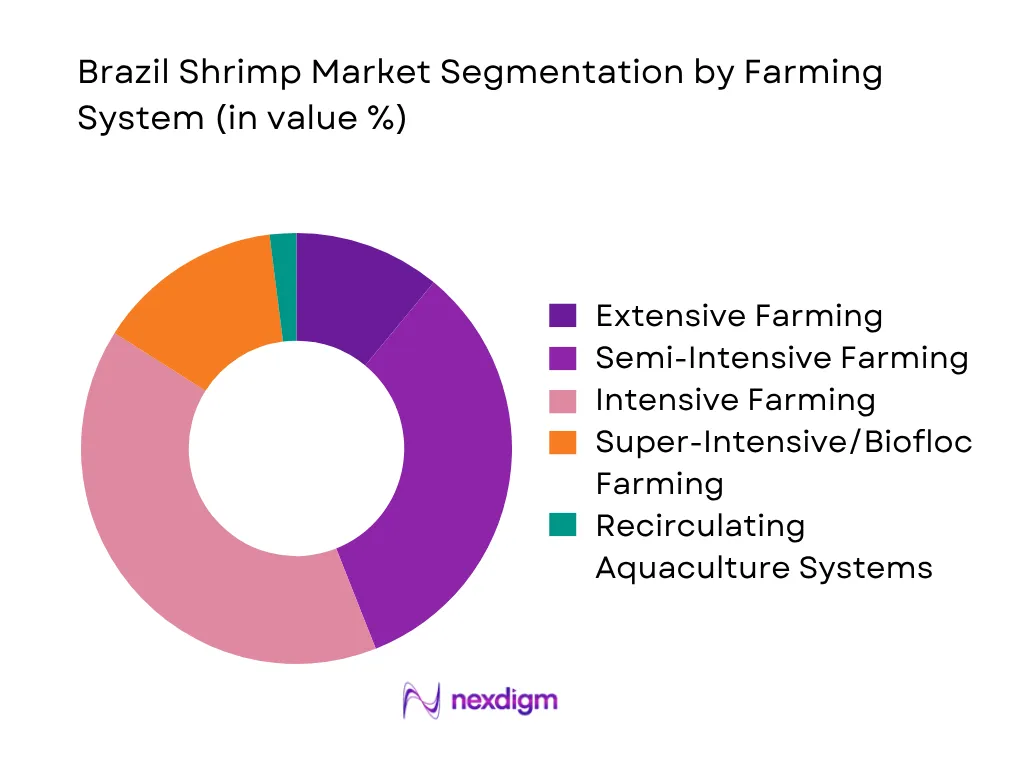
By Farming System
The Brazil Shrimp Market is segmented by farming system into Extensive Farming, Semi-Intensive Farming, Intensive Farming, Super-Intensive/Biofloc Farming, and Recirculating Aquaculture Systems. Intensive farming dominates the market because producers are increasingly focusing on higher production efficiency and optimized land utilization. Shrimp farms across Northeast Brazil are adopting mechanical aeration systems, automated feeding technologies, and precision pond monitoring solutions to improve productivity and reduce operational risks. Intensive farming also allows better disease management and harvest consistency, which is essential for commercial seafood processors and export-oriented buyers. Increasing financing support for aquaculture modernization and greater adoption of biosecurity infrastructure are further strengthening the dominance of intensive shrimp farming systems throughout Brazil.
Competitive Landscape
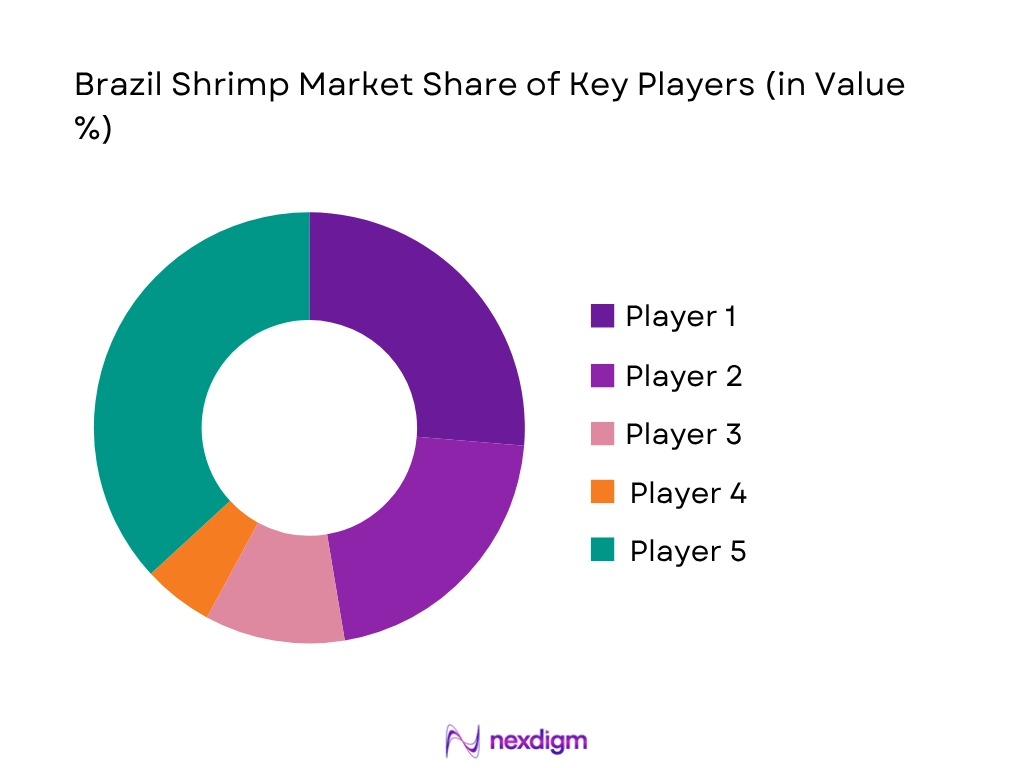
The Brazil Shrimp Market is moderately consolidated, with integrated aquaculture companies, hatchery operators, seafood processors, and regional farming cooperatives dominating commercial production. Leading producers are increasingly investing in SPF genetics, hatchery modernization, intensive farming infrastructure, and cold storage facilities to improve productivity and strengthen export competitiveness. The market is also witnessing increasing adoption of sustainability certifications, traceability systems, and value-added shrimp processing to cater to evolving domestic and international seafood demand.
| Company | Establishment Year | Headquarters | Production Focus | Farming System | Processing Infrastructure | Export Presence | Sustainability Focus | Technology Adoption |
| Potiporã | 1983 | Brazil | ~ | ~ | ~ | ~ | ~ | ~ |
| Camanor Produtos Marinhos | 1982 | Brazil | ~ | ~ | ~ | ~ | ~ | ~ |
| Aquatec Aquacultura | 1994 | Brazil | ~ | ~ | ~ | ~ | ~ | ~ |
| Netuno Internacional | 1989 | Brazil | ~ | ~ | ~ | ~ | ~ | ~ |
| Compescal | 2000 | Brazil | ~ | ~ | ~ | ~ | ~ | ~ |
Brazil Shrimp Market Analysis
Growth Drivers
Rising Domestic Seafood Consumption and Protein Demand
Brazil’s expanding seafood consumption and growing preference for animal protein continue to support shrimp aquaculture development. Brazil’s population exceeded 203 million people, while household final consumption expenditure crossed USD 1.3 trillion according to macroeconomic indicators. National aquaculture production surpassed 968 thousand metric tons, strengthening seafood supply availability across retail and foodservice channels. Organized supermarket chains generated over BRL 1 trillion in retail sales, increasing shelf space for chilled and frozen seafood products. Urbanization levels above 87% have accelerated demand for convenient packaged seafood products in metropolitan regions such as São Paulo, Fortaleza, and Recife, supporting long-term domestic demand for farmed shrimp products and commercial aquaculture expansion.
Increasing Adoption of Intensive Aquaculture Practices
Brazil’s shrimp industry is increasingly transitioning toward intensive aquaculture systems to improve productivity and resource utilization efficiency. The country possesses over 8,500 kilometers of coastline and extensive brackish water resources favorable for commercial shrimp cultivation. Intensive shrimp farms in Northeast Brazil produce more than 20 metric tons per hectare annually through advanced aeration systems and automated pond management technologies. Brazil’s electricity generation exceeded 700 terawatt-hours, supporting wider use of water recirculation systems and precision aquaculture infrastructure. Investments in irrigation and water resource management projects across Ceará and Rio Grande do Norte are also strengthening aquaculture infrastructure, enabling shrimp producers to increase survival rates, improve feed utilization, and enhance overall production consistency.
Market Challenges
Disease Outbreaks and Biosecurity Risks in Shrimp Farming
Disease outbreaks remain one of the largest operational risks affecting Brazil’s shrimp farming industry. Aquatic diseases such as White Spot Syndrome Virus and Acute Hepatopancreatic Necrosis Disease continue to threaten intensive aquaculture systems globally. Northeast Brazil experiences elevated climatic temperatures exceeding 30°C during several months annually, creating conditions favorable for pathogen development and water quality deterioration. Increasing stocking densities and water reuse practices in intensive shrimp farms are amplifying biosecurity concerns and mortality risks. Fragmented disease monitoring systems and limited veterinary infrastructure for smaller farms continue to affect operational stability and production consistency across several shrimp-producing regions in Brazil’s coastal aquaculture clusters.
Feed Cost Inflation and Dependence on Agricultural Inputs
Feed inflation continues to challenge profitability within Brazil’s shrimp farming sector because aquaculture feed production depends heavily on soybean meal, corn, wheat, and fishmeal availability. Brazil’s grain production exceeded 315 million metric tons, yet adverse weather conditions and logistics bottlenecks have increased transportation and storage costs for agricultural commodities. Shrimp feed remains the largest operational expenditure within intensive farming systems, requiring producers to maintain high-quality nutrient formulations despite fluctuating agricultural input availability. Dependence on imported micronutrients and fishmeal additives also exposes commercial shrimp producers to exchange-rate volatility and international commodity market instability, affecting operational planning and production economics across export-oriented farming operations.
Market Opportunities
Expansion of Sustainable and Certified Shrimp Production
Growing international demand for sustainable seafood sourcing is creating strong opportunities for certified shrimp production in Brazil. The country possesses more than 20% of the world’s freshwater resources and generates over 90% of electricity from renewable and low-carbon energy sources, supporting environmentally sustainable aquaculture development. International seafood retailers and foodservice operators increasingly require traceability systems, antibiotic-free certifications, and environmentally compliant sourcing practices. Expansion of government inspection programs and seafood export certification frameworks is encouraging shrimp producers to adopt sustainability standards and premium export-oriented production systems. These developments are strengthening Brazil’s positioning in international frozen and value-added shrimp trade markets.
Growth in Seafood Export Infrastructure and Trade Diversification
Brazil’s expanding logistics infrastructure and export capabilities are creating new opportunities for the shrimp market, particularly within frozen and processed seafood categories. National port systems handled more than 1.3 billion tons of cargo, supporting growth in refrigerated seafood exports. Northeast ports such as Pecém and Natal are becoming increasingly important seafood export hubs due to proximity to shrimp farming clusters and improved cold-chain logistics infrastructure. Brazil’s total exports exceeded USD 339 billion, reflecting stronger integration into global food supply chains. Improved customs digitalization, refrigerated transportation systems, and export diversification initiatives are supporting greater international market access for Brazilian shrimp producers and seafood processors.
Future Outlook
The Brazil Shrimp Market is expected to witness substantial expansion over the coming years due to increasing seafood consumption, modernization of aquaculture infrastructure, and greater adoption of intensive farming technologies. Shrimp producers are expected to increase investments in hatchery modernization, biofloc farming systems, and precision aquaculture solutions to improve productivity and disease management efficiency. Rising domestic demand for high-protein seafood products and growing penetration of frozen seafood across organized retail channels are expected to strengthen market demand nationwide. The expansion of export-oriented seafood processing facilities and improved cold-chain logistics infrastructure are likely to enhance Brazil’s competitiveness within global shrimp trade markets. Sustainability certifications, traceability systems, and antibiotic-free production standards are expected to become increasingly important as international seafood buyers emphasize environmentally responsible sourcing. Technological advancements in water quality monitoring, automated feeding systems, and SPF genetics are anticipated to support higher production efficiency and long-term industry growth throughout Brazil’s coastal aquaculture regions.
Major Players
- Potiporã
- Camanor Produtos Marinhos
- Aquatec Aquacultura
- Netuno Internacional
- Compescal
- Copacol
- Atlantis Aquacultura
- Primar Aquacultura
- Marine Farms
- Tecnopesca
- Mucuripe Pescados
- Fujimar
- Cia Norte de Aquicultura
- Maris Pescados
- Brazilian Fish
Key Target Audience
- Shrimp Farming and Aquaculture Companies
- Seafood Processing and Export Companies
- Feed Manufacturers and Aquaculture Nutrition Providers
- Cold Chain and Refrigerated Logistics Providers
- Investments and Venture Capitalist Firms
- Government and Regulatory Bodies
- Retail Seafood Chains and HoReCa Procurement Companies
- Aquaculture Equipment and Water Management Technology Providers
Research Methodology
Step 1: Identification of Key Variables
The initial stage involved identifying critical variables influencing the Brazil Shrimp Market, including aquaculture production capacity, hatchery infrastructure, seafood consumption trends, export demand, cold-chain logistics, and intensive farming adoption. Extensive secondary research was conducted using government fisheries statistics, trade databases, aquaculture publications, and seafood industry reports to understand the market ecosystem and operational value chain.
Step 2: Market Analysis and Construction
Historical market analysis was conducted using shrimp production data, aquaculture acreage, seafood consumption statistics, export-import trends, and processing capacity assessments. Revenue estimations were derived through bottom-up calculations based on farm productivity, average harvest volumes, regional aquaculture distribution, and seafood retail demand patterns across Brazil.
Step 3: Hypothesis Validation and Expert Consultation
The preliminary market findings were validated through interviews with shrimp farmers, hatchery operators, seafood exporters, feed manufacturers, and aquaculture technology providers. These consultations provided operational insights regarding disease management practices, production efficiency, investment trends, cold-chain infrastructure, and future commercialization opportunities within Brazil’s shrimp aquaculture industry.
Step 4: Research Synthesis and Final Output
The final phase involved consolidating quantitative and qualitative findings to produce a comprehensive market assessment. Cross-validation was conducted using government trade statistics, aquaculture production databases, and industry disclosures to ensure consistency and reliability of market estimates, segmentation analysis, and long-term growth projections for the Brazil Shrimp Market.

- Executive Summary
- Research Methodology (Market Definitions and Assumptions, Abbreviations, Research Framework, Bottom-Up Market Estimation, Top-Down Validation, Aquaculture Production Mapping, Export-Import Trade Flow Assessment, Primary Interviews with Hatcheries and Shrimp Producers, Forecasting Model, Limitations and Assumptions)

- Definition and Scope
- Evolution of Shrimp Aquaculture in Brazil
- Industry Ecosystem and Stakeholder Mapping
- Supply Chain and Value Chain Analysis
- Hatchery and Larvae Supply Landscape
- Feed Supply and Procurement Structure

- Growth Drivers
Rising Domestic Seafood Consumption and Protein Demand
Increasing Adoption of Intensive Aquaculture Practices
Expansion of Cold Chain and Seafood Retail Infrastructure
Growing Adoption of Biofloc and Precision Aquaculture Systems
Government Support for Fisheries and Aquaculture Development - Market Challenges
Disease Outbreaks and Biosecurity Risks in Shrimp Farming
Feed Cost Inflation and Dependence on Agricultural Inputs
Environmental Licensing and Compliance Constraints
Cold Chain and Logistics Infrastructure Gaps - Market Opportunities
Expansion of Sustainable and Certified Shrimp Production
Growth in Seafood Export Infrastructure and Trade Diversification
Increasing Demand for Value-Added Frozen Shrimp Products
Expansion of Traceability and Digital Aquaculture Solutions - Market Trends
Adoption of SPF Shrimp Larvae
Expansion of Intensive and Super-Intensive Farming
Increasing Investment in Hatchery Modernization
Growth of Automated Water Quality Monitoring
Rising Demand for Antibiotic-Free Shrimp Production - Government Regulations
Aquaculture Environmental Licensing Policies
Seafood Export Certification Requirements
Food Safety and Traceability Standards
Water Usage and Coastal Management Regulations - Porter’s Five Forces Analysis
- PESTLE Analysis
- Pricing Analysis
- Competition Ecosystem

- By Value, 2020-2025
- By Production Volume, 2020-2025
- By Consumption Volume, 2020-2025
- By Export Volume, 2020-2025
- By Average Farm Gate Price, 2020-2025

- By Shrimp Species (in Value %)
Production Yield
Survival Rate
Feed Conversion Efficiency
Export Acceptance - By Farming System (in Value %)
Stocking Density
Water Utilization Efficiency
Aeration Dependency
Productivity per Hectare - By Product Form (in Value %)
Processing Yield
Shelf Life
Value Addition Potential
Cold Chain Dependency - By Distribution Channel (in Value %)
Retail Penetration
Foodservice Consumption
Export Procurement Volume
Inventory Turnover - By End User (in Value %)
Consumption Frequency
Procurement Volume
Quality Specification Demand
Purchase Consistency - By Region (in Value %)
Northeast Brazil
North Brazil
Southeast Brazil
South Brazil
Central-West Brazil

- Market Share Analysis of Major Players on the Basis of Revenue and Production Volume
- Cross Comparison Parameters (Company Overview, Shrimp Production Capacity, Hatchery Infrastructure, Farming Area, Feed Conversion Efficiency, Processing Facilities, Export Presence, Cold Storage Infrastructure, Sustainability Certifications, Product Portfolio, Value-Added Product Share, Distribution Reach, Disease Management Capability, Technology Adoption, EBITDA Margins, Strategic Collaborations)
- Competitive Benchmarking Matrix
- SWOT Analysis of Major Players
- Pricing Analysis by Shrimp Size Grade and Product Format
- Detailed Profiles of Major Companies
Potiporã
Camanor Produtos Marinhos
Aquatec Aquacultura
Netuno Internacional
Compescal
Copacol
Atlantis Aquacultura
Primar Aquacultura
Marine Farms
Tecnopesca
Mucuripe Pescados
Fujimar
Cia Norte de Aquicultura
Maris Pescados
Brazilian Fish

- Seafood Consumption Frequency Analysis
- Retail and Foodservice Procurement Assessment
- Consumer Preference for Fresh vs Frozen Shrimp
- Purchase Decision Parameters
- Export Buyer Requirement Mapping

- By Value, 2026-2035
- By Production Volume, 2026-2035
- By Consumption Volume, 2026-2035
- By Export Volume, 2026-2035
- By Average Farm Gate Price, 2026-2035


 Request a Sample
 Ask for Customization
 Get a Quote
 Enquire Now