
 Download PDF
Market Overview
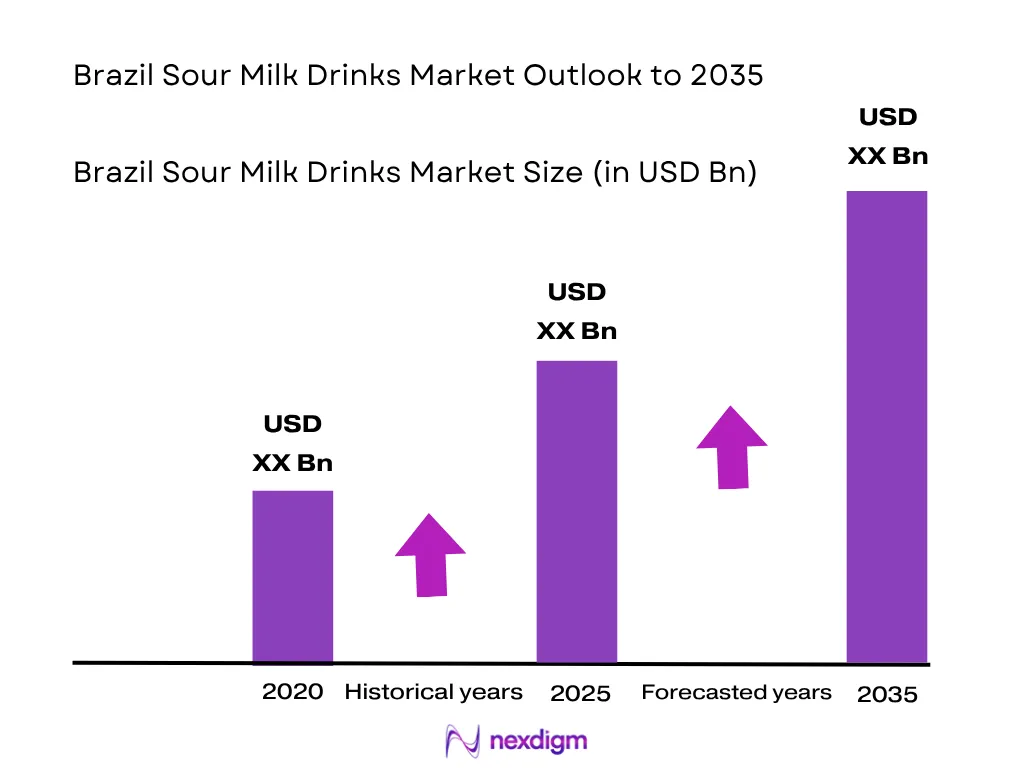
The Brazil Sour Milk Drinks Market is valued at USD ~ billion, based on the addressable yogurt and sour-milk-drinks category used for Brazil-specific market tracking. The market is driven by fermented dairy consumption, probiotic positioning, single-serve yogurt drink formats, and rising demand for convenient chilled dairy snacks. Brazil’s milk production base stood at about 25 million metric tons, while total dairy packaging retail volumes reached 27 billion units, supporting scale for drinkable yogurt, leite fermentado, kefir drinks and cultured dairy beverages.
São Paulo, Rio de Janeiro, Belo Horizonte, Brasília, Fortaleza and Porto Alegre dominate Brazil Sour Milk Drinks Market demand because they combine high population density, modern retail concentration, higher cold-chain availability and stronger brand visibility. Brazil’s estimated population reached 212.6 million, with 42.7 million residents living in municipalities above 1 million people. Metropolitan São Paulo alone has about 21.5 million residents, followed by Rio de Janeiro with 12.9 million and Belo Horizonte with 6 million, making these markets central for chilled dairy velocity.
Market Segmentation
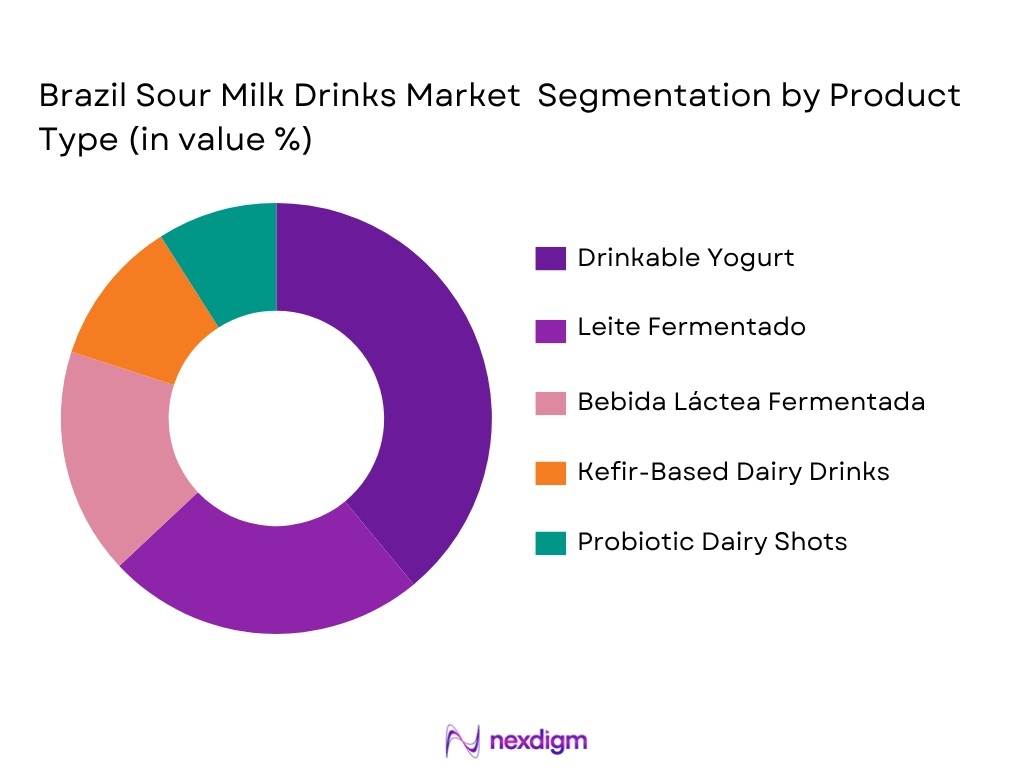
By Product Type
Brazil Sour Milk Drinks Market is segmented by product type into drinkable yogurt, leite fermentado, bebida láctea fermentada, kefir-based dairy drinks and probiotic dairy shots. Recently, drinkable yogurt has the dominant market share under the product type segmentation because it sits between dairy nutrition and ready-to-drink convenience. The sub-segment benefits from strong supermarket refrigeration, family-oriented pack formats, fruit flavors and breakfast/snacking use cases. Major dairy processors also use drinkable yogurt as a scalable platform for flavor extensions, protein-enriched formats, zero-lactose variants and value packs. Leite fermentado remains culturally strong in children’s consumption, but drinkable yogurt has broader age coverage, larger pack-size flexibility and wider shelf placement across supermarkets, atacarejo and convenience stores.
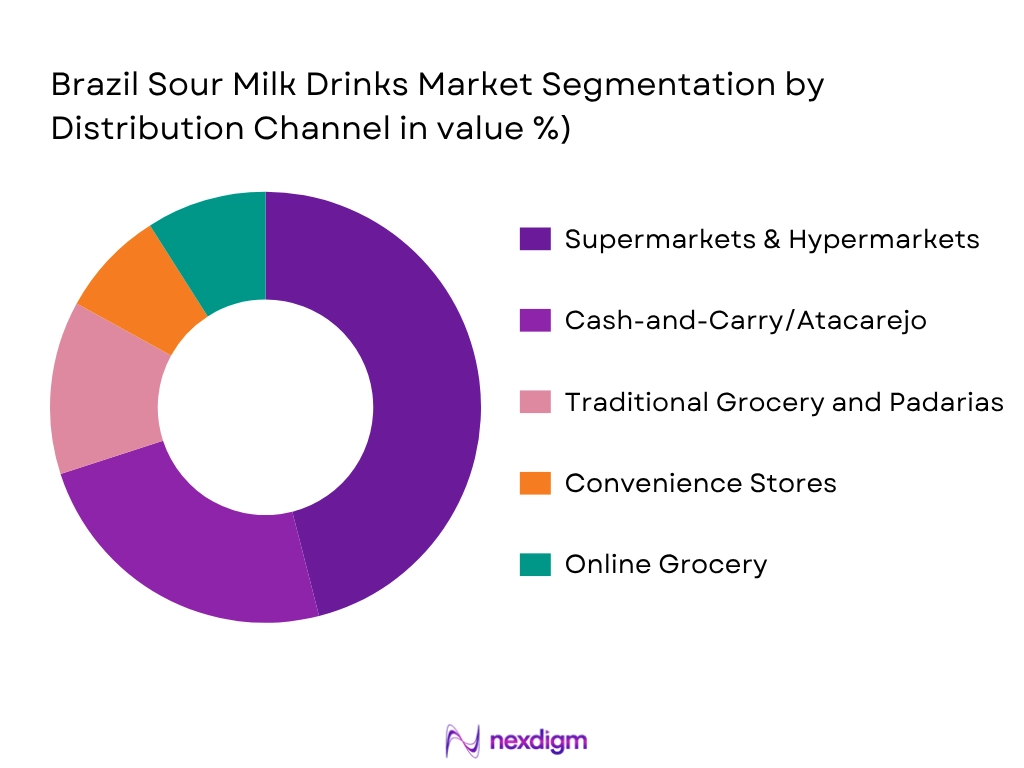
By Distribution Channel
Brazil Sour Milk Drinks Market is segmented by distribution channel into supermarkets and hypermarkets, cash-and-carry/atacarejo, traditional grocery and padarias, convenience stores, online grocery and pharmacies/wellness stores. Supermarkets and hypermarkets dominate because sour milk drinks require consistent refrigeration, strong SKU visibility and high-frequency dairy replenishment. These stores provide chilled aisle space for mini bottles, multipacks, PET drinkable yogurt and family bottles, while also supporting promotional pricing and impulse discovery. Atacarejo is expanding quickly because families increasingly buy multipacks and larger bottles for home consumption, but supermarkets remain more important for assortment depth, premium products, zero-lactose SKUs, functional claims and new product launches.
Competitive Landscape
The Brazil Sour Milk Drinks Market is moderately consolidated at the national-brand level but fragmented across regional dairy processors. Yakult, Danone, Nestlé, Vigor and Piracanjuba are among the most visible players because they combine probiotic credibility, dairy processing scale, chilled logistics and broad retail availability. Regional dairy brands remain important in price-sensitive channels, while premium growth is increasingly linked to zero-lactose, reduced-sugar, high-protein and kefir-positioned sour milk drinks.
| Company | Establishment Year | Headquarters | Key Sour Milk Drinks Portfolio | Core Channel Strength | Functional Claim Focus | Packaging Strength | Regional Reach | Strategic Positioning |
| Yakult Brasil | 1966 | São Bernardo do Campo, São Paulo | ~ | ~ | ~ | ~ | ~ | ~ |
| Danone Brasil | 1970 | São Paulo, Brazil | ~ | ~ | ~ | ~ | ~ | ~ |
| Nestlé Brasil | 1921 | São Paulo, Brazil | ~ | ~ | ~ | ~ | ~ | ~ |
| Vigor Alimentos | 1917 | São Paulo, Brazil | ~ | ~ | ~ | ~ | ~ | ~ |
| Piracanjuba | 1955 | Bela Vista de Goiás, Goiás | ~ | ~ | ~ | ~ | ~ | ~ |
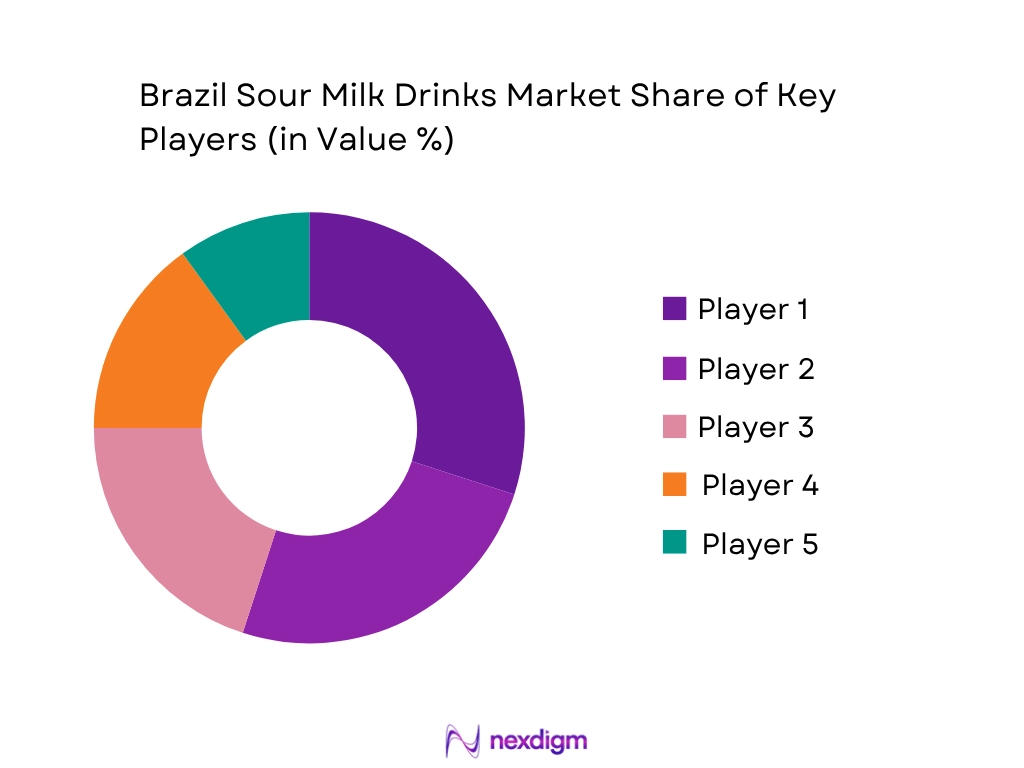
Brazil Sour Milk Drinks Market Analysis
Growth Drivers
Gut-health Awareness
Brazil Sour Milk Drinks Market benefits from a large, urban consumer base that can absorb fermented dairy drinks positioned around digestive comfort, daily nutrition and preventive wellness. Brazil recorded 211,998,573 people in World Bank’s 2024 population series, while IBGE’s municipal estimate placed the country at 212.6 million residents and identified 15 municipalities with more than 1 million residents each. These large urban centers are important for sour milk drinks because refrigerated dairy beverages depend on dense store networks, frequent replenishment and short purchase cycles. The concentration of 42.7 million residents in municipalities above 1 million people supports high-volume retail rotation for leite fermentado, drinkable yogurt and probiotic dairy shots. São Paulo had 11.9 million residents, Rio de Janeiro 6.7 million, Brasília 3.0 million, Fortaleza 2.6 million and Salvador 2.6 million, creating a dense chilled-dairy consumption corridor. Health-oriented positioning is also supported by Brazil’s income base: IBGE reported national per-capita household earnings of R$2,069 in 2024, with the Federal District at R$3,444, allowing premium functional dairy formats to coexist with mass multipacks. For the sour milk drinks category, this means gut-health products can be placed in both mainstream supermarket dairy aisles and higher-income wellness baskets without depending only on niche buyers.
Functional Beverage Adoption
Functional beverage adoption in Brazil Sour Milk Drinks Market is supported by macro consumption conditions rather than by a single product statistic. IBGE reported that Brazil’s GDP reached R$11.7 trillion in 2024, with real GDP growth of 3.4, services growth of 3.7 and industry growth of 3.3. Household consumption increased 5.1 in 2024 and remained positive in 2025, rising 1.3 from 2024, according to IBGE’s national accounts release. This matters for sour milk drinks because leite fermentado, drinkable yogurt and kefir-based beverages are routine-consumption products bought through households, convenience trips and supermarket baskets. Employment conditions also supported functional beverage penetration: IBGE reported annual unemployment of 6.6 in 2024 and 5.6 in 2025, while the average number of unemployed people fell from 7.2 million to 6.2 million. A stronger labor market broadens the consumer base for ready-to-drink dairy formats used during breakfast, commuting, office snacking and school lunch occasions. The addressable retail infrastructure is also broad: Brazil had 77.3 million housing units with electricity access reaching 99.8 of housing units in 2024, a baseline requirement for home refrigeration and chilled dairy storage. These macro indicators support adoption of functional fermented dairy drinks because consumers have income flow, household infrastructure and urban retail access for repeat chilled purchases.
Market Challenges
Milk Price Volatility
Brazil Sour Milk Drinks Market is exposed to input instability because sour milk drinks depend on raw milk availability, dairy solids, whey streams and formal dairy collection. IBGE reported estimated cow milk production of 35.7 billion liters in 2024, setting a new national record, while inspected dairy establishments acquired 27.51 billion liters of raw milk in 2025. The change between 2024 and 2025 added 2.15 billion liters of milk to the formal acquisition system, which shows how quickly supply conditions can shift. For fermented dairy beverages, rapid changes in raw milk flow can affect processor planning, formulation flexibility, shelf allocation and inventory cycles, especially because sour milk drinks cannot be stored like dry dairy ingredients. IBGE also noted that raw milk acquisition reached 7.36 billion liters in the fourth quarter of 2025, the highest quarter in a time series beginning in 1997. Regional concentration adds another operational challenge: Minas Gerais accounted for 23.9 of formal milk acquisition in 2025, followed by Paraná at 15.6 and Rio Grande do Sul at 12.8. When production shifts across these states, fermented dairy processors must rebalance sourcing, plant utilization and refrigerated distribution. For sour milk drinks, this volatility is more sensitive than shelf-stable beverages because product quality depends on controlled fermentation, consistent milk solids and short chilled inventory turnover.
Refrigerated Logistics Cost
Brazil Sour Milk Drinks Market faces refrigerated logistics pressure because chilled fermented dairy must move through temperature-controlled routes from dairy plants to supermarkets, atacarejo outlets, padarias, pharmacies and online grocery warehouses. The challenge is structural: Brazil’s geography spans a very large consumer base, with World Bank reporting 211,998,573 people in 2024 and IBGE estimating 212.6 million residents across 5,570 municipalities. Refrigerated distribution is easier in dense metropolitan corridors but more complex across North, Northeast and interior Central-West routes where distance, road dependence and delivery fragmentation are higher. IBGE data show that 42.7 million people live in the 15 municipalities above 1 million residents, which implies that a large share of chilled dairy demand is concentrated in cities, while remaining demand is spread across thousands of smaller municipalities. Household electricity access reached 99.8 of 77.3 million housing units in 2024, supporting final consumption, but upstream cold-chain execution still depends on reliable refrigerated transport, cold rooms and retail chilled cabinets. The operational issue is not only national reach; it is maintaining probiotic viability, texture, acidity and shelf life during multi-stop distribution. Sour milk drinks, kefir drinks and drinkable yogurt are therefore disadvantaged versus ambient beverages when delivery routes are long, store refrigeration varies or replenishment frequency is low.
Market Opportunities
Kefir Commercialization
Kefir commercialization in Brazil Sour Milk Drinks Market is supported by the scale of the formal dairy base and the widening role of fermented, natural and digestive-positioned dairy drinks. IBGE reported 35.7 billion liters of cow milk production in 2024 and 27.51 billion liters of inspected raw milk acquisition in 2025, creating a large processing base for cultured products beyond conventional yogurt. The formal acquisition system added 2.15 billion liters of raw milk from 2024 to 2025, while increases occurred in 21 of the 26 Federation Units participating in the Quarterly Milk Survey. This breadth matters for kefir because commercialization requires consistent milk supply, fermentation control, quality assurance and refrigerated routing rather than purely artisanal production. Regional gains also support expansion beyond the Southeast: IBGE identified significant volume increases in Rio Grande do Sul with 418.56 million liters, Paraná with 391.83 million liters and São Paulo with 297.20 million liters between 2024 and 2025. These states are relevant because they combine dairy production, urban retail access and established chilled logistics. Kefir can use this structure to move from niche health-food shelves into mainstream refrigerated dairy aisles, especially through PET bottles, family packs and single-serve functional formats. Current macro conditions support this transition because Brazil’s 2024 household consumption rose 5.1, giving retailers a basis to test premium cultured dairy formats without relying only on small specialty stores.
Zero-Lactose Sour Milk
Zero-lactose sour milk presents a future growth opportunity in Brazil Sour Milk Drinks Market because it allows fermented dairy processors to target consumers who want digestive comfort while staying within dairy nutrition. The opportunity is supported by Brazil’s large urban and household base: IBGE estimated 212.6 million residents in 2024, including 42.7 million people living in cities above 1 million residents. These dense cities provide the cold-chain store concentration needed for differentiated sour milk SKUs such as zero-lactose drinkable yogurt, lactose-free leite fermentado and cultured dairy beverages. Income dispersion also creates a premium-addressable layer: national per-capita household earnings reached R$2,069 in 2024, while the Federal District recorded R$3,444, São Paulo R$2,945, and Santa Catarina R$2,887, supporting higher-value nutrition claims in higher-income urban regions. At the same time, mass access is improving because unemployment fell from 6.6 in 2024 to 5.6 in 2025, reducing pressure on routine household consumption. The dairy supply base is also large enough for processors to allocate capacity to lactose-free formulations: IBGE reported 35.7 billion liters of cow milk production in 2024 and record formal acquisition of 27.51 billion liters in 2025. For sour milk drinks, zero-lactose formats can convert consumers who avoid regular dairy beverages while preserving probiotic, protein and calcium positioning.
Future Outlook
Brazil Sour Milk Drinks Market is expected to expand at a forecast CAGR of about 6.05% during the forecast period, with stronger momentum in zero-lactose, reduced-sugar, kefir-based and high-protein cultured dairy drinks. Growth will be shaped by modern retail refrigeration, family multipack demand, probiotic education and urban snacking occasions. At the same time, milk input volatility, short shelf life, temperature-controlled logistics and claim substantiation will remain key operating constraints. Brands that combine functional credibility with affordable pack architecture are expected to outperform. The future market will be influenced by four structural shifts. First, sour milk drinks will move from children’s fermented milk shots toward family digestive-health routines. Second, drinkable yogurt will continue absorbing demand from breakfast replacement, office snacking and convenience-led dairy consumption. Third, lactose-free and reduced-sugar formulations will become more central as consumers look for digestive comfort and healthier dairy options. Fourth, regional dairy brands will gain visibility through atacarejo and local supermarket chains, especially outside São Paulo and Rio de Janeiro.
Major Players
- Yakult Brasil
- Nestlé Brasil
- Danone Brasil
- Vigor Alimentos
- Lactalis Brasil
- Itambé Alimentos
- Piracanjuba
- Batavo
- Parmalat Brasil
- Frimesa
- Tirol
- Verde Campo
- Betânia Lácteos
- Alvoar Lácteos
- Embaré
Key Target Audience
- Dairy product manufacturers and processors
- Probiotic ingredient and starter culture suppliers
- Cold-chain logistics and refrigerated distribution companies
- Supermarket, hypermarket and atacarejo operators
- Online grocery and quick-commerce platforms
- Packaging manufacturers for chilled dairy beverages
- Investments and venture capitalist firms
- Government and regulatory bodies
Research Methodology
Step 1: Identification of Key Variables
The initial phase involves mapping the Brazil Sour Milk Drinks Market ecosystem across dairy farmers, milk collectors, whey suppliers, probiotic culture suppliers, processors, distributors, retailers and regulators. Key variables include product type, chilled distribution depth, pack size, flavor profile, probiotic claim, lactose positioning, retail price per ml and regional consumption density.
Step 2: Market Analysis and Construction
In this phase, historical and current category indicators are compiled from dairy production data, retail packaging volumes, supermarket channel performance, company portfolios and syndicated category benchmarks. The market is constructed using top-down analysis from dairy and yogurt category values and bottom-up validation through SKU-level pricing, distribution reach and pack-volume assumptions.
Step 3: Hypothesis Validation and Expert Consultation
Market hypotheses are validated through structured interviews with dairy processors, supermarket category managers, cold-chain distributors, packaging suppliers and probiotic ingredient companies. These consultations help refine assumptions related to chilled shelf space, promotional dependence, family-pack rotation, zero-lactose growth, kefir adoption and price elasticity across Brazilian regions.
Step 4: Research Synthesis and Final Output
The final phase integrates secondary research, company benchmarking, channel checks and expert inputs into a validated market model. The output includes market size, segmentation, competitive landscape, growth drivers, challenges, future outlook and target audience mapping for decision-makers evaluating investment, distribution expansion, product development or market entry in Brazil Sour Milk Drinks Market.

- Executive Summary
- Research Methodology (Market definitions and assumptions, sour milk drinks scope, leite fermentado classification, bebida láctea fermentada classification, MAPA RTIQ interpretation, Anvisa food authorization framework, lactose labeling considerations, market sizing approach, top-down approach, bottom-up approach, retail SKU audit, cold-chain channel checks, distributor interviews, dairy processor interviews, supermarket shelf-space analysis, production-to-consumption triangulation, trade and import screening, limitations and future conclusions)

- Definition and Scope
- Overview Genesis
- Timeline of Major Players
- Business Cycle
- Supply Chain and Value Chain Analysis
- Regulatory Classification Landscape
- Retail Shelf Architecture
- Consumer Consumption Occasions
- Cold Chain and Last-Mile Distribution Structure
- Pricing Ladder and SKU Architecture

- Growth Drivers (Gut-health awareness, functional beverage adoption, child nutrition occasions, urban convenience consumption, modern retail cold-chain expansion, dairy processor innovation)
- Market Challenges (Milk price volatility, refrigerated logistics cost, probiotic viability, short shelf life, sugar scrutiny, regulatory claim substantiation, affordability pressure)
- Market Opportunities (Kefir commercialization, zero-lactose sour milk, high-protein cultured dairy, regional flavor portfolios, subscription multipacks, pharmacy-wellness channel)
- Market Trends (Premium probiotic shots, low-sugar reformulation, regional dairy brands, functional fortification, flavor localization, multipack promotions, clean-label kefir)
- Government Regulation (MAPA RTIQ, Anvisa authorization, lactose labeling, probiotic claim evaluation, packaging compliance, food safety inspection, identity and quality standards)
- SWOT Analysis (Probiotic credibility, dairy infrastructure, chilled-chain constraints, sugar scrutiny, lactose-free opportunity, kefir white space)
- Stakeholder Ecosystem (Dairy farmers, milk collectors, whey suppliers, culture suppliers, dairy processors, co-packers, cold-chain logistics providers, retailers, pharmacies, foodservice buyers, regulators, consumers)
- Porter’s Five Forces (Raw milk supplier power, retailer bargaining power, threat of functional beverage substitutes, entry barriers in cold-chain distribution, rivalry among national and regional dairy brands)
- Competition Ecosystem (Global dairy majors, Japanese probiotic specialists, Brazilian dairy cooperatives, regional chilled dairy brands, private labels, functional beverage challengers)
- Pricing Analysis (Mini-bottle multipacks, PET drinkable yogurt, family bottles, zero-lactose premium, kefir premium, atacarejo discounting)
- Channel Margin Analysis (Distributor margin, retailer cold-shelf margin, promotional allowance, shrinkage cost, chilled logistics cost)
- Import, Export and Local Production Analysis (Dairy cultures, packaging inputs, finished probiotic imports, domestic milk base, regional manufacturing clusters)

- By Value (2020-2025)
- By Volume (2020-2025)
- By Average Retail Selling Price (2020-2025)
- By Per Capita Consumption (2020-2025)
- By Household Penetration (2020-2025)
- By Retail Shelf Presence (2020-2025)

- By Product Type (In Value%)
Leite Fermentado
Bebida Láctea Fermentada
Drinkable Yogurt
Probiotic Dairy Shots
Cultured Dairy Smoothies - By Culture and Functional Claim (In Value%)
Lactobacillus-Based Drinks
Bifidobacterium-Based Drinks
Mixed-Culture Fermented Dairy Drinks
Kefir Culture-Based Drinks
Functional Fortified Sour Milk Drinks - By Flavor Profile (In Value%)
Traditional/Natural
Strawberry
Grape
Vanilla
Tropical Fruit
Mixed Fruit and Pulp-Based - By Sugar, Lactose and Nutrition Positioning (In Value%)
Regular Sugar
Reduced Sugar/Light
Zero Lactose
High-Protein/Protein-Enriched
Low-Fat/Fat-Free - By Packaging Type and Pack Size (In Value%)
Mini Bottles
Multipack Bottles
PET Bottles
Carton Boxes
Pouches
Family Bottles - By Distribution Channel (In Value%)
Supermarkets and Hypermarkets
Cash-and-Carry/Atacarejo
Convenience Stores
Traditional Grocery and Padarias
Online Grocery and Quick Commerce
Pharmacies and Wellness Stores
Foodservice and Institutional Channels
- By End User (In Value%)
Children
Teenagers and Young Adults
Working Professionals
Health-Conscious Adults
Elderly Consumers
Fitness and Active-Lifestyle Consumers - By Region (In Value%)
Southeast Brazil
South Brazil
Northeast Brazil
Central-West Brazil
North Brazil

- Market Share of Major Players (Value share, volume share, chilled shelf share, SKU count share, regional share, channel share)
- Market Share by Product Cluster (Leite fermentado, bebida láctea fermentada, drinkable yogurt, kefir, probiotic dairy shots, zero-lactose drinkables)
- Cross Comparison Parameters (Probiotic strain/culture claim, price per ml and SKU ladder, cold-chain distribution footprint, shelf-life and storage requirement, sugar/lactose/nutrition profile, dairy base and whey utilization, channel mix by modern trade-atacarejo-traditional-online, plant location and regional reach)
- SWOT Analysis of Major Players (Brand equity, probiotic credibility, innovation pipeline, regional distribution, pricing flexibility, regulatory claim strength)
- Pricing Analysis by SKU (Mini-bottle multipacks, single-serve PET bottles, family bottles, zero-lactose SKUs, kefir SKUs, kids’ packs)
- Product Benchmarking (CFU communication, cultures used, sugar per serving, lactose declaration, protein per serving, pack size, shelf life, flavor portfolio)
- Distribution Benchmarking (Supermarket penetration, atacarejo presence, pharmacy listing, online grocery availability, padaria reach, regional distributor network)
- Recent Developments and Innovation Pipeline (New flavors, low-sugar reformulation, probiotic fortification, packaging refresh, regional expansion, e-commerce packs)
- Detailed Profiles of Major Companies
Yakult Brasil
Nestlé Brasil
Danone Brasil
Vigor Alimentos
Lactalis Brasil
Itambé Alimentos
Piracanjuba
Batavo
Parmalat Brasil
Frimesa
Tirol
Verde Campo
Betânia Lácteos
Alvoar Lácteos
Embaré

- Demand and Utilization (Daily probiotic shots, breakfast drinkables, lunchbox packs, post-meal digestive usage, snack replacement)
- Purchasing Power and Budget Allocation (Multipack affordability, premium zero-lactose willingness, atacarejo basket share, family dairy spend)
- Needs, Desires and Pain Point Analysis (Digestive comfort, taste acceptance, sugar concerns, lactose intolerance, child nutrition, convenience, price-value balance)
- Consumer Decision-Making Process (Brand trust, probiotic claim credibility, flavor, price per ml, pack count, shelf visibility, retailer availability)
- Brand Switching and Loyalty Analysis (Promotional switching, child preference, perceived efficacy, household routine formation, regional brand loyalty)
- Usage Occasion Mapping (Breakfast, school snack, office snack, post-lunch digestive, fitness snack, evening light drink)
- Willingness-to-Pay Analysis (Probiotic strain claim, zero-lactose claim, high-protein claim, natural kefir claim, multipack discount)

- By Value (2026-2035)
- By Volume (2026-2035)
- By Average Retail Selling Price (2026-2035)
- By Per Capita Consumption (2026-2035)
- By Household Penetration (2026-2035)
- By Channel Contribution (2026-2035)


 Request a Sample
 Ask for Customization
 Get a Quote
 Enquire Now