
 Download PDF
Market Overview
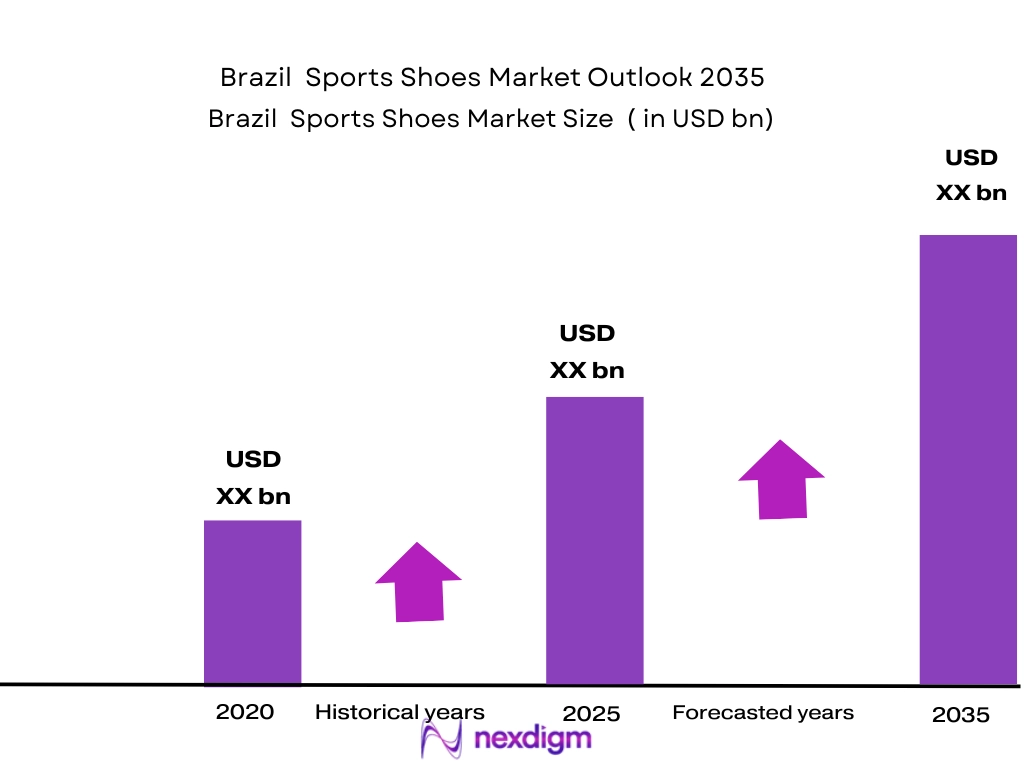
The Brazil sports shoes market is valued at USD ~ billion, reflecting steady growth driven by increasing urbanization, rising disposable income, and growing interest in fitness and sports activities. Sales growth in 2023 reached USD 6.3 billion, and in 2024 it is projected at USD 6.8 billion, reflecting heightened consumer preference for branded and performance-oriented footwear. The market expansion is supported by the proliferation of e-commerce platforms and omni-channel retailing, making sports shoes more accessible across diverse income groups and geographic regions.
Major urban centers such as São Paulo, Rio de Janeiro, and Belo Horizonte dominate the Brazil sports shoes market due to high population density, strong sports culture, and established retail infrastructure. These cities host flagship stores of global brands and attract significant marketing and sponsorship investments, leading to increased consumer engagement. Additionally, their status as economic hubs ensures higher disposable incomes, enabling consumers to adopt premium and performance-based sports footwear. The concentration of sports clubs, gyms, and professional sports institutions further supports market dominance in these regions.
Market Segmentation
By Product Type
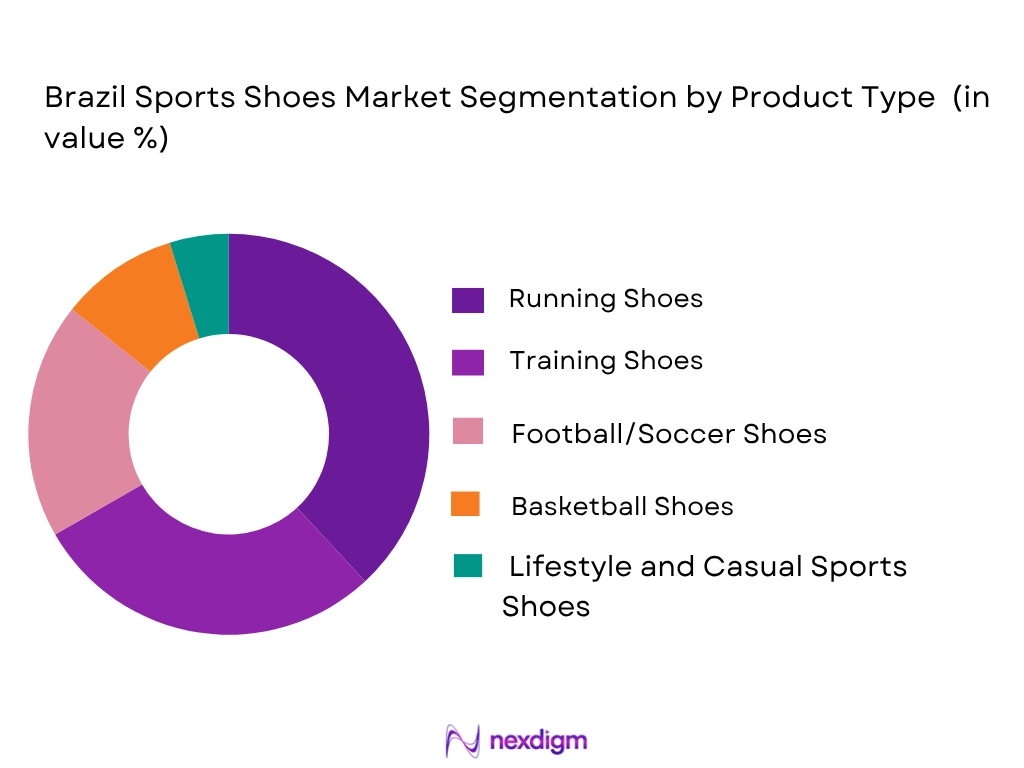
Brazil sports shoes market is segmented by product type into running shoes, training shoes, football/soccer shoes, basketball shoes, lifestyle and casual sports shoes, and other sports shoes. Running shoes have recently captured a dominant market share due to their broad appeal among both recreational and professional users. The rising popularity of marathons, fitness programs, and health-conscious lifestyles encourages consumers to invest in comfortable, high-performance running footwear. Major brands have focused on technological innovations such as shock absorption, breathability, and lightweight designs, further cementing running shoes as the preferred choice among a diverse customer base.
By Material Type
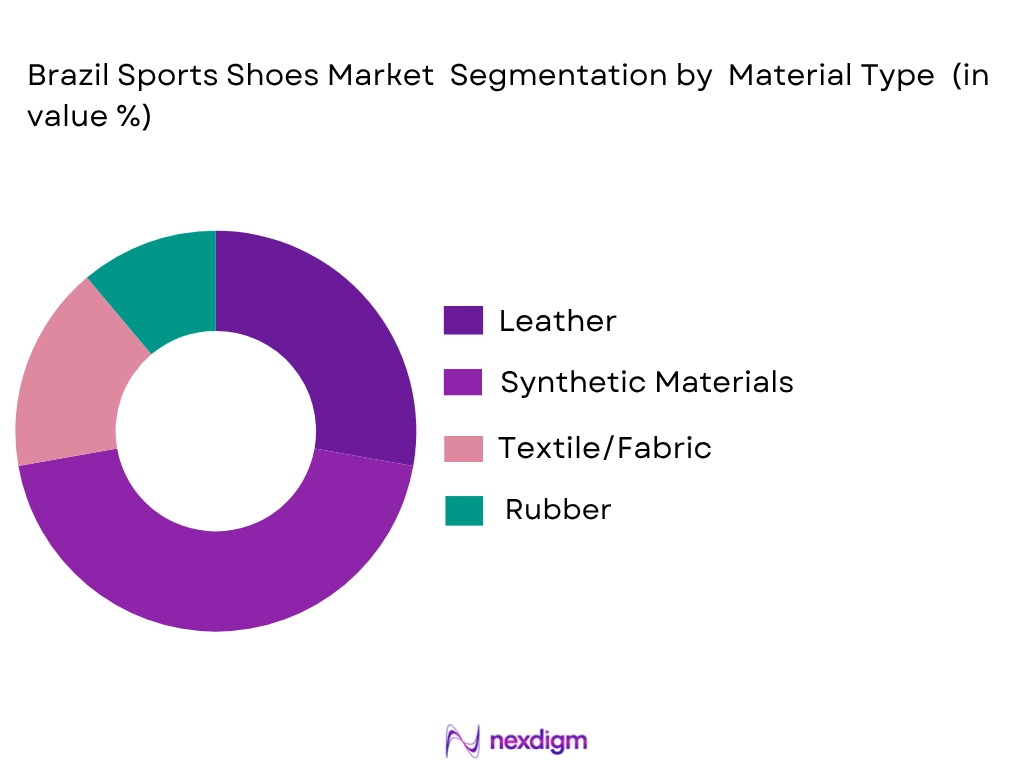
Brazil sports shoes market is segmented by material type into leather, synthetic materials, textile/fabric, and rubber. Synthetic materials dominate the market as they offer a balance of durability, lightweight performance, and affordability. Consumer demand for multifunctional and stylish sports footwear encourages manufacturers to innovate with advanced synthetic composites, including breathable mesh and engineered plastics. The wide availability of synthetic materials at lower costs also allows brands to offer products across entry-level, mid-tier, and premium price ranges, ensuring accessibility and broad adoption among sports enthusiasts.
Competitive Landscape
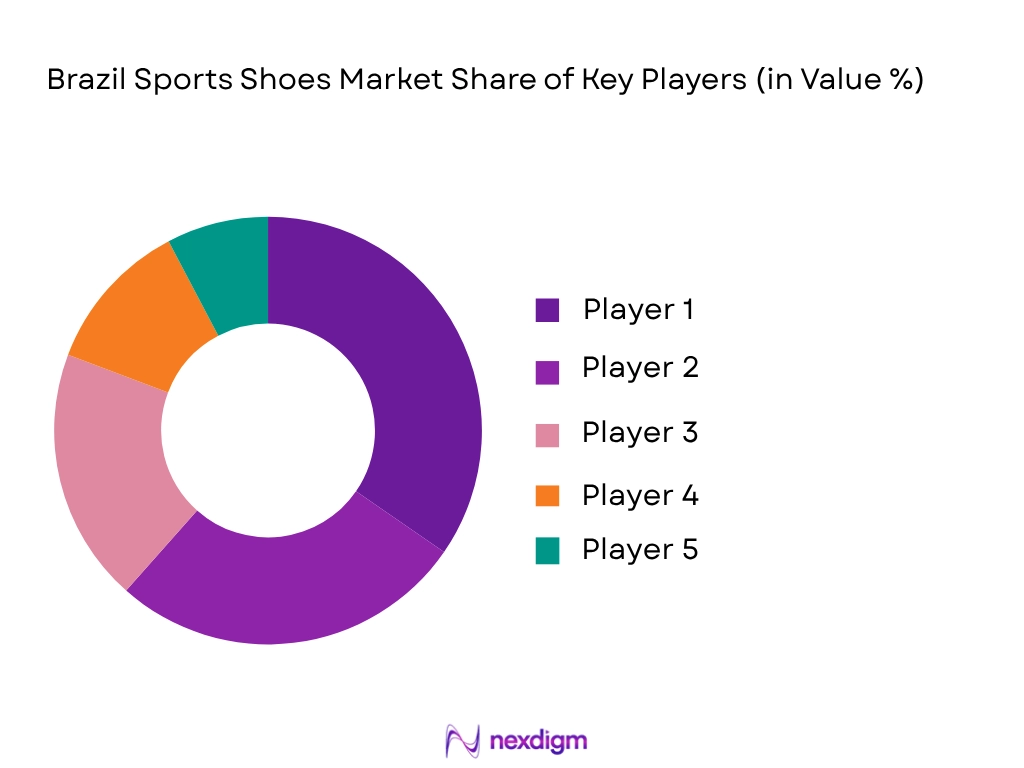
The Brazil sports shoes market is dominated by a few major global and regional players, including Nike, Adidas, Puma, Reebok, and Under Armour. This concentration highlights the strong influence of established brands, which leverage technological innovations, athlete endorsements, and extensive retail and online presence. The competition emphasizes continuous product innovation and marketing campaigns to capture evolving consumer preferences in both professional and recreational sports segments.
| Company | Establishment Year | Headquarters | Product Portfolio | Distribution Network | Annual Revenue | Innovation & R&D | Marketing Strategy | Manufacturing Capacity | Brand Recognition |
| Nike Brazil | 1964 | São Paulo | ~ | ~ | ~ | ~ | ~ | ~ | ~ |
| Adidas Brazil | 1949 | São Paulo | ~ | ~ | ~ | ~ | ~ | ~ | ~ |
| Puma Brazil | 1948 | Rio de Janeiro | ~ | ~ | ~ | ~ | ~ | ~ | ~ |
| Reebok Brazil | 1958 | São Paulo | ~ | ~ | ~ | ~ | ~ | ~ | ~ |
| Under Armour Brazil | 1996 | São Paulo | ~
|
~ | ~ | ~ | ~ | ~ | ~ |
Brazil Sports Shoes Market Analysis
Growth Drivers
Increasing Sports Participation and Fitness Awareness
In Brazil, growing awareness of health and fitness has significantly boosted participation in sports and recreational activities. Urban populations are increasingly adopting running, soccer, and gym-based workouts, leading to higher demand for appropriate sports footwear. Schools, community programs, and corporate wellness initiatives also promote regular exercise, creating a broad consumer base for athletic shoes. The trend is not limited to professional athletes; casual fitness enthusiasts seek shoes that offer comfort, durability, and injury prevention. This widespread engagement drives both volume and premium demand, encouraging brands to introduce activity-specific footwear and innovative designs tailored to different sports and fitness regimes, reinforcing market expansion across urban and semi-urban regions.
Technological Advancements in Sports Footwear
Brazilian consumers are showing increasing interest in sports shoes incorporating advanced materials and technology. Innovations such as lightweight soles, breathable fabrics, enhanced cushioning, and ergonomically optimized designs improve performance, reduce fatigue, and prevent injuries. Brands are also introducing shoes with smart features like activity tracking, connected apps, and adaptive fit technology. These developments appeal to both professional athletes and tech-savvy consumers seeking performance and style. The growing emphasis on research and development, combined with awareness campaigns on biomechanics and injury prevention, creates an environment where technologically advanced footwear is highly valued, allowing brands to command premium pricing while differentiating themselves from local and traditional competitors.
Market Challenges
High Cost of Premium Sports Shoes
The price of technologically advanced or branded sports shoes in Brazil remains a significant challenge, limiting adoption among price-sensitive consumers. Premium models with innovative materials, cushioning systems, or smart features can be prohibitively expensive, particularly in regions with lower disposable income. Import taxes and distribution costs further inflate retail prices, creating opportunities for counterfeit or low-cost alternatives to gain traction. Brands need to carefully balance innovation and affordability, offering value propositions that justify higher prices. Failure to do so can result in limited market penetration, reduced brand loyalty, and lost sales, especially in a competitive environment where domestic and international players compete aggressively.
Seasonal Demand Fluctuations
Demand for sports shoes in Brazil is subject to seasonal variations, influenced by sports calendars, school terms, and festive periods. Sales often spike during events like soccer tournaments or back-to-school seasons but can drop in off-peak periods, affecting revenue consistency and inventory management. Brands must plan production, marketing, and supply chain strategies carefully to manage these fluctuations. Unsold inventory may result in markdowns or reduced profitability. Effective forecasting, flexible manufacturing, and targeted promotional campaigns are crucial to mitigate the risks associated with seasonality and ensure steady cash flow while maintaining brand positioning.
Opportunities
Expansion of Eco-Friendly and Sustainable Footwear
Environmental awareness in Brazil is increasing consumer demand for sustainable sports footwear. Brands can capitalize on this trend by incorporating recycled materials, biodegradable components, and environmentally responsible manufacturing practices. Eco-conscious consumers are willing to pay premiums for products that align with their values, offering both brand differentiation and new revenue streams. Additionally, global pressure to reduce carbon footprints encourages local manufacturers to adopt sustainable processes, enhancing competitiveness. Partnerships with environmental organizations and clear communication of sustainability efforts can further strengthen brand image and consumer trust, creating a long-term opportunity for growth in eco-friendly sports shoe segments.
Integration of Smart Footwear and Wearable Technology
The adoption of wearable technology in Brazil is opening opportunities for smart sports shoes. Footwear with embedded sensors, GPS tracking, and performance analytics allows users to monitor running patterns, step counts, and energy expenditure in real time. Integration with mobile apps enhances personalized training, health insights, and lifestyle engagement. These smart features appeal to both professional athletes and fitness-conscious consumers, creating a niche for high-tech, data-driven products. As digital literacy rises and wearable adoption grows, smart sports shoes can transform traditional footwear into multifunctional devices, providing brands with innovative avenues for differentiation, direct-to-consumer engagement, and premium pricing strategies.
Future Outlook
Over the next decade, the Brazil sports shoes market is expected to demonstrate significant growth driven by rising consumer awareness of fitness and wellness, expanding urbanization, and increasing adoption of smart and eco-friendly footwear. Technological advancements in sports shoe design, including wearable sensors and customized fit technologies, are projected to drive innovation. E-commerce penetration and direct-to-consumer sales channels will further facilitate growth, especially in tier-2 and tier-3 cities. Sustainable production methods and collaboration with athletes are also expected to shape consumer preferences, ensuring long-term market expansion.
Major Players
- Nike Brazil
- Adidas Brazil
- Puma Brazil
- Reebok Brazil
- Under Armour Brazil
- New Balance Brazil
- ASICS Brazil
- Mizuno Brazil
- Fila Brazil
- Skechers Brazil
- Umbro Brazil
- Converse Brazil
- Vans Brazil
- Havaianas Sports Division
- Olympikus
Key Target Audience
- Sports Retailers and Distributors
- Investments and Venture Capitalist Firms
- Sports Clubs and Professional Teams
- Fitness Centers and Gyms
- Corporate Wellness Programs
- Government and Regulatory Bodies
- Sports Event Organizers
- Footwear Manufacturers and OEMs
Research Methodology
Step 1: Identification of Key Variables
The initial phase involves mapping all stakeholders within the Brazil sports shoes market, including manufacturers, distributors, and retailers. Comprehensive secondary research using industry reports, financial statements, and trade publications is conducted to identify the key factors influencing market growth and dynamics.
Step 2: Market Analysis and Construction
Historical data on market revenues, product sales, and consumer behavior is analyzed. Data quality is ensured through cross-verification with trade statistics, industry surveys, and company reports. Trends in material usage, product preferences, and distribution channels are also assessed to construct a reliable market model.
Step 3: Hypothesis Validation and Expert Consultation
Market assumptions are validated through structured interviews with executives, product managers, and marketing professionals from top sports shoe companies. Insights regarding product innovation, pricing strategies, and consumer demand patterns are incorporated to refine market estimates.
Step 4: Research Synthesis and Final Output
The final phase integrates bottom-up data from manufacturers and top-down analysis from industry reports. Direct engagement with stakeholders validates market size and forecasts, ensuring accuracy and comprehensiveness in the final report.

- Executive Summary
- Research Methodology (Market Definitions and Assumptions, Abbreviations, Market Sizing Approach, Consolidated Research Approach, Understanding Market Potential Through In-Depth Industry Interviews, Primary Research Approach, Limitations and Future Conclusions)

- Definition and Scope
- Market Dynamics Overview
- Market Genesis and Evolution
- Key Players and Market Timeline
- Business Cycle and Trends
- Supply Chain and Value Chain Analysis

- Growth Drivers
Increasing Sports Participation and Fitness Awareness
Technological Advancements in Sports Footwear
Rising Disposable Income and Consumer Spending
Popularity of Branded Sports Shoes and Lifestyle Integration
Innovations in Custom and Personalized Footwear - Market Challenges
High Cost of Premium Sports Shoes
Seasonal Demand Fluctuations
Intense Competition from Domestic and International Brands
Environmental Concerns and Sustainable Manufacturing
Regulatory Compliance and Import Tariffs - Opportunities
Expansion of Eco-Friendly and Sustainable Footwear
Integration of Smart Footwear and Wearable Technology
Growth in Online Sales and Direct-to-Consumer Models
Rise in Women’s and Youth Participation in Sports
Collaborations and Limited Edition Collections - Trends
Shift Toward Lightweight and Performance-Oriented Shoes
Customization and Personalization
Integration of Digital Platforms and Mobile Apps
Collaboration with Athletes and Influencers
Focus on Footwear for Multi-Sport Activities - Government Regulations
Import and Export Regulations
Health and Safety Standards for Footwear
Environmental Regulations (Sustainability and Recyclability)
Sports Footwear Standards and Certification
Taxation and Import Duties on Sports Shoes - SWOT Analysis
- Porter’s Five Forces

- By Value, 2020–2025
- By Volume, 2020–2025
- By Average Price, 2020–2025

- By Product Type (In Value %)
Running Shoes
Training Shoes
Football/Soccer Shoes
Basketball Shoes
Lifestyle and Casual Sports Shoes - By Material Type (In Value %)
Leather
Synthetic Materials
Textile/Fabric
Rubber - By Usage Type (In Value %)
Professional/Competitive Sports
Recreational Sports - By End User (In Value %)
Individual Consumers
Sports Clubs and Institutions
Retailers
E-commerce Platforms - By Distribution Channel (In Value %)
Direct Sales (Brand Stores, Flagship Stores)
Distributors and Wholesalers
Online Channels (E-commerce Websites)
Retail Chains (Sporting Goods Stores) - By Price Tier (In Value %)
Economy / Entry-Level
Mid-Tier
Premium / High-End

- Market Share of Major Players by Value/Volume
- Market Share of Major Players by Product Type
- Market Share of Major Players by Material Type
- Cross Comparison Parameters(Company Overview, Business Strategies, Recent Developments, Strength, Weakness, Organizational Structure, Revenues, Revenues by Product Type, Distribution Channels, Dealer Networks, Production Capacity, Unique Value Offerings)
- SWOT Analysis of Major Players
- Pricing Analysis Based on Product Categories for Major Players
- Detailed Profiles of Major Companies
Nike Brazil
Adidas Brazil
Puma Brazil
Reebok Brazil
Under Armour Brazil
New Balance Brazil
ASICS Brazil
Mizuno Brazil
Fila Brazil
Skechers Brazil
Umbro Brazil
Converse Brazil
Vans Brazil
Havaianas Sports Division
Olympikus

- Market Demand and Utilization
- Purchasing Power and Budget Allocations
- Regulatory and Compliance Requirements
- Needs, Desires, and Pain Point Analysis
- Decision-Making Process

- By Value, 2026–2035
- By Volume, 2026–2035
- By Average Price, 2026–2035


 Request a Sample
 Ask for Customization
 Get a Quote
 Enquire Now