

 Download PDF
Market Overview
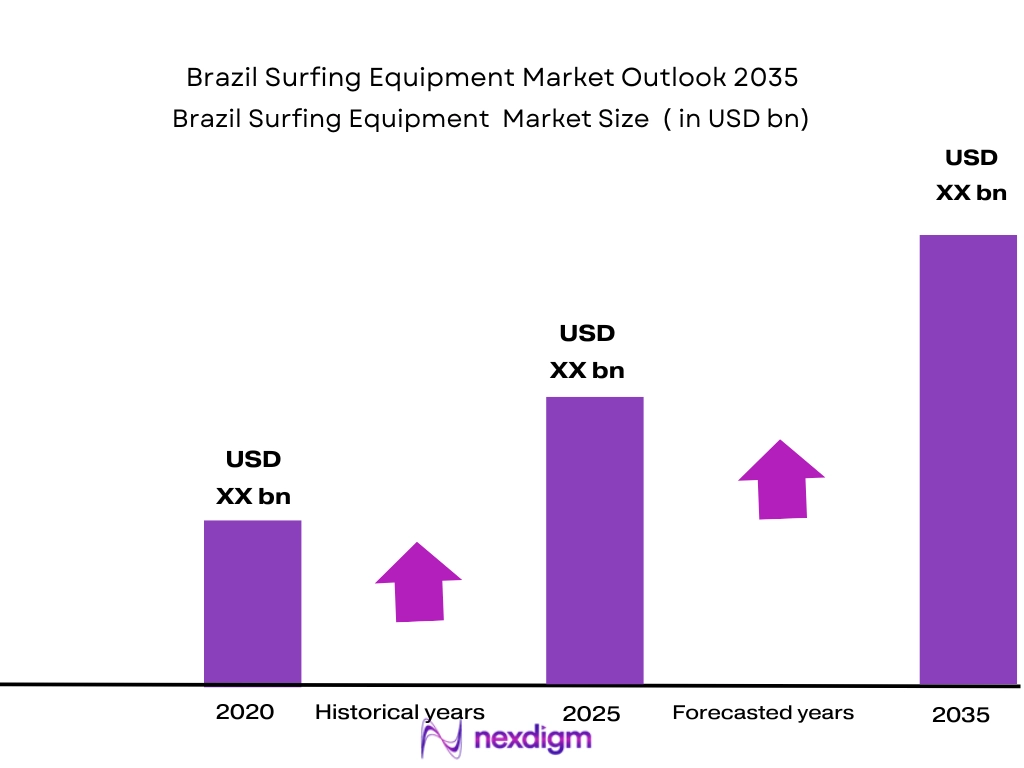
The Brazil Surfing Equipment Market is valued at approximately USD ~ billion, with steady growth observed in recent years. This growth is mainly attributed to the increasing popularity of surfing as a recreational sport, driven by Brazil’s extensive coastline and strong surfing culture. Additionally, the growing tourism industry, with international surfing events hosted along Brazilian beaches, has significantly fueled demand. This market is also supported by rising awareness regarding sustainable products, which has led to innovation in eco-friendly surfing equipment.
Brazil, especially cities like Rio de Janeiro, Florianópolis, and São Paulo, dominates the surfing equipment market. These cities have become cultural hubs for surfers, with renowned beaches such as Copacabana and Barra da Tijuca. The nation’s strong beach tourism industry, combined with its favorable climate for year-round surfing, makes Brazil a prime market for surfing products. The rise of international surfing competitions like the World Surf League in these areas further cements Brazil’s dominance in the surfing equipment market.
Market Segmentation
By Product Type
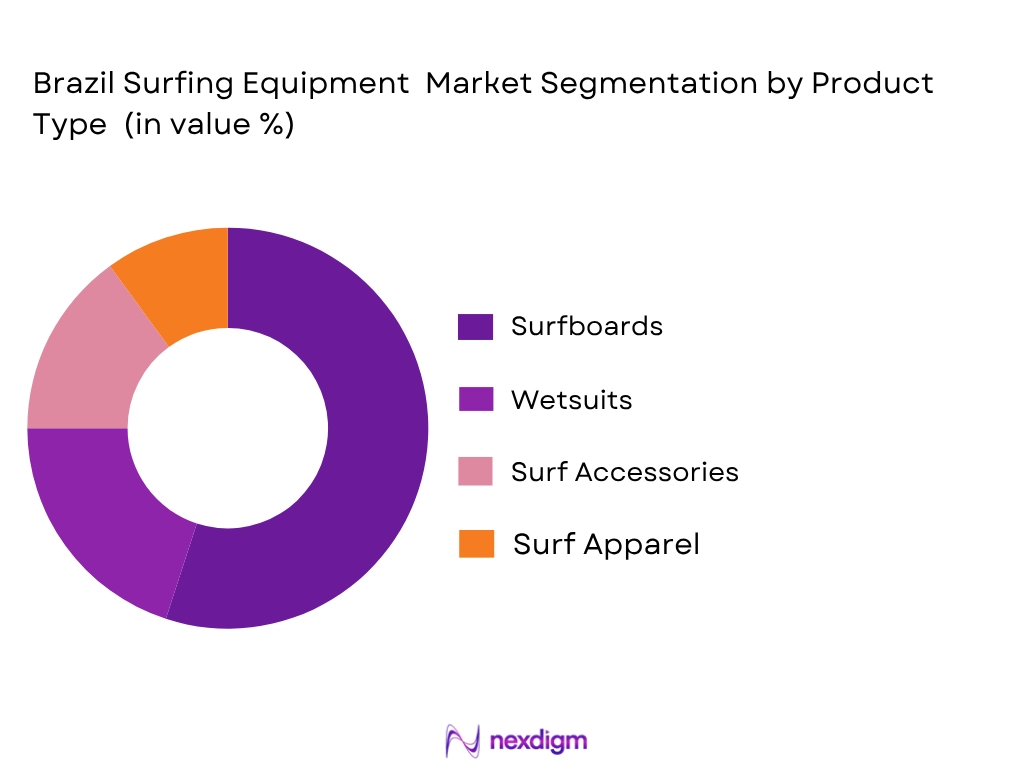
The Brazil Surfing Equipment market is segmented by product type into surfboards, wetsuits, surfing accessories (leashes, fins, etc.), and apparel. Surfboards dominate this segment, with a substantial market share due to their integral role in the sport. Brazil’s vibrant surf culture drives continuous demand for surfboards, especially in coastal regions, where surfing is part of the lifestyle. Additionally, local and international brands have contributed significantly to the availability and innovation of surfboards, ensuring a broad range of options for consumers across different skill levels. The popularity of boards made from sustainable materials has also enhanced the segment’s growth.
By Usage Type
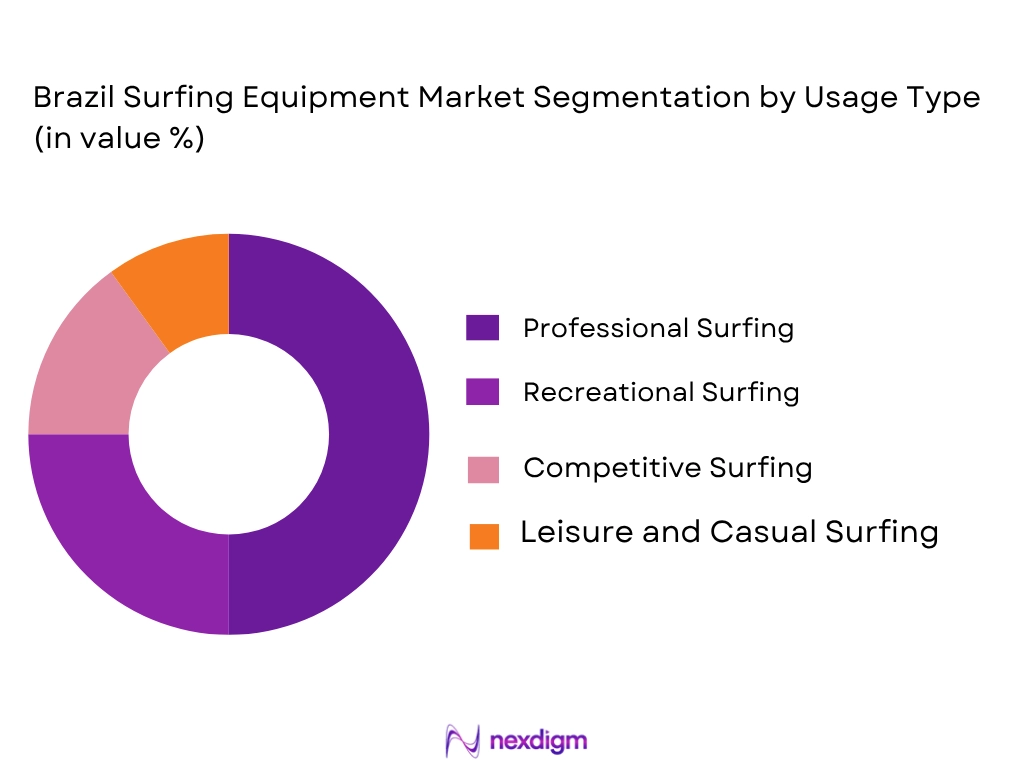
Brazil’s Surfing Equipment market is segmented by usage type into professional surfing, recreational surfing, competitive surfing, and leisure surfing. Among these, recreational surfing holds the dominant market share. This segment benefits from the rising number of surfers who engage in the sport for leisure rather than competition. The appeal of surfing as an outdoor activity for fitness and relaxation, coupled with growing beach tourism, has made recreational surfing the most significant contributor to the market. Brands focusing on affordable, durable, and beginner-friendly equipment have capitalized on this growing interest.
Competitive Landscape
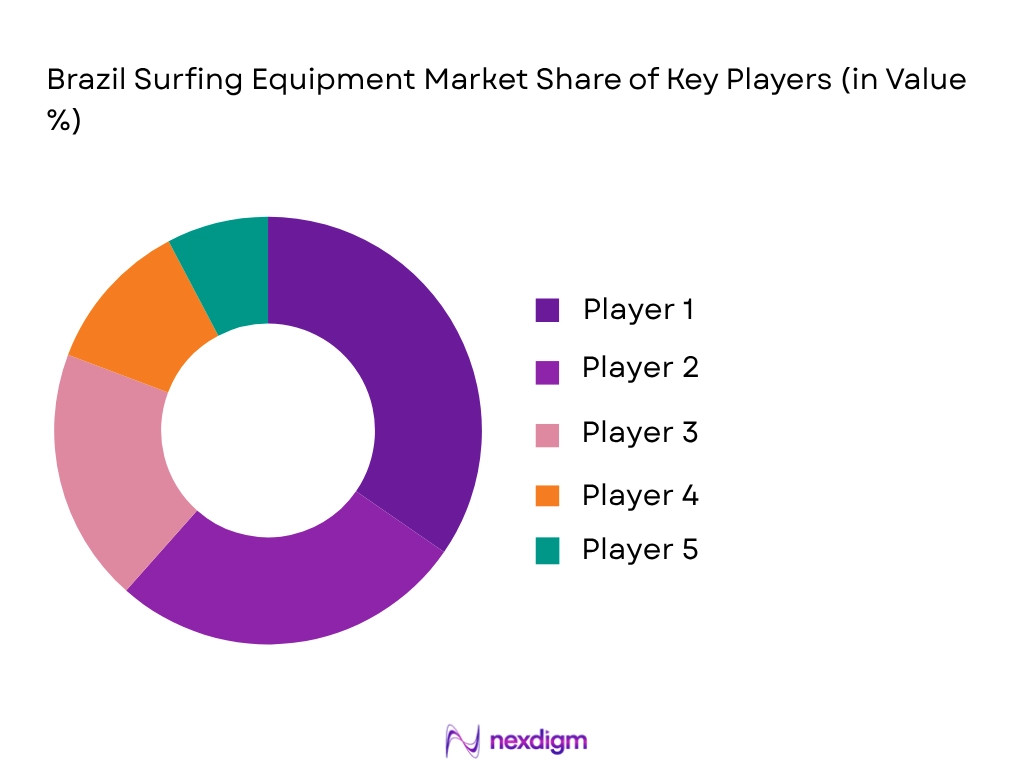
The Brazil Surfing Equipment market is highly competitive, with a mix of global and local players. Major brands such as Rip Curl, Quiksilver, O’Neill, and Billabong have a strong presence due to their established brand reputation, extensive distribution networks, and product variety. Alongside these international brands, local companies have also gained traction by offering tailored products that meet the needs of Brazilian surfers. The rise of e-commerce platforms has also leveled the playing field, making it easier for both global and local brands to reach a wider consumer base.
| Company Name | Establishment Year | Headquarters | Product Range | Market Focus | Distribution Channels | Brand Strength |
| Rip Curl | 1969 | Torquay, Australia | ~ | ~ | ~ | ~ |
| Quiksilver | 1969 | Huntington Beach, US | ~ | ~ | ~ | ~ |
| O’Neill | 1952 | Santa Cruz, USA | ~ | ~ | ~ | ~ |
| Billabong | 1973 | Gold Coast, Australia | ~ | ~ | ~ | ~ |
| Channel Islands | 1969 | Santa Barbara, USA | ~ | ~ | ~ | ~ |
Brazil Surfing Equipment Market Analysis
Growth Drivers
Rising Popularity of Surfing as a Sport
Surfing has rapidly gained popularity across Brazil, particularly in coastal cities like Rio de Janeiro, São Paulo, and Florianópolis. The sport has become an integral part of the beach culture, appealing to both locals and tourists. As a result, there is a growing demand for surfing equipment, with more people participating in surfing, ranging from beginners to professionals. The rising interest in fitness and outdoor activities has further fueled the sport’s expansion. Additionally, Brazil’s strong competitive surfing presence on the global stage, with top athletes such as Gabriel Medina, has helped increase the sport’s visibility, motivating more individuals to engage in surfing as a recreational and competitive activity.
Government Support for Sports and Recreation
The Brazilian government has been increasingly supportive of sports and recreation, particularly beach sports like surfing. Various initiatives, such as promoting outdoor tourism and hosting international surfing competitions, contribute to increasing public interest in surfing. Furthermore, government-backed investments in infrastructure—such as improved beach access and surf-friendly urban planning—have created favorable conditions for surfing. These efforts not only promote healthy lifestyles but also encourage local businesses by boosting tourism in key surfing regions. Moreover, governmental policies advocating for eco-friendly practices align with the growing demand for sustainable surfing products, stimulating the development of environmentally-conscious surfing gear.
Market Challenges
High Import Dependency
Brazil’s surfing equipment market faces challenges due to the high dependency on imports. While local brands have been growing, the majority of high-quality surfing products, such as surfboards, wetsuits, and accessories, are imported from countries like the United States, Australia, and European nations. This import reliance drives up product costs, making them less accessible to a broader range of consumers. Currency fluctuations and international tariffs also add further complexity to the pricing structure. As the local market continues to expand, there is a push for domestic manufacturing, but overcoming these import barriers remains a key challenge for the industry.
Seasonality of Surfing Demand
The demand for surfing equipment in Brazil is influenced by seasonal factors, particularly weather conditions. The peak surfing season typically runs during Brazil’s summer months (December to March), where warm weather and ideal waves attract more surfers. Outside of this period, the market sees a dip in sales, especially for recreational surfers. Additionally, regions that experience off-season periods with less favorable surfing conditions may see limited demand. This seasonality poses a challenge for brands and retailers, who must adapt their strategies to sustain sales during the off-season and target the growing segment of year-round surfers.
Opportunities
Increasing Investment in Surfing Infrastructure
Brazil’s government and private sector are investing heavily in surfing infrastructure, creating opportunities for market growth. Notably, the development of world-class surf parks, improved beach access, and dedicated surf zones along Brazil’s coastline is expected to increase the sport’s accessibility. These investments are particularly beneficial in areas outside major surf cities like Rio and São Paulo, helping to expand the sport to new regions and encouraging more individuals to take up surfing. Additionally, these infrastructure developments are likely to attract international surfers, boosting demand for local surfing equipment. The rise in surfing tourism further strengthens this opportunity, with many visitors requiring high-quality equipment during their stay.
Development of Eco-Friendly and Sustainable Surfing Equipment
As environmental concerns rise globally, there is a significant shift toward sustainable and eco-friendly products in the surfing equipment market. The demand for eco-conscious surfboards, wetsuits made from recycled materials, and other green accessories is growing among Brazilian consumers. Local surfers are increasingly prioritizing products that minimize their environmental impact. Brands that innovate by offering sustainable options are gaining traction, as Brazilian consumers become more eco-aware. The global trend toward sustainability presents a significant opportunity for manufacturers to tap into a niche market of eco-conscious surfers, allowing them to gain a competitive edge while promoting environmentally-friendly practices within the industry.
Future Outlook
Over the next 5 years, the Brazil Surfing Equipment market is expected to experience substantial growth, driven by the increasing interest in surfing as both a recreational and professional sport. Factors such as the expansion of surf tourism, the rising adoption of eco-friendly equipment, and the continuous innovation in surfboard materials and designs are set to contribute to this growth. Additionally, Brazilian government initiatives promoting beach tourism and outdoor activities will play a pivotal role in enhancing the market’s potential.
Major Players in the Market
- Rip Curl
- Quiksilver
- O’Neill
- Billabong
- Channel Islands
- Lost Enterprises
- Hurley
- Firewire Surfboards
- Roxy
- Dakine
- Patagonia
- Vissla
- Reef
- Northcore
- Sun Bum
Key Target Audience
- Investments and Venture Capitalist Firms
- Government and Regulatory Bodies
- Surf Tourism Companies
- Major Retail Chains
- Surfing Product Manufacturers
- E-commerce Platforms
- Sports Equipment Distributors
- Eco-Friendly Product Advocates
Research Methodology
Step 1: Identification of Key Variables
The first phase involves identifying the key factors driving the Brazil Surfing Equipment market. This includes analyzing historical data, examining product trends, and identifying major industry players. Secondary research is conducted to gather data from trade reports, industry journals, and proprietary databases.
Step 2: Market Analysis and Construction
In this phase, a deep dive into historical market data is performed, assessing various segments like product type and usage type. We then analyze growth patterns, seasonal trends, and the impact of events like surfing championships to understand the dynamics.
Step 3: Hypothesis Validation and Expert Consultation
Hypotheses around market trends are validated through consultations with key stakeholders in the Brazilian surfing industry. These include product manufacturers, retailers, and surfing professionals, who provide invaluable insights into future market trends and consumer behavior.
Step 4: Research Synthesis and Final Output
The final output synthesizes data from both top-down and bottom-up research methodologies. We engage with major players in the Brazilian surfing equipment market to verify and refine the gathered data, ensuring that all insights are comprehensive, accurate, and actionable.

- Executive Summary
- Research Methodology (Market Definitions and Assumptions, Abbreviations, Market Sizing Approach, Consolidated Research Approach, Understanding Market Potential Through In-Depth Industry Interviews, Primary Research Approach, Limitations and Future Conclusions)

- Definition and Scope
- Market Dynamics Overview
- Market Genesis
- Major Players and Market Timeline
- Business Cycle and Trends
- Supply Chain and Value Chain Analysis

- Growth Drivers
Rising Popularity of Surfing as a Sport
Government Support for Sports and Recreation
Expanding Surf Tourism Industry
Increasing Awareness of Eco-Friendly Surf Products
Advancements in Surfing Equipment Technology - Market Challenges
High Import Dependency
Seasonality of Surfing Demand
Competition from Other Water Sports
Limited Availability of Surfing Locations in Some Regions
Economic Factors Affecting Consumer Spending - Opportunities
Increasing Investment in Surfing Infrastructure
Development of Eco-Friendly and Sustainable Surfing Equipment
Expanding Surfing Events and Competitions
Growth of the Surfing Market for Women and Kids
Rising E-commerce and Online Retail Trends - Trends
Sustainable and Eco-Friendly Surfing Equipment
Smart Surfing Equipment and Wearable Technology
Growth of Surfing Events and Competitions
Customization of Surfboards and Surf Gear
Increased Focus on Surfing Safety Equipment - Government Regulations
Import and Product Quality Regulations
Environmental Regulations for Surfing Equipment
Safety and Health Standards for Surfing Gear
Supportive Policies for Water Sports and Recreation
Regulations on Surf Tourism and Beach Access - SWOT Analysis
- Porter’s Five Forces Analysis

- By Value, 2020-2025
- By Volume, 2020-2025
- By Average Price, 2020-2025

- By product Type (In Value %)
Surfboards
Wetsuits
Surf Accessories
Surf Apparel - By Usage Type (In Value %)
Professional Surfing
Recreational Surfing
Competitive Surfing
Leisure and Casual Surfing - By Distribution Channel (In Value %)
Direct Sales
Online Retailers
Specialty Surf Shops
Department Stores
Other Retail Channels - By Price Tier (In Value %)
Economy / Entry-Level
Mid-Tier
Premium / High-End

- Market Share of Major Players by Value/Volume
- Market Share of Major Players by Equipment Type
- Market Share of Major Players by Distribution Channel
- Cross Comparison Parameters (Company Overview, Business Strategies, Recent Developments, Strengths, Weaknesses, Organizational Structure, Revenues, Revenues by Equipment Type, Number of Retail Outlets, Distribution Channels, Margins, Production Capabilities, Unique Value Offering)
- SWOT Analysis of Major Players
- Pricing Analysis Based on Surfing Equipment Categories for Major Players
- Detailed Profiles of Major Companies
Quiksilver Inc.
Rip Curl
Billabong International Ltd.
O’Neill
Channel Islands Surfboards
Lost Enterprises
Hurley International LLC
Firewire Surfboards
JS Industries
Other Major Players

- Recreational Surfing Usage Trends
- Professional Surfing Requirements
- Amateur Surfing Expansion
- Surf Tourism Influence
- Surf School and Training Centers

- By Value, 2026-2035
- By Volume, 2026-2035
- By Average Price, 2026-2035


 Request a Sample
 Ask for Customization
 Get a Quote
 Enquire Now