
 Download PDF
Market Overview
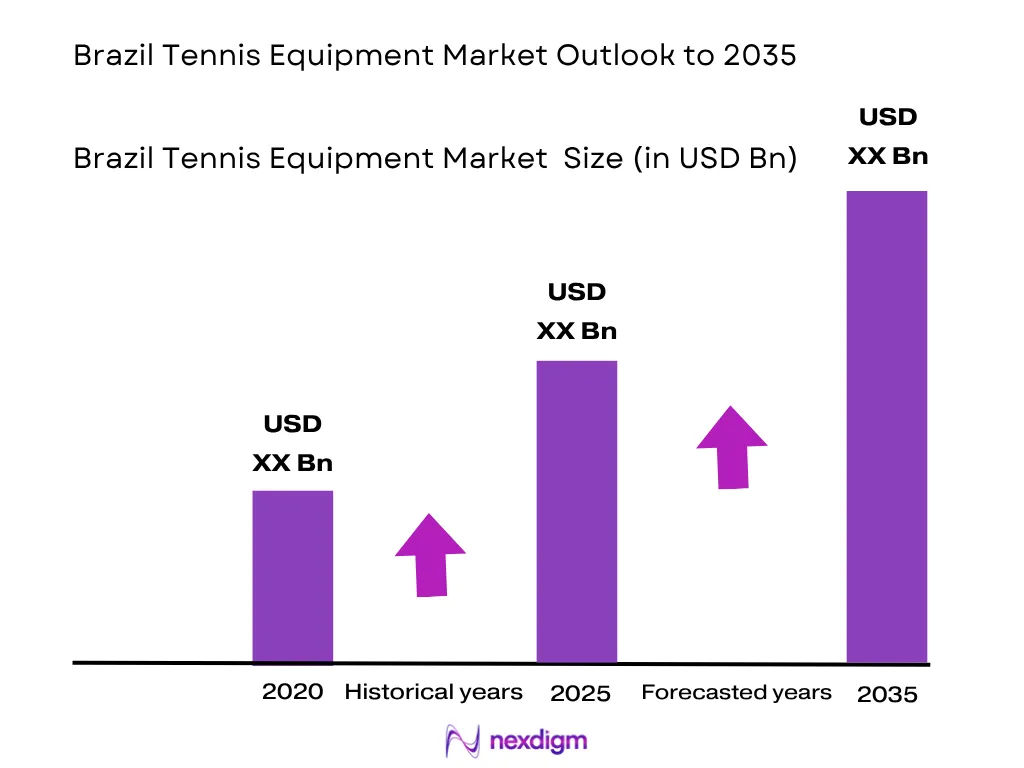
The Brazil Tennis Equipment Market is valued at approximately USD ~ billion, with growth fueled by the rising popularity of tennis as a sport, increasing government support for tennis programs, and a growing middle class willing to spend on quality sporting goods. The demand for high-performance tennis rackets, apparel, and footwear continues to rise, especially in urban areas. The market is also driven by the increasing participation of youth in tennis, encouraged by grassroots initiatives and the visibility of Brazilian athletes at international tournaments. Brazil’s expanding e-commerce platforms, along with retail chains like Decathlon, further drive market accessibility and consumer reach.
Brazil, particularly cities like São Paulo, Rio de Janeiro, and Belo Horizonte, dominates the tennis equipment market. These cities have well-established tennis clubs and federations that contribute significantly to equipment sales. São Paulo and Rio are known for their affluent populations, where sports, including tennis, are widely followed and practiced. Additionally, São Paulo’s strong retail infrastructure supports the availability of global and local tennis brands. Rio de Janeiro also benefits from international tournaments such as the Rio Open, boosting awareness and driving demand for tennis equipment.
Market Segmentation
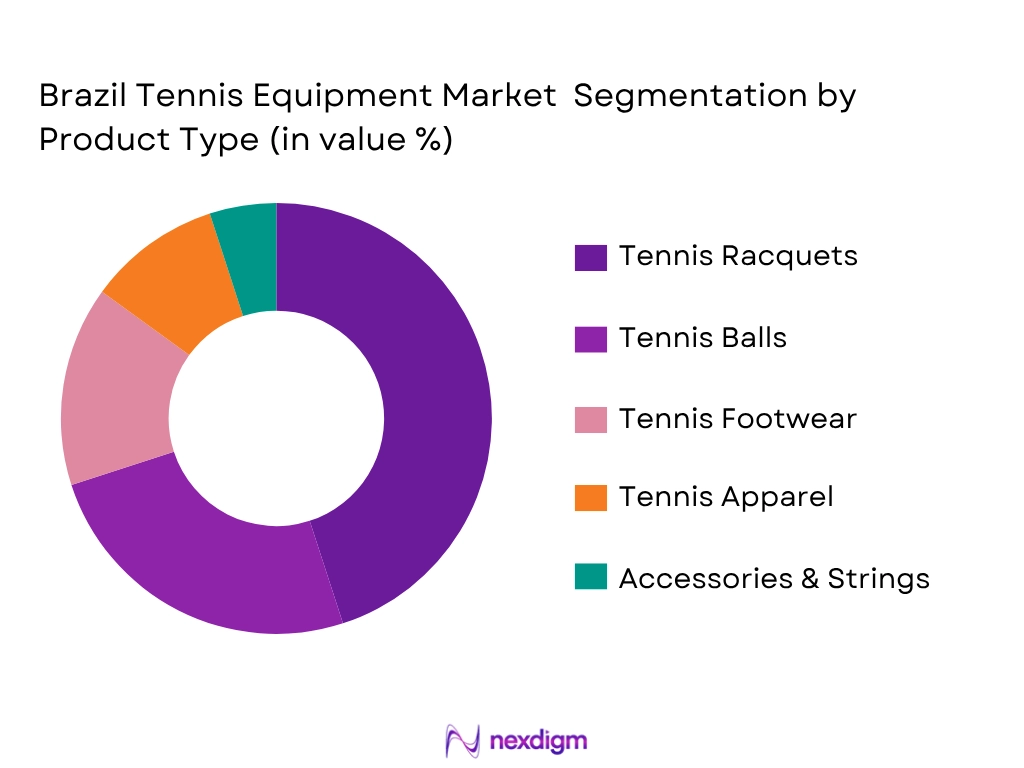
By Product Type
The Brazil Tennis Equipment Market is segmented by product type into tennis rackets, tennis balls, tennis footwear, tennis apparel, and accessories & strings. Tennis rackets hold a dominant position in the market, largely due to their indispensable role in the sport. Brazilian tennis enthusiasts, both amateur and professional, often prioritize high-performance rackets. Brands like Wilson, Babolat, and Head have secured strong market positions by providing quality rackets that meet the demands of Brazilian players. The increasing popularity of tennis academies, coupled with the success of Brazilian athletes on the international stage, has further solidified rackets as the leading product category in the market.
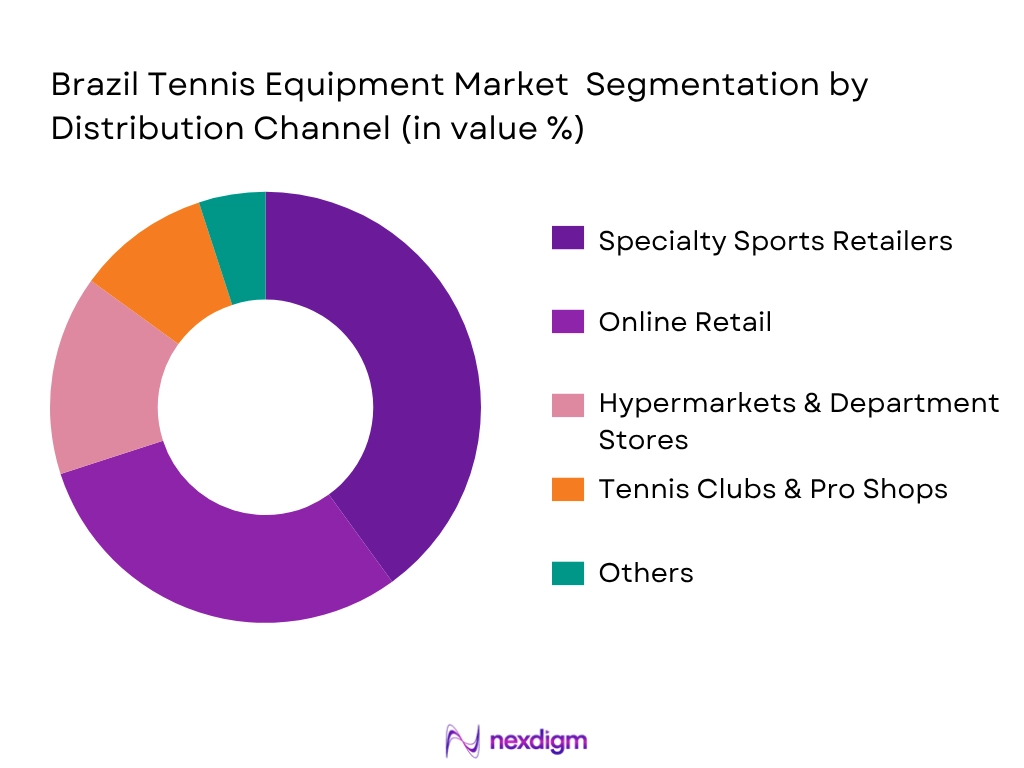
By Distribution Channel
The Brazil Tennis Equipment Market is also segmented by distribution channel, with key channels including specialty sports retailers, online retail, hypermarkets & department stores, tennis clubs & pro shops, and others. Specialty sports retailers dominate this segment due to their tailored customer service, expert advice, and extensive product range. These retailers offer a wide array of premium tennis equipment, which attracts serious tennis players, especially in major cities like São Paulo and Rio de Janeiro. E-commerce has also seen a rise, but specialty retailers still maintain a strong foothold in terms of market share, driven by the preference for hands-on shopping experiences and expert recommendations.
Competitive Landscape
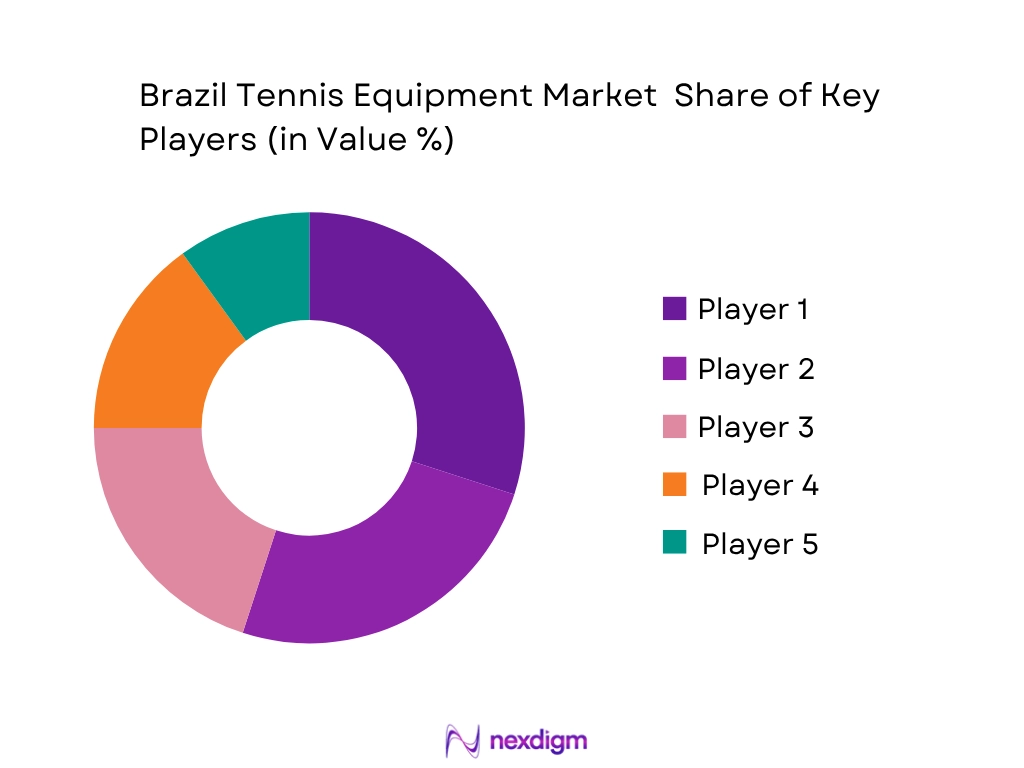
The Brazil Tennis Equipment Market is dominated by a few key players, with both global brands and local manufacturers contributing to the competition. The market leaders include Wilson, Babolat, Head, Yonex, and Prince. These companies have established strong brand presence and partnerships with major tennis tournaments in Brazil, further solidifying their market position. Local brands, such as PróSpin, cater to the growing demand for affordable tennis equipment, offering products that appeal to recreational players and beginners. Despite challenges like import tariffs and fluctuating exchange rates, these companies continue to dominate the landscape through product innovation and extensive distribution networks.
| Company | Establishment Year | Headquarters | Product Range | Distribution Network | R&D/Innovation Focus | Market Share Strategy | Key Endorsements |
| Wilson | 1914 | Chicago, USA | ~ | ~ | ~ | ~ | ~ |
| Babolat | 1875 | Lyon, France | ~ | ~ | ~ | ~ | ~ |
| Head | 1950 | Kennelbach, Austria | ~ | ~ | ~ | ~ | ~ |
| Yonex | 1946 | Tokyo, Japan | ~ | ~ | ~ | ~ | ~ |
| Prince | 1970 | Chicago, USA | ~ | ~ | ~ | ~ | ~ |
Brazil Tennis Equipment Market Analysis
Growth Drivers
Rising Tennis Participation
The growth in tennis participation across Brazil continues to drive demand for tennis equipment. According to the Brazilian Tennis Confederation (CBT), there has been an increase in the number of tennis players, particularly among the youth. The association reported over 150,000 active players participating in tennis in Brazil as of 2025. This number represents a steady growth in tennis participation, especially in regions like São Paulo and Rio de Janeiro, where tennis clubs are more accessible and have seen membership numbers rise. Additionally, the Brazilian government’s investment in sports infrastructure, including tennis courts in public spaces, further facilitates participation. The expansion of tennis academies and a larger focus on youth development programs also contribute to increasing grassroots participation in the sport. With a broader fanbase and growing visibility of Brazilian athletes like Thiago Monteiro in international competitions, participation is expected to maintain a positive trajectory. Data from the Brazilian Ministry of Sports shows that investment in sports, including tennis, has increased significantly, with more than 10% allocated to infrastructure improvements in 2025. The success of national players on the international stage encourages more youth to take up tennis, creating an even larger market for tennis equipment.
Technological Innovation in Gear
Technological innovation in tennis equipment is another key growth driver for the Brazilian market. Leading brands, including Wilson and Babolat, have introduced smart rackets equipped with sensors that track the player’s performance and provide real-time data. These innovations align with Brazil’s growing focus on technological advancements in sports. In 2025, Brazil’s investment in technology, particularly in the sports sector, has surged, with over USD 40 million allocated for technological development within sports organizations, as reported by the Ministry of Science, Technology, and Innovation. This government backing is crucial as it promotes further development of advanced tennis equipment. The preference for high-tech products in the Brazilian market is particularly evident among the youth and professional players who seek enhanced performance capabilities. Additionally, the country’s increasing e-commerce penetration has enabled easy access to these innovations, driving their adoption. The integration of materials science and performance-tracking technology has made tennis equipment more appealing to a wider audience. As of 2024, approximately 30% of all tennis equipment sales in Brazil are for technologically enhanced items, indicating a shift in consumer preference toward performance-oriented products.
Market Challenges
Limited Court Infrastructure and Access
One of the major challenges hindering the expansion of the Brazil Tennis Equipment Market is the limited access to tennis courts, particularly in less urbanized areas. Data from the Ministry of Sports reveals that while Brazil has over 9,000 tennis courts nationwide, the distribution is heavily skewed toward wealthier areas. Over 50% of tennis courts are located in major urban centers like São Paulo, Rio de Janeiro, and Belo Horizonte, leaving rural regions with very few options. This limited access restricts the growth of tennis participation outside the metropolitan areas. Additionally, maintenance of public tennis courts remains a challenge, with many facing neglect and poor condition due to insufficient government investment. The Brazilian government has earmarked only USD 15 million for sports infrastructure in rural areas in 2024, a figure far below the requirements needed to significantly expand access to tennis facilities. The lack of facilities in smaller cities also limits the development of local talent, which in turn affects the overall demand for tennis equipment in these regions.
High Import Tariffs and Logistics Costs
Brazil’s high import tariffs and logistical costs present significant challenges for the tennis equipment market. The country’s import duties on sporting goods, including tennis rackets, footwear, and apparel, can reach as high as 20%, which increases the final cost of these products for consumers. This makes tennis equipment more expensive in Brazil compared to other countries in South America. According to data from the World Bank, Brazil’s average import tariff rate in 2025 stands at 6.7%, one of the highest in Latin America. Furthermore, the cost of logistics in Brazil is also a major factor, as it is reported that logistics expenses contribute to up to 28% of product prices in the country. This is partly due to Brazil’s extensive geographical size and inefficient transportation infrastructure, which increases shipping costs, especially for international brands. This results in limited access to affordable tennis equipment for a larger portion of the population, especially in smaller cities and rural areas. The combination of high tariffs and expensive logistics ultimately slows the growth of the tennis equipment market by raising costs and limiting product availability.
Market Opportunities
E-Commerce Expansion (Digital Sales Channels)
The e-commerce sector in Brazil has seen remarkable growth, and it is expected to continue expanding, particularly in sports equipment markets like tennis. In 2025, online retail in Brazil grew by 25%, with sports and fitness categories witnessing some of the highest growth rates. The increasing penetration of the internet, especially in Brazil’s more remote regions, has opened up new avenues for the sale of tennis equipment. In particular, platforms like Mercado Livre and Amazon Brazil have made it easier for consumers to access international tennis brands, significantly improving product availability. Government-backed initiatives to increase internet access, including the National Broadband Plan, are expected to further fuel the expansion of online shopping. Additionally, the younger demographic, which is more digitally savvy, is increasingly turning to online channels to purchase tennis gear. This digital shift not only improves accessibility to high-quality equipment but also creates opportunities for brands to reach a wider audience, especially in areas where physical stores are scarce. As online retail continues to expand in Brazil, it will help bridge the gap between major urban centers and smaller cities, driving overall market growth.
Growth of Tennis Academies
Brazil has witnessed a surge in the establishment of tennis academies and clinics, which presents significant opportunities for the tennis equipment market. According to the Brazilian Ministry of Sports, over 200 new tennis academies were established between 2022 and 2024, primarily focusing on youth development and professional training. This growth is reflective of an increasing interest in tennis as a serious sport among the younger generation. The government has supported these initiatives with grants and incentives, recognizing the long-term benefits of fostering young talent. As these academies grow in number and influence, they create a consistent demand for tennis equipment, from basic gear for beginners to advanced equipment for high-level competitors. The role of these academies in nurturing professional talent is evident, with players like Thiago Monteiro and Beatriz Haddad Maia achieving success in international tournaments. The combination of government support and the private sector’s growing investment in tennis education helps fuel the demand for tennis equipment. The expansion of tennis clinics for various age groups further boosts the consumption of tennis gear, creating new market opportunities.
Future Outlook
Over the next decade, the Brazil Tennis Equipment Market is expected to witness significant growth, driven by rising participation in tennis at all levels, including grassroots programs and professional tournaments. Continued investment in tennis infrastructure, along with government-backed initiatives to promote the sport, will further fuel market growth. Additionally, technological advancements in tennis gear, such as smart rackets and wearable performance trackers, are anticipated to play a key role in enhancing the consumer experience. As Brazil continues to host major international tournaments, the demand for high-quality tennis equipment will likely see an upward trajectory, ensuring long-term market stability.
Major Players
- Wilson
- Babolat
- Head
- Yonex
- Prince
- Tecnifibre
- Dunlop
- Slazenger
- Nike
- Adidas
- Asics
- Puma
- Fila
- Lotto
- Under Armour
Key Target Audience
- Professional Tennis Players
- Tennis Clubs & Academies
- Sports Retailers (Specialty & Hypermarkets)
- E-commerce Platforms (for Sports Equipment)
- Government Agencies (Brazilian Ministry of Sport)
- Event Organizers (e.g., Rio Open)
- Equipment Manufacturers (for Tennis Gear)
- Investments and Venture Capitalist Firms
Research Methodology
Step 1: Identification of Key Variables
In this phase, we map the stakeholders in the Brazil Tennis Equipment Market, including manufacturers, retailers, and consumers. Through secondary data analysis and surveys, we identify the critical variables influencing market dynamics, such as product demand, distribution channels, and consumer behavior patterns.
Step 2: Market Analysis and Construction
We compile and analyze historical data on the market, focusing on sales performance, market penetration, and consumer preferences. We assess each product category, especially tennis rackets, to determine its role in the market. This helps construct an accurate and comprehensive view of market conditions.
Step 3: Hypothesis Validation and Expert Consultation
We validate the findings through expert interviews with industry stakeholders, such as product developers, sports retailers, and club owners. These consultations provide insights into emerging trends and consumer preferences, which are incorporated into the final market analysis.
Step 4: Research Synthesis and Final Output
The final step involves synthesizing the data from both primary and secondary sources. We engage directly with retailers, manufacturers, and consumers to verify data, ensuring accuracy and reliability. This comprehensive approach leads to a well-rounded, validated market report.

- Executive Summary
- Research Methodology (Definitions, Assumptions & Data Scope, Data Collection (Primary & Secondary Sources), Market Sizing Approach (Value/Volume Estimation), Data Validation, Limitations and Assumptions)

- Industry Genesis & Evolution
- Market Structure & Stakeholder Ecosystem
- Timeline of Key Events
- Value Chain Analysis
- Regulatory & Institutional Factors

- Growth Drivers (Rising Tennis Participation & Media Exposure, Expanding Middle Class & Sports Spending, Government & Federation Programs (grassroots initiatives), Technological Innovation in Gear (advanced rackets, wearable tech), Star Athlete Endorsements & Tournaments)
- Market Challenges (Limited Court Infrastructure & Access, High Import Tariffs & Logistics Costs, Competition from Other Sports (football, soccer, mixed martial arts), Economic Volatility & Currency Fluctuations, Seasonal Demand Fluctuations)
- Market Opportunities (E-Commerce Expansion (digital sales channels), Growth of Tennis Academies & Clinics, Demand for Premium / Customized Products, Hosting Global Events (e.g. Brazilian Open), Synergies with Padel & Beach Tennis Markets)
- Emerging Trends (Digitalization & Smart Gear (apps, analytics), Sustainable/Eco-Friendly Equipment (recycled materials), Customizable & 3D-Printed Rackets / Wearables, Increasing Women’s & Youth Participation)
- Government & Regulation (Sports Funding & Development Policies, Trade Regulations & Import Duties on Sports Goods, Quality/Certification Standards (INMETRO for equipment), Health & Safety Standards)
- SWOT Analysis (Market Strengths, Weaknesses, Opportunities, Threats)
- Stakeholder Ecosystem (Retailers, Clubs, Coaches, Suppliers)
- Porter’s Five Forces (Buyer/Supplier power, Threat of New Entrants)
- Competitive Ecosystem (Co-opetition, Partnerships in Market)

- By Value (2020-2025)
- By Volume (2020-2025)
- By Average Selling Price (2020-2025)

- By Product Type (In Value %)
Tennis Rackets
Tennis Balls
Tennis Footwear
Tennis Apparel
Accessories & Strings - By Player Category (In Value%)
Professional / Tournament Players
Tennis Academies & Clubs
Recreational Adult Players
Youth / School Programs
Corporate Events - By Distribution Channel (In Value %)
Specialty Sports Retailers
Online Retail
Hypermarkets & Department Stores
Tennis Clubs & Pro Shops
independent retailers - By Region (In Value %)
North Region
Northeast Region
Central-West Region
Southeast Region (São Paulo, Rio)
South Region - By Price Tier (In Value %)
Premium / Pro-Grade Equipment
Enthusiast / Upper-Mid
Mid-Range Consumer
Entry-Level / Economy
Youth / Junior Gear

- Market Share of Major Players (Value, Volume, Product Category)
- Cross-Comparison Parameters (Brand Legacy and Global Presence, Product Portfolio & R&D Innovation, Professional Endorsements/Sponsorships, Distribution & Retail Network, E-commerce & Digital Strategy, Manufacturing & Supply Chain Capacity, Pricing Strategy, Sustainability/Material Initiatives)
- SWOT of Major Players (Strengths, Weaknesses, Opportunities, Threats for key companies)
- Pricing Analysis (Average selling prices and SKU-level pricing for major brands, premium vs standard product lines)
- Detailed Profiles of Major Companies
Wilson (Amer Sports)
Babolat
Head
Yonex
Prince
Tecnifibre
Dunlop
Slazenger
Nike
Adidas
Asics
Puma
Fila
Lotto
Under Armour

- Demand Patterns & Utilization (Club vs Individual Equipment Usage, Seasonality & Peak Periods)
- Consumer Profiles & Affordability (Demographics (Age, Gender split of players), Income Levels & Willingness to Spend)
- Regulatory & Certification Requirements (Safety standards)
- Needs, Preferences & Pain Points (Performance Expectations & Quality Demands, Brand Loyalty vs Price Sensitivity, Access to Quality Gear & Service)
- Purchase Decision Process (Coaches, Pro Players, Reviews, Store experience vs online info, After-Sales Support & Brand Reputation)

- By Value (2026-2035)
- By Volume (2026-2035)
- By ASP (2026-2035)


 Request a Sample
 Ask for Customization
 Get a Quote
 Enquire Now