
 Download PDF
 Download PDF
Market Overview
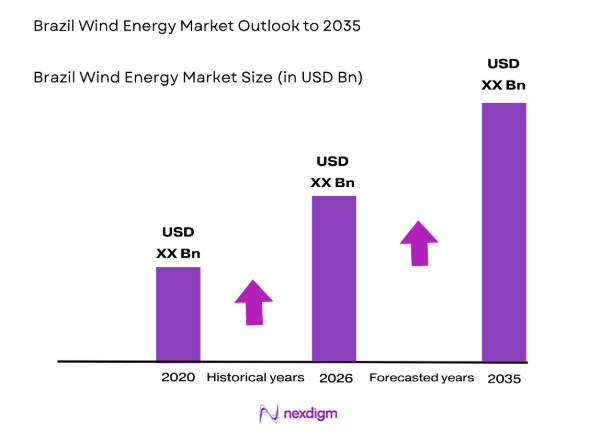
The Brazil Wind Energy market is estimated to reach USD ~ billion, driven by the country’s vast wind potential, growing investments, and increasing demand for clean energy. The market is fueled by government initiatives that focus on diversifying the energy mix and reducing reliance on fossil fuels. Wind power is seen as a key component of Brazil’s renewable energy transition, with large-scale wind farms being developed to contribute to the national grid, thus supporting the country’s sustainability goals.
The northeastern region of Brazil, particularly areas like Bahia, Ceará, and Rio Grande do Norte, is at the forefront of wind energy development due to the consistent wind resources available. These regions offer optimal conditions for large wind farms, supported by favorable government incentives and private sector investments. As a result, Brazil’s wind energy industry has grown rapidly, with more projects expected to be developed in these areas, further strengthening the country’s position as a global leader in wind energy production.
Market Segmentation
By Technology Type
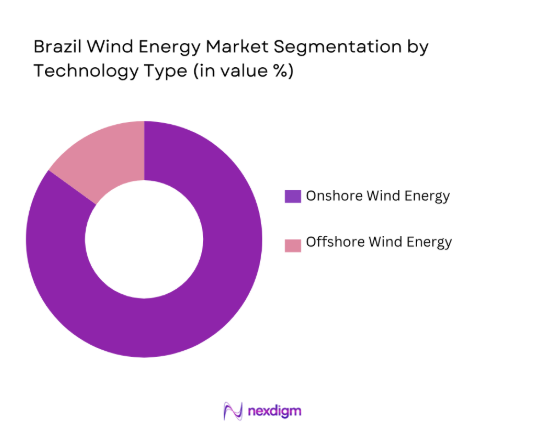
The Brazil Wind Energy market is segmented by technology type into onshore and offshore wind energy. Onshore wind energy has a dominant market share due to its cost-effectiveness, lower capital investment, and the country’s vast land availability in regions with strong wind resources. Brazil’s favorable terrain, combined with government incentives, has led to the expansion of large-scale onshore wind farms, particularly in the northeastern states. The continued development of onshore wind projects is expected to maintain its dominance in the coming years as Brazil continues to invest in its renewable energy infrastructure.
By End-User Sector
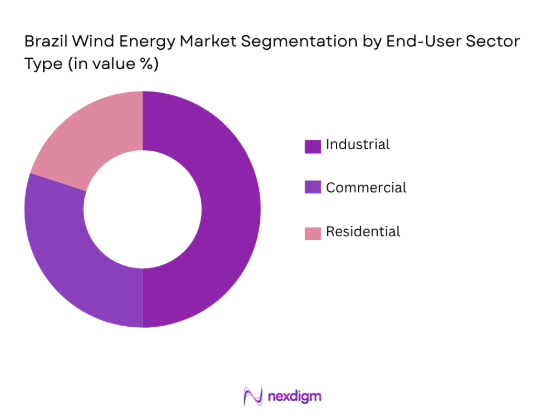
The Brazil Wind Energy market is segmented by end-user sector into residential, commercial, and industrial. The industrial sector has recently dominated the market share due to the growing demand for large-scale electricity generation from wind farms. Industries seeking sustainable energy solutions and reducing their carbon footprints have increasingly turned to wind power as a reliable and eco-friendly energy source. Additionally, the industrial sector benefits from government incentives for renewable energy projects, further accelerating the adoption of wind energy in this segment.
Competitive Landscape
The Brazil Wind Energy market is competitive, with both local and international players competing for market share. The market has experienced consolidation, with large energy companies and developers acquiring smaller firms to expand their portfolios and strengthen their position. These companies are actively involved in the development, construction, and operation of wind farms, leveraging technological advancements to improve the efficiency and cost-effectiveness of wind energy generation. The competitive dynamics are influenced by factors such as government policies, infrastructure development, and financing options for large-scale wind projects.
| Company Name | Establishment Year | Headquarters | Technology Focus | Market Reach | Key Products | Revenue (USD Billion) | Market-Specific Parameter |
| Enel Green Power | 2008 | Rome, Italy | ~ | ~ | ~ | ~ | ~ |
| Iberdrola | 1992 | Bilbao, Spain | ~ | ~ | ~ | ~ | ~ |
| Voltalia | 2006 | Paris, France | ~ | ~ | ~ | ~ | ~ |
| Vestas | 1945 | Aarhus, Denmark | ~ | ~ | ~ | ~ | ~ |
| EDP Renewables | 2007 | Lisbon, Portugal | ~ | ~ | ~ | ~ | ~ |
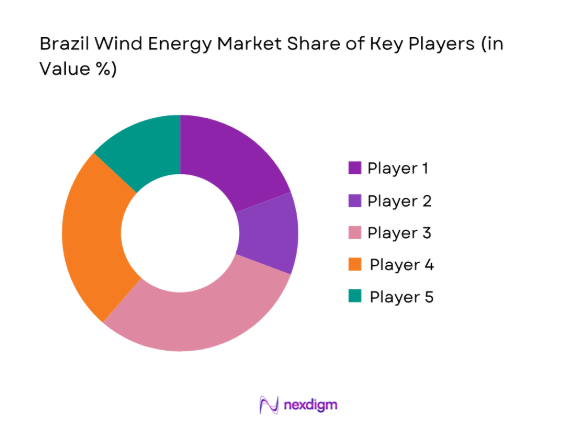
Brazil Wind Energy Market Analysis
Growth Drivers
Government Incentives
Government policies and financial incentives are key drivers for the growth of Brazil’s wind energy market. The Brazilian government has set ambitious renewable energy targets, including achieving 50% of its total energy from renewables by 2030. To support this goal, Brazil has implemented numerous programs such as the Proinfa Program, which provides incentives and subsidies to encourage the development of wind and solar energy projects. These policies have facilitated a favorable investment climate for wind energy, drawing international developers and creating a competitive market for wind farm projects. As the Brazilian government continues to prioritize renewable energy, these incentives will continue to drive growth in the wind energy market, particularly in the northeastern region, where the wind potential is highest.
Technological Advancements
Technological innovations in wind turbine design and efficiency are driving the growth of Brazil’s wind energy market. The wind energy industry in Brazil has benefited from advancements in turbine technology, which have increased energy output and reduced the cost of electricity generation. The development of larger and more efficient turbines, along with improvements in aerodynamics and materials science, has made wind energy more economically competitive. Moreover, technological innovations in energy storage and grid integration are allowing for better management of intermittent energy generation, further increasing the reliability and attractiveness of wind energy. As these technologies continue to improve, Brazil’s wind energy market is expected to see further expansion, contributing to the country’s renewable energy objectives.
Market Challenges
Regulatory and Bureaucratic Hurdles
Regulatory barriers and bureaucratic processes present a challenge for the Brazil Wind Energy market. While Brazil has made significant progress in promoting wind energy, the regulatory framework can be complex and time-consuming. Obtaining permits for land use, environmental assessments, and interconnection with the national grid can take several years, leading to delays in project development. The legal framework surrounding wind energy development also requires compliance with numerous local, state, and federal regulations. These challenges can deter potential investors and developers, slowing the growth of the market. Addressing these bureaucratic hurdles and streamlining the permitting process will be essential for the continued growth of Brazil’s wind energy industry.
Infrastructure and Grid Integration
The need for infrastructure upgrades and grid integration remains a key challenge for the Brazil Wind Energy market. While Brazil has made significant strides in increasing its wind energy capacity, the country’s electrical grid infrastructure faces challenges in integrating renewable energy sources. Wind energy is intermittent, and the existing grid requires improvements to handle the variability of wind power generation. Expanding the transmission network to connect wind farms in remote regions to population centers is a critical issue. Additionally, energy storage solutions need to be enhanced to manage the fluctuating supply of wind energy effectively. Overcoming these infrastructure challenges will be crucial for ensuring the efficient use of wind energy and supporting its continued growth in Brazil.
Opportunities
Offshore Wind Energy
Offshore wind energy presents a significant growth opportunity for Brazil’s wind energy market. While Brazil’s onshore wind resources are abundant, offshore wind energy offers the potential for even greater energy generation. The country’s extensive coastline, particularly in the northeastern regions, has high wind speeds and favorable conditions for offshore wind farms. Offshore wind projects have the advantage of accessing stronger and more consistent winds compared to onshore sites, resulting in higher energy yields. Several global companies have already shown interest in developing offshore wind projects in Brazil, and the government is expected to introduce supportive policies and regulations to facilitate their development. The expansion of offshore wind energy will be a key opportunity for Brazil to diversify its renewable energy portfolio and contribute to its clean energy goals.
Wind Power for Industrial Use
The adoption of wind power for industrial applications presents significant opportunities in Brazil. As industries in Brazil seek to reduce their carbon footprints and energy costs, wind power is becoming an increasingly attractive option for large-scale energy consumption. Industrial sectors, such as manufacturing, mining, and agriculture, are increasingly turning to renewable energy solutions like wind power to meet their energy needs sustainably. By investing in on-site wind farms or entering into power purchase agreements (PPAs) with wind energy developers, industries can secure long-term, stable energy prices while supporting Brazil’s renewable energy transition. This trend is expected to grow as companies prioritize sustainability and seek to align with global environmental standards.
Future Outlook
The future of the Brazil Wind Energy market is promising, with continued growth expected in both onshore and offshore wind energy sectors. Technological advancements, along with favorable government policies, will play a crucial role in expanding wind energy capacity. The shift towards sustainable energy solutions, combined with the growing demand for industrial-scale renewable energy, will drive market development. Additionally, as the country invests in grid modernization and energy storage, wind energy will play a vital role in Brazil’s transition to a low-carbon economy.
Major Players
- Brookfield Renewable Partners
- TransAlta
- Iberdrola
- Enel Green Power
- Vestas
- Siemens Gamesa
- Pattern Energy
- EDF Renewables
- Voltalia
- NextEra Energy
- Engie Brasil Energia
- AES Tietê Energia
- Invenergy
- Ørsted
- EDP Renováveis
Key Target Audience
- Investments and venture capitalist firms
- Government and regulatory bodies
- Energy developers and EPC contractors
- Wind turbine manufacturers
- Wind project investors
- Commercial and residential wind energy consumers
- Utility companies
Research Methodology
Step 1: Identification of Key Variables
Identifying the key growth drivers, challenges, and regulatory frameworks affecting the Brazil Wind Energy market, including government policies, technological advancements, and demand trends.
Step 2: Market Analysis and Construction
Analyzing the wind energy market, including segmentation by technology type, project type, and end-user sector, to provide a comprehensive view of the market landscape.
Step 3: Hypothesis Validation and Expert Consultation
Consulting with industry experts, wind energy developers, and government bodies to validate hypotheses and ensure the accuracy of market assumptions and forecasts.
Step 4: Research Synthesis and Final Output
Synthesizing findings from primary and secondary research into a comprehensive market report, offering insights and recommendations for stakeholders in the Brazil Wind Energy market.

- Executive Summary
- Research Methodology (Definitions, Scope, Industry Assumptions, Market Sizing Approach, Primary & Secondary Research Framework, Data Collection & Verification Protocol, Analytic Models & Forecast Methodology, Limitations & Research Validity Checks)

- Market Definition and Scope
- Value Chain & Stakeholder Ecosystem
- Regulatory / Certification Landscape
- Sector Dynamics Affecting Demand

- Growth Drivers
Increasing Demand for Renewable Energy
Government Incentives for Wind Energy
Technological Advancements in Wind Turbines - Market Challenges
High Capital Investment for Offshore Wind
Regulatory Barriers and Permitting Issues
Intermittency of Wind Energy - Market Opportunities
Expansion in Offshore Wind Projects
Development of Floating Wind Farms
Integration with Energy Storage Solutions - Trends
Increasing Investment in Offshore Wind
Adoption of Advanced Turbine Technologies - Government Regulations
- SWOT Analysis
- Porter’s Five Forces

- By Market Value, 2020-2025
- By Installed Units, 2020-2025
- By Average System Price, 2020-2025
- By System Complexity Tier, 2020-2025

- By System Type (In Value%)
Onshore Wind Systems
Offshore Wind Systems
Hybrid Wind Systems
Small-scale Wind Systems
Utility-scale Wind Systems - By Platform Type (In Value%)
Onshore Platforms
Offshore Platforms
Floating Platforms
Integrated Platforms - By Fitment Type (In Value%)
Fixed Solutions
Floating Solutions
Modular Solutions
Hybrid Solutions - By End User Segment (In Value%)
Private Sector
Government Agencies
Energy Utilities

- Market structure and competitive positioning
- Market share snapshot of major players
- Cross Comparison Parameters (System Type, Platform Type, Procurement Channel, End User Segment, Fitment Type, Technological Integration, Installation Scale, capacity, growth outlook, investment environment, technology and infrastructure, policy and challenge)
- SWOT Analysis of Key Competitors
- Pricing & Procurement Analysis
- Key Players
Siemens Gamesa
Vestas
GE Renewable Energy
Nordex
Suzlon
MHI Vestas Offshore Wind
NextEra Energy
Orsted
Enel Green Power
EDF Renewables
Iberdrola
Boralex
Brookfield Renewable Partners
Ørsted
Invenergy

- Private Sector’s Role in Wind Energy Adoption
- Energy Utilities Increasing Investments
- Government’s Active Role in Project Approvals
- Rise of Distributed Wind Energy Systems

- Forecast Market Value, 2026-2035
- Forecast Installed Units, 2026-2035
- Price Forecast by System Tier, 2026-2035
- Future Demand by Platform, 2026-2035


 Request a Sample
 Ask for Customization
 Get a Quote
 Enquire Now