
 Download PDF
 Download PDF
Market Overview
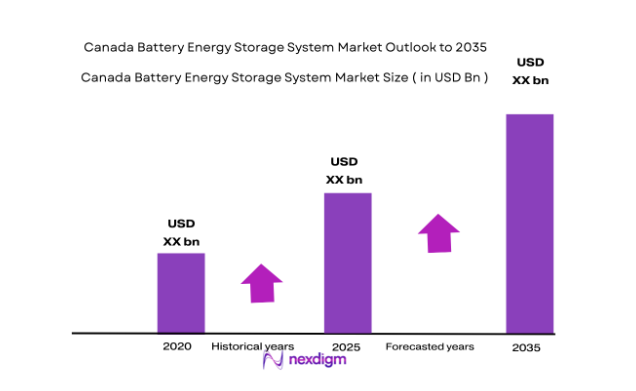
The Canada Battery Energy Storage System market is experiencing significant growth driven by the increasing need for efficient energy storage solutions. This market is primarily supported by the push for clean energy and the integration of renewable sources such as solar and wind into the grid. As the demand for grid reliability and energy independence grows, investments in energy storage systems, including battery storage technologies, are increasing. The market size for battery energy storage systems in Canada is currently valued at several billion ~ USD based on a recent historical assessment. The market’s expansion is also encouraged by government incentives and the rising trend of electrification in various sectors.
The market is predominantly driven by major provinces like Ontario, Quebec, and British Columbia, which lead the way due to their investments in renewable energy sources and grid modernization. These regions have significantly advanced their energy storage projects, benefiting from government support and infrastructure development. Cities such as Toronto, Vancouver, and Montreal are key players in this growth, primarily due to their large-scale energy transition programs. Additionally, their commitment to reducing carbon emissions and improving energy efficiency drives the dominance of these regions in the Canadian energy storage market.
Market Segmentation
By Product Type
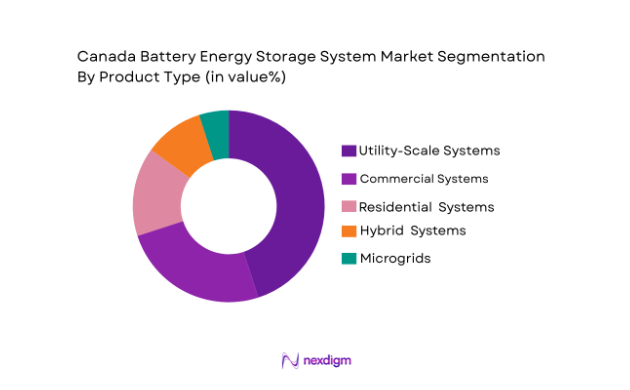
Canada Battery Energy Storage System market is segmented by product type into various sub-segments. Recently, utility-scale storage systems have dominated the market due to the increasing demand for large-scale, long-duration energy storage that can support grid stability and renewable energy integration. These systems offer advantages like high scalability and efficiency, which makes them a key component in the transition to renewable energy. The dominant demand for these systems is primarily driven by regulatory incentives and the need for grid operators to manage intermittent renewable energy sources effectively, making them crucial in enhancing energy security across Canada.
By Platform Type
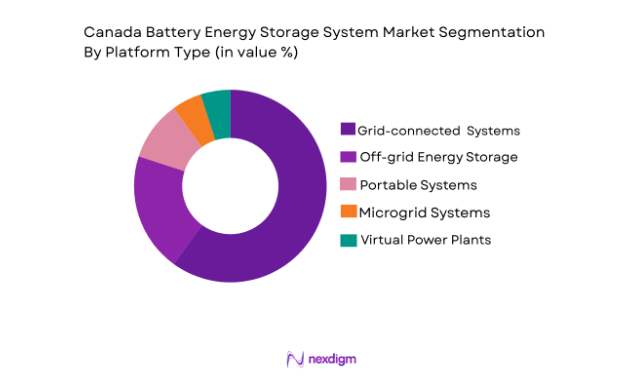
The Canada Battery Energy Storage System market is also segmented by platform type into multiple categories. Grid-connected systems have the dominant market share, driven by the need for grid stability and energy balancing as renewable energy penetration increases. These systems are integrated into the national grid, allowing for large-scale energy storage that can be dispatched when renewable energy production fluctuates. Grid-connected systems are crucial for managing peak loads, supporting the efficient distribution of power, and facilitating energy exchanges between regions. Their dominance is supported by government incentives and policies focused on decarbonizing the energy grid.
Competitive Landscape
The competitive landscape of Canada’s Battery Energy Storage System market is characterized by significant consolidation, with several global and regional players leading the market. These companies are focusing on technological advancements and strategic partnerships to expand their market share. The market remains competitive with continuous innovations in battery technology, system integration, and project deployment capabilities. Major players are also pushing forward with new projects, capitalizing on government incentives, and collaborating with utility companies to drive energy transition projects across Canada.
| Company Name | Establishment Year | Headquarters | Technology Focus | Market Reach | Key Products | Revenue (USD) | Additional Parameter |
| Tesla | 2003 | Palo Alto, California | ~ | ~ | ~ | ~ | ~ |
| LG Chem | 1947 | Seoul, South Korea | ~ | ~ | ~ | ~ | ~ |
| Fluence | 2018 | Washington D.C., USA | ~ | ~ | ~ | ~ | ~ |
| BYD | 1995 | Shenzhen, China | ~ | ~ | ~ | ~ | ~ |
| AES Energy Storage | 1981 | Arlington, Virginia | ~ | ~ | ~ | ~ | ~ |
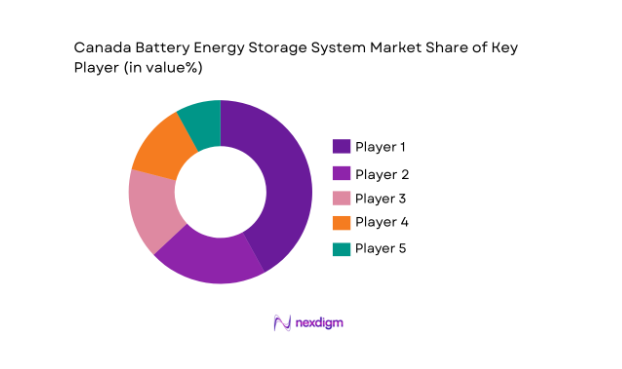
Canada Battery Energy Storage Market Analysis
Growth Drivers
Government Support for Energy Storage Systems
Canada’s commitment to green energy and reducing carbon emissions has led to an increase in government initiatives supporting battery storage systems. With federal and provincial incentives such as tax credits and subsidies for the development of energy storage technologies, the market is seeing a significant boost. This support extends to grid-connected energy storage solutions, making it easier for companies to invest in large-scale storage systems. Furthermore, as the Canadian government continues to set renewable energy targets, the demand for battery storage systems to support these targets becomes essential. As more utilities adopt these systems to store excess renewable energy, the demand for energy storage systems grows exponentially, making this a key driver for market expansion. The federal government’s ambitious green energy strategy has set the tone for the battery storage sector, ensuring a favorable environment for long-term growth.
Technological Advancements in Energy Storage
Rapid advancements in battery technologies, such as improvements in lithium-ion batteries, are providing significant growth opportunities in the Canada Battery Energy Storage System market. The development of high-capacity, fast-charging, and durable batteries is reducing costs and increasing the overall efficiency of storage systems. These technological innovations are making energy storage more practical and cost-effective, encouraging both residential and commercial adoption. As these technologies improve, battery storage systems are becoming more accessible to a wider range of customers, further accelerating market adoption. Additionally, the ongoing research into solid-state batteries and other advanced materials holds the potential to revolutionize energy storage by providing higher energy densities, faster charging times, and longer lifespans, all of which contribute to the long-term growth prospects for the market.
Market Challenges
High Initial Capital Costs
One of the significant challenges to the growth of Canada’s Battery Energy Storage System market is the high upfront costs of installing energy storage systems. Despite the declining prices of batteries over the years, the initial cost of deploying these systems remains a barrier, particularly for small businesses and residential customers. While the long-term savings in energy costs and grid stability benefits provide a return on investment, many potential adopters still face financial limitations when considering energy storage systems. This challenge is exacerbated by the lack of sufficient financing mechanisms and economic support for smaller-scale consumers, hindering the widespread adoption of energy storage solutions. Governments and private players need to work together to offer more affordable financing options and reduce the cost burden for end users, enabling greater adoption.
Limited Grid Integration
Another challenge in the Canadian Battery Energy Storage System market is the technical complexity involved in integrating large-scale storage systems with existing grid infrastructures. Although grid-connected systems offer significant benefits in terms of energy storage and distribution, the process of integrating these systems with the grid requires sophisticated infrastructure and substantial investment. Grid operators must ensure that the storage systems are compatible with the current grid setup and that they can respond effectively to fluctuations in energy demand. This complexity has slowed the pace of adoption, especially in regions with older grid systems. Moreover, the regulatory and policy frameworks governing the integration of energy storage systems into the grid remain underdeveloped, which contributes to delays and uncertainties in the market.
Opportunities
Integration of Battery Storage with Electric Vehicles (EVs)
The growth of the electric vehicle market presents an exciting opportunity for the Battery Energy Storage System market in Canada. As the number of EVs on the road increases, there is a growing need for battery storage systems to manage energy flows between EVs and the grid. This integration can help support vehicle-to-grid (V2G) technologies, allowing EVs to not only consume energy but also discharge stored energy back to the grid during peak hours. This interaction provides an opportunity to stabilize the grid and further integrate renewable energy sources. By combining EVs with battery storage, the system can enhance the value of both technologies, creating a mutually beneficial scenario for consumers and the grid. This opportunity is particularly promising for consumers looking to enhance their energy independence while contributing to a cleaner, greener energy infrastructure.
Expansion of Microgrid Systems
The demand for microgrids is increasing, especially in remote and off-grid regions of Canada. Microgrids, powered by battery energy storage systems, provide localized energy solutions that are independent of the main grid. These systems are especially useful in remote areas where grid expansion is impractical or cost-prohibitive. The Canadian government’s support for remote energy solutions and its focus on renewable energy provides an opportunity for battery energy storage systems to be deployed in off-grid microgrid systems. By providing reliable, sustainable, and cost-effective power to remote communities, microgrids not only reduce dependence on fossil fuels but also help in stabilizing the national grid by reducing demand during peak hours.
Future Outlook
Over the next five years, the Canada Battery Energy Storage System market is expected to continue expanding, driven by advances in battery technology, government incentives, and the increasing demand for renewable energy integration. Technological developments, such as the widespread adoption of lithium-ion and solid-state batteries, will make energy storage more efficient and cost-effective. Additionally, supportive government policies, including tax incentives and subsidies, will encourage investment in energy storage infrastructure. The growing demand for grid stability, particularly in remote regions, along with the continued transition to clean energy sources, will be key drivers of growth. Furthermore, as electric vehicles become more prevalent, there will be increased opportunities for integrating battery storage with transportation systems, creating a more interconnected and sustainable energy network.
Major Players
- Tesla
- LG Chem
- Fluence
- BYD
- AES Energy Storage
- Panasonic
- Sonnen
- Vestas
- Siemens Gamesa
- Schneider Electric
- Greensmith Energy
- Saft Batteries
- E3/DC
- Kensington Solar
- S&C Electric
Key Target Audience
- Investments and venture capitalist firms
- Government and regulatory bodies
- Utility companies
- Commercial enterprises
- Industrial operations
- Residential consumers
- Energy storage manufacturers
- Energy infrastructure developers
Research Methodology
Step 1: Identification of Key Variables
The identification of the key variables driving the Canada Battery Energy Storage System market is critical for accurate analysis. These variables include technological advancements, regulatory frameworks, and market demand patterns.
Step 2: Market Analysis and Construction
Comprehensive market analysis is conducted to build a framework for the market landscape. This includes evaluating historical trends, current market conditions, and growth forecasts, factoring in external factors like policy changes.
Step 3: Hypothesis Validation and Expert Consultation
Through expert consultation and data validation, hypotheses regarding market trends and challenges are tested to ensure the accuracy of the analysis. Expert insights from industry professionals help refine market assumptions.
Step 4: Research Synthesis and Final Output
The final output is the synthesis of gathered data, integrating quantitative and qualitative insights, and producing a comprehensive market report that guides decision-makers on future investments.

- Executive Summary
- Research Methodology (Definitions, Scope, Industry Assumptions, Market Sizing Approach, Primary & Secondary Research Framework, Data Collection & Verification Protocol, Analytic Models & Forecast Methodology, Limitations & Research Validity Checks)

- Market Definition and Scope
- Value Chain & Stakeholder Ecosystem
- Regulatory / Certification Landscape
- Sector Dynamics Affecting Demand
- Strategic Initiatives & Infrastructure Growth

- Growth Drivers
Growing demand for renewable energy integration
Government incentives and funding for clean energy solutions
Technological advancements in energy storage systems
Increasing energy security concerns and grid resilience needs
Rising industrial and commercial demand for energy efficiency - Market Challenges
High initial investment costs for energy storage systems
Limited energy storage capacity in certain regions
Grid integration and technological interoperability issues
Lack of regulatory standards for energy storage solutions
Limited awareness and adoption in certain sectors - Market Opportunities
Emerging demand for electric vehicle (EV) charging infrastructure
Partnerships with renewable energy developers for integrated solutions
Technological advancements in battery performance and cost reductions - Trends
Rapid advancements in solid-state and flow battery technologies
Increasing adoption of hybrid storage solutions
Deployment of large-scale storage systems for grid balancing
Government-backed initiatives to encourage energy storage adoption
Development of smart grid technology for better energy management - Government Regulations & Defense Policy
Incentives for clean energy and storage system deployment
Regulations for energy storage system integration into national grids
Supportive policies for sustainable energy transitions in commercial sectors - SWOT Analysis
- Stakeholder and Ecosystem Analysis
- Porter’s Five Forces Analysis
- Competition Intensity and Ecosystem Mapping

- By Market Value, 2020-2025
- By Installed Units, 2020-2025
- By Average System Price, 2020-2025
- By System Complexity Tier, 2020-2025

- By System Type (In Value%)
Utility-Scale Systems
Commercial and Industrial Systems
Residential Systems
Hybrid Storage Systems
Microgrids - By Platform Type (In Value%)
Grid-connected Systems
Off-grid Systems
Portable Systems
Microgrid Systems
Virtual Power Plants - By Fitment Type (In Value%)
On-site Energy Storage
Grid-integrated Energy Storage
Distributed Energy Storage
Containerized Systems
Modular Systems - By End User Segment (In Value%)
Utility Companies
Commercial Enterprises
Residential Consumers
Industrial Operations
Government and Military - By Procurement Channel (In Value%)
Direct Sales
Government Tenders
Private Sector Procurement
Online Bidding Platforms
Distributors and Partners - By Material / Technology (In Value%)
Lithium-ion Batteries
Lead-acid Batteries
Flow Batteries
Solid-state Batteries
Sodium-ion Batteries

- Market structure and competitive positioning
Market share snapshot of major players - Cross Comparison Parameters (System Type, Platform Type, Procurement Channel, End User Segment, Fitment Type)
- SWOT Analysis of Key Competitors
- Pricing & Procurement Analysis
- Key Players
Tesla
LG Chem
Sonnen
Fluence
AES Energy Storage
Panasonic
BYD
Vestas
Siemens Gamesa
Schneider Electric
Greensmith Energy
Saft Batteries
E3/DC
Kensington Solar
S&C Electric

- Increasing demand for energy independence in remote areas
- Utility companies investing in large-scale storage systems
- Rising demand from commercial enterprises for peak shaving
- Government interest in deploying energy storage systems for grid reliability

- Forecast Market Value, 2026-2035
- Forecast Installed Units, 2026-2035
- Price Forecast by System Tier, 2026-2035
- Future Demand by Platform, 2026-2035


 Request a Sample
 Ask for Customization
 Get a Quote
 Enquire Now