

 Download PDF
 Download PDF
Market Overview
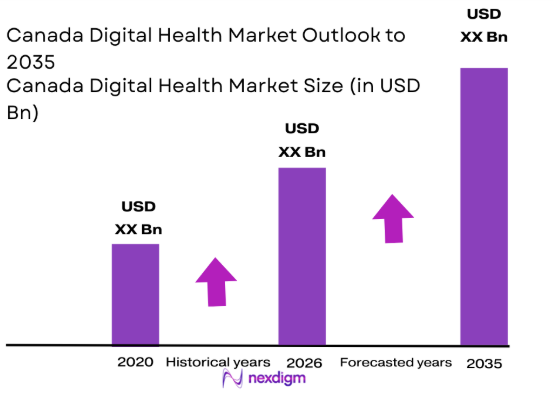
Based on a recent historical assessment, the Canada Digital Health Market reached a value of approximately USD ~ billion according to consolidated datasets from Canada Health Infoway, national healthcare expenditure reports, and Statista digital health industry analysis. Market growth is driven by rapid expansion of telehealth services, increasing deployment of electronic health records across healthcare institutions, and growing adoption of remote patient monitoring technologies. Government initiatives supporting digital infrastructure modernization and healthcare data interoperability have further accelerated the integration of digital platforms within hospitals, clinics, and home healthcare environments.
Toronto, Vancouver, Montreal, and Ottawa dominate the Canada Digital Health Market due to strong healthcare infrastructure, advanced digital technology ecosystems, and the presence of leading digital health companies and research institutions. These metropolitan regions host large hospital networks, healthcare innovation hubs, and public health agencies that actively support digital care initiatives. Provincial healthcare systems in Ontario, British Columbia, and Quebec continue investing heavily in telehealth platforms and digital health programs, strengthening collaboration between healthcare providers and technology developers.
Market Segmentation
By Product Type
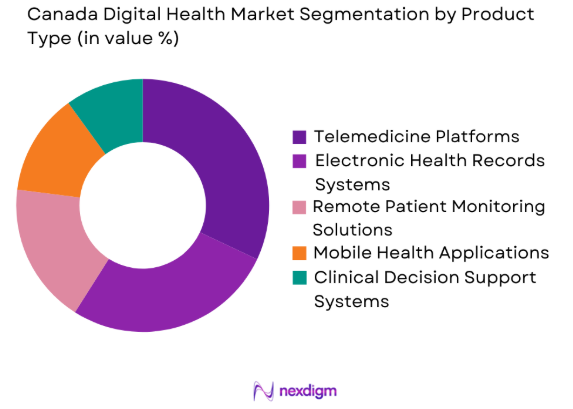
Canada Digital Health Market is segmented by product type into telemedicine platforms, electronic health records systems, remote patient monitoring solutions, mobile health applications, and clinical decision support systems. Recently, telemedicine platforms have a dominant market share due to factors such as demand patterns, brand presence, infrastructure availability, or consumer preference. Virtual healthcare services have become a major component of Canadian healthcare delivery as hospitals and clinics increasingly integrate teleconsultation platforms into routine medical services. Telemedicine systems enable remote consultations, digital prescriptions, and follow-up care, particularly benefiting patients in geographically remote regions. Public healthcare programs across multiple provinces support virtual healthcare access, encouraging widespread adoption among providers.
By Platform Type
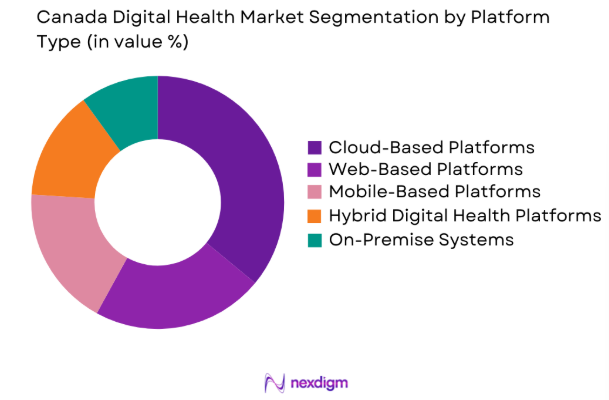
Canada Digital Health Market is segmented by platform type into cloud-based platforms, web-based platforms, mobile-based platforms, on-premise systems, and hybrid digital health platforms. Recently, cloud-based platforms have a dominant market share due to factors such as demand patterns, brand presence, infrastructure availability, or consumer preference. Healthcare organizations increasingly rely on cloud infrastructure to manage large volumes of healthcare data while enabling secure remote access for healthcare professionals. Cloud platforms support telemedicine services, patient data management, and advanced healthcare analytics applications. Hospitals and healthcare networks prefer cloud-based systems due to lower infrastructure costs, scalability, and improved interoperability between healthcare providers. Integration with artificial intelligence tools and population health analytics platforms further increases the value of cloud-based digital health infrastructure.
Competitive Landscape
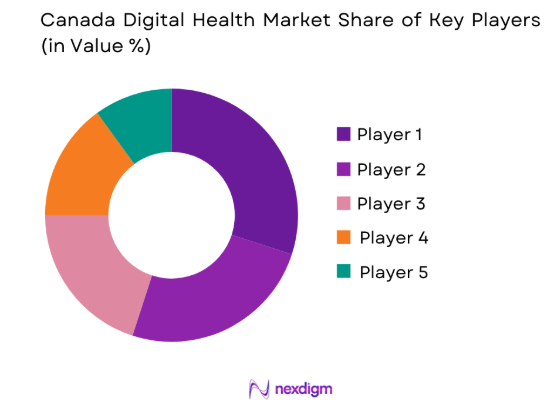
The Canada Digital Health Market features a moderately consolidated competitive environment where established healthcare technology companies and innovative digital health startups compete to deliver telehealth platforms, patient management systems, and healthcare analytics solutions. Market leaders focus on strategic partnerships with hospitals, healthcare networks, and government health agencies to expand digital care services. Continuous innovation in artificial intelligence, patient monitoring technologies, and data interoperability platforms is shaping the competitive landscape and strengthening the influence of major digital health companies.
Canada Digital Health Market Analysis
Growth Drivers
Expansion of Virtual Healthcare Services Across Provincial Healthcare Systems
Expansion of virtual healthcare services across provincial healthcare systems has become a major growth driver for the Canada Digital Health Market as healthcare providers increasingly adopt telehealth platforms and digital consultation systems to improve accessibility and operational efficiency. Geographic distances between patients and healthcare facilities, especially in rural and remote communities, encourage the use of telemedicine solutions that allow consultations without travel. Provincial health authorities support virtual care through reimbursement programs and digital health initiatives. Hospitals deploy telehealth platforms for consultations, chronic disease monitoring, and follow up care, improving service access and reducing patient wait times. Digital appointment scheduling, remote triage, and secure communication systems further enhance healthcare delivery while enabling providers to manage larger patient populations effectively.
Increasing Adoption of Remote Patient Monitoring and Connected Health Devices
Increasing adoption of remote patient monitoring and connected health devices is a major driver supporting the expansion of the Canada Digital Health Market as healthcare providers increasingly rely on digital technologies to monitor patients beyond traditional clinical environments. Remote monitoring systems allow physicians to track vital signs, chronic disease indicators, and treatment adherence through wearable devices and connected health platforms transmitting real time data. These technologies are particularly valuable in managing long term conditions such as diabetes, cardiovascular diseases, and respiratory disorders. Hospitals and healthcare networks use remote monitoring programs to reduce readmissions and improve patient outcomes through proactive care management. Integration of wearable sensors with analytics platforms enables early detection of health risks and timely medical intervention.
Market Challenges
Healthcare Data Privacy and Cybersecurity Risks in Digital Health Infrastructure
Healthcare data privacy and cybersecurity risks represent a major challenge for the Canada Digital Health Market because digital health platforms store large volumes of sensitive patient information that must be protected from unauthorized access and cyber threats. Hospitals, clinics, and technology providers manage electronic health records, diagnostic data, and personal medical histories within digital systems requiring strong security infrastructure. The increasing use of cloud platforms and telemedicine services expands potential vulnerabilities within healthcare networks. Cybersecurity incidents can disrupt healthcare operations and compromise patient confidentiality. Canadian healthcare organizations must comply with strict privacy regulations governing how patient information is collected, stored, and shared. Maintaining secure digital systems requires continuous investment in cybersecurity technologies, monitoring frameworks, and employee training programs.
Integration Complexity Between Legacy Healthcare Systems and Modern Digital Platforms
Integration complexity between legacy healthcare systems and modern digital platforms represents a significant challenge for the Canada Digital Health Market because many healthcare institutions continue to operate outdated information systems that are incompatible with advanced digital health technologies. Hospitals and clinics frequently rely on multiple legacy platforms that store patient information in varied formats, making data sharing and interoperability difficult across healthcare networks. Implementing modern digital health solutions often requires extensive infrastructure upgrades and specialized technical expertise, increasing operational costs and implementation timelines. Healthcare organizations must establish interoperability frameworks that enable secure exchange of data between electronic health records, telemedicine systems, and diagnostic databases. Without effective integration, providers may experience fragmented patient records and inefficiencies in clinical decision making.
Opportunities
Expansion of Artificial Intelligence Driven Clinical Decision Support Systems
Expansion of artificial intelligence driven clinical decision support systems represents a major opportunity in the Canada Digital Health Market as healthcare providers increasingly depend on advanced analytics and machine learning technologies to enhance diagnostic accuracy and treatment planning. Artificial intelligence platforms process large volumes of patient data including medical records, diagnostic imaging, and laboratory results to identify clinical patterns that support informed decision making. Physicians use AI powered tools to detect diseases earlier and recommend personalized treatment strategies based on predictive insights. Hospitals implementing these systems can improve operational efficiency by reducing diagnostic errors and streamlining clinical workflows. Integration of AI capabilities into telemedicine platforms further strengthens digital healthcare delivery across Canada.
Development of Integrated Digital Health Ecosystems for Population Health Management
Development of integrated digital health ecosystems for population health management represents a major opportunity within the Canada Digital Health Market as healthcare systems increasingly shift toward coordinated care models designed to improve long term patient outcomes. Integrated digital platforms enable healthcare providers, insurers, government agencies, and patients to access shared health information through interoperable systems that support collaborative healthcare delivery. These ecosystems combine electronic health records, remote monitoring technologies, predictive analytics, and mobile health applications to create comprehensive care management frameworks. Government healthcare programs are expanding investments in digital infrastructure that supports coordination between hospitals, clinics, and community health providers. Such systems enable personalized treatment strategies, improved care continuity, and more efficient management of preventive healthcare programs.
Future Outlook
The Canada Digital Health Market is expected to experience strong expansion over the coming years as healthcare providers increasingly integrate telehealth platforms, artificial intelligence diagnostics, and remote monitoring technologies into healthcare delivery systems. Government initiatives supporting healthcare digitalization and interoperability standards will further accelerate market development. Growing demand for accessible healthcare services, particularly in rural communities, will encourage continued adoption of digital health platforms. Advancements in data analytics, connected health devices, and integrated care systems are expected to strengthen the overall digital healthcare ecosystem.
Major Players
- TelusHealth
- WELL Health Technologies
- PointClickCare
- Dialogue Health Technologies
- AlayaCare
- Maple Corporation
- NovariHealth
- Medchart
- League Inc
- PocketHealth
- Think Research
- CarebookTechnologies
- CloudMD
- Medeo Health
- ClinicSense
Key Target Audience
- Healthcare Providers and Hospital Networks
- Digital Health Technology Companies
- Pharmaceutical and Life Sciences Companies
- Health Insurance Companies
- Medical Device Manufacturers
- Investments and Venture Capitalist Firms
- Government and Regulatory Bodies
- Healthcare IT Platform Developers
Research Methodology
Step 1: Identification of Key Variables
The research process begins by identifying the major variables influencing the Canada Digital Health Market including telehealth adoption, healthcare digital infrastructure, government health IT policies, and technology innovation trends. These variables form the basis for evaluating market dynamics.
Step 2: Market Analysis and Construction
Industry databases, healthcare system reports, and digital health adoption studies are analyzed to construct market segmentation and identify demand patterns across healthcare providers, technology platforms, and patient services within the Canada Digital Health Market.
Step 3: Hypothesis Validation and Expert Consultation
Healthcare professionals, digital health technology developers, and industry experts provide insights to validate the market findings. Their feedback helps refine assumptions regarding healthcare technology adoption and digital health infrastructure development.
Step 4: Research Synthesis and Final Output
All validated information is consolidated into a comprehensive research report combining qualitative insights and quantitative analysis. The final output provides a structured understanding of market trends, competitive landscape, and growth opportunities.

- Executive Summary
- Research Methodology (Definitions, Scope, Industry Assumptions, Market Sizing Approach, Primary & Secondary Research Framework, Data Collection & Verification Protocol, Analytic Models & Forecast Methodology, Limitations & Research Validity Checks)

- Market Definition and Scope
- Value Chain & Stakeholder Ecosystem
- Regulatory / Certification Landscape
- Sector Dynamics Affecting Demand
- Strategic Initiatives & Infrastructure Growth

- Growth Drivers
Rising Adoption of Telehealth Services Across Public Healthcare Systems
Expansion of Remote Patient Monitoring and Chronic Disease Management Programs
Increasing Investment in Healthcare IT Infrastructure - Market Challenges
Data Privacy and Cybersecurity Concerns in Digital Health Systems
Interoperability Issues Across Healthcare Platforms
High Implementation Costs for Advanced Digital Health Technologies - Market Opportunities
Integration of Artificial Intelligence in Clinical Decision Support Systems
Expansion of Digital Health Services in Rural and Remote Communities
Growth in Personalized and Preventive Healthcare Platforms - Trends
Growth of AI-Powered Diagnostics and Virtual Care Platforms
Increasing Adoption of Wearable Health Monitoring Devices
Integration of Big Data Analytics in Healthcare Management - Government Regulations
- SWOT Analysis of Key Competitors
- Porter’s Five Forces

- By Market Value, 2020-2025
- By Installed Units, 2020-2025
- By Average System Price, 2020-2025
- By System Complexity Tier, 2020-2025

- By System Type (In Value%)
Telemedicine Platforms
Electronic Health Records Systems
Remote Patient Monitoring Solutions
Mobile Health Applications
Clinical Decision Support Systems - By Platform Type (In Value%)
Cloud-Based Platforms
Web-Based Platforms
Mobile-Based Platforms
On-Premise Systems
Hybrid Digital Health Platforms - By Fitment Type (In Value%)
Standalone Software Solutions
Integrated Hospital Systems
Wearable Device Integration
Home Healthcare Monitoring Systems
Interoperable Health Data Platforms - By End User Segment (In Value%)
Hospitals and Healthcare Networks
Diagnostic Laboratories
Home Healthcare Providers
Government Health Agencies
Pharmaceutical and Life Sciences Firms - By Procurement Channel (In Value%)
Government Healthcare Procurement Programs
Direct Vendor Procurement
Public Healthcare Tenders
Technology Partnerships and Alliances
Digital Health Marketplace Platforms

- Market Share Analysis
- Cross Comparison Parameters (Technology Integration Capability, Telehealth Platform Scalability, AI Analytics Capability, Healthcare Data Security Standards, Interoperability Compliance)
- SWOT Analysis of Key Competitors
- Pricing & Procurement Analysis
- Key Players
Telus Health
PointClickCare
Think Research
Dialogue Health Technologies
CloudMD
Well Health Technologies
Carebook Technologies
AlayaCare
MediSolution
HealthHub Solutions
Maple Corporation
Novari Health
Medchart
League Inc
PocketHealth

- Hospitals Increasing Investment in Integrated Digital Health Systems
- Expansion of Remote Monitoring Services by Home Healthcare Providers
- Growing Role of Government Health Agencies in Digital Health Procurement
- Adoption of Digital Health Platforms by Pharmaceutical and Life Sciences Firms

- Forecast Market Value, 2026-2035
- Forecast Installed Units, 2026-2035
- Price Forecast by System Tier, 2026-2035
- Future Demand by Platform, 2026-2035


 Request a Sample
 Ask for Customization
 Get a Quote
 Enquire Now