
 Download PDF
Market Overview
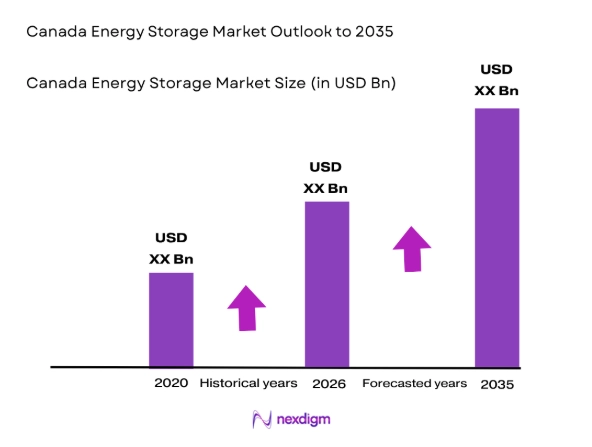
The Canada Energy Storage market is expected to reach approximately USD ~ billion based on a recent historical assessment. This growth is largely driven by the need for more reliable energy storage systems to integrate renewable energy sources such as wind and solar into the grid. The market is supported by various government incentives, including tax credits and funding for energy storage projects, designed to enhance grid stability and support the transition to a low-carbon economy.
Ontario, Quebec, and British Columbia are the dominant regions driving the growth of energy storage in Canada. Ontario’s large-scale renewable energy installations and strong policy support for energy storage make it a key player. Quebec benefits from its hydroelectric resources, which are being integrated with energy storage solutions to enhance grid management. British Columbia, with its focus on clean technology and renewable energy, is also increasing investments in energy storage systems, further strengthening Canada’s position in the global energy storage market.
Market Segmentation
By Technology Type
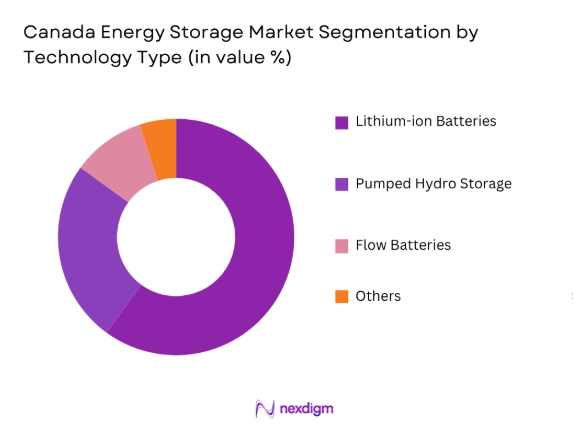
The Canada Energy Storage market is segmented by technology type into lithium-ion batteries, pumped hydro storage, flow batteries, and others. Lithium-ion batteries have recently dominated the market due to their high efficiency, declining costs, and widespread applications in both residential and commercial sectors. Their ability to store energy for later use, coupled with advancements in battery management systems, has led to a rapid increase in adoption, particularly in grid stabilization, renewable energy integration, and electric vehicle charging infrastructure.
By End-User
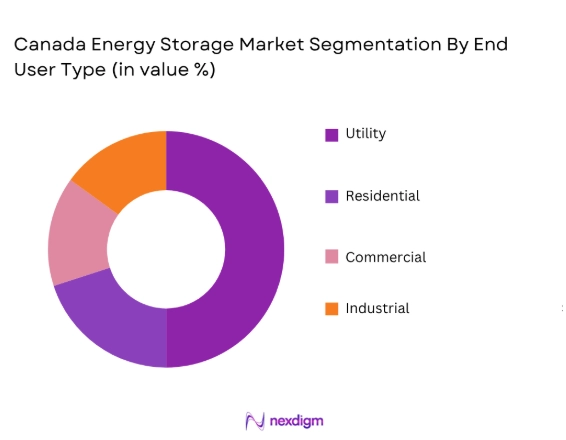
The Canada Energy Storage market is segmented by end-user into residential, commercial, industrial, and utility sectors. The utility sector has recently dominated the market due to the large-scale storage needs for grid stabilization and renewable energy integration. Utility-scale storage systems, such as large lithium-ion battery installations and pumped hydro storage facilities, help stabilize the grid by storing excess energy generated during peak renewable energy production and releasing it when demand is high or generation is low.
Competitive Landscape
The competitive landscape of the Canada Energy Storage market is increasingly dynamic, with a combination of global energy companies, startups, and technology providers vying for market share. Key players are focusing on developing cost-effective, scalable storage solutions, and enhancing grid integration. With the Canadian government’s support for clean energy solutions, market participants are accelerating their investments in research and development. Strategic partnerships, acquisitions, and collaboration with utility companies are common strategies used to gain a competitive edge.
| Company Name | Establishment Year | Headquarters | Technology Focus | Market Reach | Key Products | Revenue (USD Billion) | Market-Specific Parameter |
| Tesla | 2003 | Palo Alto, USA | ~ | ~ | ~ | ~ | ~ |
| LG Chem | 1947 | Seoul, South Korea | ~ | ~ | ~ | ~ | ~ |
| ABB | 1988 | Zurich, Switzerland | ~ | ~ | ~ | ~ | ~ |
| Brookfield Renewable | 1999 | Toronto, Canada | ~ | ~ | ~ | ~ | ~ |
| Enbridge | 1949 | Calgary, Canada | ~ | ~ | ~ | ~ | ~ |
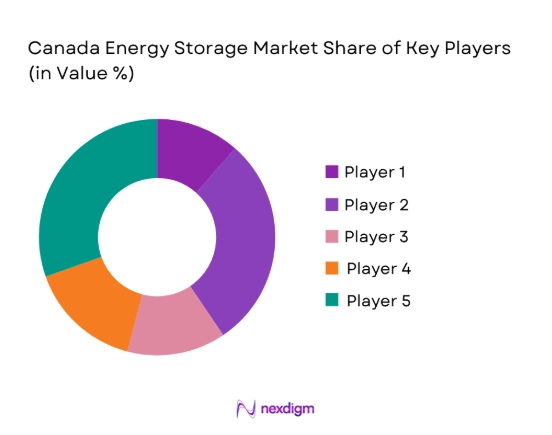
Canada Energy Storage Market Analysis
Growth Drivers
Government Policy Support
Government policies and initiatives are crucial drivers for the growth of the Canada Energy Storage market. The Canadian government has committed to reducing its carbon emissions and achieving net-zero emissions by 2050, and energy storage is seen as an essential tool to support the integration of renewable energy sources into the national grid. Programs like the Clean Energy Investment Fund and various provincial incentives are designed to reduce the financial burden on energy storage projects and encourage investment in energy storage technologies. These policies not only help to stabilize the grid but also create long-term market demand for energy storage solutions. Additionally, the expansion of clean energy projects, including wind and solar power, has been a key driver for the adoption of storage technologies, as energy storage helps address the intermittency of renewable power generation.
Technological Advancements
Technological advancements in energy storage systems are driving the growth of the Canada Energy Storage market. The rapid improvements in battery technologies, particularly lithium-ion batteries, have led to a decrease in the cost of energy storage systems. Innovations such as solid-state batteries and flow batteries are further enhancing the performance and efficiency of energy storage systems. These advancements not only reduce the cost of energy storage but also improve the scalability and energy density of storage systems. Additionally, innovations in battery management systems (BMS) have enabled more efficient energy storage and quicker energy release, making storage systems more reliable for grid applications. As storage technologies become more efficient and affordable, they are expected to play a pivotal role in Canada’s transition to renewable energy sources and provide long-term growth prospects for the energy storage market.
Market Challenges
High Initial Investment
One of the significant challenges in the Canada Energy Storage market is the high initial investment required for storage systems. While the cost of energy storage technologies has decreased over the years, the capital expenditure for installing energy storage systems, especially at a large scale, remains a major barrier. The initial investment costs for setting up large battery storage projects, particularly for industrial and utility applications, can be significant. This high upfront cost is a challenge for smaller players, who may lack access to the necessary funding or incentives to implement energy storage projects. While financing options, such as government incentives and tax credits, help mitigate some of these costs, the financial barrier remains a challenge for widespread adoption, particularly in residential and smaller-scale commercial applications.
Energy Storage System Lifespan and Efficiency
The lifespan and efficiency of energy storage systems also pose challenges for the Canada Energy Storage market. Although technological advancements have improved the lifespan of energy storage systems, many still have limited service lives, particularly batteries. Over time, batteries lose their capacity to store and discharge energy efficiently, requiring costly replacements or upgrades. This limitation can make energy storage systems less appealing for long-term investments. Moreover, while the efficiency of energy storage systems has improved, the energy losses during charging and discharging still present a challenge. As a result, maintaining high system efficiency and extending the lifespan of energy storage solutions are key areas that need to be addressed to ensure the long-term viability of energy storage in Canada’s energy mix.
Opportunities
Integration of Energy Storage with Renewable Energy
The integration of energy storage with renewable energy sources presents a significant opportunity for the Canada Energy Storage market. As Canada continues to expand its renewable energy capacity, particularly in wind and solar power, there is a growing need to manage the intermittent nature of renewable energy generation. Energy storage systems can store excess energy generated during periods of high renewable output and release it when demand is higher or when renewable generation is low. This integration helps to stabilize the grid and ensures a reliable supply of clean energy, even when renewable energy production fluctuates. The growing investments in renewable energy infrastructure, combined with the ongoing reduction in energy storage costs, present significant opportunities for energy storage companies to collaborate with renewable energy developers and utilities to provide integrated solutions.
Energy Storage for Electric Vehicles
The rise of electric vehicles (EVs) presents a new opportunity for the Canada Energy Storage market. As the adoption of EVs increases, there is an emerging demand for energy storage systems that can support the growing need for EV charging infrastructure. Energy storage solutions, such as battery storage systems at EV charging stations, can help manage the demand for electricity during peak hours and provide a stable power supply. Additionally, vehicle-to-grid (V2G) technologies, where EV batteries can supply power back to the grid, offer an innovative way to integrate EVs into the broader energy storage ecosystem. With the Canadian government’s support for the electrification of transportation, including incentives for EV adoption, this market segment is poised to see significant growth in the coming years, creating opportunities for energy storage providers to support the EV transition.
Future Outlook
The future of the Canada Energy Storage market looks promising, with continued growth expected in both residential and large-scale applications. Technological advancements in battery efficiency and reductions in costs will drive further adoption, while government policies and incentives will continue to provide support. The integration of energy storage with renewable energy systems will be a key focus area as Canada seeks to meet its clean energy goals. With increasing demand for energy storage in sectors like transportation, industry, and utilities, the market is poised to see significant expansion over the next five years.
Major Players
- Tesla
- LG Chem
- ABB
- Brookfield Renewable Partners
- Enbridge
- Schneider Electric
- NextEra Energy
- Fluence
- Siemens Energy
- AES Energy Storage
- Wärtsilä
- Vestas
- Nordex
- Ørsted
- Ballard Power Systems
Key Target Audience
- Investment and venture capitalist firms
- Government and regulatory bodies
- Energy storage developers
- Renewable energy project developers
- Utility companies
- Electric vehicle infrastructure providers
- Industrial energy consumers
Research Methodology
Step 1: Identification of Key Variables
Identify the key drivers, challenges, and technological developments affecting the Canada Energy Storage market. This includes analyzing the current policy landscape, the adoption of renewable energy sources, and technological innovations in energy storage solutions.
Step 2: Market Analysis and Construction
Conduct a detailed market analysis, including segmentation by technology type, end-user sectors, and market growth trends, to provide insights into the opportunities and challenges in the energy storage space.
Step 3: Hypothesis Validation and Expert Consultation
Engage with industry experts, energy storage manufacturers, and policymakers to validate hypotheses and ensure the market analysis reflects current and future market conditions accurately.
Step 4: Research Synthesis and Final Output
Synthesize the research findings into a comprehensive market report, offering actionable insights, strategic recommendations, and a detailed overview of the Canada Energy Storage market for key stakeholders.

- Executive Summary
- Research Methodology (Definitions, Scope, Industry Assumptions, Market Sizing Approach, Primary & Secondary Research Framework, Data Collection & Verification Protocol, Analytic Models & Forecast Methodology, Limitations & Research Validity Checks)

- Market Definition and Scope
- Value Chain & Stakeholder Ecosystem
- Regulatory / Certification Landscape
- Sector Dynamics Affecting Demand

- Growth Drivers
Increasing Demand for Renewable Energy Integration
Government Incentives and Subsidies for Energy Storage
Advancements in Battery Technologies - Market Challenges
High Initial Capital Investment for Energy Storage Systems
Regulatory Hurdles and Delays in Approvals
Challenges in Energy Storage Efficiency and Duration - Market Opportunities
Expanding Role of Energy Storage in Electric Vehicle Charging Infrastructure
Integration of Energy Storage in Smart Grids
Development of Large-Scale Energy Storage Projects - Trends
Shift Towards Decentralized Energy Systems
Integration of AI and IoT with Energy Storage Solutions - Government Regulations
- SWOT Analysis
- Porter’s Five Forces

- By Market Value, 2020-2025
- By Installed Units, 2020-2025
- By Average System Price, 2020-2025
- By System Complexity Tier, 2020-2025

- By System Type (In Value%)
Lithium-ion Batteries
Flow Batteries
Lead-Acid Batteries
Sodium-based Batteries
Compressed Air Energy Storage - By Platform Type (In Value%)
Residential Platforms
Commercial Platforms
Industrial Platforms
Utility-scale Platforms - By Fitment Type (In Value%)
On-grid Solutions
Off-grid Solutions
Hybrid Solutions
Modular Solutions - By End User Segment (In Value%)
Utilities
Commercial Sector
Residential Sector

- Market structure and competitive positioning
- Market share snapshot of major players
- Cross Comparison Parameters (System Type, Platform Type, Procurement Channel, End User Segment, Fitment Type, Energy Density, Installation Scale, Market Size & Growth Projections, Installed Capacity & Future Projections, Applications & Segment Usage, Competitive & Policy Environment)
- SWOT Analysis of Key Competitors
- Pricing & Procurement Analysis
- Key Players
Siemens Energy
ABB
Vestas
Tesla
LG Chem
Sonnen
Fluence
BYD
General Electric
Schneider Electric
Samsung SDI
Hitachi
E.ON
Enel X
Saft

- Growing Demand from the Residential Sector
- Expanding Adoption in the Commercial Sector
- Energy Storage Role in Grid Stabilization
- Utilities Increasing Investment in Storage Solutions

- Forecast Market Value, 2026-2035
- Forecast Installed Units, 2026-2035
- Price Forecast by System Tier, 2026-2035
- Future Demand by Platform, 2026-2035


 Request a Sample
 Ask for Customization
 Get a Quote
 Enquire Now