

 Download PDF
 Download PDF
Market Overview
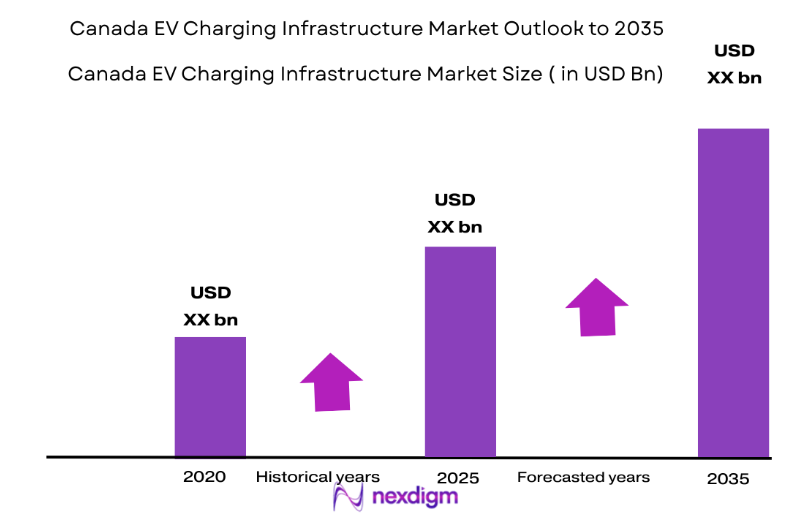
The Canada EV Charging Infrastructure market is experiencing rapid growth due to a surge in electric vehicle adoption, government incentives, and investments in clean energy. The market size for EV charging infrastructure is expected to reach USD ~ billion, driven by expanding EV sales and demand for reliable charging networks. The market is propelled by the increase in the number of EVs on the road, as well as the growing need for public and private charging stations. Additionally, developments in fast-charging technology and the government’s initiatives to achieve sustainability goals contribute to the market’s growth trajectory.
Cities like Toronto, Vancouver, and Montreal are leading the EV charging infrastructure development in Canada due to their large populations, higher EV penetration, and robust policy support. These cities benefit from government funding for clean energy initiatives and private sector investments in EV charging networks. The strategic locations and substantial infrastructure investments in urban areas enable faster deployment of charging stations, catering to the increasing number of EV owners. The government’s push for low-carbon emission targets also accelerates the expansion of EV infrastructure in these regions.
Market Segmentation
By Product Type
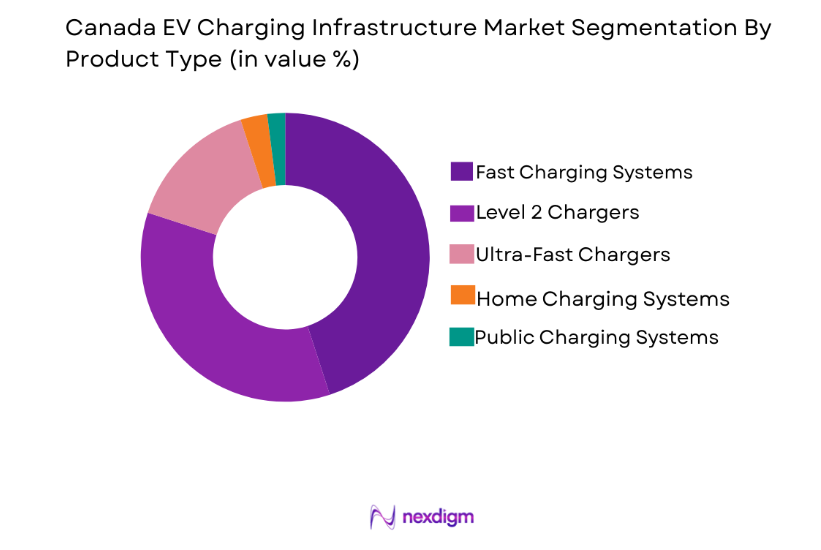
Canada EV Charging Infrastructure market is segmented by product type into various charging systems, including fast chargers, Level 2 chargers, and ultra-fast chargers. Recently, fast chargers have a dominant market share due to factors such as increased consumer demand for quick recharging and the expansion of ultra-fast charging networks by industry leaders. The ability to recharge EVs in a short time and the growing consumer preference for high-speed charging solutions have driven the adoption of fast chargers. As more EV models are launched with longer driving ranges, the need for high-speed chargers is becoming increasingly critical to support EV adoption. The government’s focus on building an advanced charging infrastructure has further fueled demand for fast chargers.
By Platform Type
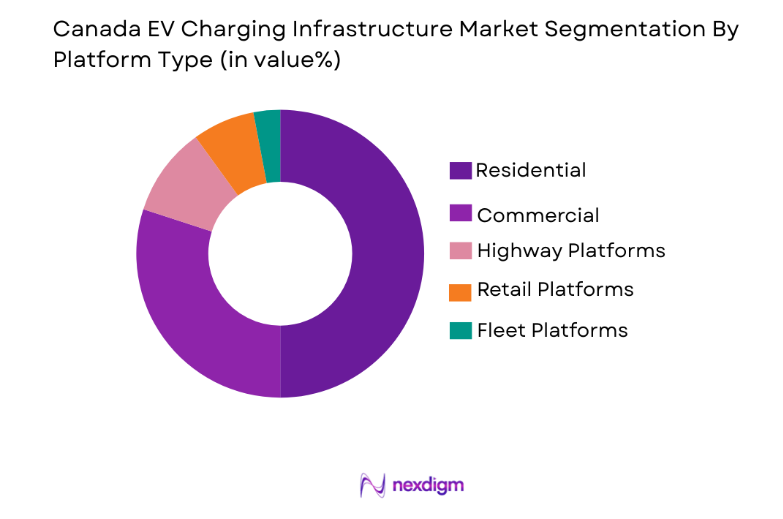
Canada EV Charging Infrastructure market is also segmented by platform type, including residential, commercial, and highway platforms. Residential platforms dominate the market due to the high adoption of home charging stations by EV owners seeking convenience. The growing number of electric vehicles, coupled with rising homeownership, has increased demand for private charging infrastructure. Moreover, with the availability of government incentives for home installation, this sub-segment is expanding rapidly. In addition, advancements in wireless charging and smart charging solutions have contributed to the dominance of residential platforms as EV owners prefer cost-effective and easily accessible charging solutions.
Competitive Landscape
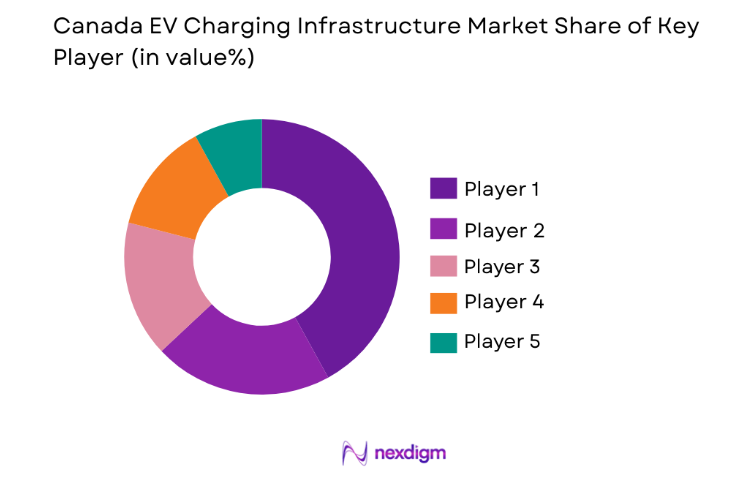
The Canada EV Charging Infrastructure market is marked by the presence of both established players and new entrants focusing on innovations in charging solutions and infrastructure development. The competitive landscape is characterized by consolidation as larger companies acquire smaller, regional players to expand their service coverage and technological capabilities. Major players are focusing on strategic partnerships with automakers, utility companies, and government bodies to leverage their resources and enhance their market position.
| Company Name | Establishment Year | Headquarters | Technology Focus | Market Reach | Key Products | Revenue | Additional Parameter |
| Tesla | 2003 | Palo Alto, CA, USA | ~ | ~ | ~ | ~ | ~ |
| ChargePoint | 2007 | Campbell, CA, USA | ~ | ~ | ~ | ~ | ~ |
| ABB | 1988 | Zurich, Switzerland | ~ | ~ | ~ | ~ | ~ |
| Siemens | 1847 | Munich, Germany | ~ | ~ | ~ | ~ | ~ |
| Shell | 1907 | The Hague, Netherlands | ~ | ~ | ~ | ~ | ~ |
Canada EV Charging Infrastructure Market Analysis
Growth Drivers
Government Incentives
Government support for the adoption of electric vehicles and infrastructure is a major driver for growth in the Canada EV Charging Infrastructure market. Incentives such as tax rebates, grants, and funding for EV charging stations are encouraging consumers and businesses to switch to electric vehicles. In addition, Canadian federal and provincial governments have set ambitious targets to reduce greenhouse gas emissions, which have further accelerated investments in EV infrastructure. These incentives are not only reducing the cost burden on consumers but also making the installation of charging stations more affordable for businesses. The push towards zero-emission vehicles and renewable energy integration into the grid is further driving the expansion of EV charging infrastructure in Canada. By supporting these projects, the government is fostering the widespread adoption of electric vehicles, creating a ripple effect on the demand for charging stations. Furthermore, the market is seeing a shift towards sustainable energy sources, which align with government initiatives to achieve environmental targets. These policies are expected to drive consistent growth in the EV charging infrastructure market, particularly in urban areas.
Technological Advancements
The rapid development of advanced charging technologies is fueling the growth of Canada’s EV charging infrastructure market. The introduction of ultra-fast chargers and wireless charging systems has significantly enhanced charging speed and convenience for EV owners, addressing a key barrier to EV adoption. Innovations in smart charging, where consumers can manage and schedule their charging sessions through mobile apps, are also gaining traction. The ability to monitor charging performance remotely and optimize electricity consumption has made charging systems more efficient and user-friendly. Additionally, the integration of renewable energy sources, such as solar power, into charging stations is another technological advancement that is helping reduce carbon footprints while supporting EV infrastructure. As the demand for fast and accessible charging grows, these innovations are enabling the creation of a more robust and sustainable charging network. Moreover, the development of public-private partnerships for infrastructure deployment and smart grid integration is facilitating the expansion of the charging network across the country.
Market Challenges
High Installation Costs
One of the major challenges hindering the growth of Canada’s EV charging infrastructure market is the high installation costs of charging stations. While the demand for electric vehicles continues to rise, the high upfront cost of installing charging infrastructure, including the purchase of equipment and the need for grid upgrades, has slowed down adoption. Small businesses and residential owners, in particular, find it difficult to bear the financial burden of these installations. Although government incentives are available, they do not fully offset the high costs, leaving a gap between the required investment and financial feasibility for certain consumers and businesses. Additionally, the installation of ultra-fast chargers and associated technologies requires specialized infrastructure and higher capital expenditures, which has resulted in delays in infrastructure expansion in some regions. As the market matures, efforts to reduce installation costs through economies of scale and advancements in technology will be crucial to overcoming this barrier and ensuring broader adoption.
Grid Infrastructure Limitations
The existing power grid in Canada is facing significant challenges in supporting the rapid expansion of EV charging infrastructure. Increased demand for electricity due to the growing number of EVs on the road could strain the grid, particularly in areas with limited grid capacity. Additionally, some rural areas lack the necessary electrical infrastructure to support widespread charging station deployment. This limitation has led to slower adoption of EV charging stations in certain regions. Furthermore, the need for grid upgrades and improvements in electrical distribution systems to handle the additional load adds further complexity to the issue. While advancements in energy storage and smart grid technology could alleviate some of these challenges, the lack of reliable and scalable grid infrastructure remains a critical obstacle to achieving nationwide charging station availability.
Opportunities
Renewable Energy Integration
The integration of renewable energy sources such as solar and wind power into EV charging stations represents a significant opportunity for growth in the Canada EV charging infrastructure market. As the demand for electric vehicles increases, the need for sustainable, low-carbon energy sources to power charging stations has become critical. By utilizing solar panels and wind turbines, charging stations can reduce their dependence on the grid, lowering both operational costs and environmental impact. This trend aligns with the Canadian government’s clean energy initiatives and carbon reduction goals. Additionally, the ability to create off-grid charging stations in remote locations through renewable energy integration will expand access to EV charging in underserved regions, promoting broader adoption of electric vehicles. This shift towards renewable energy at charging stations will also provide consumers with a more sustainable option, addressing growing concerns over the carbon footprint of electricity generation. The combination of EV adoption and renewable energy integration is expected to drive long-term growth in the market, creating a win-win scenario for both the environment and the economy.
Partnerships with Commercial Establishments
Another key opportunity in the Canada EV charging infrastructure market lies in forming partnerships with commercial establishments such as shopping malls, parking lots, and retail centers to install charging stations. As EV ownership increases, the need for accessible and convenient charging points in high-traffic areas will become essential. Commercial partnerships will allow businesses to install charging stations at their locations, offering a value-added service to customers and enhancing the customer experience. Furthermore, these partnerships can provide businesses with a new revenue stream as they can charge fees for the use of their charging stations. With growing interest from property developers and commercial real estate owners in accommodating EV owners, these partnerships are expected to drive infrastructure expansion across urban centers. Collaborations between the public and private sectors will be essential in ensuring the successful implementation of this strategy, enabling widespread EV adoption across Canada.
Future Outlook
The future outlook for Canada’s EV charging infrastructure market is positive, with expected continued growth in both technology and demand. Key drivers include ongoing advancements in fast-charging technology, government policy support, and the integration of renewable energy. As electric vehicle adoption increases, so will the demand for more charging stations, particularly in urban areas and along major highways. The next five years will likely see a shift toward a more connected and optimized charging network, with innovations in charging technology and the development of smart grid solutions further improving the efficiency of the system. With the continued support from both government and private sectors, the market is poised for steady expansion and increased penetration across the country.
Major Players
- Tesla
- ChargePoint
- ABB
- Siemens
- Shell
- Enel X
- Blink Charging
- Greenlots
- Ionity
- EVgo
- BP Chargemaster
- SemaConnect
- Wallbox
- Schneider Electric
- Shell Recharge
Key Target Audience
- Investments and venture capitalist firms
- Government and regulatory bodies
- EV manufacturers
- Charging network operators
- Electric utility companies
- Retailers and commercial establishments
- Property developers
- Fleet operators
Research Methodology
Step 1: Identification of Key Variables
Identify the key factors influencing the Canada EV charging infrastructure market, including technological advancements, regulatory policies, and market drivers.
Step 2: Market Analysis and Construction
Conduct in-depth analysis to evaluate market size, trends, growth projections, and regional demand for EV charging stations.
Step 3: Hypothesis Validation and Expert Consultation
Consult with industry experts and stakeholders to validate hypotheses and refine data insights for accurate market forecasting.
Step 4: Research Synthesis and Final Output
Synthesize research findings, prepare the final report, and ensure all insights align with the market’s current and future outlook.

- Executive Summary
- Research Methodology (Definitions, Scope, Industry Assumptions, Market Sizing Approach, Primary & Secondary Research Framework, Data Collection & Verification Protocol, Analytic Models & Forecast Methodology, Limitations & Research Validity Checks)

- Market Definition and Scope
- Value Chain & Stakeholder Ecosystem
- Regulatory / Certification Landscape
- Sector Dynamics Affecting Demand

- Growth Drivers
Government incentives for EV adoption
Increase in EV sales and demand
Technological advancements in fast charging
Growing environmental awareness among consumers
Expansion of renewable energy sources for charging - Market Challenges
High initial investment costs
Lack of standardization in charging technology
Grid infrastructure limitations
Slow pace of infrastructure deployment
Regulatory challenges and policy delays - Market Opportunities
Integration of renewable energy with charging systems
Growth in electric fleet services
Strategic partnerships with commercial establishments - Trends
Expansion of ultra-fast charging networks
Emerging trends in wireless charging
Government support and incentives - Government Regulations & Defense Policy
Electric vehicle adoption mandates
Incentives for clean energy infrastructure
Regulations on carbon emissions - SWOT Analysis
- Stakeholder and Ecosystem Analysis
- Porter’s Five Forces

- By Market Value, 2020-2025
- By Installed Units, 2020-2025
- By Average System Price, 2020-2025
- By System Complexity Tier, 2020-2025

- By System Type (In Value%)
Fast Chargers
Level 2 Chargers
Ultra-Fast Chargers
Home Charging Systems
Public Charging Systems - By Platform Type (In Value%)
Residential Platforms
Commercial Platforms
Highway Platforms
Retail Platforms
Fleet Platforms - By Fitment Type (In Value%)
On-premise Installations
Public Installations
Mobile Installations
Fleet Installations
Commercial Installations - By End User Segment (In Value%)
EV Owners
Fleet Operators
Retail Customers

- Market share of major players
- Cross Comparison Parameters (System Type, Platform Type, Procurement Channel, EndUser Segment, Fitment Type)
- SWOT Analysis of Key Competitors
- Pricing & Procurement Analysis
- Key Players
Tesla
Electrify Canada
Enel X
ChargePoint
ABB
Siemens
Shell
EVgo
Coulomb Technologies
Greenlots
BP Chargemaster
Ionity
Blink Charging
SemaConnect
Eaton

- Increased demand for public charging stations
- Rising popularity of home charging solutions
- Fleet operators adopting electric vehicles
- Government agencies expanding charging networks

- Forecast Market Value, 2026-2035
- Forecast Installed Units, 2026-2035
- Price Forecast by System Tier, 2026-2035
- Future Demand by Platform, 2026-2035


 Request a Sample
 Ask for Customization
 Get a Quote
 Enquire Now