
 Download PDF
Market Overview
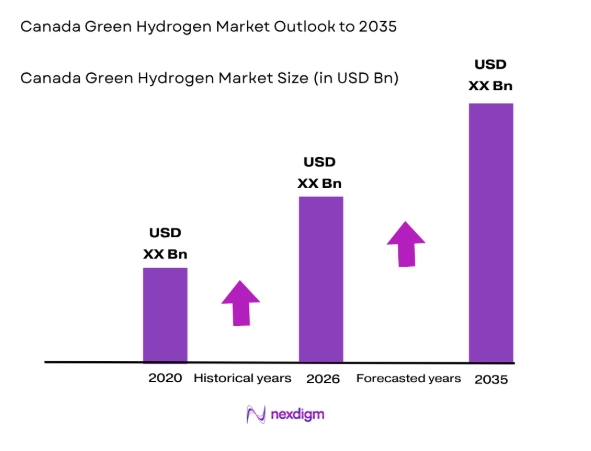
The Canada Green Hydrogen market is expected to reach approximately USD ~ billion based on a recent historical assessment, driven by the country’s commitment to decarbonizing its energy sector and achieving net-zero emissions. Government policies such as the Hydrogen Strategy for Canada and initiatives like the Clean Growth Program are fostering the adoption of green hydrogen. Technological advancements in electrolysis, along with increasing investments in infrastructure and storage solutions, are further propelling market growth.
Ontario, Quebec, and Alberta are the leading regions driving the growth of the Canada Green Hydrogen market. Ontario, with its strong industrial base and proximity to renewable energy resources, is a key player in green hydrogen production. Quebec benefits from abundant hydroelectric power, which can be leveraged for hydrogen production. Alberta, with its vast renewable energy potential, is focusing on developing green hydrogen as part of its strategy to reduce emissions from its oil and gas sectors, making these provinces key players in the market.
Market Segmentation
By Production Method
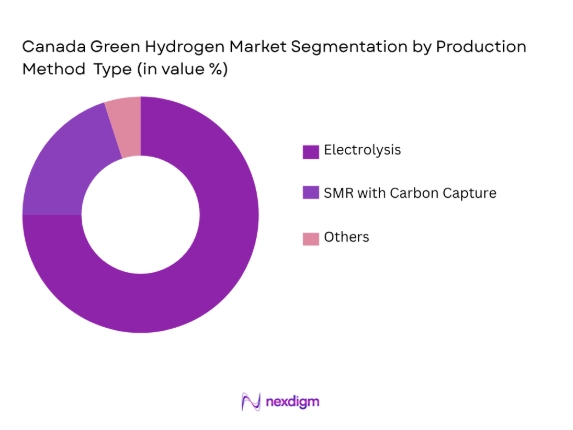
The Canada Green Hydrogen market is segmented by production method into electrolysis, steam methane reforming (SMR) with carbon capture, and others. Recently, electrolysis has dominated the market due to its sustainable approach of producing hydrogen using electricity derived from renewable sources. Electrolysis benefits from Canada’s vast renewable energy resources, especially hydropower, which makes it a cleaner and more efficient option for green hydrogen production. The continued development of electrolyzer technology and falling costs will further strengthen the dominance of electrolysis in the green hydrogen market in Canada.
By End-User
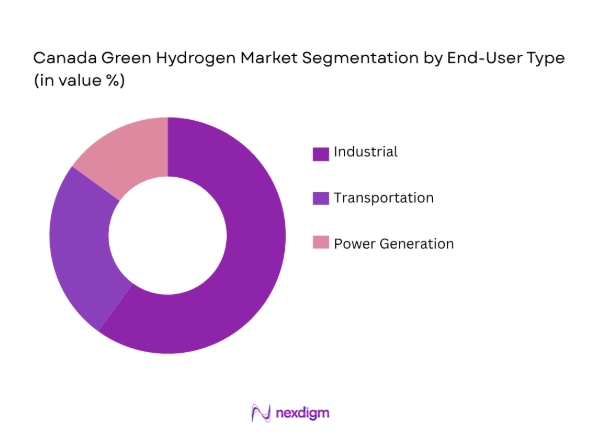
The Canada Green Hydrogen market is segmented by end-user into industrial, transportation, and power generation. The industrial sector has seen significant adoption due to its high demand for hydrogen in processes like steel production, refining, and chemical manufacturing. Green hydrogen is increasingly being used to replace conventional fossil fuels in these industries, supporting Canada’s decarbonization goals. With heavy industries under pressure to meet stricter emissions standards, the industrial sector remains a major driver of green hydrogen adoption, especially as the cost of green hydrogen continues to fall.
Competitive Landscape
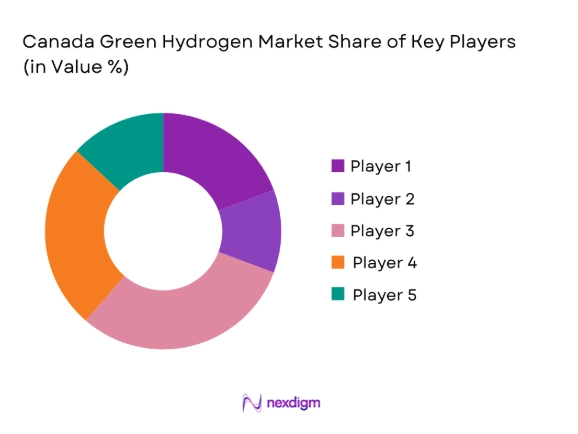
The competitive landscape of the Canada Green Hydrogen market is evolving, with a mix of international and domestic players entering the space. These players are focused on developing advanced hydrogen production technologies, building hydrogen infrastructure, and securing long-term contracts. Collaborations and joint ventures between energy companies, technology providers, and government bodies are accelerating the deployment of green hydrogen projects. Market consolidation is likely as the industry matures, with large players acquiring smaller firms to expand their capabilities and market reach.
| Company Name | Establishment Year | Headquarters | Technology Focus | Market Reach | Key Products | Revenue (USD Billion) | Market-Specific Parameter |
| Air Products and Chemicals | 1940 | Allentown, USA | ~ | ~ | ~ | ~ | ~ |
| Plug Power | 1997 | Latham, USA | ~ | ~ | ~ | ~ | ~ |
| Ballard Power Systems | 1979 | Burnaby, Canada | ~ | ~ | ~ | ~ | ~ |
| Enbridge | 1949 | Calgary, Canada | ~ | ~ | ~ | ~ | ~ |
| Hydrogenics | 1995 | Mississauga, Canada | ~ | ~ | ~ | ~ | ~ |
Canada Green Hydrogen Market Analysis
Growth Drivers
Government Support and Clean Energy Initiatives
The Canadian government’s strong commitment to clean energy and carbon neutrality is a major driver of the green hydrogen market. The government has outlined clear targets for reducing carbon emissions and has committed to investing in green hydrogen as a critical part of this effort. Programs like the Hydrogen Strategy for Canada, along with funding for clean hydrogen projects, are providing a solid foundation for the growth of the market. In addition to federal efforts, provinces like Ontario, Quebec, and Alberta are launching their own initiatives to develop green hydrogen infrastructure, making it a key part of Canada’s energy transition. These policies and government investments are expected to continue driving demand for green hydrogen, particularly in heavy industry, transportation, and power generation sectors.
Technological Advancements in Electrolysis
Technological improvements in electrolysis are a key growth driver for the Canada Green Hydrogen market. Electrolysis is the process of using electricity to split water into hydrogen and oxygen, and recent innovations have made it increasingly cost-effective and scalable. Electrolyzers powered by renewable energy sources, such as hydroelectric and wind power, are helping to drive the production of green hydrogen. Ongoing research into improving the efficiency of electrolyzers and reducing their costs will continue to make green hydrogen more affordable, which in turn will increase its adoption across various sectors. As Canada has abundant renewable resources, the continued development of electrolysis technology will be pivotal in accelerating the country’s green hydrogen production capacity.
Market Challenges
High Production Costs
The high cost of producing green hydrogen remains a major challenge in the Canadian market. Although green hydrogen has significant environmental benefits, the process of producing it through electrolysis remains expensive compared to traditional methods like steam methane reforming (SMR). The cost of electrolyzers, the need for abundant renewable energy, and the infrastructure required for large-scale production all contribute to the high cost of green hydrogen. While costs are expected to decline with technological advancements and increased production capacity, the high initial investment is still a barrier to widespread adoption. Addressing this cost issue through economies of scale and technological breakthroughs will be critical for the continued growth of the green hydrogen market in Canada.
Lack of Infrastructure
The absence of sufficient infrastructure for hydrogen storage, transportation, and distribution is a significant challenge. Hydrogen, being a highly volatile and low-density gas, requires specialized infrastructure for storage and transportation. The current hydrogen distribution network in Canada is limited, which creates logistical challenges for scaling up green hydrogen adoption. Building out this infrastructure will require significant investments from both the public and private sectors, as well as regulatory frameworks to ensure safety and efficiency. The lack of a robust infrastructure limits the ability of producers to deliver hydrogen to end-users in key sectors such as transportation, industrial applications, and power generation, slowing down the overall adoption of green hydrogen.
Opportunities
Hydrogen Integration in Heavy Industry
The integration of green hydrogen into heavy industry presents a significant opportunity for the Canadian market. Canada’s heavy industries, such as steel production, oil refining, and cement manufacturing, are responsible for a large portion of the country’s emissions. Green hydrogen offers a clean alternative to traditional fossil fuels in these industries, particularly in high-temperature processes that are hard to decarbonize. The demand for green hydrogen as a fuel and feedstock in these industries is expected to rise as companies look to meet sustainability goals and reduce their carbon footprints. With Canada’s strong industrial base and governmental support for decarbonization, this sector presents a substantial growth opportunity for the green hydrogen market.
Green Hydrogen for Transportation
The transportation sector presents a key opportunity for the adoption of green hydrogen in Canada. Hydrogen fuel cells offer a clean alternative for long-haul trucking, buses, and other heavy-duty transportation modes that are difficult to electrify using traditional battery technology. The Canadian government is investing in hydrogen infrastructure, including refueling stations, to support the deployment of hydrogen-powered vehicles. Additionally, several companies in Canada are developing hydrogen-powered trucks and vehicles, further driving the demand for green hydrogen in the transportation sector. As the technology matures and infrastructure expands, the use of green hydrogen in transportation will play a pivotal role in reducing emissions from one of Canada’s largest carbon-emitting sectors.
Future Outlook
The future of the Canada Green Hydrogen market looks promising, with continued growth driven by favorable government policies and technological advancements in hydrogen production. As Canada aims to meet its climate targets and transition to a net-zero economy, green hydrogen will be a key part of its energy mix. The development of hydrogen infrastructure and advancements in electrolysis technology will enable greater adoption of green hydrogen across industrial, transportation, and energy sectors. Over the next five years, investments in green hydrogen projects, supported by both public and private sectors, are expected to accelerate, contributing to the growth and commercialization of hydrogen as a clean energy source in Canada.
Major Players
- Air Products and Chemicals
- Plug Power
- Ballard Power Systems
- Enbridge
- Hydrogenics
- TransAlta
- Cummins Inc.
- Nel ASA
- McPhy Energy
- Iwatani Corporation
- Mitsubishi Power
- Linde plc
- Shell plc
- ExxonMobil
- Northland Power
Key Target Audience
- Investment and venture capitalist firms
- Government and regulatory bodies
- Industrial companies in heavy industries
- Energy producers and developers
- Hydrogen infrastructure developers
- Automotive and transportation companies
- Renewable energy equipment manufacturers
Research Methodology
Step 1: Identification of Key Variables
Identification of critical drivers, challenges, and regulatory frameworks affecting the Canada Green Hydrogen market, including government policies, technological trends, and market dynamics.
Step 2: Market Analysis and Construction
Comprehensive analysis of the market, including segmentation by production method, end-user sectors, and technological advancements, focusing on the green hydrogen ecosystem.
Step 3: Hypothesis Validation and Expert Consultation
Consultation with industry experts, hydrogen producers, and governmental bodies to validate assumptions and ensure the accuracy of market forecasts.
Step 4: Research Synthesis and Final Output
The collected data is synthesized into a detailed market report, providing actionable insights into growth trends, challenges, opportunities, and strategic recommendations for stakeholders.

- Executive Summary
- Research Methodology (Definitions, Scope, Industry Assumptions, Market Sizing Approach, Primary & Secondary Research Framework, Data Collection & Verification Protocol, Analytic Models & Forecast Methodology, Limitations & Research Validity Checks)

- Market Definition and Scope
- Value Chain & Stakeholder Ecosystem
- Regulatory / Certification Landscape
- Sector Dynamics Affecting Demand

- Growth Drivers
Government Incentives for Green Hydrogen Production
Technological Advancements in Electrolysis
Growing Demand for Clean Fuel Alternatives - Market Challenges
High Capital Costs for Green Hydrogen Production
Regulatory and Policy Uncertainty
Hydrogen Storage and Distribution Challenges - Market Opportunities
Integration of Green Hydrogen with Renewable Energy Sources
Development of Hydrogen Fuel Cell Vehicles
Scaling up Hydrogen Infrastructure for Large-Scale Deployment - Trends
Increasing Investment in Hydrogen Research
Rising Adoption of Hydrogen in Industrial Applications - Government Regulations
- SWOT Analysis
- Porter’s Five Forces

- By Market Value, 2020-2025
- By Installed Units, 2020-2025
- By Average System Price, 2020-2025
- By System Complexity Tier, 2020-2025

- By System Type (In Value%)
Electrolyzers
Green Hydrogen Production Plants
Hydrogen Storage Systems
Hydrogen Transportation Systems
Hydrogen Distribution Networks - By Platform Type (In Value%)
Onshore Platforms
Offshore Platforms
Integrated Platforms
Modular Platforms - By Fitment Type (In Value%)
Fixed Solutions
Mobile Solutions
Hybrid Solutions
Modular Solutions - By End User Segment (In Value%)
Industrial Sector
Energy Utilities
Transportation Sector

- Market structure and competitive positioning
- Market share snapshot of major players
- Cross Comparison Parameters (System Type, Platform Type, Procurement Channel, End User Segment, Fitment Type, Hydrogen Storage Capacity, Technological Integration)
- SWOT Analysis of Key Competitors
- Pricing & Procurement Analysis
- Key Players
Plug Power
Nel ASA
ITM Power
Ballard Power Systems
Cummins Inc.
Air Products and Chemicals
Bloom Energy
Siemens Energy
McPhy Energy
Envision Group
Hydrogenics
Linde Group
Engie
RWE
Ørsted

- Growth in Industrial Hydrogen Use
- Energy Utilities Increasing Investment in Hydrogen Infrastructure
- Transportation Sector’s Adoption of Hydrogen Fuel Cells
- Government Support for Hydrogen Technologies

- Forecast Market Value, 2026-2035
- Forecast Installed Units, 2026-2035
- Price Forecast by System Tier, 2026-2035
- Future Demand by Platform, 2026-2035


 Request a Sample
 Ask for Customization
 Get a Quote
 Enquire Now