
 Download PDF
 Download PDF
Market Overview
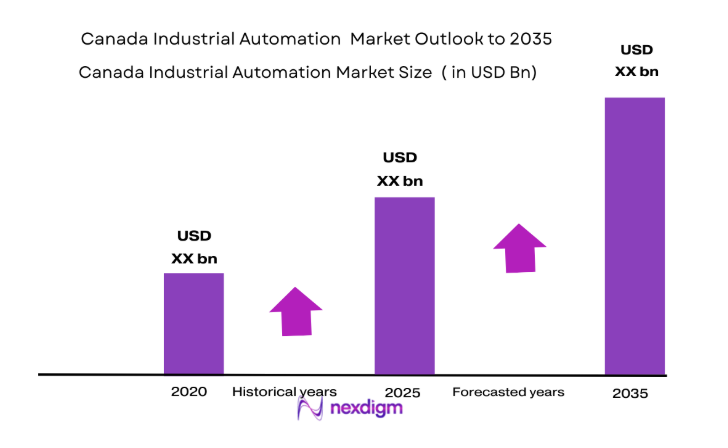
The industrial automation market is projected to experience significant growth, driven by the increasing demand for automation technologies across various industries. In recent assessments, the market size is valued at USD ~ billion, reflecting a robust demand for advanced automation systems. The growing emphasis on reducing operational costs and enhancing productivity is pushing industries such as manufacturing, automotive, and electronics to adopt industrial automation solutions. This growth is largely driven by technological advancements, such as AI integration and robotics, offering greater efficiency and precision in manufacturing processes.
North America, particularly the United States and Canada, is a leading player in the industrial automation space due to its technological advancements and highly developed manufacturing sector. Cities like Toronto, Montreal, and Vancouver play a crucial role in the market’s growth due to their strong industrial bases and infrastructure development. The region’s dominance is bolstered by significant investments in research and development, leading to faster adoption of cutting-edge automation technologies. This positions Canada as a key contributor to the growth of the global industrial automation market, especially in sectors such as automotive manufacturing, food processing, and pharmaceuticals.
Market Segmentation
By Product Type:
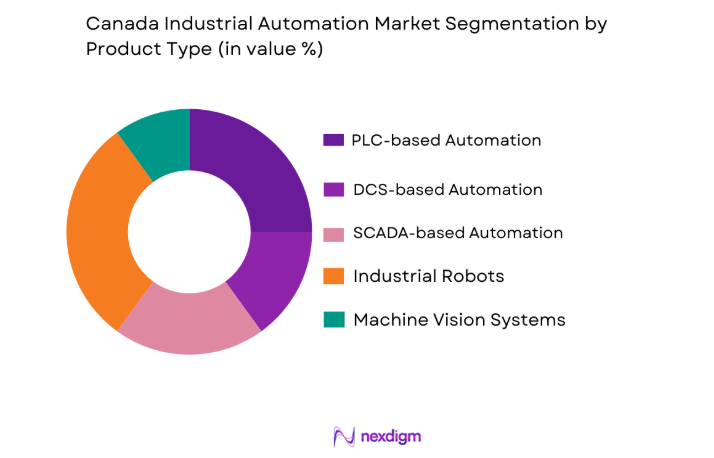
The industrial automation market is segmented by product type into PLC-based automation, DCS-based automation, SCADA-based automation, industrial robots, and machine vision systems. Recently, industrial robots have seen the most dominant market share due to the rising need for precision, speed, and efficiency in production lines. The growing trend of adopting collaborative robots (cobots) and the increasing use of robots in non-traditional industries like healthcare and logistics have further propelled the demand for industrial robots. These robots provide automation solutions that reduce the need for manual labor, enhance operational efficiency, and improve workplace safety, which makes them an essential component of modern manufacturing environments.
By End-User Industry:
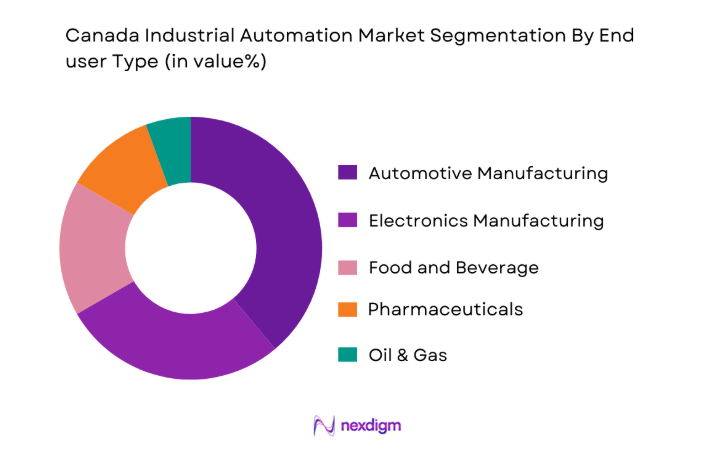
The market is also segmented by end-user industry, including automotive manufacturing, electronics manufacturing, food and beverage, pharmaceuticals, and oil & gas. Automotive manufacturing has a dominant market share due to the extensive use of automation systems in assembly lines for tasks such as welding, painting, and assembly. The rise of electric vehicles (EVs) has further increased the adoption of industrial automation, as EV production requires advanced technologies like robotics and precision systems. Automotive manufacturers are increasingly turning to automation to streamline production processes, reduce costs, and meet the growing demand for high-quality, precision-engineered components.
Competitive Landscape
The competitive landscape of the industrial automation market is dominated by major players focusing on technological advancements and strategic acquisitions. Market consolidation is notable, with key companies acquiring smaller players to expand their technological capabilities and enhance their product offerings. Major players are continuously investing in R&D to stay ahead of market trends and develop next-generation automation technologies. Companies are also focusing on forming partnerships with end-users to provide customized automation solutions, which increases their market penetration and solidifies their position in the industry.
| Company Name | Establishment Year | Headquarters | Technology Focus | Market Reach | Key Products | Revenue | Additional Parameter |
| Rockwell Automation | 1903 | USA | ~ | ~ | ~ | ~ | ~ |
| Siemens AG | 1847 | Germany | ~ | ~ | ~ | ~ | ~ |
| ABB Ltd | 1988 | Switzerland | ~ | ~ | ~ | ~ | ~ |
| Mitsubishi Electric | 1921 | Japan | ~ | ~ | ~ | ~ | ~ |
| Honeywell International | 1906 | USA | ~ | ~ | ~ | ~ | ~ |
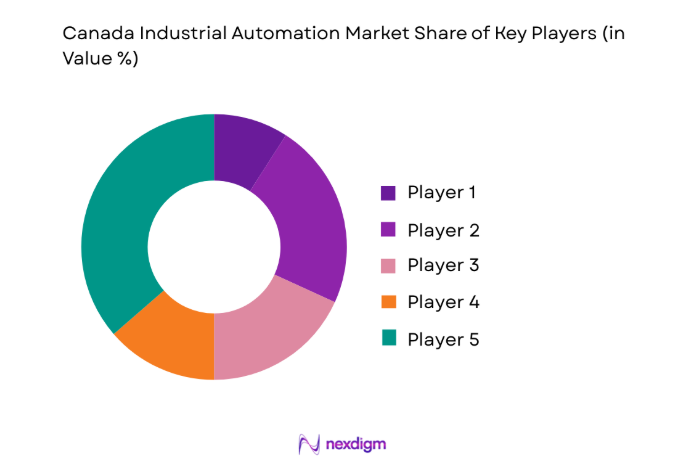
Canada Industrial Automation Market Analysis
Growth Drivers
Technological Advancements in Robotics:
Robotics technology is driving the industrial automation market by improving efficiency and precision in manufacturing processes. The adoption of robots, particularly collaborative robots (cobots), is expected to rise across various industries, such as automotive and electronics manufacturing. These robots not only reduce the need for manual labor but also enhance the production speed and ensure higher-quality outcomes. With their ability to perform repetitive tasks with high accuracy and safety, robots are becoming integral to production lines. Furthermore, advancements in artificial intelligence (AI) and machine learning are contributing to the growth of robotics, enabling machines to learn and adapt to tasks more effectively. The integration of AI in robotic systems helps predict potential failures and optimize production schedules, making operations more cost-efficient and reducing downtime. As manufacturing processes become more complex, robotics offers a sustainable solution to meet the growing demands of various industries, further accelerating the adoption of industrial automation systems. Additionally, governments across the globe are investing in automation technologies, providing financial support to industries to adopt these systems, which is fueling further growth. Automation also plays a key role in improving workplace safety by taking on hazardous tasks, which increases its appeal to manufacturers looking to minimize risks and protect workers. This ongoing technological evolution in robotics is set to continue driving market expansion.
Government Initiatives for Industry 4.0:
Another key growth driver is the increasing number of government initiatives supporting Industry 4.0. Governments worldwide are recognizing the importance of digital transformation in industries and are promoting automation technologies through favorable policies and subsidies. These initiatives aim to enhance productivity, reduce labor costs, and help industries stay competitive in the global market. For instance, countries such as Canada, Germany, and Japan are investing heavily in the development of smart factories and advanced manufacturing technologies. Industry 4.0 initiatives often focus on integrating Internet of Things (IoT) devices, AI, and robotics to create more efficient production processes. These investments are not only pushing the adoption of automation in manufacturing but are also fostering innovation in the technology sector, further propelling the market’s growth. As industries move toward more automated systems, the adoption of digital solutions like cloud computing and data analytics is also rising, which enhances real-time decision-making and operational transparency. Governments are also encouraging the creation of sustainable solutions in manufacturing, promoting automation that reduces waste and increases energy efficiency. With growing interest in automation and digitalization, the regulatory support provided by governments is expected to accelerate the transition to fully automated industries, which will continue to drive the market forward.
Market Challenges
High Initial Investment Costs:
One of the major challenges facing the industrial automation market is the high initial investment required for automation technologies. The upfront cost of procuring, installing, and integrating automated systems can be prohibitive for small and medium-sized enterprises (SMEs). For many businesses, the cost of automation systems, including robotics, sensors, and AI software, represents a significant portion of their operating budget. Additionally, the complexity of integrating new systems into existing infrastructure adds to the financial burden. Many industries are still hesitant to adopt these technologies due to concerns about the return on investment (ROI). Although automation offers long-term cost savings through efficiency gains, the initial outlay can deter businesses from making the leap. This issue is especially prevalent in developing economies where capital is limited, and businesses are less likely to invest in automation. Moreover, industries that rely on labor-intensive processes are often resistant to automation due to the fear of job losses and a perceived lack of readiness for such a transformation. Addressing this challenge requires governments and industry leaders to offer financial incentives, grants, or tax rebates to encourage companies to invest in automation. These efforts can help mitigate the impact of high upfront costs and increase the overall adoption of industrial automation.
Integration of Legacy Systems:
Another significant challenge in the industrial automation market is the difficulty of integrating automation systems with legacy equipment. Many industries still rely on outdated machinery and systems that were not designed with automation in mind. Integrating new automation technologies with these legacy systems can be a complex and time-consuming process. In many cases, legacy systems are incompatible with modern automation technologies, requiring significant customization or even complete overhauls of existing equipment. This can be costly and may result in disruptions to ongoing operations. Moreover, businesses may face challenges in training their workforce to operate new automated systems while still maintaining older equipment. For industries with long-established processes and technologies, the integration of automation presents a steep learning curve and the need for specialized expertise. This challenge is further exacerbated by the lack of standardization in automation technologies, which can lead to interoperability issues between different systems and devices. Despite these challenges, companies that successfully integrate automation with legacy systems can achieve improved efficiency, lower operating costs, and enhanced product quality, ultimately benefiting from the long-term advantages of automation.
Opportunities
Emerging Demand for Smart Manufacturing:
As industries worldwide increasingly focus on digital transformation, there is a growing opportunity for industrial automation technologies to support smart manufacturing initiatives. Smart manufacturing involves the use of connected devices, sensors, and advanced analytics to optimize production processes in real-time. The demand for smart manufacturing solutions is growing rapidly, driven by the need for higher efficiency, reduced costs, and better quality control. Automation technologies, such as robotics, machine vision, and AI, are central to the development of smart factories, enabling manufacturers to monitor and adjust operations dynamically. These systems are not only improving production rates but also enhancing product customization and reducing waste. Smart manufacturing is seen as a key strategy for industries looking to stay competitive in an increasingly digital world. The integration of automation with IoT devices allows for data-driven decision-making, improved supply chain visibility, and predictive maintenance, all of which contribute to more efficient and agile manufacturing environments. As more companies recognize the potential of smart manufacturing to drive innovation and growth, the demand for automation solutions is expected to soar.
Growth in Collaborative Robotics:
Collaborative robots (cobots) are becoming an increasingly important segment of the industrial automation market. Unlike traditional industrial robots, cobots are designed to work alongside human operators, making them ideal for tasks that require both human expertise and automation efficiency. This unique feature is helping cobots gain traction in industries such as automotive, electronics, and food processing, where they are deployed to assist with assembly, packaging, and material handling. The growing interest in cobots is driven by their flexibility, ease of integration into existing workflows, and ability to enhance productivity without replacing human workers. Cobots are particularly beneficial in small- and medium-sized enterprises, where space constraints and limited budgets make traditional automation systems less feasible. As industries move toward more flexible and human-friendly automation solutions, cobots are expected to play a major role in transforming manufacturing environments. Their ability to collaborate safely with humans in a shared workspace is also opening up new opportunities for automation in sectors where traditional robots were previously deemed unsuitable. With advancements in AI, sensors, and safety systems, cobots are poised to drive significant growth in the industrial automation market.
Future Outlook
The future outlook for the industrial automation market is promising, with continued growth expected over the next five years. Technological innovations, such as AI-driven systems and advanced robotics, will play a significant role in driving demand. Increased investments in smart manufacturing, coupled with rising government support for Industry 4.0, will create favorable conditions for market expansion. As industries increasingly embrace digital transformation, the adoption of automation technologies will continue to grow, offering significant opportunities for manufacturers to enhance efficiency and productivity.
Major Players
- Rockwell Automation
- Siemens AG
- ABB Ltd
- Mitsubishi Electric
- Honeywell International
- Schneider Electric
- Emerson Electric Co
- Fanuc Corporation
- KUKA AG
- Panasonic Corporation
- National Instruments
- Yokogawa Electric Corporation
- GE Automation
- Omron Corporation
- Bosch Rexroth AG
Key Target Audience
- Investments and venture capitalist firms
- Government and regulatory bodies
- Manufacturing companies seeking automation solutions
- Automotive industry stakeholders
- Electronics manufacturers
- Pharmaceutical companies
- Food and beverage producers
- Oil and gas companies
Research Methodology
Step 1: Identification of Key Variables
This step involves identifying the primary variables that influence market trends and size, including technological developments, industry demands, and market dynamics.
Step 2: Market Analysis and Construction
Market analysis is conducted using quantitative data, expert insights, and historical trends to construct a comprehensive view of market dynamics and future projections.
Step 3: Hypothesis Validation and Expert Consultation
The validity of market hypotheses is tested through consultations with industry experts, manufacturers, and technology providers to refine assumptions and projections.
Step 4: Research Synthesis and Final Output
The final report synthesizes all gathered data, presenting a well-rounded market outlook that includes analysis, forecasts, and recommendations.

- Executive Summary
- Research Methodology (Definitions, Scope, Industry Assumptions, Market Sizing Approach, Primary & Secondary Research Framework, Data Collection & Verification Protocol, Analytic Models & Forecast Methodology, Limitations & Research Validity Checks)

- Market Definition and Scope
- Value Chain & Stakeholder Ecosystem
- Regulatory / Certification Landscape
- Sector Dynamics Affecting Demand

- Growth Drivers
Rising Demand for Operational Efficiency
Government Initiatives for Industry 4.0
Technological Advancements in Robotics - Market Challenges
High Initial Investment Costs
Integration of Legacy Systems
Shortage of Skilled Workforce - Market Opportunities
Adoption of AI & Machine Learning in Automation
Expansion of Smart Manufacturing Initiatives
Integration of IoT with Automation Systems - Trends
Increased Adoption of Autonomous Systems
Growing Use of Predictive Maintenance
Surge in Demand for Smart Sensors - Government Regulations
- SWOT Analysis of Key Competitors

- By Market Value, 2020-2025
- By Installed Units, 2020-2025
- By Average System Price, 2020-2025
- By System Complexity Tier, 2020-2025

- By System Type (In Value%)
PLC-based Automation
DCS-based Automation
SCADA-based Automatio
Industrial Robots
Machine Vision Systems - By Platform Type (In Value%)
Cloud-based Platforms
Edge Computing Platforms
On-premise Platforms
Hybrid Platforms
Industrial IoT Platforms - By Fitment Type (In Value%)
On-site Solutions
Cloud-based Solutions
Hybrid Solutions
Integrated Systems
Modular Systems - By EndUser Segment (In Value%)
Automotive Manufacturing
Food & Beverage
Pharmaceuticals
Electronics Manufacturing
Oil & Gas

- Market Share Analysis
- CrossComparison Parameters (System Type, Platform Type, Procurement Channel, EndUser Segment, Fitment Type)
- SWOT Analysis of Key Competitors
- Pricing & Procurement Analysis
- Porter’s Five Forces
- Key Players
Rockwell Automation
Siemens AG
ABB Ltd
Honeywell International
Mitsubishi Electric
Schneider Electric
Yokogawa Electric Corporation
Emerson Electric Co
Panasonic Corporation
GE Automation
KUKA AG
Fanuc Corporation
Omron Corporation
Bosch Rexroth AG
National Instruments

- Automotive Manufacturers Increasing Automation Demand
- Pharmaceutical Industry’s Shift to Automation
- Food & Beverage Industry’s Focus on Process Optimization
- Oil & Gas Sector’s Adoption of Automation for Efficiency

- Forecast Market Value, 2026-2035
- Forecast Installed Units, 2026-2035
- Price Forecast by System Tier, 2026-2035
- Future Demand by Platform, 2026-2035


 Request a Sample
 Ask for Customization
 Get a Quote
 Enquire Now