

 Download PDF
Market Overview
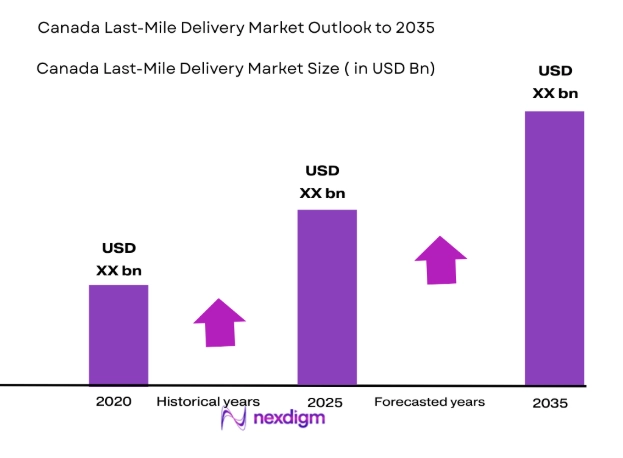
Canada’s last-mile delivery market is valued at approximately USD ~ billion based on a recent historical assessment, driven primarily by the expansion of e-commerce logistics, parcel distribution networks, and rapid urban delivery infrastructure across the country. Data published by Statistics Canada and the Canadian Transportation Agency highlights strong parcel shipment volumes generated by digital retail transactions. Increasing consumer expectations for rapid delivery services, combined with investments in automated distribution centers, route optimization software, and urban micro-fulfillment facilities, continue strengthening the operational scale of last-mile delivery networks nationwide.
Toronto, Vancouver, Montreal, Calgary, and Ottawa represent the dominant logistics hubs shaping Canada’s last-mile delivery ecosystem due to their large population bases, dense retail infrastructure, and advanced transportation connectivity. Major parcel carriers and third-party logistics providers maintain extensive distribution facilities across these metropolitan regions to support high shipment volumes generated by e-commerce retailers and food delivery platforms. Strong digital commerce adoption, sophisticated urban logistics infrastructure, and proximity to major fulfillment warehouses enable these cities to operate as the primary distribution centers for national last-mile delivery operations.
Market Segmentation
By Product Type
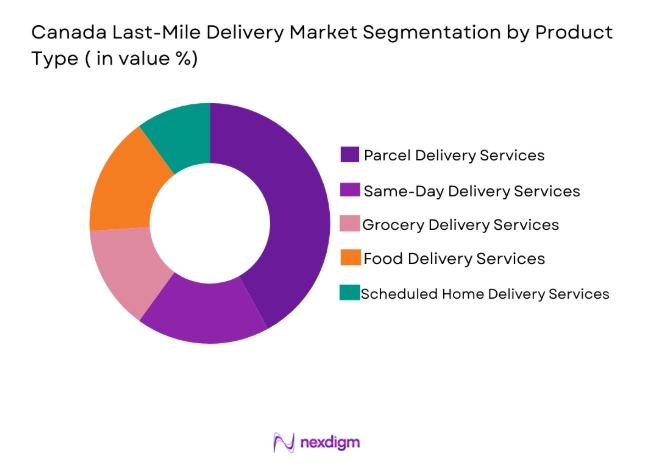
Canada Last-Mile Delivery market is segmented by product type into parcel delivery services, same-day delivery services, grocery delivery services, food delivery services, and scheduled home delivery services. Recently, parcel delivery services has a dominant market share due to factors such as strong e-commerce shipment volumes, nationwide logistics infrastructure, and the operational scale of established courier networks. Major carriers maintain extensive sorting hubs, automated distribution centers, and large delivery fleets designed to handle extremely high parcel volumes generated by online retail transactions. Retailers increasingly rely on parcel distribution providers capable of managing cross-province deliveries while maintaining reliable transit times. Consumer purchasing behavior increasingly favors online retail channels, strengthening demand for parcel delivery networks capable of supporting large shipment volumes across residential destinations nationwide.
By Platform Type
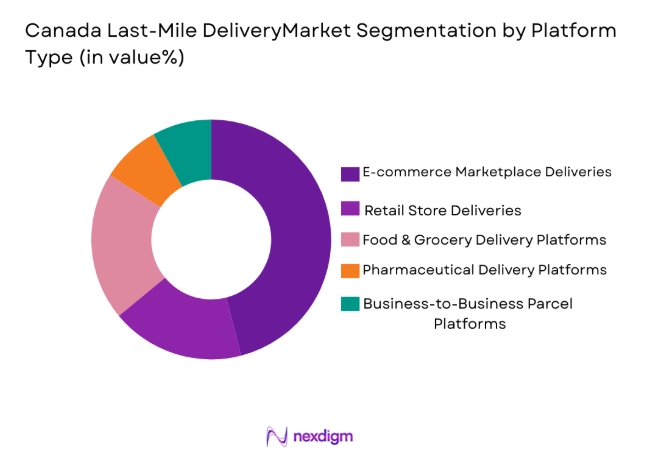
Canada Last-Mile Delivery market is segmented by platform type into e-commerce marketplace deliveries, retail store deliveries, food and grocery platforms, pharmaceutical delivery platforms, and business-to-business parcel platforms. Recently, e-commerce marketplace deliveries has a dominant market share due to factors such as rising digital commerce participation, expansion of large online retail platforms, and nationwide fulfillment networks supporting residential deliveries. Online marketplaces process significant transaction volumes involving electronics, clothing, groceries, and household goods requiring efficient last-mile transportation systems. Logistics providers operate large distribution centers connected with regional courier fleets capable of managing daily parcel shipments generated by digital retail transactions. The expansion of mobile commerce applications and digital payment platforms further increases the frequency of online purchases across Canadian consumers.
Competitive Landscape
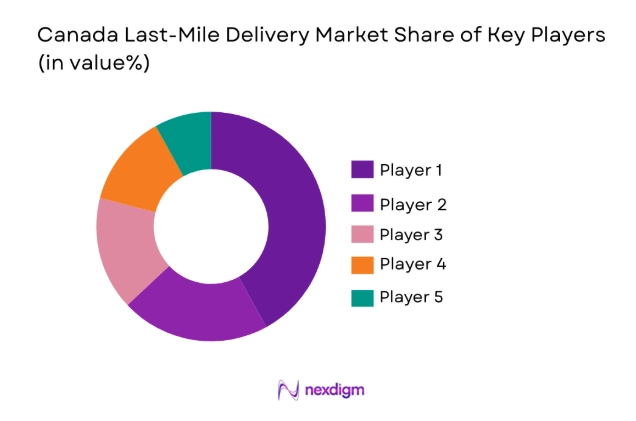
The Canada Last-Mile Delivery market is moderately consolidated, with a combination of large national parcel carriers, specialized courier companies, and technology-enabled logistics platforms operating across the country. Established players maintain strong nationwide infrastructure including automated parcel hubs, delivery fleets, and digital shipment tracking platforms. Major logistics companies compete through service reliability, delivery speed, and technological integration while smaller operators focus on regional distribution networks and specialized delivery services such as grocery, pharmaceutical, and same-day courier deliveries.
| Company Name | Establishment Year | Headquarters | Technology Focus | Market Reach | Key Products | Revenue | Delivery Network Capacity |
| Canada Post | 1867 | Ottawa, Canada | ~ | ~ | ~ | ~ | ~ |
| Purolator | 1960 | Mississauga, Canada | ~ | ~ | ~ | ~ | ~ |
| FedEx Canada | 1971 | Memphis, USA | ~ | ~ | ~ | ~ | ~ |
| UPS Canada | 1907 | Atlanta, USA | ~ | ~ | ~ | ~ | ~ |
| Intelcom | 1986 | Montreal, Canada | ~ | ~ | ~ | ~ | ~ |
Canada Last-Mile Delivery Market Analysis
Growth Drivers
Expansion of E-commerce Retail and Digital Marketplace Logistics Networks
Canada’s last-mile delivery sector continues expanding due to rapid growth in digital commerce and online marketplace platforms that generate extremely high parcel shipment volumes across national logistics networks. Online retail platforms distribute a wide range of consumer goods including electronics, clothing, groceries, and pharmaceuticals requiring efficient last-mile transportation infrastructure capable of supporting daily residential deliveries. Logistics companies invest heavily in automated parcel sorting facilities, robotics-enabled warehouses, and route optimization software designed to improve delivery efficiency while reducing operational costs. Retail companies increasingly outsource logistics operations to specialized courier and parcel service providers capable of managing nationwide distribution networks connecting fulfillment warehouses with residential delivery destinations. Advanced digital tracking platforms enable logistics providers to offer real-time shipment visibility while improving delivery reliability across metropolitan regions. Large e-commerce platforms continue expanding regional fulfillment centers located near major urban populations to accelerate order processing and shorten delivery timelines for consumers. Growing adoption of mobile commerce applications and digital payment platforms further increases online retail participation among Canadian consumers generating additional parcel shipment volumes. Logistics providers also deploy predictive analytics systems capable of forecasting parcel demand and optimizing transportation routes across urban delivery networks. As online retail activity continues expanding across Canada’s consumer economy, last-mile delivery infrastructure remains critical for supporting efficient order fulfillment operations nationwide.
Rising Consumer Demand for Rapid and Same Day Delivery Services
Consumer purchasing behavior across Canada increasingly prioritizes rapid delivery options including same-day and next-day parcel shipments for online retail orders. Digital consumers expect faster delivery times across a wide range of product categories including groceries, consumer electronics, apparel, pharmaceuticals, and household products. Logistics providers respond by expanding urban micro-fulfillment centers and localized distribution hubs positioned near major population centers capable of accelerating parcel processing operations. Courier companies deploy large urban delivery fleets supported by advanced route optimization software designed to reduce transit times and improve delivery efficiency across densely populated metropolitan areas. Retail companies also partner with third-party logistics providers capable of offering specialized rapid delivery services for high-value consumer shipments requiring fast transportation across city distribution networks. Food delivery platforms and grocery retailers further strengthen demand for same-day delivery services requiring highly responsive logistics networks capable of supporting rapid order fulfillment. Digital tracking platforms and mobile courier applications allow customers to monitor shipment progress while increasing transparency across delivery operations. As consumer expectations for delivery speed continue rising, logistics providers continuously expand infrastructure investments in urban distribution facilities, automated parcel hubs, and technology-enabled transportation networks designed to support faster delivery performance nationwide.
Market Challenges
High Urban Delivery Costs and Operational Expenses
Urban logistics operations across Canada’s last-mile delivery sector face significant operational cost pressures driven by labor expenses, vehicle maintenance, fuel consumption, and complex urban transportation conditions. Logistics companies must operate large delivery fleets and maintain extensive distribution networks to support daily parcel shipments across metropolitan regions. Rising fuel costs and vehicle operating expenses increase transportation costs for courier companies responsible for managing large shipment volumes. Labor shortages across transportation and warehousing sectors also increase operational costs as logistics providers compete for qualified delivery drivers and warehouse personnel. Urban traffic congestion further complicates delivery operations by extending transit times and reducing fleet productivity across densely populated cities. Logistics companies therefore invest heavily in route optimization technologies, automated sorting equipment, and delivery scheduling systems designed to reduce operational inefficiencies. However, the implementation of advanced logistics technologies also requires significant capital investment which may challenge smaller courier operators attempting to compete with larger logistics companies. Increasing parcel shipment volumes generated by digital commerce further require large distribution facilities capable of managing high order processing activity. As operational expenses continue rising across transportation networks, logistics providers must continuously optimize fleet management strategies and delivery routes to maintain profitability.
Urban Congestion and Last Mile Infrastructure Limitations
Canada’s rapidly growing metropolitan regions present logistical challenges for last-mile delivery providers attempting to manage high parcel volumes across densely populated urban environments. Traffic congestion, parking restrictions, and limited loading zones complicate the ability of delivery fleets to complete parcel drop-offs efficiently within city centers. Courier drivers frequently experience delays caused by limited urban logistics infrastructure designed to support commercial delivery vehicles. Growing e-commerce shipment volumes significantly increase delivery traffic across metropolitan neighborhoods requiring improved transportation coordination and route planning. Municipal governments increasingly introduce urban traffic regulations and environmental policies designed to reduce congestion and vehicle emissions which may affect delivery operations across city logistics networks. Logistics companies respond by deploying advanced route optimization systems and alternative delivery methods including parcel lockers and micro-fulfillment facilities located within urban districts. Some operators experiment with electric delivery vehicles and cargo bikes capable of navigating congested city environments more efficiently than conventional delivery vans. However, limited urban logistics infrastructure continues creating operational bottlenecks affecting delivery speed and operational productivity across major Canadian metropolitan regions. Efficient urban planning and logistics infrastructure development therefore remain critical for improving last-mile delivery performance nationwide.
Opportunities
Expansion of Electric Delivery Fleets and Sustainable Logistics Infrastructure
Canada’s transition toward environmentally sustainable transportation systems creates significant opportunities for last-mile delivery companies to adopt electric vehicle fleets and low-emission logistics technologies across urban distribution networks. Federal and provincial environmental policies encourage commercial fleet electrification through incentives supporting electric vehicle adoption within logistics operations. Courier companies increasingly deploy electric delivery vans designed to reduce greenhouse gas emissions while lowering long-term vehicle operating costs associated with fuel consumption. Electric fleet adoption also supports corporate sustainability commitments among logistics providers and large retail companies seeking environmentally responsible transportation partners. Battery technology improvements enable electric delivery vehicles to achieve longer operational ranges suitable for daily parcel distribution routes within urban environments. Logistics companies further invest in charging infrastructure networks supporting electric fleet operations across distribution hubs and regional delivery centers. Sustainable transportation strategies also improve corporate brand positioning among environmentally conscious consumers who increasingly value low-emission logistics services. Electric delivery fleets may additionally reduce operational noise levels across residential neighborhoods improving community acceptance of urban delivery operations. As environmental regulations and sustainability expectations continue strengthening across Canada’s transportation sector, electric logistics fleets represent a significant growth opportunity for last-mile delivery providers.
Deployment of Automated Parcel Lockers and Smart Delivery Infrastructure
The rapid expansion of automated parcel locker networks and smart delivery infrastructure presents significant operational opportunities for last-mile delivery providers seeking to improve delivery efficiency and reduce residential delivery complexities. Parcel lockers located within residential buildings, retail centers, and transportation hubs allow courier companies to consolidate multiple deliveries within centralized pickup points rather than completing individual household drop-offs. This approach significantly improves delivery productivity by enabling drivers to deliver large parcel volumes within a single location while reducing travel time between destinations. Retail companies increasingly partner with logistics providers to install parcel lockers across commercial centers supporting flexible consumer pickup options. Smart locker systems integrated with mobile applications allow consumers to receive digital notifications and secure access codes enabling convenient parcel collection at any time. Automated parcel infrastructure also reduces failed delivery attempts which commonly occur when recipients are unavailable during delivery windows. Logistics providers therefore improve operational efficiency while lowering transportation costs associated with repeated delivery attempts. As parcel shipment volumes continue increasing due to expanding e-commerce activity, smart delivery infrastructure offers scalable solutions capable of improving last-mile logistics performance across urban distribution networks.
Future Outlook
Canada’s last-mile delivery market is expected to experience continued expansion as digital commerce participation increases across the national economy and parcel shipment volumes continue rising. Logistics providers will invest heavily in automation technologies, micro-fulfillment centers, and artificial intelligence based delivery route optimization platforms to improve operational efficiency. Environmental policies supporting electric transportation and sustainable logistics fleets will also influence delivery infrastructure modernization. Growing consumer demand for faster delivery services and integrated digital tracking systems will continue strengthening demand for advanced last-mile logistics networks across major Canadian metropolitan regions.
Major Players
- Canada Post
- Purolator
- FedEx Canada
- UPS Canada
- DHL Express Canada
- Intelcom
- GoBolt
- Nationex
- Loomis Express
- Canpar Express
- ICS Courier
- Dragonfly Shipping
- Amazon Logistics Canada
- FlashBox
- TForce Integrated Solutions
Key Target Audience
- Investments and venture capitalist firms
- Government and regulatory bodies
- E-commerce retail companies
- Logistics and transportation companies
- Courier and parcel service providers
- Food and grocery delivery platforms
- Technology companies developing logistics automation systems
Research Methodology
Step 1: Identification of Key Variables
Market variables influencing Canada’s last-mile delivery market were identified including parcel shipment volumes, logistics infrastructure, digital commerce penetration, transportation regulations, and delivery technology adoption. Secondary research sources such as logistics industry reports, government transportation data, and trade publications were analyzed to establish core market parameters influencing delivery network expansion.
Step 2: Market Analysis and Construction
Extensive secondary research was conducted across government publications, corporate financial reports, logistics industry databases, and trade association statistics to construct market size estimates. Supply chain infrastructure, courier fleet capacity, parcel volume trends, and e-commerce activity were analyzed to determine the structural composition of the last-mile delivery ecosystem.
Step 3: Hypothesis Validation and Expert Consultation
Market assumptions were validated through consultations with logistics industry professionals, supply chain analysts, and transportation experts. Insights from courier companies, logistics technology providers, and retail distribution specialists helped verify operational trends shaping last-mile delivery networks across Canada.
Step 4: Research Synthesis and Final Output
All collected data points were synthesized through structured analytical frameworks to produce the final market report. Data triangulation techniques ensured accuracy across market size estimation, segmentation analysis, and competitive landscape evaluation. Final conclusions were structured into a comprehensive report presenting detailed insights on Canada’s last-mile delivery market.

- Executive Summary
- Research Methodology (Definitions, Scope, Industry Assumptions, Market Sizing Approach, Primary & Secondary Research Framework, Data Collection & Verification Protocol, Analytic Models & Forecast Methodology, Limitations & Research Validity Checks)

- Market Definition and Scope
- Value Chain & Stakeholder Ecosystem
- Regulatory / Certification Landscape
- Sector Dynamics Affecting Demand
- Strategic Initiatives & Infrastructure Growth

- Growth Drivers
Expansion of E-commerce Retail and Digital Marketplace Fulfillment
Rising Consumer Demand for Same Day and Next Day Delivery Services
Growth of Urban Population and Digital Commerce Adoption - Market Challenges
High Urban Delivery Costs and Labor Expenses
Last-Mile Delivery Congestion in Major Metropolitan Areas
Operational Complexity of Managing High Parcel Volumes - Market Opportunities
Adoption of Electric Delivery Vehicles and Sustainable Logistics Solutions
Expansion of Automated Parcel Lockers and Pickup Networks
Integration of Artificial Intelligence for Route Optimization and Fleet Management - Trends
Expansion of Micro Fulfillment Centers Near Urban Consumers
Increasing Use of Data Driven Delivery Route Optimization Technologies - Government Regulations
Transport Canada Delivery Vehicle Regulations
Urban Emissions Reduction Policies for Commercial Fleets
Data Privacy Regulations Affecting Digital Delivery Platforms - SWOT Analysis
- Porter’s Five Forces

- By Market Value, 2020-2025
- By Installed Units, 2020-2025
- By Average System Price, 2020-2025
- By System Complexity Tier, 2020-2025

- By System Type (In Value%)
Parcel Delivery Services
Same Day Delivery Services
Scheduled Home Delivery Services
Crowdsourced Delivery Services
Temperature Controlled Delivery Services - By Platform Type (In Value%)
E-commerce Marketplace Deliveries
Retail Distribution Deliveries
Food & Grocery Delivery Platforms
Pharmaceutical Delivery Platforms
Business to Business Parcel Deliveries - By Fitment Type (In Value%)
In-House Delivery Fleet
Third Party Logistics Providers
Crowdsourced Driver Networks
Hybrid Delivery Networks - By End User Segment (In Value%)
E-commerce Retailers
Food & Grocery Retail Chains
Healthcare & Pharmaceutical Companies

- Market Share Analysis
- Cross Comparison Parameters (Delivery Speed, Coverage Network, Fleet Size, Technology Integration, Pricing Model, Service Portfolio, Sustainability Initiatives)
- SWOT Analysis of Key Competitors
- Pricing & Procurement Analysis
- Key Players
Canada Post
Purolator
FedEx Canada
UPS Canada
DHL Express Canada
Intelcom
GoBolt
Nationex
Loomis Express
Canpar Express
ICS Courier
Dragonfly Shipping
Amazon Logistics Canada
FlashBox
TForce Integrated Solutions

- Retailers Increasing Dependence on Outsourced Delivery Networks
- Food and Grocery Chains Expanding Rapid Home Delivery Services
- Healthcare Sector Requiring Temperature Controlled Medical Deliveries
- Small Businesses Using On Demand Courier Platforms for Local Distribution

- Forecast Market Value, 2026-2035
- Forecast Installed Units, 2026-2035
- Price Forecast by System Tier, 2026-2035
- Future Demand by Platform, 2026-2035


 Request a Sample
 Ask for Customization
 Get a Quote
 Enquire Now