

 Download PDF
 Download PDF
Market Overview
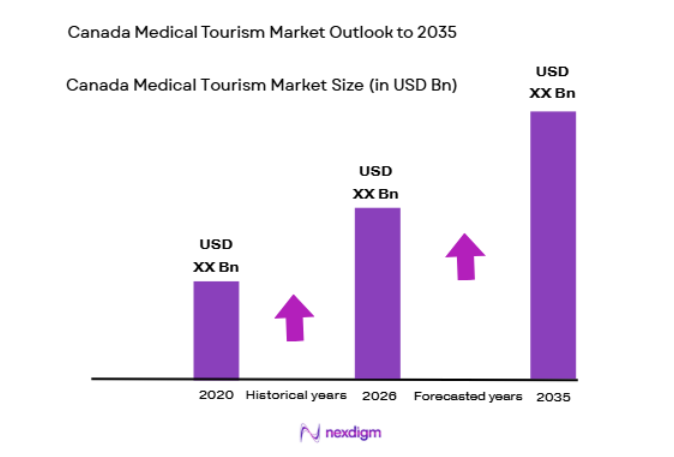
The medical tourism market in Canada is experiencing notable growth, valued at approximately USD ~ billion based on a recent historical assessment. This market is primarily driven by the increasing preference for high-quality healthcare services, competitive pricing, and advanced medical technologies. Patients from various parts of the world, especially from the U.S. and other neighboring countries, are drawn to Canada’s well-established healthcare infrastructure and specialized medical treatments. The market has also benefited from the government’s initiatives to boost international medical services.
Dominant cities in Canada, such as Toronto, Vancouver, and Montreal, continue to lead the medical tourism sector. These cities are recognized for their world-class hospitals, state-of-the-art diagnostic equipment, and highly skilled medical professionals. Their proximity to international borders and established networks of private and public health facilities make them attractive destinations for medical tourists. Additionally, Canada’s emphasis on quality healthcare and patient safety strengthens its position in the global medical tourism market.
Market Segmentation
By Treatment Type
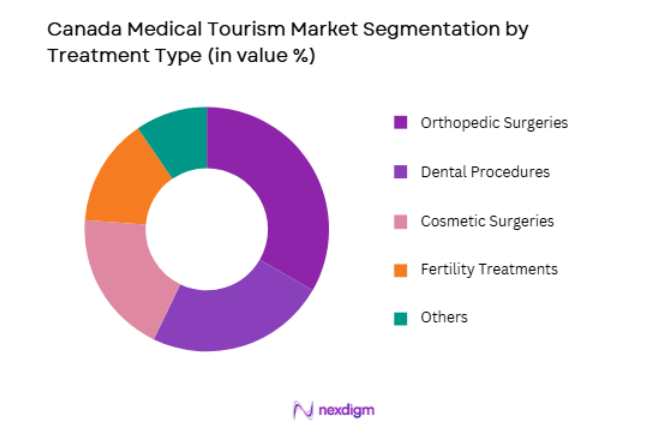
Canada’s medical tourism market is segmented by treatment type into orthopedic surgeries, dental procedures, cosmetic surgeries, fertility treatments, and others. Recently, orthopedic surgeries have dominated the market due to the growing demand for joint replacement surgeries, sports injury treatments, and other musculoskeletal interventions. Canada is known for its highly advanced medical facilities specializing in orthopedic procedures, which has attracted international patients seeking cost-effective and high-quality treatments. The country’s healthcare infrastructure and internationally renowned orthopedic surgeons contribute to this sub-segment’s strong market presence.
By Source Country
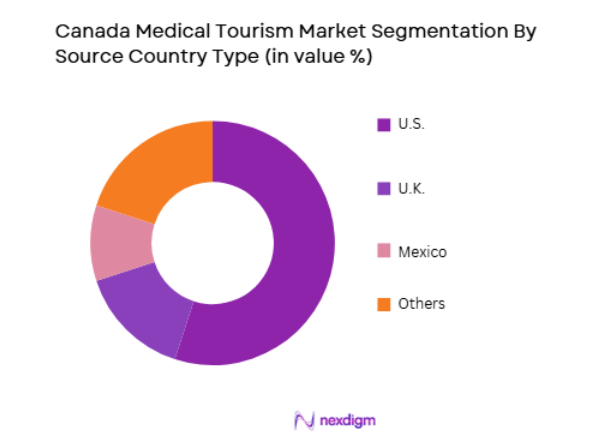
Canada’s medical tourism market is segmented by source country into the U.S., the U.K., Mexico, and others. The U.S. has seen the largest number of patients seeking medical care in Canada due to the high cost of healthcare in the U.S. and the proximity between the two countries. The affordability of medical treatments in Canada, combined with the country’s advanced healthcare technologies, makes it a highly attractive destination for American patients. Additionally, the ease of travel and the quality of healthcare services provided by Canadian medical institutions further solidify the dominance of U.S. patients in the market.
Competitive Landscape
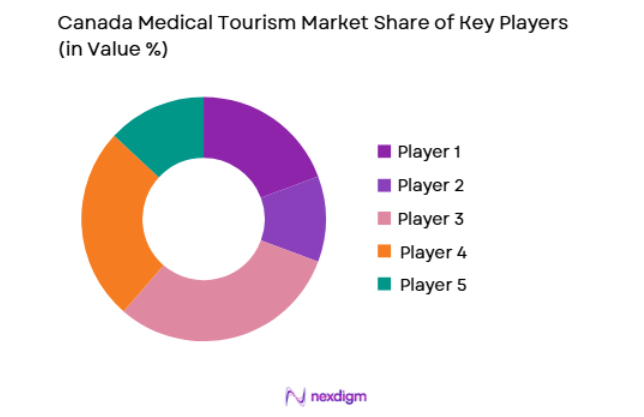
The competitive landscape of the Canadian medical tourism market is highly fragmented, with several private hospitals, clinics, and healthcare institutions vying for market share. The market has seen some consolidation, especially with larger healthcare providers expanding their global footprint and increasing their medical tourism services. The influence of major players is growing as they improve their service offerings and attract international patients through competitive pricing, specialized treatments, and innovative technologies. Hospitals in key cities like Toronto and Vancouver lead the market by offering high-quality medical services and forming strategic partnerships with travel agencies and insurance providers.
| Company Name | Establishment Year | Headquarters | Technology Focus | Market Reach | Key Services | Revenue | Additional Parameter |
| MedCan | 1997 | Toronto, Canada | ~ | ~ | ~ | ~ | ~ |
| Toronto General Hospital | 1829 | Toronto, Canada | ~ | ~ | ~ | ~ | ~ |
| Mount Sinai Hospital | 1923 | Toronto, Canada | ~ | ~ | ~ | ~ | ~ |
| BC Children’s Hospital | 1928 | Vancouver, Canada | ~ | ~ | ~ | ~ | ~ |
| The Ottawa Hospital | 1845 | Ottawa, Canada | ~ | ~ | ~ | ~ | ~ |
Canada Medical Tourism Market Analysis
Growth Drivers
High-Quality Healthcare Services
High-quality healthcare services in Canada serve as a significant growth driver for the medical tourism market. The country has earned a reputation for offering world-class medical services across a variety of specialties, including orthopedics, cosmetic surgery, and fertility treatments. Canadian hospitals and clinics are equipped with state-of-the-art technology and employ internationally trained medical professionals, making it a prime destination for patients seeking high-quality, cost-effective treatments. The country’s healthcare system is also recognized for its patient-centric approach, with an emphasis on safety and comfort. As patients from countries like the U.S. and U.K. continue to seek affordable, high-quality medical care, Canada’s well-established reputation as a healthcare leader supports the ongoing growth of its medical tourism sector.
Cost-Effective Healthcare
The cost-effectiveness of healthcare in Canada is another key driver of growth in the medical tourism market. Compared to countries like the U.S., Canada offers significantly lower treatment costs, making it an attractive alternative for patients seeking affordable medical solutions. While the cost of healthcare in Canada is still substantial, it remains more accessible than in many other high-cost countries. For patients, especially those from the U.S. where healthcare can be prohibitively expensive, medical tourism to Canada presents a compelling option. This cost advantage, combined with the country’s excellent healthcare infrastructure, has made Canada a preferred destination for medical tourists looking to balance quality with affordability. The increasing trend of patients seeking value-driven healthcare options further accelerates the growth of Canada’s medical tourism market.
Market Challenges
Regulatory and Legal Barriers
One of the significant challenges faced by the Canadian medical tourism market is navigating the complex regulatory and legal landscape. Healthcare in Canada is publicly funded, and while this ensures high-quality services for residents, the involvement of international patients raises questions regarding the regulatory framework for non-residents. Medical tourism regulations can vary from province to province, complicating the process for foreign patients seeking treatment. Furthermore, patients often face issues regarding insurance coverage, as their domestic insurers may not provide reimbursement for treatments received outside their home country. This creates a barrier to entry for many potential international patients, limiting the market’s growth potential.
Competition from Other Countries
Canada faces stiff competition from other countries in the medical tourism sector, particularly in regions like Mexico, Costa Rica, and India. These countries offer lower-cost alternatives and have developed strong reputations for providing high-quality medical services to international patients. While Canada offers excellent healthcare, the higher treatment costs compared to some of its competitors can discourage patients from choosing Canada as their destination for medical care. This competition challenges Canadian hospitals and clinics to innovate continuously, improve their service offerings, and lower costs to remain competitive in the global medical tourism market.
Opportunities
Expansion of Specialized Treatments
One of the key opportunities for growth in Canada’s medical tourism market is the expansion of specialized treatments. Canada has already established itself as a leader in several medical specialties, including orthopedics, cosmetic surgery, and fertility treatments. There is significant potential to further develop niche services in areas like robotic surgery, neurosurgery, and advanced cancer treatments. By focusing on high-demand specialized services, Canadian healthcare institutions can attract a broader international patient base. Additionally, the rising demand for alternative medicine and wellness treatments presents another opportunity for Canadian providers to diversify their offerings and expnd their market reach.
Increased Government Support for Medical Tourism
Government support for medical tourism is another significant opportunity for the market’s growth. As medical tourism continues to generate significant economic benefits, provincial and federal governments may introduce policies to support the industry. This could include the development of specific visa programs for medical tourists, tax incentives for hospitals offering international patient services, and partnerships with travel and tourism sectors to streamline the medical tourism process. Increased government backing can help overcome some of the barriers in the regulatory environment, making it easier for international patients to access medical care in Canada. As the global market for medical tourism continues to expand, Canadian government initiatives to promote the country as a healthcare destination will drive further market growth.
Future Outlook
The future outlook for Canada’s medical tourism market is positive, with continued growth expected over the next five years. The country’s high-quality healthcare services, cost-effectiveness, and well-established medical infrastructure will continue to attract international patients. Technological advancements, including the integration of telemedicine and AI-driven diagnostics, will further enhance the patient experience and drive demand. Additionally, government support and the expansion of specialized treatments present significant opportunities for growth. With increasing competition from other countries, Canadian medical tourism providers must innovate and adapt to remain competitive in the global marketplace.
Major Players
- MedCan
- Toronto General Hospital
- Mount Sinai Hospital
- BC Children’s Hospital
- The Ottawa Hospital
- St. Michael’s Hospital
- Sunnybrook Health Sciences Centre
- McGill University Health Centre
- Humber River Hospital
- Hamilton Health Sciences
- Toronto Western Hospital
- North York General Hospital
- University Health Network
- London Health Sciences Centre
- Scarborough Health Network
Key Target Audience
- Investments and venture capitalist firms
- Government and regulatory bodies
- Healthcare providers
- Hospitals and clinics
- Pharmaceutical companies
- Travel and tourism agencies
- Medical equipment manufacturers
- Insurance providers
Research Methodology
Step 1: Identification of Key Variables
Key variables such as market size, growth drivers, segmentation factors, and key trends are identified using a combination of primary and secondary research.
Step 2: Market Analysis and Construction
Data is gathered from multiple sources, including industry reports, government publications, and expert interviews, to build a comprehensive market model.
Step 3: Hypothesis Validation and Expert Consultation
Insights are validated through consultations with medical tourism industry experts to ensure the reliability and accuracy of the findings.
Step 4: Research Synthesis and Final Output
All gathered data is synthesized into a cohesive report that highlights the key drivers, challenges, and opportunities in Canada’s medical tourism market.

- Executive Summary
- Research Methodology (Definitions, Scope, Industry Assumptions, Market Sizing Approach, Primary & Secondary Research Framework, Data Collection & Verification Protocol, Analytic Models & Forecast Methodology, Limitations & Research Validity Checks)

- Market Definition and Scope
- Value Chain & Stakeholder Ecosystem
- Regulatory / Certification Landscape
- Sector Dynamics Affecting Demand

- Growth Drivers
High-Quality Healthcare Services at Competitive Prices
Advancements in Medical Technology
Government Incentives and Promotion of Healthcare - Market Challenges
Regulatory and Licensing Barriers
Language and Cultural Differences
Perception of Medical Risks - Market Opportunities
Expansion in Non-surgical Treatments
Increased Focus on Wellness and Preventive Care
Growing Popularity of Alternative Medicine - Trends
Rising Demand for Wellness Tourism
Integration of Telemedicine in Medical Tourism - Government Regulations
- SWOT Analysis
- Porter’s Five Forces

- By Market Value, 2020-2025
- By Installed Units, 2020-2025
- By Average System Price, 2020-2025
- By System Complexity Tier, 2020-2025

- By System Type (In Value%)
Cosmetic Surgery
Cardiac Surgery
Orthopedic Surgery
Dental Services
Fertility Treatments - By Platform Type (In Value%)
Online Platforms
Medical Tourism Agencies
Direct Hospital/Clinic Referrals
Third-Party Facilitators
Government-supported Platforms - By Fitment Type (In Value%)
Pre-treatment Services
Post-treatment Services
Complete Treatment Packages
Travel and Accommodation Services - By End User Segment (In Value%)
International Patients
Domestic Patients
Insurance Providers

- Market Share Analysis
- Cross Comparison Parameters (System Type, Platform Type, Procurement Channel, End User Segment, Fitment Type, Service Quality, Patient Satisfaction, Treatment Cost, Location Accessibility, Service Availabilit)
- SWOT Analysis of Key Competitors
- Pricing & Procurement Analysis
- Key Players
Medigo
PlacidWay
Healthbase
Smart Medical Buyer
MedTour
CanadaMedLaser
The Medical Concierge
TMC HealthCare
Facial Surgery Center
Hospital for Special Surgery
Toronto General Hospital
Mount Sinai Hospital
Bloor West Medical Centre
Vancouver General Hospital
McGill University Health Centre

- Increasing International Patients’ Demand
- Rising Preferences for Cosmetic and Dental Treatments
- Growing Role of Insurance Providers in Medical Tourism
- The Impact of Government Regulations on Patient Flow

- Forecast Market Value, 2026-2035
- Forecast Installed Units, 2026-2035
- Price Forecast by System Tier, 2026-2035
- Future Demand by Platform, 2026-2035


 Request a Sample
 Ask for Customization
 Get a Quote
 Enquire Now