
 Download PDF
Market Overview
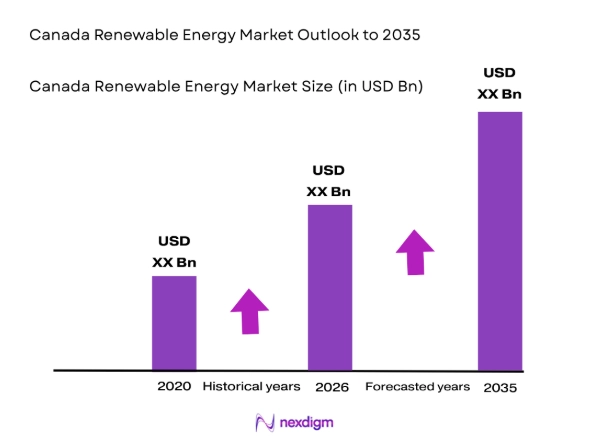
The Canada Renewable Energy market is projected to reach USD ~ billion based on a recent historical assessment, driven by the country’s ambitious goals to reduce carbon emissions and expand the adoption of clean energy technologies. This growth is primarily fueled by increasing investments in wind, solar, and hydroelectric power, alongside strong government policies promoting renewable energy adoption. These efforts are further supported by tax incentives, subsidies, and the commitment to achieving net-zero emissions by 2050.
Ontario, Quebec, and British Columbia are the key regions leading the charge in Canada’s renewable energy transition. Ontario is a major player due to its growing solar and wind energy infrastructure. Quebec is increasingly leveraging its abundant hydroelectric resources to support renewable energy goals, while British Columbia focuses on expanding both its solar and wind energy capacities. These provinces are driving technological advancements and investing in infrastructure to ensure the success of Canada’s renewable energy initiatives.
Market Segmentation
By Energy Source
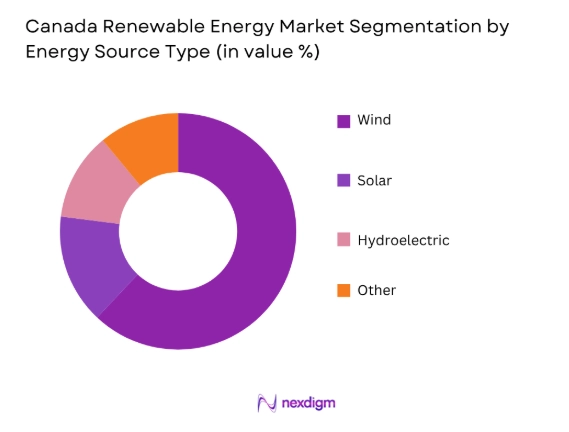
The Canada Renewable Energy market is segmented by energy source into wind, solar, hydroelectric, and others. Wind energy has recently dominated the market due to its cost-effectiveness and Canada’s vast wind resources, especially in regions such as the Prairies and the Atlantic provinces. Technological advancements, coupled with decreasing installation costs and an increase in government-backed wind projects, have strengthened wind energy’s position as a leading source of renewable power in Canada. This has resulted in substantial investments and an expanding project pipeline for onshore and offshore wind farms.
By Application Type
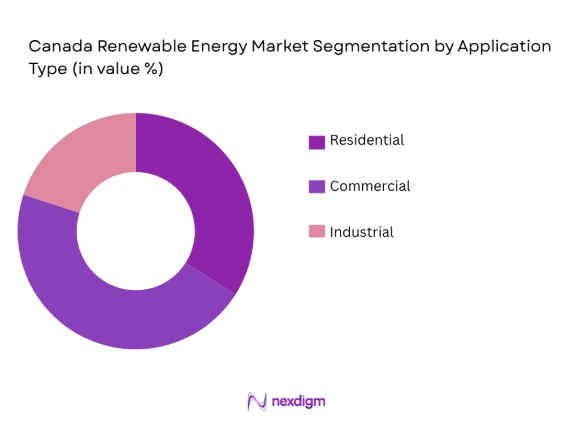
The Canada Renewable Energy market is segmented by application type into residential, commercial, and industrial. The residential sector has dominated in recent years due to the increasing adoption of rooftop solar installations and the growing interest in small-scale renewable energy solutions. Government incentives, such as rebates and tax credits, have made it more affordable for homeowners to install solar panels. As consumers seek to reduce energy bills and minimize their environmental impact, the residential renewable energy sector remains a significant driver of market growth.
Competitive Landscape
The Canada Renewable Energy market is highly competitive, featuring both large international companies and a growing number of local players focused on developing and managing renewable energy projects. The market has witnessed consolidation, with larger firms acquiring smaller regional companies to enhance their portfolios and scale up operations. These companies focus on expanding renewable energy capacity, improving technology, and securing long-term contracts with government entities and utilities to maintain a competitive edge in the market.
| Company Name | Establishment Year | Headquarters | Technology Focus | Market Reach | Key Products | Revenue (USD Billion) | Market-Specific Parameter |
| Brookfield Renewable | 1999 | Toronto, Canada | ~ | ~ | ~ | ~ | ~ |
| TransAlta | 1909 | Calgary, Canada | ~ | ~ | ~ | ~ | ~ |
| Canadian Solar | 2001 | Guelph, Canada | ~ | ~ | ~ | ~ | ~ |
| Enbridge | 1949 | Calgary, Canada | ~ | ~ | ~ | ~ | ~ |
| NextEra Energy | 1925 | Juno Beach, USA | ~ | ~ | ~ | ~ | ~ |
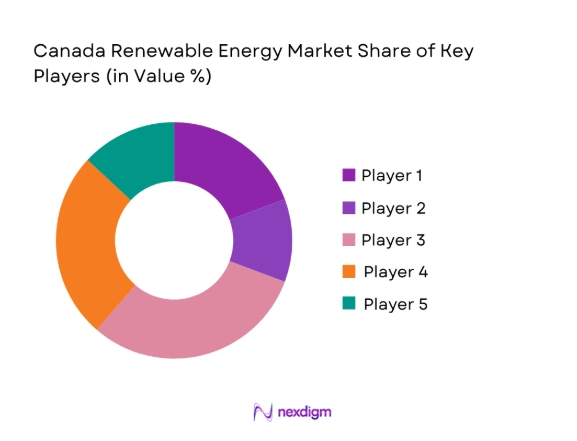
Canada Renewable Energy Market Analysis
Growth Drivers
Government Policies and Incentives
Government initiatives and financial incentives are a key driver for the growth of the Canada Renewable Energy market. The Canadian government’s commitment to achieving net-zero emissions by 2050 has led to the introduction of various policies and financial incentives aimed at promoting renewable energy adoption. Programs such as the Clean Growth Program and the Renewable Energy Investment Fund are providing financial support for wind, solar, and hydroelectric projects. Additionally, provinces like Ontario and Quebec have introduced their own policies to incentivize renewable energy use in both residential and commercial sectors. These initiatives are expected to drive continued growth in the renewable energy market, with renewable power generation becoming an essential component of Canada’s energy landscape.
Technological Advancements
Technological innovations in renewable energy systems are fueling the growth of the Canada Renewable Energy market. Recent advancements in solar panel efficiency, wind turbine technology, and hydroelectric power systems have significantly lowered costs, making renewable energy more competitive with traditional fossil fuels. The reduction in the cost of energy storage solutions is also allowing for better integration of renewable energy sources into the grid, overcoming challenges related to intermittency. The ongoing development of advanced grid management systems, along with breakthroughs in energy storage, will continue to facilitate the adoption of renewable energy technologies. As these technologies continue to evolve, Canada’s renewable energy market will benefit from increased capacity, efficiency, and affordability.
Market Challenges
High Initial Investment
The high capital costs associated with renewable energy projects pose a significant challenge to market growth. While the cost of renewable energy technologies has decreased over the years, the initial capital required for large-scale wind, solar, and hydroelectric projects remains a barrier. Developers must secure significant funding to build infrastructure such as wind farms, solar arrays, and grid integration systems. Despite declining costs, the upfront financial commitment required for such projects can still be a major hurdle for smaller developers or those with limited access to capital. Financial barriers, combined with regulatory delays and permitting challenges, can slow down the deployment of renewable energy systems in Canada.
Grid Integration and Storage
Integrating renewable energy into the existing grid infrastructure remains a major challenge. As renewable energy sources like wind and solar are intermittent, the need for advanced energy storage systems to store excess power generated during peak times is essential. However, the high costs and technological limitations of current storage solutions present a challenge. Additionally, grid infrastructure in certain regions of Canada requires upgrades to handle the increased load from renewable energy sources. These infrastructure challenges, along with the intermittency of renewable energy, make grid integration more complex and costly. Overcoming these challenges through innovation in storage solutions and grid management systems will be critical for the continued growth of the renewable energy market.
Opportunities
Expansion of Distributed Energy Resources
The rise of distributed energy resources (DERs) offers significant opportunities for the Canada Renewable Energy market. With the increasing adoption of solar panels on rooftops, home battery storage systems, and small-scale wind turbines, Canada is witnessing a shift toward more decentralized energy production. DERs allow homeowners and businesses to generate their own electricity and reduce their dependence on the grid, contributing to greater energy security and reducing emissions. The growth of these distributed systems creates new opportunities for renewable energy providers to offer tailored solutions for residential, commercial, and industrial customers. This shift toward localized energy generation is expected to continue, driving market expansion in the coming years.
Hydropower Expansion in Remote Areas
There is significant potential for expanding hydropower projects in remote regions of Canada. Canada is already one of the world’s largest producers of hydroelectric power, but there are still untapped opportunities in remote and underserved areas. Expanding hydropower capacity in these regions could provide a reliable source of renewable energy, benefiting local communities while reducing the reliance on fossil fuels. In addition to large-scale hydroelectric plants, smaller run-of-river and pumped storage projects can contribute to meeting Canada’s growing demand for renewable energy. As government policies continue to support the development of clean energy infrastructure, hydropower will remain a vital opportunity for renewable energy developers in Canada.
Future Outlook
The future of the Canada Renewable Energy market looks optimistic, with substantial growth expected across all major sectors. Advancements in renewable technologies, including solar, wind, and hydropower, will continue to lower costs and improve efficiency. Government policies and financial incentives will support the growth of renewable energy infrastructure, while the development of energy storage solutions will enable better grid integration. As demand for clean energy rises, both from residential consumers and large industrial players, Canada’s renewable energy market will play a central role in the country’s transition to a low-carbon economy.
Major Players
- Brookfield Renewable Partners
- TransAlta
- Canadian Solar
- Enbridge
- SunPower
- Vestas
- Siemens Gamesa
- First Solar
- Innergex Renewable Energy
- Boralex
- Pattern Energy
- NextEra Energy
- EDF Renewables
- Nexterra
- Resolute Forest Products
Key Target Audience
- Investments and venture capitalist firms
- Government and regulatory bodies
- Energy developers and EPC contractors
- Solar panel manufacturers
- Solar project investors
- Commercial and residential solar consumers
- Utility companies
Research Methodology
Step 1: Identification of Key Variables
Identifying the key drivers, challenges, and regulatory frameworks affecting the Canada Renewable Energy market, including government policies, technological advancements, and demand trends.
Step 2: Market Analysis and Construction
Analyzing the renewable energy market, including segmentation by technology type, project type, and end-user sector, to provide a comprehensive view of the market landscape.
Step 3: Hypothesis Validation and Expert Consultation
Consulting with industry experts, renewable energy developers, and government bodies to validate hypotheses and ensure the accuracy of market assumptions and forecasts.
Step 4: Research Synthesis and Final Output
Synthesizing findings from primary and secondary research into a comprehensive market report, offering insights and recommendations for stakeholders in the Canadian Renewable Energy market.

- Executive Summary
- Research Methodology (Definitions, Scope, Industry Assumptions, Market Sizing Approach, Primary & Secondary Research Framework, Data Collection & Verification Protocol, Analytic Models & Forecast Methodology, Limitations & Research Validity Checks)

- Market Definition and Scope
- Value Chain & Stakeholder Ecosystem
- Regulatory / Certification Landscape
- Sector Dynamics Affecting Demand

- Growth Drivers
Government Support and Incentives for Renewable Energy
Technological Advancements in Energy Generation
Rising Demand for Clean Energy Solutions - Market Challenges
Intermittency and Storage Challenges for Renewable Energy
High Capital Investment for Infrastructure
Regulatory and Permitting Delays - Market Opportunities
Expansion of Offshore Wind Energy
Development of Energy Storage Solutions
Growth in Residential Solar Installations - Trends
Increasing Adoption of Energy Storage Technologies
Integration of Renewable Energy with Smart Grids - Government Regulations
- SWOT Analysis
- Porter’s Five Forces

- By Market Value, 2020-2025
- By Installed Units, 2020-2025
- By Average System Price, 2020-2025
- By System Complexity Tier, 2020-2025

- By System Type (In Value%)
Solar Energy Systems
Wind Energy Systems
Biomass Energy Systems
Hydropower Systems
Geothermal Energy Systems - By Platform Type (In Value%)
Onshore Platforms
Offshore Platforms
Ground-mounted Platforms
Rooftop Platforms - By Fitment Type (In Value%)
Fixed Solutions
Tracking Solutions
Hybrid Solutions
Modular Solutions - By End User Segment (In Value%)
Private Sector
Government Agencies
Energy Utilities

- Market structure and competitive positioning
- Market share snapshot of major players
- Cross Comparison Parameters (System Type, Platform Type, Procurement Channel, End User Segment, Fitment Type, Technological Integration, Installation Scale, Hydroelectric Power, Wind Energy, Solar Photovoltaic, Biomass & Bioenergy)
- SWOT Analysis of Key Competitors
- Pricing & Procurement Analysis
- Key Players
Siemens Gamesa
Nordex
Vestas
Enel Green Power
RWE
SMA Solar Technology
First Solar
Trina Solar
JinkoSolar
E.ON
Vattenfall
BayWa r.e.
Sungrow Power
Suzlon Energy
Senvion

- Government’s Role in Renewable Energy Policies
- Rising Private Sector Investment in Renewable Projects
- Increasing Adoption in Energy Utilities
- Renewable Energy for Decentralized Power Systems

- Forecast Market Value, 2026-2035
- Forecast Installed Units, 2026-2035
- Price Forecast by System Tier, 2026-2035
- Future Demand by Platform, 2026-2035


 Request a Sample
 Ask for Customization
 Get a Quote
 Enquire Now