

 Download PDF
 Download PDF
Market Overview
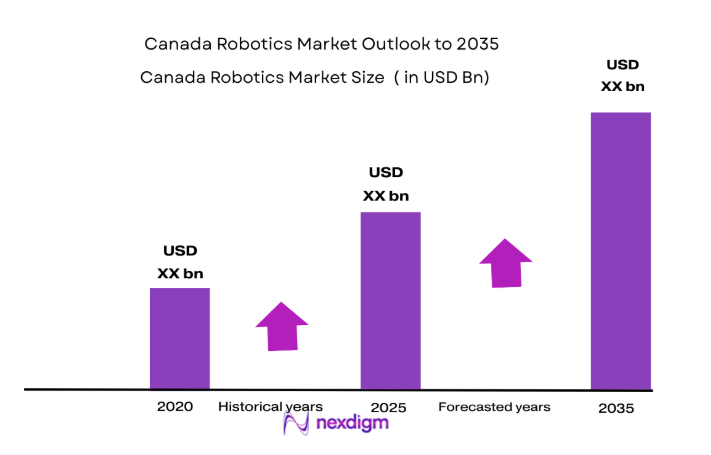
The Canada Robotics Market is a rapidly growing sector, driven by advancements in automation and robotics technology. Based on a recent historical assessment, the market size is projected to reach USD ~ billion, driven by increased demand for industrial robots and automation solutions across manufacturing, healthcare, logistics, and other industries. The market’s expansion is supported by government incentives, ongoing technological innovations in robotics, and the integration of AI and machine learning, which is pushing the limits of what robots can achieve in terms of precision, efficiency, and autonomy.
The market’s growth is dominated by major industrial hubs such as Toronto, Montreal, and Vancouver, which have become key centers for robotics innovation and manufacturing. These cities benefit from strong infrastructure, access to highly skilled talent, and proximity to key sectors such as manufacturing and logistics, which are increasingly adopting robotics solutions to enhance productivity and operational efficiency. Additionally, the Canadian government’s focus on fostering technological innovation and supporting robotics integration in key sectors contributes to the market’s growth, positioning Canada as a leader in North America for robotics technology.
Market Segmentation
By Product Type:
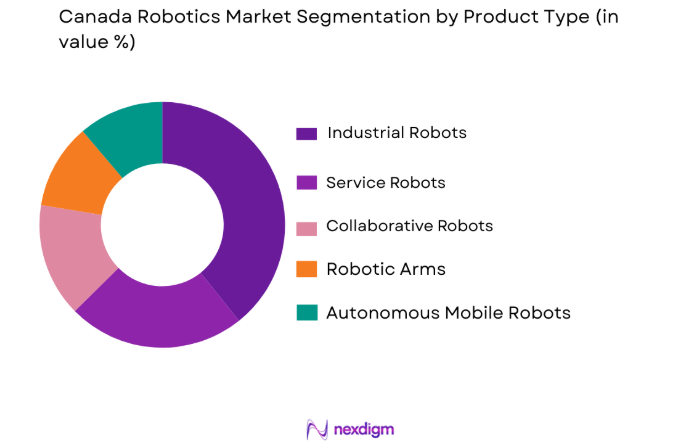
The Canada Robotics Market is segmented by product type into industrial robots, service robots, collaborative robots, robotic arms, and autonomous mobile robots. Industrial robots hold the dominant market share, driven by the widespread adoption of automation solutions in manufacturing industries such as automotive and electronics. These robots are increasingly seen as vital tools for improving production efficiency, reducing costs, and maintaining high-quality standards in manufacturing environments. The growth of smart factories and Industry 4.0 initiatives also contributes to the increasing demand for industrial robots.
By Application:
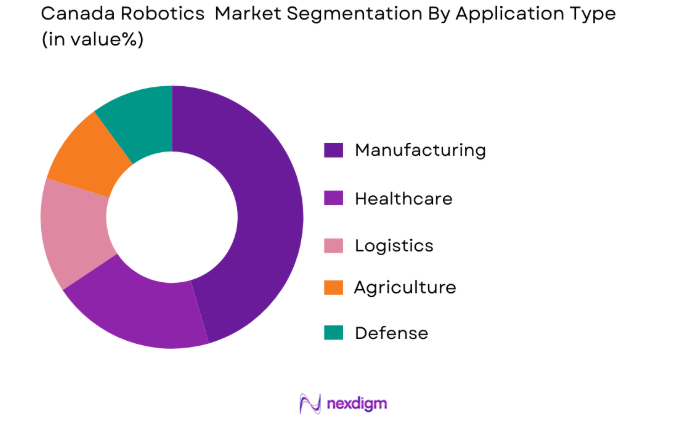
The Canada Robotics Market is segmented by application into manufacturing, healthcare, logistics, agriculture, and defense. The manufacturing sector dominates the market due to the high adoption rate of robotics in automotive production, electronics assembly, and other industrial applications. Robotics in manufacturing helps reduce human error, increase operational efficiency, and improve worker safety. As automation and robotics technology continues to evolve, manufacturers are increasingly investing in advanced robotics systems to optimize their production lines and stay competitive in the global market.
Competitive Landscape
The competitive landscape of the Canada Robotics Market is highly concentrated, with several key players dominating the market. These players are leveraging advanced technologies, strategic partnerships, and strong customer bases to maintain their market position. The influence of major companies is driving consolidation within the sector, particularly as companies expand their product portfolios to include a wider range of robotics solutions for industrial, commercial, and consumer use. Industry players are focusing on enhancing robot intelligence and capabilities, investing in AI and machine learning, and exploring new markets to expand their reach.
| Company Name | Establishment Year | Headquarters | Technology Focus | Market Reach | Key Products | Revenue | Market-Specific Parameter |
| ABB | 1988 | Zurich, Switzerland | ~ | ~ | ~ | ~ | ~ |
| KUKA | 1898 | Augsburg, Germany | ~ | ~ | ~ | ~ | ~ |
| FANUC | 1956 | Oshino, Japan | ~ | ~ | ~ | ~ | ~ |
| Yaskawa Electric | 1915 | Kitakyushu, Japan | ~ | ~ | ~ | ~ | ~ |
| Universal Robots | 2005 | Odense, Denmark | ~ | ~ | ~ | ~ | ~ |

Canada Robotics Market Analysis
Growth Drivers
Technological Advancements in Robotics:
The technological advancements in robotics, particularly in AI, machine learning, and sensor technologies, have been a major growth driver for the Canada Robotics Market. These innovations have enhanced the capabilities of robots, making them more intelligent, autonomous, and capable of performing a wide range of tasks across industries. Robotics solutions are now able to perform complex functions such as real-time data analysis, decision-making, and remote operation, which are crucial for industries like manufacturing, logistics, and healthcare. Moreover, the integration of robotics with other advanced technologies like IoT and big data analytics is increasing the efficiency and functionality of robotics solutions, further driving market growth. As robots become more adaptable and capable of handling diverse tasks, industries are increasingly investing in automation to reduce costs, enhance production, and improve operational efficiency. This trend is particularly prominent in manufacturing, where robots are widely used for tasks such as assembly, welding, and packaging. The rapid adoption of robotics in the automotive and electronics sectors is expected to fuel the growth of the robotics market in Canada, positioning it as a key player in North America’s industrial robotics space.
Government Support for Robotics Integration:
Another significant growth driver is the strong support from the Canadian government in promoting technological innovation and robotics integration across various industries. Through various initiatives and funding programs, the government is encouraging businesses to adopt robotics technology to enhance productivity and competitiveness. For example, the Canadian government has introduced policies aimed at supporting automation in manufacturing, which has led to the development of advanced robotics systems in sectors such as automotive, healthcare, and agriculture. Additionally, government investments in research and development (R&D) are fostering innovation in the robotics field, enabling Canadian companies to develop cutting-edge robotics solutions. Government support for the adoption of robotics is also evident in the defense sector, where Canada is investing in autonomous systems and robotics for surveillance, reconnaissance, and other military applications. The combination of policy support, R&D investments, and the push for industrial automation is expected to further accelerate the growth of the Canadian robotics market, making it a key contributor to the global robotics industry.
Market Challenges
High Initial Investment Costs:
One of the main challenges facing the Canada Robotics Market is the high initial investment costs associated with robotics systems. The acquisition of industrial robots, service robots, and collaborative robots often involves significant capital expenditure, which can be a barrier for small and medium-sized enterprises (SMEs) looking to adopt automation technology. Although the long-term benefits of robotics, such as increased productivity and reduced operational costs, outweigh the initial investment, many companies, especially SMEs, find it difficult to justify the upfront cost. This challenge is exacerbated by the high cost of integrating robotics with existing production systems and ensuring interoperability with other technologies. While larger corporations may have the financial resources to invest in robotics, smaller players may delay their adoption of automation technology due to budget constraints. To address this challenge, it is essential for robotics manufacturers to develop cost-effective solutions and provide financing options to help companies mitigate the initial investment costs and make robotics more accessible to businesses of all sizes.
Shortage of Skilled Labor in Robotics:
Another challenge faced by the Canada Robotics Market is the shortage of skilled labor capable of designing, operating, and maintaining advanced robotics systems. As the robotics industry continues to grow, there is an increasing demand for workers with specialized skills in robotics engineering, AI, machine learning, and automation. However, the supply of skilled labor in these fields is insufficient to meet the growing demand. This shortage of skilled workers presents a significant challenge for companies looking to adopt robotics solutions and integrate them into their operations. The lack of skilled labor can lead to delays in implementation, increased training costs, and operational inefficiencies. To overcome this challenge, industry stakeholders need to invest in training programs, educational initiatives, and partnerships with academic institutions to ensure that the workforce is equipped with the necessary skills to support the robotics sector’s growth.
Opportunities
Adoption of Robotics in Healthcare:
The healthcare sector presents significant opportunities for robotics adoption in Canada. With the growing demand for medical procedures, the increasing need for precision surgery, and the aging population, robotics is poised to play a critical role in the transformation of healthcare delivery. Surgical robots, rehabilitation robots, and robotic assistants are becoming integral parts of medical practices, enabling healthcare professionals to perform complex procedures with greater precision and minimal invasiveness. The Canadian healthcare industry is adopting robotics for a wide range of applications, including surgery, patient management, and rehabilitation. As the demand for robotic-assisted procedures increases, there will be more opportunities for robotics companies to expand their presence in the healthcare market. The Canadian government’s support for healthcare modernization and innovation further enhances the potential for robotics in this sector. Robotics technology is expected to improve patient outcomes, reduce recovery times, and lower healthcare costs, creating substantial opportunities for market players in the healthcare robotics space.
Expansion of Robotics in Agriculture:
The agriculture sector in Canada is increasingly adopting robotics to improve efficiency, reduce labor costs, and enhance precision farming practices. Robotics technology in agriculture is being used for a variety of tasks, including planting, harvesting, crop monitoring, and pest control. The rise of precision agriculture, supported by advancements in sensor technology and AI, is driving the demand for agricultural robots that can perform tasks with greater accuracy and efficiency than traditional methods. Additionally, with the growing demand for sustainable and eco-friendly farming practices, robotics can help reduce resource usage and environmental impact. The Canadian government’s support for smart farming initiatives and sustainable agricultural practices further strengthens the market’s potential for agricultural robotics. As more farmers look for innovative solutions to meet the challenges of modern agriculture, robotics will play an increasingly important role in optimizing farm operations and improving productivity.
Future Outlook
Over the next five years, the Canada Robotics Market is expected to continue its strong growth trajectory, driven by ongoing advancements in automation technologies and increased adoption across various industries. Technological developments, particularly in AI, machine learning, and robotics integration, are expected to enhance the capabilities of robotics systems, making them more intelligent and adaptable to diverse applications. The manufacturing sector will remain a key driver of market growth, but other sectors such as healthcare, agriculture, and logistics will also see increased adoption of robotics solutions. Furthermore, government initiatives aimed at fostering innovation and supporting robotics integration will contribute to the sector’s growth, creating a favorable environment for market players. Regulatory support for robotics technology and its applications in critical industries will also play a crucial role in shaping the future outlook of the market.
Major Players
- ABB
- KUKA
- FANUC
- Yaskawa Electric
- Universal Robots
- Rockwell Automation
- Mitsubishi Electric
- StäubliRobotics
- Omron Corporation
- Kawasaki Heavy Industries
- iRobot
- TechmanRobot
- Rethink Robotics
- Cyberdyne
- Schunk
Key Target Audience
- Investments and venture capitalist firms
- Government and regulatory bodies
- Manufacturing companies
- Healthcare providers
- Logistics and supply chain companies
- Agricultural firms
- Robotics research institutions
- Technology developers
Research Methodology
Step 1: Identification of Key Variables
The first step involves identifying the key variables that influence the Canada Robotics Market, including technological advancements, industry-specific demand, and regulatory factors.
Step 2: Market Analysis and Construction
This step includes analyzing the data collected from secondary and primary sources to construct a comprehensive market model.
Step 3: Hypothesis Validation and Expert Consultation
Expert consultations are conducted to validate assumptions and refine hypotheses based on real-world insights.
Step 4: Research Synthesis and Final Output
The final step involves synthesizing the findings from market analysis, expert input, and data collection to produce the final research report.

- Executive Summary
- Research Methodology (Definitions, Scope, Industry Assumptions, Market Sizing Approach, Primary & Secondary Research Framework, Data Collection & Verification Protocol, Analytic Models & Forecast Methodology, Limitations & Research Validity Checks)

- Market Definition and Scope
- Value Chain & Stakeholder Ecosystem
- Regulatory / Certification Landscape
- Sector Dynamics Affecting Demand

- Growth Drivers
Increasing Demand for Automation in Manufacturing
Technological Advancements in Robotics and AI
Government Initiatives for Robotics Integration in Industries - Market Challenges
High Initial Investment in Robotics Systems
Shortage of Skilled Workforce in Robotics
Integration and Interoperability Issues - Market Opportunities
Adoption of Robotics in Healthcare
Growth in E-commerce and Logistics Robotics
Expansion of Autonomous Systems in Agriculture - Trends
Rise of Collaborative Robots in Industry
Growth of AI-powered Robotics Solutions
Integration of IoT with Robotics for Real-time Data Analytics - Government Regulations
- SWOT Analysis of Key Competitors

- By Market Value, 2020-2025
- By Installed Units, 2020-2025
- By Average System Price, 2020-2025
- By System Complexity Tier, 2020-2025

- By System Type (In Value%)
Industrial Robots
Service Robots
Collaborative Robots
Robotic Arms
Autonomous Mobile Robots - By Platform Type (In Value%)
Land-based Robots
Aerial Robots
Underwater Robots
Hybrid Robots
Integrated Platforms - By Fitment Type (In Value%)
On-premise Solutions
Cloud-based Solutions
Hybrid Solutions
Modular Solutions
Integrated Solutions - By EndUser Segment (In Value%)
Manufacturing Industry
Healthcare & Medical
Logistics & Warehousing
Agriculture

- Market Share Analysis
- CrossComparison Parameters (System Type, Platform Type, Procurement Channel, EndUser Segment, Fitment Type)
- SWOT Analysis of Key Competitors
- Pricing & Procurement Analysis
- Porter’s Five Forces
- Key Players
ABB
KUKA Robotics
Fanuc Corporation
Yaskawa Electric Corporation
Rockwell Automation
Universal Robots
Boston Dynamics
Mitsubishi Electric
Omron Corporation
Stäubli Robotics
Kawasaki Heavy Industries
IRobot
Techman Robot
Rethink Robotics
Cyberdyne

- Manufacturers Increasing Adoption of Robots for Automation
- Healthcare Providers Utilizing Robotics for Surgery and Rehabilitation
- Logistics Firms Increasing Use of Robotics in Warehousing
- Agriculture Sector Adopting Robotics for Precision Farming

- Forecast Market Value, 2026-2035
- Forecast Installed Units, 2026-2035
- Price Forecast by System Tier, 2026-2035
- Future Demand by Platform, 2026-2035


 Request a Sample
 Ask for Customization
 Get a Quote
 Enquire Now