

 Download PDF
Market Overview
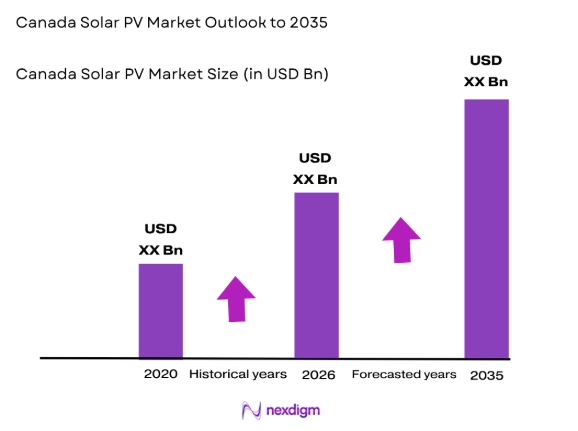
The Canadian solar photovoltaic (PV) market is expected to reach USD ~ billion by 2025, driven by both government initiatives and growing environmental awareness. The Canadian government’s clean energy policies, including the Carbon Pricing Act and renewable energy targets, have fostered the expansion of solar energy in both residential and commercial sectors. Additionally, falling costs for solar equipment and improving efficiency contribute to market growth. Incentives and subsidies further drive demand, making solar solutions more attractive to consumers and businesses alike.
The market is predominantly driven by provinces such as Ontario, Alberta, and Quebec, which have strong solar energy potential. These provinces are home to extensive solar energy projects due to their sunny climates, government-backed programs, and advanced infrastructure. Ontario leads the charge with numerous large-scale solar initiatives, while Alberta has rapidly expanded its renewable energy projects in recent years, benefiting from favorable policy environments and vast open land for solar farm installations.
Market Segmentation
By Product Type
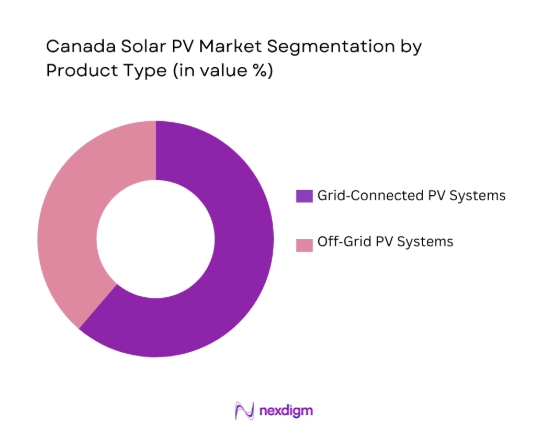
The Canadian solar PV market is segmented by product type into Grid‑Connected PV Systems, Off‑Grid PV Systems solar PV systems. The utility-scale segment holds the dominant market share due to significant investments in large solar farms driven by government incentives and the country’s renewable energy targets. Utility-scale projects, often backed by private investments, benefit from economies of scale, leading to lower installation costs and higher efficiency, making them the preferred choice for meeting Canada’s clean energy goals.
By Installation Type
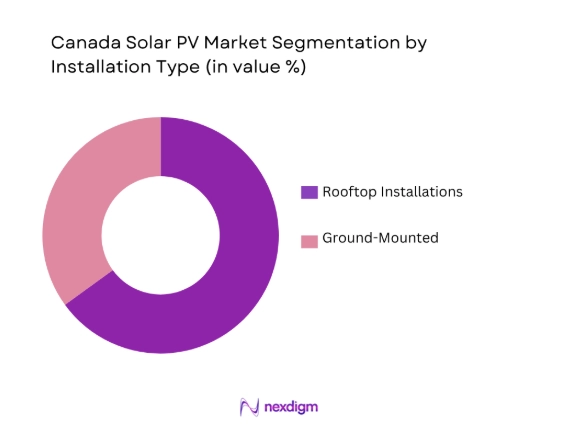
The market is segmented into rooftop installations and ground-mounted installations. Rooftop installations dominate due to their cost-effectiveness and flexibility, particularly in urban areas with high electricity demand. These systems are popular for residential and small commercial applications, where space constraints and installation costs are key factors. The growing trend of homeowners and businesses opting for solar energy to reduce energy bills and lower their carbon footprint is driving the expansion of rooftop installations across Canada.
Competitive Landscape
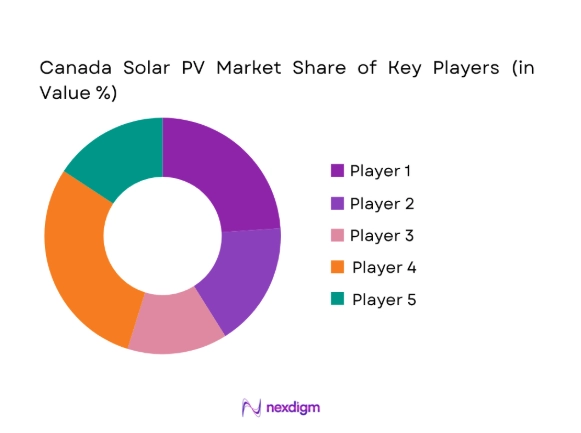
The Canadian solar PV market is competitive, with a mix of international and domestic players focusing on both utility-scale and residential installations. Several key players are involved in providing solar panels, inverters, and energy storage solutions, while others focus on installation services and project management. Major global companies are increasingly partnering with local firms to tap into the growing demand for renewable energy solutions. The market continues to be influenced by government policies, technological advancements, and the continuous reduction in solar costs.
| Company Name | Establishment Year | Headquarters | Technology Focus | Market Reach | Key Products | Revenue | Market-specific Parameter |
| Canadian Solar | 2001 | Guelph, Canada | ~ | ~ | ~ | ~ | ~ |
| JinkoSolar | 2006 | Shanghai, China | ~ | ~ | ~ | ~ | ~ |
| SunPower | 1985 | San Jose, USA | ~ | ~ | ~ | ~ | ~ |
| Trina Solar | 1997 | Changzhou, China | ~ | ~ | ~ | ~ | ~ |
| First Solar | 1999 | Tempe, USA | ~ | ~ | ~ | ~ | ~ |
Canada Solar PV Market Analysis
Growth Drivers
Government Policies
A key growth driver for the Canadian solar PV market is the supportive government policies that align with Canada’s clean energy targets. The country has committed to reducing carbon emissions and transitioning to renewable energy sources, with the goal of achieving net-zero emissions by 2050. To meet these targets, the government has introduced various financial incentives, subsidies, and rebates for both residential and commercial solar PV systems. Programs like the Canada Greener Homes Grant, which offers rebates for home solar installations, encourage the adoption of solar energy across the country. These government-led initiatives are essential in driving solar market growth by making renewable energy systems more affordable for consumers and businesses.
Technological Advancements
Technological advancements in solar PV technology have significantly reduced the costs associated with solar energy generation, contributing to the market’s growth in Canada. The efficiency of solar panels has improved over the years, with new products offering higher energy output and greater durability. Additionally, innovations such as bifacial solar panels, which capture sunlight from both sides, and the integration of energy storage systems, are gaining traction in the Canadian market. These technological advancements make solar energy even more attractive by increasing the amount of power generated while reducing the overall costs of installation and maintenance. As solar technologies continue to evolve, they will further contribute to the expansion of solar energy in Canada.
Market Challenges
High Initial Costs
While solar energy offers long-term savings, the high initial costs of purchasing and installing solar PV systems remain a significant barrier to adoption, especially in residential applications. Despite falling solar panel prices, the upfront cost of installing solar systems can still be prohibitive for some consumers. The financial burden is especially challenging in regions where the incentives or rebates provided by the government are not sufficient to cover the high capital investment. While financing options, such as solar loans and leases, have become more accessible, many potential buyers are still deterred by the initial expense. To overcome this challenge, continued government support, along with the development of more affordable solar technologies, is necessary to ensure broader adoption across all sectors.
Intermittency of Solar Power
Solar power generation is highly dependent on weather conditions, with energy production fluctuating based on sunlight availability. While Canada has a high level of solar radiation in certain regions, such as Alberta and Ontario, solar energy generation can be inconsistent, especially during the winter months or in regions with cloud cover. This intermittency presents a challenge for the solar market, particularly when it comes to meeting the continuous energy needs of households and businesses. To mitigate this challenge, solar energy systems need to be paired with reliable energy storage solutions that can store excess power for use during low production periods. However, the integration of such technologies comes with its own costs and technical challenges.
Opportunities
Residential Solar Solutions
The increasing interest in sustainability and the desire to lower electricity bills present a significant opportunity for residential solar PV systems in Canada. Homeowners are increasingly seeking ways to reduce their carbon footprints while ensuring long-term energy savings. Government incentives, such as the Canada Greener Homes Grant, further incentivize residential solar adoption by providing rebates and financial support for the installation of solar PV systems. As energy costs continue to rise, residential solar installations are expected to experience rapid growth, especially in urban centers such as Toronto, Vancouver, and Montreal, where electricity consumption is high. This segment offers a major opportunity for solar manufacturers, installers, and technology providers to expand their presence in the Canadian market.
Energy Storage Integration
As the demand for solar energy grows, the integration of energy storage systems presents a valuable opportunity in the Canadian market. Energy storage solutions, such as home battery systems, allow for the storage of excess energy generated during the day for use during the night or cloudy periods. The growing interest in off-grid and grid-connected residential solar systems presents a clear opportunity for the development of affordable and efficient storage solutions. By integrating solar PV with storage systems, consumers can reduce their reliance on the grid, enhance energy security, and achieve even greater cost savings. As energy storage technologies become more advanced and affordable, this market segment is expected to grow substantially in the coming years.
Future Outlook
The future outlook for the Canadian solar PV market is positive, with sustained growth expected over the next five years. The country’s commitment to achieving net-zero emissions by 2050, coupled with increasing solar energy adoption at both the residential and commercial levels, will drive further expansion. Technological advancements in solar panels and energy storage systems will continue to improve the cost-effectiveness and efficiency of solar energy. The Canadian government’s ongoing support for renewable energy through financial incentives and tax credits will also help maintain the momentum of solar adoption across the country. Additionally, the increasing demand for energy independence and sustainability will further propel market growth in the coming years.
Major Players
- JinkoSolar
- SunPower
- First Solar
- Canadian Solar
- Trina Solar
- REC Solar
- Yingli Green Energy
- LONGi Solar
- JA Solar
- SolarEdge
- Enphase Energy
- Sunrun
- Vestas
- Hanwha Q Cells
- Ecoligo
Key Target Audience
- Investments and venture capitalist firms
- Government and regulatory bodies
- Solar panel manufacturers
- Solar installation companies
- Real estate developers
- Solar equipment distributors
- Large-scale industrial energy consumers
Research Methodology
Step 1: Identification of Key Variables
The key variables for this research included government policies, technological advancements, solar panel costs, and energy consumption patterns.
Step 2: Market Analysis and Construction
Primary and secondary data sources, including market reports, expert interviews, and government publications, were utilized to analyze the Canadian solar PV market.
Step 3: Hypothesis Validation and Expert Consultation
Experts in solar energy technology, policy, and business models were consulted to validate key assumptions and insights used in this report.
Step 4: Research Synthesis and Final Output
The final output synthesized the collected data to offer an in-depth analysis of the solar PV market in Canada, addressing its growth drivers, challenges, and opportunities.

- Executive Summary
- Research Methodology (Definitions, Scope, Industry Assumptions, Market Sizing Approach, Primary & Secondary Research Framework, Data Collection & Verification Protocol, Analytic Models & Forecast Methodology, Limitations & Research Validity Checks)

- Market Definition and Scope
- Value Chain & Stakeholder Ecosystem
- Regulatory / Certification Landscape
- Sector Dynamics Affecting Demand

- Growth Drivers
Government Incentives for Solar Energy
Technological Advancements in Solar Panels
Growing Demand for Renewable Energy - Market Challenges
Intermittency and Storage Issues with Solar Energy
High Initial Capital Investment
Regulatory Barriers - Market Opportunities
Expanding Residential Solar Installations
Integration with Energy Storage Solutions
Development of Floating Solar Projects - Trends
Increasing Adoption of Solar in Commercial Sectors
Advancements in Solar Panel Efficiency - Government Regulations
- SWOT Analysis
- Porter’s Five Forces

- By Market Value, 2020-2025
- By Installed Units, 2020-2025
- By Average System Price, 2020-2025
- By System Complexity Tier, 2020-2025

- By System Type (In Value%)
Utility-scale Solar Systems
Residential Solar Systems
Commercial Solar Systems
Community Solar Systems
Floating Solar Systems - By Platform Type (In Value%)
Rooftop Platforms
Ground-mounted Platforms
Floating Platforms
Integrated Platforms - By Fitment Type (In Value%)
Fixed Solutions
Tracking Solutions
Hybrid Solutions
Modular Solutions - By End User Segment (In Value%)
Residential Sector
Commercial Sector
Industrial Sector

- Market structure and competitive positioning
- Market share snapshot of major players
- Cross Comparison Parameters (System Type, Platform Type, Procurement Channel, End User Segment, Fitment Type, Technological Integration, Installation Scale, Market Size & Installed Capacity, Growth Rates and Forecasts, Market Drivers & Policy Environment)
- SWOT Analysis of Key Competitors
- Pricing & Procurement Analysis
- Key Players
SMA Solar Technology
First Solar
Trina Solar
Canadian Solar
JinkoSolar
SunPower
Enphase Energy
LONGi Solar
Sungrow Power
Sunrun
Rivian
Brookfield Renewable Partners
Sungrow Power
NextEra Energy

- Growth in Residential Solar Adoption
- Expansion in the Commercial Sector
- Increasing Demand in Industrial Applications
- Government’s Role in Driving Solar Energy

- Forecast Market Value, 2026-2035
- Forecast Installed Units, 2026-2035
- Price Forecast by System Tier, 2026-2035
- Future Demand by Platform, 2026-2035


 Request a Sample
 Ask for Customization
 Get a Quote
 Enquire Now