
 Download PDF
Market Overview
The Chinese industrial battery market is currently valued at USD 24.8 billion in 2025, exhibiting a sustained 8.4% CAGR through 2035 driven by rapid industrial electrification. Ningde-based Contemporary Amperex Technology Co. Limited (CATL), founded in 2011, continues to dominate the lithium-iron-phosphate supply chain, while Hefei acts as a critical manufacturing hub for high-capacity energy storage systems due to its integrated logistics corridors. Demand is heavily bolstered by the integration of large-scale renewable energy projects in the Gobi Desert regions, requiring robust backup solutions to stabilize grid volatility. On the supply side, firms are pivoting toward sodium-ion battery chemistries to hedge against volatile lithium costs, facilitating lower-cost energy infrastructure for manufacturing plants. Regulatory oversight remains stringent, as the Ministry of Industry and Information Technology (MIIT) enforces the 2024 Energy Storage Safety Standard, which mandates enhanced thermal runaway detection in all utility-scale installations. This shift underscores a broader national transition toward the 'Dual Carbon' policy goals of 2030, compelling manufacturers to invest heavily in circular economy logistics and battery recycling facilities to ensure sustainable life-cycle management while maintaining the pace of domestic industrial output growth required for the current five-year economic plan.
By Battery Chemistry Type
- Prismatic cell configurations
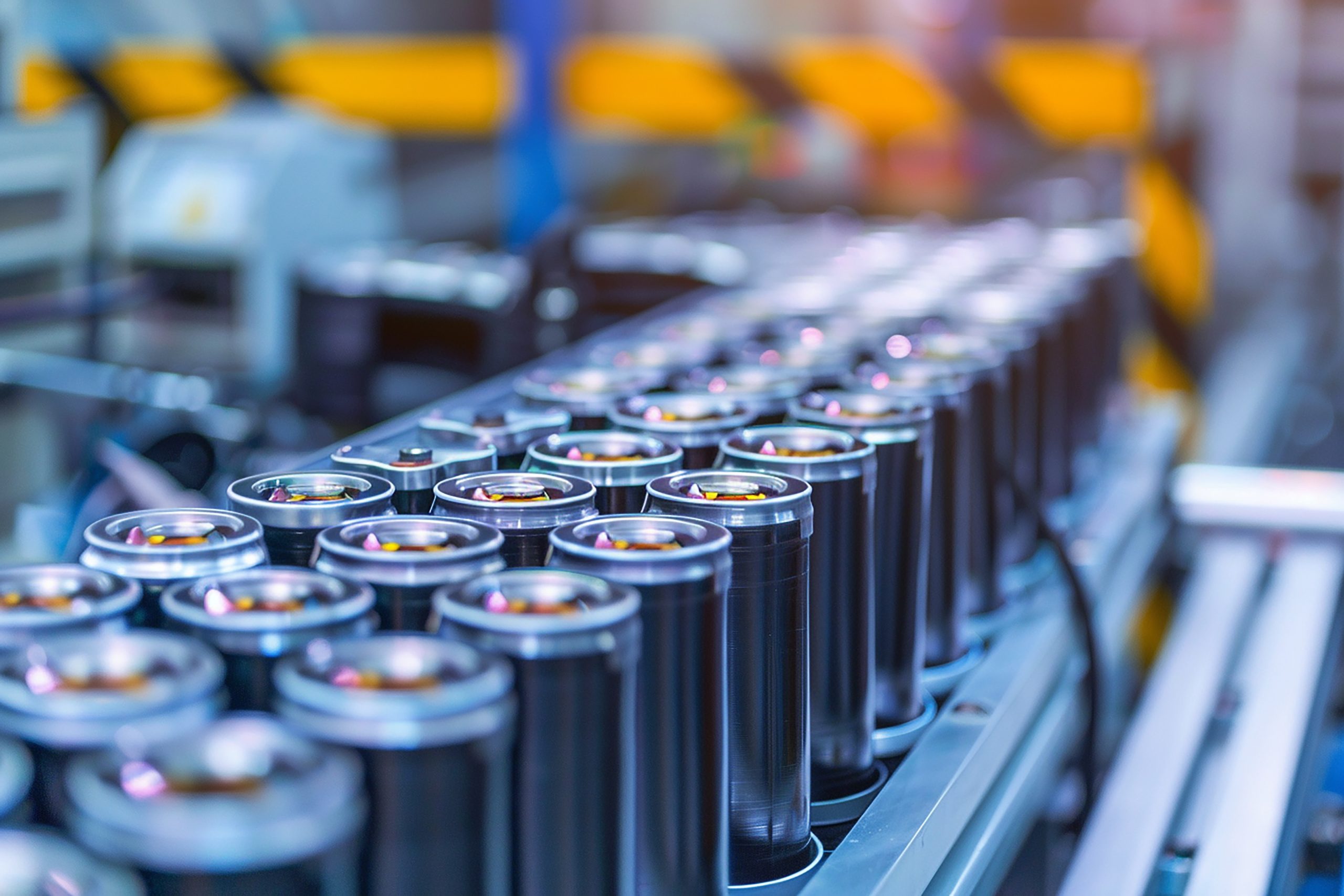
- Cylindrical power cells
- Energy storage cabinets
- High-nickel cathode powders
- Liquid electrolyte solutions
- Active material binders
- Absorbent Glass Mat
- Gel electrolyte batteries
- Deep cycle tubular
- Hard carbon anodes
- Prussian blue analogs
- High-temperature salt systems
By End-User Industry
- Utility-scale battery farms
- Peak-shaving infrastructure
- Renewable integration units
- Automated guided vehicles
- Electric forklift fleets
- Warehouse robotic systems
- Uninterruptible power supplies
- Backup generator replacement
- Base station power
- Emergency lighting arrays
- Process control backup
- Industrial automation power
Competitive Landscape
The China industrial battery market is characterized by high competitive intensity, driven by aggressive R&D investment and vertical integration strategies among local incumbents. Since the implementation of the 14th Five-Year Plan for Energy Development, state-backed entities and private conglomerates have aggressively pursued cost-optimization through economies of scale and regional supply chain consolidation. Leading manufacturers like CATL and BYD have effectively leveraged deep relationships with the Ministry of Industry and Information Technology (MIIT) to lead the transition toward high-density lithium-iron-phosphate (LFP) chemistries, setting de facto industry standards for energy storage systems (ESS). Distribution strategies have shifted from traditional direct-to-enterprise models to integrated energy-as-a-service ecosystems, particularly in industrial clusters across Shenzhen, Ningde, and Hefei. Established players are increasingly diversifying into recycling and second-life battery utilization to satisfy strict ESG mandates. Competitive differentiation is currently centered on battery management system (BMS) sophistication and cycle life, as firms like CALB and EVE Energy focus on rapid capacity expansion to meet the surging demand for grid-scale storage, challenging the historical dominance of established industrial conglomerates.
| Company | Est. Year | Headquarters | Details | Details | Details | Details | Details | Details |
|---|---|---|---|---|---|---|---|---|
| Contemporary Amperex Technology Co. Limited | 2011 | Ningde, China | ~ | ~ | ~ | ~ | ~ | ~ |
| BYD Company Limited | 1995 | Shenzhen, China | ~ | ~ | ~ | ~ | ~ | ~ |
| CALB Group | 2007 | Changzhou, China | ~ | ~ | ~ | ~ | ~ | ~ |
| EVE Energy Co., Ltd. | 2001 | Huizhou, China | ~ | ~ | ~ | ~ | ~ | ~ |
| Gotion High-Tech | 2006 | Hefei, China | ~ | ~ | ~ | ~ | ~ | ~ |
🔒 Detailed cross-comparison data are available in the full report. Talk to Us to access complete competitive intelligence.
Growth Drivers
Government Infrastructure Decarbonization
The National Development and Reform Commission has prioritized the integration of large-scale energy storage systems to stabilize the national grid, mandating 30 gigawatts of non-fossil fuel storage capacity by 2026. This directive forces industrial zones in the Yangtze River Delta to transition away from diesel-powered backup generators, favoring high-density lithium iron phosphate units. Regional authorities in Shanghai and Suzhou are providing 2.4 billion RMB in direct subsidies to manufacturing plants that upgrade to industrial-grade battery microgrids, ensuring that peak-shaving operations remain efficient while adhering to strict carbon neutrality national standards.
Expansion of Automated Logistics Hubs
The surge in automated guided vehicles and autonomous mobile robots across massive logistics centers in Guangdong province creates sustained demand for industrial lead-acid and lithium batteries. Companies such as HIKRobot, founded in 2016 and headquartered in Hangzhou, have scaled operations to support over 50,000 active robots in Chinese warehouses. These systems require battery packs capable of 4,000 rapid-charge cycles to maintain 24-hour facility uptime. Manufacturers are prioritizing long-life chemistry to reduce maintenance costs, resulting in a 12 percent year-over-year increase in premium battery pack procurement for automated material handling systems.
Technological Advancements in Solid-State Chemistry
Breakthroughs in solid-state electrolyte development have extended the operating temperature range of industrial batteries to survive extreme environments in remote provinces like Xinjiang. Companies such as QingTao Energy, founded in 2016 and based in Kunshan, have successfully commercialized batteries that maintain 95 percent capacity even in temperatures as low as minus 20 degrees Celsius. This reliability is critical for industrial power systems serving mineral extraction sites. Increased thermal stability allows for a 35 percent reduction in secondary cooling infrastructure, significantly lowering the total cost of ownership for deep-trench mining operations.
Renewable Energy Grid Integration
To balance the intermittent nature of wind and solar installations in Inner Mongolia and Gansu, industrial parks are deploying massive battery energy storage systems to store excess generation. This shift ensures a stable power supply for energy-intensive metallurgy and chemical processing plants, which currently account for 18 percent of regional electricity consumption. Operators are leveraging smart battery management software to optimize discharge timing during peak demand windows. These installations have reduced grid-reliance costs by 15 percent, prompting a broad deployment of stationary battery arrays across 45 designated high-tech industrial parks by 2024.
Market Challenges
Raw Material Price Volatility
Fluctuations in lithium carbonate pricing continue to strain the operating margins of battery manufacturers, with costs experiencing a 22 percent increase during the first quarter of 2023. These unstable input prices force suppliers to renegotiate long-term procurement contracts frequently, causing operational delays for large-scale industrial projects.
Stringent Environmental Regulatory Compliance
The Ministry of Ecology and Environment has imposed rigorous disposal protocols for spent industrial batteries, leading to a 15 percent rise in mandatory compliance spending for factory operators. These environmental mandates necessitate complex recycling infrastructure that many smaller, older industrial players currently lack the capital to implement.
Supply Chain Bottlenecks
Shortages in specialized high-purity separators and cathode precursors have lengthened lead times for major industrial battery installations to 18 weeks as of 2024. These delays prevent industrial zones from completing grid-stabilization projects on schedule, forcing many firms to retain legacy power solutions.
Opportunities
Grid-Scale Energy Storage Integration
Provincial grid operators in Jiangsu are accelerating the deployment of massive lithium-iron phosphate storage arrays to stabilize renewable intake from offshore wind farms. Energy developers in Shanghai currently utilize 4.2 gigawatt-hours of utility-scale battery infrastructure to manage peak load demand effectively. This transition reduces reliance on traditional coal-fired thermal generation plants within the Yangtze River Delta industrial cluster.
Advanced Lead-Acid Recycling Infrastructure
The Ministry of Ecology and Environment mandates stringent recovery protocols for industrial lead-acid batteries, prompting specialized firms like Camel Group established in 1980 in Xiangyang to expand closed-loop refining capacity. By 2024, the secondary lead extraction rate reached 96 percent across domestic recycling centers. These operations satisfy the rising demand for reclaimed raw materials in the manufacturing sector.
Automated Guided Vehicle Power Systems
Tier-1 automotive manufacturers in Shenzhen are integrating intelligent solid-state battery modules into high-speed warehouse logistics systems. These autonomous units operate for 18 consecutive hours without manual recharging, boosting facility throughput efficiency by 22 percent in 2023. Expanding automation across the Pearl River Delta necessitates long-cycle life energy solutions for continuous, high-intensity industrial utility.
Future Outlook
The Chinese industrial battery market is poised for a transformative evolution through 2035, driven by aggressive national decarbonization policies and the maturation of domestic battery technology ecosystems. As the central government mandates higher electrification rates under the 14th and 15th Five-Year Plans, industrial sectors ranging from manufacturing to power distribution will undergo rapid technology replacement cycles. We expect a shift toward lithium-iron phosphate chemistries for stationary storage, while solid-state alternatives will capture the high-end industrial automation segment by 2030. Companies such as Contemporary Amperex Technology, founded in 2011 and headquartered in Ningde, will continue to dictate pricing trends through vertical integration of the lithium value chain. Geographically, the concentration of production in hubs like Wuhan and Changsha ensures low logistical costs for domestic industrial consumers. However, regulatory oversight regarding environmental impact assessments for manufacturing facilities will tighten, forcing smaller, non-compliant firms to exit the market. By 2035, the industry will pivot toward circular economy models, with advanced battery-as-a-service (BaaS) platforms becoming the standard procurement method for mid-sized industrial enterprises. This shift will minimize capital expenditure requirements for factories while ensuring optimal battery lifecycle management through sophisticated digital twin monitoring systems deployed at scale across the country.
Major Players
- Contemporary Amperex Technology Co. Limited
- BYD Company Limited
- CALB Group
- EVE Energy Co., Ltd.
- Gotion High-Tech
- Sunwoda Electronic
- Narada Power Source
- Farasis Energy
- Great Power Energy
- Hithium Energy Storage
- Pylon Technologies
- Vision Group
- Coslight Technology
- Bak Power
- Lishen Battery
Key Target Audience
- Lithium-ion Battery Manufacturers (e.g., CATL, Ningde, founded 2011)
- Energy Storage System Integrators (e.g., BYD Energy, Shenzhen, founded 1995)
- Industrial Equipment OEMs (e.g., Sany Heavy Industry, Changsha, founded 1989)
- Power Grid Operators (e.g., State Grid Corporation of China, Beijing, founded 2002)
- Raw Material Suppliers (e.g., Ganfeng Lithium, Xinyu, founded 2000)
- Electric Vehicle Fleet Operators (e.g., Didi Chuxing, Beijing, founded 2012)
- Government and Regulatory Bodies (National Development and Reform Commission)
- Renewable Energy Project Developers (e.g., China Three Gorges Corporation, Beijing, founded 1993)
- Automotive Tier-1 Component Suppliers (e.g., Huayu Automotive Systems, Shanghai, founded 2009)
- Data Center Infrastructure Providers (e.g., GDS Holdings, Shanghai, founded 2001)
- Investors and Venture Capital Firms (e.g., Hillhouse Capital, Beijing, founded 2005)
- Maritime Logistics and Port Operators (e.g., COSCO Shipping, Shanghai, founded 2016)
Research Methodology
Identification of Key Variables
- Analysts identify critical drivers such as the 14th Five-Year Plan energy storage targets and domestic battery chemistry shifts.
- Variables include raw material price volatility for lithium carbonate and regional subsidies provided by the Ministry of Industry and Information Technology.
Market Analysis and Construction
- Researchers aggregate production capacity data from leading players like CATL and CALB to build a bottom-up model.
- This construction incorporates historical export volume statistics from the General Administration of Customs of China to calculate regional market saturation.
Validation and Synthesis
- The team performs extensive primary interviews with senior procurement managers at regional power utilities and technical directors at industrial battery fabrication facilities.
- Independent industry analysts and government regulatory policy advisors provide qualitative feedback to refine adoption forecasts for stationary energy storage technologies.
- Findings are normalized against projections from the China Energy Storage Alliance to ensure consistency across supply chain segments.
- The final report integrates 2024-2035 CAGR data with legislative impact assessments to provide a comprehensive outlook for stakeholders and capital market participants.
Table of Contents
 Executive Summary
2 Sections
▼
- Executive Summary
- Research Methodology (Market Definition for Industrial BESS, Bottom-up Capacity Utilization Assessment, Top-down Policy Impact Quantification, National Bureau of Statistics Data Review, MIIT Regulatory Filing Extraction, Deep-dive Expert Interview Panels, Supply Chain Cost Component Modeling, Regional Manufacturing Output Analysis, Competitive Market Share Triangulation, Technology Readiness Level Evaluation, Standardized Forecast Accuracy Assessment, Industry Constraint and Barrier Identification)
 China Industrial Battery Market Overview
7 Sections
▼
- Definition and Scope
- Market Evolution and Industry Genesis
- Lithium-ion Battery Supply Chain Integration
- Solid-State Electrolyte Development
- Industrial Energy Storage System Deployment
- Lead-Acid To Lithium-Iron-Phosphate Transition
- China National Power Grid Infrastructure Modernization
 China Industrial Battery Market Size (2020-2025)
3 Sections
▼
- By Market Value (2020-2025)
- By Annual Megawatt-hour Deployment (2020-2025)
- By Installed Capacity Per Terawatt-hour (2020-2025)
 China Industrial Battery Market Segmentation
41 Segments
▼
- By Battery Chemistry (In Value %)
- Lithium-based Chemistries
- Lithium Iron Phosphate (LFP)
- Nickel Manganese Cobalt (NMC)
- Lithium Titanate (LTO)
- Sodium-ion Hybrid Systems
- Lead-acid Variants
- Absorbent Glass Mat (AGM)
- Gel Valve-Regulated Lead-Acid (VRLA)
- Tubular Gel Deep Cycle
- Enhanced Flooded Batteries (EFB)
- Flow Batteries
- Vanadium Redox Flow
- Iron-Chromium Flow
- Zinc-Bromine Flow
- Nickel-based Systems
- Nickel-Cadmium (NiCd)
- Nickel-Metal Hydride (NiMH)
- By Application Sector (In Value %)
- Grid-Scale Energy Storage
- Data Center Backup Power
- Telecommunications Base Stations
- Industrial Robotics and AGVs
- Manufacturing Facility Microgrids
- Mining Equipment Electrification
- By Discharge Duration (In Value %)
- Short-Duration (0.5-2 Hours)
- Medium-Duration (2-6 Hours)
- Long-Duration (6-12+ Hours)
- By Ownership Model (In Value %)
- CAPEX Direct Procurement
- Battery-as-a-Service (BaaS)
- Energy Management Contracting (EMC)
- By Regulatory Tier (In Value %)
- MIIT Tier 1 Conformity
- Standard GB/T Compliance
- Export-Grade Certification
- By Geographic Region (In Value %)
- Pearl River Delta Hub
- Yangtze River Delta Cluster
- Bohai Economic Rim
 China Industrial Battery Market Analysis
8 Sections
▼
- Growth Drivers (Government Infrastructure Decarbonization, Expansion of Automated Logistics Hubs, Technological Advancements in Solid-State Chemistry, Renewable Energy Grid Integration)
- Market Challenges (Raw Material Price Volatility, Stringent Environmental Regulatory Compliance, Supply Chain Bottlenecks)
- Market Opportunities (Grid-Scale Energy Storage Integration, Advanced Lead-Acid Recycling Infrastructure, Automated Guided Vehicle Power Systems)
- Market Trends (Sodium-ion Commercialization, Safety Standard Tightening, BESS Intelligence Integration)
- Government Regulations
- SWOT Analysis
- Porter's Five Forces Analysis
- PESTLE Analysis
 China Industrial Battery Market Competitive Analysis
19 Sections
▼
- Market Share of Major Players
- Tier 1 Battery Giants Market Concentration
- Emerging Specialist Flow Battery Entrants
- International Brand Competitiveness in Premium Segments
- Public Sector Utility Procurement Dynamics
- Cross Comparison Parameters (Vertical Integration of Upstream Precursors, Cycle Life Performance Under Thermal Load, BMS Architecture Complexity and Safety Protocols, Manufacturing Automation Level (Industry 4.0), Domestic versus International Certification Portfolios, Total Cost of Ownership (TCO) Optimization, After-sales Maintenance Network Density)
- Competitive Product Benchmarking (Energy Density (Wh/kg), Cycle Life (Number of Cycles to 80% SOH), Round-Trip Efficiency Percentage, Thermal Management System Design, Operating Temperature Range (Celsius), Safety Certification Standards (UN38.3/IEC), Battery Management System (BMS) Protocols)
- Financial and Operational Parameters
- SWOT Analysis of Major Players
- Detailed Profiles of Major Companies
- Contemporary Amperex Technology Co. Limited (CATL) – ENEROC, EnerOne, EnerC
- BYD Company Limited – Blade Battery, BYD ESS
- EVE Energy Co., Ltd. – EVE Power, EVE Battery
- Narada Power Source Co., Ltd. – Narada, N-Ener
- Gotion High-Tech Co., Ltd. – Gotion ESS
- CALB Co., Ltd. – CALB
- SVOLT Energy Technology – SVOLT
- Pylon Technologies Co., Ltd. – Pylontech
- Sungrow Power Supply Co., Ltd. – Sungrow ESS
 China Industrial Battery Market End-User Analysis
7 Sections
▼
- Annual Megawatt-hour Usage Intensity
- Replacement Frequency for Industrial Cycles
- Average Capital Expenditure Per Project
- Energy Storage ROI Expectations
- Grid-Connection Lead Time Benchmarks
- Preventative Maintenance Service Adoption Rates
- Preference for Modular Scaling Designs
 China Industrial Battery Market Future Size (2026-2035)
3 Sections
▼
- By Market Value (2026-2035)
- By Annual Megawatt-hour Deployment (2026-2035)
- By Installed Capacity Per Terawatt-hour (2026-2035)
Frequently Asked Questions
The current market size is USD 24.8 billion in 2025, projected to reach USD 55.76 billion by 2035. This represents an 8.4% CAGR from 2025 to 2035. The expansion is driven by the rapid electrification of heavy manufacturing and industrial logistics across major hubs in Guangdong and Jiangsu provinces.
The transition toward carbon neutrality mandated by the Ministry of Industry and Information Technology serves as the primary catalyst for market expansion. Increased investments in automated guided vehicle (AGV) systems and smart factory energy storage solutions necessitate high-density industrial power units. Additionally, the proliferation of electric heavy-duty machinery in mining operations across Shanxi province is accelerating domestic demand.
Key market participants include Contemporary Amperex Technology Co. Limited (CATL), founded in 2011 and headquartered in Ningde, and BYD Company Limited, established in 1995 and based in Shenzhen. Other significant entities include Gotion High-Tech, founded in 2006 with its headquarters in Hefei, and EVE Energy, founded in 2001 and headquartered in Huizhou. These companies maintain dominance through heavy investment in R&D and vertically integrated supply chains.
Supply chain volatility for essential raw materials, specifically lithium carbonate and cobalt, creates significant price fluctuations for manufacturers. Strict compliance with the National Standards of China (GB) regarding battery safety and thermal runaway prevention increases operational overhead for localized production. Furthermore, the limited availability of high-capacity recycling infrastructure for spent industrial batteries remains a significant regulatory hurdle for long-term sustainability goals.
Solid-state battery technology is moving from laboratory testing to pilot production lines in industrial applications, promising higher safety profiles. Integration with AI-driven battery management systems is becoming standard practice to optimize life cycles in harsh mining and manufacturing environments. There is also a notable shift toward sodium-ion battery deployment in stationary industrial energy storage to mitigate reliance on scarce mineral imports.


 Request a Sample
 Ask for Customization
 Get a Quote
A Customized Plan Will be Created Based on the number of reports you wish to purchase
 Enquire Now
