

 Download PDF
 Download PDF
Market Overview
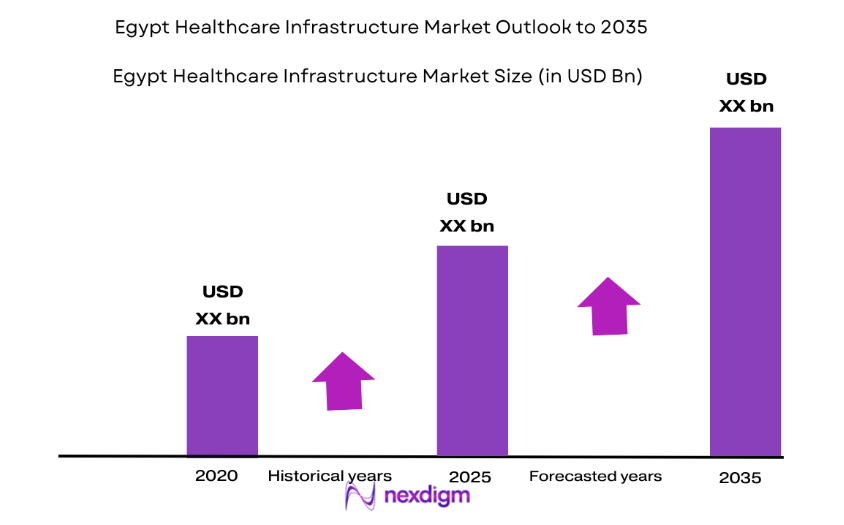
Based on a recent historical assessment, the Egypt Healthcare Infrastructure Market reached approximately USD ~ billion in investment and development value according to reporting from the Egypt Ministry of Planning and Economic Development and national healthcare development programs. The market is primarily driven by large-scale hospital construction projects, expansion of public healthcare networks, and infrastructure modernization initiatives supporting universal healthcare coverage. Government funding, private hospital investment, and medical city development programs are accelerating facility construction, diagnostic infrastructure deployment, and healthcare capacity expansion across multiple regions.
Cairo remains the dominant hub for healthcare infrastructure development due to its concentration of national hospitals, specialized medical institutes, and government healthcare headquarters. Alexandria also hosts significant hospital modernization and specialty medical facilities supported by both public investment and private hospital groups. New Administrative Capital developments are attracting modern hospital projects integrated with smart city infrastructure. Regional cities such as Giza and Mansoura are also expanding hospital capacity as healthcare demand increases and the government expands national medical coverage and hospital infrastructure networks.
Market Segmentation
By Product Type
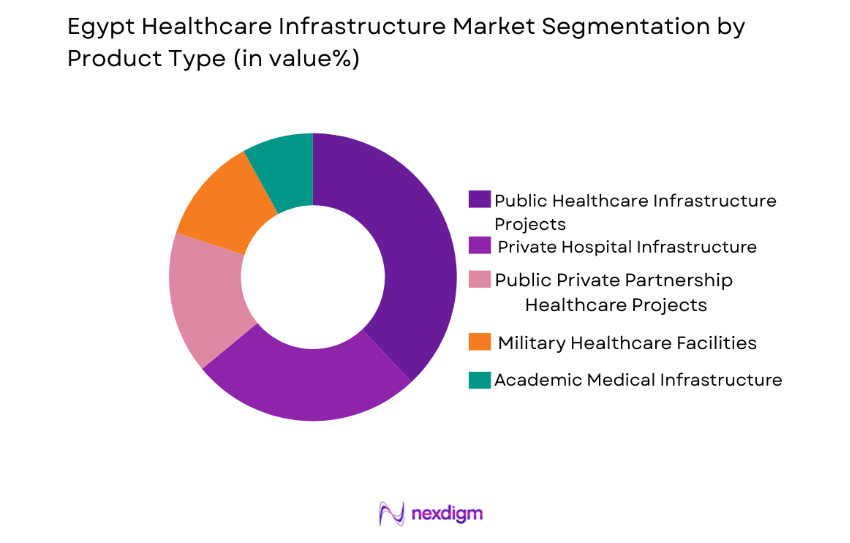
Egypt Healthcare Infrastructure Market is segmented by product type into hospital construction infrastructure, diagnostic and imaging facility infrastructure, primary healthcare center infrastructure, specialty care facility infrastructure, and digital hospital infrastructure systems. Recently, hospital construction infrastructure has a dominant market share due to increasing hospital capacity expansion projects, government investment in universal healthcare facilities, and private sector hospital development programs. Large medical city developments and national hospital modernization initiatives are accelerating infrastructure spending in hospital buildings, patient wards, surgical units, and integrated healthcare facilities. Growing population demand for inpatient and specialty treatment services further drives large hospital construction projects. Additionally, government programs focusing on expanding hospital beds, emergency care facilities, and tertiary healthcare institutions strengthen this segment’s dominance in the overall healthcare infrastructure development landscape across major Egyptian cities.
By Platform Type
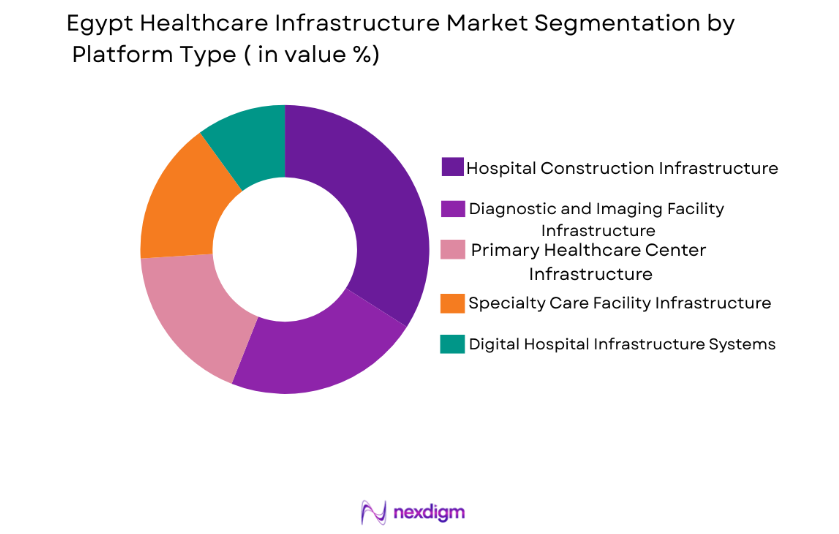
Egypt Healthcare Infrastructure Market is segmented by platform type into public healthcare infrastructure projects, private hospital infrastructure, public private partnership healthcare projects, military healthcare facilities, and academic medical infrastructure. Recently, public healthcare infrastructure projects have a dominant market share due to extensive national hospital expansion programs implemented by the government to strengthen universal healthcare coverage. Large public investments in hospital construction, district healthcare centers, and national medical city initiatives drive infrastructure demand in this segment. Public sector healthcare authorities prioritize expanding healthcare accessibility across urban and regional populations. Additionally, international development financing and national infrastructure development funds support government hospital modernization and expansion programs, reinforcing the leadership of public healthcare infrastructure projects within the broader healthcare infrastructure development ecosystem.
Competitive Landscape
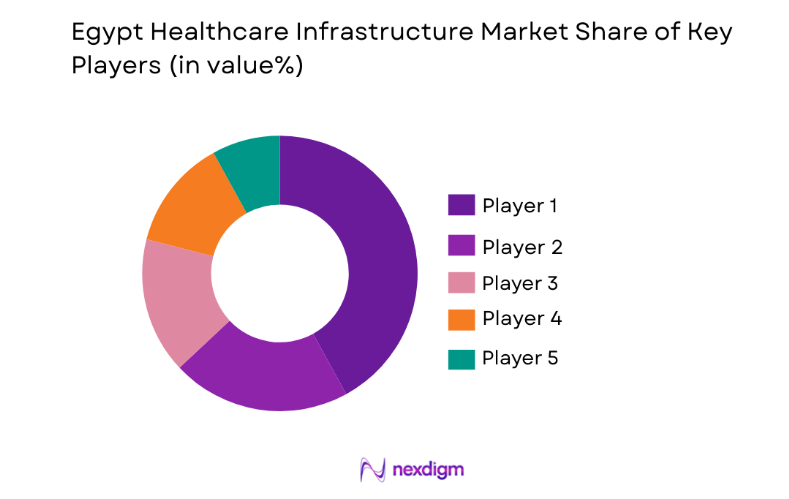
The Egypt Healthcare Infrastructure Market demonstrates moderate consolidation with a mix of large engineering contractors, healthcare facility developers, and international infrastructure companies participating in major hospital construction and modernization projects. Government healthcare expansion initiatives create opportunities for domestic construction firms and global healthcare infrastructure specialists. Major players focus on integrated hospital construction, medical technology infrastructure integration, and healthcare facility design services, while partnerships with government agencies and private hospital operators remain critical for project acquisition and market presence.
| Company Name | Establishment Year | Headquarters | Technology Focus | Market Reach | Key Products | Revenue | Healthcare Infrastructure Capability |
| Orascom Construction | 1950 | Cairo, Egypt | ~ | ~ | ~ | ~ | ~ |
| Hassan Allam Holding | 1936 | Cairo, Egypt | ~ | ~ | ~ | ~ | ~ |
| The Arab Contractors | 1955 | Cairo, Egypt | ~ | ~ | ~ | ~ | ~ |
| Dar Al-Handasah | 1956 | Beirut, Lebanon | ~ | ~ | ~ | ~ | ~ |
| Hill International | 1976 | Philadelphia, USA | ~ | ~ | ~ | ~ | ~ |
Egypt Healthcare Infrastructure Market Analysis
Growth Drivers
Expansion of Universal Healthcare Infrastructure Programs
The nationwide universal healthcare reform program is significantly expanding healthcare infrastructure investments across Egypt as the government accelerates hospital construction and healthcare facility upgrades to improve medical service accessibility. Major development projects include new public hospitals, specialized treatment centers, and integrated medical complexes designed to support national healthcare coverage expansion. Public investment programs funded through national infrastructure budgets prioritize the construction of hospitals, diagnostic centers, and emergency care facilities across multiple governorates. Infrastructure spending focuses on increasing hospital bed capacity, strengthening regional healthcare networks, and modernizing aging public healthcare facilities. These projects stimulate demand for construction services, medical infrastructure equipment, and facility management systems. The integration of digital health systems and modern hospital architecture is also increasing infrastructure complexity and project value. Healthcare modernization programs are further encouraging collaboration between international engineering firms and domestic contractors. As universal healthcare coverage expands across the population, infrastructure demand continues to grow due to the requirement for additional hospitals, clinics, and specialized treatment facilities.
Rising Private Sector Investment in Hospital Development
Private healthcare operators are increasingly investing in modern hospital infrastructure across Egypt in response to rising healthcare demand and growing middle class access to private medical services. Private hospital groups are constructing advanced specialty hospitals focusing on cardiology, oncology, orthopedic surgery, and diagnostic imaging. Investors are also developing integrated healthcare complexes combining hospitals, diagnostic centers, outpatient facilities, and medical laboratories within single campuses. Urban population growth and rising healthcare awareness encourage patients to seek advanced treatment services offered by private healthcare providers. Private investors also focus on technologically advanced hospital facilities equipped with modern diagnostic and surgical infrastructure. International healthcare operators and regional investment groups are participating in joint ventures with local healthcare companies to develop large medical centers. The growth of medical tourism within the region also supports demand for internationally accredited hospital infrastructure. These factors collectively increase capital investment in hospital construction and healthcare facility modernization across Egypt.
Market Challenges
High Capital Intensity of Healthcare Infrastructure Development
Healthcare infrastructure development requires substantial financial resources due to the complexity of hospital construction, medical equipment installation, and regulatory compliance requirements. Large hospital projects involve significant investment in specialized building materials, advanced ventilation systems, surgical infrastructure, and diagnostic technology integration. Financing such large infrastructure projects presents challenges for private investors and smaller healthcare operators. Government budgets allocated to healthcare infrastructure must compete with other national infrastructure priorities such as transportation and housing development. The cost of advanced medical equipment also significantly increases the total project expenditure of healthcare facilities. Project delays caused by procurement processes, construction challenges, or regulatory approvals further increase development costs. Infrastructure developers must also maintain compliance with international healthcare facility standards and safety regulations. These financial and regulatory pressures can slow down hospital development timelines and reduce investment flexibility in the healthcare infrastructure sector.
Shortage of Specialized Healthcare Infrastructure Planning Expertise
Designing and constructing modern healthcare facilities requires specialized architectural, engineering, and medical infrastructure expertise that is not always widely available in emerging healthcare markets. Hospitals require highly specialized layouts for operating rooms, diagnostic imaging areas, patient wards, and infection control systems. Healthcare infrastructure planning must also integrate advanced digital health systems and hospital management technologies. The shortage of professionals with experience in healthcare facility design and medical infrastructure planning creates challenges for project implementation. International consultants are often required to support large hospital development projects, increasing project costs and planning timelines. Training local engineering teams in healthcare facility development standards remains an ongoing challenge. Infrastructure developers must also ensure that hospital designs meet strict regulatory requirements related to patient safety and medical equipment installation. These technical requirements create additional complexity for healthcare infrastructure projects across the country.
Opportunities
Development of Smart Hospitals and Digitally Integrated Healthcare Facilities
Smart hospital infrastructure represents a major opportunity within the Egypt Healthcare Infrastructure Market as healthcare providers increasingly adopt digital technologies and integrated medical systems. Modern hospitals are incorporating digital patient management systems, automated diagnostic equipment, and telemedicine infrastructure within hospital facilities. Smart hospital design integrates data connectivity, advanced monitoring systems, and intelligent building management platforms to improve operational efficiency. These technologies enhance patient care delivery and streamline hospital operations across departments. Infrastructure developers are increasingly incorporating digital health systems during hospital construction phases to enable seamless technology integration. Government healthcare modernization initiatives also support the development of technologically advanced hospital infrastructure across major cities. International technology providers collaborate with local construction firms to deploy advanced medical facility infrastructure. The growing importance of digital healthcare delivery models is expected to further increase demand for smart hospital construction and integrated healthcare infrastructure projects across the country.
Expansion of Medical Cities and Integrated Healthcare Clusters
Integrated medical cities and healthcare clusters are emerging as a strategic opportunity for large-scale healthcare infrastructure development across Egypt. These projects combine hospitals, research institutions, training centers, and specialized treatment facilities within large healthcare campuses. Medical cities create centralized healthcare ecosystems capable of providing comprehensive medical services across multiple specialties. Such infrastructure developments attract investment from international healthcare organizations, medical equipment providers, and research institutions. Integrated healthcare campuses also improve operational efficiency by consolidating medical services within single geographic locations. Governments often support these projects through infrastructure funding, land allocation, and policy incentives designed to strengthen national healthcare systems. The presence of advanced medical facilities within these clusters encourages medical tourism and international healthcare collaboration. As healthcare demand continues to rise, integrated medical cities are expected to become a major driver of infrastructure investment within the national healthcare sector.
Future Outlook
The Egypt Healthcare Infrastructure Market is expected to expand steadily over the coming years as national healthcare reform programs continue to prioritize hospital expansion and modernization. Investments in smart hospital infrastructure, digital healthcare integration, and large medical city developments will accelerate infrastructure demand. Government universal healthcare initiatives will remain the central driver of facility construction. Private hospital investment and international healthcare partnerships will further strengthen infrastructure capacity across major urban centers.
Major Players
- Orascom Construction
- Hassan Allam Holding
- The Arab Contractors
- Dar Al-Handasah
- Hill International
- Siemens Healthineers Egypt
- GE Healthcare Egypt
- Elsewedy Electric Infrastructure
- China State Construction Engineering Corporation Egypt
- Cleopatra Hospitals Group
- Al Ahly Sabbour Developments
- Medtronic Egypt
- Orascom Healthcare
- Arabtec Construction Egypt
- Vinci Construction Healthcare
Key Target Audience
- Healthcare infrastructure investors
- Hospital development companies
- Medical equipment manufacturers
- Healthcare private equity firms
- Investments and venture capitalist firms
- Government and regulatory bodies
- Healthcare facility operators
Research Methodology
Step 1: Identification of Key Variables
Key infrastructure indicators including hospital construction projects, healthcare facility investments, medical equipment deployment, and healthcare infrastructure capacity were identified through national healthcare development data and infrastructure investment reporting.
Step 2: Market Analysis and Construction
Market size and segmentation were constructed through analysis of healthcare infrastructure investments, government healthcare programs, private hospital developments, and infrastructure project pipelines across major regions.
Step 3: Hypothesis Validation and Expert Consultation
Industry experts including healthcare infrastructure consultants, hospital administrators, and engineering specialists validated development trends, infrastructure investment patterns, and project pipeline analysis.
Step 4: Research Synthesis and Final Output
All collected infrastructure investment data, industry insights, and development indicators were synthesized to construct a comprehensive analysis of the Egypt Healthcare Infrastructure Market and future infrastructure growth outlook.

- Executive Summary
- Research Methodology (Definitions, Scope, Industry Assumptions, Market Sizing Approach, Primary & Secondary Research Framework, Data Collection & Verification Protocol, Analytic Models & Forecast Methodology, Limitations & Research Validity Checks)

- Market Definition and Scope
- Value Chain & Stakeholder Ecosystem
- Regulatory / Certification Landscape
- Sector Dynamics Affecting Demand

- Growth Drivers
Expansion of Government Led Universal Health Insurance Infrastructure
Rapid Urban Population Growth Driving Hospital Capacity Expansion
Increasing Private Sector Investment in Healthcare Facilities - Market Challenges
High Capital Requirements for Large Scale Hospital Development
Regulatory Approvals and Land Allocation Constraints
Shortage of Skilled Healthcare Infrastructure Planning Experts - Market Opportunities
Development of Smart Hospitals and Digital Healthcare Facilities
Expansion of Medical Cities and Integrated Healthcare Clusters
Growing Demand for Specialized Oncology and Cardiac Centers - Trends
Adoption of Smart Hospital Design and Integrated Digital Systems
Rise of Public Private Partnerships in Hospital Infrastructure Development - Government Regulations
- SWOT Analysis
- Porter’s Five Forces

- By Market Value, 2020-2025
- By Installed Units, 2020-2025
- By Average System Price, 2020-2025
- By System Complexity Tier, 2020-2025

- By System Type (In Value%)
Hospital Construction Infrastructure
Diagnostic and Imaging Facility Infrastructure
Primary Healthcare Center Infrastructure
Specialty Care Facility Infrastructure
Digital Hospital Infrastructure Systems - By Platform Type (In Value%)
Public Healthcare Infrastructure Projects
Private Hospital Infrastructure
Public Private Partnership Healthcare Projects
Military and Government Healthcare Facilities
University and Research Hospital Infrastructure - By Fitment Type (In Value%)
Greenfield Healthcare Infrastructure
Brownfield Hospital Expansion
Modular Healthcare Facilities
Retrofit and Modernization Projects - By End User Segment (In Value%)
Government Healthcare Authorities
Private Hospital Groups
Academic and Research Medical Institutions

- Market Share Analysis
- Cross Comparison Parameters (Project Development Capability, Healthcare Facility Portfolio, Infrastructure Technology Integration, Regional Project Presence, Public Private Partnership Experience, Hospital Design Expertise, Financial Strength)
- SWOT Analysis of Key Competitors
- Pricing & Procurement Analysis
- Key Players
Orascom Construction
Hassan Allam Holding
The Arab Contractors
Siemens Healthineers Egypt
Elsewedy Electric Infrastructure
Hill International
Dar Al-Handasah
Egyptian Engineering Company
Orascom Healthcare
Cleopatra Hospitals Group
Al Ahly Sabbour Developments
Arabtec Construction Egypt
China State Construction Engineering Corporation Egypt
GE Healthcare Egypt
Medtronic Egypt

- Government programs expanding national hospital networks under universal healthcare reform
- Private hospital operators investing in specialty hospitals and diagnostic centers
- Academic institutions developing research hospitals and medical training infrastructure
- Growing participation of international healthcare investors and infrastructure developers

- Forecast Market Value, 2026-2035
- Forecast Installed Units, 2026-2035
- Price Forecast by System Tier, 2026-2035
- Future Demand by Platform, 2026-2035


 Request a Sample
 Ask for Customization
 Get a Quote
 Enquire Now