
 Download PDF
 Download PDF
Market Overview
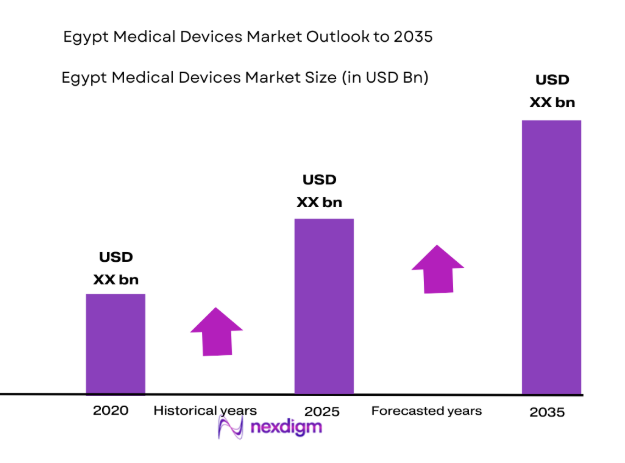
Based on a recent historical assessment, the Egypt Medical Devices Market reached approximately USD ~ Billion, reflecting steady expansion supported by healthcare modernization initiatives and increasing demand for advanced diagnostic and therapeutic technologies. Government healthcare infrastructure investments, expansion of private hospital networks, and rising diagnostic testing volumes continue to drive procurement of medical equipment across hospitals and laboratories. According to industry sources including the International Trade Administration and Egypt’s Ministry of Health, rising chronic disease prevalence and modernization of clinical services further accelerate device adoption across healthcare facilities.
Cairo and Alexandria represent the most dominant urban centers within the Egypt Medical Devices Market due to their concentration of large tertiary hospitals, academic medical institutions, and private healthcare chains that maintain high procurement volumes of diagnostic and surgical equipment. Cairo hosts major government medical complexes, specialized treatment centers, and private healthcare groups that continuously upgrade medical technologies. Alexandria functions as a key regional healthcare hub with advanced hospitals and diagnostic laboratories. These cities benefit from stronger healthcare infrastructure, higher patient volumes, and stronger private sector healthcare investment.
Market Segmentation
By Product Type
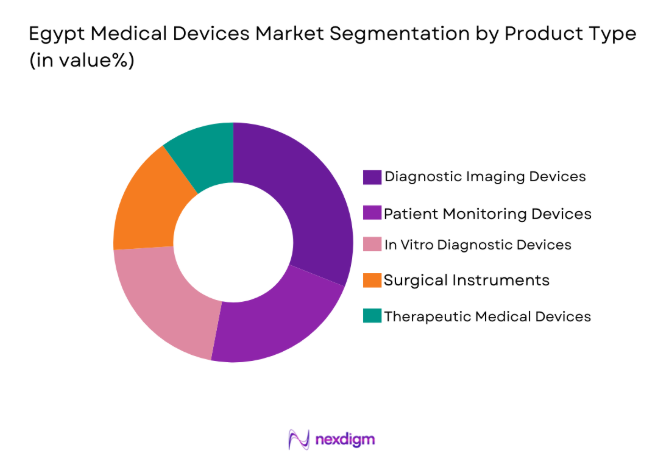
Egypt Medical Devices Market is segmented by product type into diagnostic imaging devices, patient monitoring devices, in vitro diagnostic devices, surgical instruments, and therapeutic medical devices. Recently, diagnostic imaging devices have a dominant market share due to strong demand for radiology diagnostics across public hospitals and private medical centers. Hospitals require imaging technologies such as CT scanners, MRI systems, and ultrasound equipment to support clinical diagnosis and treatment planning. Growing investments in hospital modernization programs and diagnostic capacity expansion further strengthen demand for advanced imaging systems in Egypt.
By Platform Type
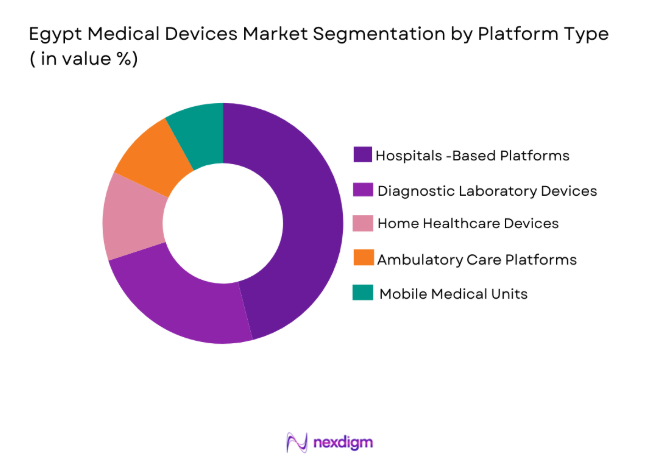
Egypt Medical Devices Market is segmented by platform type into hospital-based devices, diagnostic laboratory devices, home healthcare devices, ambulatory care devices, and mobile medical units. Recently, hospital-based devices have a dominant market share due to strong procurement demand from large tertiary hospitals and government healthcare facilities. Hospitals maintain extensive equipment requirements for diagnostics, surgical procedures, and patient monitoring. Expansion of hospital infrastructure projects and private healthcare investment continues to increase equipment installation across large healthcare institutions in Egypt.
Competitive Landscape
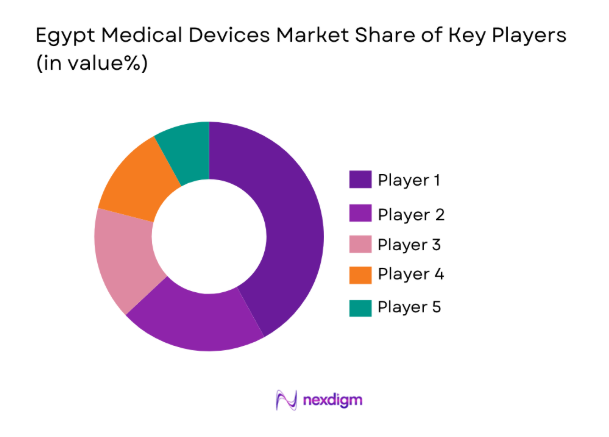
The Egypt Medical Devices Market is moderately consolidated with a strong presence of multinational healthcare technology companies that dominate advanced medical equipment segments such as imaging, diagnostics, and surgical devices. Global manufacturers maintain strong distribution networks and partnerships with Egyptian healthcare providers to supply hospitals and diagnostic laboratories. Market competition is influenced by technology innovation, regulatory compliance, service support, and pricing strategies. International suppliers continue to lead high-value equipment segments while local distributors and regional suppliers support procurement and maintenance services.
| Company Name | Establishment Year | Headquarters | Technology Focus | Market Reach | Key Products | Revenue | Egypt Distribution Network |
| Siemens Healthineers | 1847 | Germany | ~ | ~ | ~ | ~ | ~ |
| GE HealthCare | 1892 | United States | ~ | ~ | ~ | ~ | ~ |
| Philips Healthcare | 1891 | Netherlands | ~ | ~ | ~ | ~ | ~ |
| Medtronic | 1949 | United States | ~ | ~ | ~ | ~ | ~ |
| Abbott Laboratories | 1888 | United States | ~ | ~ | ~ | ~ | ~ |
Egypt Medical Devices Market Analysis
Growth Drivers
Expansion of Healthcare Infrastructure and Hospital Modernization Programs
Egypt’s healthcare sector is undergoing large-scale modernization supported by public healthcare infrastructure development and private hospital expansion across major urban centers. National healthcare reforms have encouraged investment in new hospitals, specialized treatment facilities, and diagnostic centers, which significantly increases demand for advanced medical devices. Hospitals require imaging systems, monitoring equipment, surgical devices, and diagnostic platforms to support clinical services and improve patient care outcomes. The government’s healthcare modernization initiatives prioritize upgrading outdated hospital infrastructure and integrating modern medical technologies into treatment facilities. Private healthcare groups are also expanding specialized hospitals that require advanced surgical and diagnostic equipment. Medical tourism growth further encourages healthcare providers to invest in advanced treatment technologies. Increasing patient volumes across tertiary hospitals further stimulate procurement of high-performance diagnostic systems. Healthcare providers continuously upgrade equipment to maintain clinical standards and improve diagnostic accuracy. These infrastructure developments significantly strengthen demand for medical devices across Egypt’s healthcare system.
Rising Prevalence of Chronic Diseases and Diagnostic Testing Demand
The increasing burden of chronic diseases such as cardiovascular disorders, diabetes, and cancer significantly accelerates demand for diagnostic and therapeutic medical devices across Egypt’s healthcare sector. Hospitals and diagnostic laboratories require advanced diagnostic technologies to support early disease detection and long-term patient monitoring. Medical imaging systems including CT scanners, MRI equipment, and ultrasound devices play a critical role in clinical diagnosis and treatment planning. The growing number of patients requiring diagnostic testing drives expansion of laboratory infrastructure and imaging departments within hospitals. Diagnostic laboratories increasingly invest in advanced in vitro diagnostic equipment to process large testing volumes efficiently. Healthcare providers are also adopting patient monitoring technologies to manage chronic conditions in hospital and home healthcare settings. The demand for minimally invasive surgical devices further increases as hospitals expand specialized treatment services. Continuous clinical innovation and healthcare service expansion strengthen the adoption of advanced medical technologies. These healthcare demand patterns significantly support long-term growth of the Egypt medical devices market.
Market Challenges
Dependence on Imported Advanced Medical Technologies
Egypt’s medical devices sector faces significant structural challenges due to heavy dependence on imported advanced medical equipment supplied by multinational healthcare technology manufacturers. Most high-end diagnostic imaging systems, surgical robotics platforms, and advanced laboratory diagnostic equipment are produced internationally and imported into the country. This reliance on foreign suppliers increases procurement costs for healthcare providers due to currency fluctuations, import tariffs, and logistics expenses. Hospitals often face higher capital investment requirements when acquiring technologically advanced medical systems from global manufacturers. Limited domestic manufacturing capabilities restrict local production of complex medical technologies, making the healthcare sector dependent on international supply chains. Maintenance and servicing of sophisticated medical equipment also require technical support from foreign suppliers or specialized service providers. Healthcare institutions may experience procurement delays when regulatory approvals or import procedures extend equipment delivery timelines. Budget constraints in public healthcare institutions further complicate large-scale equipment procurement programs. These structural challenges limit the speed of technology adoption within the healthcare system.
Limited Skilled Workforce for Medical Equipment Operation and Maintenance
The effective deployment of advanced medical devices requires a skilled workforce capable of operating complex diagnostic equipment and maintaining sophisticated medical technologies. However, healthcare institutions across Egypt face challenges related to the availability of trained biomedical engineers, medical technicians, and equipment specialists. Advanced imaging systems and laboratory diagnostic platforms require specialized technical expertise to ensure accurate performance and safe operation. Hospitals must invest heavily in staff training programs to develop technical capabilities for device management and clinical operation. Inadequate training infrastructure may slow the adoption of technologically advanced equipment across smaller healthcare facilities. Maintenance of high-value medical equipment also requires skilled technical professionals capable of performing system calibration, repairs, and preventive maintenance. Equipment downtime caused by technical skill shortages can reduce operational efficiency within healthcare institutions. International suppliers often provide technical training programs to support equipment deployment. Strengthening biomedical engineering education and technical training programs remains critical for improving medical device utilization across Egypt’s healthcare sector.
Opportunities
Expansion of Private Healthcare Investment and Specialized Medical Centers
The rapid expansion of private healthcare providers in Egypt creates significant opportunities for medical device suppliers to support new hospital construction and specialized treatment facilities. Private healthcare groups are investing heavily in modern medical infrastructure to meet growing demand for high-quality healthcare services across urban areas. New hospitals and specialty clinics require advanced diagnostic imaging systems, surgical equipment, and patient monitoring technologies. These investments increase demand for technologically advanced medical devices that improve clinical outcomes and operational efficiency. Private healthcare providers often prioritize modern equipment to attract patients seeking advanced medical treatments. The expansion of specialized treatment centers such as oncology clinics, cardiology hospitals, and diagnostic laboratories further strengthens demand for specialized medical technologies. International healthcare providers entering the Egyptian market also increase equipment procurement volumes. These developments create strong growth opportunities for medical device manufacturers and technology suppliers.
Growing Adoption of Home Healthcare and Portable Medical Devices
The increasing demand for home healthcare services across Egypt presents significant opportunities for the adoption of portable and connected medical devices. Patients with chronic illnesses increasingly rely on home monitoring technologies to manage long-term medical conditions outside traditional hospital environments. Portable diagnostic equipment and wearable patient monitoring devices enable healthcare providers to track patient health data remotely. Home healthcare services help reduce pressure on hospital infrastructure while improving patient convenience and treatment continuity. Technological advancements in digital health platforms and connected medical devices further accelerate adoption of home healthcare solutions. Healthcare providers increasingly integrate remote monitoring technologies into treatment programs for chronic disease management. Portable diagnostic devices also support mobile healthcare services in rural areas where access to hospitals may be limited. These developments significantly expand the potential market for innovative medical device technologies.
Future Outlook
The Egypt Medical Devices Market is expected to experience steady expansion as healthcare infrastructure modernization and private healthcare investment continue to increase demand for advanced medical technologies. Hospitals and diagnostic laboratories are likely to expand diagnostic and treatment capabilities by installing advanced imaging systems and diagnostic equipment. Technological innovation including digital health platforms, portable diagnostic devices, and AI-assisted medical technologies will further support market development. Government healthcare programs and growing healthcare demand will continue to stimulate long-term medical device adoption.
Major Players
- Siemens Healthineers
- GE HealthCare
- Philips Healthcare
- Medtronic
- Abbott Laboratories
- Roche Diagnostics
- Becton Dickinson
- Canon Medical Systems
- Mindray Medical International
- Fresenius Medical Care
- Boston Scientific
- Stryker Corporation
- Olympus Corporation
- Drägerwerk AG
- Johnson & Johnson MedTech
Key Target Audience
- Medical device manufacturers
- Healthcare technology distributors
- Private hospital chains
- Diagnostic laboratory networks
- Investments and venture capitalist firms
- Government and regulatory bodies
- Healthcare equipment procurement agencies
Research Methodology
Step 1: Identification of Key Variables
The study begins by identifying key variables influencing the Egypt Medical Devices Market including healthcare infrastructure investments, hospital equipment procurement, diagnostic testing demand, and regulatory compliance requirements. Data sources include government health agencies, international healthcare databases, and industry reports.
Step 2: Market Analysis and Construction
Market size estimation and segmentation analysis are conducted through structured modeling of medical device demand across hospitals, diagnostic laboratories, and home healthcare platforms. Industry supply chains, technology adoption patterns, and procurement trends are incorporated into the analysis framework.
Step 3: Hypothesis Validation and Expert Consultation
Industry experts including hospital procurement managers, healthcare administrators, and medical technology specialists are consulted to validate market assumptions and demand patterns. Expert insights help refine technology adoption trends and validate supply chain dynamics.
Step 4: Research Synthesis and Final Output
Validated research findings are synthesized into a structured market report combining quantitative analysis with qualitative insights. The final output provides strategic guidance regarding market growth patterns, technology adoption, and competitive positioning within the Egypt Medical Devices Market.

- Executive Summary
- Research Methodology (Definitions, Scope, Industry Assumptions, Market Sizing Approach, Primary & Secondary Research Framework, Data Collection & Verification Protocol, Analytic Models & Forecast Methodology, Limitations & Research Validity Checks)

- Market Definition and Scope
- Value Chain & Stakeholder Ecosystem
- Regulatory / Certification Landscape
- Sector Dynamics Affecting Demand
- Strategic Initiatives & Infrastructure Growth

- Growth Drivers
Expansion of Public Healthcare Infrastructure and Hospital Construction Programs
Rising Prevalence of Chronic Diseases Requiring Advanced Diagnostic Equipment
Growing Private Sector Investment in Modern Medical Facilities - Market Challenges
High Import Dependence for Advanced Medical Technologies
Limited Availability of Skilled Technicians for Device Maintenance
Regulatory Approval Delays for New Medical Technologies - Market Opportunities
Increasing Demand for Point of Care Diagnostic Devices
Expansion of Private Diagnostic Laboratory Networks
Adoption of Digital Health and Connected Medical Devices - Trends
Growing Integration of Artificial Intelligence in Diagnostic Imaging Systems
Rising Adoption of Portable and Home Based Medical Devices - Government Regulations
- SWOT Analysis
- Porter’s Five Forces

- By Market Value, 2020-2025
- By Installed Units, 2020-2025
- By Average System Price, 2020-2025
- By System Complexity Tier, 2020-2025

- By System Type (In Value%)
Diagnostic Imaging Devices
Patient Monitoring Devices
Surgical and Operating Room Equipment
In Vitro Diagnostic Devices
Therapeutic and Rehabilitation Devices - By Platform Type (In Value%)
Hospital Based Systems
Laboratory Diagnostic Platforms
Point of Care Devices
Home Healthcare Devices
Mobile Diagnostic Units - By Fitment Type (In Value%)
Fixed Installed Medical Systems
Portable Medical Devices
Handheld Diagnostic Devices
Modular Medical Equipment - By End User Segment (In Value%)
Hospitals and Medical Centers
Diagnostic Laboratories
Home Healthcare Providers

- Market Share Analysis
- Cross Comparison Parameters (Product Portfolio Breadth, Technology Innovation Capability, Pricing Strategy, Regional Distribution Network, After Sales Service Support, Regulatory Compliance Capability, Strategic Partnerships)
- SWOT Analysis of Key Competitors
- Pricing & Procurement Analysis
- Key Players
Siemens Healthineers
GE HealthCare
Philips Healthcare
Medtronic
Johnson & Johnson MedTech
Abbott Laboratories
Roche Diagnostics
Becton Dickinson
Fresenius Medical Care
Drägerwerk AG
Mindray Medical International
Canon Medical Systems
Olympus Corporation
Stryker Corporation
Boston Scientific

- Hospitals Increasing Procurement of Advanced Imaging and Monitoring Equipment
- Diagnostic Laboratories Expanding Molecular and Clinical Testing Capabilities
- Private Healthcare Groups Investing in Specialized Treatment Centers
- Growth of Home Healthcare Services Driving Demand for Portable Devices

- Forecast Market Value, 2026-2035
- Forecast Installed Units, 2026-2035
- Price Forecast by System Tier, 2026-2035
- Future Demand by Platform, 2026-2035


 Request a Sample
 Ask for Customization
 Get a Quote
 Enquire Now