

 Download PDF
 Download PDF
Market Overview
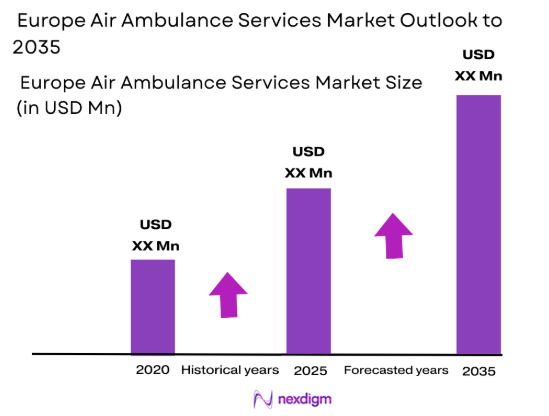
The Europe Air Ambulance Services market is projected to reach USD ~ billion, driven by the growing demand for rapid medical transportation across the region. The increasing prevalence of medical emergencies, along with an aging population, has led to a rise in demand for air ambulance services. These services are crucial in providing timely interventions in critical situations, especially in areas with limited access to medical facilities, further expanding their market presence.
The dominant cities and countries in the European air ambulance services market include Germany, the United Kingdom, and France. These regions boast highly developed healthcare systems, advanced infrastructure, and strong regulatory support for emergency medical services. Moreover, the presence of well-established air ambulance operators and high standards for medical care ensure that these countries remain at the forefront of the market, with a large number of emergency medical aircraft available to service both urban and rural areas.
Market Segmentation
By Service Type
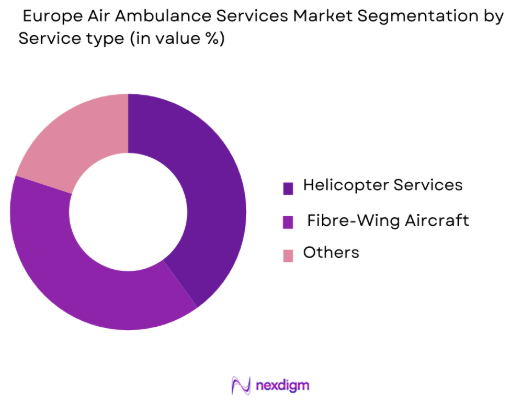
The Europe Air Ambulance Services market is segmented by service type into helicopter services, fixed-wing aircraft services, and others. Recently, helicopter services have a dominant market share, driven by their ability to access hard-to-reach areas and provide rapid medical response. Helicopter air ambulances are widely used for short-distance emergency transports, offering quicker access to patients and enabling more efficient evacuations, particularly in rural, mountainous, or congested urban environments. The compact size and speed of helicopters make them ideal for emergency medical services in Europe.
By End-User Segment
The Europe Air Ambulance Services market is segmented by end-user segment into private patients, hospitals, government agencies, insurance companies, and others. Among these, private patients have a dominant market share, driven by the growing trend of patients seeking faster and more personalized air ambulance services. With a rise in medical tourism, private patients increasingly prefer air ambulances for urgent medical transport, especially in cases requiring quick international transfers or specialized care. This demand is reinforced by growing insurance coverage and partnerships with private service providers.
Competitive Landscape
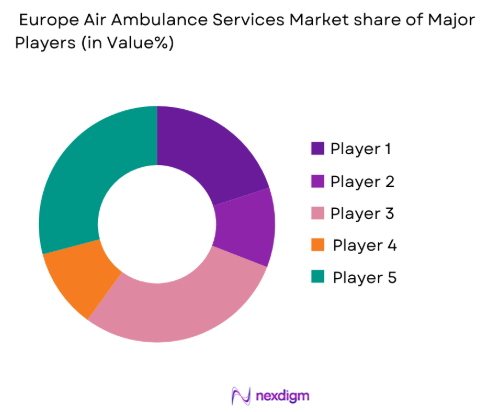
The competitive landscape in the Europe Air Ambulance Services market is shaped by several key players providing a range of emergency medical services. Consolidation has been observed in the sector, with large service providers expanding their fleets and service coverage through mergers and acquisitions. The market is influenced by regulatory frameworks, service quality, and the ability to meet increasing demand for specialized care. Companies are investing heavily in advanced medical equipment and expanding their air ambulance fleets to strengthen their position.
| Company Name | Establishment Year | Headquarters | Technology Focus | Market Reach | Key Products | Revenue (USD) | Additional Market Parameter |
| Rega Swiss Air Rescue | 1952 | Zurich, Switzerland | – | – | – | – | – |
| London’s Air Ambulance | 1989 | London, UK | – | – | – | – | – |
| Air Ambulance Services | 2000 | Munich, Germany | – | – | – | – | – |
| Babcock International | 1891 | London, UK | – | – | – | – | – |
| Falck Air Ambulance | 1906 | Copenhagen, Denmark | – | – | – | – | – |
Europe Air Ambulance services Market Analysis
Growth Drivers
Increase in Emergency Medical Needs
The demand for air ambulance services in Europe is increasingly driven by a rise in medical emergencies across the continent. With the aging population and the incidence of medical conditions such as heart attacks, strokes, and trauma-related injuries on the rise, there is an escalating need for immediate medical interventions. Air ambulances provide critical life-saving transport for patients in remote areas, reducing response times and improving survival rates. Additionally, air ambulances offer the ability to transport patients with complex medical conditions across longer distances, particularly for specialized care. The need for quicker, more efficient transport options during emergencies has made air ambulance services an essential part of the healthcare system. As the number of medical emergencies continues to rise, particularly in rural areas and during natural disasters, the demand for air ambulance services will further intensify, driving market growth.
Technological Advancements in Air Ambulance Services
Another key driver in the European air ambulance services market is the rapid technological advancements in medical transport. These include innovations in both the air ambulance fleet and the medical equipment onboard, such as advanced life support systems, telemedicine integration, and satellite communication technologies. The integration of telemedicine allows patients to receive real-time medical consultations during transport, which is especially important in critical situations. Furthermore, advanced medical devices and equipment, such as portable ventilators and defibrillators, enhance the quality of care provided during air transport. These technologies help ensure that patients receive timely interventions and care while en route to medical facilities, contributing to better outcomes. The continuous development of lighter, more fuel-efficient aircraft also improves the operational efficiency of air ambulances, enabling them to cover longer distances in less time. These technological innovations are crucial for improving the effectiveness and accessibility of air ambulance services.
Market Challenges
High Operational Costs
One of the major challenges in the European air ambulance services market is the high operational costs associated with running air ambulance fleets. The purchase and maintenance of helicopters and fixed-wing aircraft, as well as the costs of fuel, medical equipment, and highly trained personnel, significantly increase operational expenses. These high costs, combined with the need for 24/7 availability, make air ambulance services expensive for both providers and end-users. Additionally, insurance reimbursement rates for air ambulance services may not fully cover the costs, forcing many service providers to rely on private payments or supplementary insurance plans. This cost burden may limit the accessibility of air ambulance services for lower-income individuals or smaller organizations, posing a barrier to wider adoption and market growth. As the demand for air ambulance services grows, providers must find ways to reduce costs, improve efficiency, and expand insurance partnerships to remain financially viable.
Regulatory and Compliance Barriers
Another challenge faced by the European air ambulance services market is the complex regulatory environment. Air ambulance services must comply with stringent aviation safety regulations, medical transport standards, and insurance requirements that vary across different countries. These regulations ensure the safety of both patients and medical staff during transport, but they also create significant operational hurdles for service providers. Compliance with these regulations often involves expensive certification processes, frequent inspections, and regular updates to equipment and training. Moreover, air ambulance services must adhere to a variety of regional and national standards for emergency medical care, adding to the complexity of operations. This regulatory complexity can delay market entry for new players, increase costs for existing providers, and limit the speed at which services can expand into new areas. Service providers must navigate these regulatory challenges carefully to maintain service continuity and ensure patient safety.
Opportunities
Expansion of Air Ambulance Networks in Rural Areas
The increasing demand for air ambulance services presents a significant opportunity to expand service coverage in rural and underserved areas. While major cities have well-established air ambulance networks, many rural areas face challenges in accessing timely emergency medical transport. Expanding air ambulance services to these regions will not only address geographical disparities in healthcare access but also improve survival rates in emergency situations. By extending coverage to remote areas, air ambulance service providers can tap into an underserved market and increase their market share. Additionally, collaborations with government agencies and non-profit organizations can help subsidize costs in these areas, making services more affordable for individuals. With government initiatives aimed at improving healthcare access in rural areas, air ambulance services have the opportunity to become an integral part of the healthcare infrastructure, especially for time-sensitive emergencies.
Technological Integration and Partnerships with Insurance Providers
As air ambulance services continue to grow, there is a significant opportunity to integrate advanced technologies such as telemedicine, GPS tracking, and AI-powered dispatch systems. These technologies can improve operational efficiency, reduce response times, and enhance the quality of care provided during transport. Additionally, partnerships with insurance providers can help streamline the reimbursement process for air ambulance services, ensuring that both patients and providers benefit from greater financial coverage. By leveraging technology to optimize operations and working closely with insurance companies to improve payment structures, air ambulance providers can increase service accessibility and affordability. Furthermore, technological innovations can also help enhance the patient experience, making air ambulance transport safer, faster, and more reliable.
Future Outlook
The Europe Air Ambulance Services market is poised for continued growth, driven by the increasing need for rapid medical transport and advancements in technology. As demand for air ambulance services grows, especially in rural areas and during emergencies, service providers will focus on expanding networks and improving operational efficiencies. Technological developments, including telemedicine and advanced life support systems, will play a key role in enhancing service quality and patient outcomes. The next five years will also see increased collaboration with insurance companies, further driving market growth and making air ambulance services more accessible and affordable.
Major Players
- Rega Swiss Air Rescue
- London’s Air Ambulance
- Air Ambulance Services
- Babcock International
- Falck Air Ambulance
- European Air Ambulance
- Scandinavian Air Ambulance
- Global Medical Response
- Lifeguard Ambulance Service
- Air Evac Lifeteam
- Helimed Rescue
- Airmed International
- Air Ambulance Worldwide
- MedJet Assist
- Helicopter Emergency Medical Services
Key Target Audience
- Investments and venture capitalist firms
- Government and regulatory bodies
- Emergency medical providers
- Insurance companies
- Air ambulance service operators
- Medical equipment manufacturers
- Aircraft leasing firms
- Health policy planners
Research Methodology
Step 1: Identification of Key Variables
Identification of market variables including demand patterns, regulatory frameworks, and technological trends.
Step 2: Market Analysis and Construction
Collection and analysis of historical data to build a comprehensive market model.
Step 3: Hypothesis Validation and Expert Consultation
Consultation with industry experts to validate hypotheses and refine insights.
Step 4: Research Synthesis and Final Output
Synthesis of research findings into actionable insights for stakeholders, ensuring clarity and accuracy.

- Executive Summary
- Research Methodology (Definitions, Scope, Industry Assumptions, Market Sizing Approach, Primary & Secondary Research Framework, Data Collection & Verification Protocol, Analytic Models & Forecast Methodology, Limitations & Research Validity Checks)

- Market Definition and Scope
- Value Chain & Stakeholder Ecosystem
- Regulatory / Certification Landscape
- Sector Dynamics Affecting Demand
- Strategic Initiatives & Infrastructure Growth

- Growth Drivers
Increased Demand for Emergency Medical Services
Technological Advancements in Air Ambulance Operations
Rising Health Risks and Natural Disasters - Market Challenges
High Operational Costs in Air Ambulance Services
Regulatory and Compliance Barriers
Availability of Skilled Medical Staff - Market Opportunities
Expansion of Air Ambulance Services in Rural Areas
Technological Innovations in Medical Transport Solutions
Partnerships with Insurance Providers for Cost Efficiency - Trends
Rise in Use of Drones for Medical Transport
Integration of Telemedicine in Air Ambulance Services
Increased Adoption of Advanced Life Support Systems - Government Regulations
Regulations on Air Safety for Medical Flights
Compliance with Emergency Medical Transport Standards
Policy Support for Rural Health Care Accessibility

- By Market Value 2020-2025
- By Installed Units 2020-2025
- By Average System Price 2020-2025
- By System Complexity Tier 2020-2025

- By System Type (In Value%)
Rotary Wing Ambulances
Fixed Wing Ambulances
Specialized Air Ambulance Units
Non-Emergency Air Transport
Emergency Air Transport - By Platform Type (In Value%)
Private Air Ambulance Services
Government Air Ambulance Services
Hospital-Based Air Ambulance Services
Insurance-Backed Air Ambulance Services
Military and Defense Air Ambulance Services - By Fitment Type (In Value%)
Helicopter-Based Solutions
Aircraft-Based Solutions
Hybrid Solutions
Mobile Medical Units
Fixed Station Solutions - By End User Segment (In Value%)
Private Patients
Public Health Institutions
Defense and Military
Insurance Companies
Hospitals and Emergency Medical Services - By Procurement Channel (In Value%)
Direct Procurement
Government Tenders
Private Sector Procurement
Bidding Contracts
Third-Party Procurement

- Market Share Analysis
- Cross Comparison Parameters (System Type, Platform Type, Procurement Channel, End User Segment, Fitment Type)
- SWOT Analysis of Key Competitors
- Pricing & Procurement Analysis
- Porter’s Five Forces
- Key Players
London’s Air Ambulance
Rega Swiss Air Rescue
Helicare
Air Medical Group Holdings
Falkirk Helicopter Services
Phoenix Air Group
Eurocopter
Babcock International
Falck Group
ADAC Air Ambulance
Lifeguard Ambulance Service
Lufthansa Air Ambulance
MedeAnalytics
Lifeline Australia
Air Evac Lifeteam

- Demand for Private Air Ambulance Services
- Government Initiatives to Enhance Air Ambulance Networks
- Insurance Company Partnerships for Cost-Effective Transport
- Role of Military in Air Ambulance Services During Emergencies

- Demand for Private Air Ambulance Services
- Government Initiatives to Enhance Air Ambulance Networks
- Insurance Company Partnerships for Cost-Effective Transport
- Role of Military in Air Ambulance Services During Emergencies


 Request a Sample
 Ask for Customization
 Get a Quote
 Enquire Now