

 Download PDF
 Download PDF
Market Overview
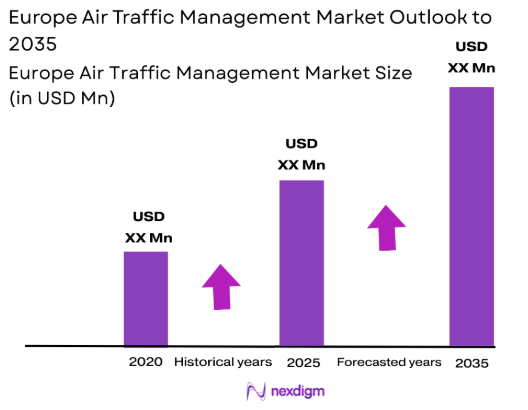
The Europe Air Traffic Management market is projected to reach USD ~ billion based on a recent historical assessment. This growth is primarily driven by the increasing volume of air traffic, the need for improved airspace efficiency, and the growing complexity of air traffic management systems. The market is further fueled by advancements in digital air traffic control technologies, such as automation, AI, and integrated communication systems. These innovations enable better capacity management, enhancing safety and reducing delays in Europe’s busy airspace.
Countries such as the United Kingdom, Germany, and France are leading in air traffic management development due to their strategic positions within Europe’s aviation network. These countries have made substantial investments in infrastructure upgrades and are leveraging advanced technologies to optimize air traffic operations. The UK, for instance, is known for its cutting-edge air traffic control systems, while Germany’s role as a central hub for both domestic and international flights drives its dominance in the market. France is also a key player, with its strong commitment to improving airspace efficiency and safety through advanced systems.
Market Segmentation
By System Type
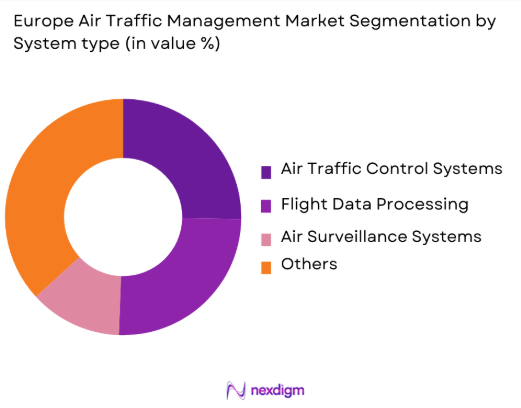
The Europe Air Traffic Management market is segmented by system type into air traffic control (ATC) systems, flight data processing systems, air surveillance systems, and others. Recently, air traffic control (ATC) systems have dominated the market share, driven by the growing need for real-time traffic management and the optimization of airspace. With the increasing number of flights, air traffic control systems have become central to ensuring airspace safety, preventing congestion, and improving the efficiency of flight paths. These systems are being upgraded with automation, AI-based decision support, and satellite-based technologies, enhancing their capabilities and driving their market dominance.
By Platform Type
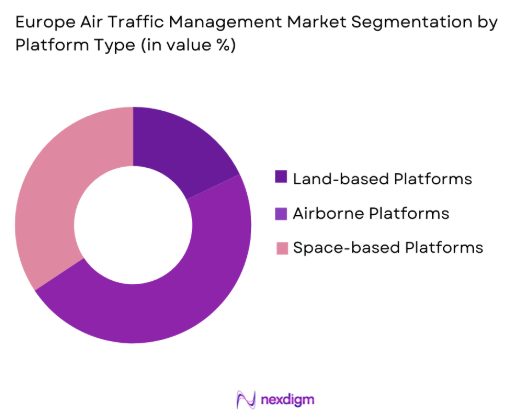
The Europe Air Traffic Management market is segmented by platform type into land-based platforms, airborne platforms, and space-based platforms. Among these, land-based platforms dominate the market due to their cost-effectiveness, ease of deployment, and the essential role they play in managing air traffic within and across airspace boundaries. Land-based platforms are responsible for managing the majority of air traffic operations, especially in high-traffic regions such as major airports and busy flight routes. With advancements in digital technologies and radar systems, land-based platforms continue to be the backbone of air traffic management in Europe.
Competitive Landscape
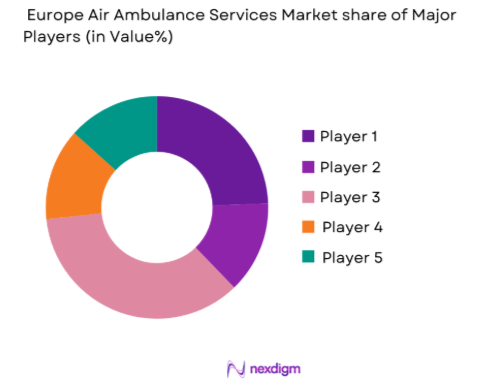
The competitive landscape in the Europe Air Traffic Management market is highly dynamic, with several key players leading the charge in developing and deploying advanced air traffic control systems. Companies like Thales Group, Indra Sistemas, and Raytheon Technologies are at the forefront, providing innovative solutions for air traffic management across Europe. These companies are investing heavily in next-generation systems that incorporate automation, AI, and real-time data analytics to improve efficiency, reduce delays, and enhance safety. The market is also witnessing consolidation, as larger companies acquire smaller players to expand their product offerings and technological capabilities.
| Company Name | Establishment Year | Headquarters | Technology Focus | Market Reach | Key Products | Revenue (USD) | Additional Market Parameter |
| Thales Group | 2000 | Paris, France | – | – | – | – | – |
| Indra Sistemas | 1993 | Madrid, Spain | – | – | – | – | – |
| Raytheon Technologies | 1922 | Waltham, USA | – | – | – | – | – |
| Leonardo | 1948 | Rome, Italy | – | – | – | – | – |
| Frequentis | 1990 | Vienna, Austria | – | – | – | – | – |
Europe Air Traffic Management Market Analysis
Growth Drivers
Increased Air Traffic and Airspace Complexity
The growth of air traffic is one of the key drivers for the expansion of the air traffic management market in Europe. With the rise in both passenger and cargo flights, particularly in major hubs like London, Frankfurt, and Paris, the demand for efficient air traffic management solutions is growing. As European airspace becomes more congested, there is a pressing need for advanced systems that can optimize flight paths, minimize delays, and enhance airspace safety. Automation, artificial intelligence (AI), and machine learning are enabling the next generation of air traffic control systems to handle increasing traffic volumes more efficiently. These systems allow for better coordination between airports, aircraft, and air navigation service providers (ANSPs), making it possible to maintain air traffic safety while accommodating more flights. The complexity of managing such a busy airspace requires continuous improvements in both hardware and software, contributing to the growth of the air traffic management market.
Technological Advancements in Air Traffic Management Systems
Technological innovations in air traffic management systems are driving market growth by enabling more efficient and safer operations. Advances in automation, artificial intelligence (AI), and big data analytics are revolutionizing the way air traffic is managed. AI-driven systems provide real-time decision support, predicting air traffic patterns and optimizing flight routes to reduce delays and improve airspace usage. Additionally, satellite-based navigation systems, such as ADS-B (Automatic Dependent Surveillance-Broadcast), are improving surveillance accuracy, allowing for more precise tracking of aircraft in crowded skies. The introduction of digital air traffic control towers and remote air traffic management systems is also reshaping the landscape, offering better flexibility and scalability for airports and air navigation service providers (ANSPs). These technological advancements are expected to continue enhancing the efficiency of air traffic management systems in Europe, supporting the growth of the market.
Market Challenges
Regulatory and Compliance Barriers
The air traffic management market in Europe faces several regulatory challenges, as air traffic systems must comply with stringent aviation safety and security regulations. These regulations are established by organizations such as the European Union Aviation Safety Agency (EASA) and the International Civil Aviation Organization (ICAO), which require air traffic management systems to meet high standards for safety, reliability, and interoperability. Compliance with these regulations can be costly and time-consuming, particularly for smaller air traffic management providers who may struggle to meet the rigorous technical and certification requirements. Moreover, regulations surrounding data privacy, cybersecurity, and airspace allocation further complicate market development. As European countries adopt new technologies like AI and cloud-based systems, the regulatory environment must adapt quickly to ensure that air traffic management systems remain safe, secure, and compliant with evolving standards.
High Infrastructure Costs
The high cost of developing and maintaining air traffic management infrastructure is another significant challenge in the European market. Upgrading existing systems to accommodate increasing traffic volumes, improving surveillance capabilities, and integrating new technologies into the existing infrastructure requires substantial investment. Air traffic management solutions involve not only the procurement of advanced hardware and software systems but also the development of training programs for air traffic controllers and the maintenance of infrastructure across airports and airspace. For smaller airports or regions with limited budgets, the high capital expenditure required to adopt these solutions can be a major barrier to entry. Moreover, ongoing operational and maintenance costs add to the financial burden, making it difficult for certain stakeholders to invest in the latest air traffic management technologies.
Opportunities
Digitalization of Air Traffic Management
The digitalization of air traffic management systems presents a significant opportunity for growth in the European market. With the ongoing transition to digital air traffic control towers and the introduction of digital flight planning and airspace management solutions, there is a growing demand for digital transformation in the aviation industry. Digitalization offers the potential to reduce costs, improve efficiency, and enhance the overall safety of air traffic management systems. By moving to digital platforms, airports and air navigation service providers (ANSPs) can better integrate new technologies such as AI, machine learning, and predictive analytics. Additionally, the development of remote air traffic management capabilities allows for the centralization of control towers, offering greater flexibility and scalability for managing air traffic across multiple regions. As the European aviation industry moves toward digitalization, there will be significant opportunities for technology providers to introduce innovative solutions that can enhance air traffic management operations.
Collaboration with Private Sector and Technology Firms
Another key opportunity in the Europe Air Traffic Management market lies in the collaboration between government bodies, air navigation service providers (ANSPs), and private sector technology firms. As air traffic management systems become more complex, partnerships with technology providers who specialize in automation, AI, and cloud computing will be essential for meeting future demands. Collaborative efforts can drive the development of more scalable, flexible, and cost-effective solutions for managing Europe’s busy airspace. These partnerships are particularly important as the aviation industry seeks to modernize air traffic control infrastructure while also improving sustainability and efficiency. By leveraging private sector expertise and innovative technologies, public and private entities can create more efficient air traffic management systems that benefit all stakeholders in the European aviation ecosystem.
Future Outlook
The Europe Air Traffic Management market is expected to experience steady growth over the next five years, driven by the need for more efficient air traffic management solutions and the increasing complexity of air traffic. Technological advancements, such as the adoption of artificial intelligence, automation, and satellite-based systems, will continue to drive the development of more advanced systems capable of handling growing air traffic volumes. Additionally, increasing regulatory support for airspace optimization and the integration of new technologies will further support market growth, ensuring that Europe’s air traffic management infrastructure can meet the challenges of the future.
Major Players
- Thales Group
- Indra Sistemas
- Raytheon Technologies
- Honeywell International
- Leonardo
- Boeing
- Frequentis
- SAAB
- Airbus
- Airmic
- General Electric
- Lockheed Martin
- SITA
- Collins Aerospace
- NATS
Key Target Audience
- Investments and venture capitalist firms
- Government and regulatory bodies
- Air traffic management providers
- Airlines and airport operators
- Airspace users and aviation service providers
- Technology developers in air traffic management
- Airport authorities and infrastructure developers
- Aviation safety organizations
Research Methodology
Step 1: Identification of Key Variables
Identify key variables affecting the air traffic management market, including air traffic volume, technological advancements, and regulatory changes.
Step 2: Market Analysis and Construction
Gather and analyze data from industry reports, market trends, and expert insights to build a detailed market model.
Step 3: Hypothesis Validation and Expert Consultation
Consult industry experts and stakeholders to validate market assumptions and refine the research framework.
Step 4: Research Synthesis and Final Output
Synthesize the findings into a comprehensive report, ensuring accuracy and relevance for stakeholders.

- Executive Summary
- Research Methodology (Definitions, Scope, Industry Assumptions, Market Sizing Approach, Primary & Secondary Research Framework, Data Collection & Verification Protocol, Analytic Models & Forecast Methodology, Limitations & Research Validity Checks)

- Market Definition and Scope
- Value Chain & Stakeholder Ecosystem
- Regulatory / Certification Landscape
- Sector Dynamics Affecting Demand
- Strategic Initiatives & Infrastructure Growth

- Growth Drivers
Increasing Air Traffic Volume
Technological Advancements in Air Traffic Management Systems
Government Initiatives and Regulatory Support - Market Challenges
High Capital Investment in Infrastructure
Regulatory and Compliance Issues
Cybersecurity Risks in Air Traffic Systems - Market Opportunities
Growth in Drone Traffic Management
Implementation of Artificial Intelligence and Automation
Collaborations with Private Sector and Technology Firms - Trends
Digitalization of Air Traffic Management
Adoption of Autonomous Air Traffic Management Systems
Integration of Artificial Intelligence and Machine Learning - Government Regulations
Regulations on Airspace Safety and Management
Data Privacy and Cybersecurity Regulations
Government Support for Sustainable Air Traffic Systems

- By Market Value 2020-2025
- By Installed Units 2020-2025
- By Average System Price 2020-2025
- By System Complexity Tier 2020-2025

- By System Type (In Value%)
Air Traffic Control (ATC) Systems
Air Traffic Flow Management Systems
Flight Data Processing Systems
Navigation Systems
Surveillance Systems - By Platform Type (In Value%)
Land-Based Platforms
Airborne Platforms
Space-Based Platforms
Hybrid Platforms
Integrated Platforms - By Fitment Type (In Value%)
On-premise Solutions
Cloud-Based Solutions
Modular Solutions
Integrated Solutions
Hybrid Solutions - By End User Segment (In Value%)
Airlines
Airports
Air Navigation Service Providers (ANSPs)
Defense Contractors
Government Agencies - By Procurement Channel (In Value%)
Direct Procurement
Government Tenders
Private Sector Procurement
Third-Party Distributors
Online Bidding Platforms

- Market Share Analysis
- Cross Comparison Parameters (System Type, Platform Type, Procurement Channel, End User Segment, Fitment Type)
- SWOT Analysis of Key Competitors
- Pricing & Procurement Analysis
- Porter’s Five Forces
- Key Players
Thales Group
Indra Sistemas
Raytheon Technologies
Honeywell International
Leonardo
Boeing
Frequentis
SAAB
Airbus
Aireon
Siemens
DFS Deutsche Flugsicherung
Nav Canada
NATS
Aeroports de Paris

- Airlines Increasing Demand for Efficient Air Traffic Systems
- Airports Upgrading Infrastructure for Increased Traffic
- Air Navigation Service Providers Enhancing Capacity
- Governments Supporting Air Traffic Infrastructure Development

- Forecast Market Value 2026-2035
- Forecast Installed Units 2026-2035
- Price Forecast by System Tier 2026-2035
- Future Demand by Platform 2026-2035


 Request a Sample
 Ask for Customization
 Get a Quote
 Enquire Now