

 Download PDF
 Download PDF
Market Overview
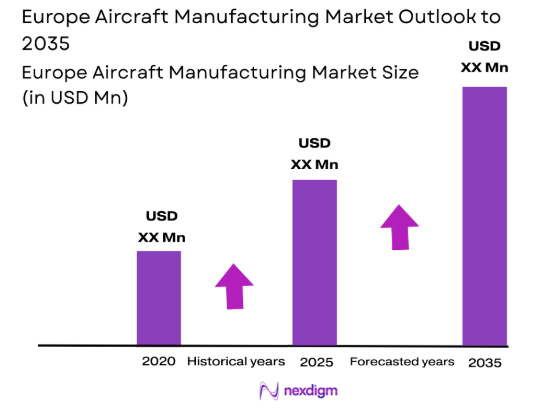
The Europe Aircraft Manufacturing market is expected to reach USD ~ billion based on a recent historical assessment. This market growth is largely driven by the increasing demand for commercial and military aircraft, alongside the rise in air traffic and airline fleet expansions. Furthermore, continuous technological advancements in aircraft design and manufacturing are fueling growth, with a focus on improving fuel efficiency, reducing emissions, and meeting strict regulatory standards in the aerospace industry.
Key countries such as Germany, France, and the United Kingdom dominate the Europe Aircraft Manufacturing market. Germany leads with a robust aerospace industry, focusing on both commercial and military aircraft production. France is home to major players like Airbus, a global leader in aircraft manufacturing, while the UK benefits from a strong defense and aerospace sector. These nations dominate due to their established industrial bases, skilled labor, and technological innovations that drive both domestic and international aircraft manufacturing.
Market Segmentation
By Product Type
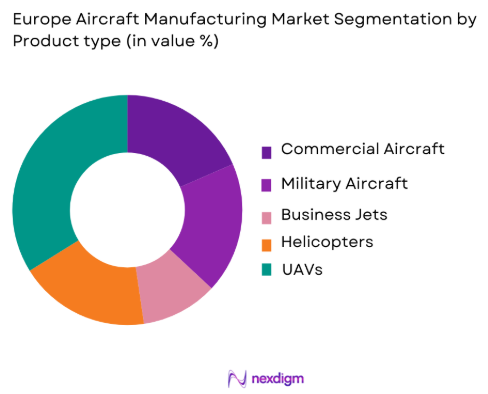
The Europe Aircraft Manufacturing market is segmented by product type into commercial aircraft, military aircraft, business jets, helicopters, and UAVs. Commercial aircraft dominate this segment due to the increasing air traffic and the rise in demand for long-haul flights. The rapid expansion of low-cost carriers and full-service airlines is boosting the demand for efficient and large-capacity commercial aircraft. These aircraft offer higher passenger capacity, longer ranges, and greater fuel efficiency, thus driving their dominant position in the market.
By Platform Type
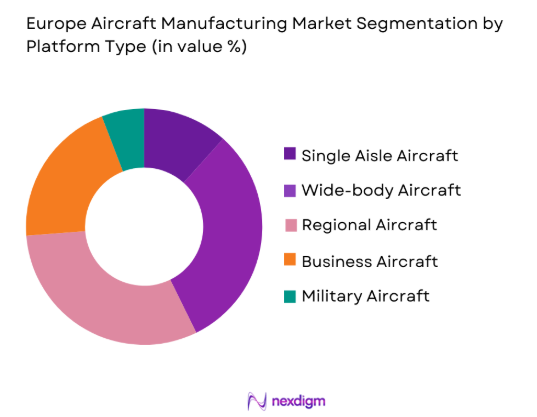
The Europe Aircraft Manufacturing market is segmented by platform type into single-aisle aircraft, wide-body aircraft, regional aircraft, business jets, and military aircraft. Single-aisle aircraft dominate the market due to their wide adoption by low-cost carriers and regional airlines. These aircraft are typically more fuel-efficient and cost-effective, making them ideal for shorter routes, which are growing rapidly due to increasing passenger travel. As a result, they represent a large portion of the market, particularly in the commercial sector.
Competitive Landscape
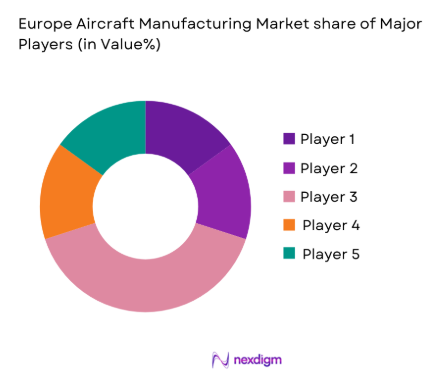
The Europe Aircraft Manufacturing market is highly competitive, with key players like Airbus, Boeing, and Lockheed Martin dominating the industry. These companies are not only the primary manufacturers of aircraft but are also focused on technological advancements, with an increasing focus on fuel efficiency and environmentally sustainable aircraft. The consolidation of smaller manufacturers and collaborations between leading players are shaping the competitive dynamics. The growth of commercial aircraft demand and government contracts in defense are driving major market players to innovate and expand their product portfolios.
| Company Name | Establishment Year | Headquarters | Technology Focus | Market Reach | Key Products | Revenue (USD) | Additional Market Parameter |
| Airbus | 1970 | – | – | – | – | – | – |
| Boeing | 1916 | – | – | – | – | – | – |
| Lockheed Martin | 1912 | – | – | – | – | – | – |
| Dassault Aviation | 1929 | – | – | – | – | – | – |
| Embraer | 1969 | – | – | – | – | – | – |
Europe Aircraft Manufacturing Market Analysis
Growth Drivers
Increasing Demand for Air Travel and Fleet Expansions
The Europe Aircraft Manufacturing market is primarily driven by the growing demand for air travel, which in turn is fueling fleet expansions by airlines. As global air traffic rises, both low-cost carriers and full-service airlines are increasing their aircraft orders, leading to a surge in commercial aircraft manufacturing. Additionally, the need for replacement of aging fleets in Europe contributes to the continuous demand for new aircraft. With air travel expected to maintain a steady growth trajectory, aircraft manufacturers are benefiting from sustained demand, particularly for fuel-efficient, high-performance models that cater to both short and long-haul routes.
Technological Advancements in Aircraft Design and Manufacturing
Technological advancements play a critical role in driving the growth of the Europe Aircraft Manufacturing market. Companies are increasingly focusing on improving fuel efficiency, reducing carbon emissions, and enhancing the overall performance of aircraft. Innovations such as lightweight materials, improved aerodynamics, and next-generation engine technologies are enabling manufacturers to offer aircraft that meet the stringent environmental regulations set by European aviation authorities. Furthermore, advancements in electric and hybrid propulsion systems are expected to transform the market in the coming years, offering significant growth opportunities for manufacturers that invest in these technologies.
Market Challenges
High Capital Investment and Operational Costs
One of the key challenges facing the Europe Aircraft Manufacturing market is the significant capital investment required for the development, production, and certification of new aircraft. The development of advanced aircraft models involves substantial R&D expenses, as well as compliance with rigorous safety and environmental regulations. Additionally, manufacturers must continuously invest in new technologies and innovations to stay competitive, which can strain financial resources, particularly for smaller players in the market. This high capital intensity is a significant barrier to entry for new competitors and limits the pace at which new manufacturers can scale operations in the industry.
Supply Chain Disruptions and Component Shortages
Another challenge faced by the Europe Aircraft Manufacturing market is the ongoing supply chain disruptions and component shortages. The global semiconductor shortage, logistical challenges, and raw material price fluctuations have affected the production timelines for aircraft manufacturers. The reliance on complex global supply chains for components, including avionics, engines, and materials, makes the industry vulnerable to delays and cost increases. These disruptions can lead to extended lead times for aircraft deliveries and affect the overall profitability of manufacturers, creating uncertainty for operators and consumers alike.
Opportunities
Growth in Military Aircraft and Defense Contracts
The growth of military aircraft production, fueled by increasing defense budgets in Europe, presents significant opportunities for aircraft manufacturers. Several European countries are investing heavily in defense modernization programs, including the procurement of advanced military aircraft. With rising geopolitical tensions and security concerns, governments are looking to enhance their military capabilities, which is driving demand for next-generation fighter jets, transport aircraft, and UAVs. This demand is expected to remain strong over the coming years, providing a lucrative market segment for aircraft manufacturers specializing in military and defense-related products.
Sustainability Initiatives and Green Aviation Technologies
Sustainability is becoming increasingly important in the Europe Aircraft Manufacturing market, offering substantial growth opportunities for companies that invest in green technologies. The European Union’s commitment to achieving carbon neutrality by 2050 and reducing aviation emissions presents a strong incentive for manufacturers to develop more fuel-efficient and eco-friendly aircraft. Electric and hybrid propulsion systems, as well as sustainable aviation fuel (SAF), are key areas where significant technological advancements are taking place. Manufacturers that prioritize these innovations are well-positioned to capitalize on the demand for sustainable aviation solutions in Europe.
Future Outlook
The Europe Aircraft Manufacturing market is expected to continue its positive growth trajectory in the next five years, driven by increasing air traffic, fleet expansions, and technological advancements in aircraft design. The demand for more fuel-efficient, environmentally friendly aircraft will lead to a continued focus on sustainable aviation technologies. Additionally, the European defense sector’s expansion and the adoption of electric propulsion systems will provide significant growth opportunities for manufacturers. However, challenges related to supply chain disruptions, capital investments, and regulatory compliance will need to be navigated carefully for sustained market growth.
Major Players
- Airbus
- Boeing
- Lockheed Martin
- Dassault Aviation
- Embraer
- General Dynamics
- Saab Group
- Bombardier
- MTU Aero Engines
- Pratt & Whitney
- Rolls-Royce
- GE Aviation
- IHI Corporation
- Honeywell Aerospace
- Leonardo
Key Target Audience
- Investments and venture capitalist firms
- Government and regulatory bodies
- Aircraft operators and fleet managers
- MRO service providers
- Aircraft manufacturers
- Engine leasing companies
- Aerospace technology developers
- Aviation maintenance organizations
Research Methodology
Step 1: Identification of Key Variables
Identification of market drivers and challenges, including technological advancements, regulatory impacts, and market trends
Step 2: Market Analysis and Construction
Gathering data from industry reports and expert opinions to build a comprehensive market model based on historical and current market conditions.
Step 3: Hypothesis Validation and Expert Consultation
Consultation with industry professionals and stakeholders to validate assumptions and refine market projections.
Step 4: Research Synthesis and Final Output
Synthesis of research findings into actionable insights and a comprehensive market report.

- Executive Summary
- Research Methodology (Definitions, Scope, Industry Assumptions, Market Sizing Approach, Primary & Secondary Research Framework, Data Collection & Verification Protocol, Analytic Models & Forecast Methodology, Limitations & Research Validity Checks)

- Market Definition and Scope
- Value Chain & Stakeholder Ecosystem
- Regulatory / Certification Landscape
- Sector Dynamics Affecting Demand
- Strategic Initiatives & Infrastructure Growth

- Growth Drivers
Increased Demand for Air Travel and Fleet Expansions
Technological Advancements in Aircraft Design and Manufacturing
Rising Military Aircraft Production in Europe - Market Challenges
High Capital Investment and Operational Costs
Stringent Regulatory and Compliance Barriers
Global Supply Chain Disruptions - Market Opportunities
Emerging Demand for Electric and Hybrid Aircraft Technologies
Government Defense and Aerospace Contracts
Growth of the Aircraft Leasing Market - Trends
Shift Towards Sustainable Aviation Technologies
Growing Interest in Autonomous Aircraft Systems
Innovation in Aircraft Lightweighting and Fuel Efficiency - Government Regulations
Environmental Regulations and Emission Standards
Aircraft Safety and Certification Regulations
Defense Procurement and Compliance Policies

- By Market Value 2020-2025
- By Installed Units 2020-2025
- By Average System Price 2020-2025
- By System Complexity Tier 2020-2025

- By System Type (In Value%)
Commercial Aircraft
Military Aircraft
Business Jets
Helicopters
UAVs - By Platform Type (In Value%)
Single-aisle Aircraft
Wide-body Aircraft
Regional Aircraft
Business Jets
Military Aircraft - By Fitment Type (In Value%)
OEM Services
Aftermarket Services
Retrofit Services
Integrated Solutions
Standalone Installations - By End User Segment (In Value%)
Airlines
OEM Manufacturers
MRO Service Providers
Defense Contractors
Private Operators - By Procurement Channel (In Value%)
Direct Procurement
OEM Sourcing
Private Sector Procurement
Third-Party Distributors
Government Contracts

- Market Share Analysis
- Cross Comparison Parameters (System Type, Platform Type, Procurement Channel, End User Segment, Fitment Type]
- SWOT Analysis of Key Competitors
- Pricing & Procurement Analysis
- Porter’s Five Forces
- Key Players
Airbus
Boeing
Dassault Aviation
Airbus Defence and Space
Leonardo
Embraer
Bombardier
Lockheed Martin
General Dynamics
Saab Group
MTU Aero Engines
Pratt & Whitney
Rolls-Royce
GE Aviation
IHI Corporation

- Airlines Expanding Fleets and Aircraft Upgrades
- OEM Manufacturers Focusing on Technological Integration
- Defense Contractors Increasing Demand for Military Aircraft
- Private Operators Seeking Cost-Effective Aircraft Solutions

- Forecast Market Value 2026-2035
- Forecast Installed Units 2026-2035
- Price Forecast by System Tier 2026-2035
- Future Demand by Platform 2026-2035


 Request a Sample
 Ask for Customization
 Get a Quote
 Enquire Now