

 Download PDF
 Download PDF
Market Overview
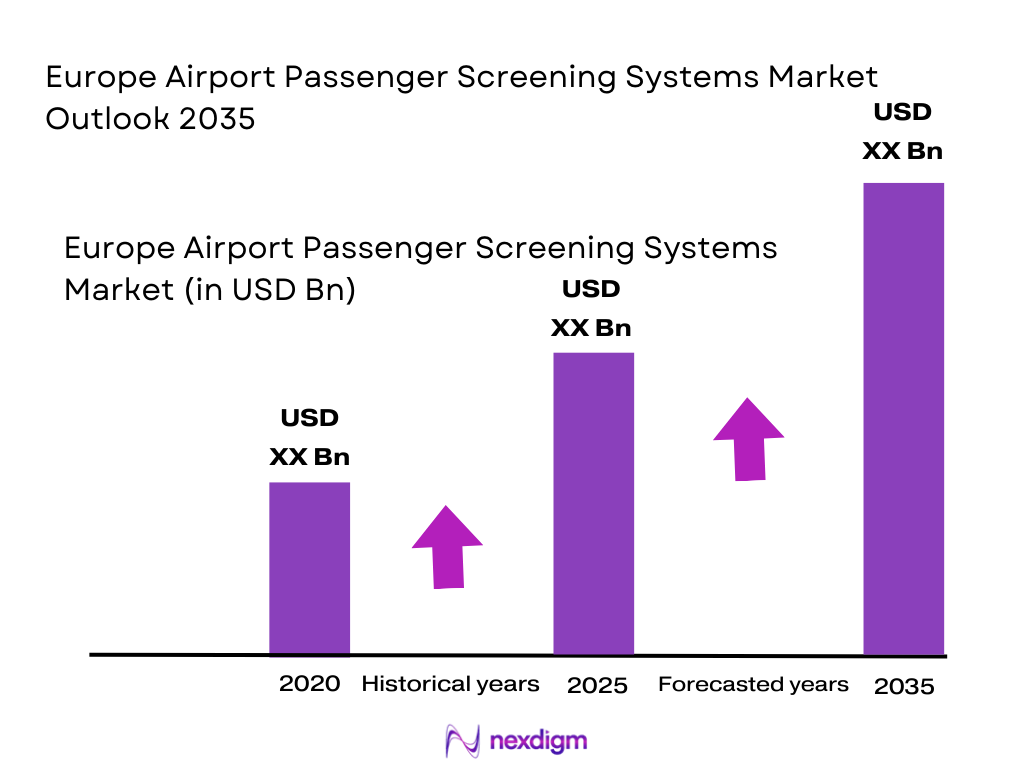
Based on a recent historical assessment, the Europe Airport Passenger Screening Systems market is valued at approximately USD ~ in 2025. This market is primarily driven by the increasing security demands across airports in response to global travel growth and rising threats. The continuous advancements in screening technology, such as automated systems, body scanners, and AI-based solutions, are further bolstering market growth. Government regulations and a strong emphasis on enhancing passenger safety are significant contributors to the expansion.
Countries like Germany, the United Kingdom, and France dominate the European market for airport passenger screening systems due to their large international airports and well-established aviation infrastructure. These nations consistently invest in advanced security systems, supported by their respective government agencies. Additionally, the increased focus on upgrading airport facilities, coupled with rising passenger traffic, fosters greater demand for these systems. These countries maintain leadership in the sector by deploying state-of-the-art technologies to improve efficiency and security.
Market Segmentation
By Product Type
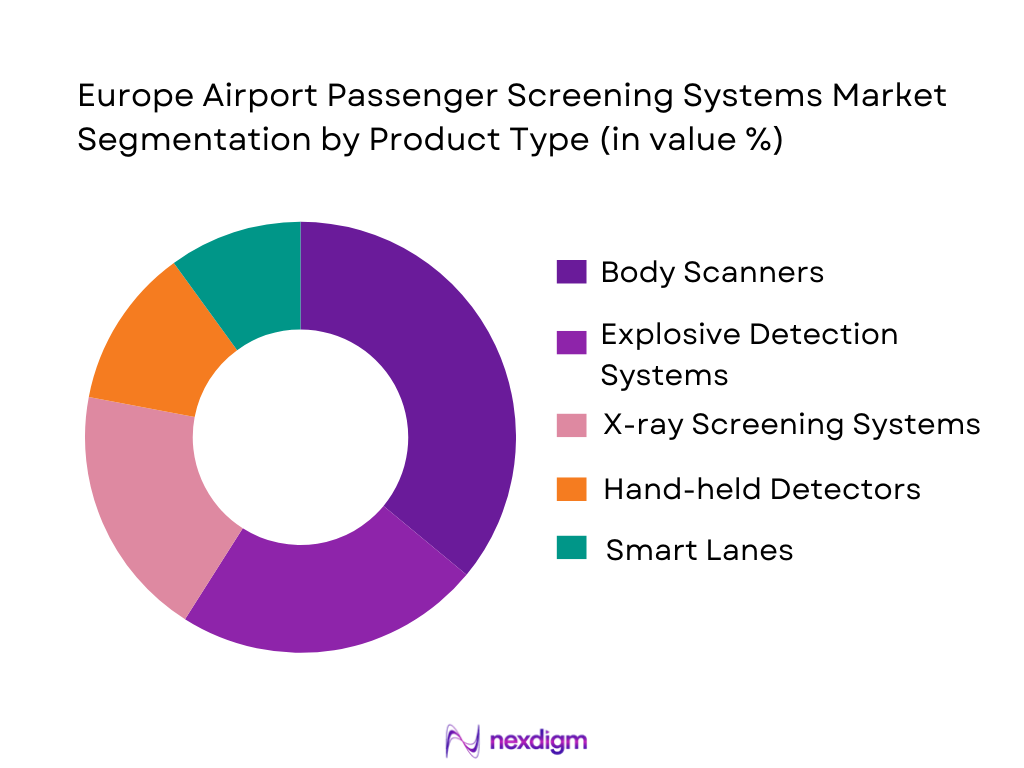
The Europe Airport Passenger Screening Systems market is segmented by product type into body scanners, explosive detection systems, X-ray screening systems, hand-held detectors, and smart lanes. Recently, body scanners have gained the dominant market share due to factors such as enhanced security capabilities, the increasing need for non-intrusive screening solutions, and the adoption of innovative technologies. Their ability to detect concealed threats and improve passenger throughput has made them the preferred choice in major European airports.
By Platform Type
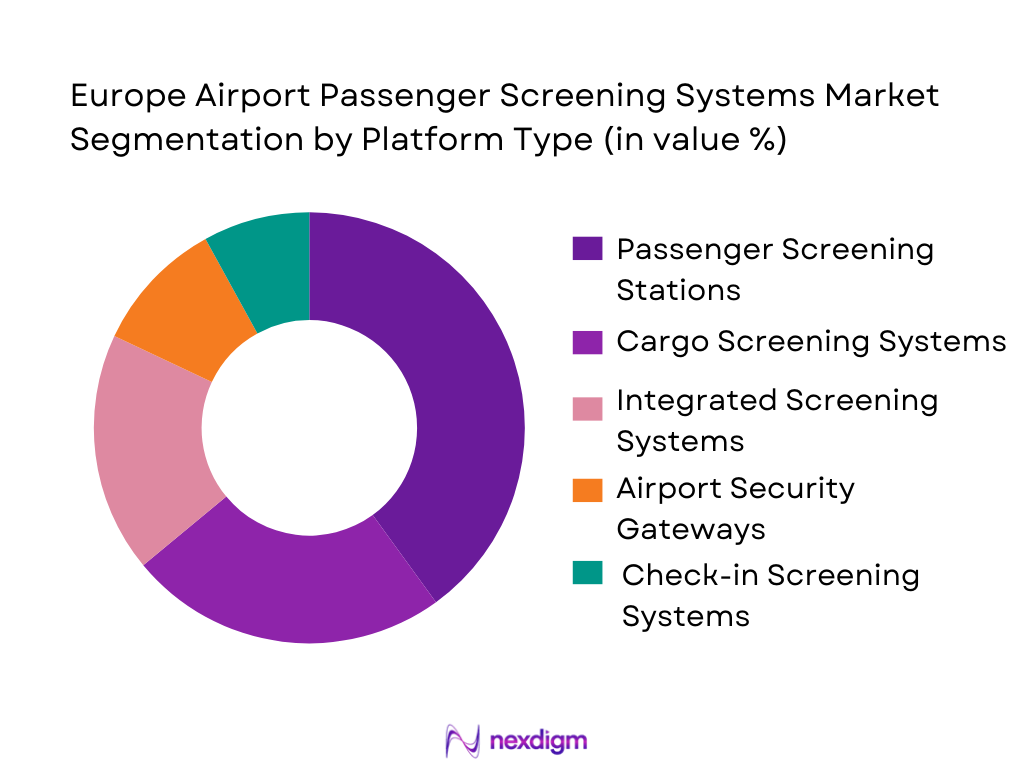
The market is segmented by platform type into passenger screening stations, cargo screening systems, integrated screening systems, airport security gateways, and check-in screening systems. Passenger screening stations have the largest share, driven by the consistent increase in air travel and the need to ensure passenger safety. With the rise in international travel, airports are increasingly focusing on enhancing passenger security measures at these stations to provide smoother and more efficient screening processes.
Competitive Landscape
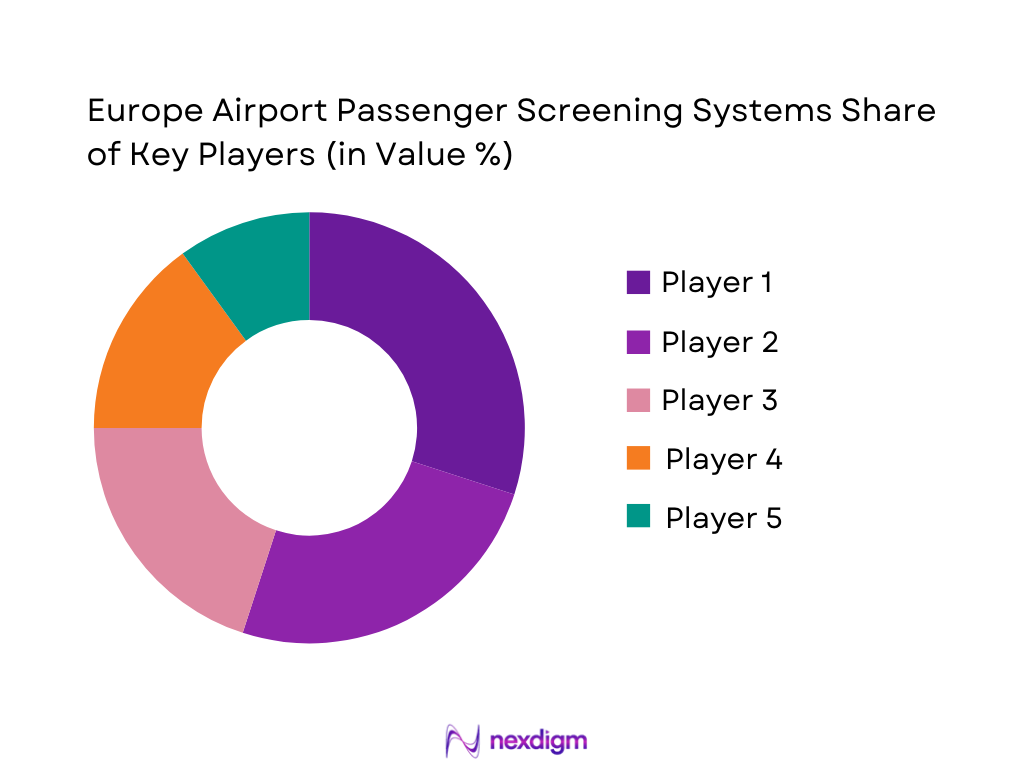
The competitive landscape of the Europe Airport Passenger Screening Systems market is highly consolidated with the presence of well-established players. Key players dominate the market with a focus on technological innovation, offering advanced screening solutions to meet the growing security demands. Strategic mergers, acquisitions, and partnerships are common, as companies look to expand their product portfolios and market presence. The influence of major players continues to shape the market with their substantial R&D investments.
| Company Name | Establishment Year | Headquarters | Technology Focus | Market Reach | Key Products | Revenue (USD) | Additional Market-Specific Parameter |
| Smiths Detection | 1980 | United Kingdom | ~ | ~ | ~ | ~ | ~ |
| Rapiscan Systems | 1993 | United States | ~ | ~ | ~ | ~ | ~ |
| CEIA | 1968 | Italy | ~ | ~ | ~ | ~ | ~ |
| L3 Technologies | 2002 | United States | ~ | ~ | ~ | ~ | ~ |
| Leidos | 1969 | United States | ~ | ~ | ~ | ~ | ~ |
Europe Airport Passenger Screening Systems Market Analysis
Growth Drivers
Increasing Security Threats and Terrorism Concerns
The rise in global security threats and terrorism has spurred the need for advanced airport security measures, leading to increased demand for airport passenger screening systems. With security incidents such as bombings and hijackings, governments and airport authorities are investing significantly in the development of new screening technologies that ensure better threat detection. These systems not only offer greater accuracy in identifying dangerous objects, but they also improve airport efficiency by reducing wait times and streamlining passenger flows. As international air travel continues to expand, enhanced security measures become essential, making the market for screening systems crucial to ensuring safer travel environments. This heightened focus on safety has also prompted airport operators to adopt high-tech solutions, such as automated screening lanes and advanced body scanners, that provide superior protection while adhering to international security standards. As new technologies continue to evolve, airports will demand even more sophisticated systems to stay ahead of potential security risks, further propelling the market growth in Europe.
Technological Advancements in Screening Solutions
The European market for airport passenger screening systems is being driven by the rapid advancements in screening technologies, especially in automation and AI-based systems. With innovations like artificial intelligence, machine learning, and automated detection, these systems are becoming more efficient in identifying threats while reducing human error. AI-powered screening solutions, such as smart lanes and body scanners, can automatically detect hidden items, reducing the need for manual inspection and speeding up the overall screening process. Furthermore, the integration of biometric verification systems with screening equipment is expected to play a significant role in improving security and streamlining operations at airports. Technological advancements such as these not only enhance security but also contribute to better passenger experience by reducing long queues and wait times. Airports in Europe are keen on adopting these innovations to maintain high standards of security, which is a major factor propelling the demand for new and improved screening systems.
Market Challenges
High Costs of Implementation and Maintenance
One of the biggest challenges in the Europe Airport Passenger Screening Systems market is the high capital expenditure required for the implementation and maintenance of advanced screening technologies. Many airports in Europe, particularly those in smaller cities or regional airports, find it difficult to invest in the latest technologies due to the significant upfront costs involved. Additionally, these systems require continuous maintenance, software updates, and periodic replacements, further adding to operational costs. Airports are under constant pressure to ensure security without compromising the flow of passengers, which makes the high costs of these systems a barrier for some stakeholders. Furthermore, as airports expand and new systems are introduced, the need for more training and skilled personnel increases, which can lead to higher long-term operational expenses. The financial burden on airport authorities can delay the adoption of advanced screening systems, limiting market growth in certain regions.
Regulatory and Compliance Issues
Compliance with various security regulations and certifications is another major challenge for the Europe Airport Passenger Screening Systems market. Airport screening systems must meet stringent security and regulatory requirements imposed by government agencies, such as the European Union Aviation Safety Agency (EASA) and the International Civil Aviation Organization (ICAO). These regulatory standards continuously evolve, and airports are required to update their security systems to meet new protocols. This ongoing need for compliance can be time-consuming and costly for airports, particularly when it comes to upgrading systems that may not meet the latest standards. Additionally, regulatory approval processes for new technologies can be slow, delaying the deployment of cutting-edge solutions. The complexity and costs associated with meeting these regulatory standards pose significant challenges to the timely adoption of advanced screening systems across European airports.
Opportunities
Rise of Smart Airports and Automated Systems
The growing trend of smart airports presents a significant opportunity for the Europe Airport Passenger Screening Systems market. As airports across Europe strive to improve operational efficiency, reduce costs, and enhance the passenger experience, there is a strong push toward automating various processes, including passenger screening. The integration of biometric technology, AI, and self-service kiosks into screening systems is driving this transformation. These innovations allow passengers to move through security checkpoints more quickly and with less human intervention, improving both safety and satisfaction. The demand for smart, automated systems is expected to grow as airports look for ways to handle increased passenger traffic while maintaining high security standards. Airports are also focusing on the integration of IoT and data analytics into screening systems, enabling real-time monitoring and improved decision-making. This presents a significant growth opportunity for companies that offer integrated, automated security solutions.
Expansion of Regional Airports and Infrastructure Investment
Another major opportunity for the Europe Airport Passenger Screening Systems market lies in the expansion of regional airports and ongoing infrastructure investment. Many European countries are focusing on improving their airport infrastructure, with an emphasis on enhancing security systems in smaller and regional airports. As these airports increase passenger traffic, they are investing in advanced screening systems to ensure safety and efficiency. This expansion and modernization effort offers a growing market for airport security solution providers, particularly those offering scalable and cost-effective systems. Additionally, governments across Europe are supporting airport upgrades with increased funding, creating favorable conditions for new technology adoption. The expansion of regional airports not only contributes to the overall growth of the market but also presents opportunities for companies to enter new markets and expand their product offerings to a broader range of airports.
Future Outlook
The future outlook for the Europe Airport Passenger Screening Systems market indicates steady growth over the next five years, driven by advancements in screening technology, increasing passenger volumes, and heightened security concerns. Technological developments such as AI-based solutions, biometric integration, and automated systems will continue to shape the industry, making airports more efficient and secure. Furthermore, regulatory support and investment in infrastructure development are expected to create a favorable environment for market expansion. The ongoing demand for smarter and more efficient screening systems, coupled with a growing emphasis on safety and passenger experience, will drive the adoption of innovative solutions across the European airport landscape.
Major Players
- Smiths Detection
- Rapiscan Systems
- CEIA
- L3 Technologies
- Leidos
- Nuctech
- Arjo
- Morpho Detection
- Kantech
- Aventura Technologies
- Safran
- Raytheon Technologies
- OSI Systems
- VOTI Detection
- Analogic Corporation
Key Target Audience
- Investments and venture capitalist firms
- Government and regulatory bodies
- Airport authorities and operators
- Airport security departments
- Aviation safety consultants
- Airport contractors and developers
- Technology providers for airport security systems
- Airports’ infrastructure managers
Research Methodology
Step 1: Identification of Key Variables
The first step involves identifying the key market variables, including product types, platform types, and regional demand factors. This provides a comprehensive understanding of the dynamics driving the market.
Step 2: Market Analysis and Construction
This step includes analyzing historical trends, current market conditions, and key growth drivers. It also entails constructing detailed market models to predict future market movements.
Step 3: Hypothesis Validation and Expert Consultation
Experts from the aviation and security sectors are consulted to validate hypotheses. Their insights help refine market models and ensure they accurately reflect industry dynamics.
Step 4: Research Synthesis and Final Output
The final output synthesizes all research findings, providing a comprehensive and actionable market analysis. The report is tailored to address the specific needs of stakeholders in the airport security industry.

- Executive Summary
- Research Methodology (Definitions, Scope, Industry Assumptions, Market Sizing Approach, Primary & Secondary Research Framework, Data Collection & Verification Protocol, Analytic Models & Forecast Methodology, Limitations & Research Validity Checks)

- Market Definition and Scope
- Value Chain & Stakeholder Ecosystem
- Regulatory / Certification Landscape
- Sector Dynamics Affecting Demand
- Strategic Initiatives & Infrastructure Growth

- Growth Drivers
Rising Passenger Traffic
Increased Security Measures Post-9/11
Technological Advancements in Screening Systems - Market Challenges
High Installation and Maintenance Costs
Regulatory Compliance Requirements
Integration with Existing Airport Infrastructure - Market Opportunities
Expansion of Smart Security Solutions
Integration with AI and Biometrics
Growth in Regional Airports - Trends
Adoption of AI in Screening Systems
Rise of Automated and Contactless Screening Technologies - Government Regulations
- SWOT Analysis
- Porter’s Five Forces

- By Market Value, 2020-2025
- By Installed Units, 2020-2025
- By Average System Price, 2020-2025
- By System Complexity Tier, 2020-2025

- By System Type (In Value%)
Explosive Detection Systems
Body Scanners
X-ray Screening Systems
Hand-held Detectors
Smart Lanes - By Platform Type (In Value%)
Passenger Screening Stations
Cargo Screening Systems
Integrated Screening Systems
Airport Security Gateways
Check-in Screening Systems - By Fitment Type (In Value%)
Fixed Systems
Modular Systems
Portable Systems
Integrated Systems - By End User Segment (In Value%)
Airports
Security Agencies
Airport Contractors
Government Bodies - By Procurement Channel (In Value%)
Direct Procurement
Government Tenders
Third-party Distributors

- Market Share Analysis
- Cross Comparison Parameters (System Type, Platform Type, Procurement Channel, End User Segment, Fitment Type)
- SWOT Analysis of Key Competitors
- Pricing & Procurement Analysis
- Key Players
Smiths Detection
Rapiscan Systems
CEIA
L3 Technologies
Leidos
Zebra Technologies
Kantech
Vanderlande
SAAB Group
Cognitec Systems
Nuctech
Morpho Detection
Aventura Technologies
Fisher International
Cameron International

- Airports’ Focus on Passenger Safety
- Government Agencies’ Role in Airport Security
- Security Contractors’ Innovations in Screening
- Technology Firms’ Development of Screening Solutions

- Forecast Market Value, 2026-2035
- Forecast Installed Units, 2026-2035
- Price Forecast by System Tier, 2026-2035
- Future Demand by Platform, 2026-2035


 Request a Sample
 Ask for Customization
 Get a Quote
 Enquire Now