
 Download PDF
 Download PDF
Market Overview
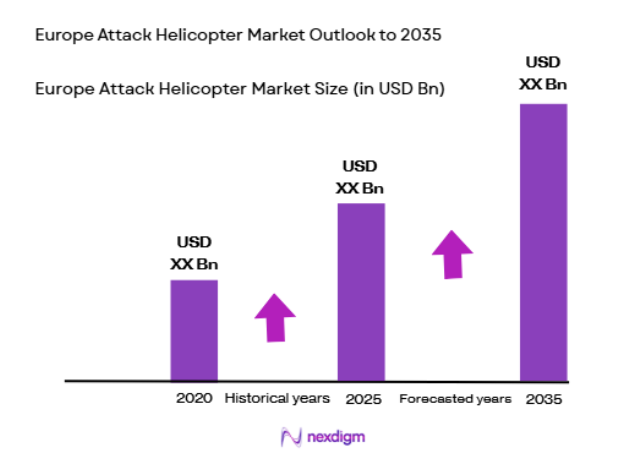
The Europe Attack Helicopter market is valued at approximately USD ~ billion, driven by the increasing demand for advanced military capabilities, the modernization of defense forces, and the rising need for versatile platforms capable of performing a range of combat roles. Defense spending in Europe has been increasing, particularly due to geopolitical tensions and the need for improved defense preparedness. The shift toward upgrading existing fleets and acquiring newer, more capable attack helicopters is further propelling market growth.
Countries such as the United Kingdom, Germany, and France dominate the European attack helicopter market due to their large defense budgets, strategic importance within NATO, and well-established military infrastructures. These nations are leading the development, procurement, and operational deployment of modern attack helicopters, leveraging their robust defense industry capabilities. Strong defense alliances and international collaborations also contribute to their dominance in the market, as these countries focus on maintaining technological superiority in airborne defense systems.
Market Segmentation
By Helicopter Type
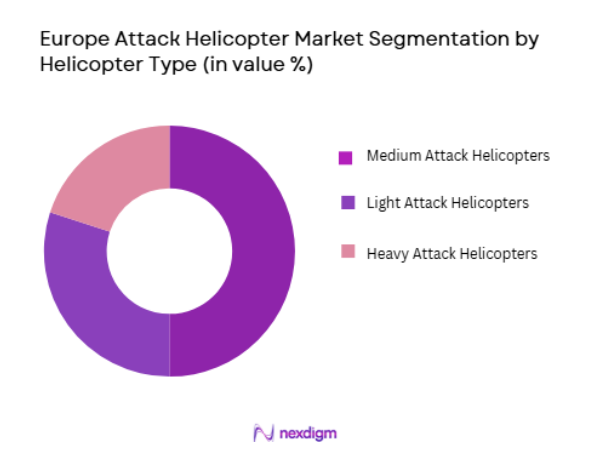
The Europe Attack Helicopter market is segmented by helicopter type into light attack helicopters, medium attack helicopters, and heavy attack helicopters. Recently, medium attack helicopters have dominated the market due to their balance of firepower, maneuverability, and operational versatility. These helicopters are equipped with advanced targeting systems, guided missiles, and can operate effectively in a variety of combat environments, making them the preferred choice for most European nations. Their ability to engage both ground and aerial targets while offering greater survivability in combat situations has driven their demand across military fleets.
By Technology Type
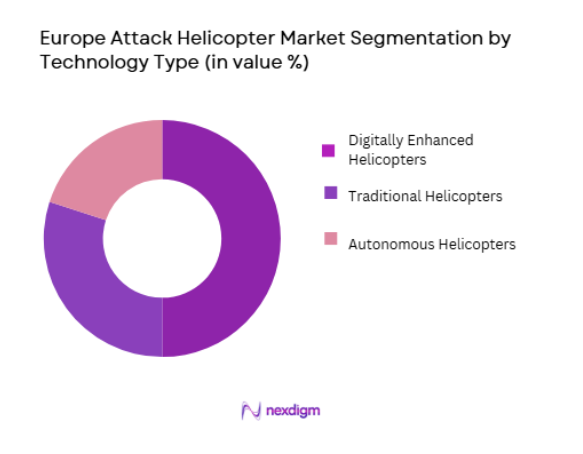
The market is segmented by technology type into traditional helicopters, digitally enhanced helicopters, and autonomous helicopters. Recently, digitally enhanced helicopters have captured the dominant market share due to the integration of advanced avionics, digital communications, and target acquisition systems. These helicopters offer enhanced situational awareness, precise targeting capabilities, and improved survivability through advanced defensive systems. The growing reliance on digital technology in combat operations is driving the adoption of these enhanced systems, making them the most sought-after choice for modern militaries.
Competitive Landscape
The competitive landscape of the Europe Attack Helicopter market is dominated by a few key players that design, manufacture, and supply advanced helicopters to various military forces across the region. These companies focus on enhancing the capabilities of their helicopters, including better firepower, mobility, and defensive systems, while also ensuring that they meet the evolving demands of modern warfare. The market is highly consolidated, with leading manufacturers continuing to innovate in terms of both design and technology.
| Company Name | Establishment Year | Headquarters | Technology Focus | Market Reach | Key Products | Revenue (USD) | Additional Parameter |
| Airbus Helicopters | 1992 | Toulouse, France | ~ | ~ | ~ | ~ | ~ |
| Boeing | 1916 | Chicago, USA | ~ | ~ | ~ | ~ | ~ |
| Leonardo | 1948 | Rome, Italy | ~ | ~ | ~ | ~ | ~ |
| Sikorsky | 1923 | Stratford, USA | ~ | ~ | ~ | ~ | ~ |
| Bell Helicopter | 1935 | Fort Worth, USA | ~ | ~ | ~ | ~ | ~ |
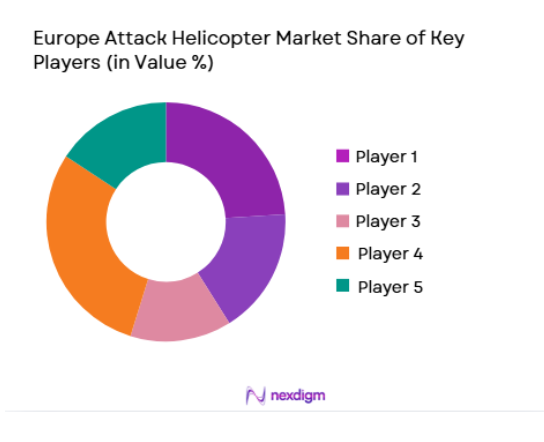
Europe Attack Helicopter Market Analysis
Growth Drivers
Increasing Defense Budgets and Military Modernization:
One of the primary growth drivers in the Europe Attack Helicopter market is the increasing defense budgets and ongoing modernization of military forces across Europe. With rising geopolitical tensions and evolving security threats, European nations are investing heavily in modernizing their military capabilities to enhance national security and meet NATO commitments. Attack helicopters play a vital role in modern combat, providing precise firepower, reconnaissance, and battlefield support. Countries like the United Kingdom, France, and Germany are leading these efforts, acquiring new, technologically advanced attack helicopters to replace aging platforms. This trend of fleet renewal is expected to continue as defense forces look for helicopters that offer better mobility, survivability, and operational versatility in a wide range of environments. The focus on upgrading attack helicopters with next-generation systems, such as enhanced targeting, sensors, and avionics, is also contributing to the growth of this market. As military modernization continues, the demand for attack helicopters is anticipated to rise, supporting market expansion.
Technological Advancements in Rotorcraft and Weapon Systems:
Technological advancements in rotorcraft design and weapons systems are significantly driving the growth of the Europe Attack Helicopter market. Modern attack helicopters are equipped with advanced avionics, radar systems, and digital displays that enhance the pilot’s situational awareness and the aircraft’s ability to engage targets accurately. The integration of advanced weapon systems, such as precision-guided missiles, air-to-ground rockets, and machine guns, allows attack helicopters to perform a variety of combat roles, including close air support, anti-tank operations, and suppression of enemy air defenses. Additionally, the use of composite materials and lightweight structures is making helicopters more fuel-efficient and easier to maintain, contributing to long-term operational cost savings for military operators. The continuous research and development in helicopter technology, including the integration of unmanned aerial vehicle (UAV) capabilities and enhanced cockpit automation, are expected to further fuel the market’s growth as militaries increasingly rely on cutting-edge technologies for tactical superiority.
Market Challenges
High Production and Maintenance Costs:
One of the major challenges facing the Europe Attack Helicopter market is the high production and maintenance costs associated with these advanced systems. The development and production of modern attack helicopters require significant investment in research, engineering, and materials, particularly for cutting-edge technologies such as advanced avionics, weapon systems, and rotorcraft design. Additionally, the operational and maintenance costs of these helicopters are substantial due to the need for regular repairs, upgrades, and replacements of various components. For many European countries, particularly those with smaller defense budgets, the high costs of acquiring and maintaining these platforms can be prohibitive. While military modernization efforts are driving demand, the financial burden of attack helicopter procurement and upkeep can hinder the growth of the market, particularly in nations with more restricted defense spending. Balancing the need for advanced helicopters with the financial realities of defense budgets remains a critical challenge.
Regulatory and Certification Barriers:
The Europe Attack Helicopter market faces significant regulatory and certification barriers, which can delay the deployment and adoption of new systems. European defense agencies must comply with strict aviation regulations and certification processes to ensure that attack helicopters meet safety, performance, and environmental standards. This process can be time-consuming and costly, particularly when integrating new technologies such as advanced avionics, weapon systems, and unmanned capabilities. Additionally, export controls and international defense agreements often impose restrictions on the sale and transfer of military equipment, which can limit the ability of manufacturers to expand their customer base. These regulatory hurdles can slow the development and delivery of new helicopters, affecting manufacturers’ ability to meet market demand quickly. Navigating the complex regulatory landscape is a challenge that manufacturers and military operators must address to ensure timely deployment of next-generation attack helicopters.
Opportunities
Increased Demand for Multi-role Helicopters:
One of the key opportunities in the Europe Attack Helicopter market is the increased demand for multi-role helicopters that can perform a wide range of operations, including close air support, reconnaissance, and anti-tank missions. Modern military forces require versatile platforms that can be deployed in various scenarios, from conventional warfare to counterinsurgency operations. Multi-role helicopters, which can be easily adapted for different missions by changing weapons or sensor systems, are becoming the preferred choice for many European nations. The ability to deploy a single helicopter for a variety of roles increases operational flexibility, reduces the need for multiple specialized platforms, and lowers overall procurement and maintenance costs. As defense budgets tighten, the demand for flexible, multi-role helicopters is expected to grow, presenting a significant opportunity for manufacturers to develop versatile platforms that meet the evolving needs of military forces.
Advancements in Autonomous and Unmanned Technologies:
Another major opportunity in the Europe Attack Helicopter market is the integration of autonomous and unmanned technologies into rotorcraft platforms. Autonomous and semi-autonomous attack helicopters have the potential to revolutionize military operations by allowing for remote piloting and reducing the risk to human operators. These technologies enable helicopters to perform high-risk missions without putting pilots in danger, such as reconnaissance in contested environments or engagement in hostile airspace. Additionally, the use of autonomous systems can enhance the precision and effectiveness of attack helicopters by providing real-time data analysis and decision-making capabilities. The development of unmanned aerial systems (UAS) and their integration with traditional manned platforms opens new opportunities for innovation in combat scenarios. As militaries increasingly seek to reduce casualties and enhance operational efficiency, the demand for autonomous and unmanned attack helicopters is expected to rise, providing a significant growth opportunity for manufacturers.
Future Outlook
The future outlook for the Europe Attack Helicopter market is positive, with growth expected to continue over the next five years. Technological advancements in rotorcraft, weapons systems, and autonomous technologies will drive demand for next-generation helicopters that offer enhanced operational flexibility, cost-efficiency, and survivability. The increasing focus on multi-role and versatile attack helicopters will lead to greater adoption of these platforms across European military forces. Additionally, advancements in connectivity and unmanned systems will further enhance helicopter capabilities, contributing to market expansion. As European countries continue to modernize their defense forces and address evolving security challenges, the demand for advanced attack helicopters is expected to rise, providing significant growth opportunities for manufacturers.
Major Players
- Airbus Helicopters
- Boeing
- Lockheed Martin
- Sikorsky Aircraft
- Leonardo
- Bell Helicopter
- Russian Helicopters
- Hindustan Aeronautics Limited
- AVIC
- Kamov
- MD Helicopters
- KAI
- Turkish Aerospace Industries
- Textron Aviation
- Scorpion Helicopters
Key Target Audience
- Military Forces
- Government Defense Agencies
- Aerospace and Defense Contractors
- Investments and Venture Capitalist Firms
- Government and Regulatory Bodies
- Helicopter Manufacturers
- MRO Service Providers
- Aviation Technology Integrators
Research Methodology
Step 1: Identification of Key Variables
Identify the key factors driving the market, including defense budgets, technological advancements, and geopolitical conditions affecting demand for attack helicopters.
Step 2: Market Analysis and Construction
Analyze primary and secondary data to understand market trends, demand patterns, and the competitive landscape, ensuring a comprehensive understanding of market dynamics.
Step 3: Hypothesis Validation and Expert Consultation
Validate key market assumptions through consultations with defense industry experts, military professionals, and technology providers to refine insights and improve analysis.
Step 4: Research Synthesis and Final Output
Synthesize findings into a detailed report offering actionable insights, forecasts, and strategic recommendations for stakeholders in the Europe Attack Helicopter market.

- Executive Summary
- Research Methodology (Definitions, Scope, Industry Assumptions, Market Sizing Approach, Primary & Secondary Research Framework, Data Collection & Verification Protocol, Analytic Models & Forecast Methodology, Limitations & Research Validity Checks)

- Market Definition and Scope
- Value Chain & Stakeholder Ecosystem
- Regulatory / Certification Landscape
- Sector Dynamics Affecting Demand
- Strategic Initiatives & Infrastructure Growth

- Growth Drivers
Increasing geopolitical tensions and defense needs
Technological advancements in weaponry and avionics
Rising defense budgets among European nations - Market Challenges
High operational and acquisition costs
Regulatory hurdles for weaponry integration
Maintenance and logistical complexity in combat zones - Market Opportunities
Growth in multi-role attack helicopter demand
Demand for lightweight and versatile helicopters
Emerging markets seeking advanced defense technologies - Trends
Advancements in autonomous helicopter systems
Integration of AI in targeting and surveillance systems
Development of eco-friendly, energy-efficient helicopter systems - Government regulations
Weapon system certification and compliance
Environmental regulations on military aircraft emissions
Defense procurement regulations for helicopters - SWOT analysis
- Porters 5 forces

- By Market Value, 2020-2025
- By Installed Units, 2020-2025
- By Average System Price 2020-2025
- By System Complexity Tier 2020-2025

- By System Type (In Value%)
Multi-role Attack Helicopters
Dedicated Attack Helicopters
Light Attack Helicopters
Anti-tank Attack Helicopters
Armed Reconnaissance Helicopters - By Platform Type (In Value%)
Land-based Platforms
Airborne Platforms
Hybrid Platforms
Naval Platforms
Unmanned Platforms - By Fitment Type (In Value%)
OEM Fitment
Aftermarket Fitment
Integrated Fitment
Custom Fitment
Modular Fitment - By End-User Segment (In Value%)
Military Forces
Government Defense Agencies
Defense Contractors
Private Contractors
Commercial Operators - By Procurement Channel (In Value%)
Direct Procurement
Government Tenders
Private Sector Procurement
Leasing
Third-party Distributors

- Market Share Analysis
- Cross Comparison Parameters (Weapon Integration Flexibility, Operational Range, Vehicle Adaptability to Combat Environments, Advanced Sensor Integration, Lifecycle Costs, System Reliability)
- SWOT Analysis of Key Competitors
- Pricing & Procurement Analysis
- Key Players
Airbus Helicopters
Bell Helicopter
Boeing
Sikorsky Aircraft
Leonardo
Kawasaki Heavy Industries
Russian Helicopters
MD Helicopters
Lockheed Martin
Embraer
Hindustan Aeronautics
Saab Group
Avicopter
Textron Aviation
AeroVironment

- Military forces increasingly modernizing their fleets with advanced attack helicopters
- Defense contractors focusing on supplying advanced weaponry integration systems
- Government agencies enhancing national security with high-performance attack helicopters
- Commercial operators looking for versatile platforms for private and paramilitary use

- Forecast Market Value, 2026-2035
- Forecast Installed Units, 2026-2035
- Price Forecast by System Tier, 2026-2035
- Future Demand by Platform, 2026-2035


 Request a Sample
 Ask for Customization
 Get a Quote
 Enquire Now