

 Download PDF
 Download PDF
Market Overview
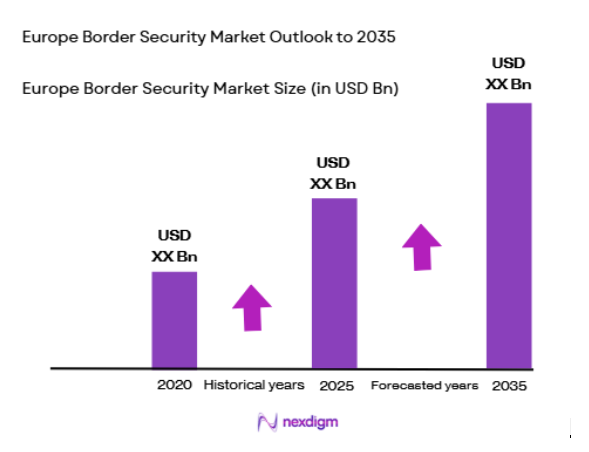
The Europe Border Security market is valued at approximately USD ~ billion, driven by growing security concerns, technological advancements in surveillance systems, and increasing government investments in border protection. This market encompasses various solutions such as surveillance cameras, biometric access control, drones, and artificial intelligence systems designed to enhance border security. The rise in geopolitical tensions, terrorism threats, and illegal immigration has further accelerated demand for advanced border security solutions.
Countries such as Germany, the United Kingdom, and France dominate the Europe Border Security market, driven by their significant defense budgets and advanced technological capabilities. These nations invest heavily in border security infrastructure, utilizing a combination of physical barriers, surveillance systems, and high-tech security solutions. Government policies supporting advanced border control technologies have contributed to the growing dominance of these countries in the sector.
Market Segmentation
By Product Type:
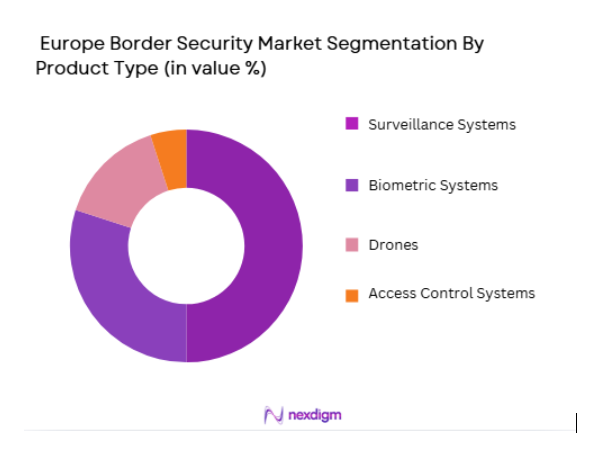
The Europe Border Security market is segmented by product type into surveillance systems, biometric systems, drones, and access control systems. Recently, surveillance systems have emerged as the dominant sub-segment, due to the growing demand for real-time monitoring and data collection at borders. The increasing reliance on technologies like CCTV cameras, infrared sensors, and motion detectors has made surveillance systems essential for modern border security. The integration of AI-driven analytics for predictive surveillance further enhances the efficiency and effectiveness of these systems in monitoring border activity
By Technology Type:
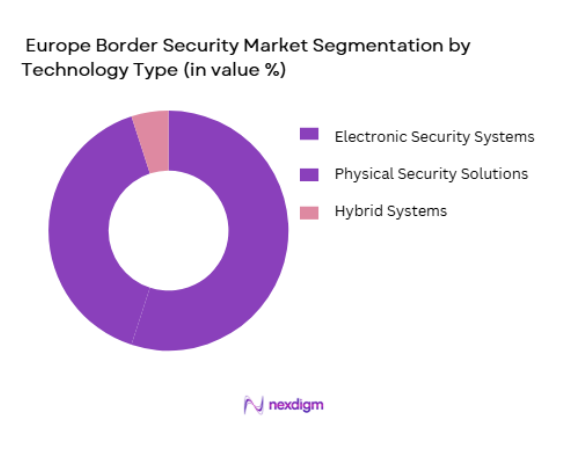
The Europe Border Security market is segmented by technology type into physical security solutions, electronic security solutions, and hybrid systems. Electronic security solutions have the dominant market share due to the growing demand for automated and real-time monitoring systems that can provide constant surveillance. With advancements in electronic technologies such as sensors, RFID, and automated license plate recognition, electronic systems are increasingly preferred for enhancing border security. Their ability to integrate with other technologies, such as biometric systems, further strengthens their position in the market.
Competitive Landscape
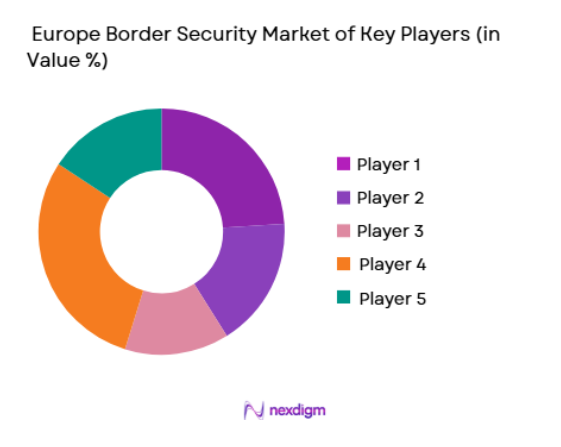
The Europe Border Security market is marked by the presence of several key players that have established a strong foothold in the sector. Companies are focusing on technological innovations, such as AI and machine learning, to improve security capabilities. The market is consolidating as leading companies form strategic partnerships and acquisitions to broaden their product offerings and geographic reach. This consolidation allows companies to leverage economies of scale and provide comprehensive security solutions.
| Company Name | Establishment Year | Headquarters | Technology Focus | Market Reach | Key Products | Revenue (USD) | Additional Parameter |
| Thales Group | 2000 | Paris, France | ~ | ~ | ~ | ~ | ~ |
| BAE Systems | 1999 | London, UK | ~ | ~ | ~ | ~ | ~ |
| Safran | 2005 | Paris, France | ~ | ~ | ~ | ~ | ~ |
| Lockheed Martin | 1912 | Bethesda, USA | ~ | ~ | ~ | ~ | ~ |
| Leonardo | 1948 | Rome, Italy | ~ | ~ | ~ | ~ | ~ |
Europe Border Security Market Analysis
Growth Drivers
Technological Advancements in Border Security Systems:
Technological advancements in surveillance and monitoring systems have driven significant growth in the Europe Border Security market. The integration of AI and machine learning has enabled real-time data analysis, which is vital for proactive border control. AI-powered surveillance systems, drones, and biometric technologies are increasingly being deployed to monitor borders more effectively and efficiently. These advancements have reduced human intervention, enabling quicker responses to security threats. Furthermore, advancements in sensor technologies, such as infrared and motion detection, have enhanced the accuracy and reliability of border security systems. As these technologies continue to evolve, they offer greater precision in detecting unauthorized border crossings and criminal activities, making them essential for modernizing border security infrastructure. With increasing concerns about cross-border terrorism and illegal immigration, the demand for such advanced systems has increased significantly, driving growth in the market.
Government Policies and Investments in Border Security:
Government policies and investments in border security have played a crucial role in driving market growth. Countries across Europe are allocating significant budgets to enhance border security and protect national interests. Governments are increasingly relying on technology to strengthen border defenses and ensure national safety. The EU has implemented various security measures to combat illegal immigration, human trafficking, and terrorism, driving demand for advanced border security solutions. Additionally, the EU’s funding programs, such as the European Border and Coast Guard Agency (Frontex), have bolstered the adoption of innovative security technologies at the borders. With rising security concerns in Europe, governments are also collaborating with private companies to improve border protection systems, making public sector investments a key growth driver in this market.
Market Challenges
High Initial Investment and Maintenance Costs:
One of the major challenges in the Europe Border Security market is the high initial investment and ongoing maintenance costs associated with advanced border security systems. Technologies such as surveillance systems, drones, and biometric devices require substantial upfront investments in equipment, installation, and training. The complexity of these systems, coupled with the need for regular software updates and maintenance, adds to the overall operational cost. For many countries, particularly those with limited budgets or in emerging markets, this high cost may hinder the full-scale deployment of advanced border security solutions. Additionally, the need for skilled personnel to operate and maintain these technologies further exacerbates the financial burden on governments. As a result, the high capital and operational expenses may limit the adoption of the latest security technologies, posing a challenge for growth in the market.
Geopolitical Instability and Regulatory Constraints:
Geopolitical instability and regulatory constraints present challenges to the Europe Border Security market. The ongoing refugee crisis and shifting political landscapes in Europe have led to changes in border policies and security protocols, which complicate the implementation of standardized solutions across borders. Variations in national regulations and approaches to border security can hinder cross-border collaboration and information sharing, affecting the overall effectiveness of security systems. Additionally, geopolitical tensions, such as those caused by Brexit or the ongoing conflict in Ukraine, can lead to abrupt changes in border security priorities and investment strategies. These uncertainties make it difficult for companies to predict market dynamics and adapt their offerings to changing political and security environments. Companies must also navigate various legal frameworks surrounding privacy and data protection, particularly in the implementation of biometric systems, which can limit the adoption of certain security technologies.
Opportunities
Rising Demand for AI-Driven Surveillance Solutions:
The rising demand for AI-driven surveillance solutions presents a significant opportunity for the Europe Border Security market. AI technologies are increasingly being integrated into border security systems to improve threat detection and response times. Machine learning algorithms enable surveillance systems to analyze vast amounts of data in real-time, identifying potential security risks with greater accuracy than traditional methods. The adoption of AI-driven surveillance is particularly valuable for monitoring remote or unmanned areas of borders, which can be difficult for human patrols to access. As the European Union and individual countries continue to focus on enhancing border security, there will be increased demand for AI-powered systems that can provide comprehensive, automated solutions for monitoring, identification, and tracking. Companies that can innovate and offer AI-based security technologies are well-positioned to capitalize on this growing market trend.
Expansion of Smart Border Solutions:
The expansion of smart border solutions represents another key opportunity for the Europe Border Security market. Smart borders utilize advanced technologies such as biometric identification, automated gates, and RFID-enabled systems to streamline border control processes. The increasing focus on efficient border management systems that minimize delays and improve the flow of legitimate travelers is driving the adoption of smart border technologies. The implementation of smart borders not only enhances security but also facilitates faster, more efficient border crossings, which is crucial for boosting trade and tourism. Governments across Europe are investing in smart border technologies to improve both security and operational efficiency, presenting significant opportunities for companies that provide integrated, high-tech solutions for border control.
Future Outlook
The future outlook for the Europe Border Security market is optimistic, with significant growth expected over the next five years. Technological innovations, such as AI, drones, and smart border solutions, will continue to transform the landscape of border security, offering more efficient, automated, and accurate monitoring systems. Increased government investments in security infrastructure, coupled with the growing need to address emerging security threats, will drive market demand. Additionally, the rise of geopolitical tensions and security concerns across Europe will further fuel the adoption of advanced border security technologies, making the market an attractive area for both established players and new entrants.
Major Players
- Thales Group
- BAE Systems
- Safran
- Lockheed Martin
- Leonardo
- General Dynamics
- Harris Corporation
- Northrop Grumman
- Raytheon Technologies
- L3 Technologies
- Honeywell International
- IBM
- Palantir Technologies
- Airbus
- FLIR Systems
Key Target Audience
- Investments and venture capitalist firms
- Government and regulatory bodies
- Border security agencies
- Airport security providers
- Border control technology manufacturers
- Customs and immigration authorities
- Homeland security agencies
- Law enforcement agencies
Research Methodology
Step 1: Identification of Key Variables
The first step involves identifying key variables impacting the Europe Border Security market, including technological developments, regulatory policies, and market demand.
Step 2: Market Analysis and Construction
Analyzing historical data, market size, growth trends, and segmentation to construct a robust market model.
Step 3: Hypothesis Validation and Expert Consultation
Consulting with industry experts, stakeholders, and key market players to validate assumptions and hypotheses.
Step 4: Research Synthesis and Final Output
Synthesize research findings into a comprehensive and actionable report, ensuring clarity and accuracy.

- Executive Summary
- Research Methodology (Definitions, Scope, Industry Assumptions, Market Sizing Approach, Primary & Secondary Research Framework, Data Collection & Verification Protocol, Analytic Models & Forecast Methodology, Limitations & Research Validity Checks)

- Market Definition and Scope
- Value Chain & Stakeholder Ecosystem
- Regulatory / Certification Landscape
- Sector Dynamics Affecting Demand
- Strategic Initiatives & Infrastructure Growth

- Growth Drivers
Increasing Cross-border Security Threats
Rising Government Investments in Border Protection
Technological Advancements in Security Systems - Market Challenges
High Initial Setup Costs
Integration Issues with Existing Infrastructure
Data Privacy and Security Concerns - Market Opportunities
Growing Adoption of AI and Automation in Border Security
Expansion of Smart Border Solutions
Demand for Autonomous Surveillance Systems - Trends
Integration of IoT in Border Security
Increased Use of Drones in Border Patrol
Rise in Biometric Authentication Solutions - Government regulations
Tightened Regulations on Border Control Technology
Privacy Regulations on Data Collection
Government Incentives for Technological Upgrades - SWOT analysis
- Porters 5 forces

- By Market Value, 2020-2025
- By Installed Units, 2020-2025
- By Average System Price, 2020-2025
- By System Complexity Tier, 2020-2025

- By System Type (In Value%)
Surveillance Systems
Access Control Systems
Perimeter Security Systems
Detection and Monitoring Systems
Biometric Systems - By Platform Type (In Value%)
Ground Platforms
Aerial Platforms
Maritime Platforms
Integrated Platforms
Mobile Platforms - By Fitment Type (In Value%)
Fixed Systems
Modular Systems
Portable Systems
Hybrid Systems
Upgraded Systems - By EndUser Segment (In Value%)
Government Agencies
Military Forces
Homeland Security Departments
Private Security Firms
Border Control Authorities - By Procurement Channel (In Value%)
Direct Procurement
Government Contracts
Public Tenders
Private Sector Procurement
International Organizations

- Market Share Analysis
CrossComparison Parameters (System Type, Platform Type, Procurement Channel, EndUser Segment, Fitment Type, Market Share, Technological Innovation, Geographic Coverage, Product Reliability, Regulatory Compliance, Integration Capabilities, Cost Efficiency, R&D Investment, Customer Support, Environmental Impact) - SWOT Analysis of Key Competitors
- Pricing & Procurement Analysis
- Key Players
Thales Group
Lockheed Martin
Harris Corporation
Boeing
Raytheon Technologies
Northrop Grumman
General Dynamics
L3 Technologies
Saab Group
Elbit Systems
Honeywell International
Cisco Systems
AeroVironment
Airbus

- Government Agencies Increasing Demand for Advanced Security
- Military Forces Upgrading Border Defense Technologies
- Homeland Security Focusing on Technological Integration
- Private Security Firms Investing in Smarter Solutions

- Forecast Market Value, 2026-2035
- Forecast Installed Units, 2026-2035
- Price Forecast by System Tier, 2026-2035
- Future Demand by Platform, 2026-2035


 Request a Sample
 Ask for Customization
 Get a Quote
 Enquire Now