

 Download PDF
 Download PDF
Market Overview
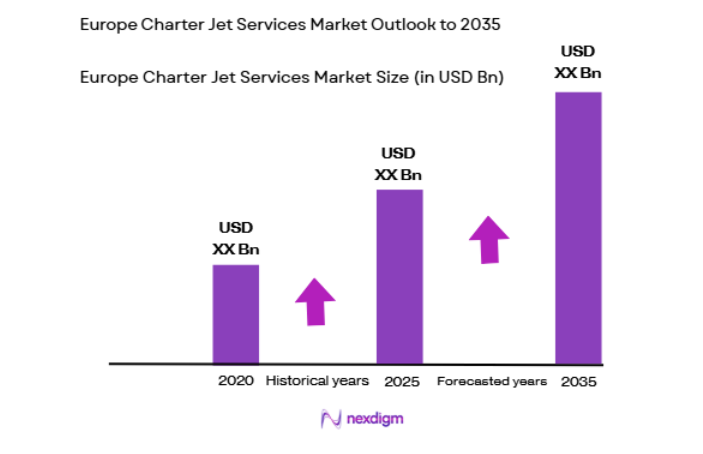
The Europe Charter Jet Services market is valued at approximately USD ~ billion, driven by increasing demand for private air travel from high-net-worth individuals, corporate executives, and businesses seeking time efficiency, privacy, and flexibility. Growth in both leisure and business travel, along with the expanding availability of on-demand charter services, has propelled the market forward. The increase in disposable income, combined with the availability of new digital platforms to book charter services, further supports market growth.
Countries such as the United Kingdom, Germany, and France dominate the Europe Charter Jet Services market due to their large financial sectors, high concentrations of wealthy individuals, and well-established aviation infrastructure. These countries have strong demand for both business and leisure jet travel, as well as a significant presence of charter companies providing flexible and efficient air travel solutions. The robust regulatory frameworks in these countries also facilitate market growth by ensuring safety and operational standards are met.
Market Segmentation
By Product Type
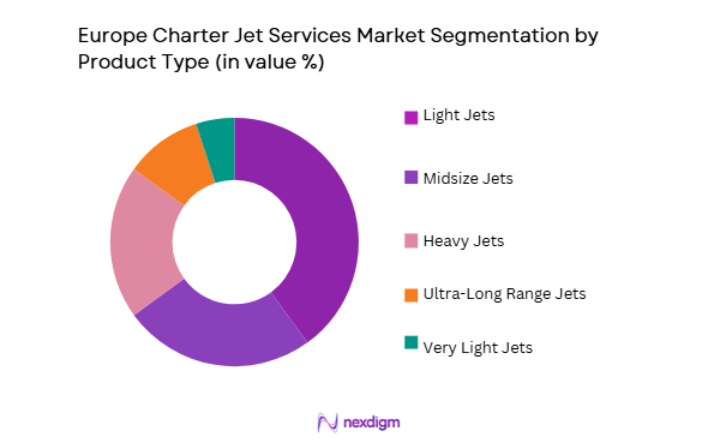
The Europe Charter Jet Services market is segmented by product type into light jets, midsize jets, heavy jets, ultra-long-range jets, and very light jets. The light jet sub-segment has a dominant market share, primarily driven by its affordability and convenience for short- to medium-haul flights. Light jets offer a cost-effective solution for individuals and small businesses seeking private air travel without the significant expenses associated with larger jets. Their versatility in terms of landing at smaller airports and lower operational costs make them a preferred choice for charter services in Europe.
By Platform Type
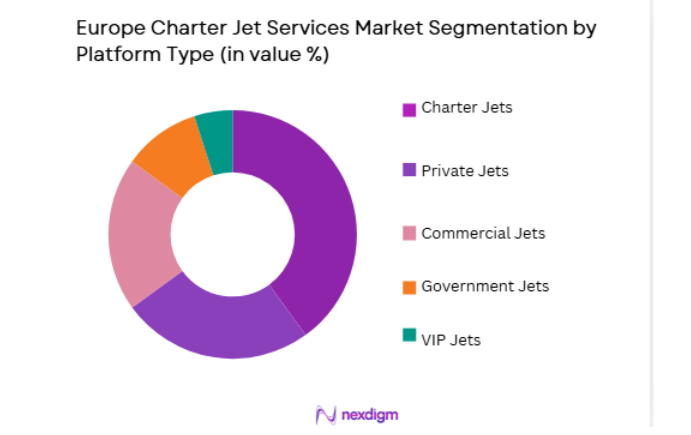
The Europe Charter Jet Services market is also segmented by platform type into private jets, commercial jets, charter jets, government jets, and VIP jets. Charter jets dominate the market, driven by the growing demand for on-demand private travel services, especially among business travelers and wealthy individuals. Charter services offer significant flexibility, allowing customers to select aircraft based on their specific needs for range, passenger capacity, and destination. This adaptability, coupled with the ability to avoid crowded airports, has made charter jets the go-to platform for those seeking an exclusive, time-efficient travel experience.
Competitive Landscape
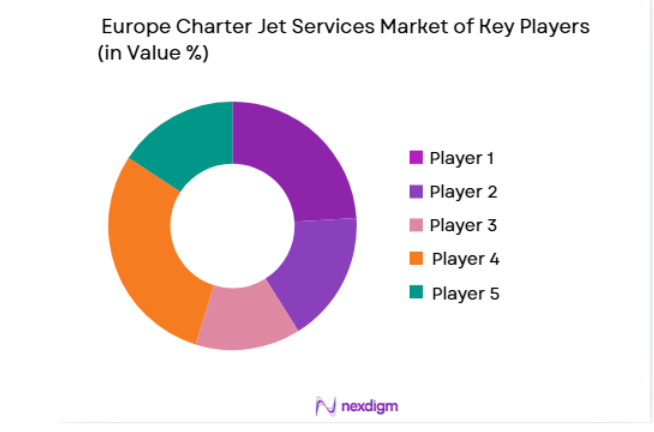
The Europe Charter Jet Services market is competitive, with a mix of established players and emerging service providers. Major companies dominate the market by offering a range of fleet options, personalized services, and flexible booking systems. The increasing demand for private jet travel, coupled with advances in digital platforms for on-demand bookings, has led to market expansion. Consolidation within the industry is evident as smaller charter companies partner with larger operators to expand their fleets and services.
| Company Name | Establishment Year | Headquarters | Technology Focus | Market Reach | Key Products | Revenue (USD) | Additional Parameter |
| NetJets | 1964 | Columbus, USA | ~ | ~ | ~ | ~ | ~ |
| Flexjet | 1995 | Cleveland, USA | ~ | ~ | ~ | ~ | ~ |
| VistaJet | 2004 | Malta | ~ | ~ | ~ | ~ | ~ |
| Air Charter Service | 1990 | London, UK | ~ | ~ | ~ | ~ | ~ |
| PrivateFly | 2008 | London, UK | ~ | ~ | ~ | ~ | ~ |
Europe Charter Jet Services Market Analysis
Growth Drivers
Rising Demand for Flexible and Time-Efficient Travel Solutions
Rising demand for flexible and time-efficient travel solutions is a key growth driver for the Europe Charter Jet Services market. The increasing number of high-net-worth individuals, along with busy corporate executives, fuels the need for faster, more convenient air travel options. Business jet charter services provide a time-saving alternative to traditional air travel, allowing passengers to avoid long security lines and delays at commercial airports. Additionally, the ability to choose departure times, destinations, and aircraft types further appeals to travelers seeking a high level of personalization and efficiency. As global travel increases, especially in the post-pandemic era, demand for charter jet services has surged as more people prioritize flexibility and privacy over conventional flight options.
Expansion of Digital Booking Platforms
The expansion of digital booking platforms is driving the growth of the Europe Charter Jet Services market. With the rise of on-demand services, customers can now easily access charter flights through user-friendly apps and websites. These platforms allow for real-time flight bookings, transparent pricing, and customized services, making it easier for travelers to book charter services on short notice. The ability to compare prices, check aircraft availability, and make last-minute changes has made private jet chartering more accessible than ever before. Additionally, digital platforms have increased the visibility of smaller, independent operators, helping to create a more competitive and dynamic market landscape. As technology continues to evolve, the convenience and flexibility of digital booking systems will further drive market growth.
Market Challenges
High Operational and Maintenance Costs
One of the main challenges facing the Europe Charter Jet Services market is the high operational and maintenance costs associated with running a fleet of business jets. The maintenance of aircraft, including routine inspections, repairs, and the replacement of parts, can be expensive. Fuel costs also represent a significant portion of operational expenses, especially as fuel prices fluctuate. These high costs often limit the profitability of smaller charter companies and result in higher prices for customers, which can reduce demand for services. Additionally, the need for highly trained pilots, crew, and support staff adds to the cost burden. These operational challenges can make it difficult for charter companies to maintain competitive pricing while ensuring high service standards.
Stringent Regulatory Compliance and Safety Standards
Another challenge for the Europe Charter Jet Services market is the stringent regulatory compliance and safety standards set by aviation authorities. These regulations cover areas such as aircraft certification, crew training, maintenance protocols, and airspace restrictions. While these regulations ensure safety and reliability, they also increase the cost and complexity of operating charter services. Airlines must invest in training programs for pilots and crew members, comply with environmental regulations regarding emissions, and adhere to evolving safety standards. As regulations continue to tighten, particularly concerning environmental sustainability, charter operators will need to balance regulatory compliance with profitability, which could impact market growth.
Opportunities
Increasing Popularity of Leisure and Luxury Travel
The increasing popularity of leisure and luxury travel presents a significant opportunity for the Europe Charter Jet Services market. With rising disposable incomes and a growing preference for exclusive travel experiences, more individuals are opting for private charter jets as a luxury service. High-net-worth individuals, celebrities, and corporate leaders are seeking tailored travel experiences that offer privacy, comfort, and convenience. The demand for personalized services, such as in-flight catering, customized entertainment options, and luxury interiors, is driving growth in the charter jet services market. As more travelers prioritize bespoke travel experiences, charter operators can tap into this growing demand by offering luxury services and enhancing customer satisfaction, further expanding their market share.
Growth of Corporate and Business Travel in Emerging Markets
The growth of corporate and business travel in emerging markets presents a promising opportunity for the Europe Charter Jet Services market. As the economies of Eastern Europe and parts of Asia continue to grow, the demand for efficient and secure travel options for business executives is on the rise. Companies operating in these regions are increasingly utilizing charter jet services to ensure timely travel for their employees and executives. The ability to schedule meetings in multiple cities or countries within a short time frame is a key driver for charter services in these markets. As emerging markets continue to grow, charter jet service providers will find opportunities to expand their operations and cater to the increasing demand for business travel solutions.
Future Outlook
The future outlook for the Europe Charter Jet Services market is positive, with steady growth expected in the next five years. Technological innovations in booking platforms, along with a continued rise in demand for flexible and time-efficient travel, will drive the market forward. Additionally, the expansion of leisure travel, particularly among high-net-worth individuals, will further fuel demand for private jet charter services. Increased competition, particularly from new entrants and digital platforms, will continue to shape the market, driving greater customer-centric services and innovations in the coming years.
Major Players
- NetJets
- Flexjet
- VistaJet
- Air Charter Service
- PrivateFly
- GlobeAir
- Skyjet
- XOJET
- Jet Edge International
- Air Partner
- Vistajet
- JetSmarter
- Alpha Jets
- ClubOne Air
- Charters Europe
Key Target Audience
- Investments and venture capitalist firms
- Government and regulatory bodies
- Private jet owners
- Corporate travel departments
- Charter service providers
- Aviation technology developers
- High-net-worth individuals
- Travel management companies
Research Methodology
Step 1: Identification of Key Variables
Identifying critical variables affecting the Europe Charter Jet Services market, including demand drivers, technological advancements, and regulatory policies.
Step 2: Market Analysis and Construction
Constructing a market model using historical data, market trends, and segmentation to estimate future growth potential.
Step 3: Hypothesis Validation and Expert Consultation
Consulting with industry experts and key stakeholders to validate market hypotheses and ensure accurate predictions.
Step 4: Research Synthesis and Final Output
Synthesizing research findings into a detailed and actionable market report for stakeholders, ensuring clarity and precision.

- Executive Summary
- Research Methodology (Definitions, Scope, Industry Assumptions, Market Sizing Approach, Primary & Secondary Research Framework, Data Collection & Verification Protocol, Analytic Models & Forecast Methodology, Limitations & Research Validity Checks)

- Market Definition and Scope
- Value Chain & Stakeholder Ecosystem
- Regulatory / Certification Landscape
- Sector Dynamics Affecting Demand
- Strategic Initiatives & Infrastructure Growth

- Growth Drivers
Increasing Demand for Private and Convenient Travel
Rising Disposable Incomes and Affluence
Advancements in Aircraft Technology and Efficiency - Market Challenges
High Operating Costs
Regulatory Compliance and Certification Issues
Limited Aircraft Availability and Fleet Management Challenges - Market Opportunities
Growing Interest in Eco-friendly Aviation Solutions
Expansion of Luxury Travel Experiences
Increased Demand for Last-minute and On-demand Travel - Trends
Growth in Sustainable Aviation Technologies
Rising Popularity of Short-Term Jet Rentals
Increased Integration of Mobile Apps for Booking and Services - Government regulations
- SWOT analysis
- Porters 5 forces

- By Market Value, 2020-2025
- By Installed Units, 2020-2025
- By Average System Price, 2020-2025
- By System Complexity Tier, 2020-2025

- By System Type (In Value%)
Private Jet Charter
Group Charter Services
Helicopter Charter
Luxury Jet Charter
Executive Charter Services - By Platform Type (In Value%)
Light Jets
Midsize Jets
Heavy Jets
Turboprops
Helicopters - By Fitment Type (In Value%)
On-demand Charter
Membership-based Charter
Scheduled Charter
Corporate Charter
Private Ownership Charter - By EndUser Segment (In Value%)
Business Travelers
Tourists
Government & Diplomats
Event Organizers
Corporate Fleets - By Procurement Channel (In Value%)
Direct Procurement
Online Platforms
Charter Brokers

- Market Share Analysis
- Cross Comparison Parameters (System Type, Platform Type, Procurement Channel, EndUser Segment, Fitment Type, Aircraft Utilization Rates, Customer Loyalty Programs, Fleet Management Efficiency, Service Quality, Market Penetration, Technological Adaptation)
- SWOT Analysis of Key Competitors
- Pricing & Procurement Analysis
- Key Players
NetJets
VistaJet
JetSetGo
GlobeAir
Air Charter Service
Luxaviation Group
PrivateFly
Gama Aviation
Jet Aviation
Air Partner
Talon Air
Executive Jet Management
SaxonAir
Delta Private Jets
FlyEliteJets

- Business Travelers Seeking Time Efficiency
- Government Agencies’ Use of Private Aviation for Security
- Tourists Preferring Exclusive and Flexible Travel Experiences
- Corporate Fleets Integrating Charter Services for Employee Travel

- Forecast Market Value, 2026-2035
- Forecast Installed Units, 2026-2035
- Price Forecast by System Tier, 2026-2035
- Future Demand by Platform, 2026-2035


 Request a Sample
 Ask for Customization
 Get a Quote
 Enquire Now