

 Download PDF
 Download PDF
Market Overview
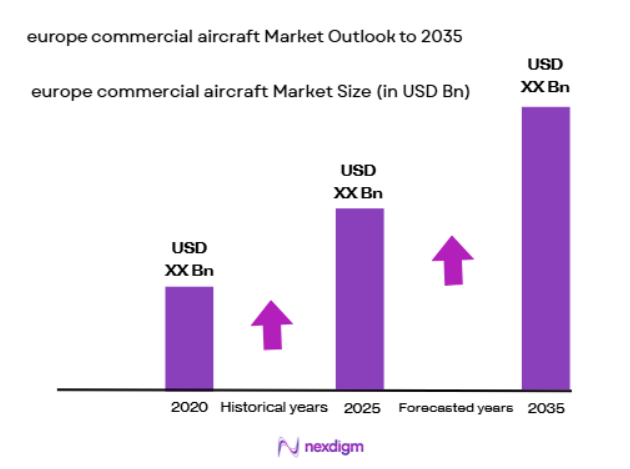
The Europe commercial aircraft market reached approximately USD ~billion based on a recent historical assessment, driven by strong demand for fleet renewal, increasing passenger traffic, and the expansion of low-cost carriers across the region. Airlines continue to invest in new-generation, fuel-efficient aircraft to reduce operational costs and comply with stringent environmental regulations. Aircraft deliveries remain high, further stimulating growth in both aircraft sales and leasing sectors.
Germany, the United Kingdom, and France are key drivers in the Europe commercial aircraft market, supported by their large fleets, strong airline networks, and established aerospace manufacturing bases. Germany is home to Airbus and several major airlines, making it a pivotal player in both production and operations. The United Kingdom’s strategic position as a global aviation hub supports continuous demand for aircraft. France continues to dominate in aerospace research, engineering, and aircraft production, contributing to Europe’s leading position in global commercial aviation.
Market Segmentation
By Aircraft Type:
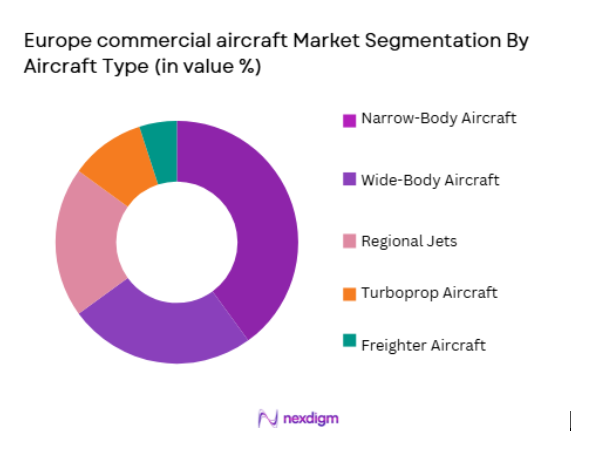
The Europe commercial aircraft market is segmented by aircraft type into narrow-body aircraft, wide-body aircraft, regional jets, turboprop aircraft, and freighter aircraft. Recently, narrow-body aircraft have a dominant market share due to their cost-effectiveness and high demand for short- and medium-haul routes, which are prevalent in Europe. These aircraft offer flexible seating configurations, allowing airlines to optimize capacity for different market segments. They are also preferred by low-cost carriers, who prioritize fleet efficiency, resulting in rapid procurement cycles for new narrow-body aircraft. These aircraft’s operational versatility in both high-density city pairs and regional markets has made them a mainstay in European fleets. Additionally, the growing trend toward environmental sustainability encourages airlines to adopt fuel-efficient narrow-body jets that meet stringent carbon emission targets.
By End-User Segment:
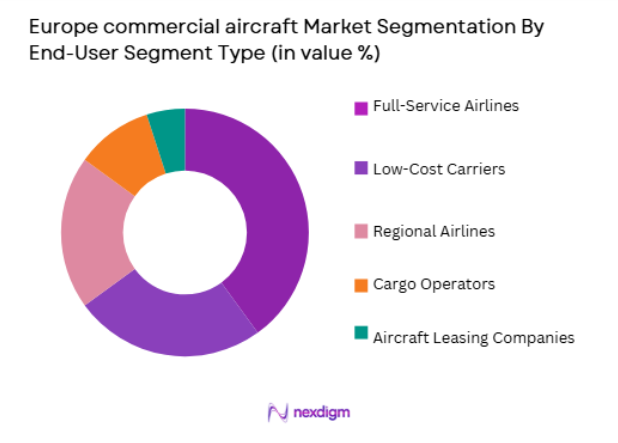
The Europe commercial aircraft market is segmented by end-user segment into full-service airlines, low-cost carriers, regional airlines, cargo operators, and aircraft leasing companies. Full-service airlines hold a dominant market share due to their extensive networks, particularly for long-haul flights, which require wide-body aircraft. These airlines continue to modernize their fleets with larger, more efficient aircraft to meet passenger demand and maintain competitive positioning. Full-service carriers emphasize passenger experience with premium cabin configurations and state-of-the-art entertainment systems, supporting their strong position in fleet procurement. The wide-body segment remains the preferred choice for these airlines due to long-range capabilities and superior cargo capacity, which helps them maintain profitability on international routes.
Competitive Landscape
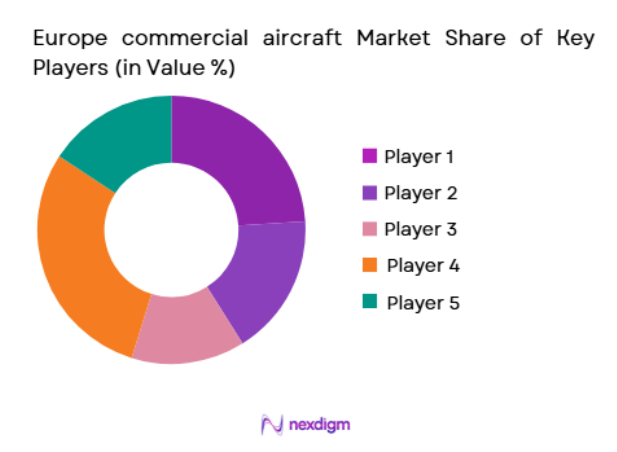
The Europe commercial aircraft market is moderately consolidated, with a few major players controlling a significant portion of the market share. Airbus and Boeing are the dominant forces in aircraft manufacturing, while leasing companies and low-cost carriers contribute to strong procurement demand. The presence of smaller regional aircraft manufacturers, such as Embraer and ATR, provides further competition, particularly in regional jets and turboprops. Strong supplier networks, customer service capabilities, and partnerships with aerospace suppliers play a crucial role in shaping the competitive landscape.
| Company Name | Establishment Year | Headquarters | Technology Focus | Market Reach | Key Products | Revenue | Additional Parameter |
| Airbus SE | 1970 | France | ~ | ~ | ~ | ~ | ~ |
| Boeing Company | 1916 | United States | ~ | ~ | ~ | ~ | ~ |
| Embraer S.A. | 1969 | Brazil | ~ | ~ | ~ | ~ | ~ |
| ATR | 1981 | France | ~ | ~ | ~ | ~ | ~ |
| Bombardier Inc. | 1942 | Canada | ~ | ~ | ~ | ~ | ~ |
Europe commercial aircraft Market Analysis
Growth Drivers
Increase in Air Traffic and Regional Connectivity:
The demand for commercial aircraft in Europe is primarily driven by the surge in passenger air traffic, particularly on short to medium-haul routes. As the economy rebounds and disposable incomes rise, more passengers are opting for air travel. Low-cost carriers are a significant part of this growth, offering affordable fares that encourage more people to travel by air. The need for regional connectivity between major cities and underserved destinations is fueling demand for both narrow-body and regional aircraft, as they offer the required capacity and operational flexibility. Europe’s robust aviation infrastructure, coupled with growing demand for frequent, affordable flights, is pushing the expansion of regional flight networks. Airlines are increasingly looking to upgrade their fleets with modern aircraft that deliver higher fuel efficiency, lower emissions, and better customer experiences, thus stimulating market growth. Additionally, the rise of digital technologies in the aviation sector, which enhance route planning, operational management, and in-flight services, is also driving the demand for newer, more advanced aircraft models.
Fleet Modernization and Sustainability Goals:
European airlines are increasingly focusing on fleet modernization as part of their broader sustainability goals, leading to significant demand for new commercial aircraft. Older fleets are being retired in favor of newer models that are more fuel-efficient and environmentally friendly. Aircraft manufacturers are responding to this demand by offering models with improved aerodynamics, reduced carbon emissions, and advanced engines that contribute to lower operational costs and better environmental performance. This trend is particularly prominent among low-cost carriers and full-service airlines, which are prioritizing sustainability in their fleet strategies. Furthermore, the European Union’s emissions regulations are encouraging airlines to adopt greener aircraft, driving the demand for aircraft that meet these stringent requirements. As airlines strive to meet their sustainability targets, fleet renewal programs and the adoption of more efficient aircraft will continue to be significant growth drivers for the commercial aircraft market in Europe.
Market Challenges
High Development and Production Costs:
One of the key challenges in the Europe Commercial Aircraft market is the high cost associated with the development, production, and maintenance of advanced commercial aircraft. Aircraft manufacturers are heavily invested in research and development to design next-generation aircraft that meet stringent environmental standards and improve operational efficiency. However, these innovations come at a significant cost, which is passed on to airlines. The high price of new aircraft, coupled with long delivery times and limited production capacity, poses a barrier to airlines, especially smaller carriers with limited budgets. Furthermore, while newer aircraft are more fuel-efficient and cost-effective in the long run, the initial investment remains a challenge for many operators. This is particularly true for low-cost carriers, which are focused on maintaining tight profit margins. As a result, the high upfront costs of acquiring modern aircraft remain a critical challenge that limits the growth potential of the market.
Regulatory and Environmental Constraints:
The European commercial aircraft market faces significant regulatory challenges, particularly in terms of meeting strict environmental standards and safety regulations. The European Union has implemented stringent emissions regulations that require airlines to reduce their carbon footprint and adopt more sustainable practices. These regulations have led to an increased demand for fuel-efficient and low-emission aircraft, but the process of certifying and adopting these new technologies is complex and time-consuming. Additionally, airspace congestion and regulations around flight routes, particularly in busy European corridors, limit operational flexibility for airlines. While the European aviation industry is at the forefront of innovation in terms of sustainability, the pace of regulatory change and the complexity of complying with evolving environmental standards present significant challenges for manufacturers and operators. Navigating these regulatory hurdles, particularly in relation to the adoption of new aircraft models and technologies, is a crucial challenge for the market.
Opportunities
Advances in Autonomous Aircraft Technology:
One of the key opportunities in the Europe Commercial Aircraft market is the advancement of autonomous aircraft technology. While fully autonomous commercial aircraft are not yet a reality, significant strides are being made in autonomous flight systems, particularly for pilot assistance and automated flight controls. These systems can reduce the cost of operating aircraft by decreasing the reliance on human pilots, improving efficiency in flight operations, and reducing the potential for human error. As the technology matures, it could lead to fully autonomous aircraft, transforming the aviation industry. Airlines are also exploring the use of unmanned aerial vehicles (UAVs) for cargo transport, which is expected to see significant growth in the coming years. The integration of autonomous systems into commercial aircraft could enhance operational efficiency, reduce costs, and lead to the development of next-generation aircraft with greater fuel efficiency and reduced emissions.
Emerging Demand for Sustainable Aviation Fuel (SAF) Aircraft:
Another significant opportunity in the Europe Commercial Aircraft market is the growing demand for aircraft that can operate on sustainable aviation fuels (SAF). As environmental concerns and regulatory pressures increase, airlines are looking for ways to reduce their carbon emissions. SAF, produced from renewable sources such as algae, waste, or biomass, presents a promising solution to reducing the aviation industry’s environmental impact. The European market, in particular, is focused on transitioning to SAF as part of its broader sustainability goals. Aircraft manufacturers are increasingly designing models that are compatible with SAF, and airlines are beginning to adopt SAF as a fuel alternative. This shift not only aligns with the European Union’s emissions reduction targets but also offers significant opportunities for manufacturers and fuel suppliers to capitalize on the growing demand for sustainable aviation options.
Future Outlook
The European commercial aircraft market is expected to maintain its positive growth trajectory over the next five years, driven by continued fleet modernization, increasing demand for sustainable aviation technologies, and the continued expansion of low-cost carriers. Technological innovations in fuel efficiency, sustainability, and advanced avionics will continue to shape the future of aircraft manufacturing. In addition, the rising demand for cargo transportation and the gradual recovery of passenger traffic post-pandemic will further bolster market growth.
Major Players
- Airbus SE
- Boeing Company
- Embraer S.A.
- ATR
- Bombardier Inc.
- COMAC
- De Havilland Aircraft of Canada
- Leonardo S.p.A.
- Textron Aviation
- Dassault Aviation
- Ilyushin
- Tupolev
- Irkut Corporation
- Pilatus Aircraft
- Viking Air
Key Target Audience
- Commercial airlines
- Aircraft leasing companies
- Aerospace OEMs
- Cabin interior integrators
- Government and regulatory bodies
- Investments and venture capitalist firms
- Satellite connectivity providers
- Airline IT solution providers
Research Methodology
Step 1: Identification of Key Variables
Core variables such as fleet expansion, fuel efficiency, regulatory factors, and passenger demand were identified to provide foundational analysis for the market. The identification of these variables helped set the stage for understanding market dynamics and developing accurate forecasts.
Step 2: Market Analysis and Construction
A comprehensive market analysis was conducted using industry reports, financial statements, and other publicly available data to estimate market size and forecast future trends. Segment-specific modeling helped assess the demand for various aircraft types, focusing on fleet expansion and renewal.
Step 3: Hypothesis Validation and Expert Consultation
Market hypotheses were validated through consultations with industry experts, airline executives, and aircraft manufacturers. This provided further insights into emerging trends, consumer preferences, and market constraints.
Step 4: Research Synthesis and Final Output
Data was synthesized to produce a comprehensive report that provides actionable insights for stakeholders. The final output offers in-depth analysis, market trends, growth drivers, and forecasts that inform strategic decision-making.

- Executive Summary
- Research Methodology (Definitions, Scope, Industry Assumptions, Market Sizing Approach, Primary & Secondary Research Framework, Data Collection & Verification Protocol, Analytic Models & Forecast Methodology, Limitations & Research Validity Checks)

- Market Definition and Scope
- Value Chain & Stakeholder Ecosystem
- Regulatory / Certification Landscape
- Sector Dynamics Affecting Demand
- Strategic Initiatives & Infrastructure Growth

- Growth Drivers
Rising intra-European passenger traffic supporting fleet expansion
Accelerated airline fleet modernization strategies
Growth in aircraft leasing driving procurement flexibility - Market Challenges
Aircraft production bottlenecks and delivery delays
High capital intensity limiting airline purchasing capacity
Supply chain constraints affecting component availability - Market Opportunities
Expansion of sustainable aviation initiatives encouraging next-generation aircraft adoption
Increasing demand for fuel-efficient narrow-body aircraft
Growth in cargo aviation supporting freighter conversions - Trends
Shift toward composite-intensive aircraft structures
Adoption of advanced propulsion technologies for efficiency
Increasing digitalization of aircraft operations - Government regulations
European Union Aviation Safety Agency certification standards
EU emissions reduction mandates impacting fleet renewal
Noise regulation compliance across major European airports - SWOT analysis
Porters 5 forces

- By Market Value 2020-2025
- By Installed Units 2020-2025
- By Average System Price 2020-2025
- By System Complexity Tier 2020-2025

- By System Type (In Value%)
Narrow-Body Aircraft
Wide-Body Aircraft
Regional Aircraft
Turboprop Aircraft
Freighter Aircraft - By Platform Type (In Value%)
Short-Haul Aircraft Platforms
Medium-Haul Aircraft Platforms
Long-Haul Aircraft Platforms
Ultra-Long-Range Aircraft Platforms
High-Density Passenger Platforms - By Fitment Type (In Value%)
Line-Fit Aircraft Deliveries
Fleet Expansion Aircraft
Replacement Aircraft
Passenger-to-Freighter Conversions
Refurbished Aircraft Programs - By EndUser Segment (In Value%)
Full-Service Airlines
Low-Cost Carriers
Regional Airlines
Cargo Operators
Aircraft Leasing Companies - By Procurement Channel (In Value%)
Direct OEM Orders
Operating Lease Agreements
Financial Lease Agreements
Sale-Leaseback Transactions
Secondary Market Acquisitions

- Market Share Analysis
CrossComparison Parameters (Fuel Efficiency, Range Capability, Seating Capacity, Acquisition Cost, Delivery Timeline Fuel Efficiency, Range Capability, Seating Capacity, Acquisition Cost, Operating Cost per Seat, Maintenance Interval, Delivery Timeline, Residual Value) - SWOT Analysis of Key Competitors
Pricing & Procurement Analysis - Key Players
Airbus SE
Boeing Company
ATR
Embraer S.A.
Bombardier Inc.
COMAC
De Havilland Aircraft of Canada
Leonardo S.p.A.
Textron Aviation
Dassault Aviation
Ilyushin
Tupolev
Irkut Corporation
Pilatus Aircraft
Viking Air

- Low-cost carriers expanding fleets to capture regional travel demand
- Full-service airlines investing in long-haul aircraft for international connectivity
- Leasing companies strengthening influence in aircraft procurement decisions
- Cargo operators increasing aircraft acquisitions to support e-commerce logistics

- Forecast Market Value 2026-2035
- Forecast Installed Units 2026-2035
- Price Forecast by System Tier 2026-2035
- Future Demand by Platform 2026-2035


 Request a Sample
 Ask for Customization
 Get a Quote
 Enquire Now