
 Download PDF
 Download PDF
Market Overview
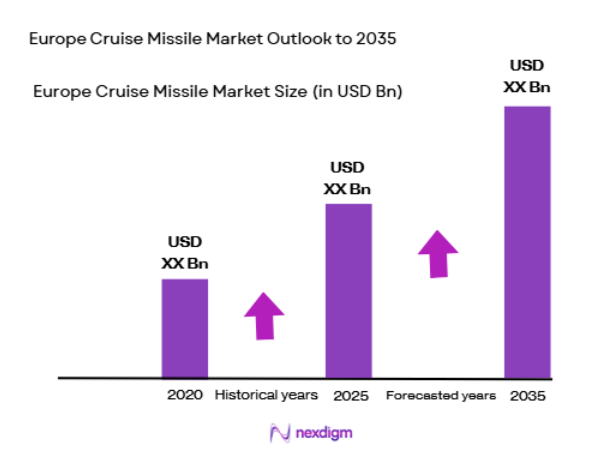
The Europe Cruise Missile market is driven by increasing defense budgets and advancements in missile technology. Based on recent assessments, the market size for 2024 is expected to reach approximately USD ~ billion. Key drivers such as the need for precision strike capabilities, geopolitical instability, and the rising importance of defense in national security agendas will continue to fuel growth. This market is propelled by the constant development of new missile systems, which integrate cutting-edge technologies to enhance performance and operational effectiveness.
Europe’s dominance in the cruise missile market is influenced by several factors, including strong defense industries in countries like the United Kingdom, France, and Germany. These nations are investing significantly in military modernization and technology, driving demand for advanced weapon systems. Geopolitical tensions in the region also contribute to the urgency of bolstering military defense capabilities. The market’s leadership is attributed to the robust defense infrastructure, advanced research and development facilities, and the strategic importance of these countries in global defense alliances such as NATO.
Market Segmentation
By Product Type:
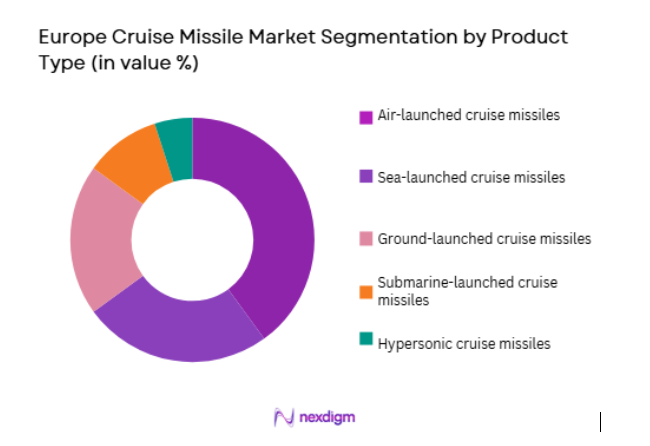
The Europe Cruise Missile market is segmented by product type into air-launched, sea-launched, ground-launched, submarine-launched, and hypersonic cruise missiles. The air-launched cruise missile segment has a dominant market share due to its versatility and efficiency in operational deployments. Air-launched missiles are favored for their mobility, ease of integration into existing fighter platforms, and precision in target engagement. Their strategic advantages, including rapid deployment and ability to strike high-value targets, continue to support their market dominance. Air-launched missiles are also seen as critical in enhancing offensive capabilities for air forces, thus leading the segment’s growth in the European market.
By Platform Type:
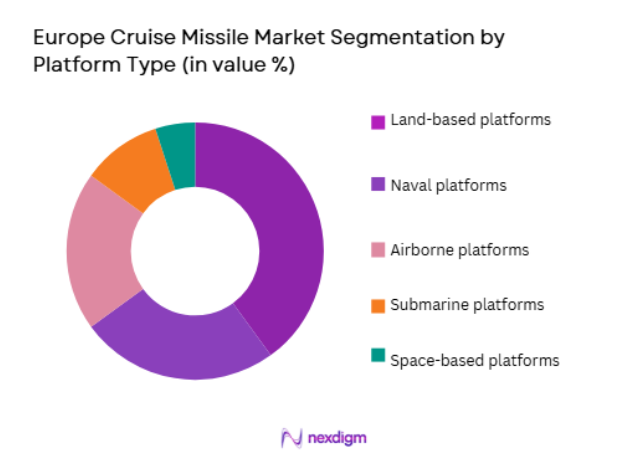
The market is segmented by platform type into land-based, naval, airborne, submarine, and space-based platforms. Among these, naval platforms dominate the market. The naval platforms are crucial due to their strategic importance in naval warfare and power projection. Naval vessels like destroyers and aircraft carriers are increasingly equipped with cruise missiles to provide precision strike capabilities, especially in maritime conflict scenarios. The continuous upgrading of naval defense technologies, alongside increasing investments in surface combatants and submarines, further strengthens the dominance of naval platforms in Europe.
Competitive Landscape
The Europe Cruise Missile market is highly competitive, with several leading players consolidating their positions through technological innovations and strategic partnerships. Major defense contractors dominate the market, contributing to the ongoing development of next-generation missile systems. Companies are focusing on integrating advanced technologies such as AI and hypersonics to maintain competitive advantages. The market is also influenced by government defense spending, as many of the missile systems are developed through long-term contracts with national governments.
| Company Name | Establishment Year | Headquarters | Technology Focus | Market Reach | Key Products | Revenue (USD) | Additional Parameter |
| MBDA | 2001 | France | ~ | ~ | ~ | ~ | ~ |
| Lockheed Martin | 1912 | USA | ~ | ~ | ~ | ~ | ~ |
| Raytheon Technologies | 1922 | USA | ~ | ~ | ~ | ~ | ~ |
| Northrop Grumman | 1939 | USA | ~ | ~ | ~ | ~ | ~ |
| BAE Systems | 1999 | UK | ~ | ~ | ~ | ~ | ~ |
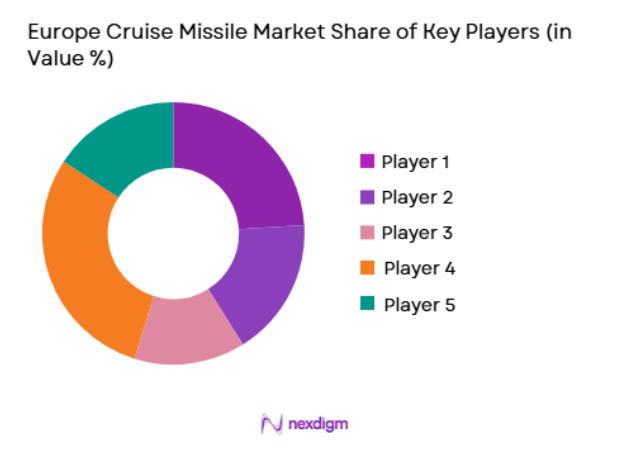
Europe Cruise Missile Market Analysis
Growth Drivers
Increased defense budgets across Europe:
The expansion of defense budgets across Europe is a primary growth driver for the cruise missile market. With geopolitical tensions on the rise, countries are focusing on enhancing their defense capabilities. This trend is observed in nations like France, the UK, and Germany, who continue to increase their military spending to counter emerging security threats. These investments are directed towards upgrading existing systems and integrating advanced missile technologies, such as hypersonic systems, into their defense arsenals. Defense contractors are benefiting from these budget increases as governments prioritize the modernization of their military infrastructure. As more countries adopt advanced missile systems, the market for cruise missiles is expected to grow significantly, driven by increasing military expenditure and the need for precision strike capabilities.
Technological advancements in missile systems:
Another key growth driver for the Europe Cruise Missile market is the rapid advancement of missile technology. Innovations in cruise missile systems, including enhanced guidance technologies, stealth features, and improved payload capabilities, are pushing the market forward. The development of hypersonic missiles and AI-based guidance systems is changing the landscape, offering better accuracy and faster response times. These technologies are designed to counter emerging threats, such as missile defense systems and evolving warfare tactics. Additionally, advancements in naval platforms and integration of cruise missiles with various platforms further boost their utility in military operations. The continuous development of next-generation cruise missiles that can deliver superior performance in varied combat environments contributes to the sector’s robust growth.
Market Challenges
High operational costs of advanced missile systems:
One of the significant challenges facing the Europe Cruise Missile market is the high operational cost associated with advanced missile systems. These systems, including hypersonic and air-launched cruise missiles, are expensive to develop, maintain, and deploy. For many European countries, balancing defense spending with other national priorities poses a financial challenge. The high cost of procurement, along with the need for specialized infrastructure, further strains defense budgets, especially for smaller nations or those with limited resources. While these advanced systems offer superior capabilities, their high cost limits their widespread adoption. Governments and defense contractors are exploring cost-effective alternatives, such as modular systems and missile defense solutions, to mitigate the financial burden. However, the overall expense of advanced cruise missile technologies remains a barrier to faster market expansion.
Technological integration and interoperability issues:
Another challenge is the integration and interoperability of advanced cruise missile systems with existing military platforms. Many defense systems currently in use across Europe were not initially designed to accommodate the next generation of missiles, such as hypersonic cruise missiles or AI-powered systems. Upgrading existing infrastructure to support these new technologies requires substantial investments in both hardware and software. Furthermore, ensuring that these new systems are interoperable across different platforms and defense networks adds complexity. Nations within the European Union and NATO must align their defense capabilities to create a cohesive defense strategy. The challenge lies in achieving this alignment while addressing national security needs and constraints.
Opportunities
Growth of autonomous and AI-powered missile systems:
One significant opportunity in the Europe Cruise Missile market lies in the growth of autonomous and AI-powered missile systems. As artificial intelligence and machine learning continue to evolve, defense contractors are integrating these technologies into missile systems to enhance targeting accuracy, reduce reliance on human intervention, and improve system efficiency. AI-powered missiles can adapt to changing environments, increasing their effectiveness during missions. This innovation offers greater flexibility, responsiveness, and operational success, particularly in complex combat scenarios. As European countries increasingly focus on autonomous defense technologies, investments in AI-powered systems will likely grow, creating new opportunities for the cruise missile market.
Increased demand for hypersonic technology:
The growing interest in hypersonic technology presents another opportunity for the Europe Cruise Missile market. Hypersonic missiles are capable of traveling at speeds greater than Mach ~ , making them harder to detect and intercept. The development and deployment of hypersonic cruise missiles are a priority for many European countries, especially those facing heightened security risks. Hypersonic missiles offer advantages in terms of speed, precision, and stealth, which are critical in modern warfare. As geopolitical tensions persist, the demand for these advanced missile systems will increase, further fueling market growth. Manufacturers and defense contractors are focused on improving the range and capabilities of hypersonic systems, making them a key area for expansion in the cruise missile market.
Future Outlook
The Europe Cruise Missile market is expected to witness steady growth over the next five years, driven by technological advancements and increasing defense spending. Key trends, such as the rise of autonomous systems and the development of hypersonic missile technologies, will dominate the market. Additionally, governments are likely to continue prioritizing national security, which will support demand for more advanced and effective missile systems. Technological integration, such as improved missile guidance systems and stealth features, will shape the market’s evolution. The regulatory landscape, including arms control agreements and defense collaborations within NATO, will also influence market dynamics. The future outlook remains strong as nations seek to enhance their defense capabilities through cutting-edge missile technologies.
Major Players
- MBDA
- Lockheed Martin
- Raytheon Technologies
- Northrop Grumman
- BAE Systems
- Thales Group
- General Dynamics
- Leonardo
- Saab AB
- L3 Technologies
- Kongsberg Gruppen
- Rafael Advanced Defense Systems
- Israel Aerospace Industries
- Rheinmetall AG
- Hensoldt
Key Target Audience
- Investments and venture capitalist firms
- Government and regulatory bodies
- Defense contractors
- Military procurement agencies
- Aerospace and defense manufacturers
- Technology development firms
- National security agencies
- Defense research organizations
Research Methodology
Step 1: Identification of Key Variables
Identification of the primary factors influencing the market, such as technological advancements, defense budgets, and geopolitical concerns.
Step 2: Market Analysis and Construction
Analyzing current market trends and constructing models based on historical data, market dynamics, and technological progress.
Step 3: Hypothesis Validation and Expert Consultation
Validating assumptions through interviews with industry experts and consulting defense professionals to ensure accurate market insights.
Step 4: Research Synthesis and Final Output
Compiling the findings into a comprehensive market report, including forecasts and recommendations for stakeholders.

- Executive Summary
- Research Methodology (Definitions, Scope, Industry Assumptions, Market Sizing Approach, Primary & Secondary Research Framework, Data Collection & Verification Protocol, Analytic Models & Forecast Methodology, Limitations & Research Validity Checks)

- Market Definition and Scope
- Value Chain & Stakeholder Ecosystem
- Regulatory / Certification Landscape
- Sector Dynamics Affecting Demand
- Strategic Initiatives & Infrastructure Growth

- Growth Drivers
Increased defense budgets in Europe
Technological advancements in missile systems
Rising geopolitical tensions
Investment in military modernization programs
Focus on precision strike capabilities - Market Challenges
High development and operational costs
Compliance with international arms control regulations
Technological integration and interoperability issues
Concerns over missile defense countermeasures
Public and political opposition to defense expansions - Market Opportunities
Increased adoption of hypersonic technology
Collaborations with NATO defense initiatives
Growing demand for autonomous cruise missile systems - Trends
Integration of AI and machine learning in missile guidance systems
Focus on stealth and reduced radar signatures
Expansion of autonomous systems for cruise missile launches - Government regulations
Export control laws and compliance
International arms trade regulations
National defense spending regulations - SWOT analysis
- Porters 5 forces

- By Market Value 2020-2025
- By Installed Units 2020-2025
- By Average System Price 2020-2025
- By System Complexity Tier 2020-2025

- By System Type (In Value%)
Air-launched cruise missiles
Sea-launched cruise missiles
Ground-launched cruise missiles
Submarine-launched cruise missiles
Hypersonic cruise missiles - By Platform Type (In Value%)
Land-based platforms
Naval platforms
Airborne platforms
Submarine platforms
Space-based platforms - By Fitment Type (In Value%)
Fixed-fit solutions
Modular solutions
Upgrade kits
Integrated systems
Custom-fit systems - By EndUser Segment (In Value%)
Military forces
Defense contractors
Government agencies
Private defense companies
Security agencies - By Procurement Channel (In Value%)
Direct procurement
Government contracts
Defense auctions
Private sector procurement
Third-party distributors

- Market Share Analysis
CrossComparison Parameters (Cost Efficiency, Technology Innovation, Market Share, Production Capacity, Geographic Reach, Customer Base, Regulatory Compliance, Product Reliability, Integration Capability, Speed of Development) - SWOT Analysis of Key Competitors
- Pricing & Procurement Analysis
- Key Players
MBDA
Lockheed Martin
Raytheon Technologies
Northrop Grumman
BAE Systems
Rheinmetall AG
General Dynamics
Thales Group
L3 Technologies
Saab AB
Hensoldt
Elbit Systems
Rafael Advanced Defense Systems
Kongsberg Gruppen
Israel Aerospace Industries

- Growing demand for advanced cruise missile systems in military forces
- Defense contractors enhancing missile technology for global markets
- Government agencies driving procurement based on national security needs
- Private defense companies expanding their missile portfolios

- Forecast Market Value 2026-2035
- Forecast Installed Units 2026-2035
- Price Forecast by System Tier 2026-2035
- Future Demand by Platform 2026-2035


 Request a Sample
 Ask for Customization
 Get a Quote
 Enquire Now