
 Download PDF
 Download PDF
Market Overview
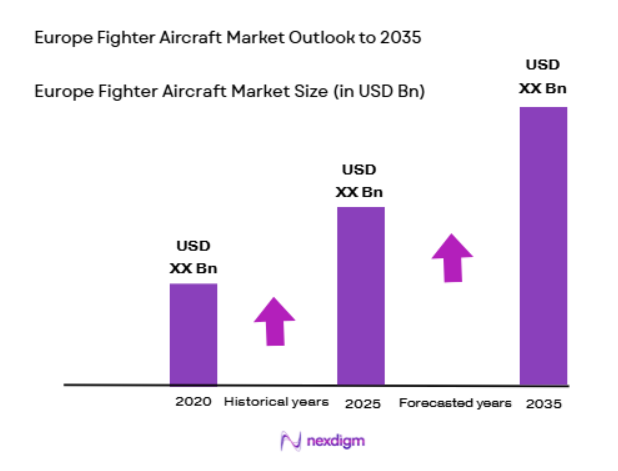
The Europe Fighter Aircraft market is projected to reach USD ~ billion in 2024, driven by continuous advancements in military technology and increasing defense budgets across European nations. Rising geopolitical tensions, particularly in Eastern Europe, and the need for modernization of aging fleets have prompted nations to invest in advanced fighter aircraft. Additionally, the growing demand for multi-role capabilities and precision strikes has spurred the adoption of cutting-edge fighter jets, ensuring sustained market growth.
Countries such as the United Kingdom, France, and Germany lead the Europe Fighter Aircraft market, owing to their strong defense industries and strategic positioning within NATO. These countries maintain large defense budgets, enabling significant investments in next-generation fighter aircraft. Their leadership in the market is further solidified by extensive military modernization programs, technological advancements, and their ongoing focus on maintaining air superiority in a rapidly evolving defense landscape.
Market Segmentation
By Product Type:
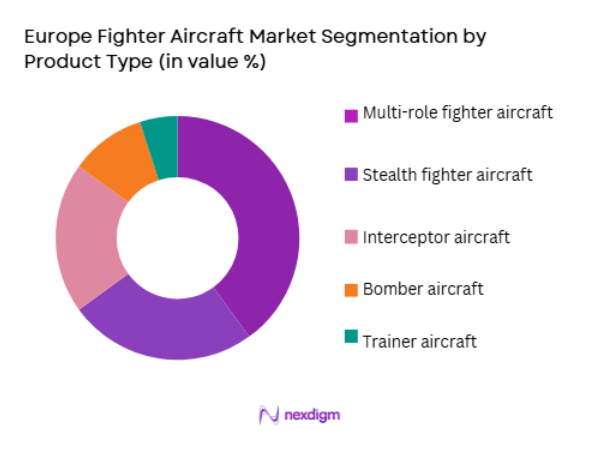
The Europe Fighter Aircraft market is segmented by product type into multi-role fighter aircraft, stealth fighter aircraft, interceptor aircraft, bomber aircraft, and trainer aircraft. The multi-role fighter aircraft segment dominates the market due to their versatility in performing various functions, such as air-to-air combat, air-to-ground strikes, and reconnaissance. These aircraft are favored by European defense forces for their ability to adapt to various mission requirements, making them a critical component of modern air forces. As military strategies evolve to encompass a wide range of combat scenarios, the demand for multi-role fighter jets continues to grow, strengthening their dominance in the market.
By Platform Type:
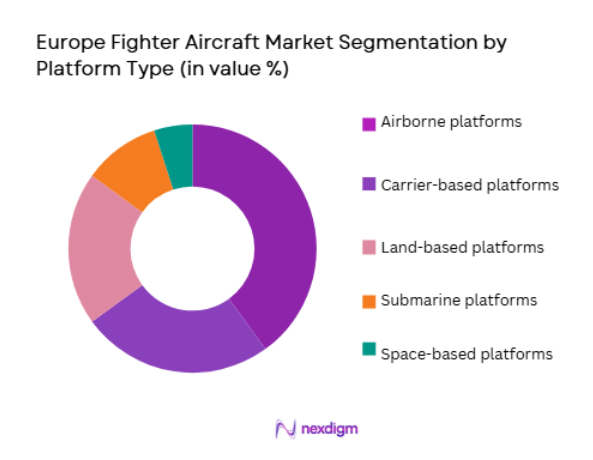
The market is segmented by platform type into airborne platforms, carrier-based platforms, land-based platforms, submarine platforms, and space-based platforms. Airborne platforms dominate the market, primarily due to their flexibility, rapid deployment capabilities, and the increasing need for versatile, high-performance fighter aircraft. Airborne platforms, particularly those designed for multirole capabilities, provide air forces with the ability to execute a wide range of missions, from air dominance to close air support and precision strikes. The rising importance of controlling airspace in modern warfare continues to drive the demand for these platforms.
Competitive Landscape
The Europe Fighter Aircraft market is highly competitive, with numerous global players vying for dominance. Major players in the market have established strong positions through innovation, strategic defense contracts, and collaborations with NATO and other military alliances. The market also sees consolidation through mergers and acquisitions, with defense contractors expanding their product portfolios and enhancing their technological capabilities. The increasing importance of air superiority and the integration of advanced stealth technologies are among the key factors driving competition in the sector.
| Company Name | Establishment Year | Headquarters | Technology Focus | Market Reach | Key Products | Revenue (USD) | Market-Specific Parameter |
| Lockheed Martin | 1912 | USA | ~ | ~ | ~ | ~ | ~ |
| BAE Systems | 1999 | UK | ~ | ~ | ~ | ~ | ~ |
| Dassault Aviation | 1929 | France | ~ | ~ | ~ | ~ | ~ |
| Airbus Defence and Space | 2000 | Germany/France | ~ | ~ | ~ | ~ | ~ |
| Saab Group | 1937 | Sweden | ~ | ~ | ~ | ~ | ~ |
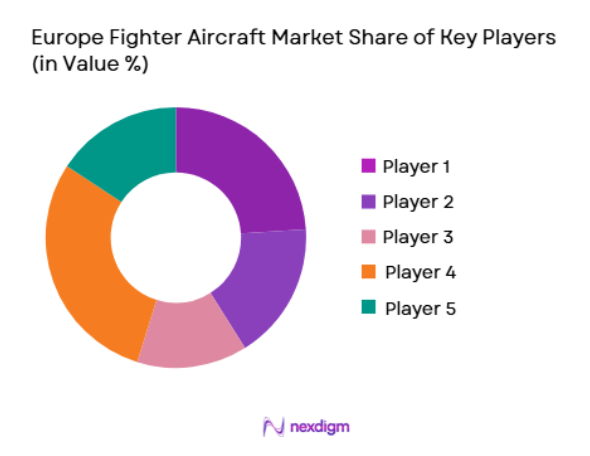
Europe Fighter Aircraft Market Analysis
Growth Drivers
Technological advancements in stealth and radar systems:
Technological advancements in stealth and radar systems are key growth drivers for the Europe Fighter Aircraft market. The demand for next-generation stealth capabilities has been increasing as European nations seek to maintain air superiority in increasingly complex threat environments. New radar technologies, including active electronically scanned arrays (AESA), allow for better detection of enemy aircraft and missiles, further enhancing the effectiveness of stealth fighter jets. As defense budgets continue to rise and the need for more advanced, undetectable platforms increases, the development and integration of advanced stealth and radar technologies remain critical factors driving the growth of the market.
Increasing geopolitical tensions and defense spending:
Geopolitical tensions and increasing defense spending across Europe are major factors contributing to the market’s growth. With rising threats from both state and non-state actors, European countries are investing more heavily in their military capabilities to ensure they remain protected. The development and procurement of advanced fighter aircraft are key components of these investments, as these aircraft are vital for protecting airspace, conducting surveillance, and maintaining offensive and defensive capabilities. As countries increase their defense budgets, the demand for modern fighter jets, including multirole and stealth variants, is expected to rise, leading to steady market expansion.
Market Challenges
High cost of procurement and maintenance:
The high cost of procuring and maintaining advanced fighter aircraft is a significant challenge facing the Europe Fighter Aircraft market. Fighter jets, particularly those equipped with cutting-edge technology such as stealth capabilities and advanced radar systems, require substantial investments for both acquisition and long-term maintenance. These costs can strain defense budgets, especially for smaller European countries or those with limited financial resources. Additionally, the complex and lengthy maintenance cycles of modern fighter jets further contribute to high operational costs. Governments and defense contractors are working to reduce these costs through cost-sharing agreements and efficient maintenance programs, but the financial burden remains a key challenge.
Regulatory complexities in international arms control and export restrictions:
Regulatory complexities, including international arms control and export restrictions, pose significant challenges for the Europe Fighter Aircraft market. Fighter aircraft manufacturers must navigate strict regulations concerning the export of defense technologies, which can limit market access and sales opportunities. Furthermore, the evolving landscape of arms control agreements and export restrictions can create delays and uncertainties in the procurement process, particularly for multinational defense programs. Compliance with these regulations requires significant resources, and manufacturers must remain adaptable to changing legal and political environments to stay competitive in the global market.
Opportunities
Expansion of multirole fighter aircraft adoption:
One of the most significant opportunities in the Europe Fighter Aircraft market is the growing adoption of multirole fighter aircraft. These versatile platforms are capable of performing a wide range of tasks, including air-to-air combat, close air support, and intelligence gathering. Their flexibility makes them highly attractive to European air forces, as they allow for cost-effective and efficient operations across a broad spectrum of missions. As the demand for versatile and adaptable military solutions increases, multirole fighter jets are expected to see significant growth in the European market, driven by both defense contractors and government procurement programs.
Development of hypersonic aircraft and weapons:
The development of hypersonic aircraft and weapons presents another significant opportunity for the Europe Fighter Aircraft market. As the speed and range of combat aircraft continue to evolve, hypersonic technologies offer the potential for faster, more efficient missions with greater strategic impact. European nations are increasingly investing in research and development of hypersonic systems to stay ahead of emerging threats and maintain a competitive advantage in air defense. Hypersonic aircraft can also offer significant advantages in terms of avoiding interception, making them a crucial component of future military strategies.
Future Outlook
The Europe Fighter Aircraft market is poised for continued growth over the next five years, driven by technological advancements in stealth, radar, and multirole capabilities. European countries are expected to maintain a focus on upgrading their air forces and enhancing interoperability with NATO forces. As defense spending increases in response to emerging threats, investments in next-generation fighter jets, including those with hypersonic capabilities, will be a key priority. The market is also expected to see further consolidation, with partnerships between manufacturers and governments aimed at reducing procurement and maintenance costs.
Major Players
- Lockheed Martin
- BAE Systems
- Dassault Aviation
- Airbus Defence and Space
- Saab Group
- Boeing
- Northrop Grumman
- Leonardo
- Thales Group
- Hindustan Aeronautics
- Israel Aerospace Industries
- Mitsubishi Heavy Industries
- Sukhoi
- Embraer
- Textron Aviation
Key Target Audience
- Investments and venture capitalist firms
- Government and regulatory bodies
- Defense contractors
- Military procurement agencies
- Aerospace and defense manufacturers
- Technology development firms
- National security agencies
- Defense research organizations
Research Methodology
Step 1: Identification of Key Variables
Identification of factors influencing the Europe Fighter Aircraft market, such as defense budgets, geopolitical risks, and technological advancements.
Step 2: Market Analysis and Construction
Analyzing market trends, historical data, and creating models for market growth based on emerging defense requirements and technologies.
Step 3: Hypothesis Validation and Expert Consultation
Validation of market assumptions through expert consultations with military advisors, industry professionals, and government defense officials.
Step 4: Research Synthesis and Final Output
Compiling research findings into a comprehensive report, including strategic insights, competitive analysis, and forecasted market trends.

- Executive Summary
- Research Methodology (Definitions, Scope, Industry Assumptions, Market Sizing Approach, Primary & Secondary Research Framework, Data Collection & Verification Protocol, Analytic Models & Forecast Methodology, Limitations & Research Validity Checks)

- Market Definition and Scope
- Value Chain & Stakeholder Ecosystem
- Regulatory / Certification Landscape
- Sector Dynamics Affecting Demand
- Strategic Initiatives & Infrastructure Growth

- Growth Drivers
Increased defense budgets across Europe
Technological advancements in stealth and radar systems
Rising geopolitical tensions - Market Challenges
High operational costs of advanced fighter aircraft
Regulatory barriers and international arms control
Technological integration and interoperability issues - Market Opportunities
Expansion of multi-role fighter aircraft adoption
Growth in unmanned fighter aircraft technology
Strategic partnerships with defense contractors - Trends
Development of hypersonic weapons and aircraft
Increased integration of AI in combat operations
Shift towards electronic warfare capabilities - Government regulations
Export control regulations
Defense procurement policies
National security compliance - SWOT analysis
- Porters 5 forces

- By Market Value 2020-2025
- By Installed Units 2020-2025
- By Average System Price 2020-2025
- By System Complexity Tier 2020-2025

- By System Type (In Value%)
Multi-role fighter aircraft
Stealth fighter aircraft
Interceptor aircraft
Bomber aircraft
Trainer aircraft - By Platform Type (In Value%)
Airborne platforms
Carrier-based platforms
Land-based platforms
Submarine platforms
Space-based platforms - By Fitment Type (In Value%)
Fixed-fit solutions
Integrated systems
Modular solutions
Upgradable solutions
Custom-fit solutions - By EndUser Segment (In Value%)
Military forces
Defense contractors
Government agencies
Private defense firms
Security services - By Procurement Channel (In Value%)
Government tenders
Private sector procurement
Direct procurement
Online procurement platforms
Distributors and resellers

- Market Share Analysis
Cross Comparison Parameters (Cost Efficiency, Technological Innovation, Product Reliability, Payload Capacity, Mission Versatility, Operational Range, Maintenance Requirements, Speed, Stealth Capabilities, Customer Support) - SWOT Analysis of Key Competitors
- Pricing & Procurement Analysis
- Key Players
Lockheed Martin
BAE Systems
Dassault Aviation
Airbus Defence and Space
Saab AB
Northrop Grumman
Boeing
Leonardo
Thales Group
L3 Technologies
F-35 Joint Program Office
Dassault Aviation
Fokker Technologies
Kongsberg Gruppen
Rheinmetall AG

- Increased demand for multi-role aircraft in defense
- Government agencies’ push for fleet modernization
- Defense contractors focusing on AI and automation
- Security services seeking advanced reconnaissance capabilities

- Forecast Market Value 2026-2035
- Forecast Installed Units 2026-2035
- Price Forecast by System Tier 2026-2035
- Future Demand by Platform 2026-2035


 Request a Sample
 Ask for Customization
 Get a Quote
 Enquire Now